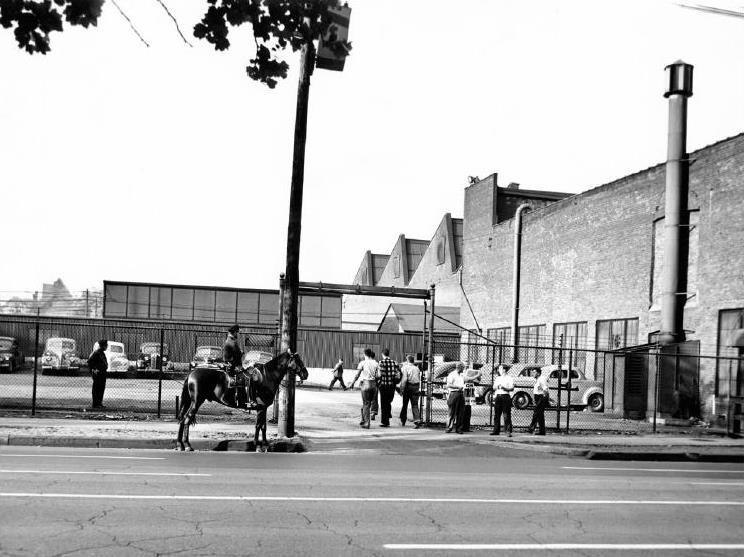
According to one website, it was for years one of Cleveland's most popular places for urban exploring. In a building where world wars were once won, young people crept through dark hallways, clambered up rusted metal stairways, and walked carefully through debris-filled rooms.
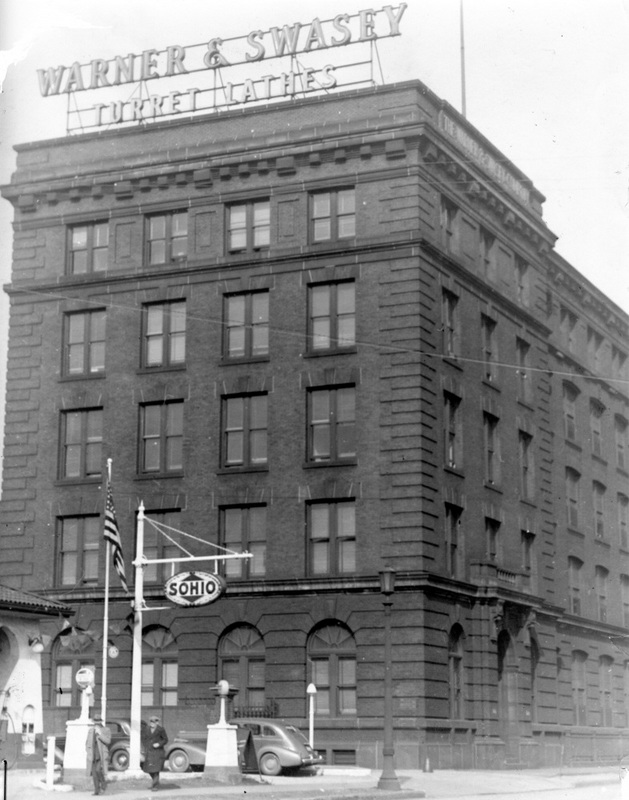
Well, perhaps it is a bit of a stretch to say that wars were won in this building. But it is a fact that, in the long-vacant Warner & Swasey building at 5701 Carnegie Avenue, critical armament parts were once manufactured that helped the United States and its allies win two world wars during the twentieth century.
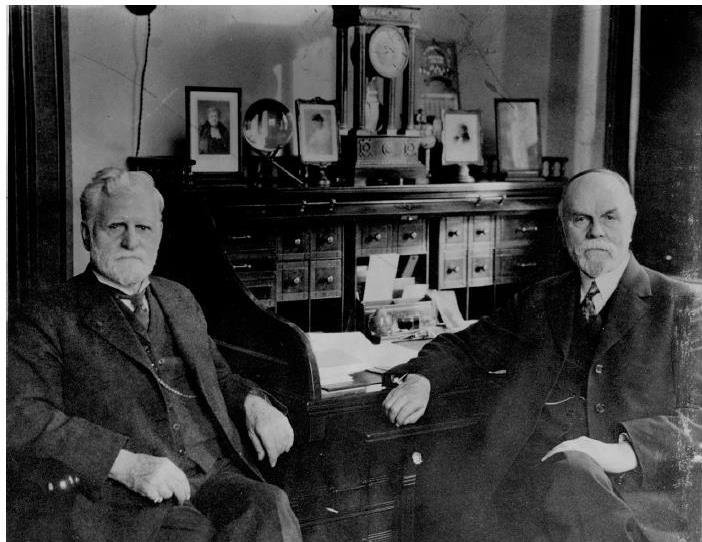
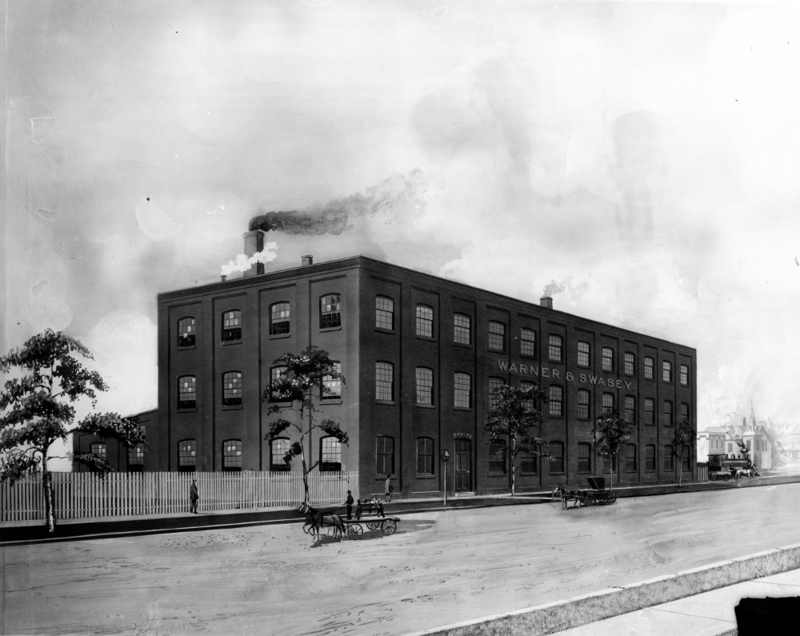
The five-story building made of reddish-brown stone was constructed over a six-year period from 1904 to 1910. It replaced the original Warner & Swasey building that had been erected on the site in the early 1880s. That was just shortly after Worcester Warner and Ambrose Swasey, two young New England machinists, had come to Cleveland to build a machine shop — to Cleveland, because they thought Chicago was just too far west.
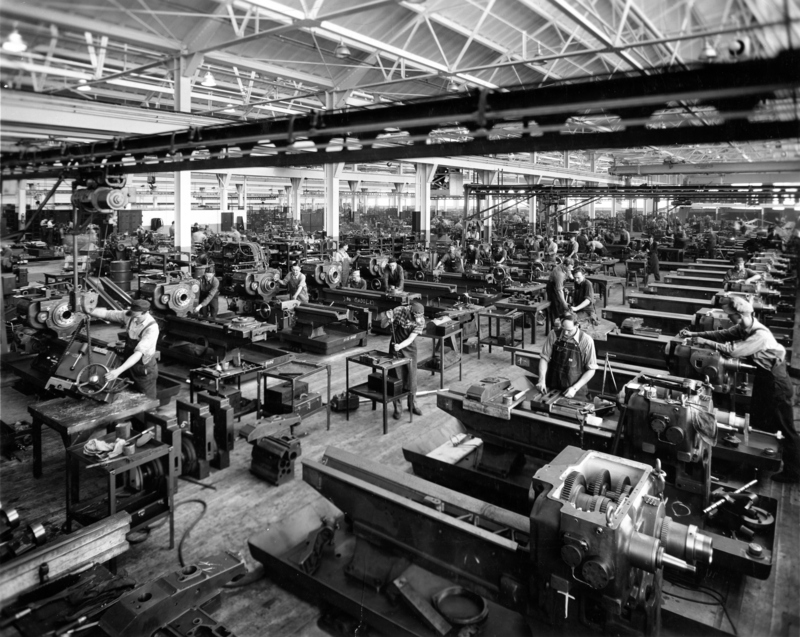
Warner & Swasey built telescopes and machine lathes in the new, as well as the old, building on Carnegie Avenue. And in wartime, when the company built those armament parts that helped America win two world wars, thousands of Clevelanders worked there. They built parts for tommy guns in World War I. And in World War II, when 7,000 Clevelanders worked for Warner & Swasey, they built parts for planes, ships, and tanks.
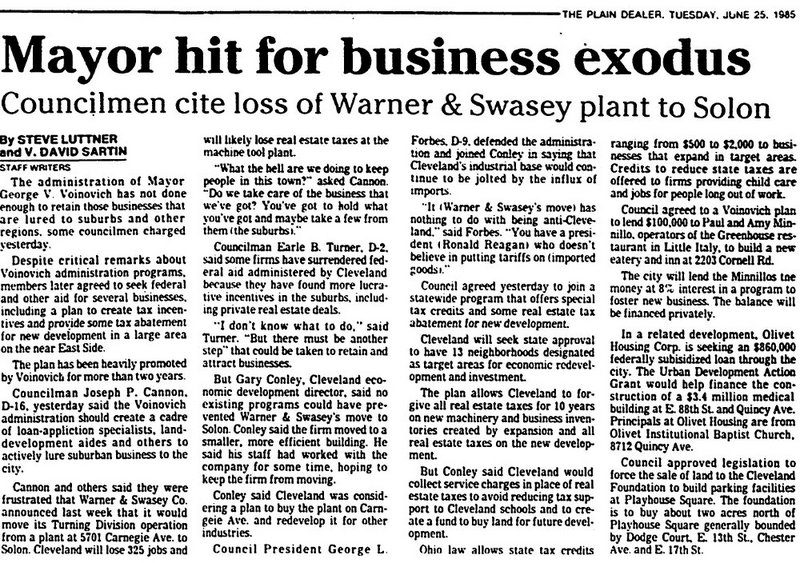
From World War I, through World War II, and into the 1950s and the 1960s, the building on Carnegie Avenue was one of Cleveland's most important workplaces. People talked about Warner & Swasey in the same breath and in the same way that they talked about the city's other big employers, like Republic Steel, TRW, and Ford Motor. But then the building on Carnegie Avenue began its downward slide, much like the city of Cleveland did in the same period. In the end it was a victim of high technology, and when it closed its doors for good in 1985, only a few hundred employees were still left to be sent elsewhere.
Decades passed after Warner & Swasey left Cleveland. Its iconic early twentieth-century industrial building was owned for much of that period of time by the City of Cleveland, which looked to put the building to a new use. In 1988, Cuyahoga County had considered the building as a possible site for its Department of Human Services and Child Support Enforcement Agency. That fell through. In 1992, Cleveland officials talked about making it the Charles V. Carr Municipal Center. That never happened either.
In 2010, yet another proposal was put on the table. Fred and Greg Geis, sons of German immigrants who came to Cleveland in the 1960s, proposed to convert the Warner & Swasey building into a high-tech office, lab and manufacturing facility. However, after several years of planning, the Geis Brothers ultimately decided that the Warner & Swasey Building would not suit their purpose, and they developed their Tech Park instead on a large piece of land located between Euclid and Carnegie Avenues, several blocks east of the Warner & Swasey Building.
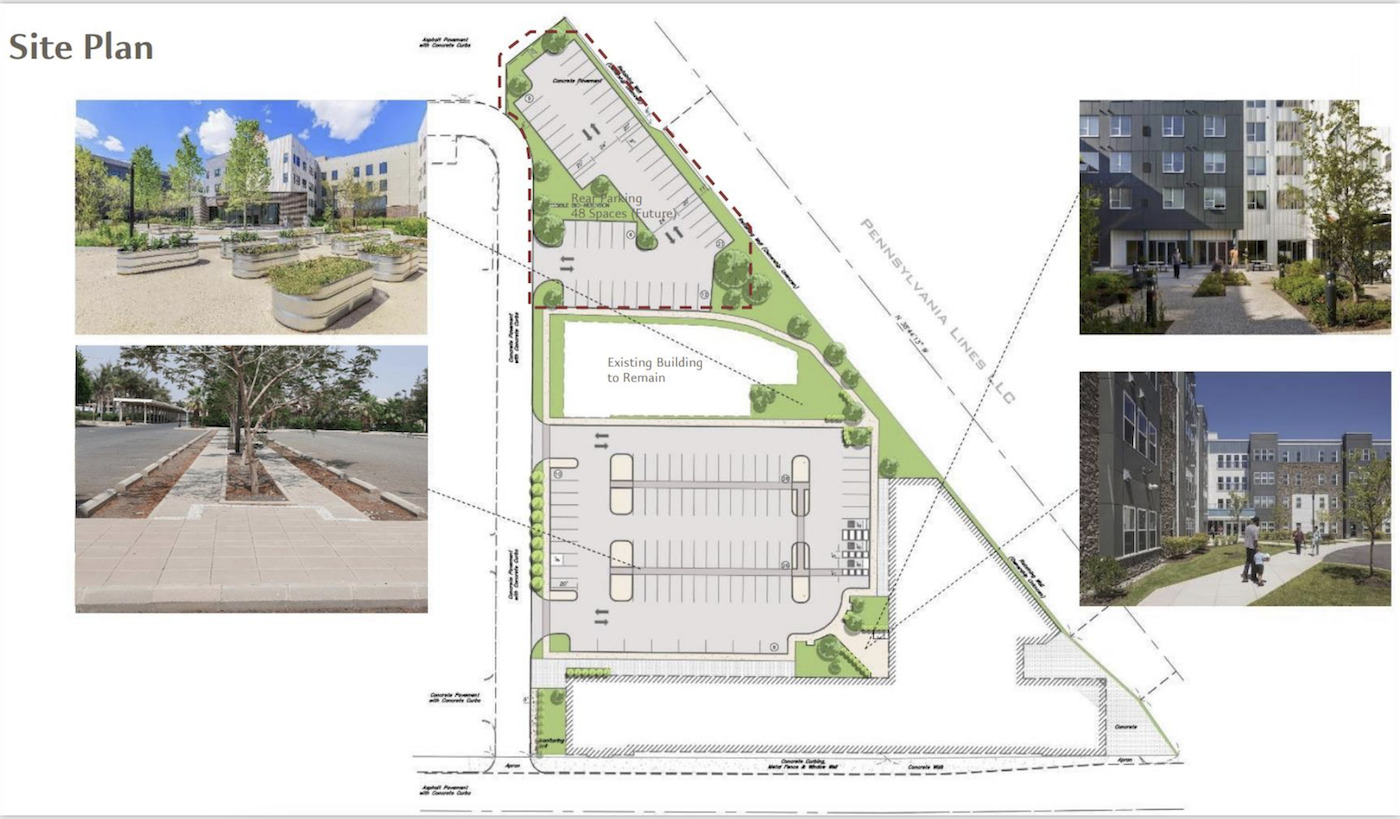
And so the historic building stood vacant and deteriorating on Carnegie Avenue for several more years. And then, in 2018, a new redevelopment proposal was put forward by Pennrose, a housing developer from Philadelphia. Its proposal was to convert the Warner & Swasey Building into an apartment building with some affordable housing units, some units for seniors, and some market-rate units. The proposal included a possible roof deck which, according to the developer, would offer tenants amazing views of downtown Cleveland.
In 2025, Pennrose completed its acquisition of the Warner & Swasey Building and, in early 2026, it began its redevelopment and restoration of the historic building. It is likely hoped by all who know the historic nature of the Warner & Swasey Building that soon it will be filled with residents who will not only enjoy the benefits of living in an historic building, but will, as well, enjoy the benefits of living in Cleveland's fast-developing Midtown neighborhood.
Images