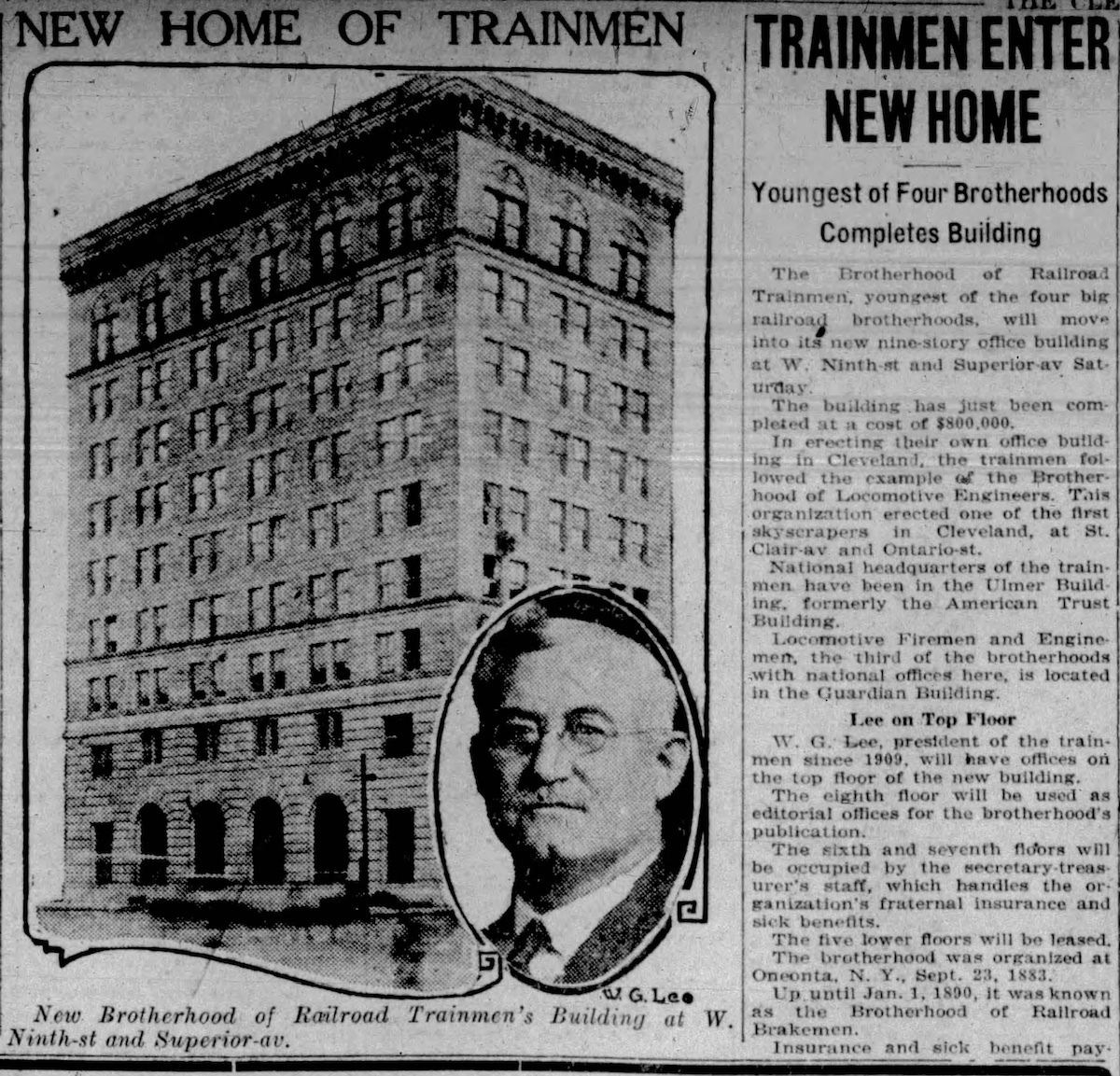
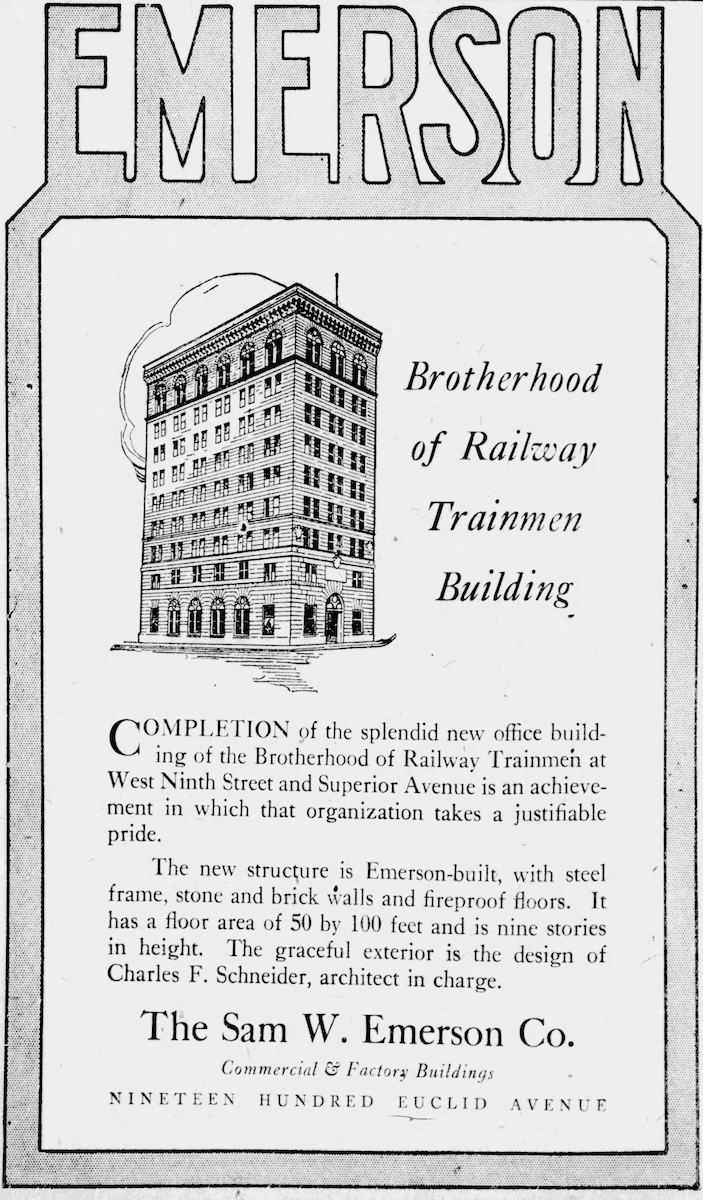
Brotherhood of Railroad Trainmen Building
When Railroad Labor Unions were King in Cleveland
Brothers Mantis and Oris Van Sweringen, founders of the City of Shaker Heights and developers of the Union Terminal and the Terminal Tower complex in Cleveland, began acquiring national railroads in 1915 with the intention of making Cleveland the railroad capital of the United States. While the Van Sweringen brothers were ultimately unsuccessful in that effort, the unions that represented the workers at these railroads were successful in their's. Three of the largest railroad labor unions in the country, representing tens of thousands of railroad workers, moved their headquarters to Cleveland in the late 19th and early 20th centuries, and, for much of the twentieth century, Cleveland was the railroad workers capital of the United States.
The largest of the railroad brotherhoods which established headquarters in Cleveland in the late 19th or early 20th centuries was the Brotherhood of Railroad Trainmen. Both a labor union and a fraternal benefits society, it represented the interests of almost all of the various classes of railroad employees which were not represented by the other members of the Big Four—the Brotherhood of Locomotive Engineers, the Brotherhood of Locomotive Firemen and Enginemen, and the Order of Railroad Conductors of America. Among the classes of railroad employees represented by the Railroad Trainmen union were flagmen, baggagemen, ticket collectors, dining car stewards, yard masters, hump riders, and car tenders.
The Brotherhood of Railroad Trainmen was founded in 1883 in Oneonta, New York. Its first national headquarters was in Galesburg, Illinois, and its next in Peoria. In 1899, it decided to move its national headquarters to Cleveland, based upon Cleveland's cheaper rents, better printing and mailing facilities, higher rates of interest on savings accounts, and its very favorable living conditions. At the time the Trainmen union decided to move to Cleveland, it already represented more than 35,000 railroad employees. (By 1921, the year in which construction of the Brotherhood of Railroad Trainmen Building was completed, that membership number skyrocketed to 187,000.)
Upon arriving in Cleveland, the Brotherhood established its headquarters in leased offices on the top floor of the American Trust Building, a building which then stood on the west side of the northwest quadrant of Public Square. The Trainmen maintained their headquarters in this building, which in 1920 was renamed the Ulmer Building, from 1899 until 1921.
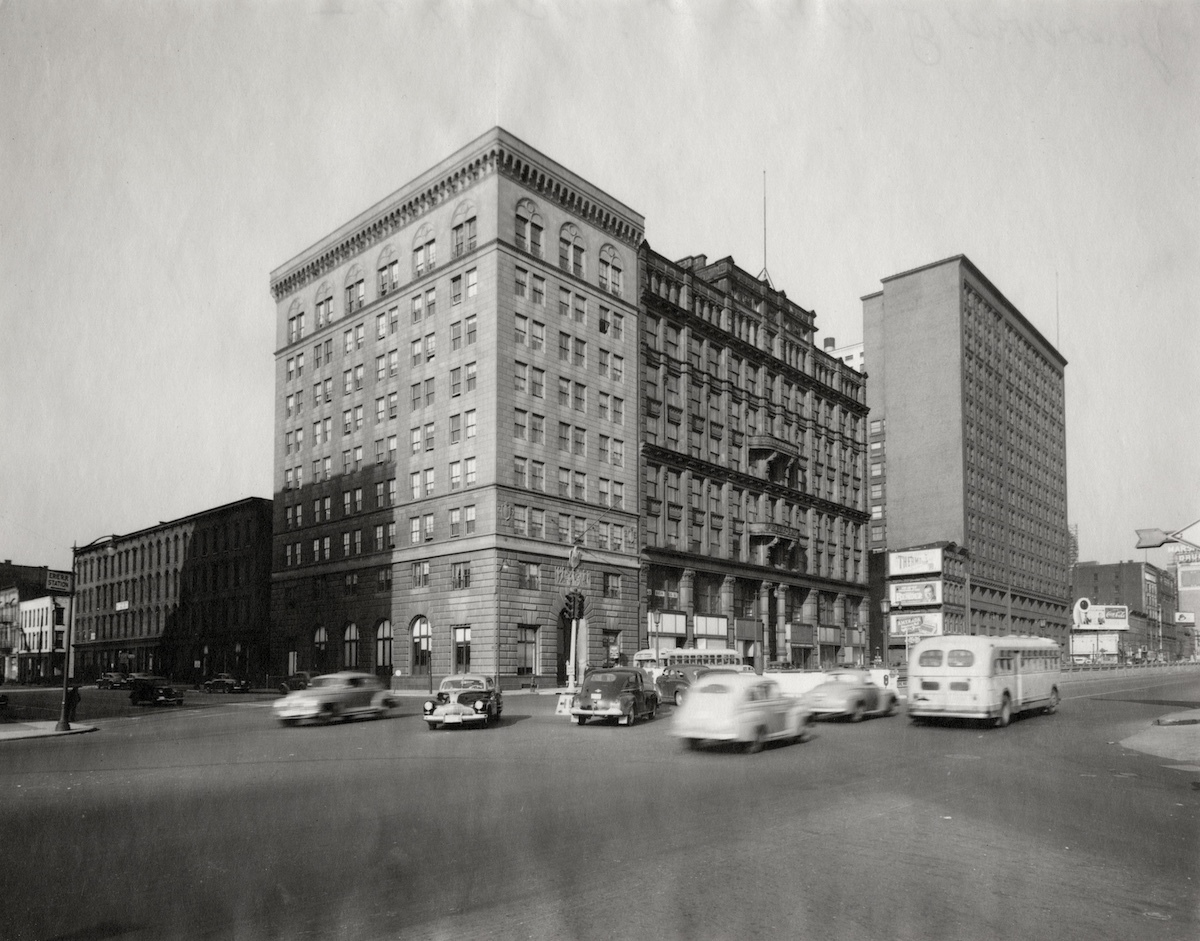
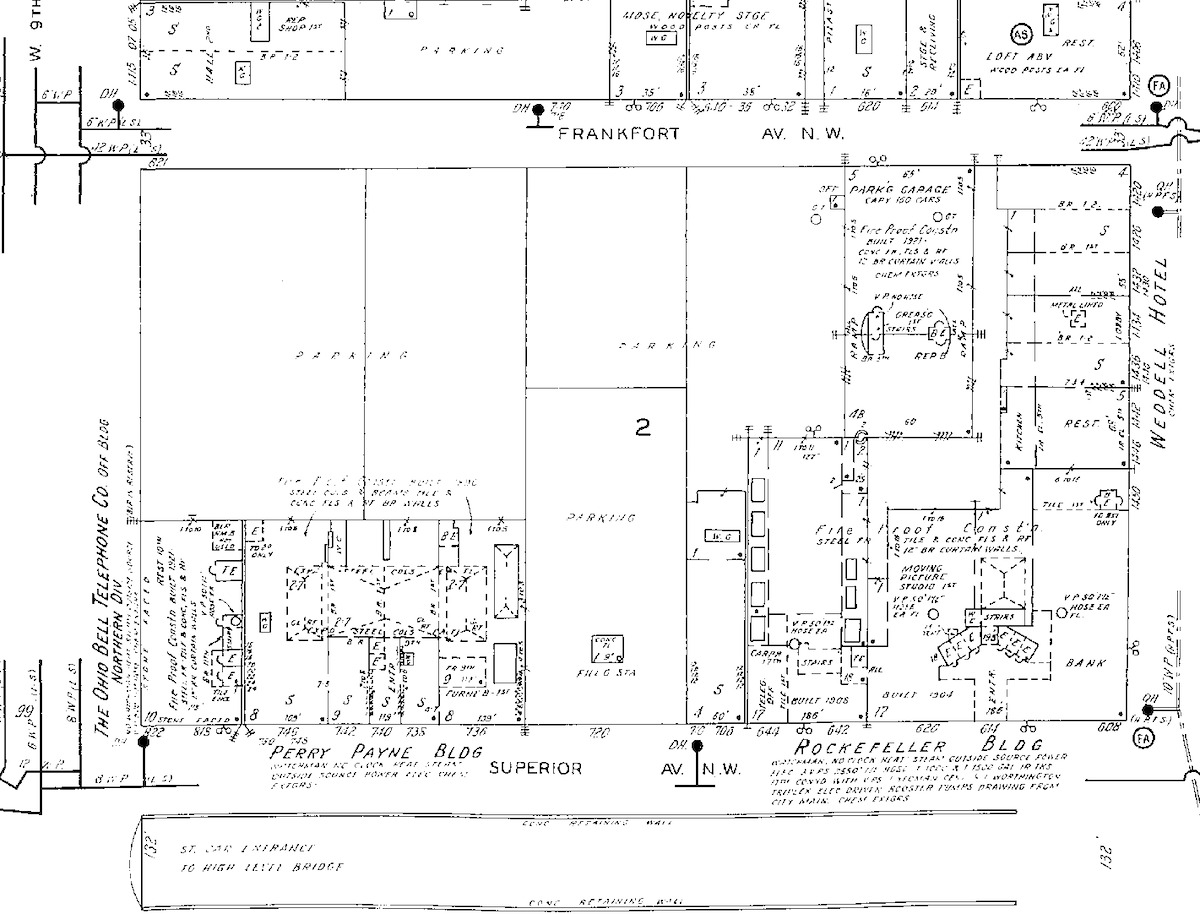
In 1920, reportedly because of an increase in rents in the newly-named Ulmer Building, the Brotherhood decided to build their own headquarters building in downtown Cleveland much as the Brotherhood of Locomotive Engineers had on the southeast corner of Ontario Street and St. Clair Avenue in 1903, On January 5, 1921, the Railroad Trainmen purchased land on the northeast corner of West Superior Avenue and West 9th Street, immediately to the west of the Perry-Payne Building, for their new building.
The purchase quickly made news. Within 24 hours of the recording of the deed, both the Cleveland Press and the Cleveland Plain Dealer reported that the Railroad Trainmen were planning to build a headquarters building in Cleveland. The parcel of land that the Trainmen had purchased was relatively small—it had less than 50 feet of frontage on West Superior and was only a little more than 100 feet deep on West 9th Street—and on it stood the National Bank Building which had been erected on the land in 1869.
Notwithstanding all that, the land was very historic. On it, in 1806, Nathan Perry, one of Cleveland's first merchants, had built and operated a trading post, one of Cleveland's first commercial businesses. His son, also named Nathan, replaced the trading post a decade later in 1819 with the first brick commercial building erected in Cleveland. The land was also historically significant because it had been in the Perry, or Perry-Payne, family for more than a century. While the land had been put to different uses in the 19th and early 20th centuries, ownership of the historic parcel had always remained in that family.
The Brotherhood purchased land from the Perry Payne Company, an Ohio corporation formed in 1898, following the death of Henry B. Payne, and one to which his heirs had transferred their interests in all of his properties, including this one, in exchange for shares in the company. C. W. Bingham, a prominent hardware merchant, and husband to one of Henry and Mary Perry Payne's daughters, signed the deed as president of that company, transferring the land out of the Perry-Payne family.
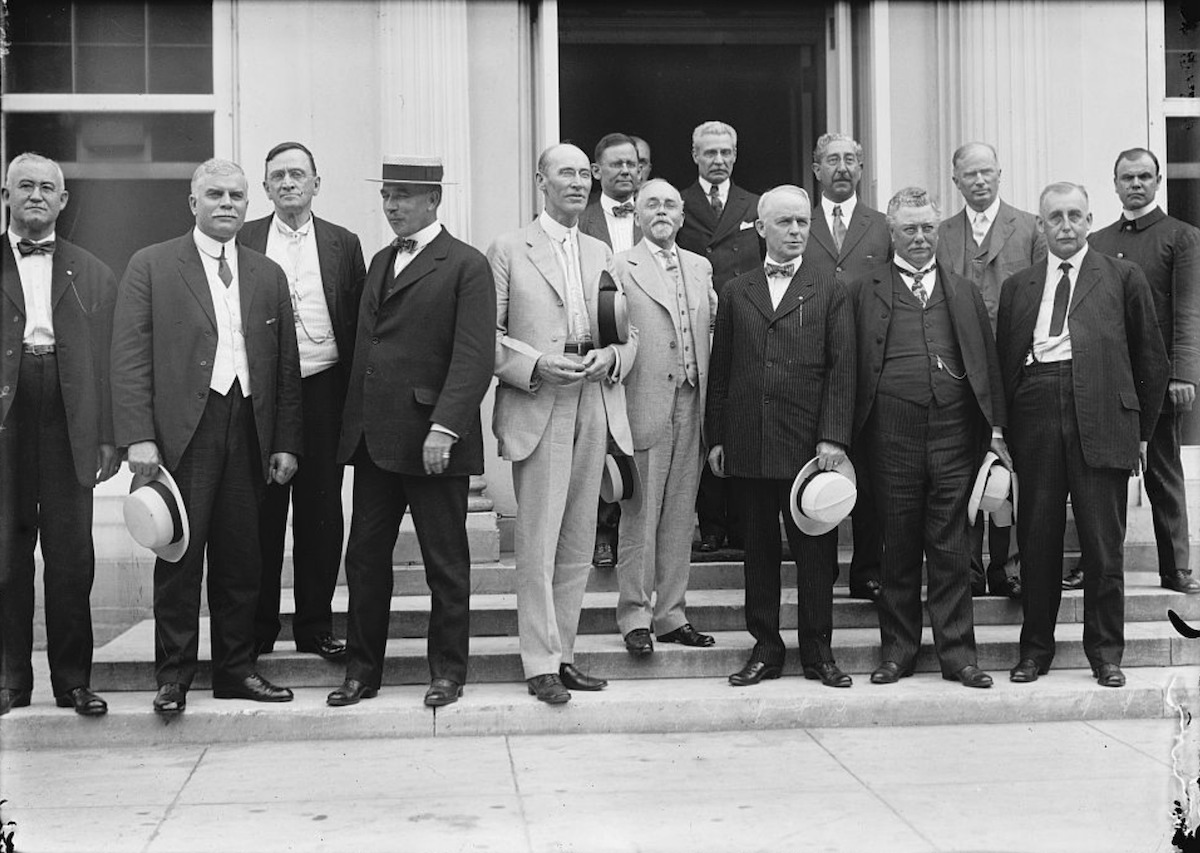
At the time that the land was purchased, the President of the Brotherhood of Railroad Trainmen was William G. Lee, a former railroad conductor who had subsequently become a very prominent union leader in the railroad industry. It was said that he always held himself up as a man of honor. When, in 1920, a number of locals had struck a railroad without the Brotherhood's consent, he immediately expelled them from the Brotherhood. He had, at the urging of President Woodrow Wilson in 1913, also been very instrumental in settling a nationwide railroad strike that had imperiled the nation's transportation network. It was thus likely William G. Lee, on behalf of the Brotherhood, who negotiated the purchase of the land from the Perry-Payne Company, even though the actual deed listed three trustees of the Brotherhood as the purchasers. It was also likely Lee who approached architect Charles S. Schneider in late 1920 or early 1921 with a request that he design an office building for the Brotherhood to replace the National Bank Building then standing upon the purchased land.
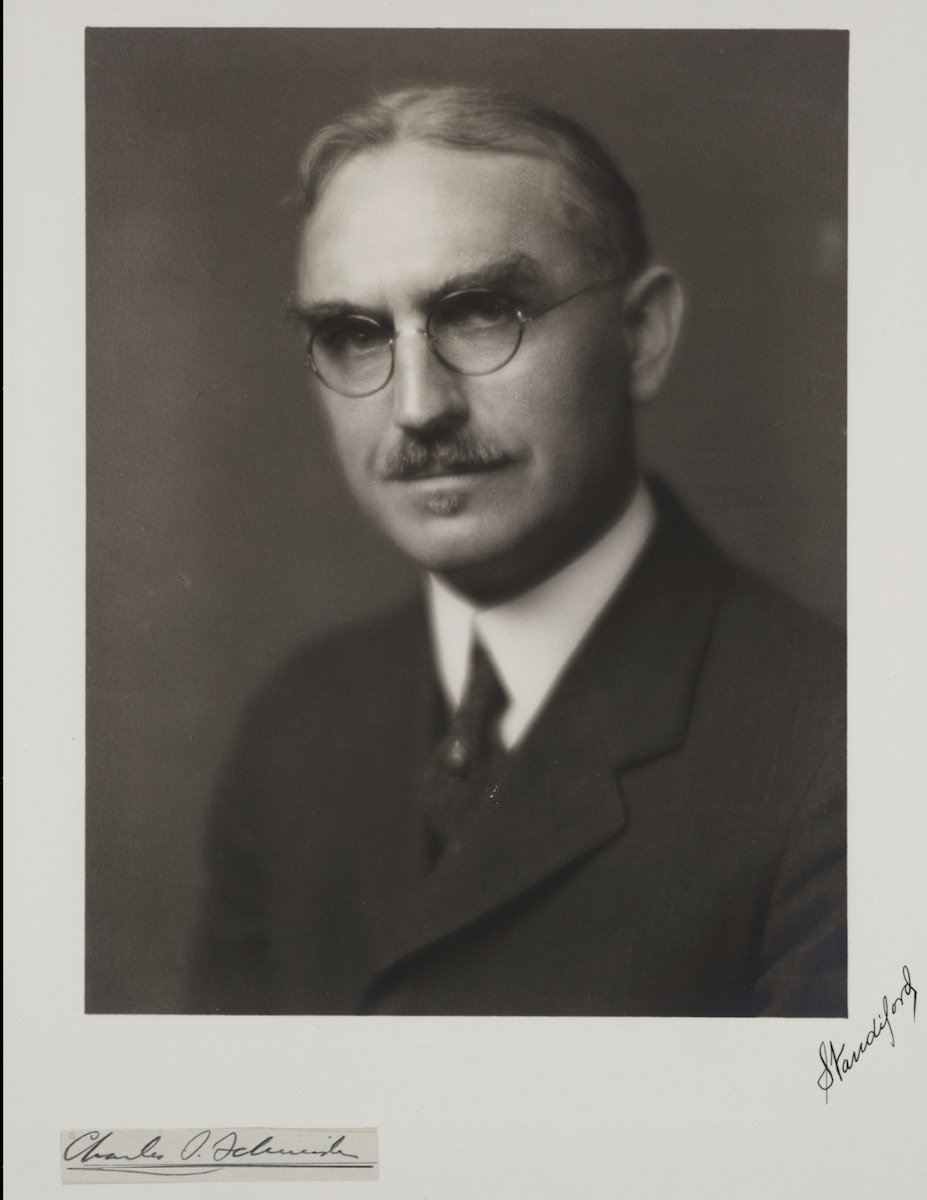
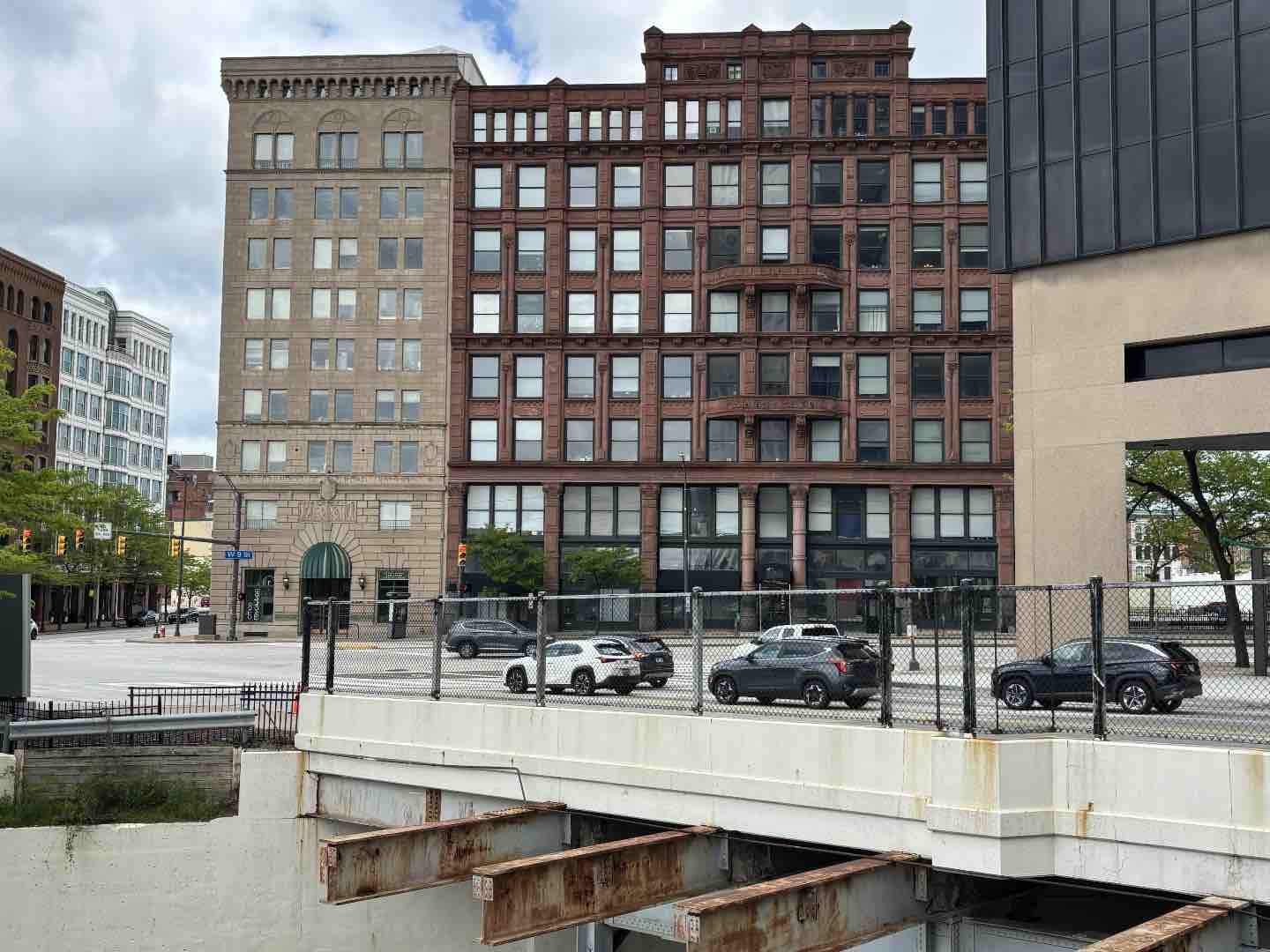
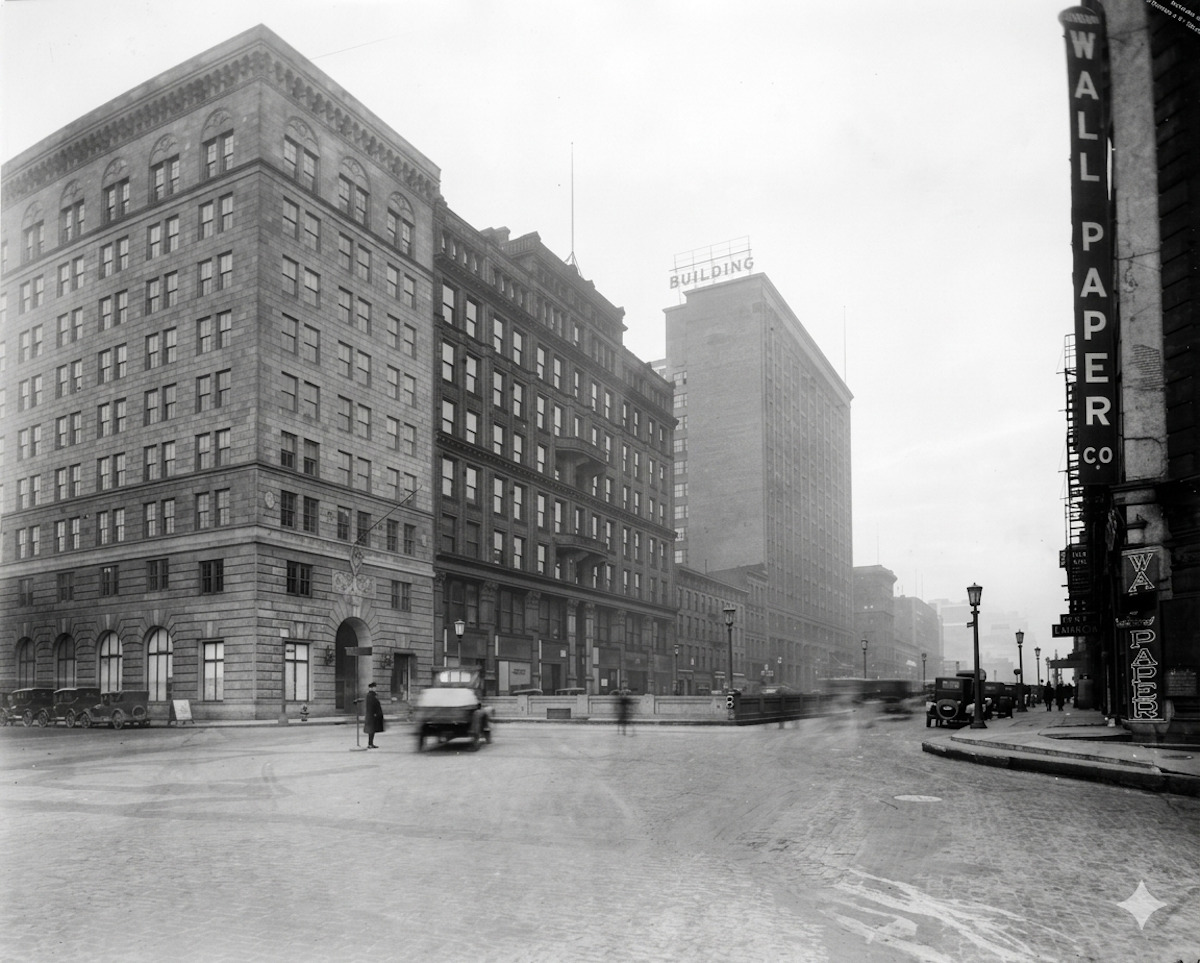
Architect Charles S. Schneider was Cleveland-born and Cleveland-educated. He is best known for designing mansions for the wealthy in the early twentieth century. In 1912, he had notably designed the 64,500 square foot Stan Hywet Hall in Akron, which to this day is said to be Ohio's largest mansion. In 1921, he turned his attention to designing an office building for the Brotherhood of Railroad Trainmen. The building that he designed, and which replaced the National Bank Building on the northeast corner of W. Superior Avenue and West 9th Street, is ten stories tall, with its tenth story hidden behind the upper facade of the building, making it appear to have only nine stories. Its exterior is constructed of steel and Bedford limestone. Contractor Sam W. Emerson Co. began construction of the building in early 1921 and completed it by November of that year at a cost of $800,000 to the union. In May, construction work had been temporarily halted as the result of an ongoing strike by Cleveland's building trades. However, while the strike itself continued, the bricklayers and laborers working on the site quickly agreed to return and work for pre-strike level wages, likely in order to help out the members of a fellow union.
Once construction of the new headquarters building was completed, the Brotherhood occupied offices on the top four floors and leased out the remaining six floors to outside tenants. With the completion and occupancy of this building, Cleveland became home to two buildings that were built as headquarters for two of the largest railroad unions.
In the year that the Railroad Trainmen building was going up, there was also speculation that a third member of the Big Four railroad unions—the Brotherhood of Locomotive Firemen and Enginemen—which was already headquartered in Cleveland as a lessee in the Guardian Building on Euclid Avenue, was planning to build a headquarters building too. It had earlier purchased land for that purpose on the northeast corner of W. Superior and West 6th Street. However, while it continued to maintain its headquarters in Cleveland, the Brotherhood of Locomotive Firemen and Enginemen eventually elected not to build that headquarters building. There was also talk in that year of the fourth member of the Big Four railroad unions—the Order of Railroad Conductors—moving its headquarters from Des Moines, Iowa, to Cleveland, but that too did not materialize at this time.
The Brotherhood of Railroad Trainmen occupied their building on the northeast corner of W. Superior and West 9th from 1921 until 1944. As early as 1931, according to an article appearing in the Plain Dealer in May of that year, the Trainmen contemplated selling their building because membership had communicated to their leaders that they should devote all of their efforts to labor and not divert any of those efforts to running business enterprises. The Trainmen, however, continued to retain ownership of the building until 1946 when they sold it. Two years before doing so, they moved out of the building and into the Standard Building—owned by the Brotherhood of Locomotive Engineers—citing a need for "more space."
In the eighty years that now have passed since the Brotherhood of Railroad Trainmen moved from and then sold its historic headquarters building on West Superior Avenue, the Railroad Trainmen building has seen several different uses. From 1946 until 1985, it was leased by the Ohio Bell Telephone Company, initially to serve as offices for the company's northern division and its commercial, traffic and planning divisions, and then later for other offices and divisions of that company. In 1985, the building was purchased by new owners and, with the aid of historic preservation tax credits, it was renovated with the total cost of purchase and renovation amounting to five million dollars. Since that time, the building, now known as the 820 Building, has been a multi-tenanted commercial building for lawyers, architects, realtors and other professionals.
As for the Brotherhood of Railroad Trainmen, in 1957 it joined the newly created AFL-CIO, and, in 1969, it merged with the Switchmens Union of North America, the Order of Railway Conductors & Brakemen, and the Brotherhood of Locomotive Firemen & Enginemen to form a new union known as the United Transportation Union. The UTU was headquartered in the Cleveland area until 2014 when it merged with the International Association of Sheet Metal, Air, Rail and Transportation workers (SMART) whose headquarters were, and still are, in Washington, D.C.
Images