<?xml version="1.0" encoding="UTF-8"?>
<feed xmlns="http://www.w3.org/2005/Atom">
  <title type="text">Cleveland Historical</title>
  <updated>2026-08-21T21:58:42+00:00</updated>
  <generator uri="http://framework.zend.com" version="1.12.20">Zend_Feed_Writer</generator>
  <link rel="alternate" type="text/html" href="https://mail.clevelandhistorical.org/"/>
  <link rel="self" type="application/atom+xml" href="https://mail.clevelandhistorical.org/items/browse?output=rss2"/>
  <id>https://mail.clevelandhistorical.org/</id>
  <author>
    <name>Cleveland Historical</name>
    <uri>https://mail.clevelandhistorical.org</uri>
  </author>
  <link rel="hub" href="http://pubsubhubbub.appspot.com/"/>
  <entry>
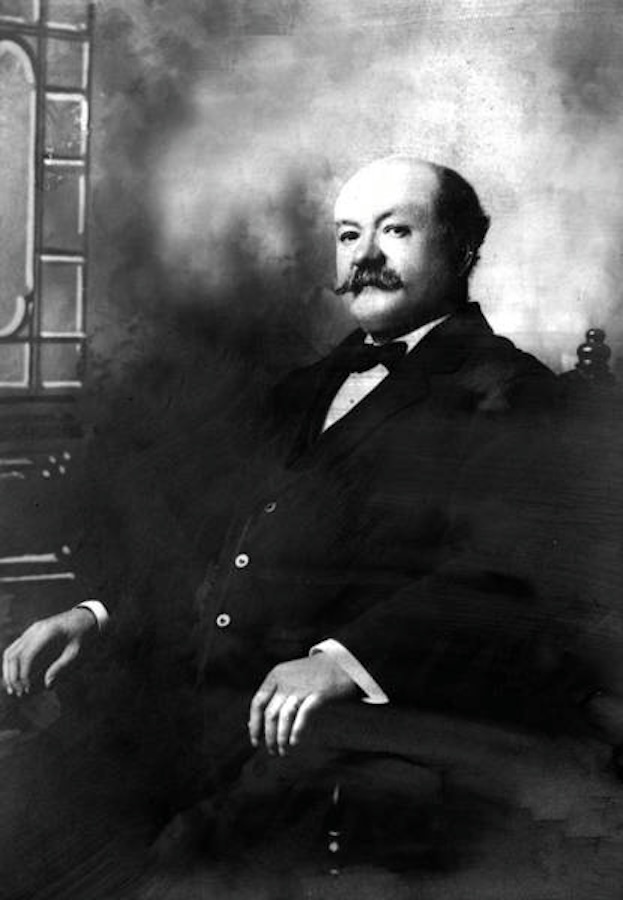
    <title type="html"><![CDATA[Giuseppe Carabelli: Founder and &quot;King&quot; of Cleveland&#039;s Little Italy]]></title>
    <summary type="html"><![CDATA[<p><strong><em>Cleveland’s ethnic neighborhoods often developed around strong leaders who helped unify their communities while preserving and promoting their cultural traditions. Giuseppe Carabelli was one such figure, an artistic and entrepreneurial force who helped establish Cleveland’s Little Italy by attracting skilled artisans and their families to the neighborhood.</em></strong></p><img src="https://mail.clevelandhistorical.org/files/fullsize/270df98dc68e2b72ec609ff87d521487.jpg" alt="Joseph Carabelli, Founder of Little Italy" /><br/><p>Cleveland’s ethnic rich identity took shape mostly after the Civil War as the Second Industrial Revolution made the city a hub of manufacturing and a strategic location for the distribution of products. Much of the manpower that drove its development came from eager southern and eastern European immigrants seeking new opportunities in the United States. As a result, the city's population came to reflect an increasingly rich mixture of cultures. </p><p>In 1917, the Cleveland Americanization Committee began sponsoring a series of monographs about the city's various ethnic and national communities. The project’s intent was both to teach American customs to new immigrants and to educate Americans about the customs and culture of their new neighbors. As in other American manufacturing cities, Cleveland saw people of like-minded cultures settle in compact geographic areas that enabled them to continue to share their language and customs. Distinct neighborhood ethnic "pockets" emerged between the 1870s and 1920s as Slovaks, Slovenes, Magyars (Hungarians), Poles, Italians, Croatians, Lithuanians, Russians, and immigrants of other origins arrived. The committee served these newcomers in their neighborhoods with citizenship classes and English as a Second Language classes offered in 27 languages. </p><p>One of the committee's monographs, <i>The Italians of Cleveland</i>, appeared in 1919 and explored the evolution of Cleveland's Italian communities over the previous forty years. Its author, Charles Coulter, characterized Italy as economically, socially, and culturally divided. Northern Italy was home to the upper class, educated, business-industrial ‘aristocracy’ of the country while the south of Italy was characterized by the uneducated, agricultural and labor peasantry “who form the base of the pyramid of Italian society.” This profile influences our understanding of the story of Cleveland’s Little Italy. Prior to 1870, Cleveland’s population was primarily Anglo-Saxon, with a smaller immigrant population having German and Irish backgrounds. The eastern and southern European migration had not yet begun. </p><p>Giuseppe (Joseph) Carabelli was born in April 1850 in Lombardy, north of Milan. Growing up in the northern city of Como, he entered the sculptural and stonecarving trades. At age 20, he immigrated to New York and worked to perfect his skills as a stonecutter. He gained early recognition working on several federal and state government jobs on the East Coast. He arrived in Cleveland in 1880 and partnered with James Broggini to form the Lakeview Granite and Monumental Works. The partnership rapidly dissolved and by 1886 the business became the Joseph Carabelli Company. Located across from the main entrance of <a href="https://clevelandhistorical.org/items/show/76">Lake View Cemetery</a>, the firm capitalized on the growing grave monument market. Broggini later opened his own monument works on Woodland Avenue near a cemetery there.</p><p>As Carabelli's business expanded, his need for skilled laborers drove him back to Italy, this time to the southern regions of Abruzzo and Molise to recruit stone masons to Cleveland. The ensuing response was ambitious as families sought to settle and work in the new country. Upon arrival, Carabelli would counsel and guide the immigrants to work and live in his neighborhood south of the cemetery, which was called the East End at that time. They instantly became the backbone of his company, and the neighborhood filled with Italian immigrant families and became known as <a href="https://clevelandhistorical.org/items/show/35">Little Italy</a>. </p><p>While his granite business thrived, Carabelli's civic and social interests accelerated within the community. He was regarded as the leader of Cleveland’s Italians and ultimately known as the ‘king’ of Little Italy. By the late 1890s the community was fully established and Carabelli promoted a neighborhood nursery and kindergarten to assist working parents; with John D. Rockefeller’s help, it grew into the <a href="https://clevelandhistorical.org/items/show/396">Alta House</a>. He conducted ‘classes’ for young men at his residence in the arts and sculpture and established fraternal societies that live on today, binding the Italian community. Carabelli became influential in local politics and was welcomed by the city’s leadership for his community involvement. He won a term in the Ohio House of Representatives in 1908 and promoted the recognition of Columbus Day as an official Ohio holiday in 1910. He was routinely acknowledged in the local newspapers as a benevolent civic leader; prior to the mass street naming plan in 1906, East 123rd Street was called Carabelli Street. </p><p>Although grave markers were the main focus of his business, Carabelli's influence spread further. A number of monuments in the city also feature his work: <a href="https://clevelandhistorical.org/items/show/332">The Soldiers' and Sailors' Monument </a>column on Public Square, <a href="The%20Wade%20Chapel">Wade Chapel</a>, and the Rockefeller, Brush, John Hay, and Steinbrenner monuments in Lake View Cemetery. Additional monuments in Elyria, Willoughby, and other Ohio cities, as well as in several major U.S. cities outside the state, feature his company's work. One local project that no longer exists was the portico entranceway to the Citizens Building (now Tiffany Glass Building) on Euclid Avenue near East 9th Street. Carabelli designed and carved the work for the original construction, which was removed in a subsequent 1924 facade renovation. </p><p>Joseph Carabelli died on April 19, 1911, and is interred at Lake View Cemetery along with his family members. Carabelli Monument Works continued under the leadership of his sons. John Iacobucci Johns worked at the Carabelli Company between 1931 and 1937 and rejoined the Carabellis to merge businesses in 1971 after the death of Joseph Carabelli III. The company is called the Johns-Carabelli Company, and has continued to expand the memorial business under the leadership of the Johns family.</p><p>Carabelli's legacy lies in stone monuments but also in the neighborhood he did so much to sculpt. His artistic mentorship, support for newly arrived immigrants, and civic leadership earn him distinction in the story of Cleveland's Little Italy.</p><p><em><strong><a href="https://mail.clevelandhistorical.org/items/show/1086">For more (including 12 images) view the original article</a></strong></em></p>]]></summary>
    <published>2026-05-06T14:14:36+00:00</published>
    <updated>2026-08-10T16:05:06+00:00</updated>
    <link rel="alternate" type="text/html" href="https://mail.clevelandhistorical.org/items/show/1086"/>
    <id>https://mail.clevelandhistorical.org/items/show/1086</id>
    <author>
      <name>Jim Lanese</name>
    </author>
  </entry>
  <entry>
    <title type="html"><![CDATA[James A. Garfield Memorial: Cleveland&#039;s Monument to a Fallen President]]></title>
    <summary type="html"><![CDATA[<img src="https://mail.clevelandhistorical.org/files/fullsize/0815d1ec3ec92e5260f4402719794328.jpg" alt="Front Elevation, 2014" /><br/><p>James A. Garfield was born on November 19, 1831, in a log cabin in Orange Township. His father passed away when he was only 18 months old, leaving his mother to fend for herself and her family. Garfield started working at an early age to try to keep his family out of poverty. His first job--working on the Ohio Canal--was only the beginning. During his lifetime, the hardworking Garfield ably filled a number of positions and jobs. Among his many occupations, he served as a minister, lawyer, war hero and general in the volunteer Union Army, president of Hiram College, Republican state representative and senator, and finally the President of the United States of America. </p><p>Marking the pinnacle of Garfield's achievements in terms of position, his presidency lasted only 200 days. It is the second shortest presidency in U.S. history (only "beaten" by William Henry Harrison who died of pneumonia-related causes on his 32nd day in office). It spanned from March 4 to Sept. 19, 1881, when he died from a gunshot wound inflicted by his assassin Charles J. Guiteau.</p><p>A committee was formed for the memorial of Ohio's third President. J. H. Wade was its president, and many other notable citizens were involved as well, including Rutherford B. Hayes and John D. Rockefeller. They wanted to build a structure that would do justice to the nation's slain hero. An international competition was held for artists and architects to compete for the task and honor of designing the memorial. For that reason, a notice was sent throughout the U.S., England, Germany, Italy, and France. In the end, the job was awarded to George Keller of Hartford, Connecticut, as the committee favored his design. Construction of the 180-foot-tall memorial began in Cleveland's Lake View Cemetery on October 6, 1885, and the memorial, which sits astride the Cleveland–Cleveland Heights border, was dedicated on May 30, 1890.</p><p>The tomb of President Garfield is located inside the memorial. It is entered through the portico from a terrace. There are five bas-reliefs inside the memorial, with more than 108 life-size figures, showing Garfield in the role of schoolteacher, statesman, and president. Sculpture work inside of the tomb is by Casper Buberl. The statue of Garfield, prominently displaced in the center of the circular chapel, is the creation of Alexander Doyle. The marble used by Doyle was taken from the famous quarries near Carrara, Italy, which were first opened by Leonardo da Vinci.</p><p>An interesting detail was revealed in an interview with the architect George Keller. Keller told that the five bas-reliefs show some famous Americans. There are depictions of  Chief Justice Waite, General Sherman, ex-President Rutherford B. Hayes, Chester Arthur, John A. Logan, Carl Schurz, James G. Blaine, and many others. The sculptor Buberl had also included depictions of himself, the architect, the sculptor's assistant, and even the foreman of the plaster casters of Perth Amboy Terra Cotta works. Furthermore, on the interior in the mosaic frieze, the artist Mr. Lonsdale had introduced a portrait of the architect's infant daughter. These little details were obviously introduced unobtrusively.</p><p>The memorial has required repeated preservation work in the past several decades. In 1984, the memorial was closed for major restorations including repairing the walls, floors and roof in addition to restoring the stained-glass windows. The cemetery received a $500,000 federal grant to help pay for the restoration work, which was completed in time for a rededication ceremony on Memorial Day in 1985. More recently, a multimillion-dollar restoration project aimed to mitigate more than century of wear and tear, including repointing the mortar and performing the first cleaning of the sandstone exterior. The scaffolding came down in 2020, 130 years after the monument's completion, revealing an edifice that again looks much as it did a decade after President Garfield's death.</p><p><em><strong><a href="https://mail.clevelandhistorical.org/items/show/400">For more (including 8 images&#32;&amp;&#32;3 audio files) view the original article</a></strong></em></p>]]></summary>
    <published>2012-01-24T10:44:44+00:00</published>
    <updated>2026-04-17T19:17:38+00:00</updated>
    <link rel="alternate" type="text/html" href="https://mail.clevelandhistorical.org/items/show/400"/>
    <id>https://mail.clevelandhistorical.org/items/show/400</id>
    <author>
      <name>Ashley Hardison</name>
    </author>
  </entry>
  <entry>
    <title type="html"><![CDATA[Collinwood School Fire]]></title>
    <summary type="html"><![CDATA[<img src="https://mail.clevelandhistorical.org/files/fullsize/c6bbf892cf5e906323a5d357c3d70a75.jpg" alt="Lakeview Elementary School" /><br/><p>On 4 March 1908, a tragedy occurred that prompted changes in school safety across the United States. About nine o'clock in the morning on March 4, 1908, nine-year-old Niles Thompson jumped out of a window at Lakeview Elementary to escape a fire that had started in the basement of his school. Nearly two hundred children who had also been lucky enough to escape watched as flames engulfed the Collinwood school. Niles frantically ran among his schoolmates, searching for his little brother, Thomas. Once Niles realized his brother was not one of the safe children, he ran back into the school to save Thomas. Neither of the two Thompson boys walked out of their school again. </p><p>Niles and Thomas Thompson were among the 172 children and two teachers who were trapped inside the school and died in the fire. Nineteen of these children could not be identified. That weekend, the entire Collinwood community mourned for those lost.  According to Cleveland's Plain Dealer, "The village seemed to be one vast procession of hearses and carriages. . . . Scarcely did one funeral carriage pass before another came into sight wending its way with its sorrowful burden to the burying grounds. . . . Those who had no dead to mourn stood on the streets watching the grim procession as they passed. There was scarcely a dry eye in Collinwood." The following Monday,  memorial and funeral services were held at Lake View Cemetery for all the victims of the Collinwood school fire. Businesses in the Collinwood neighborhood were closed for the day out of respect for the dead and their families. Lakeview Elementary children that survived served as pallbearers and other Cleveland school children made memorials in the shape of flowers. </p><p>A number of building deficiencies contributed to the fire's start and to so many children getting trapped inside the blazing building. According to the State Deputy Fire Marshal, who investigated the burnt building, the fire began when an overheated furnace ignited exposed dry wood in the boiler room.  Obstruction of a clear pathway to the exits, narrow stairs, and the school's highly flammable structure were blamed for the fire and consequent deaths of so many children. This "awakened the state to action for better protection against fire in schools and public buildings." Following the Lakeview school fire, many changes were made in school building in Cleveland and throughout the country. For the former, these changes included iron stair cases, concrete floors, fireproof coverings for pipes, the placement of doors directly in front of stair cases, and unobstructed doorways. Everywhere in the United States, laws were passed that required enclosed stairwells and special door latches.</p><p><em><strong><a href="https://mail.clevelandhistorical.org/items/show/394">For more (including 7 images) view the original article</a></strong></em></p>]]></summary>
    <published>2012-01-12T20:12:36+00:00</published>
    <updated>2026-04-17T19:17:38+00:00</updated>
    <link rel="alternate" type="text/html" href="https://mail.clevelandhistorical.org/items/show/394"/>
    <id>https://mail.clevelandhistorical.org/items/show/394</id>
    <author>
      <name>Heidi Fearing</name>
    </author>
  </entry>
  <entry>
    <title type="html"><![CDATA[Wade Memorial Chapel: Louis Comfort Tiffany&#039;s Tribute to the Founder of Western Union]]></title>
    <summary type="html"><![CDATA[<img src="https://mail.clevelandhistorical.org/files/fullsize/d5325ecf60861ad9def989711a106583.jpg" alt="Portico of Wade Memorial Chapel" /><br/><p>Within Lake View Cemetery stands a beautiful, white structure - the Wade Memorial Chapel. More than a century old, this structure has been referred to as one of the finest small buildings in America and is listed on the National Register of Historic Places. Over the chapel doors, you will find an inscription: "Erected in Memory of Jeptha H. Wade by the Grandson, A.D. MDCCCC."  Mr. Wade is best known for being the founder of the Western Union Telegraph Company. He also dedicated his life to hard work and good deeds, making him worthy of the honor his grandson bestowed upon him.</p><p>Jeptha H. Wade was born on August 11, 1811, in Seneca County, New York.  He was the youngest of nine children.  When Jeptha was a baby, his father passed away, leaving his mother to struggle to raise him  and his siblings.  He left home at the age of twelve for a series of apprenticeships. He thus got to try his hand as a shoemaker, a bricklayer and a carpenter. By the age of twenty he was a partner and soon owner of his first company: a sash door and blind factory in Seneca Falls.  In 1847, he acquired his first job in the telegraph industry. He would make his fortune in this field over the next twenty years, eventually forming the Western Union Telegraph Company. </p><p>At the height of his telegraphy success, Wade became ill and settled in Cleveland.  His illness did not slow him down, however.  He held six presidencies in banks and railroads, and became a director and stockholder in nine concerns, including the Cleveland Rolling Mill and the Cleveland Shipbuilding Company.  </p><p>Wade also made his mark in Cleveland through his philanthropy.  He constructed the Cleveland Orphan Asylum and gave it a $140,000 endowment, a hefty sum in the late 1800s. In 1885, he donated 75 acres for the creation of Wade Park in University Circle. By 1960, it was estimated that the Wade family had donated over $25 million in Cleveland. The family has also donated a number of artworks to the Cleveland Museum of Art. </p><p>The Wade Memorial Chapel is truly a thing of beauty that creates a sense of awe in its visitors. The exterior was constructed by Hubbell & Benes, an architectural firm that was responsible for many other notable buildings around Cleveland.  The interior was designed by Louis C. Tiffany. From the mosaic tile floor with its swirly design, up to the simple wood pews, and finally to the walls, Tiffany has left a significant mark in Wade's chapel. The left and right walls contain massive panels consisting of thousands of cut pieces of mosaic glass, showcasing the 'River of Life' and the 'River of Death.'  It is said that when Tiffany was given the commission to create the wall panels, he proclaimed that it was just the opportunity he had been waiting for, and that he would make it the work of his life. Three years later, when Tiffany arrived in Cleveland to inspect the finished work, he said, "I am perfectly satisfied."</p><p><em><strong><a href="https://mail.clevelandhistorical.org/items/show/380">For more (including 9 images&#32;&amp;&#32;3 audio files) view the original article</a></strong></em></p>]]></summary>
    <published>2011-12-21T22:50:44+00:00</published>
    <updated>2026-04-17T19:17:38+00:00</updated>
    <link rel="alternate" type="text/html" href="https://mail.clevelandhistorical.org/items/show/380"/>
    <id>https://mail.clevelandhistorical.org/items/show/380</id>
    <author>
      <name>Ashley Hardison</name>
    </author>
  </entry>
  <entry>
    <title type="html"><![CDATA[Little Italy: An Abruzzi Outpost on Mayfield Hill]]></title>
    <summary type="html"><![CDATA[<img src="https://mail.clevelandhistorical.org/files/fullsize/fcf92ead12921bef3ecbb65ba315d029.jpg" alt="Mayfield Road, 1968" /><br/><p>One of Cleveland's most enduring ethnic neighborhoods, Little Italy was established in the late nineteenth century by immigrants largely from the Italian villages of Ripalimosani, Matrice, and San Giovanni in Galdo in the province of Campobasso—then part of the region known as Abruzzi e Molise. <a href="https://clevelandhistorical.org/items/show/1086">Giuseppe Carabelli</a>, an Italian artisan, came to Cleveland via New York to open a sculpting and stone masonry business. Carabelli's early employees developed reputations as expert stonemasons due to their contributions to monumental works at nearby Lake View Cemetery. In the 1890s and 1900s, numerous Italian families took up residence to the south of the cemetery.</p><p>Other Italians moved into the enclave from Big Italy, a much larger district that had developed beginning in the 1880s along Orange and Woodland avenues and around the old Central Market, where a heavily Sicilian population engaged in the produce trade. By the early twentieth century, Big Italy was among the most densely populated districts and suffered increasingly poor living conditions. Hundreds of dwellings were also razed in the 1920s to expand the New York Central Railroad and the Northern Ohio Food Terminal. Those who were able to leave sought new homes on the Near West Side and in Kinsman, Collinwood, and Little Italy. </p><p>Neighborhood life in Little Italy revolved around both Holy Rosary Church and <a href="https://clevelandhistorical.org/items/show/396">Alta House</a>. Holy Rosary parish was established by the Cleveland Catholic Diocese in 1891 when the Scalabrini Fathers were summoned from Italy to serve Cleveland's eastern Italian residents. During the ensuing years, the parish grew, built two churches, and served as the religious and social hub of the neighborhood.</p><p>The Alta House began as a nursery and kindergarten program for the neighborhood. Carabelli approached the agency about expanding social services to the community. By 1898, contributions from John D. Rockefeller provided programs and facilities in the name of his daughter, Alta, to serve the immigrant community as it adapted to life in a new city. Although some local commentators were already pointing to these institutions' declining neighborhood base as early as the 1930s, both Holy Rosary and Alta House remained important religious and social centers in a neighborhood that was not going to empty out. </p><p>In the 1950s and 1960s, freeway construction and urban renewal destroyed what was left of Big Italy. In contrast, Little Italy was comparatively stable, though it gradually lost Italian families to Cleveland’s eastern suburbs. The neighborhood also experienced a period of serious racial conflict during the 1960s and 1970s, when opposition to school integration and to the presence of African Americans in and around the neighborhood sometimes erupted into violence.</p><p>In those same years, however, Little Italy attracted increasing outside attention. <a href="https://clevelandhistorical.org/items/show/377">The Feast of the Assumption</a>, first observed in 1898, attracted ever larger crowds in the 1950s and 1960s, introducing more visitors to the neighborhood's bakeries and restaurants. A few such businesses, notably Presti's and Guarino's, dated to the early decades of the twentieth century. As many Italians moved to the suburbs, a number of Little Italy's small, neighborhood-oriented shops yielded to restaurants that attracted Greater Cleveland residents, students and employees in nearby University Circle, and tourists—a trend that accelerated in the 1980s. Thus, even as residents of Italian descent became a minority by the end of the century, Little Italy remained Cleveland’s most visible center of Italian heritage.</p><p><em><strong><a href="https://mail.clevelandhistorical.org/items/show/35">For more (including 6 images&#32;&amp;&#32;3 audio files) view the original article</a></strong></em></p>]]></summary>
    <published>2010-09-18T11:18:27+00:00</published>
    <updated>2026-08-17T01:06:39+00:00</updated>
    <link rel="alternate" type="text/html" href="https://mail.clevelandhistorical.org/items/show/35"/>
    <id>https://mail.clevelandhistorical.org/items/show/35</id>
    <author>
      <name>Michael Sharaba</name>
    </author>
  </entry>
</feed>
