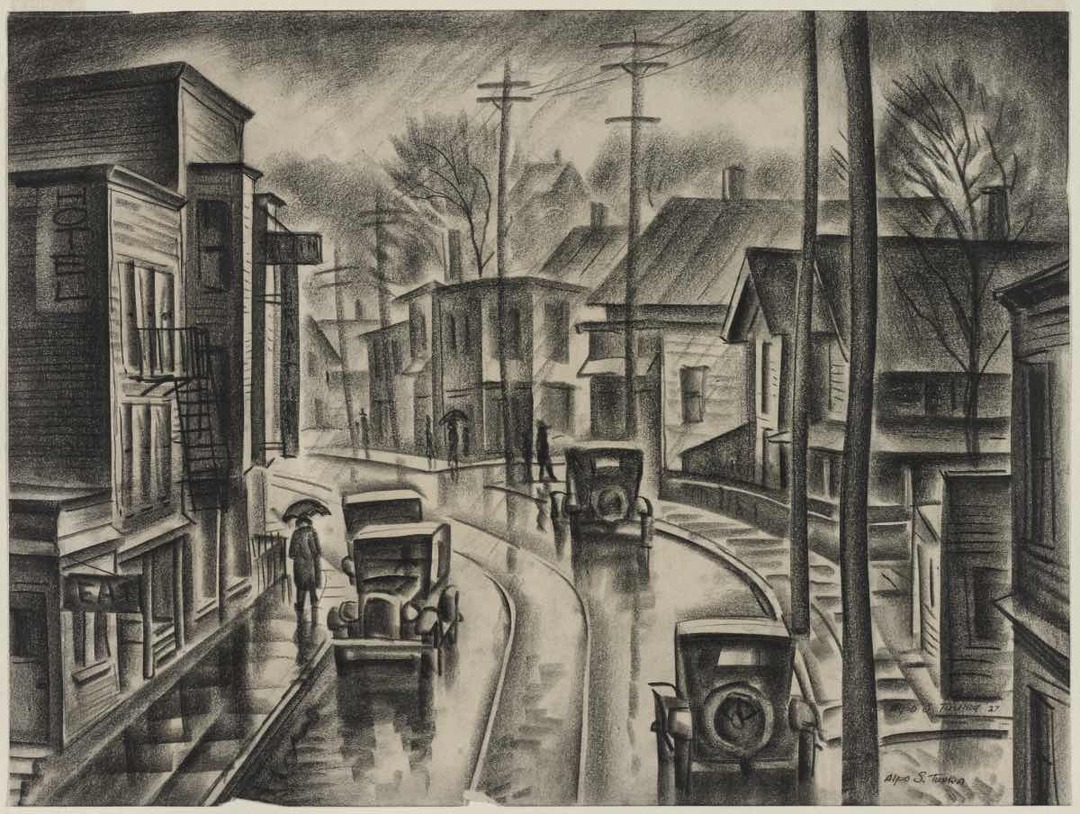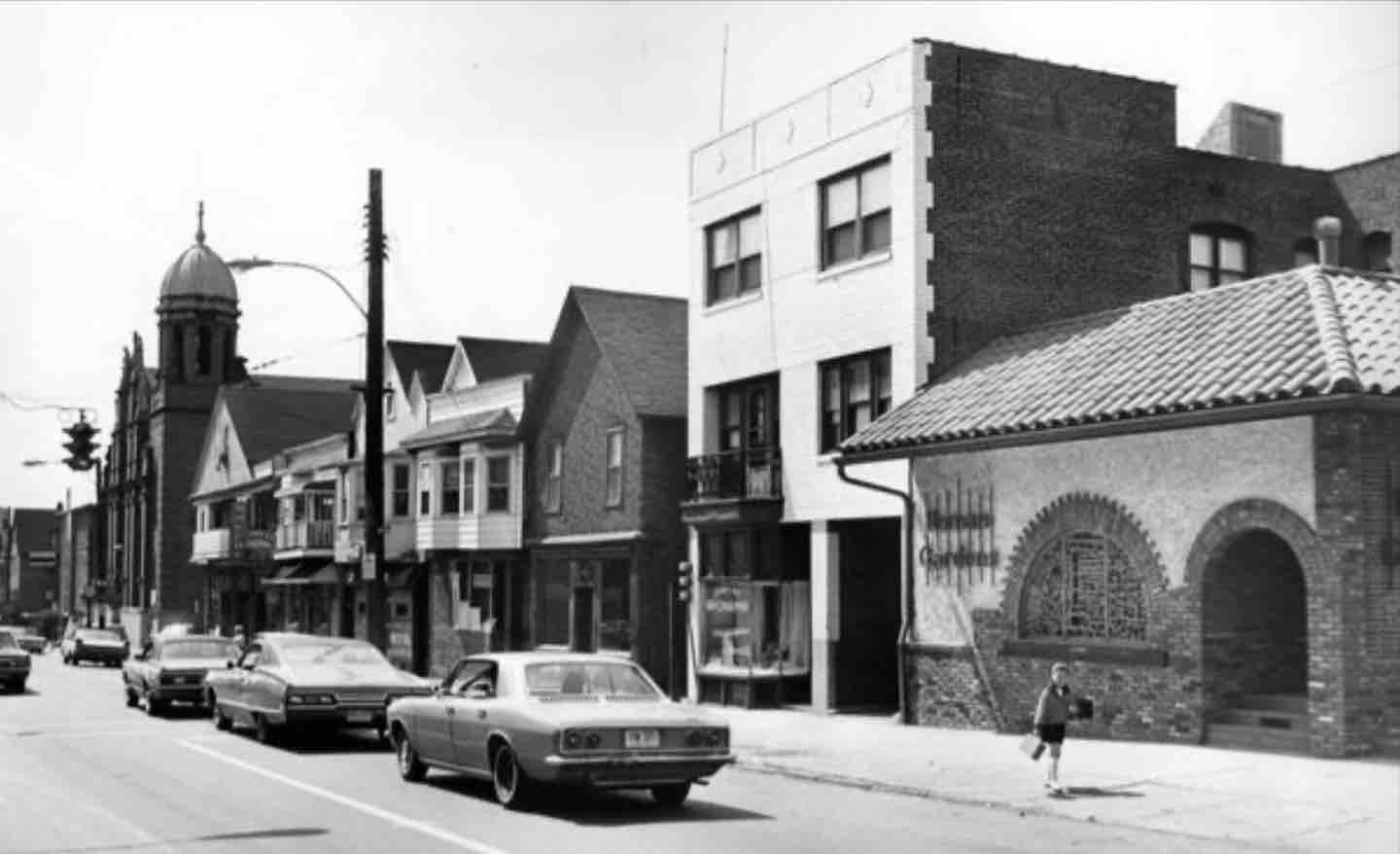
One of Cleveland's most enduring ethnic neighborhoods, Little Italy was established in the late nineteenth century by immigrants largely from the Italian villages of Ripalimosani, Matrice, and San Giovanni in Galdo in the province of Campobasso—then part of the region known as Abruzzi e Molise. Giuseppe Carabelli, an Italian artisan, came to Cleveland via New York to open a sculpting and stone masonry business. Carabelli's early employees developed reputations as expert stonemasons due to their contributions to monumental works at nearby Lake View Cemetery. In the 1890s and 1900s, numerous Italian families took up residence to the south of the cemetery.
Other Italians moved into the enclave from Big Italy, a much larger district that had developed beginning in the 1880s along Orange and Woodland avenues and around the old Central Market, where a heavily Sicilian population engaged in the produce trade. By the early twentieth century, Big Italy was among the most densely populated districts and suffered increasingly poor living conditions. Hundreds of dwellings were also razed in the 1920s to expand the New York Central Railroad and the Northern Ohio Food Terminal. Those who were able to leave sought new homes on the Near West Side and in Kinsman, Collinwood, and Little Italy.
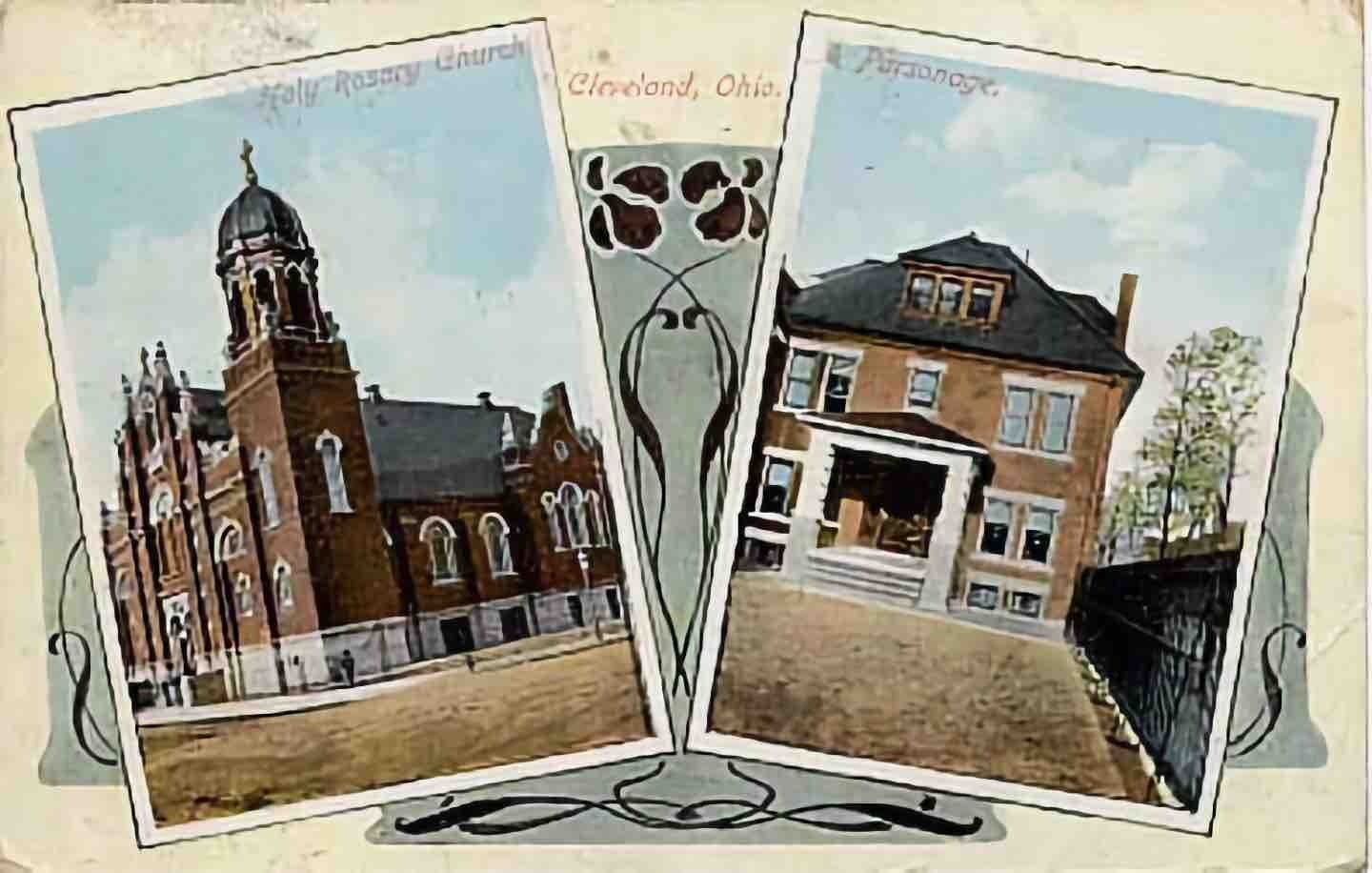
Neighborhood life in Little Italy revolved around both Holy Rosary Church and Alta House. Holy Rosary parish was established by the Cleveland Catholic Diocese in 1891 when the Scalabrini Fathers were summoned from Italy to serve Cleveland's eastern Italian residents. During the ensuing years, the parish grew, built two churches, and served as the religious and social hub of the neighborhood.
The Alta House began as a nursery and kindergarten program for the neighborhood. Carabelli approached the agency about expanding social services to the community. By 1898, contributions from John D. Rockefeller provided programs and facilities in the name of his daughter, Alta, to serve the immigrant community as it adapted to life in a new city. Although some local commentators were already pointing to these institutions' declining neighborhood base as early as the 1930s, both Holy Rosary and Alta House remained important religious and social centers in a neighborhood that was not going to empty out.
In the 1950s and 1960s, freeway construction and urban renewal destroyed what was left of Big Italy. In contrast, Little Italy was comparatively stable, though it gradually lost Italian families to Cleveland’s eastern suburbs. The neighborhood also experienced a period of serious racial conflict during the 1960s and 1970s, when opposition to school integration and to the presence of African Americans in and around the neighborhood sometimes erupted into violence.
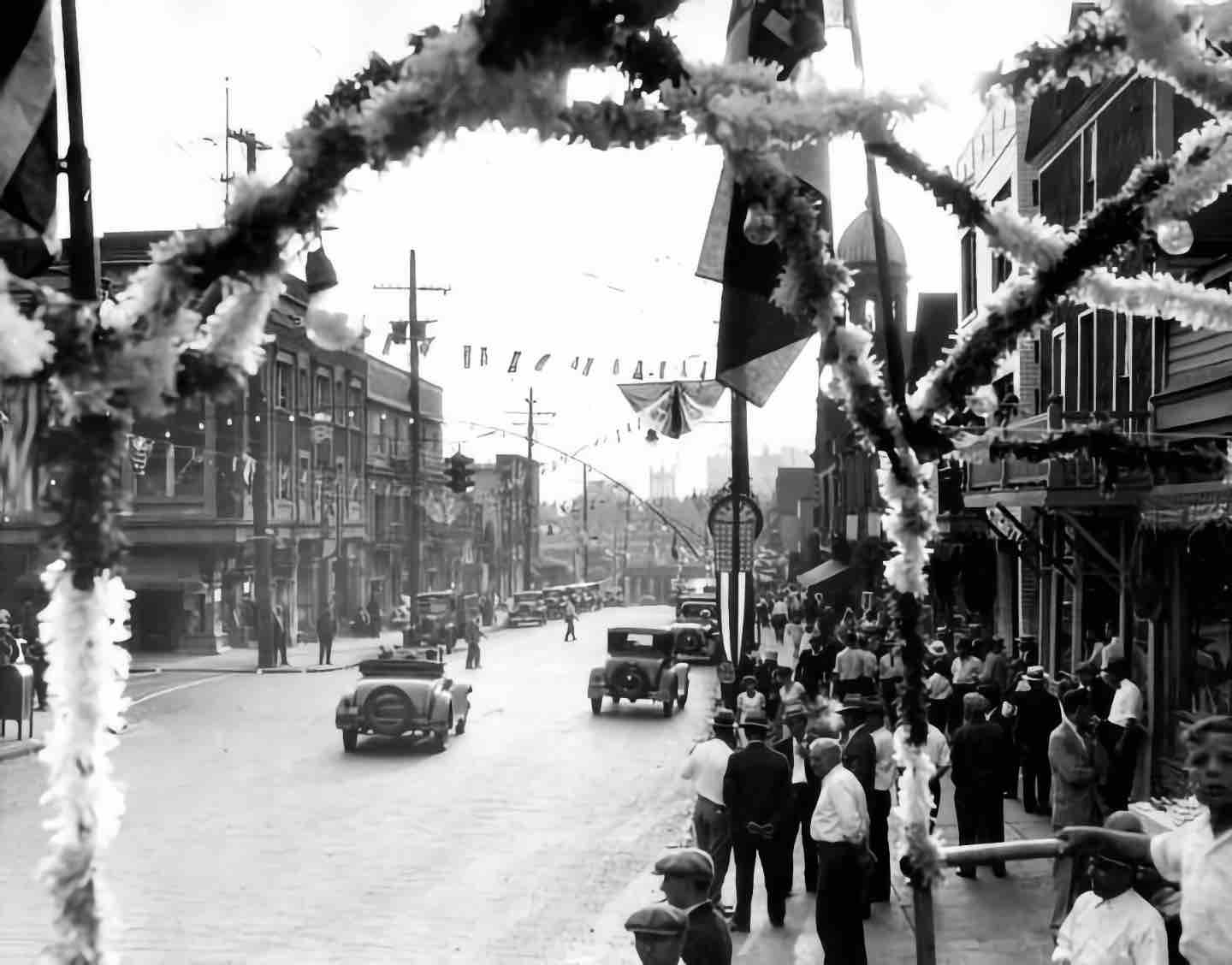
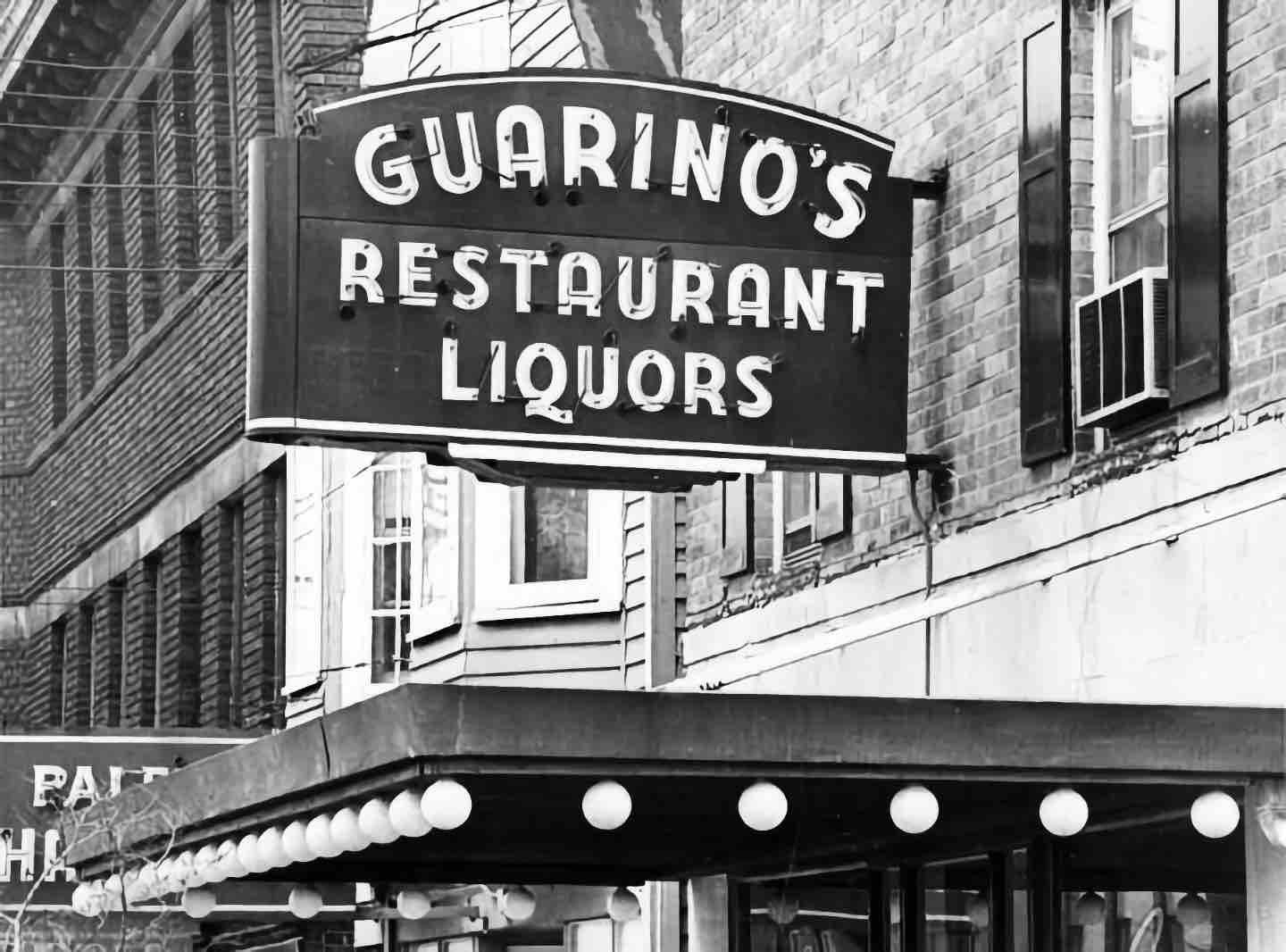
In those same years, however, Little Italy attracted increasing outside attention. The Feast of the Assumption, first observed in 1898, attracted ever larger crowds in the 1950s and 1960s, introducing more visitors to the neighborhood's bakeries and restaurants. A few such businesses, notably Presti's and Guarino's, dated to the early decades of the twentieth century. As many Italians moved to the suburbs, a number of Little Italy's small, neighborhood-oriented shops yielded to restaurants that attracted Greater Cleveland residents, students and employees in nearby University Circle, and tourists—a trend that accelerated in the 1980s. Thus, even as residents of Italian descent became a minority by the end of the century, Little Italy remained Cleveland’s most visible center of Italian heritage.
Audio
Images