<?xml version="1.0" encoding="UTF-8"?>
<feed xmlns="http://www.w3.org/2005/Atom">
  <title type="text">Cleveland Historical</title>
  <updated>2026-04-18T02:24:02+00:00</updated>
  <generator uri="http://framework.zend.com" version="1.12.20">Zend_Feed_Writer</generator>
  <link rel="alternate" type="text/html" href="https://mail.clevelandhistorical.org/"/>
  <link rel="self" type="application/atom+xml" href="https://mail.clevelandhistorical.org/items/browse?output=rss2"/>
  <id>https://mail.clevelandhistorical.org/</id>
  <author>
    <name>Cleveland Historical</name>
    <uri>https://mail.clevelandhistorical.org</uri>
  </author>
  <link rel="hub" href="http://pubsubhubbub.appspot.com/"/>
  <entry>
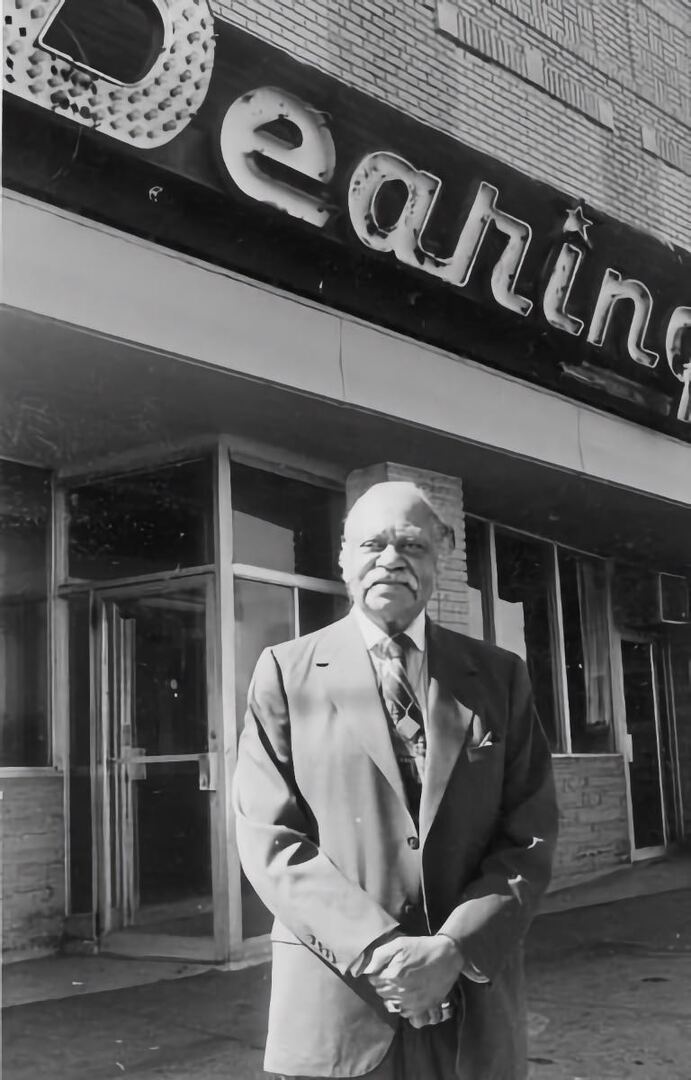
    <title type="html"><![CDATA[U. S. Dearing: Cleveland&#039;s  “Mister Restaurant”]]></title>
    <summary type="html"><![CDATA[<p><strong><em>In 1956, the <i>Call & Post</i>, Cleveland’s weekly African American newspaper, praised a leading light in the city’s restaurant field: “There is a double-star attraction featured by U. S. Dearing ... which has attracted the happy attention of approximately 65,000 Clevelanders during the past six months. Dearing’s double-feature is not a song and dance team or a couple of nationally famed stage stars; it is his Golden Brown Fried Chicken and his Hickory Smoked Barbecue.” So good was Dearing’s food that his wife, said to be a “fine cook” in her own right, confided to the paper that she usually served the restaurant’s food at parties in their 783 East Boulevard home: “I find it just too difficult to match the cooking that comes out of my husband’s kitchens,” she exclaimed.</em></strong></p><img src="https://mail.clevelandhistorical.org/files/fullsize/eaf4757cad966edd111dcd2665e4ac21.jpg" alt="U. S. Dearing Outside His Last Restaurant" /><br/><p>Born in 1903 in Washington, Virginia, in the foothills of the Blue Ridge Mountains, Ulysses S. (“Sweets”) Dearing was abandoned at birth and raised by his uncle in a tarpaper shack. At age 14 he joined the Great Migration, arriving in Pittsburgh with no money and no formal education. After a stint working in a Carnegie Steel mill and as a butler, Dearing opened his own restaurant in the Hill District before buying and operating a small hotel there in the early 1930s. Soon thereafter, Dearing tried to open a restaurant and hotel in the rural outskirts of the city but suffered a flood that, with the weight of the Great Depression, returned him to financial ruin. </p><p>As a result, Dearing left the Steel City for the Forest City in 1932. According to a story he told often, Dearing arrived in Cleveland with 97 or 98 cents in his pocket, which he said he threw on the sidewalk after getting off the bus at East 107th Street and Euclid Avenue because he decided someone else might need it more than he. Over the next two years, Dearing worked as a short-order cook before eventually landing a job as the manager of the popular, Green Book–listed <a href="https://greenbookcleveland.org/locations/cedar-gardens/">Cedar Gardens</a> restaurant at 9706 Cedar, a Harlem-inspired “black and tan” club where jazz music brought the races together. There he earned the nickname “Prince of Green Pastures” because Cedar Gardens was the pulsing heart of an emerging upscale Black nightlife district that assumed this name upon the death in 1935 of Black actor Richard B. Harrison, beloved for his starring role in the Broadway hit <i>Green Pastures</i>.</p><p>Over the next decade, Dearing managed other entrepreneurs’ ventures, all of them featured in the <i>Green Book for Negro Motorists</i>, while struggling to launch his own. He managed Jack Hecht’s Cedar Gardens (1933–37), Benny Mason’s <a href="https://clevelandhistorical.org/items/show/967">Cedar Country Club/Mason's Farm</a> in Solon (1938–42), and Mason’s <a href="https://greenbookcleveland.org/locations/blue-grass-club/">Blue Grass Club</a> (1943–45). During his tenure at Mason’s Farm, Dearing briefly owned two restaurants of his own. First, he operated Dearing’s Tasty Shop (1938–39), formerly the <i>Green Book</i>–listed <a href="https://greenbookcleveland.org/locations/the-chicken-coop/">Chicken Coop</a>. Then he bought the Park Avenue Restaurant at 5622 Woodland in 1941 but owned it for less than a year. Dearing then opened his next Dearing’s at 9708 Cedar (next to Cedar Gardens) in the former Palace Cafe in 1943, but within a few months he had moved a block to the former site of <a href="https://greenbookcleveland.org/locations/club-ron-day-voo/">Club Ron-Day-Voo</a> at 9804 Cedar, where he remained until 1945. </p><p>Following the end of World War II, Dearing finally hit his stride, entering what was to turn out to be a nearly four-decade run. In 1946, he opened his newest Dearing’s restaurant at 1035 East 105th Street. His move to 105th, the main commercial thoroughfare running through Glenville, placed Dearing’s among the vanguard of Black-owned businesses in a neighborhood that was soon to transform from one of the city’s prime Jewish communities into the so-called “Gold Coast,” which supplanted “Green Pastures” as the most coveted address for upwardly mobile African Americans. For several years he shared his block with other illustrious Black-owned establishments, including <a href="https://clevelandhistorical.org/items/show/882">Cafe Tia Juana</a>, <a href="https://greenbookcleveland.org/locations/gold-coast-tavern/">Gold Coast Tavern</a>, and <a href="https://greenbookcleveland.org/locations/mercury-bar/">Mercury Bar.</a></p><p>Within a few years, Dearing had expanded to four locations that included the dining rooms Alonzo Wright’s <i>Green Book</i>–listed <a href="https://greenbookcleveland.org/locations/carnegie-hotel/">Carnegie</a> and <a href="https://clevelandhistorical.org/items/show/636">Majestic</a> Hotels, as well as in Club Amvets, which resurrected a former Dearing’s location at 9804 Cedar. He advertised citywide delivery service by 1949, although this effectively meant only a few square miles of the East Side at a time when the vast majority of African Americans still lived in either Cedar-Central or Glenville. Thereafter, with his own restaurant’s “shack fried chicken” and barbecued ribs having become wildly popular, Dearing scaled back to concentrate solely on his Glenville dining room. </p><p>Open 24 hours a day, Dearing’s flagship restaurant was known not only for its unforgettable fried chicken but also for its sumptuous Sunday dinners. One Sunday menu in 1953, for instance, included thirteen entree options — Roast Prime Rib of Beef Au Jus, Roast Young Hen Turkey with Gravy and Cranberry Sauce, Roast Loin of Pork with Candied Yams, Broiled Boston Lamb Chops on Toast Points, Baked Sugar-cured Ham with Fresh Fruit Sauce, Stewed Fresh Country Chicken Dublin Style, Roast Long Island Duckling with Stewed Apples, Sauce Baby Chicken Livers in Butter on Toast, Broiled Prime Boston Strip Steak with Mushrooms, Lobster a la Newburgh in Casserole, Saute Veal Sweet Breads with Fresh Mushrooms, Broiled Fresh Caught Lake Erie White Fish Maitre D’Hotel, Broiled Fresh Caught Red Snapper with Lemon Butter, and Fried Jumbo Frog Leg with Tartar Sauce — all modestly priced between $1.25 and $2.25. </p><p>The Glenville-based Dearing’s enjoyed a long run, proving so successful that Dearing began to expand with the assistance of his son U. S. Dearing Jr. In 1956, he opened Dearing’s Carry-Out Store, whose slogan was, “Your apartment is your dining room.” Between 1960 and 1970, Dearing’s added five additional locations: Dearing’s Chic-A-Rib Room (1960), later named Dearing’s Living Room Lounge, Mark I Lounge, Second Choice Lounge, and finally the Candlelight Room, in the former Gem Snack Bar & Bar-B-Q at 10932 Superior Avenue; Dearing’s Carry-Out (1963) at 12019 Ashbury Avenue; Dearing’s Continental Lounge (1968) at 12804 St. Clair Avenue; Dearing’s Party Center (1969) at 17324 Harvard Avenue; and finally Dearing’s Catering (1970), later known as the Mark III Lounge and Carry-Out, at 11223 St. Clair.</p><p>Amidst his overall expansion, Dearing sold his original Glenville restaurant in 1962 to his employee Grace Sears, but just two years later he bought back the building to attempt a new concept, Mr. D’s Pancake House, which offered more than 80 different pancakes and, like his original restaurant, was open around the clock. Just a year later, he pivoted again, turning it into Mr. D’s Seafood, but then he abruptly closed down before the end of 1965. Perhaps these more specialized eateries fell short of expectations with pancakes mainly appealing in the morning hours and seafood costing more. </p><p>For the remainder of the decade, Dearing’s overall enterprise continued to prosper. However, no sooner had Dearing reached the zenith of being proprietor of his own local chain than he began to scale back. In 1971, he phased out the Continental, and he also shuttered his carry-out on East 105th following a devastating fire in 1972. Four years later, he closed the Mark III on St. Clair and, soon after on the advice of his doctor, in 1977 he also sold the Party Center to Edward Haggins and Dale Carter, with whom he shared his famous fried chicken recipe. Carter then carried on the Dearing’s tradition in Lee-Harvard, first as Dearing’s Lounge and then as Juva De’, which featured musical acts like the O’Jays.</p><p>Dearing, meanwhile, spent his remaining years concentrating on his Candlelight Room at Superior and East 110th, which operated until a few months before his death in 1984. Although only one of the Dearing’s buildings (the one in Lee-Harvard) stands today, Dearing’s legacy lives in the memory of many who remember his culinary prowess and warm hospitality. It is therefore little surprise that the <i>Cleveland Press</i> dubbed him “Mr. Restaurant,” rightly recognizing Dearing’s reputation as one of and possibly<i> the </i>foremost Black restaurateur of the twentieth century in Cleveland.</p><p><em><strong><a href="https://mail.clevelandhistorical.org/items/show/1073">For more (including 13 images) view the original article</a></strong></em></p>]]></summary>
    <published>2025-11-24T12:44:21+00:00</published>
    <updated>2026-04-17T19:17:43+00:00</updated>
    <link rel="alternate" type="text/html" href="https://mail.clevelandhistorical.org/items/show/1073"/>
    <id>https://mail.clevelandhistorical.org/items/show/1073</id>
    <author>
      <name>J. Mark Souther</name>
    </author>
  </entry>
  <entry>
    <title type="html"><![CDATA[Solomon Charles Waterford: The Crown Prince of Blues]]></title>
    <summary type="html"><![CDATA[<p><strong><em>Crown Prince Waterford, an Arkansas-born itinerant blues musician, toured the country in the mid-20th century. Waterford grew in popularity throughout Cleveland due to his performances at some of the area's top music bars and nightclubs.</em></strong></p><img src="https://mail.clevelandhistorical.org/files/fullsize/6d9cb2bbf7a37afadfbf18cc7c3bae76.jpg" alt="Headshot of Crown Prince Waterford" /><br/><p><p class="p1">Soloman Charles Waterford, better known as Crown Prince Waterford, was born on October 26, 1916, in Jonesboro, Arkansas. Growing up, music was a staple to Waterford’s family, and it played a massive role in Waterford’s upbringing. In an interview with <i>Call and Post</i> reporter John E. Fuster, Waterford recollected,“It was just natural that I was born with a song in my heart.”Waterford’s father attended Wilberforce University, where he was a part of the Glee Club, and his mother was a talented pianist, organist, and harpist. Waterford was one of five children in his family. All three of his sisters were musicians, two of whom were members of Cleveland's original “Wings Over Jordan” chorus. His sister Evanna Cotten sang and played the piano in many nightclubs in Cleveland. Waterford’s brother was a member of the Glee Club at Tuskegee Institute, where Crown Prince also attended.</p><p>Waterford’s formal music career began in 1936 in Oklahoma City, where he had lived for most of his late adolescence. His first professional experience playing in a band began when he sang with Leslie Sheffield’s Rhythmaires. He later joined Jay McShann’s band, which Waterford noted gave him a big boost in the music industry. By the late 1930s, Waterford joined Andy Kirk’s 12 Clouds of Joy as the band’s blues shouter after auditioning at Chicago’s Savoy Ballroom. Waterford took a brief hiatus from his music career to serve in the United States Army during the Second World War. After the war, his career skyrocketed when he gained popularity playing in many of Chicago’s nightclubs.</p><p>Waterford, who made his living as an itinerant musician, made his first known appearance in Cleveland sometime in 1950. At this point, he had recorded for several different labels like Hy-Tone in Chicago and King Records in Cincinnati. In May 1950, Waterford played his first show at the <a href="https://greenbookcleveland.org/locations/loop-lounge/">Loop Lounge</a>, a Prospect Avenue nightclub that attracted many notable musicians such as Dizzy Gillespie and Billie Holiday. From July to mid-August that same year, Waterford performed nightly at one of the most well-known clubs in Cleveland, <a href="https://greenbookcleveland.org/locations/cafe-tia-juana/">Cafe Tia Juana</a>, which was located on East 105th Street. After this six-week engagement, Waterford was informed by his booking agency that he was scheduled to appear in Kansas City where he would form his own band. From there Waterford and his band performed at the Municipal Auditorium in Kansas City, followed by an additional fifty-two one-night shows throughout the South and finally to the West Coast, ending in Los Angeles. </p><p>Waterford returned to Cleveland in December 1950 with his new orchestra, “The Four Crowns.”<span class="Apple-converted-space"> He</span> and the Four Crowns—which included Jimmy Saunders on the piano, Benny Miller on the tenor saxophone, Bobby Smith on the drums, and Richard Mitchell on the bass—played at the grand reopening of the <a href="https://greenbookcleveland.org/locations/maxs-bar-and-turf-club-lucky-bar/">Lucky Bar</a> on Cedar Avenue on December 29th. The Lucky Bar was excited to have Crown Prince Waterford perform and announced at their reopening that they planned to hold the Crown Prince Amateur Contest on Tuesday nights. Waterford played at Lucky Bar until mid-January the following year.</p><p>Waterford continued to frequent Cleveland's leading nightspots. In September 1951, he returned to Cafe Tia Juana, where he shared the stage with Ray Bradley and his Combo, who were playing nightly at the popular south-of-the-border-themed nightclub. Additionally, his sister Evanna Cotten (sometimes referred to as “Evanti”) played the solovox during the intermission of Waterford’s set. Waterford played at Cafe Tia Juana until November 1951. After he completed his engagement at Cafe Tia Juana, he went on another tour where he played in numerous cities in the South and ended in California. Waterford returned to Cleveland in late 1952, and by this time his Orchestra had disbanded and he began to play independently. Waterford, along with other local performers, was invited to play at <a href="https://greenbookcleveland.org/locations/jacks-musical-bar/">Jack’s Musical Bar</a> on Cedar Avenue in April 1953, where he reportedly gave an “in-command performance.” Waterford was the main act on the Friday night he performed and then played two additional shows the following Saturday. A <i>Call and Post</i> reporter noted that Crown Prince arrived at Jack’s Bar, “Big, handsome, and in his finely tailored full dress suits of various colors.”</p><p>Waterford’s role in the music and nightclub scene extended beyond Cleveland and into the Cuyahoga Valley. Waterford played at <a href="https://greenbookcleveland.org/locations/lake-glen/">Lake Glen</a> Country Club in Peninsula, twenty-six miles south of Cleveland, every weekend from July to September of 1957. After his time at Lake Glen, Waterford took a road trip back to Oklahoma to visit his parents, and then he returned to Cleveland where he played several smaller shows at places like Wade Park Avenue’s Rufus Nelson’s Blackstone Cafe. In 1958, he recorded the first 45 records for Plaid, one of the house labels started by Tom Boddie, an African American Clevelander who went on to open Boddie Record Company in the Union-Miles neighborhood a few years later. Waterford returned to Lake Glen in August 1959, ending his weekend performances the following month. He played at several small Cleveland nightclubs after leaving Lake Glen. All mentions of Waterford in the <i>Call and Post</i> cease after 1961. As styles of music were evolving at this time Crown Prince attempted to become a “twist” artist in 1962 and recorded an album under the Orbit Record label, with his band the Twistologists.</p><p>As new styles and new artists emerged, Crown Prince Waterford left the music industry, became ordained as Reverend Charles Waterford, and moved to Florida in 1965. Rev. Waterford successfully set up several churches in northern Florida. Despite leaving his blues days behind, Waterford continued singing and recorded a gospel album titled <i>The Reverend Waterford Sings. </i>After he retired from the ministry, he briefly returned to his blues days when he performed at the Springing the Blues Festival in Jacksonville Beach in 2002.</p><p>Waterford passed away in Jacksonville at the age of 90 in 2007. From blues shouter to gospel artist, Crown Prince Waterford is remembered nationally and locally in Cleveland for his distinctive style of singing and the aura of royalty that gave him none other than the stage name, Crown Prince.</p><p><em><strong><a href="https://mail.clevelandhistorical.org/items/show/1056">For more (including 4 images) view the original article</a></strong></em></p>]]></summary>
    <published>2025-04-08T14:01:33+00:00</published>
    <updated>2026-04-17T19:17:43+00:00</updated>
    <link rel="alternate" type="text/html" href="https://mail.clevelandhistorical.org/items/show/1056"/>
    <id>https://mail.clevelandhistorical.org/items/show/1056</id>
    <author>
      <name>Bali White</name>
    </author>
  </entry>
  <entry>
    <title type="html"><![CDATA[Gay Crosse: From Big Band Leader to Be-Bop Star]]></title>
    <summary type="html"><![CDATA[<p><strong><em>“Cleveland won’t appreciate Gay Crosse until he leaves here, plays the East, makes a success, then comes back.”</p><p>— Louis Jordan, 1946</em></strong></p><img src="https://mail.clevelandhistorical.org/files/fullsize/b8f79fcb0d5787d19405a01e79682b8a.jpg" alt="Sylvester &quot;Gay&quot; Crosse" /><br/><p>Sylvester G. Crosse, known to many as Gay Crosse, was born in 1916 in Mobile, Alabama. The exact year that Crosse and his family arrived in Cleveland is unknown. However, by the early 1930s, Crosse attended Central High School, where he played in the school's marching band. Crosse was known for being a talented vocalist and saxophonist who had the ability to charm any crowd. Two years after he graduated high school in 1934, Crosse and his band were under contract with the Amusement Service Bureau, which scheduled a small tour for Crosse and his orchestra to play at different local events and venues.</p><p>Crosse’s career as a musician in Cleveland skyrocketed in the 1940s. Crosse’s band, by then known as Gay Crosse and His Hellions, had a Saturday night residency at <a href="https://greenbookcleveland.org/locations/maxs-bar-and-turf-club-lucky-bar/">The Lucky Bar</a>, sometimes called “The Lucky Room,” at 9812 Cedar Avenue from November 1941 until 1944. Crosse and his orchestra then played a six-week engagement at the newly opened <a href="https://greenbookcleveland.org/locations/blue-grass-club/">Blue Grass Club</a> located on the second floor of 2173 East 55th Street from December 1944 to February 1945. After his successful six-week engagement at Blue Grass Club, Gay Crosse and His Hellions were given a contract by Music Corporation of America (MCA), one of the largest agencies at the time with offices in London, New York, Chicago, Dallas, and Cleveland. Crosse returned to Blue Grass Club in October 1945 and played for a total of 27 months before parting ways in February 1948 to pursue other engagements. While Crosse grew the crowd of patrons at the Blue Grass Club during his two-year residency, he was also coming into national prominence when Crosse’s idol “the King of the Jukebox” Louis Jordan made him his protege in 1946. Jordan told a Call & Post reporter backstage at the Palace Theater, “Cleveland won’t appreciate Gay Crosse until he leaves here, plays the East, makes a success, then comes back.” Louis Jordan gave Crosse advice throughout his musical career and the two remained friends for many years.</p><p><p class="p1">After Gay Crosse and his band left Blue Grass Club in 1948, they began touring in July 1948 and were placed under new management with the Mason James Agency of Asheville, North Carolina. This tour was comprised of several one-night shows in Ohio, Pennsylvania, Virginia, North Carolina, South Carolina, Kentucky, Tennessee, and Alabama. Gay Crosse’s tour band included pianist Charlie Ross,<span class="Apple-converted-space">  </span>bassist John Lathan, vocalist Walter “Mouse” Carson, trumpeter Eddie Harris, and an additional saxophonist Baron Lee. After their tour ended in the fall, Crosse and his band returned to Cleveland and played several nightclub venues. In 1949 Crosse and his band now known as Gay Crosse and his Good Humor Six landed a record deal with Capitol Recording Company. Crosse and his Good Humor Six released their first record for the label titled “Light Up and Relax.” At this time, Crosse noted that his band was trying to abandon the “Louis Jordan” style which they had come to be associated with, for a more modern be-bop style of music arranged by the band's pianist, Charlie Ross.</p><p><p class="p1"><span class="s1">Crosse played several shows at Frolic Show Bar, a “black-and-tan” establishment in Detroit’s midtown in the winter of 1949. In early 1951, Crosse and his Good Humor Six briefly played at a popular club in Chicago called the Brass Rail and then made their way to Camden, New Jersey, and performed as the house band at Chubby’s, a popular restaurant and nightclub. That same year, John Coltrane began to play the tenor saxophone for the Good Humor Six. In March 1951, with the band's newest edition, the Good Humor Six played an extended engagement at <a href="https://clevelandhistorical.org/items/show/634"><span class="s2">Gleason’s</span></a> </span><span class="s3">located at 5219 Woodland Avenue. From June to early July of that same year,<span class="Apple-converted-space">  </span>the band played a nightly show at Prospect Avenue’s<span class="Apple-converted-space">  </span><a href="https://greenbookcleveland.org/locations/loop-lounge/"><span class="s2">Loop Lounge</span></a></span>. Crosse and the Good Humor Six then returned to The Lucky Bar for the remainder of that summer. The band at this time which included John Coltrane also welcomed new members late in 1951. Specks Wright joined the band as a drummer and had previously played with Dizzy Gillespie. Crosse also welcomed a new trumpeter, James Robertson<span class="Apple-converted-space">, </span>who once played with Earl Hines’s band. These new members along with the band’s veteran musicians, played at <a href="https://greenbookcleveland.org/locations/towne-casino/"><span class="s2">Towne Casino</span></a>, a popular mixed nightclub on Euclid Avenue near 105th Street, from January to February 1952. In early March to May 1952 Crosse and the Good Humor Six played at The Rose Room, previously known as <a href="https://greenbookcleveland.org/locations/heat-wave/"><span class="s2">Heat Wave</span></a> inside Cleveland’s <a href="https://clevelandhistorical.org/items/show/636"><span class="s2">Majestic Hotel. </span></a>The band played their new record, “Fat Sam From Birmingham” recorded for the Gotham label, which was a popular hit at the Rose Room. The band played at Club Ebony, sometimes referred to as the <a href="https://greenbookcleveland.org/locations/ebony-lounge/"><span class="s2">Ebony Lounge </span></a>between East 69th and Cedar Avenue in November 1952. Crosse and his Good Humor Six played  nightly shows at Club Congo, located on Woodland Avenue beginning in March 1953 to May 1954
<p class="p1">While flourishing as a talented musician in Cleveland, Crosse decided to grow in prominence as a successful businessman. Crosse was the owner of<a href="https://greenbookcleveland.org/locations/gays-hotel-and-gays-drive-in-bar-b-q/"><span class="s1"> Gay’s Hotel and Drive-In Bar-B-Q</span></a> which was located at 2117 East 83rd. Gay’s Hotel in its early years was referred to as “Gay’s Tourist Home” which opened in April 1954. <a href="https://greenbookcleveland.org/locations/musicians-and-entertainers-club/"><span class="s1">Gay’s Musicians and Entertainers Club</span></a> was located next door to Gay’s Hotel at 2123 East 83rd and also opened that same year. Gay’s Drive-In Bar-B-Q opened in the rear of Gay’s Hotel in 1956. </p><p>It appears that Crosse and the Good Humor Six had parted ways in the late ’50s. This may be due to Crosse’s focus turning more towards his business pursuits rather than continuing his musical career. Gay Crosse experienced ongoing health issues during the later years of his life, and in 1971, at the age of 54, Crosse passed away due to complications during an open heart surgery performed at the Huron Road Hospital. Gay Crosse established a successful career as a popular jazz musician, both locally and nationally. Crosse became one of Cleveland’s most successful African American businessmen in the mid-twentieth century. His ability to entertain and charm the patrons of the numerous nightclub locations in Cleveland helped maintain Crosse’s image as one of the city’s best musicians of the time.</p><p><em><strong><a href="https://mail.clevelandhistorical.org/items/show/1053">For more (including 4 images) view the original article</a></strong></em></p>]]></summary>
    <published>2025-03-22T22:40:54+00:00</published>
    <updated>2026-04-17T19:17:43+00:00</updated>
    <link rel="alternate" type="text/html" href="https://mail.clevelandhistorical.org/items/show/1053"/>
    <id>https://mail.clevelandhistorical.org/items/show/1053</id>
    <author>
      <name>Bali White</name>
    </author>
  </entry>
  <entry>
    <title type="html"><![CDATA[Charles W. Chesnutt: A Life Devoted to Battling America&#039;s &quot;Color Line&quot;]]></title>
    <summary type="html"><![CDATA[<p><strong><em>"I should not want this fact [of my race] to be stated in the book, nor advertised unless the publisher advised it; first, because I do not know whether it would affect its reception favorably or unfavorably, or at all; secondly, because I would not have the book judged by any standard lower than that set for other writers. If some of these stories have stood the test of admission into <em>The Atlantic</em> and other publications where they have appeared, I am willing to submit them all to the public on their merits." – Letter of Charles W. Chesnutt to Houghton, Mifflin & Co., Summer of 1891.</em></strong></p><img src="https://mail.clevelandhistorical.org/files/fullsize/0796553bef18cf7af45666eb9e56ba46.jpg" alt="Charles W. Chesnutt in his Library" /><br/><p>Charles W. Chesnutt was the first commercially successful American fiction writer of mixed race. While he experienced much early success with the short stories he penned in the last two decades of the nineteenth century, his efforts at the beginning of the twentieth century to become equally successful as a novelist failed because of the unwillingness of the American public to buy a sufficient number of his books. America was at that time just not yet ready for novels that exposed at length and in great detail the ugliness and ridiculousness of the "color line" that then existed in the U.S., a line which — though applied in different ways in the North and South — nonetheless in all places limited persons of color from fully exercising their rights and liberties, simply because of the color of their skin.
After the commercial failure in 1905 of his third novel, <i>The Colonel's Dream</i>, Chesnutt, at age 47, gave up on <em>his</em> dream — with that novel being the final one published during his lifetime. Had Chesnutt's contemporary, Mark Twain, been similarly discouraged in his literary career at a similar age, many of his novels that we have all come to know, love and cherish, would never have been written. Following Chesnutt's death 27 years later in 1932, his works were, for decades, largely forgotten. In the 1960's, they experienced a short-lived revival, but it wasn't until the early twenty-first century that critics and readers alike finally began to recognize the literary brilliance of his work and his unique insights into the problems of race in America in the post-Civil War/pre-Harlem Renaissance period.
Charles Waddell Chesnutt was born in Cleveland, Ohio, on June 20, 1858. His parents, Andrew Jackson Chesnutt and Anna Marie Sampson, both of whom were biracial and free, had fled their hometown of Fayetteville, North Carolina in 1856, because the rights and liberties of free blacks living in the South were being severely curtailed in that decade which led up to America's Civil War. While Andrew Chesnutt initially headed to Indiana to live with an uncle there, Anna Sampson, her mother Chloe and her stepfather Moses Harris headed to Cleveland where, since the early 1850s, biracial families from North Carolina and other Southern states had been settling in an area of the city near Hudson (East 30th) Street, north and south of what is today Central Avenue. There, these families — almost all of whom were headed by men who were carpenters, masons or other tradesmen — had formed a small but vibrant biracial community amid a white population composed mostly of German and Irish immigrants. Among the biracial families who had settled there earlier in the decade was the Cicero M. and Sarah Harris Richardson family. Cicero was a mason by trade who later became a "plasterer." Census and other public records suggest that Sarah was very likely a niece of Moses Harris.
Upon arriving in Cleveland, Moses Harris, who was a carpenter by trade, purchased (according to County tax records) a house on Hudson Street that was just a few houses from the home of Cicero and Sarah Richardson. The following year, Andrew Chesnutt left Indiana, moved to Cleveland, married Anna Marie Sampson, and became a member of the Harris household. A year later, Charles Waddell Chesnutt was born. Except for parts of the years 1859 and 1860, when his parents temporarily relocated to Oberlin, Ohio, Charles Chesnutt spent the first eight years of his life growing up in his grandparents' house on Hudson Street. He likely played with both black and white children who lived nearby and, though there are no extant school records to confirm it, he likely attended, at least for several years, nearby Hudson Street School (later, Sterling School), an integrated public elementary school which was founded in 1859 and which stood on the southwest corner of Sibley (today, Carnegie) Avenue and Hudson, less than a quarter-mile walk from his home.
In these early years of his life in Cleveland, Charles Chesnutt would have also been witness to significant events in the neighborhood like the construction in 1864 of the original Shiloh Baptist Church on Hudson, just down the street from his grandparents' house. Undoubtedly, he would have thought it cool that his relative and neighbor, Cicero Richardson, a founder of that church, played a significant role in the ceremonial laying of the cornerstone for the new church by "the order of colored masons" on August 1st of that year. Moreover, in addition to the impact upon him of this event and his likely attendance at Hudson Street school, young Chesnutt would have likely also been impacted, or shaped, by the nearby Richardson family, which occasionally would expand with visits by Sarah Richardson's mother and siblings who had moved to Cleveland in the late 1850s, where they lived on Ohio Street (today, Carnegie Avenue near East 14th Street). He perhaps would have been most affected by visits from Sarah's brilliant younger brothers, Robert and Cicero Harris, who, in the early 1860s, were young adults. These brothers, just a few years later, would play an even greater role in the shaping of Charles Chesnutt.
In 1866, shortly after the end of the Civil War, Andrew Chesnutt, who had served in the Union Army, was persuaded by his white father, Wadell Cade, to move his family back to Fayetteville where his son Charles attended Howard School, a segregated school for black children. Robert Harris, that same brilliant brother of Sarah Richardson, who, like the Chesnutts, had also moved back to Fayetteville after the war, served as the first principal of that school. Harris recognized Charles' talents as a student, and, when Charles graduated early from Howard School at the age of 14, Harris recommended him to his younger brother Cicero, a teacher at Peabody School in Charlotte, for an assistant teacher position. After teaching for three years in Charlotte under Cicero Harris' guidance, Charles was called back to Fayetteville in 1875 by Robert Harris to become a teacher at Howard school which had been converted into the State Normal School for training black teachers.
The next eight years were busy and significant ones for Charles Chesnutt. In 1877, he married fellow teacher, Susan Yu Perry, and by 1880 the two were parents of daughters Ethel and Helen. In that same year, principal Robert Harris, the man who had had enormous influence on the shaping of Charles Chesnutt, died suddenly. Chesnutt, at age 22, was picked to succeed him as principal of the State Normal School. The job paid well and was prestigious, but Chesnutt soon became dissatisfied with it. As a journal he kept from 1874 to 1882 noted, he had long fantasized of moving back to the North where he believed more opportunities, including the possibility of becoming a writer, awaited him.
So, in the spring of 1883, Charles Chesnutt resigned his position as principal of the school in Fayetteville and moved to New York. There he obtained a job as a reporter for Dow, Jones & Co., but, after six months, he decided that Cleveland, where he had been born and had spent his early years, would be a better fit. He moved to Cleveland in the fall of that year, obtaining employment as a clerk in the accounting department of the newly organized Nickel Plate Railroad. The following year, his wife and children (including his son Edwin, born while Chesnutt was away in New York) joined him in Cleveland where they all moved into a rented house on Wilcutt Avenue (today, East 63rd Street) in the Central (today, Fairfax) neighborhood.
From 1883 to 1888, the Chesnutts rented several different houses in the Fairfax and Central neighborhoods. Finally, in 1888, they were able to purchase their first house, one that was located on Brenton (East 73rd) Street, just south of Cedar Avenue, an upscale area of the Central neighborhood. In these early years that followied his return to Cleveland, Chesnutt was very busy with new employments, both as a stenographer (for which he had self-trained in North Carolina) and as an attorney — which he began practicing after "reading" the law and receiving the highest test score on the Ohio bar exam in 1887. Still, despite all this, he managed to find time in 1885 to turn his atttention to his dream job and in that year began writing for publication fictional stories about people of color learning how to exercise their rights and live their lives in the Reconstruction South.
In December 1885, Charles Chesnutt's first story (as an adult writer) was published. Titled "Uncle Peter's House," it was about a former slave who tried to build a nice house for his family but failed during his lifetime because of the predatory sharecropping system instituted in the South in the post-Civil War period. The story was purchased by the McClure newspaper syndicate and appeared in a number of newspapers in the country, including the Cleveland Herald. Over the next two years, Chesnutt wrote a number of other stories about the post-War South that appeared in various newspapers and magazines. In 1887, his recognition as a writer reached new heights when his story, "The Goophered Grapevine" appeared in the nationally-known <em>Atlantic Monthly</em>.
Thereafter, during the years 1887-1900, Chesnutt published forty-seven short stories in the <i>Atlantic </i>and other magazines and newspapers, some of these painting a graphic picture of life for newly freed slaves in the South and others showing how, even in the North, color mattered, albeit in different ways than in the South. In early 1899, two collections of his stories were published as books — one, <i>The Wife of his Youth</i>, consisting of stories about the "color line" in the North, and the other, <i>The Conjure Woman</i>, on stories of life for blacks in the post-war South. After these two books were published, William Dean Howell, an author himself and noted literary critic, praised Chesnutt, adding more glitter to his growing reputation as a great American writer.
After the successful debut of his first two books in 1899, Chesnutt sat down with his wife Susan and, after reviewing their family budget, they agreed that he could, for at least a two year period, close his attorney and stenographer offices and devote all of his time to his dream job of becoming a novelist. Over the course of the next two years, he wrote two novels that were published, <em>The House Behind the Cedars</em> (1900) and <em>The Marrow of Tradition</em> (1901). Each treated what was then a very sensitive subject — the first, intermarriage between a white man and a black woman, and the second — inspired by the Wilmington, North Carolina massacre of 1898 — white supremacy and violence against Southern blacks who sought to exercise their rights as citizens. Neither book sold well and both were panned by critics for being too moralistic and by angry white Southerners who claimed they were filled with lies. Chesnutt, after seeing the poor book sales and the negative reviews, decided it was time to step back and reopen his offices as an attorney and stenographer, which he did in the new Williamson Building in downtown Cleveland in early 1902.
As noted at the beginning of this story, Charles Chesnutt's novel writing all but came to an end several years later in 1905 with the publishing of <i>The Colonel's Dream</i>. For Chesnutt himself and certainly for his family, it may not have been the worst result because, in addition to allowing him to write what he wanted about the race problem in America, and how he wanted to write it, he also now became free to pursue other important matters of both a personal and professional nature, including becoming a member of and participating in the Rowfant Club's literary work in Cleveland in 1910 (after the Club had rejected his initial membership application on account of his race in 1904); supporting the founding in 1915 of the Playhouse Settlement House, which later was renamed Karamu House; corresponding at length with other black intellectuals; traveling with his family across the United States and around the world; and lecturing, whenever called upon to do so, on the problems of America's "color line," always delivering thoughtful opinions on how it might best be finally erased in this country. And Charles W. Chestnut continued in such activities for the rest of his life.
When he died peacefully in his house on November 15, 1932, at the age of 74, his death was front page news for the Plain Dealer. All in all, despite the existence of racism in America and its impact upon him as a biracial man, Charles W. Chesnutt led a very enviable and comfortable life. He owned a grand house in an upscale, integrated neighborhood; he was respected by his peers, both white and black, in Cleveland — something that he had often dreamed about as a young black man growing to adulthood in Fayetteville, North Carolina; and he witnessed all of his children going to college and obtaining the degrees that had been denied to him. (Three of his children attended and graduated from Ivy League schools.) Perhaps then, it would be fair and not inappropriate to say that who suffered most from the premature ending of Chesnutt's career as a novelist was not he but we, the American public, who have been deprived ever since of reading the best novels that he never wrote.</p><p><em><strong><a href="https://mail.clevelandhistorical.org/items/show/1052">For more (including 19 images) view the original article</a></strong></em></p>]]></summary>
    <published>2025-03-02T22:24:58+00:00</published>
    <updated>2026-04-17T19:17:40+00:00</updated>
    <link rel="alternate" type="text/html" href="https://mail.clevelandhistorical.org/items/show/1052"/>
    <id>https://mail.clevelandhistorical.org/items/show/1052</id>
    <author>
      <name>Jim Dubelko</name>
    </author>
  </entry>
  <entry>
    <title type="html"><![CDATA[Forest City Hospital: &quot;A Hospital For All&quot;]]></title>
    <summary type="html"><![CDATA[<img src="https://mail.clevelandhistorical.org/files/fullsize/35f9272e2d0be955d7ce6ffb822e96f5.jpg" alt="Architectural Rendering of Forest City Hospital, ca. 1954" /><br/><p>Forest City Hospital, located in the Glenville neighborhood, was considered Cleveland’s first fully interracial hospital when it opened in 1957. The site of the hospital was on the grounds of the old Glenville Hospital at 701 Parkwood Avenue, which was eventually entirely razed for the development of Forest City. This construction was made possible by the Forest City Hospital Association, which was formed in 1939 by physicians and community members who supported the creation of an interracial hospital that could effectively serve Cleveland's Black population and provide an institution where Black physicians could find steady work. Some of the prominent founding members of the Forest City Hospital Association included Dr. Ulysses Grant Mason Jr., Dr. Middleton H. Lambright, and Dr. Samuel Freedlander.</p><p>Throughout the decades preceding the opening of Forest City Hospital, there had been active discussion among Cleveland’s medical community and public advocacy from local civic organizations for the development of such a facility. In 1930, about 35 Black physicians practiced in Cleveland, with only five being employed securely as staff of the Western Reserve Society Medical School. The rest were forced to seek positions at institutions where they might be subjected to outright discrimination through unequal working conditions and unjust terminations. Many African American physicians reported that though they were forced to work long hours, it was not an uncommon occurrence not to work directly with a single patient over an entire shift as white patients would request to see a white doctor while Black patients were routinely denied care by institutions for a variety of reasons. Along with physicians who pushed for the creation of a hospital where they would be accepted fully and find solid work, the ever-growing Black population of Cleveland also exerted pressure on the established hospital systems. Between 1910 and 1940, Cleveland's African American population grew from 8,488 to nearly 85,000. This increase in population, and subsequently patients seeking medical care, elicited unsatisfactory responses from Cleveland hospitals. Some institutions established specific days that served as the only times when Black patients were even considered to receive care, while some institutions enacted policies whereby Black patients were forced to wait and receive care in the oldest wings of a building and be treated only using the oldest equipment.</p><p>These major problems in the treatment of Black physicians and the care available to the entire Cleveland Black community led to the establishment of the Forest City Hospital Association in 1939. Of the 39 founding members, nine were Black physicians hoping to spark the creation of a new institution free from racial discrimination and bias. The association searched for properties where they could either build a brand-new building or renovate an existing one. Eventually, the organization decided that the site of the old Glenville Hospital would be suitable as it was in a prime location to serve the Black community in Cleveland’s east side neighborhoods. Throughout the 1940s and into the 1950s, the Forest City Hospital Association worked closely with the Cleveland branch of the NAACP, which they viewed as the likeliest source of significant funding for the construction of a new interracial hospital. However, this proposed cooperation in the building of a medical facility would be fraught with dilemmas due to disagreements on exactly where and how such a project would be undertaken. Specifically, the NAACP was continually reluctant to commit any large sum of money towards the building of a new hospital as they had already recently invested in building two other hospitals to serve black communities in New York and Chicago, each of which had proved to be a financial drag on the NAACP. In May 1954, the NAACP voted to formally disapprove of plans presented by the Forest City Hospital Association to tear down the old Glenville Hospital and create a new building. This vote effectively ended the NAACP’s involvement in the initial funding of the new facility. Opportunely, the Forest City Hospital Association had gained favor in the public eye and forged connections with other Cleveland organizations willing to help fund the project. In 1954, the Cleveland Hospital Fund granted $404,000 to the Forest City Hospital Association, allowing it to break ground at the old Glenville Hospital site. In 1955, with construction just underway, Ohio Governor Frank J. Lausche launched a public subscription campaign in support of the hospital. This effort, along with other fundraising activities conducted by the Forest City Hospital Association, contributed an additional $641,000 to the total fund.</p><p>After just over two years of construction, Forest City Hospital officially opened its doors to patients on August 4, 1957, with Cleveland's <em>Call & Post</em> newspaper declaring the institution to be "A hospital for all." The hospital initially held 92 beds, but it would eventually become a 103-bed facility. Among the care offerings at Forest City Hospital were general practice and family care, surgery, gynecology, emergency services, and state-of-the-art X-ray and imaging services. In just its first year of operation, Forest City Hospital admitted over 2,500 patients, conducted over 1,300 surgical operations, took over 4,500 X-rays, and was the site of over 500 births. Of 53 physicians on staff, 26 were Black, as were most of the other hospital staff such as nurses and technicians. For its entire time in operation, Forest City Hospital served as an institution where anyone, regardless of race, could receive high-quality and timely medical care without risk of discrimination or segregation.</p><p>Forest City Hospital functioned comfortably for nearly a decade until 1967, when concerns over the building’s ability to add more beds and facilities to accommodate an ever-growing population came to a head. For the next several years, the hospital embarked on a new fundraising campaign in an attempt to raise enough money to build a new expansion and effectively double the total amount of bed space. However, throughout the early 1970s total admissions fell and consistently occupied bed space declined, jeopardizing the plans for any new expansion. From the loss of this potential fundraising and the inability to renovate, the quality of services at Forest City Hospital reportedly fell. Moving forward, Forest City Hospital began to prioritize outpatient and supportive services, along with keeping a high-quality emergency care unit running. By the 1970s, nearly all medical organizations in Cleveland had removed major barriers targeting Black patients and healthcare workers from finding care and work. Coupled with the facilities of Forest City becoming outdated and with no hope of a renovation for the hospital, patients and physicians continually left for other Cleveland institutions. Beset by financial stress, low admissions, and a shortage of physicians and nurses, Forest City Hospital finally closed in 1978. Although it lasted barely over two decades, Forest City Hospital provided a crucial lifeline in an era of struggle for access to quality healthcare.</p><p><em><strong><a href="https://mail.clevelandhistorical.org/items/show/1022">For more (including 4 images) view the original article</a></strong></em></p>]]></summary>
    <published>2024-04-10T14:56:23+00:00</published>
    <updated>2026-04-17T19:17:43+00:00</updated>
    <link rel="alternate" type="text/html" href="https://mail.clevelandhistorical.org/items/show/1022"/>
    <id>https://mail.clevelandhistorical.org/items/show/1022</id>
    <author>
      <name>Andrew Zelina</name>
    </author>
  </entry>
  <entry>
    <title type="html"><![CDATA[Willie Pierson: A Builder of the Black Metropolis]]></title>
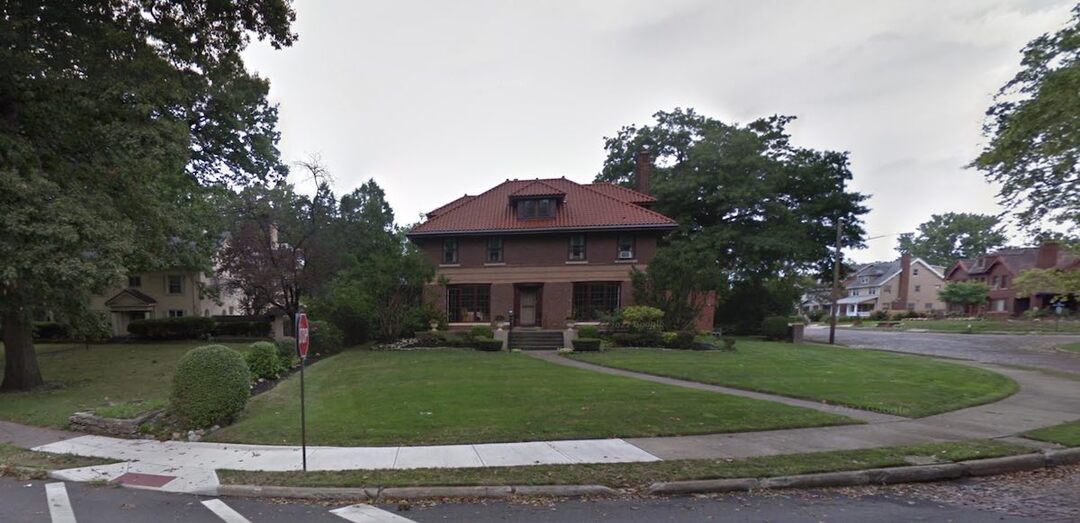
    <summary type="html"><![CDATA[<p><strong><em>At a 1947 testimonial dinner at the Phillis Wheatley Association to honor African American businessman Willie Pierson, John O. Holly, the president of Cleveland’s Future Outlook League, said, “If we had a few more Willie Piersons, this community would be almost self-sustaining.” Indeed, by investing in a number of businesses in the 1930s and ’40s with an eye toward creating opportunities in the city’s Black community, Pierson had become one of Cleveland’s most influential Black leaders of his time.</em></strong></p><img src="https://mail.clevelandhistorical.org/files/fullsize/eb5d09b1f8ee1b136b28bedca3f07bed.jpg" alt="Willie Pierson House" /><br/><p>Willie Pierson was born in Guthrie, Oklahoma Territory, in 1898. After serving in World War I, he migrated to Cleveland’s Cedar-Central neighborhood, where he operated a pool room. Over the ensuing years, he garnered a reputation as a “numbers racketeer” and, in the process, amassed considerable wealth. At a time when African Americans struggled to get access to credit, engaging in lotteries and other forms of gambling was a common way to circumvent systemic exclusion. But like his better-known contemporary Benny Mason who operated the famed <a href="https://clevelandhistorical.org/items/show/967">Mason’s Farm</a> club in Solon, Pierson would not simply grow wealthy but also use his wealth to invest in Black community advancement.</p><p>Pierson’s first noteworthy business venture followed the repeal of Prohibition. In 1934 he and Rodger Price, who would become his partner in numerous business ventures, opened the <a href="https://greenbookcleveland.org/locations/log-cabin/">Log Cabin Grill</a> at 2290 East 55th Street. The Log Cabin, styled in the manner of a “swanky hunting lodge,” became one of the most popular establishments in the heart of what many called Cleveland’s Harlem. Along with the <a href="https://clevelandhistorical.org/items/show/636">Majestic Hotel</a> across the street, the Log Cabin appeared in the <em>Negro Motorists’ Green Book</em> and attracted visiting celebrities such as Duke Ellington and Joe Louis. </p><p>With the exception of the Log Cabin, Pierson and Price poured their money into ventures that helped fellow African American entrepreneurs succeed in pursuing their own ambitions. In placing hiring power in African Americans' hands, they went beyond the Future Outlook League's call, "Don't Buy Where You Can't Work." In 1936, the men invested in the dream of Robert H. (Bob) Shauter to own his own drugstore. Shauter, a graduate of the Western Reserve University School of Pharmacy, had worked as a soda clerk in white-owned pharmacies but now had the opportunity to use his degree in his own drugstore, <a href="https://greenbookcleveland.org/locations/shauter-drugs/">Shauter Drugs</a>, at 9208 Cedar Avenue. When he was denied the opportunity in the early 1940s to open another pharmacy in the Reserve Building at Woodland and East 55th, Shauter turned to <em>Call & Post</em> publisher <a href="https://clevelandhistorical.org/items/show/686">W. O. Walker</a> for help. Walker decided to buy the Reserve Building to create a space where Black businesses and professional offices would not be sealed out on account of race. But Walker needed investors, and few in the Black community had significant capital. Two exceptions were Pierson and Mason, who joined him in forming the Woodland-55th Corporation, which purchased the Reserve Building and the Leiden Drug Co. inside it in 1943, in turn enabling Shauter to expand his business, which became Cleveland’s first Black-owned drugstore chain. </p><p>Indeed, Pierson situated himself as a facilitator of pioneering businesses. His financial support solved the problem of Black bowling leagues’ difficulty in gaining access to lanes in white-owned alleys. Piggybacking on Elmer Reed’s founding of the National Bowling Association, an umbrella for Black leagues, in 1939, Pierson and Price helped Reed start a ten-lane venue called <a href="https://greenbookcleveland.org/locations/united-recreation/">United Recreation</a> at 8217 Cedar Avenue in 1941. United Recreation was reputedly the first Black-owned bowling alley in the United States. Another pioneering African American business that Pierson supported was Sears Brothers Jewelry and Watchmaking School, which had been denied a renewal of its lease in the Prospect Fourth Building in downtown. Pierson and his associates welcomed John and Burl Sears in the Reserve Building in 1945, aiding what was likely the nation’s largest Black watchmaking school.</p><p>As he invested in Black enterprises, Pierson enjoyed growing prosperity. After years of living in a tiny tenement near Cedar and East 36th, he bought a sizable home in 1939 at 2304 East 89th Street and became a generous supporter of nearby Karamu House, an interracial arts-focused settlement. He also burnished his reputation as a sportsman by owning thoroughbred horses stabled at Thistledown. By 1943, Pierson purchased a tile-roofed brick mansion at the fork of East Boulevard and East 98th Street in the Glenville neighborhood. In doing so, he was in the vanguard of the emergence of East Boulevard as the most prestigious residential address in what African Americans came to call the “Gold Coast.” Just as discriminatory lending practices led some African Americans like Pierson and Mason to turn to illicit numbers activities to generate capital, they also sealed off suburbs from Black homeownership, making places like the “Gold Coast” the closest attainable equivalent.</p><p>Not every venture Pierson took on enjoyed success. Another wartime investment that might have been his greatest triumph ended up being his biggest failure. Around the same time that he moved to East Boulevard, Pierson committed $100,000 to start what was billed as the nation’s first Black-owned and -operated factory. The idea originated not in Cleveland but in Toledo, where Black attorney Orlando J. Smith had recently failed to advance a vision for such a factory. Undeterred, Smith convinced Pierson, Price, Mason, and another investor to start the American Enterprises garment factory, which he would manage. On December 30, 1943, the factory opened in a building at 1250 Ontario Street, two blocks north of Public Square. With 210 power machines, the plant employed 129 workers, most of them African Americans, and enjoyed a federal war work contract to supply Army coats and other clothing. Despite its promise, the enterprise soon faltered. Even though it had added a significant number of major orders from the private sector, the factory began to struggle to obtain supplies and also suffered from Smith's managerial inexperience and what the owners complained was government officials' “Jim-Crow” refusal to extend loans. By January 1945, the factory was shuttered and the firm in bankruptcy.</p><p>After the war, Pierson tailored his longtime advocacy for mentoring and bringing Black entrepreneurs into co-owned business enterprises to the pressing need to create jobs for returning Black servicemen. He argued in 1946 that African Americans with the means should pool their resources, saying, “We’ll never control the business life in our own communities until we buy the buildings in which it is housed.” In 1947 he and Price helped Wendell Bishop, long a porter in the downtown Thom McAn Shoe Co. store, open his own shoe shop in the Reserve Building, a venture jointly owned by Bishop, Pierson, Price, Mason, W. O. Walker, and Frances Shauter (Bob Shauter’s widow). Echoing other Pierson beneficiaries, Bishop Shoes became the city’s first Black-owned shoe retailer. As Pierson told the audience at the testimonial dinner in his honor that same year, “If I had two million dollars I’d solve the economic problems of the Negro in Cleveland with the simple theory that wealth is not the cash you have in the bank but the money you put to work.” </p><p>Had Pierson remained in Cleveland and lived longer, he might have been overjoyed to see African Americans succeed in moving into once-exclusionary suburbs but saddened to see how white disinvestment and limited amassing of Black capital combined to hollow out the Cedar-Central neighborhood where he had helped build the pulsing heart of Cleveland’s Black Metropolis. But Pierson moved to Victorville, California, in 1951 after buying an interest in Murray's Dude Ranch (an important <em>Green Book</em> site along Route 66), and he died in 1963. One year after his death, former Log Cabin hostess Ella Mae Ellis bought the business, but it only lasted for seven more years. In 1965, Elmer Reed closed United Recreation after a drop in the popularity of bowling and a failure to get his insurance policy renewed. In 1966, the Woodland-55th Corporation sold the Reserve Building—for twenty-three years the city’s largest Black commercial and office building but now struggling—for a gas station. Likewise, Shauter Drugs' one remaining store closed in the early 1970s. </p><p>Although today there is no physical trace of Willie Pierson’s business empire, the houses where he lived as he rose toward the zenith of his entrepreneurial and philanthropic activity are still standing. Today the long line of grand homes on East Boulevard is, to many passersby, merely an attractive backdrop to the Cleveland Cultural Gardens, but the street’s houses also embody the legacy of the World War II years, when influential African Americans like Willie Pierson were pioneers of the emerging “Gold Coast.”</p><p><em><strong><a href="https://mail.clevelandhistorical.org/items/show/1009">For more (including 8 images) view the original article</a></strong></em></p>]]></summary>
    <published>2023-12-08T23:28:54+00:00</published>
    <updated>2026-04-17T19:17:43+00:00</updated>
    <link rel="alternate" type="text/html" href="https://mail.clevelandhistorical.org/items/show/1009"/>
    <id>https://mail.clevelandhistorical.org/items/show/1009</id>
    <author>
      <name>J. Mark Souther</name>
    </author>
  </entry>
  <entry>
    <title type="html"><![CDATA[Jesse Owens: The Cleveland Years]]></title>
    <summary type="html"><![CDATA[<p><strong><em>In the 1936 Olympics held in Berlin, Germany, African American Jesse Owens won 4 gold medals for the United States, sending a clear message to Adolf Hitler about his Nazi regime and theories of white supremacy. Owens' early years in Cleveland contributed in no small way to his ability to cope with racism at home and abroad while at the same time performing at the highest levels in athletic competitions.</em></strong></p><img src="https://mail.clevelandhistorical.org/files/fullsize/b06f252d1c7c1b369927bf03397a7f4e.jpg" alt="Setting an American Record in the Long Jump in 1935" /><br/><p>James Cleveland "Jesse" Owens, widely considered to be one of the greatest American athletes of the 20th century, was born in 1913 in Oakville, Alabama. His parents, Henry and Emma Owens, were sharecroppers who, like thousands of other African Americans living in the South in the post World War I era, decided to leave and migrate to one of the industrial cities of the North. By 1922, Henry and Emma and their eight children had moved to Cleveland and were renting a house on Hamilton Avenue near East 21st Street. The area was home to a small enclave of African Americans who lived within a larger ethnic neighborhood composed predominantly of immigrants from Poland, Lithuania, Russia, and Serbia. </p><p>Jesse, as he would later come to be called, was the family's youngest son. According to an interview he later gave in 1961, he made friends with the Polish boys in the neighborhood who were his age, saying that the color of his skin did not seem to matter to them. Like his father and older brothers who worked in the nearby steel mills, Jesse also worked in his new neighborhood, finding employment as a shoe shine boy at a nearby shoe repair shop on St. Clair Avenue.</p><p>In 1926, when he was 13 years old, his family moved to a house on East 90th Street, just south of Cedar Avenue. The move may have been prompted by his mother's discomfort in the Hamilton Avenue neighborhood. Years later, Owens remembered her keeping the window blinds closed all day and rarely venturing from the house unless accompanied by a member of her family. The family's new house was located in a part of the Cedar-Central neighborhood, east of East 55th Street, where many middle class and professional black families were settling in the 1920s. </p><p>The Owens family's relocation to East 90th Street would make all the difference to Jesse's future. He was enrolled in the sixth grade at nearby Bolton Elementary School and it was there that he acquired the name "Jesse" when his teacher asked him what his name was and he responded, with a Southern drawl, "J.C. . . Owens." Even more importantly, it was at Bolton where Owens was introduced to Charles Riley, a playground supervisor there. Riley was also the track coach at Fairmount Junior High on East 107th Street, the school where Owens would be attending the following year. Riley devoted himself to working with underprivileged youths and soon took Owens under his wing, training him every day before school started, often also bringing breakfast to the underweight boy. When Jesse started seventh grade at Fairmount the following year, Riley, seeing his potential, convinced him to try out for the track team.</p><p>It didn't take long before Cleveland began to take notice of track star Jesse Owens. Local papers reported in March 1928 that he took first place in the high jump at the annual Cleveland Athletic Club Indoor Meet held at Cleveland Public Hall. A year later, as an eighth grader competing at the same meet, he won three events--the high jump, the 40 yard low hurdles and the 40 yard dash--setting meet records in two of them. In March 1930, he returned to the Cleveland Athletic Club indoor meet at Public Hall for the final time as a junior high student, setting a new record in the high jump, besting the old record by more than two inches.</p><p>In the fall of 1930, Jesse Owens started high school at East Tech on East 55th Street. The joy of beginning high school may have been tempered, as it likely was for many other Cleveland students, by the deepening of the Great Depression which had struck America the year before. Just prior to its onset, Jesse's father was injured in a car accident and lost his job at the steel mill. Even after he recovered, he was not hired back. Jesse's older brothers also lost their jobs at the mill as the national economy slowed. To survive, Henry and Emma, along with the families of several of their adult children, moved in together into a two-family house at 2211 East 95th Street. Later, this extended family moved into a larger house at 2178 East 100th.</p><p>While his family struggled to just survive, Jesse thrived in high school, especially in sports. By this time, he was the only one of Henry and Emma Owens' eight children who had not dropped out of school to work and help support the family. Although he excelled in several sports in junior high, Owens was persuaded by East Tech's principal to now focus exclusively on his best sport, track and field. He also gave up the high jump--at the time arguably his best event--because East Tech already had a good jumper in future Olympic silver medalist Dave Albritton. Owens believed that he could best contribute to the success of his team at track meets by concentrating on the broad jump and several of the sprint events.</p><p>After a string of victories and record-setting performances at various track meets during his first two years at East Tech, Owens decided to try out for the 1932 Olympic team. At the tryouts held in June in Chicago, he found himself competing against older and more seasoned athletes and, despite performing well for a high schooler, he did not make that Olympic team. In his senior year, the high schooler bounced back, especially at the National Interscholastic Championships, where he won the long jump, as well as the 100 and 220 yard dashes, setting new national interscholastic records in all three events. The City of Cleveland honored Owens afterwards with a parade and a personal meeting with Mayor Ray T. Miller, who presented him with a laudatory city resolution.</p><p>As his high school years at East Tech came to a close, Jesse Owens publicly announced in August 1933 that he had decided to attend college at Ohio State University, where he planned to continue his amateur track and field career. It was a decision that angered leaders in the black community in Cleveland and elsewhere who referred to the university as "color-line Ohio State," because of its unfair treatment of black students at that time. According to Owens' principal biographer, however, Owens made his decision based solely upon which college he believed would best enable him to continue to contribute to his family's support. </p><p>Jesse Owens' support obligations had increased at the beginning of his senior year in high school when his girlfriend Ruth Solomon gave birth to their first child. From that point on, Owens added the obligation of supporting his child to what he felt was a continuing obligation to help support his parents. In the 1930s, colleges did not offer athletic scholarships in track and field. Therefore, for a track and field athlete like Owens, the only way to both attend college and meet family support obligations was to find a job that would enable him to do both. Ohio State offered him such a job, arranging for him to be hired as an elevator operator at the State House in Columbus while attending college. According to Owens, he made enough money at this job to not only pay his school tuition and personal living expenses, but to also send money home every week to both his mother and to Solomon, whom he married in Cleveland in 1935.</p><p>At Ohio State, Jesse Owens continued to win and set records in the long jump and sprint events. In May 1935, he achieved international fame and became a favorite for the 1936 Olympics to be held in Berlin, Germany, as a result of his performances at the Big Ten Championship Meet in Ann Arbor, Michigan. There, just days after being hospitalized for a back injury sustained in a fall down a flight of stairs on Ohio State's campus, he won the long jump, the 220 yard low hurdles, and the 100 yard dash, setting world records in all three events. One year later, at the Berlin Olympics, Owens won four gold medals--in the long jump, 100 and 200 meter dashes and as a member of the 400 meter relay team. He returned home to the United States to parades in New York City and in Cleveland. While some writers at the time contended that Hitler had snubbed Owens at the Olympics, historians have subsequently noted that the real snub he received was from President Franklin D. Roosevelt who, fearing to offend Southern Democrats, failed to even congratulate Owens, much less invite him to the White House.</p><p>Jesse Owens' Olympic victories signaled the beginning of the end of his days in Cleveland. After being honored with a parade in Cleveland for the second time, he looked for work in Cleveland but found very little that provided compensation commensurate with the level of success he had experienced at the Olympics. Since 1933, when not attending classes in Columbus, Owens had worked in Cleveland as a filling station attendant at <a href="https://greenbookcleveland.org/locations/wrights-service/" title="Wright’s Service @ Green Book Cleveland">Alonzo Wright's Sohio gas station</a> at East 93rd and Cedar. He now hoped that Cleveland would give him a better paying and more prestigious job, but the City instead offered him a position as a playground supervisor which paid an annual salary of only $1,600.00. He later referred to the combination of grand parades which honored him and the meager jobs which were offered him as "parades and poverty."</p><p>For several years following his Olympic experience, Owens explored businesses opportunities in Cleveland and elsewhere. One was the Jesse Owens Dry Cleaners store, which he and several business partners opened at the corner of East 100th and Cedar in 1938. Within a few years, however, the business failed, bankrupting Owens and causing a bank to foreclose on the house at 2187 East 87th Street which he had bought for his parents in 1936. According to a Call and Post news article, Owens was able to later buy a second house for them on Westchester Avenue in the Glenville neighborhood. However, just two weeks after moving into this house, Jesse's mother died. Two years later, his dad died, and, shortly after that, Jesse Owens departed Cleveland for good, accepting a management job in Detroit with the Ford Motor Company. Later, he moved to Chicago where he lived for most of the rest of his life. In 1980, Jesse Owens died at age 67. </p><p>In 1982, Cuyahoga County honored Jesse Owens by commissioning a statue of him which was placed in <a href="https://clevelandhistorical.org/items/show/518">Huntington Park</a>, just to the west of the Cuyahoga County Court House. More recently, in 2022, University Circle unveiled plans to honor Owens by constructing the Jesse Owens Olympic Oak Plaza at Wade Park. The plaza, located just north of the Rockefeller Lagoon, is (as of May 2023) partially constructed. Its centerpiece is an oak sapling which was cloned from the last of the surviving oak trees given to Owens by the German Olympic Committee in 1936 to commemorate his four Olympic gold medals. Were he alive today to witness these postmortem honors from the County and now University Circle, Inc., Jesse Owens might thank them but at the same time remind them that "parades" alone will not reduce "poverty" in underserved communities like the ones he lived in when he called Cleveland his home.</p><p><em><strong><a href="https://mail.clevelandhistorical.org/items/show/1003">For more (including 18 images) view the original article</a></strong></em></p>]]></summary>
    <published>2023-05-24T22:13:34+00:00</published>
    <updated>2026-04-17T19:17:43+00:00</updated>
    <link rel="alternate" type="text/html" href="https://mail.clevelandhistorical.org/items/show/1003"/>
    <id>https://mail.clevelandhistorical.org/items/show/1003</id>
    <author>
      <name>Jim Dubelko</name>
    </author>
  </entry>
  <entry>
    <title type="html"><![CDATA[Mason&#039;s Farm: How an Ordinary Working Farm Became an Extraordinary Black Leisure Destination]]></title>
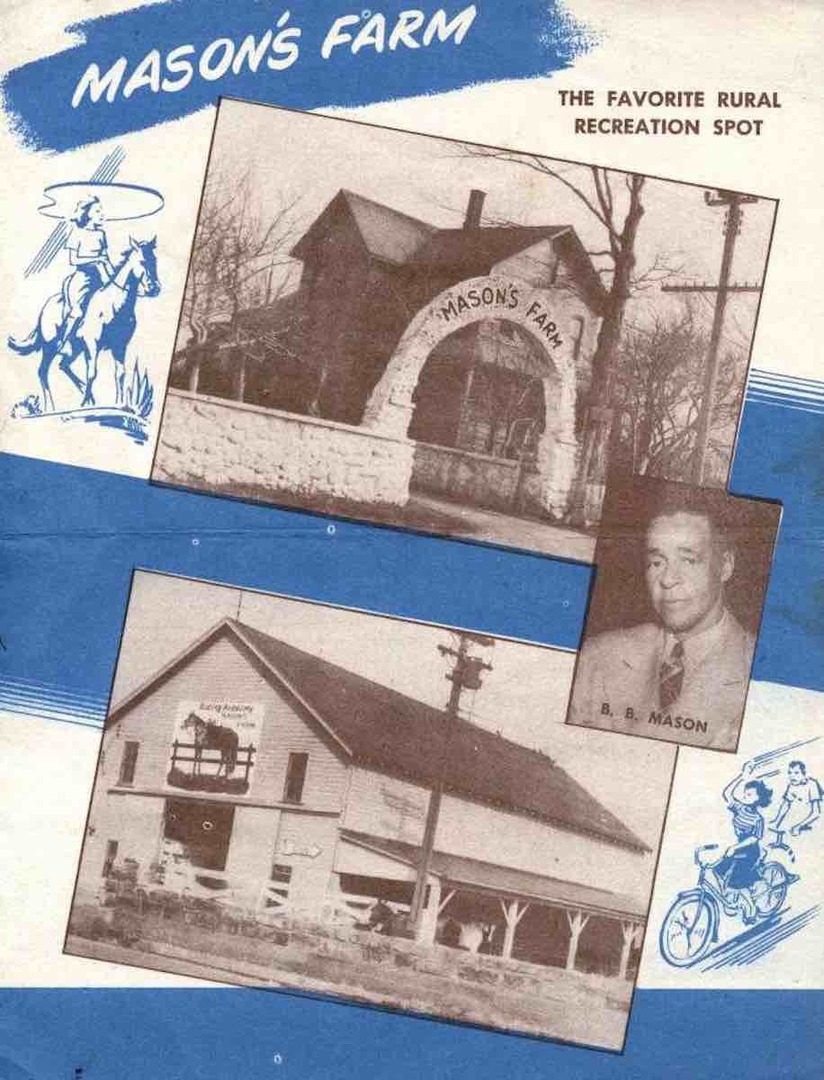
    <summary type="html"><![CDATA[<p><strong><em>The article <a href="https://greenbookcleveland.org/locations/cedar-country-club-masons-farm/">Mason's Farm</a> originally appeared in <a href="https://greenbookcleveland.org"><i>Green Book Cleveland</i></a>, our sister project exploring the history of Black entertainment, leisure, and recreation in Northeast Ohio. Named for its proprietor Benny Mason, Mason's Farm was a Black-owned working farm in Solon that achieved national renown as a music venue and resort in the 1930s-40s.</em></strong></p><img src="https://mail.clevelandhistorical.org/files/fullsize/208d4ec5c66d58b3c214bf1744dbf507.jpg" alt="Cover of Mason&#039;s Farm Booklet" /><br/><p>In 1935, Benjamin “Benny” Mason purchased a 160-acre farm in Solon on Cochran Road south of Route 43 and established what became known as “Mason’s Farm,” a popular resort, country club, and jazz venue. A well-known game operator, Mason purchased the farm and the Cedar Country Club subsequently opened in 1936. Upon the farm’s opening, Mason remarked, “I want to do something for my people. I want to make this farm a place where they can relax and enjoy themselves. I want to provide a place for them comparable to other races.” Despite its rural location beyond the east suburbs of Cleveland, one of the features Mason boasted was the Cedar Country Club's proximity to the city itself, claiming only a twenty-five-minute drive from Carnegie and East 55th Street in Cleveland. With the accessibility of the resort, both in location and its integrated clientele, the farm quickly became a popular destination for visitors across the country as well as Clevelanders. The Cedar Country Club gained national acclaim as the “showplace of Ohio.” The resort included furnished cabins, a restaurant, and nightclub. Some of its features included a riding academy, picnic grounds, and occasionally tours of the farm for students.</p><p>The Cedar Country Club also functioned as a nightclub and jazz venue that boasted popular artists Tiny Grimes, saxophonist Coleman Hawkins, and many others. The Cedar Country Club, which one <i>Call and Post</i> feature lauded as "Ohio's Swankiest Summer Resort," was routinely described as luxurious and enjoyed a listing in the 1939 edition of the <i>Negro Motorists' Green Book</i>. While it looked like a barn from the exterior, the clubhouse boasted a bar in the basement, another bar on the ground floor as well as a dance hall, and a lounge and private rooms on the second floor. It was available to be rented out for private parties, banquets, and other events. Mason renamed Cedar Country Club "Mason's Farm" in 1941 and hired restaurateur U. S. Dearing as manager. In addition to its leisure destination status, Mason’s Farm was also a working farm with more than 2,500 head of livestock and 145 of its 160 acres set aside for growing corn, wheat, and oats.</p><p>Mason himself was an eccentric character in Cleveland history, often running into legal trouble. Some of the allegations against him included purchasing stolen jewelry, transporting alcohol during Prohibition, and the frequent policy promoting that made Mason famous. Mason was known as the “king of policy games” as he notoriously ran illegal numbers rackets. In the summer of 1932, Benny Mason became the target of the Mayfield Road mob. In a number of attempts by the Mayfield Road mob to expand their own illegal numbers games into areas controlled by Mason, four men were arrested outside of Mason’s home and thought to be there to kill him.</p><p>Throughout his time both as a policy operator and owning the farm, Mason was notorious for “resigning” as the lead policy operator, but ultimately would move his operation’s headquarters and resume his business. Despite protests from management that claimed no gambling was permitted on the property, policy games continued to take place at the resort, making it a well-known gambling center in Cleveland. Residents in Solon in 1938 explained that while they did not see any “big-time gambling,” Mason’s Farm did have several slot machines. Though this reputation may have accounted for its disappearance from the <i>Green Book</i> after just one year, Mason's Farm remained very popular throughout the 1940s.</p><p>However, Mason redirected a significant portion of his wealth from these illicit games to support his community. Mason was known for his philanthropy, particularly for his donations to Black churches in Cleveland as well as paying educational costs for Black students. Throughout the early to mid-twentieth century across the country, policy and numbers games were cornerstones in providing economic opportunities to Black communities. Gambling rackets not only provided employment opportunities to Black residents in the community, but they also became a widespread source of investment into businesses and philanthropy. </p><p>Mason's establishment closed in 1951 and was sold to the Nickel Plate Railroad to form an industrial park. Benny Mason was involved in a fatal car crash in 1954 near London, Ohio, that took his life and the life of his friend Walter Woodford as well as critically injuring his wife Blanche.</p><p><em><strong><a href="https://mail.clevelandhistorical.org/items/show/967">For more (including 8 images) view the original article</a></strong></em></p>]]></summary>
    <published>2022-10-08T13:06:33+00:00</published>
    <updated>2026-04-17T19:17:42+00:00</updated>
    <link rel="alternate" type="text/html" href="https://mail.clevelandhistorical.org/items/show/967"/>
    <id>https://mail.clevelandhistorical.org/items/show/967</id>
    <author>
      <name>Cheyenne Florence</name>
    </author>
  </entry>
  <entry>
    <title type="html"><![CDATA[The Shore Clubs of Collinwood: Cleveland’s “It” Summer Spot on Lake Erie]]></title>
    <summary type="html"><![CDATA[<img src="https://mail.clevelandhistorical.org/files/fullsize/9fb7b4b640acee709c22ad73e4e3974d.jpg" alt="Helen O&#039;Brien&#039;s Shore Club Postcard
" /><br/><p>Known as a popular entertainment and leisure location that housed numerous shore clubs in the early to mid-1900s, the property at East 185th and Lake Shore Boulevard was sold and a fire subsequently destroyed any trace of the shore clubs’ existence in 1946. Despite there being no physical trace of the shore clubs, the clubs provided fantastic entertainment and meals to Clevelanders who sought out a day of leisure. The grounds had a private mansion that was built around 1900 and each of the various shore clubs redecorated and reshaped the mansion and its grounds over time.</p><p>The first shore club at this location was the Moonbeam Shore Club, which first opened to the public in May 1925. This shore club provided live entertainment, such as the musical stylings of Jack Mile’s Moonbeam Shore Club Orchestra and Al Waldon’s Serenaders. The shore club hired young women to sing and dance at the club. The Moonbeam Shore Club had its headquarters at Hotel Griswold (8844 Euclid Avenue); however, the Moonbeam Shore Club was not open for long and went up for sale in August 1926. By December 1926, The Lakeshore Gardens took over the location and offered great food and lively music that made patrons flock to the dance floor. But like the Moonbeam Shore Club, the Lakeshore Gardens were not open for very long.</p><p>On May 13, 1927, Marigold Gardens opened on East 185th and Lake Shore Boulevard. Night club owner Phil Seiznick operated Marigold Gardens and his business was described as a roadhouse or a nightclub that had live entertainment and a café. Since Seiznick was also the owner of Club Madrid (2422 Euclid Ave.), two orchestras, Club Madrid Night Owls and the Royal Hawaiians, played at Marigold Gardens in addition to cabaret acts. He also added an outdoor dance pavilion to the club grounds so that there was a dedicated dance space outside. In 1928, while Marigold Gardens was still in operation, another shore club called Shore Acres Gardens (also spelled Shore Acre Gardens) advertised its presence, suggesting that there was a second shore club located at E. 185th and Lake Shore. However, there was likely a connection between Marigold Gardens and Shore Acres Gardens because the latter had Phil Seiznick’s Club Madrid Night Owls play at their club. There are only a few advertisements for the Shore Acres Gardens in the summer of 1928, so it is likely that the Shore Acres Gardens had connections to Marigold Gardens and was not open very long. In contrast, Marigold Gardens continued operations until 1933.</p><p>In June 1933, Herman Pirchner purchased Marigold Gardens and renamed it the Alpine Shore Club. The new Alpine Shore Club had a German theme for its beer garden and boasted an Alpine yodeling orchestra and waiters wearing lederhosen. There were umbrella shielded tables on the porch and on the beach around the dance floor so that when visitors were not dancing, they could rest in the comfortable shade. Prior to owning Alpine Shore Club, Pirchner was entangled with the Mafia due to selling illegal beer during Prohibition. Although Pirchner got out of bootlegging alcohol, the Mafia continued to target his business interests, including the speakeasy on the second floor of the mansion on the property. The Mafia set off stink bombs in the speakeasy to draw customers out of the club without paying their bills. Therefore, Pirchner enlisted the help of famed safety director Eliot Ness and the Mafia stopped targeting the Alpine Shore Club. On November 28, 1935, Pirchner and Helen O’Brien opened the <a href="https://clevelandhistorical.org/items/show/79">Alpine Village</a> in Playhouse Square, which operated until 1961. Despite purchasing a second club location, Pirchner continued the Alpine Shore Club a couple more years with his co-owner Helen O’Brien.</p><p>By 1937, Helen O’Brien solely ran the Alpine Shore Club and renamed it Helen O’Brien’s Shore Club in the following year. She wanted to keep the Bavarian band but added Irish dancing to the list of entertainment at the club. Her shore club was a popular location for events, such as wedding anniversaries. O’Brien also had famous performers much like the clubs before hers, including Johnny Hayduk’s Caballeros, Dick O’Heren, Gypsy Martin Willesh, Ludwig Bosch, and Barbara Edwards. Fantastic full course meals were also served to club visitors. After Helen O’Brien’s Shore Club, there was one last entertainment venue at this location. </p><p>The last mention of Helen O’Brien’s Shore Club was in September 1938 and the first mention of Lake Shore Picnic Grounds was in August 1940. Therefore, there must have been a transition from Helen O’Brien’s Shore Club to Lake Shore Picnic Grounds during that two-year window. The Lake Shore Picnic Grounds offered racing, baseball, dancing, and swimming. Local residents could easily reach the Lake Shore Picnic Grounds by car or by public buses and enjoy a day of leisure activities. The picnic grounds’ accessibility made it a popular location not only for the general public, but also for local businesses and social clubs to reserve for outings. What set this shore club apart from previous ones was its policy of explicitly welcoming everyone regardless of race. A number of Black organizations used the grounds. For example, in 1942, the grounds hosted the annual picnic of the Tuxedo Club, an African American social club. </p><p>Despite the Lake Shore Picnic Grounds’ welcoming atmosphere, the Cleveland Catholic Diocese purchased the property in 1945 with the intent of turning the mansion and pavilion on the property that used to be a nightclub operated by Marigold Gardens and Alpine Shore Club into an extension of a nearby orphanage. However, the structures were beyond repair and a new orphanage location was procured. In June 1946, there was a large fire at East 185th and Lake Shore Boulevard that could be seen as far as 18 miles away. The fire ravaged the mansion and pavilion leaving only three brick chimneys in place and causing $30,000 in damage. The origin of the fire was never determined. With the fire, came an end to E. 185th and Lake Shore Boulevard’s history as an entertainment venue. Today, St. Joseph’s High School and HWR Christian Center Park occupies E. 185th and Lake Shore Boulevard where the shore clubs once offered recreation and entertainment near the shores of Lake Erie.</p><p><em><strong><a href="https://mail.clevelandhistorical.org/items/show/965">For more (including 12 images) view the original article</a></strong></em></p>]]></summary>
    <published>2022-08-26T15:53:59+00:00</published>
    <updated>2026-04-17T19:17:42+00:00</updated>
    <link rel="alternate" type="text/html" href="https://mail.clevelandhistorical.org/items/show/965"/>
    <id>https://mail.clevelandhistorical.org/items/show/965</id>
    <author>
      <name>Sarah White</name>
    </author>
  </entry>
  <entry>
    <title type="html"><![CDATA[Wade Park Manor: Judson Manor]]></title>
    <summary type="html"><![CDATA[<img src="https://mail.clevelandhistorical.org/files/fullsize/fe96dd69dc4b643163530918f8b560d2.jpg" alt="Wade Park Manor Postcard" /><br/><p>On September 15, 1921, Martin Daly used a silver spade to break ground near East 107th Street signifying the start of construction on Wade Park Manor, a high-end residential hotel. The announcement of plans for the hotel were made a year earlier by Daly, George Schneider, and Edwin Henn. Projected to cost $4,000,000 and contain 150 suites and 500 rooms, the hotel, its promoters predicted, would be “the last word in family hotel construction, equipment and service.”   </p><p>Residential hotels were built to serve the same purpose as a home or apartment but with the addition of different amenities and a community. Unlike transient hotels they were meant for semi-permanent or permanent stays. The first floor had public spaces and included a dining area for residents and visitors. Residential hotels were occupied by singles, widows and widowers, or young couples more so than families due to room sizing. Wade Park Manor followed this same pattern, catering to the middle and upper classes. </p><p>Headed by Daly, Henn, and Schneider, the Wade Park Manor Company commissioned George B. Post & Sons to design the hotel and John Gill & Sons as building contractors. Post & Sons was a well-known architecture firm that had designed The New York Stock Exchange, College of the City of New York, and the Cleveland Trust Company. They had their hand in the creation of other Cleveland hotels including <a href="https://clevelandhistorical.org/items/show/923">Hotel Statler</a> and <a href="https://clevelandhistorical.org/items/show/918">Fenway Hall</a>. The lead architect, Sydney Wagner, designed the building in the Georgian Revival style. The exterior was built of red brick in a U-shape that helped maximize lighting through the building. The lobby, made of stone and marble, was in the small vestibule that projected from the curve of the U at the center of the building. Attached at the back of the hotel was a three-story garage. Wade Park Manor boasted a variety of public spaces including a ballroom, dining room, library lounge, sun parlor, porches, and an enclosed heated sunroom on the roof.  </p><p>The interior was as well thought out as the exterior with the winning contract for furnishing going to Albert Pick and Company at over $500,000. Albert Pick and Company, once the third-largest hotel chain in the United States, had since become a hotel equipment supplier. The furnishings for Wade Park Manor were designed in the English style best exemplified by the grand fireplace and paneled walls found in the first-floor library lounge. Some of the rooms were outfitted with small kitchenettes including a sink, storage space, an outlet for appliances, and an electrical cabinet. Residential hotels provided dining services so it was expected that most residents would eat food made by hotel staff, but Schneider recommended small kitchens for cases when the hotel food was insufficient.   </p><p>Wade Park Manor opened on January 4, 1923, welcoming residents and visitors alike. Not only was it home to many Clevelanders, but the first floor acted as a social gathering place accessible to the public. Wade Park Manor soon became the exclusive, luxury place to be. There were conventions, weddings, small group meetings, and women’s events hosted at the Manor over the years. The hotel hosted some well-known guests including former president Dwight D. Eisenhower, Walt Disney, and Jack Benny. With its proximity to Severance Hall, Wade Park Manor also often housed several Cleveland Orchestra musicians. Outside famous individuals and large events, many people from the surrounding area also came and enjoyed dining at Wade Park Manor. The Lincoln Room, which opened at Wade Park Manor in 1942, was marketed as “the ultimate in dining facilities” and often the go-to spot for wedding anniversaries and celebrations. Others recount visiting Wade Park Manor for Sunday breakfast. </p><p>Although seen as the go-to place, there were multiple controversies around racial discrimination when it came to events being held at Wade Park Manor in the late 1940s and early 1950s. In 1947 there were claims that the management at Wade Park Manor had asked the Jewish Children's Bureau not to hold events there after discovering that there were black teachers in attendance. A second incident occurred in 1951 when the Delta Sigma Theta sorority was asked to cancel a dance at Wade Park Manor; the Manor had belatedly discovered Delta Sigma Theta were a group of African American women. In 1952, facing years of public backlash, management finally changed course, approving an application for the Boule Affair, a black men’s fraternity meeting. <em>Cleveland Call and Post</em> was prompted to publish an article with the headline "Wade Pk. Manor Quits Jim-Crow for Boule Meet."</p><p>Wade Park Manor remained a residential hotel for the upper and upper-middle classes until June 1964 when it was purchased by the Christian Residence Foundation. After purchasing the Manor, the Christian Residence Foundation renovated and transformed the hotel into a “full-service apartment house for single and married retired persons.”  Wade Park Manor, having lost its residential hotel status, lost its name in 1984 when Judson took ownership in 1983 from the Christian Residence Foundation. Newly named Judson Manor, the building underwent $7.3 million in renovations that were completed in 1985.</p><p><em><strong><a href="https://mail.clevelandhistorical.org/items/show/932">For more (including 7 images) view the original article</a></strong></em></p>]]></summary>
    <published>2020-12-14T16:23:21+00:00</published>
    <updated>2026-04-17T19:17:42+00:00</updated>
    <link rel="alternate" type="text/html" href="https://mail.clevelandhistorical.org/items/show/932"/>
    <id>https://mail.clevelandhistorical.org/items/show/932</id>
    <author>
      <name>Jasmine Prezenkowski</name>
    </author>
  </entry>
  <entry>
    <title type="html"><![CDATA[Saint Luke&#039;s Hospital: A Struggle for Equitable Healthcare]]></title>
    <summary type="html"><![CDATA[<img src="https://mail.clevelandhistorical.org/files/fullsize/de2ae057a468d9c9e8dc2de9d2c6663b.jpg" alt="Protest at St. Luke&#039;s" /><br/><p>St. Luke’s Hospital was founded on Woodland Avenue in 1894 as Cleveland General Hospital. Soon after being renamed St. Luke's in 1906, the hospital spent two decades on Carnegie Avenue before moving in 1927 to a much larger building on Shaker Boulevard in the Buckeye neighborhood that was styled like Independence Hall, where the founding fathers declared “All men are created equal.” The history of St. Luke’s does not match the architectural symbolism of the building as there are many cases of African American patients and staff being mistreated during the 1950s and 1960s. Some Black patients were physically assaulted, went untreated, or were segregated. St. Luke’s questionable history in its dealings with African American patients and staff remains relevant as events today highlight persistent issues that echo those that African Americans experienced decades ago.</p><p>The mistreatment of African American patients at St. Luke’s Hospital was common throughout the 1950s. For example, in 1957 a thirteen-year-old girl injured in a car accident was brought to St. Luke’s for medical attention. She was unconscious, but nurses and a doctor told her mother to take her home because, they insisted, she was “drunk.” The girl remained in an unconscious state for several days; however, a private doctor treated her at home. After she did not regain consciousness she was brought back to St. Luke’s, which now admitted her. The girl had to receive further treatment at home and the hospital for more than a year after the accident. She was never able to live a normal life after the accident and poor care from St. Luke’s.</p><p>Poor treatment of African American patients continued and in the early part of August 1957, St. Luke’s hospital staff rolled a white patient into an African American ward; however, the white patient had been dead for over a half hour. The woman had received a colostomy right before her death which produced a strong odor. While she was in a different ward, white patients complained about the smell. In an effort to appease white patients, hospital staff moved her to an African American ward, where they left her for over four hours. One patient said, “I’ll bet they wouldn’t bring an alive woman in here and leave her for four or five hours. If they don’t want to integrate the living patients then we don’t want integration because of somebody’s death. Especially when it's a case like this.” Later it became known that there was an empty room where the body could have been placed, but it was on the other side of the hospital.</p><p>Another incident, which involved another Black woman, Louise Ottrix, and her daughter underscores the poor treatment of African Americans. Ottrix took her four-month-old baby to St. Luke’s because the baby had fallen and hurt her head. Once Ottrix arrived her information was taken and she was told to wait. According to Ottrix she waited for about twenty-five minutes and then asked if her child could be seen immediately. She was told no and that she would have to wait her turn. After being denied timely service, she decided to leave and went to St. Vincent’s Charity Hospital where the baby was seen immediately. The baby had suffered from a skull fracture. </p><p>Protests erupted in February 1963 as a response to the treatment that African Americans received during the 1950s and '60s. The Cleveland Chapter of Congress of Racial Equality (CORE) charged St. Luke’s Hospital with segregating its patients. Arthur Evans, CORE’s protest committee chairman, led a protest where forty people were present with pickets on February 22, 1963. The protests involved people of various backgrounds, including white people. The protesters, most of whom carried posters denouncing segregation policies, circled the entrance of the hospital. </p><p>Not only did people protest outside St. Luke’s but prayer pilgrimages were held outside the hospital as well. People from CORE, the NAACP, Job Seekers, Freedom Fighters, and the Afro-American Institute participated in the prayers outside St. Luke’s. Those in attendance prayed to God that St. Luke’s would end its discrimination against those of different races, creeds, or colors. Many people who passed by joined in on the prayer. After the prayers were done people began to hold a traditional protest. Towards the end of March of 1963, CORE ended its protests at St. Luke’s Hospital as its leaders saw improved conditions of integration. St. Luke’s agreed to desegregate its wards and semi-private rooms.</p><p>St. Luke’s was not the only hospital during the 1960s to mistreat African American or minority patients. According to medical historian Rosemary Stevens, Blacks all across the country often received meager medical care during the 1960s. Poor African American patients often identified the impersonality and rudeness of large hospitals like St. Luke’s as the reason they avoided seeking health care. </p><p>St. Luke’s continued to exhibit problems in its treatment of African American patients and employees. During 1967 four hundred non-professional employees went on strike or tried to unionize. Only two of them were white. Joseph E. Murphy, who was in charge of the unionization push and the strike, believed that negotiations would have been easier if more members were white. Indeed, St. Luke’s was insensitive to its African American workers’ calls for pay increases. The NAACP sent volunteers to join the protests, and Congressman Michael A. Feighan called upon the St. Luke’s administration to recognize Local 47, Building Service and Maintenance Union.</p><p>Cleveland Mayor Carl Stokes worked hard to resolve the situation between Local 47 and St. Luke’s; however, by December 1967 he believed that he had “exhausted the maximum resources” of his office. Stokes also said that he could not force either the union or St. Luke’s to the table; however, he wanted to “bring about a settlement amicably and agreeable to all.” </p><p>The strike at St. Luke’s would continue to gain more and more attention as it stretched into the early months of 1968. Rev. Randel T. Osborn, an aide to Martin Luther King Jr., announced a plan to apply pressure on St. Luke’s through Operation Breadbasket. The goal of Operation Breadbasket was to increase African American employment across the country. Not long after Rev. Osborn announced pressure would be applied a deal was reached between Local 47 and St. Luke’s. On March 8, 1968, Mayor Stokes announced that the strike was over. The eleven-month strike ended with Local 47 being recognized as a bargaining agent with four hundred non-professional employees. Negotiations on wages and working conditions began soon thereafter. </p><p>St. Luke’s troubled past regarding its dealings with African American patients and employees have only become more relevant in today’s world. The troubles that Black patients and employees faced at St. Luke’s such as mistreatment, segregation, poor working conditions, and poor pay only touch the surface of what many African Americans experienced during the 1950s and 1960s and still face today.</p><p><em><strong><a href="https://mail.clevelandhistorical.org/items/show/926">For more (including 6 images) view the original article</a></strong></em></p>]]></summary>
    <published>2020-12-13T17:03:07+00:00</published>
    <updated>2026-04-17T19:17:42+00:00</updated>
    <link rel="alternate" type="text/html" href="https://mail.clevelandhistorical.org/items/show/926"/>
    <id>https://mail.clevelandhistorical.org/items/show/926</id>
    <author>
      <name>Seth Lyons</name>
    </author>
  </entry>
  <entry>
    <title type="html"><![CDATA[The House of Wills: Ohio&#039;s Largest Black Funeral Home]]></title>
    <summary type="html"><![CDATA[<p><strong><em>In 1904, J. Walter Wills received an offer he couldn't refuse. William Gee, a newly minted mortician, sought a partner. After paying Gee $250, Gee & Wills Funeral Home was in business. It was the genesis of what would become one of Cleveland's illustrious and long-standing African American enterprises.</em></strong></p><img src="https://mail.clevelandhistorical.org/files/fullsize/8563dd18349b9f59cc34d2caf719caa4.jpg" alt="The House of Wills" /><br/><p>Born in 1874 in Yellow Springs, Ohio, to formerly enslaved parents who had migrated from eastern Kentucky after the Civil War, J. Walter Wills arrived in Cleveland in 1899 after graduating from Antioch College. He was among eighteen African American men that the Cleveland Street Railway Co. brought to the city as strikebreakers during the streetcar conductors' strike that year and worked nine months as a conductor on the company's Central Avenue car line. After crushing the strike, the company fired all of the strikebreakers. Wills, who had originally planned to become a physician, now turned his attention to insurance, beginning his job search with Mutual Life of New York. He landed an interview and was at the point of signing a contract when the manager told him that Mutual agents could only sell policies to whites. Wills, who was light-complexioned, revealed his racial identity, whereupon the manager said if Wills called himself a Cuban he could go ahead and take the position. Wills walked out. After similar treatment by Metropolitan Life, he interviewed with State Mutual Life Insurance Co. of Worcester, Massachusetts, which was bound by its state's anti-discrimination law. </p><p>Wills worked for State Mutual Life while attending Cleveland Law School at night. In his work selling insurance, Wills continued to become better known in the community. When he joined William Gee in the funeral business in 1904, the only other black-owned funeral home in town was that of James A. Rogers, established in 1895. Gee and Wills got underway two years before Elmer F. Boyd started the city's third black-owned funeral home. They began with only a small office at East 33rd Street and Central Avenue. In 1905, Wills, who was effectively the managing partner, moved the mortuary into the former home of his wife Alberta's deceased father, John L. Lee, at 2323 Central Avenue. He remodeled the downstairs as a funeral parlor and lived upstairs. Thinking funeral homes were generally too dark and gloomy, he chose to make his as bright and colorful as possible. After Gee died, Wills reorganized in as the J. W. Wills Co. in 1907. The growing funeral home, which served all clients regardless of race but primarily African Americans, moved to a larger building at 2529 Central Avenue. </p><p>The business was truly a family affair. Wills's sisters Anna Wills Hern and Mary Wills Moss worked as funeral attendants. His son Walter (J. Walter Wills Jr.) helped out as a teenager and became integral in the business. In the early years, Wills used special "funeral cars," specially outfitted streetcars, to carry coffins. For burials at Woodland, Harvard Grove, and Evergreen Cemeteries, Wills used hand-drawn hearses for the short distance from the streetcar tracks to gravesites, while at Lake View there was a special streetcar spur track running into the cemetery. Occasionally he rented horses and carriages from local liveries before investing in his own carriage and team of horses (Barney, Richard, and Colonel) and, in 1911, an automobile. Before long, Wills became the first black mortician in Cleveland to own a funeral limousine – a Cleveland-made Stearns-Knight chain-drive sedan that he bought used for $400 – and a black Packard sedan that doubled as a hearse and ambulance. In the 1910s and 1920s, Wills became known for pioneering a number of funerary practices that broke decisively with tradition. In addition to his decision to replace black with other colors in parlor furnishings, he also became the city’s first undertaker to forgo hanging black crepe in the doorway of the home of the deceased in favor of using floral wreaths made by various African American florists. </p><p>In 1935, after the U.S. government condemned the house near East 25th and Cedar for redevelopment as one of the nation's first public housing projects, the Wills business moved into the former Koebler Funeral Home at 2340 East 55th Street in what had been until recently a largely Jewish neighborhood. Wills invested heavily in remodeling the home, adding expensive murals, mosaics, oil paintings, chandeliers, and plush furnishings. In its new location, the funeral home, dubbed the House of Wills, began to develop a reputation for community engagement. Amid the Great Depression, Wills converted his third floor into large food pantry to dispense canned goods, flour, sugar, and other staples to those in need. He also conducted many funerals for the indigent at no cost. </p><p>At a time when many public accommodations practiced Jim Crow exclusion, the House of Wills served as an important home for African American civic events of all kinds. Wills welcomed them all, gratis, and served free refreshments. A civic beacon in his own right, Wills was among the founders of the Cleveland Association of Colored Men (a precursor to the Future Outlook League), Cleveland Chapter of the NAACP, Negro Welfare Association (later the Cleveland Urban League), and <a href="https://clevelandhistorical.org/items/show/19">Phillis Wheatley Association</a>. He also invested in Dunbar Life Insurance and Quincy Savings & Loan, both of which were instrumental in writing mortgages for African Americans when white-owned firms refused to breach the color line in real estate. In doing so, Wills, like other black morticians, was an embodiment of a profession whose practitioners flourished in a society where mortality weighed heavily upon African Americans but often emerged as key figures in the long civil rights movement.</p><p>In 1941, the housing authority was again knocking on Wills's door, this time to take his property to build the Carver Park Homes. More than 20,000 citizens signed a petition started by <em>Call & Post</em> publisher William O. Walker to protest the destruction of the landmark funeral home and other businesses, as well as the discriminatory practices of the local housing authority. Although the campaign failed, it did produce a more favorable settlement that enabled Wills to acquire an even larger building down the street at 2491 East 55th Street, which gained distinction as the largest black funeral home in Ohio. The 42-room building reflected the waves of demographic changes in the Central area. It was built in 1898 as a German singing club called the Gesangverein Hall. After fourteen years it became the Hospital for Immigrants from Hungary and, in 1920, started an eighteen-year stint as home to the Cleveland Hebrew Institute. Wills remodeled it with strong Egyptian motifs.</p><p>In its newest home, the House of Wills continued to grow and prosper, employing as many as fifty people with the capacity for up to eight funerals in a single day. J. Walter Wills Jr. died in 1967 and his father passed away four years later. Harry Allen Wills, the founder's adopted son who had worked at the funeral home since 1936, not only kept the business going but oversaw its expansion to a second location at 14711 Harvard Avenue in the city's outlying Lee-Harvard neighborhood. The House of Wills kept its Harvard Avenue location open for nine years after it closed its East 55th Street funeral home in 2005. </p><p>Abandoned, the hulking building became an easy target for copper thieves until Eric Freeman, a newcomer from Los Angeles, bought it in 2010 with a dream of restoring it for community-based uses, possibly for future use to help juvenile offenders or the homeless. In the meantime, the building's past use and present decadence have, with a little encouragement by its owner, made it an irresistible destination for people who seek out paranormal activity. At first glance, the former funeral home's latest iteration seems an offbeat coda for a building that once housed one of the nation's preeminent black-owned businesses. Perhaps in a different sense, Freeman's unconventional way of giving new life to the House of Wills is a faint echo of Wills's own penchant for breaking taboos about how best to memorialize the departed.</p><p><em><strong><a href="https://mail.clevelandhistorical.org/items/show/911">For more (including 14 images) view the original article</a></strong></em></p>]]></summary>
    <published>2020-06-07T02:47:37+00:00</published>
    <updated>2026-04-17T19:17:42+00:00</updated>
    <link rel="alternate" type="text/html" href="https://mail.clevelandhistorical.org/items/show/911"/>
    <id>https://mail.clevelandhistorical.org/items/show/911</id>
    <author>
      <name>J. Mark Souther</name>
    </author>
  </entry>
  <entry>
    <title type="html"><![CDATA[Liberty Hall: The Universal Negro Improvement Association in Cleveland ]]></title>
    <summary type="html"><![CDATA[<p><strong><em><div style="text-align:left;">“Cleveland Garveyites regularly paraded through the city’s black belt, proudly wearing their all-black military styled uniforms and carrying the UNIA’s red, black, and green flag. The flag signified black pride and African Liberation.” – Erick McDuffie</div></em></strong></p><img src="https://mail.clevelandhistorical.org/files/fullsize/9f6020557f2245326d7c63447c2b8dce.jpg" alt="&quot;Liberty Hall&quot; / The Jacob Goldsmith House " /><br/><p>After the Great Migration a new nationalist movement arose in African American communities across the U.S., with Marcus Garvey as its spearhead. Founded by Garvey in 1914, the Universal Negro Improvement Movement (UNIA) stressed black pride, community solidarity, connecting the racial struggles in the U.S. to those of black people across the world. Garvey protested white colonization and called for “all men and women within the reach of the blood of Afric[a]" to be proud of their race.” The UNIA by-laws provided a script for each member oath to the organization that included a pledge to “the redemption of my motherland Africa.” This pride in African heritage in the UNIA is evident even in their anthem, “Ethiopia, Thou Land of our Fathers.” Garveyism and the UNIA gained influence in the Midwest, and more specifically in Cleveland, which would house the UNIA headquarters throughout the 1940s and again in the 1970s and 1980s. </p><p>During Marcus Garvey’s visit to Cleveland in May 1920, he spoke to more than 400 people at <a href="https://clevelandhistorical.org/items/show/643">Cory United Methodist Episcopal Church</a>. The audience's exuberant response demonstrates how Garvey’s Pan-African message truly captured the lives of those present. Inspired by Garvey’s message, the UNIA in Cleveland became a major force in local politics, as illustrated in continuous coverage of its Cleveland activates in Garvey’s newspaper <em>Negro World</em>. These efforts helped expand the Cleveland UNIA (Division 59) to more than 5,000 members by 1922, and by 1923 it claimed 15,000. This was the same year that the Cleveland UNIA, through the small donations of organization members, was able to purchase a stately three-story mansion located at 2200 East 40th Street. Liberty Hall, as it was later named, was located in the heart of the Central neighborhood. This building served not only as the headquarters space for the UNIA but also as a bustling African American community center, committed to uplifting black peoples in Cleveland and globally. </p><p>Initially, following Garvey’s mail fraud conviction and deportation, he reorganized the international UNIA at the 1929 convention, forming the Universal Negro Improvement Association and African Communities League, August 1929 of the World (UNIA-ACL). Although some charters fought Garvey on his changes, the Cleveland UNIA remained loyal and received its new charter as Division 133 from the UNIA Parent Body in 1930. It was during this time that the chapter started to face factionalism and decline. Issues with intra-racial strife, sexism, and class issues, among others, caused initial decline for the organization. Debates also focused around the issues of dancing, drinking, smoking, and women’s behavior. The black middle class, which comprised most of the Cleveland chapter, traditionally associated these activities with the recklessness of the black urban working-class. During the Depression many African Americans on Cleveland’s East Side started to migrate toward other black power groups, including the Future Outlook League (FOL) and the National Association for the Advancement of Colored People (NAACP) as a result of this strife within the organization. </p><p>The UNIA-ACL Cleveland branch, however, committed itself to the ideals of Pan-Africanism throughout the 1940s. In August 1940, James R. Stewart, who was serving as a UNIA-ACL commissioner for the state of Ohio and as president of the Cleveland branch, was elected acting president general at the time of Garvey’s death. By October, Stewart had established Cleveland as the new location for the UNIA-ACL Parent Body headquarters. The Parent Body remained in Cleveland until 1949. Part of what led to the chapter's downfall during this time was Stewart's push for voluntary African American repatriation to Liberia. Similar to Garvey, Stewart believed that the repatriation would assist in civilizing Africa and solving the American race issue. In the case of Cleveland, most African Americans were more concerned about obtaining full citizenship and rights in the U.S., rather than emigrating to Africa. These ideas, in conjunction with other black rights organizations like the FOL and NAACP supporting black rights at home, led to a continuing decline in membership. Stewart decided to take Liberian citizenship for himself in 1949, moving the Parent Body to Monrovia, Liberia. After Stewart’s death in 1964, the Parent Body moved to Chicago where it remained until 1975. </p><p>When the Civil Rights and Black Power movements arrived to Cleveland in the 1960s, the Cleveland UNIA-ACL was playing a marginal role at best. Garveyism during this time, however, took on a new life though new local Black Power organizations comprised of young black nationalists who consciously saw themselves as Garveyites. Inspired by Garvey’s defiant call for black self-determination, young black Clevelanders formed other Black Nationalist groups such as the House of Israel and the <a href="https://clevelandhistorical.org/items/show/777">Afro-Set</a>. Most of this new generation of Garveyites was unaware of the UNIA-ACL, but rather had come to Garveyism through the Nation of Islam or other veteran black nationalists. Kwame Nkrumah, the leader during Ghana’s independence, is said to have been greatly inspired by Garvey. In the U.S., Malcolm X is also said to have been influenced by Garvey in his desire to make a unified black pride on an international scale. In Cleveland’s more recent past, and even today, as the struggle for black rights rages on, people remember the influences of Garvey, and the UNIA-ACL, and the role they played in shaping the black power movements still present today.</p><p><em><strong><a href="https://mail.clevelandhistorical.org/items/show/898">For more (including 9 images) view the original article</a></strong></em></p>]]></summary>
    <published>2019-12-09T02:46:38+00:00</published>
    <updated>2026-04-17T19:17:42+00:00</updated>
    <link rel="alternate" type="text/html" href="https://mail.clevelandhistorical.org/items/show/898"/>
    <id>https://mail.clevelandhistorical.org/items/show/898</id>
    <author>
      <name>Rebekah Knaggs</name>
    </author>
  </entry>
  <entry>
    <title type="html"><![CDATA[African American Museum of Cleveland: Icabod Flewellen&#039;s Dream ]]></title>
    <summary type="html"><![CDATA[<img src="https://mail.clevelandhistorical.org/files/fullsize/d78d197a863c1fd79cd03fa1e5eb65d8.jpg" alt="The African American Museum" /><br/><p>Icabod Flewellen founded the first independent African American museum in the United States. In his home at 8716 Harkness Avenue, Flewellen chartered the Afro-American Historical and Cultural Society in 1953. His vision was the preservation and dissemination of information regarding the contributions of individuals of African descent. He hoped to educate young people about the positive contributions of African Americans to the cultures of the world, and to eliminate distorted portrayals and images of African Americans. </p><p>At age 13, Icabod Flewellen began collecting newspaper clippings about African American history. He drew inspiration from the writings of the Jamaican author J. A. Rogers, a self-trained historian, novelist, and journalist who spent most of his life debunking pseudo-scientific and racist depictions of people of African ancestry while popularizing the history of persons of black people around the world. Flewellen’s passion was also inspired by the lack of African American history in American classrooms. As he told the <em>Cleveland Plain Dealer</em>, “My daddy, who was a railroad brakeman, used to tell me of the great black inventors on the railroad. Every now and then we found a self-motivated teacher who would throw in a few things that weren’t in the textbooks, but still, we got very little Black history.” </p><p>Flewellen graduated from high school in the mid-1930s and began working for the Civilian Conservation Corps (CCC), a New Deal program created in 1933. At the age of 23, Flewellen went to West Virginia State University and enrolled in the National Youth Administration (NYA), another New Deal program, but ended up switching to the Civil Pilot Training Program. In 1942 Flewellen was drafted into the U.S. Army and served in North Africa in the quartermaster's service. </p><p>His first collection, located in his West Virginia home was, he said, “exceedingly rich with historical material.” While Flewellen served in the military, he asked his neighbor Mr. Pryor to store his collection in his garage. Unfortunately, most of the collection was lost when a firebomb thrown by white supremacists destroyed the garage. Flewellen was honorably discharged from the Army in 1945 and he moved to Cleveland. After his return from the military, Flewellen stated, “They were people who did not like what I was doing.” Undeterred, within a few years after moving to Cleveland, Flewellen had essentially transformed his home into a museum. It was so stuffed with portraits, letters, documents, books, busts and sheet music that he barely had room to sleep and eat. Seeking to institutionalize his activity, Flewellen helped organize and became president of the Afro-American Cultural and History Society, the first such organization in the U.S. With the help of the AACHS and his neighbors, Flewellen’s collection continued to grow. </p><p>In 1964, Flewellen’s and the AACHS’s accomplishments were recognized by the “Parade of Progress,” a national exhibition held at Cleveland’s Public Hall. A portion of Flewellen’s collection was on display as one of fifty displays set up by the National Service Center. Flewellen never tired of his role in bringing African American accomplishments to the public’s attention, including Garrett Morgan’s invention of the traffic light, Charles Drew’s work in perfecting blood plasma, and John Green’s role as the father of Labor Day. As Flewellen observed, “The Negro child doesn’t realize how great is his heritage. My goal is to let the Negro child know his ancestors were something besides just slaves.” Flewellen hoped his exhibition at the “Parade of Progress” would help create interest in the museum he wanted to build. </p><p>Flewellen opened his first museum outside of his home in a tiny classroom in the old school building behind St. Marian Catholic Church at 2212 Petrarca Avenue near Cedar Avenue and Fairhill Road in 1968. The next location was briefly located at the old Bell building at 1839 East 81st Street. Finally, in February 1983 it moved to the Cleveland Public Library’s decommissioned Treasure House building at 1765 Crawford Road in Hough.</p><p>By the 1970s, African Americans were being heard. Yet in spite of the fact that Black culture and history were increasing in popularity, the Afro-American Cultural and Historical Society faced extinction in a month’s time unless support and a benefactor could be found. The AACHS became a victim of the Black movement’s success. “It’s a really big thing these days,” said Flewellen. “There’s so many people jumping on the bandwagon with Black movements at universities, colleges, and other things who have much more funds and facilities than we do, we don’t find it easy to get support like that.” After seventeen years of struggling to keep his organization going, Flewellen's fortunes still appeared dim.</p><p>By 1985, a rift between founder and museum board over managerial and financial concerns forced Flewellen out. The group disbanded, which broke his heart. He saw his life’s work wasted. When his dream could not be a reality, he arranged for his entire collection to be donated to the East Cleveland Public Library upon his death, which came in 2001. Much of his life’s work lies in a wing of the library called The Flewellen Collection. </p><p>The African American Museum has provided cultural awareness, education about Black history, and community events, in addition to a collection of artifacts that represent a holistic view of the African Diaspora experience. Because of the vision and sacrifices made by Icabod Flewellen and countless others to document and display the accomplishment of African Americans and people of African descent, the National Museum of African American History and Culture was born. President Barack Obama spoke at the groundbreaking ceremony February 22, 2012, and on September 24, 2016, the museum opened – a long-imagined dream come true that would have made Flewellen proud.</p><p><em><strong><a href="https://mail.clevelandhistorical.org/items/show/897">For more (including 10 images) view the original article</a></strong></em></p>]]></summary>
    <published>2019-12-06T19:11:43+00:00</published>
    <updated>2026-04-17T19:17:42+00:00</updated>
    <link rel="alternate" type="text/html" href="https://mail.clevelandhistorical.org/items/show/897"/>
    <id>https://mail.clevelandhistorical.org/items/show/897</id>
    <author>
      <name>Linda Mack</name>
    </author>
  </entry>
  <entry>
    <title type="html"><![CDATA[Cafe Tia Juana : Second Wave Jazz in Glenville]]></title>
    <summary type="html"><![CDATA[<p><strong><em>Cafe Tia Juana was meant to be a catalyst for change during the racially divided 1940s. The most "plush" jazz club in Cleveland became one of the most infamous, with a reputation that eventually brought the café to its demise. </em></strong></p><img src="https://mail.clevelandhistorical.org/files/fullsize/0cf03608bde602831950bef6fa0a19db.jpg" alt="Cafe Tia Juana at the corner of Massie Avenue and East 105th Street" /><br/><p>It’s a typical cold and drizzly evening in Cleveland, 1948. A young woman can be seen walking along the cracked asphalt. The buzzing light of the flickering neon sign ahead beckons her as the wafting sounds of snare drum riffs, husky baritone vocals, and a blaring trumpet become louder. The sultry-sounding music coming from behind the fogging windows increases her anticipation. The rat-a-tat riffs and spontaneous blats of the saxophone call her name as her heartbeat quickens with excitement. At last, she enters into its musical oasis.</p><p>This musical escape was called Cafe Tia Juana, a true oasis for Cleveland’s jazz fanatics during a time of tumultuous racial tensions in the late 1940s to 1960s. Located in the Glenville neighborhood, Cafe Tia Juana was one of Cleveland’s most popular jazz clubs and was nationally recognized for bringing the hottest names of jazz through its doors. It eventually developed a dually famous and infamous reputation, encapsulating contradiction. It was said that the club provided “a rich formula of beauty and glamour and top-flight musical talent,” yet was simultaneously “a source of disorder and aggression to the community.” Perhaps this complex identity mirrors the time, place and culture in which it was birthed. Cafe Tia Juana opened during jazz’s second wave, not the earlier Jazz Age, featuring the free form of bebop. Cafe Tia Juana developed a dual reputation for lawlessness and sensuality while also providing an interracial haven where people from mixed backgrounds could gather. The club–like jazz itself–broke through the social expectations of its time.</p><p>Cafe Tia Juana was intentionally integrated when racial segregation was common. The club was opened in 1947 by Catherine and Arthur “Little Brother” Drake, along with Little Brother’s previous business partner, Willie Hoge. The inspiration for the venture came after Catherine Drake was barred from entering a club in Cleveland because she was African American. She was with Hoge at the time, who was solely permitted, as he was a white customer. In response, the two Drakes and Hoge decided to open their own venue that would not discriminate against anyone who wanted to enter, creating an inclusive congregation of musical talents and admirers alike. Catherine Drake became the first African American woman to own and manage a jazz club in Cleveland.</p><p>The club’s appearance made it stand out amongst numerous other venues. It was designed by Charles L. Sallee Jr., the first African American graduate of the Cleveland Institute of Art. Sallee designed the club with unapologetic lavishness in a colorfully playful “Mexican style” with a surprising element of posh sophistication, using velvet carpets and excessive draperies. The interior architecture was also unique, with a four-leaf clover-shaped bar and booth design based around an elevated revolving stage in the center. Despite the club’s Spanish name (a variation of the Mexican city, Tijuana), Sallee’s design is rooted in Southeast Asian inspiration versus the “South of the Border” theme which advertisements claimed. Sallee served in the military during World War II and was stationed in the Philippines for some time where he drew his inspiration for the design of Cafe Tia Juana. The country’s sunny skies, colorful architecture, and vibrant culture inspired the colorful Pacific Island atmosphere of Cafe Tia Juana.</p><p>At its finest, Cafe Tia Juana was nationally recognized as a hot jazz club and was every bit the musical oasis that the Drakes had sought to create. It was luxuriously extravagant through its interior decorative style and by its nationally acclaimed jazz superstars. Impressively, in Cafe Tia Juana’s first two years of operation, it hosted the nation’s most famous jazz icons including Dizzy Gillespie, the King Cole Trio, Billie Holiday, Sarah Vaughan, and Ella Fitzgerald, with The King Cole Trio being advertised as an upcoming performance in the club’s introductory article in 1947. The <em>Cleveland Call and Post</em> described the club in those early years as the “fabulous, most beautiful cafe spot in the Midwest” and as a “plush and fabulous cafe spot where top-flight entertainment is the mode.”</p><p>Despite the club’s promising start, Cafe Tia Juana struggled to maintain its positive reputation. As early as 1949, Cafe Tia Juana started to experience financial hardship as customers began to dwindle, due to changing music trends. In efforts to maintain excitement and to mitigate revenue troubles, Cafe Tia Juana became liberal in its entertainment offerings, first hosting talent shows and local bands, then clambakes, fashion shows and eventually exotic dancers. This expansion of entertainment also coincided with the club’s change of management and chronic financial and legal troubles. Catherine Drake became the sole owner of the club and managed Tia Juana with her two sons after Hoge and Little Brother were sent to prison for numerous racket schemes. In 1961, the U.S. Treasury Department “seized for nonpayment of delinquent Internal Revenue taxes due from Cafe Tia Juana.” The club was eventually managed by Mansfield Turner who started to bring in national jazz attractions once more, starting with Valerie Carr, in efforts to boost its image. Despite Turner’s efforts for revitalization, Cafe Tia Juana became exclusively associated with its poor management, gambling escapades, illegal activity and violence through a series of stabbings and a shooting. </p><p>In 1969, Cafe Tia Juana was closed permanently and the original building complex that ran along the corner of Massie Avenue and 105th Street was bought by Cleveland Christ Church Citadel of Hope Ministries and, soon after, was demolished. Although Cafe Tia Juana is long gone, its memory remains as an important symbol of Cleveland’s music history. It was both impacted and influenced by jazz and race during its short life and was a catalyst for change, it challenged cultural norms and expectations, representing an iconic time from Cleveland’s past. Tia Juana opened as a reaction to the discriminatory character of Cleveland and its racially divided public spaces. The space stood for equality and change in the face of adversity, successfully creating a lasting legacy.</p><p><em><strong><a href="https://mail.clevelandhistorical.org/items/show/882">For more (including 11 images) view the original article</a></strong></em></p>]]></summary>
    <published>2019-11-20T20:08:13+00:00</published>
    <updated>2026-04-17T19:17:39+00:00</updated>
    <link rel="alternate" type="text/html" href="https://mail.clevelandhistorical.org/items/show/882"/>
    <id>https://mail.clevelandhistorical.org/items/show/882</id>
    <author>
      <name>Petra Brown</name>
    </author>
  </entry>
  <entry>
    <title type="html"><![CDATA[Rainey Institute: Building on Anna Edwards&#039; Dream]]></title>
    <summary type="html"><![CDATA[<p><strong><em><span style="font-weight:400;">If Anna M. Edwards, the first Director (then called "Superintendent") of the Eleanor B. Rainey Memorial Institute could attend an El Sistema concert today, she would probably at first be surprised that the Institute was involved in such a thing. But once she came to understand what music, and other visual and performing arts, programs at Rainey were doing for the children of Cleveland's Hough neighborhood, she would, while perhaps personally noting the irony of it all, be very pleased.</span></em></strong></p><img src="https://mail.clevelandhistorical.org/files/fullsize/360e45df2b1005232b7d844e311585b0.jpg" alt="Willson Avenue Industrial Institute" /><br/><p>Anna M. Edwards dreamed of a career in music. Born in the Dayton, Ohio, area in 1849, she was the daughter of a Presbyterian minister who had moved his family to Cleveland near the end of the Civil War. Here, she attended local schools and then studied music at the Oberlin Conservatory of Music. By 1870, she was teaching music at the Lake Erie Seminary (today, Lake Erie College). However, when she was just 25 years old, her music career came to an end as a result of her involvement in the Women's Crusade (1873-1874), a national protest movement by women against America's saloon keepers. Edwards, according to her friend Edith Stivers, was persuaded by Frances Willard, legendary temperance reformer and women's suffragist, to give up her music career and go to work for the Woman's Christian Temperance Union (WCTU), a national organization led entirely by women that grew out of the Crusade and which was formally organized here in Cleveland in 1874.  </p><p>Edwards became the WCTU's Superintendent of Scientific Temperance Instruction for Ohio. This position required her to travel around the state, and later around the country, giving temperance lectures wherever she went. After a decade or so of this exhausting work, she began spending more of her time working at the non-partisan WCTU mission on St. Clair Street (St. Clair Avenue) near Willson Avenue (East 55th Street). The mission was located in a neighborhood that was brimming with saloons and home to many Eastern European immigrants, especially Slovenians. One day, according to accounts by several of her contemporaries, Edwards saw several young boys making a delivery of beer to a local saloon. They were drinking the "dregs" of the beer they were delivering and appeared to be intoxicated. Witnessing this was an epiphany for her. She decided then and there to devote the rest of her life to keeping boys like these away from saloons.</p><p>In 1888, Edwards took over the chairmanship of a WCTU reading room located on Willson Avenue, re-energized the neighborhood "Band of Hope" (a temperance pledge youth group), and opened the Flag Coffee House (so-called because of the flags she placed in its windows). The coffee house openly and actively competed with nearby saloons by offering boys a full dinner and a cup of coffee for just ten cents. Her work with the boys of this neighborhood eventually caught the attention of Eleanor B. Rainey, the widow of a wealthy Cleveland industrialist, who offered to provide Edwards with a larger and better facility for her work.  Rainey purchased a lot on the northeast corner of Willson and Dibble Avenues and built on it a three-story, 9,000-square-foot building, designed in the Tudor style by architects Badgley and Nicklas to resemble a large house. Officially called the Willson Avenue Industrial Institute, it opened in 1904. It had offices, and reading and game rooms, on the first floor; classrooms and a gymnasium on the second floor; and a custodian's apartment on the third floor. (Walfred and Anna Danielson, immigrants from Sweden and Canada respectively, and their son Harold, lived in that apartment and worked for the Institute for much of the period 1904-1940.)  </p><p>Just one year after the Institute opened, it was faced with a crisis that threatened its continued existence. Eleanor Rainey, its benefactor, suddenly died. The crisis was resolved when her heirs stepped in and agreed to continue their mother's support of the Institute's work, and the non-partisan WCTU (later known as the Women's Philanthropic Union) agreed to rename the Institute the "Eleanor B. Rainey Memorial Institute."  For the next half-century, the operations of Rainey as a settlement house were funded by Eleanor Rainey's heirs, particularly by her daughter Grace Rainey Rogers, who became sole owner of the building on East 55th Street and Dibble Avenues in 1931 and the sole surviving child of Eleanor Rainey in 1938. During this period, Rainey Institute functioned as a traditional settlement house, offering instruction in industrial trades for boys, home economics instruction (and also stenography and bookkeeping) for girls, and youth recreational activities. One of the young Slovenian boys who benefitted from these programs was Frank Lausche. He grew up to become Cleveland mayor (1942-1944), Ohio governor (1949-1957), and one of Ohio's United States Senators (1957-1969).</p><p>Anna Edwards served as superintendent of Rainey Institute until her death in 1923. She was succeeded by her younger sister, Flora, who served until her death in 1949. Upon her death, Flora Edwards was succeeded by Jessie Peloubet, whose mother was a close friend and associate of the Edwards sisters. Already 67 years old when she became superintendent, Peloubet faced many challenges during the decade of the 1950s. In 1957, the Goodrich settlement house moved from E. 31st Street to a location on E. 55th Street just up the street from Rainey Institute. The new Goodrich-Gannett neighborhood center, and several local organizations that provided funding to Cleveland settlement houses, put pressure on Rainey to either close, merge with Goodrich-Gannett, or move elsewhere. </p><p>Additionally, the decade of the 1950s saw the Hough neighborhood in which Rainey was located undergo racial transition, changing from primarily white and middle or working class in 1950 to primarily African American and working or lower class by 1960. Finally, the estate of Grace Rainey Rogers, Rainey's benefactor, who died in 1943, remained in administration well into the 1950s, forcing Peloubet to deal with estate executors and trustees in New York for the Institute's operational expenses. In 1955, pursuant to the terms of Rogers' will, the Rainey Institute land and building were finally conveyed from the estate to a newly formed non-profit corporation and a board of trustees was appointed that was charged with the financial management of an endowment left by Rogers for the continuing operating expenses of Rainey. </p><p>The record is silent as to how well Peloubet addressed these challenges, but by the end of 1959 she was no longer Rainey's superintendent, and, for a six-month period, Rainey was administered by League Park Center, Inc., a social services agency that was located, like Rainey, in the Hough neighborhood. According to an article which appeared later in the Cleveland Press on May 19, 1964, Rainey almost closed during this period. Shirley Lautenschlager, a social worker with a degree from Western Reserve University's School of Applied Social Sciences, was hired by the board of trustees in June 1960 to become the new director, of Rainey--the title of "superintendent" apparently having been discarded. Lautenschlager, who noted that, when she arrived, Rainey was functioning as little more than a recreation center, instituted a number of new social programs at Rainey that were intended to serve Hough's current population, including after school care for seven to twelve year olds; activities for teenagers including game rooms, clubs, and dances; and gardening, cake decorating and sewing classes. Several years later, in 1964, following the taking of a survey in the Hough neighborhood, Rainey also began offering piano lessons to the children of Hough. These and other music classes proved so popular with the neighborhood's parents and children that two years later Rainey Institute decided to concentrate its efforts solely in the field of music, becoming an affiliate of Cleveland Music Settlement in 1966. The institute also appointed a new Director that year who had a background in both music and social work.</p><p>For Rainey Institute, Zandra Richardson, the new Director hired in 1966, was like the second coming of founder Anna Edwards. Like Edwards, Richardson came to Cleveland from the Dayton area, and like Edwards, Richardson's first love was music. Both Edwards and Richardson became involved in social services because of their desire to help children in need and both ultimately worked for more than four decades helping children in what is today Cleveland's Hough neighborhood. Zandra Richardson, who served as Director from 1966 until 2008, left a deep imprint on the history and evolution of Rainey Institute as an arts center for underprivileged children. During her tenure, many new music and other arts programs were introduced at Rainey. One of the earliest new programs was a summer camp program promoted by Cleveland Music Settlement and Karamu House in 1967, the first summer following the 1966 Hough Riots. At summer camp, African American children were introduced to art, drama, African drumming, vocal music and dance. Several years later, Rainey expanded the summer camp program to include drama, art and music, and dance. Kids attending also received instruction in reading, math, and creative writing, and participated in recreational activities.</p><p>As time passed, Rainey's focus as a music and arts center gradually changed as theater and dance became more popular than music instruction. As a result, in 1997 Rainey severed its affiliate status with Cleveland Music Settlement. During first half of Richardson's directorship, she and Rainey's Board of Trustees, anchored by long-time trustee Theodore Horvath who worked tirelessly to preserve Rainey Institute's endowment, also initiated a long-term plan to build a new and larger facility so that more children in Hough and other nearby neighborhoods could be introduced to the visual and performing arts. In 2011, just three years after Richardson retired as Director, and with the guidance of new Director, Lee Lazar, many Cleveland businesses and charitable organizations, and Cleveland Councilwoman Fannie Lewis, Rainey Institute opened its new 27,500-square-foot Arts Center, just down the street from the old Rainey Institute building. In the same year as the new Arts Center opened, Isabel Trautwein, a violinist with the Cleveland Orchestra, established an El Sistema string orchestra program at Rainey. El Sistema, one of the most notable programs at Rainey today, promotes peaceful social change through music.</p><p>Under the directorship of Richardson and her successors, there have been many success stories at Rainey, of students who went on to have fulfilling careers in many different fields of endeavor ranging from music to government service to teaching to the business world. One of those former Rainey students is Stephanie D. Howse, an African American woman who had a successful career as an environmental engineer, before turning to public service and becoming State Representative from Ohio's 11th District. Today, Rainey Institute is a thriving art center, each year serving more than 2,500 children like Howse who hail from the Hough and other nearby neighborhoods of the City of Cleveland. </p><p>And the old Rainey Institute Building? It has not been forgotten by the City of Cleveland, which made it a Cleveland Landmark in 2018. From an early twentieth-century settlement house founded by a woman who gave up a career in music to help immigrant children threatened by saloons to a twenty-first century arts center, which uses music and other visual and performing arts to cultivate self-expression and promote social emotional growth in a new demographic of disadvantaged children in the neighborhood, Rainey Institute has come full circle, a statement with which Anna M. Edwards would certainly agree, even if she did find it ironic.</p><p><em><strong><a href="https://mail.clevelandhistorical.org/items/show/869">For more (including 17 images) view the original article</a></strong></em></p>]]></summary>
    <published>2019-05-02T21:58:59+00:00</published>
    <updated>2026-04-17T19:17:38+00:00</updated>
    <link rel="alternate" type="text/html" href="https://mail.clevelandhistorical.org/items/show/869"/>
    <id>https://mail.clevelandhistorical.org/items/show/869</id>
    <author>
      <name>Jim Dubelko</name>
    </author>
  </entry>
  <entry>
    <title type="html"><![CDATA[Wilkins School of Cosmetology : Haircare and Hospitality ]]></title>
    <summary type="html"><![CDATA[<img src="https://mail.clevelandhistorical.org/files/fullsize/b19c6174e4e70b1c644560859fcfb17a.jpg" alt="Wilkins School of Cosmetology Postcard" /><br/><p>In the early 20th century, many African Americans sought refuge in northern cities from the tyranny and violence of the Jim Crow South. For those participating in this Great Migration, a city such as Cleveland seemed a logical choice, with the promise of economic and social benefits, not least a growing African American population to provide a sense of community. In the midst of this influx, African Americans became increasingly channeled into the crowded Cedar-Central neighborhood. Churches, music halls, and even beauty parlors in the community all played a signal role in providing places where black newcomers could come together. The Wilkins School of Cosmetology was one such place that reflected the mixture of entrepreneurship and social service that helped make Cedar-Central a vital community. </p><p>The school's founder Edith Wilkins, the eldest of twelve children, was born in 1893 in a white-washed cabin of the farm of her grandparents in Plumville, Arkansas. After graduating from the Poro College of Cosmetology in St. Louis, she moved to Cleveland with her husband George, a South Carolina-born fireman for White Sewing Machine Co., and two daughters in 1918. After waiting tables at Halle Bros. department store, Wilkins soon established a career as a beautician when she opened her first salon at 3812 Scovill Avenue. </p><p>On the advice of friends, Wilkins became a cosmetology educator when she took over an existing beauty school located on the main floor of the <a href="https://clevelandhistorical.org/items/show/19">Phillis Wheatley</a> building on Cedar Avenue at East 46th Street. The Phillis Wheatley Association provided support and a safe place to live for young, unmarried African American women newly arrived from the South. Although this location seemed to be a fitting spot for the parlor, the business's soaring popularity necessitated an expansion that simply was not possible in the Phillis Wheatley building. Wilkins ultimately purchased her own house on East 46th just north of Cedar Avenue in early 1936. Following renovation, it officially opened as the Wilkins School of Cosmetology. </p><p>Throughout the 1930s and 1940s the Wilkins School of Cosmetology grew further. Wilkins educated students from not only the U.S., but also Canada, Cuba, Africa, and the Caribbean. The school also provided African Americans, especially women, a space in their community where they could connect and grow together. Beauty parlors served as important social spaces for both women and men in the African American community. They were safe spaces, away from the hostilities sometimes faced in the white world around them, which explains why the Wilkins School was regularly featured in the <em>Negro Motorists' Green Book</em>. Moreover, the school gave black women a sense of empowerment while teaching them skills to become financially independent. Wilkins often allowed new students to study tuition-free and in many cases would even cover their room and board until they could pay their own way. Reflective of the school's communitarian nature, Edith Wilkins hosted many social and professional groups at the school such as the Jewelites Social Club, the Venus Club, the Economical Art Club, and the Business and Professional Women's Club. During the depression and war decades the school maintained continuous enrollment. Many of its graduates either found work in other salons, came back to work for the school, or in some instances pursued higher education. </p><p>By the 1950s and 1960s the Civil Rights movement gained steam in Cleveland. Wilkins and the School of Cosmetology, from the beginning, had supported other African American business endeavors in Cleveland. These included not only other salons and beauty parlors, but also the <em>Cleveland Call and Post</em> newspaper, and the Eliza Bryant Home, formerly known as <a href="https://clevelandhistorical.org/items/show/859">The Cleveland Home for Aged Colored People</a>. Wilkins also was able to get the school into the national and even international spotlight through her political work striving for the rights of African Americans and women. As a representative of the Cleveland Council of Negro Women, Wilkins had the opportunity to travel to many countries, including to Belgium to attend the World Brotherhood of Christians and Jews. Wilkins is also considered one of the founding members of the Ohio Association of Beauticians. </p><p>After turning over administration of the school to her daughter Lucille Francis in 1974, Wilkins remained active in the school and in the community. Her daughter continued to run the school in the same way as her mother before her. She maintained its reputation of being a modern, technologically advanced institution while also keeping its programs widely publicized in the press. During her tenure, the graduating classes reached record numbers, and the institution celebrated its thirty-fifth commencement exercise. Lucille, like her mother also had a strong sense of what the School of Cosmetology meant to the community, and frequently asked public figures in the African American community to come and give lectures, as well as to speak at commencement exercises. </p><p>After Edith Wilkins's passing in 1988, the School of Cosmetology started to lose its popularity. Newspaper articles and advertisements slowly decreased, but the School still lived on through the memorialization of Wilkins. She is memorialized at the Eliza Bryant Home hall of fame, as well as the St. James A.M.E. Church in honor of her service to the church's Women’s Day. Although it is unclear when the building at 2112 East 46th Street was demolished, records indicate that the land on which it stood was given to the Lane Metro Christian Methodist Episcopal Church in 1997, with the lot remaining empty today.</p><p><em><strong><a href="https://mail.clevelandhistorical.org/items/show/868">For more (including 10 images) view the original article</a></strong></em></p>]]></summary>
    <published>2019-05-01T02:49:09+00:00</published>
    <updated>2026-04-17T19:17:36+00:00</updated>
    <link rel="alternate" type="text/html" href="https://mail.clevelandhistorical.org/items/show/868"/>
    <id>https://mail.clevelandhistorical.org/items/show/868</id>
    <author>
      <name>Rebekah Knaggs </name>
    </author>
  </entry>
  <entry>
    <title type="html"><![CDATA[The Cleveland Buckeyes: The City&#039;s Forgotten Team]]></title>
    <summary type="html"><![CDATA[<p><strong><em>Hidden within the lore of Cleveland sports history, the Cleveland Buckeyes existed in an era of war and racial strife. Overshadowed by the Indians' World Series title in 1948, the Buckeyes were a very prominent team in the Negro American League, having won a World Series in 1945. The unfortunate decline of the Buckeyes was not a result of decreased competitive play on the field, but rather the integration of Major League Baseball.</em></strong></p><img src="https://mail.clevelandhistorical.org/files/fullsize/39a780c944d18fa6327920b22ffdc6e3.jpg" alt="Cleveland Buckeyes Team Photo 1947" /><br/><p>The drive, the fumble, the shot, the meltdown, the move, the decision. The history of Cleveland sports is filled with failures, heartache, and plain old bad luck. But failure is a more recent trend of Cleveland sports history. The catastrophes of the 1980s Bernie Kosar-led Browns, the meltdown of Jose Mesa in the 1997 World Series, and the mind-numbing minutes leading up to LeBron James’ decision to take his talents to South Beach, all overshadow the past rich heritage of Cleveland sports history. Jim Brown and Otto Graham of the Browns, Bob Feller and Larry Doby of the Indians, are just several names that harken back to the lore of past great teams. But memory of sports is fickle; most people only remember great successes or epic failures, but forget the moments when teams of less notoriety, the underdogs, achieve victory. For example, in 2007, Appalachian State, then a Division I FCS (Football Championship Series) school, defeated the no. 5 team in the nation, Michigan, at Michigan, by a score of 34-32. The game is cemented into the lore of college football, but the narrative centers less on Appalachian State’s tremendous upset victory than on Michigan’s epic loss. It is in similar fashion that the long-forgotten Cleveland Buckeyes of the Negro League experienced a similar lack of notoriety. The story of the Buckeyes is of great victory, saddening loss, and an abrupt end that coincided with the integration of Major League Baseball. </p><p>Fall, 1945. The Cleveland Buckeyes had, in monumental fashion, swept the Homestead Grays in a best of seven series to earn the title of Negro American League World Series champions. It was a historic event; the Grays had posted back-to-back championships in the ’43 and ’44 seasons, only to be dislodged by a relatively new and unknown team, the Cleveland Buckeyes. The Buckeyes, minimized in Cleveland sports memory, were not only an impactful team in the Negro leagues, but a great historic franchise of professional baseball. </p><p>The team was formed at the end of 1941 by an Erie, Pennsylvania nightclub and hotel owner named Ernest Wright as well as a local Cleveland sports promoter named Wilbur Hayes, who served as the team’s general manager. Ernest Wright was a successful black business owner whose long list of business ventures included barbershops, nightclubs, restaurants, and pool halls. Most notably, Wright owned Erie’s Pope Hotel, which was a hotspot for black culture and music. According to Dave O’Karma of Cleveland Magazine, “Wright’s ventures and solid business acumen provided something the white business structure of the time ignored: entertainment and jobs for black people by black people.” </p><p>Wilbur Hayes, on the other hand, did not attain the level of financial success that came to Wright. Hayes, born in Cleveland, dreamed of forming a professional ball club, but without any financial backing he had been unable to see that dream to fruition. However, that was about to change. Wright, in his hunt for players to form a professional baseball team, arrived in Cleveland during the spring of 1941. After talking with a local reporter in Cleveland, Wright was told that Wilbur Hayes was the man he needed to see. That is when Wright approached Hayes at his Central Avenue shoe shine stand to present him with an opportunity. “For years,” stated O’Karma, “Hayes had tried unsuccessfully to get financial backing for a professional club in Cleveland. Hayes’ confidence and enthusiasm impresses Wright enough for him to back a local semi-pro team.” </p><p>The first years of the Buckeyes' existence coincided with the United States’ involvement in World War II. For professional ballclubs, especially those in the Negro League, players came and went. For example, Bob Feller, Hall of Fame pitcher for the Cleveland Indians, was the first professional athlete in the United States to enlist in the war. He served in the Navy during the peak of his career. Inconsistent play on the field led to a lack of revenue for Negro League teams and forced them to cut expenses. One popular cut was team transportation, a decision that proved fateful for the Buckeyes. </p><p>In the early hours of September 7, 1942, a carload of Buckeye players were involved in a tragic accident near Geneva, Ohio, while carpooling between road games. The resulting crash led to the tragic deaths of catcher Ulysses “Buster” Brown and pitcher Raymond “Smokey” Owens. Among the injured were pitchers Alonzo Boone, Eugene Bremerton, and Herman Watts as well as team General Manager, Wilbur Hayes. Despite such tragic losses, the Buckeyes chose to complete the remainder of their season. Unfortunately for the Buckeyes, the last two weeks of the season were all on the road. The Buckeyes lost every game. </p><p>The tragedy of 1942 was soon eclipsed by the great victories of the 1945 season. The Buckeyes had developed all-star centerfielder, Sam Jethroe, along with pitcher Willie Grace into a formidable core. To add to this talent, the Buckeyes signed all-star catcher Quincy Trouppe to act as player manager during that year’s campaign. Other all-stars who rounded out the 1945 squad included third basemen and team captain Parnell Woods and right fielder Lloyd “Ducky” Davenport. Call and Post sports editor Bob Williams declared “With the exception of the World Champion Homestead Grays, the Bucks are reputed to be the highest-paid Negro club in America.” The money Ernest Wright invested did bear fruit. The Buckeyes went 53-16 in the 1945 season and as stated above, swept the two-time Negro American League Champions, the Homestead Greys, in a best of seven series. The offense was prolific in 1945, having a team batting average of .270 while hitting 78 homeruns in 74 games, but it was the pitching that really set the tone. The Buckeyes, in 147 innings pitched, compiled a team Earned Run Average (ERA) of 2.57. </p><p>The Buckeyes again reached the Negro League World Series in 1947. Quincy Trouppe continued to guide the Buckeyes as player manager and posted a 44-25-1 record that year. Unfortunately, the Buckeyes fell short of their World Series title goals and lost to the Cuban Giants (New York) four games to two. The team’s defeat on the World Series stage was matched by a greater defeat off the field. </p><p>As was true of many Negro American League teams in the late 1940s, money became more of an issue for the Buckeyes. Starting in 1947 the Buckeyes began to lose money at a faster rate. In an attempt to save the franchise, Wright moved the team to Louisville, Kentucky, for the 1949-50 seasons. This attempt proved futile and the team returned to Cleveland. After a 3-33 start in the 1950 season, Wright folded the team. It is not surprising that the decline of the Buckeyes came at a time when Major League Baseball began to integrate. Larry Doby broke the American League color barrier in 1947 when he joined the Cleveland Indians. 1948 saw a title return to Cleveland in the form of an Indians World Series Championship. As a result of this progression, the Buckeyes faded into the shadows of Cleveland sports memory. The integration signaled the end of the Negro League as the black community was absorbed into the larger fan base of the Cleveland Indians. </p><p>The legacy of the Buckeyes is overshadowed by the integration of baseball in 1947 and the Indians’ World Series title in 1948. The onetime phenom of the Buckeyes, Sam Jethroe, played for the Boston Braves in 1950. At the age of 32 he hit .273, with 35 stolen bases, and 18 homeruns. He won the National League Rookie of the Year. Other former players also found success in the big leagues, but it was their experiences in the Negro Leagues that made them a formative force in baseball. </p><p>The Buckeyes deserve a place in the larger sports history of Cleveland. Decades before embarrassments such as the drive, the fumble, the shot, the meltdown, and the move, took over the Cleveland sports narrative, the Buckeyes reigned supreme in a city that was divided. The Buckeyes brought prominence and hope to many of its fans as they followed their favorite players' transition into Major League Baseball.</p><p><em><strong><a href="https://mail.clevelandhistorical.org/items/show/867">For more (including 4 images) view the original article</a></strong></em></p>]]></summary>
    <published>2019-04-04T02:51:45+00:00</published>
    <updated>2026-04-17T19:17:37+00:00</updated>
    <link rel="alternate" type="text/html" href="https://mail.clevelandhistorical.org/items/show/867"/>
    <id>https://mail.clevelandhistorical.org/items/show/867</id>
    <author>
      <name>Cory Ross&amp;#32;&amp;amp;&amp;#32;James Blockett</name>
    </author>
  </entry>
  <entry>
    <title type="html"><![CDATA[Cleveland Home for Aged Colored People: Cleveland&#039;s First Black Welfare Institution]]></title>
    <summary type="html"><![CDATA[<img src="https://mail.clevelandhistorical.org/files/fullsize/bf8db431c57dc7760ea95d6ea3e920b6.jpg" alt="Home for Aged Colored People, 1940" /><br/><p>The Cleveland Home for Aged Colored People was a necessity for the African American community in Ohio’s largest city. The first residents of the Cleveland Home for Aged Colored People were from out of state. Jefferson Camp, who was formerly enslaved in Missouri, moved from St. Louis to Cleveland at the age of 93. Camp was one of the first residents of the home. Another one of the home’s first residents was Susan Maria Harris of Schenectady, New York, who moved there  on November 18, 1898. Then Richard Hickerman from Huntsville, Alabama, moved to the home on June 1, 1899, at the age of 75. </p><p>Eliza Bryant, Emma Ransom, and Mesdames Baker were among the women who conceived the idea of the Cleveland Home for Aged Colored People. On September 1, 1896, Eliza Bryant and the Lady Board of Managers incorporated the Cleveland Home for Aged People. The purpose of the home was to serve elderly members of the African American community. The Lady Board of Managers purchased a building at 284 Giddings (East 71st) Street and the Cleveland Home for Aged Colored People opened there on August 11, 1897. The Cleveland Home for Aged Colored People was the first African American established and maintained social welfare institution in Cleveland. </p><p>The Cleveland Home for Aged Colored People required a community effort to remain open. The home wrestled with many financial problems and did not receive any federal, state, or local government funding to help with the cost. Instead, the home depended on Cleveland’s African American community and philanthropists' support. The home held social functions to raise money. A 1902 Plain Dealer article titled “Danced for Charity Prominent Colored People Gave Concert and Ball for Home for Aged” described an event that brought out prominent African Americans to dance to the tunes of Mrs. Beulah Griffin-West and Walter Hackley. All the money made at each event went to the home. Philanthropists also helped the home. For example, John D. Rockefeller and Mrs. Laura S. Rockefeller donated money to help the home stay open. In 1915 home joined the Cleveland Welfare Federation, which alleviated some of the home’s financial problems.</p><p>The home on Giddings Street was not the most modern or comfortable house for the time. When it opened, it did not have an area for the residents to bathe regularly, nor did it have gas heating. The home could only house up to 16 residents at a time. It also ran into trouble with the Ohio building codes. The building was not able to be remodeled, so the Lady Board of Managers chose to find a new location for the home. The Lady Board of Managers bought a new home on 186 Osborne (39th) Street that cost $3,000. Following the completion of the renovations and upgrades, the new Cleveland Home for Aged Colored People reopened its doors in 1902. The need for the home continued to grow, and the home was not able to accommodate this new demand. In 1915 the home moved from its Osborne Street location to a large new, $9,000, red-brick house at 4807 Cedar Avenue. </p><p>In the 1960s the Cleveland Home for Aged Colored People would see many changes. During the 1960s the home would undergo a reorganization project. In 1960 the home's operators decided to change its name to the Eliza Bryant Home to honor one of their founders. During this era, the home would become integrated both in terms of residents and the staff. The home’s purpose was now to provide aid to all seniors no matter their race. The home received two remarkable gifts. The Dorcas Society had a property that it could not use, so the society gave the home to the Eliza Bryant Home. The new home was located on 1380 Addison Road. Then the A. M. McGregor House donated a $1.5 million gift to the Eliza Bryant Home. Chairman Paul D. White of the Eliza Bryant Home believed that these gifts would help the home continue its services to the elderly. In an article in the Call and Post, almost a year before these gifts for the home, the board of trustees was considering closing the home. If not for these donations the home would have closed.</p><p>The Cleveland Home for Aged Colored People, which would be renamed the Eliza Bryant Home, was a cornerstone of the elderly community. This home was created because a group of women saw a need to take care of the elderly members of our society. It is incredible that these women managed to establish and maintain a home in spite of their financial challenges and how the community rallied behind them to make this home run efficiently in a time when most African Americans had little. The home may not have had all the modern comforts of the time, but the staff made it work. This home gave a lot of seniors solace while living out their golden years. Until this day the home is still keeping the founders’ ideas alive and is still taking care of the elderly community.  In 1985 the home changed its name again, becoming Eliza Bryant Center. The home still takes care of the elderly, staying true to the founder’s ideal: “the mission is to provide quality services, outreach programs and a dignified, compassionate and secure environment for seniors.” </p><p><em><strong><a href="https://mail.clevelandhistorical.org/items/show/859">For more (including 5 images) view the original article</a></strong></em></p>]]></summary>
    <published>2018-11-21T19:48:48+00:00</published>
    <updated>2026-04-17T19:17:42+00:00</updated>
    <link rel="alternate" type="text/html" href="https://mail.clevelandhistorical.org/items/show/859"/>
    <id>https://mail.clevelandhistorical.org/items/show/859</id>
    <author>
      <name>James M. Blockett III</name>
    </author>
  </entry>
  <entry>
    <title type="html"><![CDATA[The Glenville Shootout: Racial Conflict and Conspiracy in Cleveland]]></title>
    <summary type="html"><![CDATA[<p><strong><em>Following the end of the hour-long gunfight that took place in Glenville on July 23, 1968, three white policemen, three black nationalists, and one black civilian lay dead in the streets of east Cleveland. Why did it happen and who was to blame?</em></strong></p><img src="https://mail.clevelandhistorical.org/files/fullsize/f3135ded34a34d0bb9e1803f7589d18c.jpg" alt="Policemen duck for cover during the Glenville Shootout" /><br/><p>On the evening of July 23, 1968, shots rang out in Cleveland’s predominantly black east side neighborhood of Glenville. Though it is unknown who fired the first shot, it is known that the Cleveland Police Department and the Black Nationalists of New Libya, a militant black nationalist group led by Fred (Ahmed) Evans, played a part in the fierce, hour-long gun battle now commonly referred to as the 'Glenville shootout'. Once gunfire died down, three white policemen, three black nationalists, and one black civilian lay dead in the streets of Glenville. After, rioting ensued for three straight days and resulted in the damaging or destruction of 62 buildings. Both during and after the riots, black Glenville residents were brutalized by white policemen fueled by racism and resentment from the deaths of fellow officers. Glenville would never be the same again.</p><p>Many black Clevelanders during the early-to-mid 1960s viewed white city authorities (as well as members of the Cleveland police department) as antagonistic white supremacists who did nothing to stop the urban decay, racism, discrimination, and violence that plagued their communities. Civil rights and black nationalist groups in Cleveland aimed to improve social and economic conditions for black Clevelanders but were often met with violent opposition from white residents, policemen, and city authorities. Racial tensions often culminated in episodes of intense racial violence, as was seen in neighboring communities, like <a href="https://clevelandhistorical.org/items/show/7">Hough</a>, throughout the 1960s. In 1967, the election of Carl Stokes, the first black mayor of a major city, helped calm racial tensions in Cleveland — but only temporarily.</p><p>Fred (Ahmed) Evans, leader of a militant black nationalist group known as the Black Nationalists of New Libya, faced constant conflict with white authorities and police throughout his life. To authorities, Evans’s black nationalist ideology and militant tendencies represented a threat to the perpetuation of white supremacy which their authority relied upon. Following the assassination of Martin Luther King Jr., Evans became increasingly concerned about what he saw as a white police state and began amassing a cache of weapons for the purpose of defending himself and his community. Tensions between Evans and the Cleveland Police Department reached a peak in the summer of 1968 when police surveillance was ordered on Evans’s 12312 Auburndale Avenue apartment following reports to city hall that Evans was planning to stage an attack against the police department. Though this report was unverified, police patrol cars (manned by white policemen) were stationed outside Evans’s apartment for several days prior to the shootout — despite black officials’ warnings to do precisely the opposite. </p><p>Neither the Cleveland police department nor members of New Libya agree to this day on exactly how or why the ensuing confrontation ended in violence. According to police, Evans orchestrated the shootout and was thus the one to blame; according to Evans and other black nationalists, police aggression and violence had instigated the shootout. Ultimately, the version of events told by city hall and the police department swayed the white public and media; blame for the bloodshed and destruction was placed solely on Evans while police racism, aggression, and violence went ignored. Evans’ trial jury was composed of seven white Clevelanders who were all, throughout the course of the trial, exposed to various forms of media, despite rules forbidding it. White members of the prosecution used racial slurs against Evans’ black defense team but were never disciplined. While it was proven that Evans had hidden in an attic during the gunfight and had never personally fired a single shot, this did not matter to the white judge and jury — Evans was charged with and convicted of first-degree murder. Evans originally received the death penalty, but was later re-sentenced to life in prison where he died of cancer in 1978.</p><p>Though it remains unknown exactly who initiated the shootout, it is known that the Cleveland police department had a history of largely antagonistic relations with Evans and black residents of Glenville which ultimately culminated in the events of July 23, 1968. Stokes’s decision to temporarily enact black community policing as a means of preventing additional deaths after rioting began lost him favor with many white Clevelanders, the police department, and city hall. Stokes was succeeded by Ralph Perk, a white ‘law-and-order’ mayor who stamped out any chance that black nationalist groups in Cleveland had of improving their social and economic situations. Glenville has still not fully recovered from the events of that night; the continued existence of vacant lots, burned-out buildings, and violent interactions with white police in the following years served to remind its residents that the conditions which had ultimately led to the shootout and riots had continued to endure. It has been suggested by both sides that the Glenville shootout was a conspiracy on some level - but whether the events that took place that July night were a conspiracy by the Black Nationalists of New Libya to ambush the police force or a conspiracy by the Cleveland police department to disrupt and destroy black nationalism in Cleveland is matter that also remains contested to this day.</p><p><em><strong><a href="https://mail.clevelandhistorical.org/items/show/858">For more (including 11 images) view the original article</a></strong></em></p>]]></summary>
    <published>2018-11-21T19:48:40+00:00</published>
    <updated>2026-04-17T19:17:42+00:00</updated>
    <link rel="alternate" type="text/html" href="https://mail.clevelandhistorical.org/items/show/858"/>
    <id>https://mail.clevelandhistorical.org/items/show/858</id>
    <author>
      <name>Riley Habyl</name>
    </author>
  </entry>
  <entry>
    <title type="html"><![CDATA[Dunbar Life Insurance Company: Championing Black Home Ownership]]></title>
    <summary type="html"><![CDATA[<img src="https://mail.clevelandhistorical.org/files/fullsize/f52db6f8015b5dcff4aa0426e2ba23f6.jpg" alt="Dunbar Life Insurance Company Postcard #1" /><br/><p>The Ludlow neighborhood straddles the Cleveland/Shaker Heights boundary and, through an arrangement with the Cleveland School Board in 1912, became part of Shaker Heights School District. Although Oris and Mantis Van Sweringen's garden suburb of Shaker Heights used restrictive covenants to practice social exclusion, soon after the mid-20th century a number of African Americans began to move into Ludlow by purchasing delinquent Van Sweringen lots. John and Dorothy Pegg were not the first to purchase lots, but their property did become the focus of an attack by white neighbors on January 3, 1956, when a bomb destroyed their garage and blew a hole in their dining room wall. The Peggs banked at the Cleveland Trust, which refused to give them a mortgage at a time when African Americans found it incredibly difficult to secure the means to afford home ownership, but the Peggs were able to secure a mortgage from the black-owned Dunbar Life Insurance Company.</p><p>The roots of Dunbar Life Insurance lay in the business success of Herbert S. Chauncey, a prominent African American lawyer who attracted many of his friends to his idea of creating a savings and loan company. With the help of his friends, Chauncey was able to secure a state charter and opened the Empire Savings and Loan Company in 1919. Empire SLC was first located in the offices of 2316 East 55th Street and became the first banking venture in the black community. Before World War I, many black-owned businesses found it difficult to acquire a strong economic base among their own race, but the modest success allowed Chauncey to open another branch.</p><p>Empire began operating at a time when the ghetto in Cleveland was forming and a large migration of blacks from the southern states were pouring into the city. The 1910 African American population of 8,448 soared to 34,451 ten years later. By 1930, the population nearly doubled to 72,000. The Depression hit Empire SLC hard, and in January 1935 the firm had to file for bankruptcy. All of the money loaned out by Empire was on black homes. During the Depression, African Americans were hit the hardest, but many black homeowners were able to keep up payments in whole or in part to keep from defaulting.</p><p>Chauncey was one of the first who began helping blacks gain homes with mortgages and loans, but ultimately it was Melchisedech Clarence (M.C.) Clarke who further helped blacks in insurance matters. As the state insurance examiner in 1935, Clarke was assigned to investigate the fraternal insurance societies in Cleveland, including two that were founded by Chauncey. While investigating four Cleveland insurance companies, Clarke realized that these companies should be consolidated to reduce expenses and protect policy holders. This merger became known as the Dunbar Mutual Insurance Society, which combined the assets of those fraternal societies and reinsured their policy holders. Clarke became operating head of the organization and resigned from his position as state examiner.</p><p>Dunbar Mutual expanded in 1943 after Clarke convinced his associates at the company that providing home loans would give stockholders a larger profit on their investments as opposed to investing in government and municipal bonds. Dunbar Life Insurance Company became licensed as insurance company on April 11, 1945. Clarke had anticipated that the Midwest would continue to see industrial and economic growth after World War II and that this was the “most opportune time” to launch the company. </p><p>Clarke expressed a desire to help the housing crisis for blacks by “relieving much of the congestion in our urban cities.” During World War II, another migration brought Cleveland’s black population to 147,847 by 1950, and many of the original migrants who occupied the area west of East 55th Street began to move eastward from the original settlement, primarily into an area bounded on the east by East 105th Street, on the north by Euclid Avenue and Woodward Avenue on the south. A growing number also gravitated toward Glenville, which had been a largely Jewish neighborhood for a generation. In 1940 the African American population in Glenville was just 899, but by the end of the decade, the population increased to 22,060, or 24 percent of the total population. In the same years, the Jewish population decreased from 27,000 to 15,000 as many Jews moved to Cleveland Heights and other eastern suburbs. Black population influx was located almost entirely in western Glenville on the streets off East 105th Street just south of St. Clair Avenue, and by 1960 this area of Glenville was 90 percent black.</p><p>In 1948 Dunbar Life had invested more than $300,000 in first mortgage loans to more than 100 black families. By the end of 1950, Dunbar Life had over $7 million in total insurance force and a capital surplus of $198,760. This success had allowed Dunbar Life to open a new branch office in the Glenville area on January 3, 1952, where hundreds of the company’s policyholders resided. Dunbar Life passed the $1 million mark in total assets in 1952 and held over half their assets invested in first mortgage loans on black property valued at $578,195.24. </p><p>The year 1952 also saw Clarke and his Dunbar investors purchase the outstanding stock of Quincy Savings and Loan Company. Quincy became approved for FHA mortgage loans under provisions of the National Housing Act in 1954. Before this approval, Dunbar Life was the only black-operated financial institution making FHA insured loans to the African American community. With the approval of Quincy, this increased the capital available to blacks in Cleveland to purchase homes.</p><p>In 1956, at the age of 66, M. C. Clarke died at the Cleveland Clinic. Clarke would not live to see Dunbar Life merge with the third largest black insurance company in the country, Supreme Liberty Life Insurance Company of Chicago, in 1958. The combined life insurance in force would total more than $140 million and combined assets exceeding $22 million. Quincy Savings and Loan would see incredible financial success as well. The company’s assets grew to more than $11 million by 1979. That year two Cleveland businessmen bought controlling interest of Quincy Savings and Loan and renamed it Cleveland Community Savings Company. By 1982, the company had liabilities that exceeded their assets, and in the following year Cleveland Community Savings was closed by the Federal Savings and Loan Insurance Corporation.</p><p><em><strong><a href="https://mail.clevelandhistorical.org/items/show/857">For more (including 6 images) view the original article</a></strong></em></p>]]></summary>
    <published>2018-11-21T19:48:40+00:00</published>
    <updated>2026-04-17T19:17:42+00:00</updated>
    <link rel="alternate" type="text/html" href="https://mail.clevelandhistorical.org/items/show/857"/>
    <id>https://mail.clevelandhistorical.org/items/show/857</id>
    <author>
      <name>Joseph A. Boomhower</name>
    </author>
  </entry>
  <entry>
    <title type="html"><![CDATA[Moreland Elementary School: Historic Focal Point of the Moreland Neighborhood]]></title>
    <summary type="html"><![CDATA[<p><strong><em>Built in the Roaring Twenties to provide an elementary school education for the children of the families that were moving into the fast-growing, southwesternmost neighborhood of Shaker Heights, Moreland Elementary School not only lent its name to that neighborhood, but also became the neighborhood's iconic  landmark and its enduring symbol of heritage, transition, and renaissance.  </em></strong></p><img src="https://mail.clevelandhistorical.org/files/fullsize/c0f8664caa0c0ed039e3e2bec1bdea26.jpg" alt="Moreland Elementary School (1926-1987)" /><br/><p>The Van Sweringen brothers knew that a premier suburb required a premier public school system.  So, it was not surprising that, in 1913, just one year after the incorporation of Shaker Heights, its Board of Education began implementing the Vans' vision, undertaking an ambitious building program that proposed to place a new elementary school in every neighborhood of the village. When neighboring East View Village was annexed in 1920, the school building program was extended to that new territory, which soon became home to Shaker Heights' southernmost residential neighborhoods.</p><p>Prior to the annexation, children in East View Village had attended elementary school in a small, four-classroom building located on the west side of Lee Road between South Moreland (Van Aken) Boulevard and Kinsman Road (now Chagrin Boulevard). That school building continued to be used by the Shaker Heights Board of Education for several years as an elementary school for children living in Shaker's southwesternmost neighborhood--later known as the Moreland neighborhood. By 1924, however, the Board recognized that the building had become inadequate to accommodate all of the school-age children living in this fast-growing area of Shaker Heights. Accordingly, in that year, the Board decided to build a new, larger elementary school just to the west of East View School, on a parcel of land sold to it by the Van Sweringens.</p><p>Charles Winning Bates, an architect from Wheeling, West Virginia, who had designed other school buildings in Shaker Heights, was awarded a contract by the Board of Education to design this new school.  Bates designed it in the neo-Georgian style, matching all other Shaker school buildings of its era. Three stories tall, brick, and with a grand entrance facing South Moreland (Van Aken) Boulevard, the new building was to have 28 classrooms — seven times as many as old East View School, as well as a teacher's restroom, a principal's office, a medical room, and an auditorium-gymnasium. After the Shaker Heights electorate approved a bond issue in November 1924 which had earmarked $425,000 for the new school building, construction commenced in 1925. By 1926, the building was completed, and on March 15 of that year the first children moved out of East View School and marched a few hundred feet into the new building, which was initially called Lee-Moreland School.</p><p>From the late 1920s until the late 1950s, Lee-Moreland School, which was by 1940 simply called Moreland School, served a largely Jewish population living in the Moreland neighborhood. In addition to providing a quality public education to the neighborhood's children, the school building also served as a meeting place for many Jewish organizations, as a place where sacred Jewish days were celebrated or commemorated, and even as a religious school for Temple Emanu El and the Cleveland Hebrew School. Beginning around 1960, as many Moreland neighborhood Jewish families moved to suburbs north and east of Shaker Heights, they were replaced largely by African American families, many of whom were moving out of Cleveland and its overcrowded school system, and into Shaker Heights with its nationally recognized, excellent school system.  </p><p>Racial transition in Shaker Heights presented challenges to many institutions in many places throughout the city, but perhaps none greater or more important to the city's future than those faced by Moreland Elementary School. Fortunately, the school was headed in this era by a principal who was more than up to the task. Orville Jenkins, who grew up in southern Ohio, attended college at Bowling Green University, taught as a teacher for a number of years, and then became principal of an elementary school in the Toledo, Ohio, area. In 1956, the Shaker Heights Board of Education hired him as the principal of Moreland Elementary School. Jenkins, who purchased a home on Scottsdale Boulevard in the Moreland neighborhood, was soon recognized as an excellent principal, and, as well, a fiery advocate for integrated schools. When the Moreland neighborhood began undergoing racial transition in the 1960s, Jenkins was among the leaders of the neighborhood who engaged in concerted efforts to stop blockbusting, to keep the neighborhood stable, and to preserve the high standard of community life there. He helped found the Moreland Community Association (MCA) in 1962 and he permitted the new organization to hold its meetings and functions at Moreland Elementary school. He instituted an individualized instruction program at the school, designed to help children to learn at a pace most appropriate for them. And, he became a friend to all children in the school.  Jenkins was said to have known the first name of every child in the school. He served as school principal, as well as a trustee of the MCA and other community organizations, including the Shaker Historical Society, until his untimely death at age 46 in October 1969.</p><p>Despite the efforts of Principal Jenkins, and many others in Shaker Heights, to keep Moreland an integrated neighborhood, by 1969 its population had become overwhelmingly African American, and, according to a November 18, 1969 Plain Dealer article, the number of African American children attending Moreland Elementary School had reached ninety-five percent. The Moreland Community Association, with a goal of seeing Moreland Elementary School re-integrate, petitioned the Shaker School Board of Education to initiate a program to bring in white children from other neighborhoods of Shaker Heights to achieve that.  Ultimately, Shaker Heights BOE, after a series of public meetings, instituted a voluntary busing program (the "Shaker Plan") in the city, which, with modifications in the mid-1970s, resulted in a somewhat improved racial balance at Moreland in that decade.</p><p>At about the same time that the voluntary busing program was instituted in Shaker Heights, the city began suffering a decline in the number of school-age children in its public school system and the Board of Education began experiencing financial difficulties in maintaining all of the existing school buildings. To remedy this problem, the Board of Education ultimately adopted a school reorganization plan that led to the closing of Moreland Elementary school in 1987, despite vigorous protests from the Moreland neighborhood. While Shaker Heights initially considered selling the old school building for private redevelopment, it was eventually persuaded to preserve it because of its importance to the Moreland neighborhood's history and identity. In 1993, after a renovation process was completed, the former Moreland Elementary School became the new main branch of the Shaker Heights Public Library.  </p><p>More than two decades have now passed since Moreland Elementary School was transformed into the new Shaker Heights Public Library.  While the historic building now serves a different purpose in the community, the purpose it serves is still an educational one. And, perhaps more importantly, at least to the Moreland neighborhood, the building continues to be a focal point for the neighborhood, a beloved landmark, and an enduring symbol of the neighborhood's heritage, transition, and renaissance.</p><p><em><strong><a href="https://mail.clevelandhistorical.org/items/show/835">For more (including 12 images) view the original article</a></strong></em></p>]]></summary>
    <published>2018-05-09T15:06:42+00:00</published>
    <updated>2026-04-17T19:17:41+00:00</updated>
    <link rel="alternate" type="text/html" href="https://mail.clevelandhistorical.org/items/show/835"/>
    <id>https://mail.clevelandhistorical.org/items/show/835</id>
    <author>
      <name>Jim Dubelko</name>
    </author>
  </entry>
  <entry>
    <title type="html"><![CDATA[Shaker Heights Service Center: A Public Improvement That Improved the Gateway to the City ]]></title>
    <summary type="html"><![CDATA[<p><strong><em>In March 1963, Cosmopolitan Magazine ran a story about the "Good Life" in Shaker Heights, Ohio, the wealthiest city per capita in the United States.  While nationally-recognized wealthy suburb was the public image of the city in the 1960s, a very different story about the city was unfolding in one of its southwestern neighborhoods.  The siting and construction of the Service Center in the Moreland neighborhood, as much as any other public project undertaken by the city in that decade, was an integral part of that very different story.</em></strong></p><img src="https://mail.clevelandhistorical.org/files/fullsize/ee7c1c8efcdf45996b168fb65bf801ab.jpg" alt="Welcome to the Neighborhood!" /><br/><p>As you drive east on Kinsman Road today through Cleveland's Mount Pleasant neighborhood and approach East 154th Street, you come upon and notice it--almost before you notice anything else.  You see it before you see that Kinsman Road has now become Chagrin Boulevard.  And it greets your eyes even before they are greeted by the nearby Shaker Heights welcome sign.  It's that long expanse of yellow brick wall--interrupted only once by a driveway-- that stretches for more than two city blocks along the south side of Chagrin.  It is the Shaker Heights Service Center and it tells you that you have left Cleveland and have now entered one of the area's premier suburbs.  How the Service Center came to be sited there, in Shaker’s Moreland neighborhood, is a fascinating story about city planning and resident activism.</p><p>Before the Service Center was built, Shaker Heights had for decades kept all of its service department trucks, other vehicles, and equipment on a five-acre parcel of land on East 173rd Street in Cleveland, just south of Harvard Avenue.  In the early 1960s, nearby Cleveland residents and businesses began complaining to their ward councilman about odors coming from the yard as a result of Shaker using it also as a transfer station for city garbage.  In large part as a result of these complaints, the city, which had since the previous decade been looking for a better location for its service yard, intensified its search and in January 1962 proposed to relocate it to a vacant parcel of land on the southeast corner of the intersection of Chagrin Boulevard and Warrensville Center Road, adjacent to Highland Park Cemetery.  Opposition from Shaker residents living in the Mercer and Sussex neighborhoods, as well as nearby businesses, however, prompted the city to reject the site.  Five years would pass before Shaker Heights would again attempt to relocate the service yard to within its city limits.  In the interim period, it and Cleveland remained at impasse.  Cleveland could not shut down Shaker's lawful activities on land that Shaker owned, but Cleveland could prohibit Shaker from expanding its activities there and from constructing modern buildings to house its service department vehicles and equipment. </p><p>It was Shaker Heights' decision in 1966 to hire two nationally known architects, Leonard Styche from Milwaukee and Don Hisaka, whose offices were in Cleveland but who was a resident of Shaker Heights, to create a city master plan that eventually provided the opportunity to site the Service Center in Moreland.   The Styche-Hisaka Plan recommended a substantial redevelopment of the southwestern and southeastern sections of Shaker Heights, stating that it was necessary in order to improve the city's tax base for the future and to stem the tide of white flight from the aging middle class housing of these sections that was occuring during racial transition there.  Official meetings on the plan had not even been scheduled in January 1967, when news leaked that a key feature of phase one of the plan was a proposal to construct a large civic center (a building that was expected to house the Shaker Historical Society, the Shaker Players, the Shaker Symphony and other cultural groups) at the intersection of Hildana and Hampstead Roads, in the southern part of the Moreland neighborhood.   In order to calm residents' fears, the city scheduled an informal meeting, under the auspices of the League of Women Voters of Shaker Heights, on February 22 at Woodbury Junior High School to share the details of the master plan.</p><p>Hundreds of residents, mostly from the Moreland neighborhood, showed up for the meeting.  There, Shaker Heights officials confirmed that a civic center was indeed proposed for the Moreland neighborhood and that it would likely displace 75 families whose houses would be demolished to make room for it. The officials added, however, that, prior to this occurring, the city planned to provide new housing in Moreland which would be available to displaced residents.  Anxious residents responded by expressing their concerns over losing their homes and questioning whether they would even be able to afford the planned new housing.  While representatives of Operation Equality, an organization created to expand housing opportunities in the Cleveland area for African Americans, and the Urban League of Cleveland, both of whom had been in contact with the city administration, stated that they saw no evidence that the plan was intended to remove African Americans from Moreland, at least one Moreland resident who had attended the meeting disagreed, calling it "a thinly disguised containment program for the Moreland negro population."  </p><p>Following the February 22 meeting, the Moreland Community Association (MCA), an organization formed in 1962 and largely funded by the Cleveland Foundation to help stabilize Moreland during its racial transition, and a number of local block clubs, scheduled almost weekly meetings with residents to discuss the Styche-Hisaka master plan as it pertained to their neighborhood.  When Council held its first official public hearing on the plan on May 1, 1967, more than 300 residents showed up.  According to news accounts, it was the largest audience in the history of Shaker Heights council meetings.  Netta Berman, MCA president, who attended the meeting, conveyed the residents' feelings, including their strong opposition to the proposed civic center, and suggested that, in phase one of the plan, the city do something about the south side of Chagrin Boulevard between the Cleveland city line and Lee Road, the condition of which she intimated was adversely impacting the neighborhood.</p><p>Within days following the May 1, 1967 hearing, Shaker Heights Mayor Paul K. Jones announced that the proposed civic center would not be built in the Moreland neighborhood.  Several months later, Jones appointed a 15-member master plan advisory committee, which included two MCA representatives--Patricia James (whose husband Clarence would be appointed Cleveland law director in 1968 by Mayor Carl Stokes) and William B. Hammer (who also served as operations coordinator for the Metropolitan Housing Authority),  charging the committee with the task of coming up with alternatives to the master plan's proposed redevelopment of the Moreland neighborhood.  Meeting for the next several months, the committee presented its recommendations to Shaker Heights City Council in January 1968.  Among them was a proposal to fund the construction of a service center along the south side of Chagrin Boulevard near the Cleveland city line, the area that MCA president Berman had stated needed immediate redevelopment.  City Council accepted that committee recommendation and thereafter voted to submit a bond issue to the electorate providing funding for land acquisition and construction.  While the bond issue was endorsed by the Moreland Community Association, it was not without its opponents.  On July 22, 1968, Robert LaChance, who lived at 3742 Menlo Road, submitted a petition to Council signed by 71 residents of Menlo and Pennington Roads, opposing the issue. (At the same meeting, MCA vice-president James Peoples spoke in support of the issue.)   Shaker housing officers Alan Gressel and Suzanne Spetrino also actively campaigned against the issue, and were, allegedly as a result of their opposition, fired by Mayor Jones.  On November 5, 1968, the Shaker Heights electorate passed the issue by a vote of 8257 to 5275.</p><p>Over the course of the next two and one-half years, the city purchased 32 homes on Menlo, Pennington and Ludgate Roads, as well as a number of commercial properties on Chagrin Boulevard, that were located on the site of the new Service Center, moving some of the homes and demolishing the rest, before then proceeding to construct the Center.  Pursuant to a relocation policy that it had entered into with the Moreland Community Association in January 1968, the city offered housing assistance to all residents who had been displaced.  County deed records and local directories show that, of the 27 families whose relocation information could be found, only 12 moved to a new address in Shaker Heights, with the remaining 15 moving out of the city.  The new Shaker Heights Service Center became operational in April 1971 and was officially dedicated on May 1 of that year.  </p><p>The Shaker Heights Service Center has now for 47 years fulfilled the city's need to have a service yard located within its city limits.  It is a notable gateway to Shaker Heights and improved the appearance of the south side of Chagrin Boulevard near the Cleveland city line.  It also blocked commercial retail traffic on Chagrin from Menlo and Pennington Roads.  But the story of the Shaker Heights Service Center is not just one about the needs of the city that were filled or the benefits that may have been derived by the Moreland neighborhood. It is also, and maybe more importantly, a story about neighborhood activism and how residents, working together and making sure that their voices are heard by city hall, can have a positive impact on the future development, and redevelopment, of their neighborhood.</p><p><em><strong><a href="https://mail.clevelandhistorical.org/items/show/832">For more (including 11 images) view the original article</a></strong></em></p>]]></summary>
    <published>2018-03-31T17:37:12+00:00</published>
    <updated>2026-04-17T19:17:41+00:00</updated>
    <link rel="alternate" type="text/html" href="https://mail.clevelandhistorical.org/items/show/832"/>
    <id>https://mail.clevelandhistorical.org/items/show/832</id>
    <author>
      <name>Jim Dubelko</name>
    </author>
  </entry>
  <entry>
    <title type="html"><![CDATA[Masjid Bilal: Cleveland&#039;s First Purpose-Built Mosque]]></title>
    <summary type="html"><![CDATA[<img src="https://mail.clevelandhistorical.org/files/fullsize/94a841d6cb91e947f5e6878e346d6fd5.jpg" alt="Masjid Bilal&#039;s main doors" /><br/><p>A brick building stands askew from the right-angled corner of Euclid Avenue and East 75th Street. This building is the Cleveland mosque Masjid Bilal, which was built to face Mecca in Saudi Arabia. Masjid Bilal takes its name from the Arabic word for mosque–masjid–and Bilal, who was the first African believed to follow the prophet Muhammad more than a thousand years ago. This mosque was the first in Cleveland to be built “from the ground up.” Masjid Bilal was also the first Muslim place of worship to be built in the United States by a predominantly African American congregation. </p><p>Originally called Muhammad’s Temple of Islam #18, the congregation worshiped in the old Ambassador Theater at 12416 Superior Avenue. The Cleveland congregation then relocated to a former Roman Catholic Church on East 92nd Street and Holton Avenue. It was at this location that the congregation changed their name to Masjid Willie Muhammad. Construction on a new mosque on Euclid Avenue began in 1982, so the the congregation sold its converted church building to a Baptist group. The only other U.S. mosque built around that time was the Islamic Community Center of Tempe in Arizona. Much of the $500,000 construction of Masjid Bilal was completed by the 1,000 members of the congregation. The 82 x 82-foot building was constructed of a light brown brick and is topped with a golden dome made out of aluminum. This dome is called the prayer tower where the congregation prays five times during each day. </p><p>Masjid Bilal was the vision of Imam Warith Deen Mohammed, the son of the Nation of Islam leader Elijah Muhammad. Elijah Muhammad founded the Nation of Islam in Detroit, Michigan, in 1931 to improve conditions for African Americans and people in the United States. Elijah Muhammad did not condone Black Muslims meeting or praying with white people. The Cleveland group was established in the 1950s and adhered to this policy.</p><p>When Elijah passed away in 1975, Imam Warith Deen Mohammed succeeded his father. Masjid Bilal was built on land that was purchased and donated by Jabir Muhammad, the director and founder of the nonprofit Muhammad Islamic Foundation. Jabir Muhammad was not only the brother of Imam Warith Deen Mohammed and the son of Elijah Muhammad, but also the manager for Muhammad Ali's boxing career from 1966 to 1981.</p><p>Imam Warith Deen Mohammed's vision for Masjid Bilal was completed by Imam Clyde Rahman, the congregation's spiritual leader. After serving and surviving being shot in the head during the Korean War in the 1950s, Rahman became a Detroit policeman and a Nation of Islam minister. Rahman was the Imam for temples in Dayton, St. Louis, Kansas City, Baltimore, and Springfield, Ohio, before settling in Cleveland in 1976. Imam Clyde Rahman spoke to the congregation about unifying across religions to promote peace. When Imam Warith Deen Mohammed removed the racial strictures, Black Muslims changed their name to the American Muslim Mission and began accepting white members. </p><p>Masjid Bilal opened "debt-free" and without a mortgage on Friday, June 3, 1983, the Muslim holy day. The first service in Masjid Bilal was the Sabbath prayers, followed by an open house for the public. This began the first of three days of Muslim ceremonies. The mosque had an all-day meeting of national imams, or clergymen, and a dedication banquet at Swingos in the Statler on Saturday. Sunday concluded the festivities with a service. Imam Warith Deen Mohammed attended and led the dedication ceremonies. Masjid Bilal was the first mosque to host annual Ramadan sessions under Imam W. Deen Mohammed.</p><p>As a proponent of peace, Masjid Bilal was the location for the second service during the Interfaith Peacekeeping Service on June 9, 1991. Masjid Bilal sponsored a banquet between the three faiths to honor then Cleveland Mayor Michael R. White in 1993. The banquet was held at Swingo's at the Statler, exactly where the dedication ceremony was held for Masjid Bilal ten years prior. This was the first time in Cleveland that all three faiths met together at the behest of a religious congregation. 1993 saw another first when Imam Clyde Rahman said prayers of peace at Temple Ner Tamid on Yom Kippur, the Jewish Day of Atonement. Then in 1994 the spiritual leader of Temple Ner Tamid, Rabbi Bruce Abrams, visited Masjid Bilal to pray during the end of Ramadan, the holy month of fasting. In 2009, Masjid Bilal's original spiritual leader, Imam Clyde Rahman, died at the age of 79. Thanks to his vision, Masjid Bilal welcomes Christians, Jews, and Muslims to pray with them and learn about the Muslim religion and its people. Masjid Bilal has been an essential force in dismantling the barriers between Islam, Judaism, and Christianity.</p><p><em><strong><a href="https://mail.clevelandhistorical.org/items/show/831">For more (including 9 images) view the original article</a></strong></em></p>]]></summary>
    <published>2018-03-27T16:09:54+00:00</published>
    <updated>2026-04-17T19:17:41+00:00</updated>
    <link rel="alternate" type="text/html" href="https://mail.clevelandhistorical.org/items/show/831"/>
    <id>https://mail.clevelandhistorical.org/items/show/831</id>
    <author>
      <name>Natalie Neale</name>
    </author>
  </entry>
</feed>