<?xml version="1.0" encoding="UTF-8"?>
<feed xmlns="http://www.w3.org/2005/Atom">
  <title type="text">Cleveland Historical</title>
  <updated>2026-04-18T02:18:45+00:00</updated>
  <generator uri="http://framework.zend.com" version="1.12.20">Zend_Feed_Writer</generator>
  <link rel="alternate" type="text/html" href="https://mail.clevelandhistorical.org/"/>
  <link rel="self" type="application/atom+xml" href="https://mail.clevelandhistorical.org/items/browse?output=rss2"/>
  <id>https://mail.clevelandhistorical.org/</id>
  <author>
    <name>Cleveland Historical</name>
    <uri>https://mail.clevelandhistorical.org</uri>
  </author>
  <link rel="hub" href="http://pubsubhubbub.appspot.com/"/>
  <entry>
    <title type="html"><![CDATA[Miss Mittleberger&#039;s School : The Mental, Physical, and Moral Development of the Girls of Ten-Twenty]]></title>
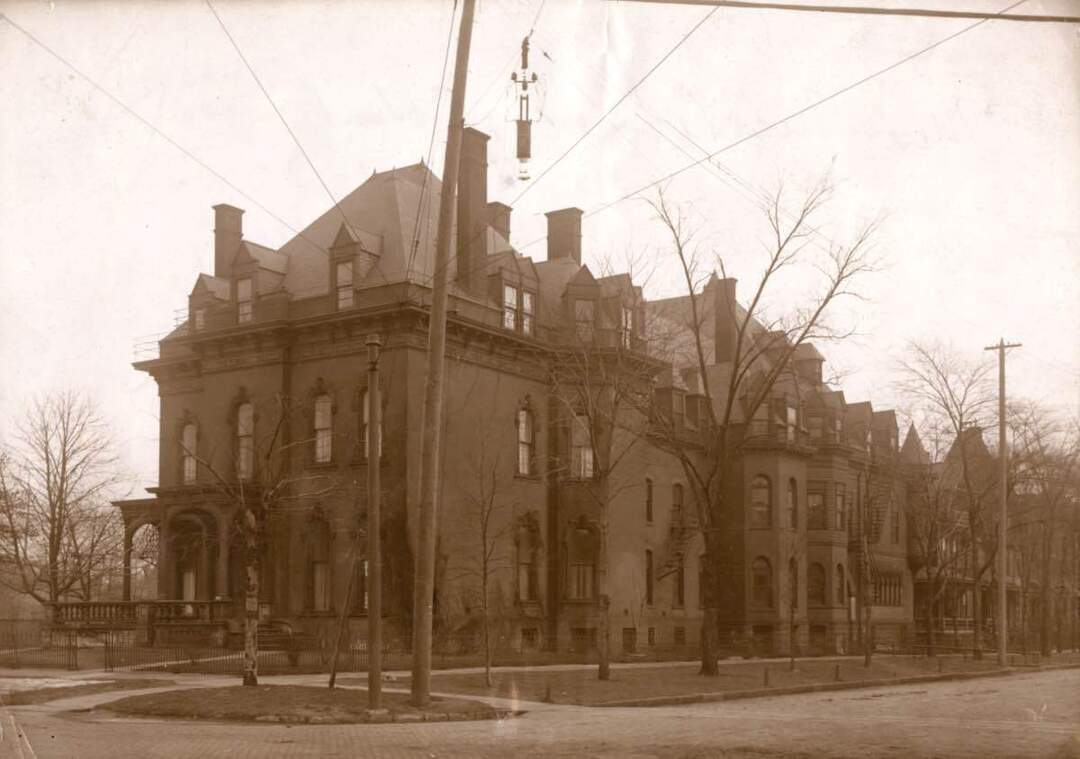
    <summary type="html"><![CDATA[<p><strong><em>"It is hardly too much to say that we have accepted Miss Mittleberger's school as a part of the constituted order of things, much as we accept the shining sun, valuing its prominence and its generous benefits most when the brighter seasons end." </p><p>— <em>The Interlude</em></em></strong></p><img src="https://mail.clevelandhistorical.org/files/fullsize/2ed54c9b5294dd1b01dd5bb7c9be79cc.jpg" alt="The Old Rockefeller Property" /><br/><p>From 1877 to 1908, Miss Mittleberger’s School for Girls educated middle- to upper-class daughters from the Cleveland area, as well as those from out of state. The girls who attended Miss Mittleberger’s School received an extensive education while also creating lifelong bonds with their classmates. Many of the young women educated at Miss Mittleberger’s School went on to attend prestigious women’s colleges such as Bryn Mawr, Smith, Vassar, and Wellesley. </p><p>Headmistress Augusta Mittleberger was born on September 13, 1845, to Canadian immigrant and prosperous coal and produce merchant William Mittleberger and Augusta Margaret Beebe of Oneida County, New York. Mittleberger had two younger brothers, William Jr. and Alexander. Mittleberger’s status allowed her to receive an education, and in 1863, she graduated from the Cleveland Female Seminary, located on Kinsman Avenue between Wallingford Court. (E. 45th Place) and Sawtell (E. 51st Street). Mittleberger was passionate about education and began tutoring students shortly after she graduated. From 1868 to 1869, she taught both History and Latin at the Cleveland Female Seminary. By 1874, Mittleberger joined the faculty of the Cleveland Academy, located on the north side of St. Clair Avenue, where she remained until her father died in 1875 after a battle with Bright’s disease, when Augusta was 30 years old. </p><p><span>Shortly after, Mittleberger decided to independently teach young girls in her private residence on Superior Avenue, where the Cleveland Public Library is located today. In 1877, Mittleberger's School moved to a house on Prospect Avenue just west of Willson Avenue (now E. 55th Street) and then, soon after, to another location on Prospect just west of Case Street (now E. 40th Street).</span><span class="c-message__edited_label"> </span> In 1880, Mittleberger’s ability as an educator had captured the attention of many prominent families. To accommodate the growing number of students, she needed a larger location to support the expanding school. One notable family interested in her work was the Rockefellers. John D. Rockefeller and his wife, Laura, had two houses facing the southwest corner of Euclid Avenue and Case Street (E. 40th). One of these remained on the land and served as their home, and the second was relocated to the southeast corner of Prospect and E. 40th. This move was one of the first attempts in Cleveland to be successful, and it had cost the Rockefellers approximately $10,000 to $17,000. </p><p>The Rockefellers, who valued education, rented this space to Miss Mittleberger. By 1881, the building had become the home of Miss Mittleberger’s School for Girls, located at 1020 Prospect Avenue (now the 4100 block of Prospect Avenue), until its closure several years later. Fifty students attended Miss Mittleberger’s School that year, and the number of pupils enrolled continued to increase with the larger building in use. </p><p>One common misconception was that Miss Mittleberger’s School operated as a “finishing school” for upper-class women to learn the social and domestic etiquette to prepare them for high society and marriage. While courses on deportment and home skills were offered to the “girls of ten-twenty,” there was a rigorous course schedule in Miss Mittleberger’s Academic Department for girls between the ages of 14 and 19. Some of the many courses available included Algebra I-III, Astronomy, Art History, Basic Arithmetic, Bible, Botany, Clay Molding, Chemistry, Drawing, Elocution, English I-IV, French, Geometry, German, Greek Language, Greek History, Gymnastics, Latin, Spelling, Virgil Prose, and Wood Carving.</p><p><span style="font-weight:400;">Mittleberger’s school also accommodated students of all ages. The school also had kindergarten, primary, and intermediate departments. The kindergarten and primary departments were co-ed, and the intermediate department, along with the academic department, was strictly for girls. Students in the academic and intermediate departments documented their daily lives in the school's monthly newspaper, </span><i><span style="font-weight:400;">The Interlude. </span></i><span style="font-weight:400;">This student paper included poems, fictional pieces, jokes, jingles, updates on staff, and descriptions of day-to-day activities in or around the area. </span>
<span style="font-weight:400;">Miss Mittleberger’s School had many notable alumnae throughout its years of operation. For example, Belle Sherwin </span><span style="font-weight:400;">was the senior class president in 1886. Fanny Hayes, </span><span style="font-weight:400;">the daughter of Rutherford B. Hayes, attended before leaving for school in Connecticut, and Mollie Garfield, </span><span style="font-weight:400;">the daughter of President James A. Garfield, also attended between 1880 and 1883 before leaving for the same school in Connecticut. </p><span style="font-weight:400;">In March of 1908, Miss Mittleberger announced that she was retiring and that the school would be closing. That June was the last commencement for Miss Mittleberger’s School, which was held at the First Baptist Church on the corner of Prospect and East 46th. Festivities and a celebration were held for the graduating class and Miss Mittleberger herself. Additionally, an Alumnae Association was established, and many of the women involved attended the final commencement to pay their respects and share fond memories of their classmates and their beloved headmistress. The Alumnae Association raised approximately $25,000 to endow the Mittleberger Memorial Kindergarten and gifted Miss Mittleberger with a purse of money that they wanted her to use for a vacation to Europe for some much-needed rest. Many of the remaining students who did not graduate that June transferred to the Laurel School to finish their education while still honoring their roots as the girls of Ten-Twenty. </p><span style="font-weight:400;">Augusta Mittleberger dedicated her life to educating young women in Cleveland, Ohio. Her passion for teaching and serving as a role model for her students is evident in the many reminiscences of the women who attended and received a well-rounded education. Even after her retirement, Mittleberger dedicated her time to furthering the Mittleberger Memorial Kindergarten and her memorial scholarship, which supported two Cleveland-area senior students for many years. Augusta Mittleberger passed away on August 3, 1915, and was laid to rest at Lake View Cemetery in Cleveland, Ohio. </span></p><p><em><strong><a href="https://mail.clevelandhistorical.org/items/show/1059">For more (including 5 images) view the original article</a></strong></em></p>]]></summary>
    <published>2025-07-18T16:59:00+00:00</published>
    <updated>2026-04-17T19:17:43+00:00</updated>
    <link rel="alternate" type="text/html" href="https://mail.clevelandhistorical.org/items/show/1059"/>
    <id>https://mail.clevelandhistorical.org/items/show/1059</id>
    <author>
      <name>Bali White</name>
    </author>
  </entry>
  <entry>
    <title type="html"><![CDATA[Max S. Hayes High School: Building a Cleveland Citizen]]></title>
    <summary type="html"><![CDATA[<p><strong><em>Max S. Hayes was an inspirational leader and voice of the labor movement in the city of Cleveland during the early 20th century. With manufacturing continuing to boom after World War II, Cleveland needed vocational training more than ever before to meet the need for new workers. When city leaders decided to build a new trade school, Hayes proved a fitting namesake for it.</em></strong></p><img src="https://mail.clevelandhistorical.org/files/fullsize/585eacd9c6b5fd63e6033efe2df4ee56.jpg" alt="Students at Max S. Hayes High School" /><br/><p>After World War II and into the 1950s, young men had more ample time and opportunity to look to their futures in a peacetime economy still dominated by industrial work, and as a result the enrollment in vocational schools on the West Side of Cleveland rose rapidly. During the war, the West Side division enrollment had averaged around 67 students, but by 1948 it had soared to 2,800 before leveling off at a slightly lower number in the following years. </p><p>In 1952, talks began about opening a new trade school on Cleveland’s West Side. The school was proposed to be opened on West 49th and Detroit Avenue. The conditions of the other trade schools on the West side were growing overcrowded, and the old Cleveland Trade School on Eagle Avenue had nowhere to expand in its densely packed downtown block. The new school’s opening was seen as ideal because it would allow more space for the influx of new apprentices in need of space.</p><p>There was dispute over whom the new school would be named after. The choice came down to William Green and Max S. Hayes. Green was the former president of the American Federation of Labor and was a conservative figure compared to Max S. Hayes. Hayes was ultimately chosen as the namesake for the school because he was a more progressive figure who stood for workers as compared to Green, who leaned towards favoring greater union cooperation with labor management. </p><p>Max S. Hayes was a Cleveland politician and writer in the early 20th century. Hayes was a member of the American Socialist Party and an advocate for workers’ unions and workers' rights in the city of Cleveland. The newspaper developed in 1891, named <em>The Cleveland Citizen</em>, was Hayes's ultimate mark on the labor and socialist politics in not only Cleveland and Ohio but in the entirety of the United States. <em>The Cleveland Citizen</em> was the first labor-focused newspaper in the United States. The paper concentrated on getting out information relevant to the city's working class. Hayes was also nominated as a candidate for Vice President of the United States on two occasions — once in 1900 under the Socialist Party and then again in 1920 as the candidate for the Farmer-Labor Party — but without success. </p><p>Upon Max S. Hayes Vocational School's opening in 1955, it met with instant success. When the school opened, there were only young men in attendance who were split up into a three-group program. The largest group included 4,000 young men who attended both day and night classes and were already working in their field and now extending their education. The second group included 2,700 students who were apprentices. Another 325 of the students were high school young men who planned on working in the field after graduation and not attending college or university. Max S. Hayes Vocational School offered 22 programs, including bricklaying, automotive, barbering, plumbing, and the list goes on. </p><p>The school has run very much the same since its opening. The primary changes have been the pivot from being a general vocational school to a school only for high school age students, and the expansion of young women also being able to attend the school. However, Max S. Hayes High School no longer exists in its original incarnation. In 2015, it was relocated to a new building on West 65th Street just a few minutes south of the original location. With the funds available, the Cleveland Metropolitan School District decided to build a new Max S. Hayes High School in order to have an updated space with new facilities to better suit its current generation of students. The school still serves as a pull school that educates students from all over the city with the goal of training the next generation of workers in Cleveland and upholding Max S. Hayes's legacy.</p><p><em><strong><a href="https://mail.clevelandhistorical.org/items/show/1046">For more (including 12 images) view the original article</a></strong></em></p>]]></summary>
    <published>2024-12-01T23:23:36+00:00</published>
    <updated>2026-04-17T19:17:43+00:00</updated>
    <link rel="alternate" type="text/html" href="https://mail.clevelandhistorical.org/items/show/1046"/>
    <id>https://mail.clevelandhistorical.org/items/show/1046</id>
    <author>
      <name>Mike Webber</name>
    </author>
  </entry>
  <entry>
    <title type="html"><![CDATA[Shaker Historical Society and Museum: Challenging Suburban Resistance and Shaping Community Identity in the Quest for Home]]></title>
    <summary type="html"><![CDATA[<img src="https://mail.clevelandhistorical.org/files/fullsize/50726ca80912a440e06313046e9fd8e7.jpg" alt="Shaker Historical Society, 16740 South Park Boulevard (Scrapbook Excerpt)" /><br/><p>The Shaker Historical Society and Museum has a rich history marked by its successful establishment and resilience in overcoming challenges to secure a permanent location. The Museum presents historical artifacts and educational programs that extend beyond the <a href="https://clevelandhistorical.org/items/show/674">North Union Shaker</a> community, engaging Shaker Heights residents in public history. The legacy of the Van Sweringen brothers, who influenced the design of city streets and community values, is deeply embedded in the area’s physical layout and reflected in the Museum's role within the community.</p><p>Building on this foundation of historical interest, the story of the North Union Shaker community itself is central to understanding the origins of Shaker Heights. Founded by Ralph Russell in 1822, the Shaker community occupied the lands now known as Shaker Heights and Cleveland Heights. Although the community disbanded in 1889, its utopian ideals left a lasting legacy that helped shape the vision of the master-planned suburb. Interest in the Shakers within the community began to grow in the mid-1920s, when the Shaker Heights School District started incorporating local history into its educational programs. Teachers Edythe Turner and Pearl Lee Stark played a pivotal role in this effort, collecting Shaker artifacts and embedding them into the third-grade curriculum, ensuring that future generations would engage with this important chapter of the area’s past.</p><p>The Shaker community attracted interest from several institutions in the Cleveland area, with Wallace H. Cathcart, former director of the Western Reserve Historical Society (WRHS), initiating the Shaker collection in 1911. Today, the WRHS holds approximately 900 Shaker photographs from 1860 to 1920, which were vital in shaping a coherent public understanding of the North Union Shaker community’s legacy. Caroline B. Piercy, a Shaker Heights resident, extensively studied the Cathcart collection and published <em>The Valley of God’s Pleasure: A Saga of the North Union Shaker Community</em> in 1951. Her research led to connections with other local residents, including Rev. John M. Schott, Cary Alburn, Benjamin Jenks, and Councilman John A. Hecker, who took a major step in preserving this history by founding the Shaker Historical Society and Museum (SHS). Elizabeth B. Nord, the Museum's volunteer curator for twenty years until her death in 1972, was also instrumental in this effort. The Society began gathering Shaker artifacts and donations, hosting its first garden party on June 11, 1948, in the Shaker Room of the WRHS.</p><p>Over the next twenty-two years, the Shaker Historical Society relocated seven times before settling into a storefront at 3488 Lee Road in 1968. However, this location proved unsustainable due to high costs, prompting the board to seek a more permanent home for the Society and Museum. In 1966, a special board meeting was held in the basement of Boulevard School to discuss the donation of the Myers mansion. Designed by architect Daniel Reamer in 1910 for Louis Myers of the Van Sweringen Company, the mansion was being negotiated by his son, Frank Myers, as a potential permanent home for the SHS. The Myers mansion was historically significant, situated on the original site of the Shaker settlers’ farm and near Horseshoe Lake, created by the settlers’ dam. Despite this, local residents and neighbors at the time strongly opposed the Museum’s move into the area. Their concerns about relocating the Museum to a residential neighborhood reflected the nineteenth-century ideals behind the Van Sweringen brothers’ vision of an ideal “utopia.” In response, Mayor Paul K. Jones decided to allow neighborhood residents to voice their opinions based on issues of zoning policies.</p><p>The Van Sweringen brothers sought to control property values in Shaker Heights through deed restrictions, a common practice in American suburban development. By promoting homeownership, they aimed to stabilize property values and prevent “undesirable” neighbors, enforcing both aesthetic standards and racial covenants. In 1925, they introduced Restriction No. 5, which encouraged residents to return old property deeds for approval before selling. Zoning regulations were also implemented, designating certain areas for single-family homes while allowing commercial use in other zones. The northern areas of South Park Boulevard and Lee Road were reserved for single-family residences, while the neighborhoods south of South Woodland Road and Van Aken Boulevard were subject to a mix of zoning types. Together, Restriction No. 5 and the expanded zoning regulations reinforced the Van Sweringen brothers' vision of a white, upper-to-middle-class "utopia."</p><p>Although Shaker was well on its way to becoming a community that embraced social diversity, the Van Sweringen vision of exclusivity and zoning control was echoed decades later when the Shaker Historical Society's proposal to relocate to the South Park Boulevard neighborhood faced resistance. Much like the earlier concerns over "social invasion" and zoning laws, opponents feared the impact of the Society's move on the residential character of the area. <span>To bypass these objections, trustee Frank Myers donated the property to the state with vice president William R. Van Aken handling the legal complexities of the transfer, enabling the Society to contract with the State Department of Public Works and avoid city zoning regulations.</span></p><p>This effort to overcome zoning resistance marked a pivotal moment in the Shaker Historical Society's development and expansion. Drawing on this achievement, the Society began to shift its focus toward broader public engagement. The president of the SHS at the time, William Van Aken, discussed opening the Museum to all residents of northeastern Ohio, and the public was first invited into the space during a tour conducted around the Shaker Lakes in 1970. Building on this momentum, the Women's Committee of the SHS was established in June 1971 to increase interest, funding, and volunteer support for the museum. In 1972, Elizabeth Nord made a significant contribution by donating her personal library to the SHS and receiving the Golden Deeds Award from the Exchange Club of the Heights. Tragically, she passed away from a heart attack just four months later. The 1980s marked a period of expansion for the Society, which showcased four major exhibits and elected its first female president in 1988, further solidifying its commitment to inclusive public history.</p><p>The success of these early efforts laid the groundwork for the Shaker Historical Society’s continued growth and evolution. As the Society expanded its reach and strengthened its community ties, it also began to reflect the values and identity of Shaker Heights itself. The suburb, deeply intertwined with the concept of "home," influenced the Society’s transition into a single-family residence, further aligning its mission with the broader emphasis on home and place that defines the area. By broadening its focus from solely representing the Shakers to engaging more deeply with the diverse local community, the Shaker Historical Society and Museum is forging a new identity for public history in Shaker Heights—one that reflects the suburb's contemporary values while enriching its historical narrative.</p><p>Today, the Shaker Historical Society and Museum, along with the Elizabeth B. Nord Memorial Library and Archives, operates in its permanent location at 16740 South Park Boulevard. Despite past resistance, the museum now stands as a hub for public history, education, and community development, honoring the legacy of the North Union Shakers on the very land they once inhabited.</p><p><em><strong><a href="https://mail.clevelandhistorical.org/items/show/1040">For more (including 14 images) view the original article</a></strong></em></p>]]></summary>
    <published>2024-11-26T01:14:49+00:00</published>
    <updated>2026-04-17T19:17:43+00:00</updated>
    <link rel="alternate" type="text/html" href="https://mail.clevelandhistorical.org/items/show/1040"/>
    <id>https://mail.clevelandhistorical.org/items/show/1040</id>
    <author>
      <name>Makialani Kanewa-Mariano</name>
    </author>
  </entry>
  <entry>
    <title type="html"><![CDATA[Hruby Conservatory of Music: From Czech Family Orchestra to Slavic Village Institution<br />
]]></title>
    <summary type="html"><![CDATA[<img src="https://mail.clevelandhistorical.org/files/fullsize/3872ca41d1075c2a3b85f3a1718def56.jpg" alt="The Hruby Family Orchestra, 1912" /><br/><p>The Hruby Conservatory of Music, located in Cleveland’s Slavic Village neighborhood, was founded by Frank J. Hruby in 1917. The Hrubys had immigrated to Cleveland from Prague in 1883, when Frank was just six months old, for his father to find more opportunities in his musical career. Growing up in an incredibly musically talented household, Frank and his five brothers formed the Hruby Brothers Orchestra (renamed the Hruby Family Orchestra as Frank’s two sisters and father joined) in 1907. They performed at venues around Cleveland and even traveled across multiple northern U.S. states for their concerts. The success of the orchestra made the Hruby family name famous in the Cleveland music scene, and enabled each member of the family to find stable work in either musical performance or education.</p><p>For over 50 years, the institution acted as an artistic and cultural centerpiece for Cleveland’s Czech-American population, as students enjoyed opportunities for high-quality instruction on various instruments, singing, and live performances. The conservatory’s prominence in the community benefited from its proximity to another major Czech-American cultural center, the <a href="https://clevelandhistorical.org/items/show/739">Bohemian National Hall</a>, where students could join dramatics groups and participate in public showcases. Another major factor that considerably boosted the conservatory’s stature as a significant cultural center in the public eye was that several members of Hruby’s immediate family performed with the Cleveland Orchestra at various points throughout from 1918 onward. The family’s locally renowned musical talent and the conservatory’s established reputation as an institution of artistic excellence allowed Hruby Conservatory to attract students not only from the nearby Czech-American neighborhoods, but from nearly every part of Cleveland.</p><p>The conservatory operated until Frank Hruby’s retirement in 1968. The building remained unused for nearly a decade when private owners purchased it in 1976. In 1980, the old conservatory building was reopened as a school of music, becoming the Broadway Branch of the Cleveland Music School Settlement. In 1983, the structure began operating as the Broadway School of Music and the Arts, the name it retains to this day.</p><p><em><strong><a href="https://mail.clevelandhistorical.org/items/show/1025">For more (including 4 images) view the original article</a></strong></em></p>]]></summary>
    <published>2024-05-08T04:17:21+00:00</published>
    <updated>2026-04-17T19:17:43+00:00</updated>
    <link rel="alternate" type="text/html" href="https://mail.clevelandhistorical.org/items/show/1025"/>
    <id>https://mail.clevelandhistorical.org/items/show/1025</id>
    <author>
      <name>Andrew Zelina</name>
    </author>
  </entry>
  <entry>
    <title type="html"><![CDATA[Shore Cultural Centre: A Public School Reimagined as a Community Hub]]></title>
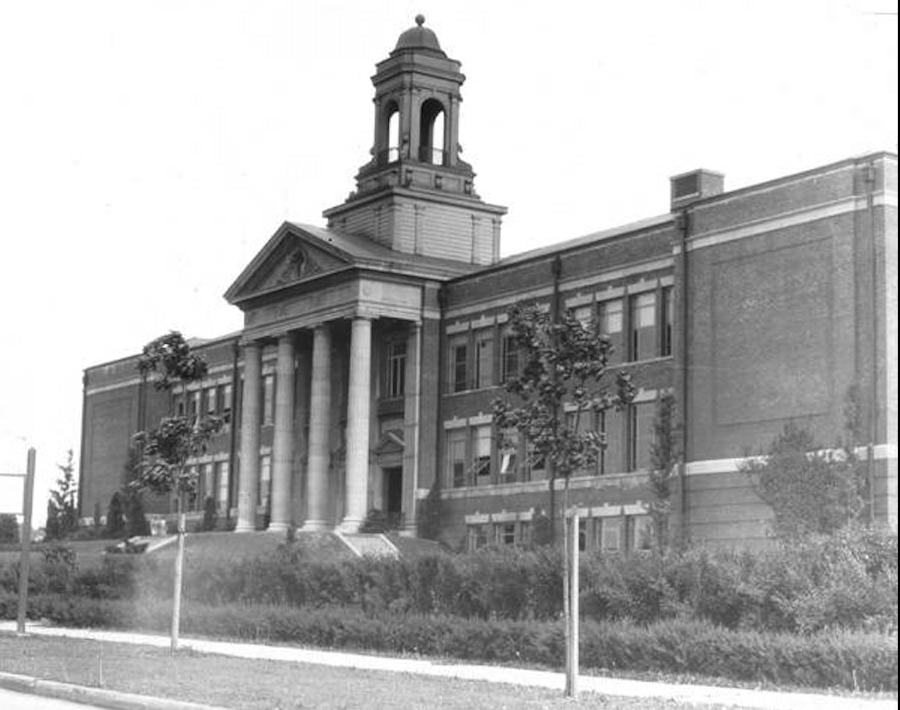
    <summary type="html"><![CDATA[<img src="https://mail.clevelandhistorical.org/files/fullsize/1a498c202ac3d28128ee6936109041cf.jpg" alt="Shore High School" /><br/><p>For nearly seven decades, the building that is now Shore Cultural Centre served as a public school. The Euclid Village School District built Shore High School in 1912-13 after it purchased land between Babbitt Road and East 222nd Street near where these roads converged at Lakeshore Boulevard in the heart of the suburban village. The three-story school was constructed at a cost of $42,500 and was paired with another new high school built near Euclid and Chardon Road, Central High School. Although Euclid remained a small village at that time, it stood on the cusp of significant growth as growing numbers of people moved to Cleveland’s first-ring suburbs. In its early years, Shore High School, like Central High, housed all grades. Only the top floor of Shore High School actually housed high school classrooms. Neither of the village’s high school buildings initially had an auditorium, necessitating the use of Euclid City Hall for graduation ceremonies. </p><p>By 1928, according to the Directory of Euclid, Euclid-Central and Euclid-Shore High Schools collectively served 615 pupils, a reflection of Euclid’s growth from about 2,000 to 12,000 people in the time since the schools opened. The directory also noted the strength of Shore High’s Musical Department, which staged many different productions, including “The Spring Maid” and “The Mikado.” The directory also claimed that Euclid had one of the largest village school systems in Ohio, a distinction that reflected the fact that Euclid was still two years away from being incorporated as a city. Shore High School’s continued growth led to the addition of eight new attachments to the original building over the next couple of decades. The school had known nothing but growth, so Euclid residents could only imagine more of the same. </p><p>Shore High School’s future became uncertain after World War II. With the suburb’s explosive growth, a new Euclid High School building opened for grades ten to twelve in 1949. As a result, both Shore and Central High Schools were converted into junior high school that housed grades seven to nine. The original Central High School building was demolished in 1968 following the construction of a newer building, while the original Shore High building continued to serve the district until Euclid began to experience population loss in the 1970s. With demand for classroom space receding, Shore Junior High School closed in 1982, leaving the 1913 building’s fate in question. </p><p>Thanks to the school building’s central location in the community, the city saw many offers over time by people who wanted to redevelop the land. However, the people of Euclid decided instead to recast the building as a community center. Shore Cultural Centre opened in 1985 and, following the school board’s sale of the building to the City of Euclid in 1989, it underwent a major renovation. Shore Cultural Centre reflected efforts by community leaders who had lived in Euclid for decades. One of them, Dolly Luskin, headed the effort to establish this center. Luskin had served on the school board for years in various leadership positions. She believed in the building’s potential as a place for teaching future generations about arts and culture while honoring a physical landmark from the city’s early years. Shore Cultural Centre preserves the memory of Shore High School as it provides cultural activities in the city. Its auditorium is the home of the Euclid Symphony Orchestra and serves other performing arts organizations, as well as some nonprofits and businesses. </p><p>Despite Shore Cultural Centre’s updated role in the community, it became the subject of debates about its utility. As early as 2007, some in the community argued that the building should be converted into some other use or sold to the highest bidder due to its land value. Ideas for what should be done with the building came from all angles, as seen in contentious local city council meetings. The problem, some argued, was that Euclid was pouring money into a facility that was losing more money than it made through renting its spaces. The city, which suffered a significant loss of its tax base after losing one-third of its population in the four decades after 1970, struggled in recent years to make needed repairs and improvements to the aging building. As a result, the city continued to troubleshoot the facility’s problems. By 2023, it had made some progress. Shore Cultural Centre received an earmark of federal funds to upgrade some of its infrastructure and was reportedly 93 percent occupied. </p><p>Shore Cultural Centre embodies the story of Euclid and, more broadly, of older suburbs. As a school, it rose from humble beginnings, grew with all the vigor of the suburb whose students it served. Then, as in many inner-ring suburbs, Euclid endured the deindustrialization and population flight to more outlying areas or even other states, leaving school facilities in excess of the need. The school’s reinvention was part of a wider effort to reinvest in the community, but like the city, Shore Cultural Centre continues to navigate toward the promise of a sustainable future for a historic asset.</p><p><em><strong><a href="https://mail.clevelandhistorical.org/items/show/929">For more (including 9 images) view the original article</a></strong></em></p>]]></summary>
    <published>2020-12-13T22:25:05+00:00</published>
    <updated>2026-04-17T19:17:42+00:00</updated>
    <link rel="alternate" type="text/html" href="https://mail.clevelandhistorical.org/items/show/929"/>
    <id>https://mail.clevelandhistorical.org/items/show/929</id>
    <author>
      <name>Harrison McCreight</name>
    </author>
  </entry>
  <entry>
    <title type="html"><![CDATA[Adele von Ohl Parker: The Second Act]]></title>
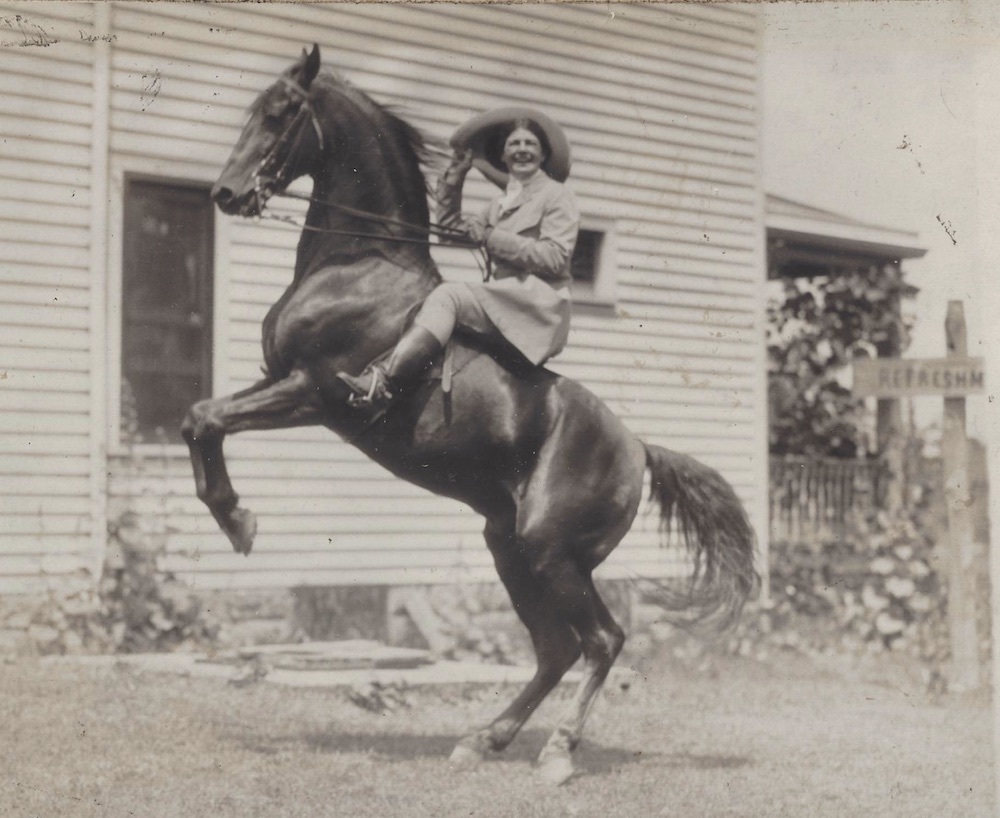
    <summary type="html"><![CDATA[<p><strong><em>"There are many women leading a butterfly's existence who would be glad to go into something worthwhile."</p><p>– Adele von Ohl Parker, Los Angeles, California. Summer, 1916.</em></strong></p><img src="https://mail.clevelandhistorical.org/files/fullsize/b68cb6e8c1a8be0c021f3bb9c2aa9e10.jpg" alt="At home on her North Olmsted ranch" /><br/><p>As World War I raged across battlefields in Europe, Adele von Ohl Parker, nationally known daredevil rider, waged a campaign  in the United States for the creation of a mounted Red Cross to be composed entirely of upper-class horsewomen.  Conscious of the limitations that society placed upon women like herself in the early twentieth century,  she believed that women would rally around her campaign.  She wasn't wrong, but before such a mounted Red Cross could be successfully organized here, World War I came to an end.</p><p>Adele Ohl was born on December 13, 1885, into an upper-class family in Plainfield, New Jersey.  Her maternal Scottish ancestors had operated horse farms there since the early eighteenth century, and were said to have supplied horses to George Washington during the American Revolution.  Adele grew up around horses and learned to ride them expertly at a riding academy in Plainfield that was owned by her grandmother and managed by her mother.  When she was still a teenager, she began doing daredevil tricks with her horse Delmar.  In 1905, after adding back onto her last name the "von" that her paternal German ancestors had dropped when they came to America, nineteen year old Adele von Ohl  appeared at the Hippodrome Theater in New York City. There, riding Delmar, she performed an act in which they plunged off a high platform into a tank of water below. The act caught the attention of the East Coast media, who were quick to label her one of America's most daring woman riders, also noting that Adele did not ride a horse sidesaddle like most women then did, but instead rode astride her horse as men did.  </p><p>Adele von Ohl's act also caught the attention of William "Buffalo Bill" Cody, who hired her in 1907 to perform tricks on horseback for his Wild West extravaganza.  She toured the country with Buffalo Bill's troupe from 1907 to 1909.  In that latter year, she married James Letcher Parker, a bronco rider also performing with Cody's show.  They both left Cody's Wild West for the Vaudeville circuit, appearing over the course of the next two decades in acts with "Wild West" themes, like "Cheyenne Days," "Texas Round-up," and "Rodeo Days."  During this period, Adele Parker also appeared with the Ringling Bros. and  Barnum & Bailey Circus and worked for several years as a stunt woman in Hollywood, appearing in early movies with cowboy star Tom Mix.  In the fall of 1928, Parker traveled to Cleveland, where she was scheduled to appear at Keith's Palace Theater.  Her show, however, was canceled and, as she later said, "I was stranded in Cleveland with two horses and seven cents."  Perhaps she recognized that Vaudeville was coming to an end, and perhaps she also recognized that, at age 42, her daredevil riding days were coming to an end too.  Whatever the reason, she approached A. Z. Baker, President of the Union Stockyards in Cleveland, where her horses were being stabled, and asked him if she could perform an exhibition of daredevil riding at the livestock show that was being held that Fall in downtown Cleveland at Public Hall.  She then used the exhibition to generate interest in a new riding school – the Von Ohl School of Horsemanship – that she decided she would open in Cleveland, a city she believed held promise to become an important equestrian center in the Midwest.  And thus the stage was set for the beginning of the second act of her equestrian career.</p><p>During the years 1928 and 1929, Parker sited her new riding school at various places in the Cleveland area, including the new Equestrium built by the Union Stockyards at 6800 Denison Avenue in Cleveland, and the Armory of Troop A, 107th Cavalry of the Ohio National Guard located in Shaker Heights.  Neither place turned out to be a good fit, and, in the fall of 1929, she moved her school to North Olmsted, Ohio, where she rented six acres of land on the Henry Giesel farm.  (A decade later, she would purchase the land from the Giesel family.)  Located on Mastick Road, just west of Clague Road, it had bridle paths that led down into Cleveland Metroparks Rocky River Reservation, making it an ideal location for a riding school.</p><p>It is not clear exactly when or why the Von Ohl School of Horsemanship became Parker's Ranch, but the "when" was certainly no later than by May 23, 1930, when a short article about a YWCA horse riding event there appeared in the Plain Dealer.  The "why" for the name change may have been a nod to her husband who helped her start the  ranch in North Olmsted,  but then soon thereafter departed.  The two were divorced several years later.  Following his departure,  Adele's brother Percy, a dog trainer, and her sister Winnonah ("Nona"), an animal trainer and talented horseback rider in her own right,  moved onto Parker's Ranch to assist their sister in its operation.  Over time the ranch grew to have some 34 buildings, including four barns which stabled from 60-70 horses, half of whom were owned by the ranch.  The ranch also became home to an assortment of other animals, including cows, donkeys, goats, chickens, rabbits and pomeranian dogs.  According to the 1940 census, the ranch also came to employ a staff of at least ten persons, ranging from secretaries to cooks to handymen to stablemen.  The Plain Dealer, in an article that appeared on June 22, 1930, called it a "dude ranch in industrial Ohio."</p><p>While Parker's Ranch was founded as  a riding school, it soon became much more than that as Adele Parker initiated programs and events at the ranch that focused on children, including disabled children.  Shortly after opening Parker's Ranch, Adele started a day camp for children.  Day camp was inspired by a program she had developed for kids in Los Angeles a decade earlier called "Junior Rough Riders."  Held  every summer for many years,  day camp at Parker's Ranch was  four days each week for an eight-week session.  At day camp, children were not only taught how to ride horses, but also to love horses and how to care for them.  Along the way, they were also taught a lot of life lessons from Parker and her staff.  She also instituted a number of annual events on the ranch, which gave children opportunities to perform on horseback in front of friends, families and neighbors.  One of those events was the annual Mother's Day Show.  Another was the Annual Horse Show.  And, starting in 1959, the fiftieth anniversary of her last year with Buffalo Bill Cody, Parker began a Wild West show of her own, modeling it after Cody's.  Proceeds from the annual Wild West shows, as well as from other events on the ranch, went to the Society for Crippled Children, today known as Easter Seals.</p><p>In addition to the programs, events and other activities at Parker's Ranch, Adele Parker also gave riding lessons at Cleveland's famed Karamu House  to African American children, a number of whom appeared in riding competitions representing Parker's Ranch.    She also  found time to pursue other passions.  She was a talented sketch artist and oil painter.  She also was, in 1961, one of the founding trustees of the Olmsted Historical Society.  Parker continued to appear at Cleveland area events on horseback well into her seventies, performing at her fifth annual Wild West Show in 1963 when she was 77 years old. When Parker died at her ranch on January 21, 1966 from heart failure, the papers reported that she had no surviving family.  And yet they also noted that more than 300 area children had attended her funeral.  These children were part of the estimated 10,000 children in Cuyahoga, Medina and  Summit Counties that she taught to ride at Parker's Ranch during the Second Act of her equestrian career.  In a real sense, they were her surviving family as well as her legacy in northeast Ohio.</p><p><em><strong><a href="https://mail.clevelandhistorical.org/items/show/904">For more (including 15 images) view the original article</a></strong></em></p>]]></summary>
    <published>2020-02-13T19:48:30+00:00</published>
    <updated>2026-04-17T19:17:42+00:00</updated>
    <link rel="alternate" type="text/html" href="https://mail.clevelandhistorical.org/items/show/904"/>
    <id>https://mail.clevelandhistorical.org/items/show/904</id>
    <author>
      <name>Jim Dubelko</name>
    </author>
  </entry>
  <entry>
    <title type="html"><![CDATA[Shaker Heights Public Library: A Legacy of the Van Sweringens&#039; Shaker &quot;Group Plan&quot;]]></title>
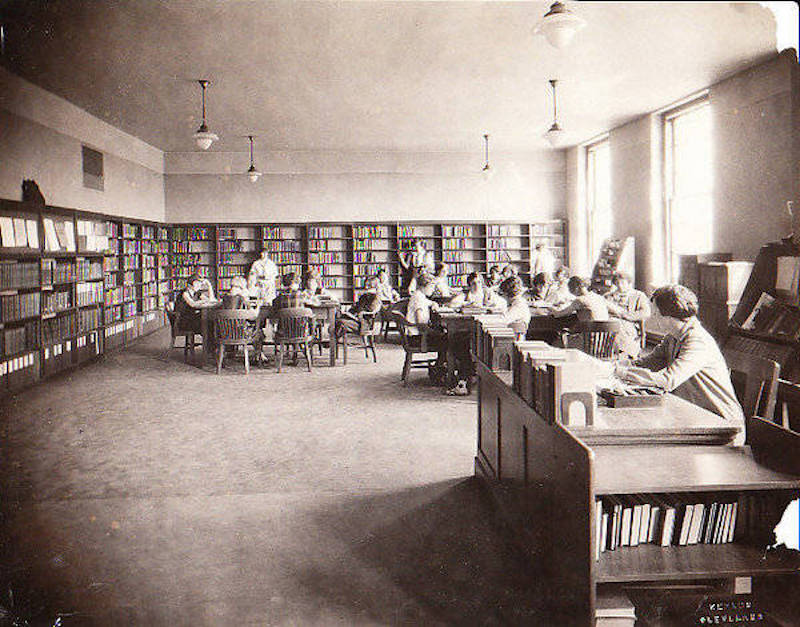
    <summary type="html"><![CDATA[<p><strong><em>Public library services in Shaker Heights grew from within the walls of the village's school system. By mid-century, the library had emerged as a valued civic institution.  Culminating in the opening of a stately structure on Lee Road in 1951, learn how these early years shaped the identity of Shaker Heights Public Library.</em></strong></p><img src="https://mail.clevelandhistorical.org/files/fullsize/c852ba06bfec7b746c5b7aa61ea6bdee.jpg" alt="Shaker Heights High School Library, ca 1929" /><br/><p>In 1913, a Van Sweringen “Group Plan” was beginning to take form in the young village of Shaker Heights. Construction of a stately school on Southington Road was nearing completion.  Borrowing from the neighboring City of Cleveland’s ambitious efforts to centralize civic buildings, a large oval tract had been donated to the village by the Van Sweringens as a potential site for an elementary school, town hall, high school and small library. While Boulevard School would be the only structure realized at this site, the short-lived plan displays early efforts to anchor civic life around school buildings in Shaker Heights’ emerging residential community.   </p><p> The Van Sweringen brothers invested heavily to bring this vision to fruition. A 1923 promotional publication for the Village of Shaker Heights claimed the investment of over two million dollars in property and equipment to the development of the village’s five educational institutions, and noted their intentions of building a school to serve each square mile of the suburb.  By 1931, ten public schools had been constructed.  Civic life centered around these educational institutions, which regularly housed the social, recreational, cultural and religious activities of the community. Despite the inclusion of a library in early plans for the Village of Shaker Heights, a public building devoted to this use was never erected during the suburb’s developmental years. Library services, however, grew from within the walls of Shaker Heights schools to become a valued public amenity. Prompted by community demand, an independent school district library was established in 1937 and the institution found a home in the Lee-Kinsman Building at the intersection of Kinsman (Chagrin Boulevard) and Lee Roads. By mid century, the library had emerged as a civic institution in its own right. These early years shaped both the future development and identity of Shaker Heights Public Library. The library’s significance as a civic institution and anchor of the Moreland neighborhood was reaffirmed in 1993 by a return to the place of its founding, the site of the former Moreland School.   </p><p> Public library services in Shaker Heights grew from the dedicated study rooms and book collections of the village’s school libraries. The only Shaker Heights library recognized by the Library Club of Cleveland and Vicinity in its 1924 handbook was operated out of Shaker Heights High School. The school, which would later be renamed Woodbury Elementary School, established its library in 1919. A graduate of Western Reserve University Library School was appointed as librarian the following year.  The library was available for use by teachers and students during the day.  Its materials supplied Shaker Heights’ classrooms and school libraries. Transition from a school-based system into a public institution was prompted by the creation of the Cuyahoga County Public Library during the early 1920s. </p><p> Spearheaded by librarian Linda Eastman of the Cleveland Public Library, efforts to make the nationally renowned institution available to county residents were met with popular support. The Ohio State Legislature authorized the creation and funding of county libraries in 1921, and a regional vote approved the establishment of a Cuyahoga County district the following year. With the law to be enacted in April of 1924, Cleveland Public Library’s County Department was formed to begin making preparations for the extension of library services to all persons living within the county.  Operated as a department of Cleveland Public Library, the County Library was an independent institution with its own personnel, book collection and funding. Early efforts focused on utilizing schools in outlying areas as distribution centers for library materials. The existing public libraries in Cleveland were also made available to county residents beginning in March, 1924. </p><p> Shortly after the creation of the County Department, negotiations began with Shaker Heights Superintendent of Schools to transform Shaker Heights High School Library into a branch of the new library system.  The village’s Board of Education approved the plans in June, 1924, and services were made available to the public beginning in October of that year. A basement room at the high school was converted into a workspace for staff, and new shelving was added to the library.  The existing book collection was supplemented by the County Library, and the position of school librarian taken over by a county employee. </p><p> The new librarian continued lending materials for classroom collections at Boulevard, East View, Malvern, Onaway and Sussex elementary schools, and immediately implemented in-house programming for Shaker Heights elementary school classes.  To accommodate its new adult patrons, the library extended weekday hours till five in the afternoon and opened on Saturday mornings. Access to the library was briefly offered on Tuesday evenings, but little demand was found for the service.  </p><p> During its first two years of operations at Shaker Heights High School, the County Library documented a steady rise in the circulation of materials. A 1926 report by the County Department noted that “the grown people of the community have discovered that the library is there and are demanding more service than our very new organization can give.” It was also quickly determined that the site of Shaker Heights High School was “far from ideal as a library center.”  A new branch of the County Library was planned for Moreland School, which was under construction at the time.   Shaker Heights Board of Education approved plans for a large room and workspace to be dedicated for use as a public library within the building.  </p><p> The public library in Moreland School opened on November 2, 1926. Final plans for the site included a room for adults, a room for students, and a work space for staff. The new facility housed a mixed collection of books culled from both County Library resources and the Shaker Heights High School collection. Moreland School’s library immediately supplanted the High School as the center for elementary school book distribution and classroom visits, but the High School branch remained staffed by its county-funded librarian and housed administrative duties for patron registration. Demand for library services from both students and adults continued to grow, and the Board of Education approved the purchase of a book truck to facilitate transportation of incoming and outgoing requested materials.   </p><p> Over the next decade, library services in Shaker Heights expanded as part of the Cuyahoga County Library system. Both Shaker Heights High School and Moreland School branches remained opened to the public, and furnished books to Shaker Heights’ Junior High and seven elementary school libraries. In response to community demand for increased services, including weekend and evening hours, the Shaker Heights Board of Education approved the creation of an independent school district library in 1937. A seven-member Library Board of Trustees was appointed by the Board of Education to govern the institution, which served the same geographic area as the school system. The Library Board was responsible for developing, implementing and overseeing all polices related to the library, including its services, budget and staff.  The Cuyahoga County Library remained affiliated with the successor institution, allowing patrons to borrow from its circulating system. The independent library, however, operated separately from the Cuyahoga County branches and received a share of the intangible property tax revenue that financed the region’s libraries.   </p><p> Arrangements were made to secure a site for the library at the intersection of Lee and Kinsman Roads soon after its institutional founding.  The owner of the Lee-Kinsman Building would erect a 49- by 70-foot, one-story addition to his commercial structure, and the newly installed Library Board agreed to lease the building for five years. Additionally, the board hired Ellen Ewing as Head Librarian to oversee the process of organizing and purchasing books for the Shaker Heights community. Opened to the public in 1938, the leased storefront was only planned as temporary headquarters. In 1941, the Board of Education agreed to sell property on Moreland School grounds to the Library Board for the construction of a new library. East View School, which had served as the neighborhood’s elementary school prior to the opening of Moreland Elementary School, had been converted into warehouse space; It would be demolished to make room for the new structure. Bond issues were approved by Shaker Heights voters in 1945 and 1948 for library construction, but construction was delayed due to World War II.</p><p> Concerns over the legitimacy of the independent school district library also delayed construction plans.  Beginning in 1946, the County Budget Commission reduced the income of several regional independent libraries. Interpreted as an attempt by the Cuyahoga County Library to absorb Shaker Heights’ library, the actions of the commission presented “an intolerable situation…that…will hamper the operation of the library in the coming year, jeopardize the proposed library building and deny the citizens of Shaker Heights the library services for which they have clearly expressed their desire.” The situation grew dire with the passage of a state law that barred the establishment of independent libraries in 1947. Because no prior law existed permitting Shaker Heights from withdrawing from the county system, the future of the library was in question.   </p><p> In 1948, the Board of Education announced it would initiate a test case to determine the legal status of independent library systems. The sale of $150,000 in notes was ordered towards financing construction of the new Shaker Heights Library, which the Clerk-Treasurer refused to issue. The case went before the Cuyahoga County Court of Appeal, and was decided in the Board of Education’s favor. The Court of Appeals compelled the Clerk-Treasurer to sell Shaker Heights’ bonds, confirming the legality of independent libraries established prior to the 1947 state law. Bids were accepted by the Shaker Heights Library Board in 1949 for the construction of a new edifice at 3450 Lee Road, the current site of the Stephanie Tubbs Jones Community Building. The library’s construction was long overdue.  More than 30,000 books were packed into the existing small, storefront location.  </p><p> The new library opened to the public in 1951. Just as the head librarian curated materials for Shaker patrons, the state-of-the-art facility was fashioned to reflect the character of the community. The interior of the civic building exuded a comfortable, home-like setting. Elaborate woodwork, easy chairs, multicolored drapes, end tables, reading lamps and an open fireplace offered visitors the ambiance of a residential study. Upon entering a room devoted to the history of the Shaker religious community, peg board floors and an off-white paint job presented patrons with a historically accurate replication of the religious sect's penchant for the austere. Low tables marked areas devoted for use by children, while space for quiet study acted as a memorial to the recently deceased Ellen Ewing. </p><p> Over the next four decades, the independent library continued to expand and diversify its services. Building renovations were made, the Bertam Wood branch opened and a number of outreach programs were instituted. Computer terminals replaced card catalogs, while patron access to library materials grew exponentially with the introduction of the Online Computer Library Catalog database and CLEVNET.  The introduction of videocassettes, books-on-tape and audio compact discs to the library catalog precipitated a surge in circulation beginning in the late 1980s.   </p><p> Sources of revenue to finance library services also changed. Beginning in 1974, county funds were supplemented through the passage of local library tax levies. Shaker Heights residents regularly displayed support for their independent library through the passage of operational levies since that time.  Per capita circulation of Shaker Heights Public Library materials consistently remained the highest in the county during the 1980s and 1990s. </p><p> As the once-spacious building at 3450 Lee Road grew crowded with materials and patrons, plans were developed to expand and modernize the main library.  After exhaustive studies, the recently vacated Moreland School site next door was chosen as the library’s new home. Previously relegated to rooms at the eastern entrance of the structure between 1926 and 1938, the library would return to Moreland School as the primary occupant. The school house would once again be an anchor for civic life in the region. The new library was dedicated and opened to the public in 1993.</p><p><em><strong><a href="https://mail.clevelandhistorical.org/items/show/841">For more (including 15 images) view the original article</a></strong></em></p>]]></summary>
    <published>2018-07-14T15:44:22+00:00</published>
    <updated>2026-04-17T19:17:39+00:00</updated>
    <link rel="alternate" type="text/html" href="https://mail.clevelandhistorical.org/items/show/841"/>
    <id>https://mail.clevelandhistorical.org/items/show/841</id>
    <author>
      <name>Richard Raponi</name>
    </author>
  </entry>
  <entry>
    <title type="html"><![CDATA[Moreland Elementary School: Historic Focal Point of the Moreland Neighborhood]]></title>
    <summary type="html"><![CDATA[<p><strong><em>Built in the Roaring Twenties to provide an elementary school education for the children of the families that were moving into the fast-growing, southwesternmost neighborhood of Shaker Heights, Moreland Elementary School not only lent its name to that neighborhood, but also became the neighborhood's iconic  landmark and its enduring symbol of heritage, transition, and renaissance.  </em></strong></p><img src="https://mail.clevelandhistorical.org/files/fullsize/c0f8664caa0c0ed039e3e2bec1bdea26.jpg" alt="Moreland Elementary School (1926-1987)" /><br/><p>The Van Sweringen brothers knew that a premier suburb required a premier public school system.  So, it was not surprising that, in 1913, just one year after the incorporation of Shaker Heights, its Board of Education began implementing the Vans' vision, undertaking an ambitious building program that proposed to place a new elementary school in every neighborhood of the village. When neighboring East View Village was annexed in 1920, the school building program was extended to that new territory, which soon became home to Shaker Heights' southernmost residential neighborhoods.</p><p>Prior to the annexation, children in East View Village had attended elementary school in a small, four-classroom building located on the west side of Lee Road between South Moreland (Van Aken) Boulevard and Kinsman Road (now Chagrin Boulevard). That school building continued to be used by the Shaker Heights Board of Education for several years as an elementary school for children living in Shaker's southwesternmost neighborhood--later known as the Moreland neighborhood. By 1924, however, the Board recognized that the building had become inadequate to accommodate all of the school-age children living in this fast-growing area of Shaker Heights. Accordingly, in that year, the Board decided to build a new, larger elementary school just to the west of East View School, on a parcel of land sold to it by the Van Sweringens.</p><p>Charles Winning Bates, an architect from Wheeling, West Virginia, who had designed other school buildings in Shaker Heights, was awarded a contract by the Board of Education to design this new school.  Bates designed it in the neo-Georgian style, matching all other Shaker school buildings of its era. Three stories tall, brick, and with a grand entrance facing South Moreland (Van Aken) Boulevard, the new building was to have 28 classrooms — seven times as many as old East View School, as well as a teacher's restroom, a principal's office, a medical room, and an auditorium-gymnasium. After the Shaker Heights electorate approved a bond issue in November 1924 which had earmarked $425,000 for the new school building, construction commenced in 1925. By 1926, the building was completed, and on March 15 of that year the first children moved out of East View School and marched a few hundred feet into the new building, which was initially called Lee-Moreland School.</p><p>From the late 1920s until the late 1950s, Lee-Moreland School, which was by 1940 simply called Moreland School, served a largely Jewish population living in the Moreland neighborhood. In addition to providing a quality public education to the neighborhood's children, the school building also served as a meeting place for many Jewish organizations, as a place where sacred Jewish days were celebrated or commemorated, and even as a religious school for Temple Emanu El and the Cleveland Hebrew School. Beginning around 1960, as many Moreland neighborhood Jewish families moved to suburbs north and east of Shaker Heights, they were replaced largely by African American families, many of whom were moving out of Cleveland and its overcrowded school system, and into Shaker Heights with its nationally recognized, excellent school system.  </p><p>Racial transition in Shaker Heights presented challenges to many institutions in many places throughout the city, but perhaps none greater or more important to the city's future than those faced by Moreland Elementary School. Fortunately, the school was headed in this era by a principal who was more than up to the task. Orville Jenkins, who grew up in southern Ohio, attended college at Bowling Green University, taught as a teacher for a number of years, and then became principal of an elementary school in the Toledo, Ohio, area. In 1956, the Shaker Heights Board of Education hired him as the principal of Moreland Elementary School. Jenkins, who purchased a home on Scottsdale Boulevard in the Moreland neighborhood, was soon recognized as an excellent principal, and, as well, a fiery advocate for integrated schools. When the Moreland neighborhood began undergoing racial transition in the 1960s, Jenkins was among the leaders of the neighborhood who engaged in concerted efforts to stop blockbusting, to keep the neighborhood stable, and to preserve the high standard of community life there. He helped found the Moreland Community Association (MCA) in 1962 and he permitted the new organization to hold its meetings and functions at Moreland Elementary school. He instituted an individualized instruction program at the school, designed to help children to learn at a pace most appropriate for them. And, he became a friend to all children in the school.  Jenkins was said to have known the first name of every child in the school. He served as school principal, as well as a trustee of the MCA and other community organizations, including the Shaker Historical Society, until his untimely death at age 46 in October 1969.</p><p>Despite the efforts of Principal Jenkins, and many others in Shaker Heights, to keep Moreland an integrated neighborhood, by 1969 its population had become overwhelmingly African American, and, according to a November 18, 1969 Plain Dealer article, the number of African American children attending Moreland Elementary School had reached ninety-five percent. The Moreland Community Association, with a goal of seeing Moreland Elementary School re-integrate, petitioned the Shaker School Board of Education to initiate a program to bring in white children from other neighborhoods of Shaker Heights to achieve that.  Ultimately, Shaker Heights BOE, after a series of public meetings, instituted a voluntary busing program (the "Shaker Plan") in the city, which, with modifications in the mid-1970s, resulted in a somewhat improved racial balance at Moreland in that decade.</p><p>At about the same time that the voluntary busing program was instituted in Shaker Heights, the city began suffering a decline in the number of school-age children in its public school system and the Board of Education began experiencing financial difficulties in maintaining all of the existing school buildings. To remedy this problem, the Board of Education ultimately adopted a school reorganization plan that led to the closing of Moreland Elementary school in 1987, despite vigorous protests from the Moreland neighborhood. While Shaker Heights initially considered selling the old school building for private redevelopment, it was eventually persuaded to preserve it because of its importance to the Moreland neighborhood's history and identity. In 1993, after a renovation process was completed, the former Moreland Elementary School became the new main branch of the Shaker Heights Public Library.  </p><p>More than two decades have now passed since Moreland Elementary School was transformed into the new Shaker Heights Public Library.  While the historic building now serves a different purpose in the community, the purpose it serves is still an educational one. And, perhaps more importantly, at least to the Moreland neighborhood, the building continues to be a focal point for the neighborhood, a beloved landmark, and an enduring symbol of the neighborhood's heritage, transition, and renaissance.</p><p><em><strong><a href="https://mail.clevelandhistorical.org/items/show/835">For more (including 12 images) view the original article</a></strong></em></p>]]></summary>
    <published>2018-05-09T15:06:42+00:00</published>
    <updated>2026-04-17T19:17:41+00:00</updated>
    <link rel="alternate" type="text/html" href="https://mail.clevelandhistorical.org/items/show/835"/>
    <id>https://mail.clevelandhistorical.org/items/show/835</id>
    <author>
      <name>Jim Dubelko</name>
    </author>
  </entry>
  <entry>
    <title type="html"><![CDATA[The Desegregation of Cleveland Public Schools: A 40-Year Struggle for Public School Equity]]></title>
    <summary type="html"><![CDATA[<p><strong><em>A 1976 landmark federal court ruling challenged Cleveland to take long-overdue action to desegregate its public school system. Although slowed by  litigation and disputes, the school district implemented crosstown busing to try to offset longstanding residential segregation patterns rooted in discriminatory real estate and lending practices. Compared to some other cities such as Boston, Cleveland's busing program was relatively peaceful, but it nonetheless produced its share of anxiety and unrest. While most Clevelanders agreed that change was necessary, the reality of transporting students away from neighborhood schools to unknown ones across the city challenged students, parents, educators, and the greater community to weigh the costs and benefits of personal comfort and social justice.</em></strong></p><img src="https://mail.clevelandhistorical.org/files/fullsize/7e8b5eb2d920e1b57695cfbf3a8ba9e4.jpg" alt="Bridgewalk, 1980" /><br/><p>Gathering at the Lincoln Statue in front of the Board of Education building, members of WELCOME (West-East Siders Let’s Come Together) rallied to promote a safe and peaceful start of busing to achieve racial balance in the Cleveland Schools. The federal court order and plans were in place amid community unrest concerning the transporting of students to desegregate the schools beginning in the 1979-80 school year. However the reality of transporting students to achieve integrated schools throughout the city challenged students, parents, activists, and educators to meet on Cleveland’s major east-west bridge to mount an effort to insure student safety and keep the process peaceful. Members of CORK (Citizens Opposed to Rearranging Kids) also called for the uninterrupted and peaceful implementation of the initial phases of desegregation. These rallies marked the beginning of each of three phases of student transportation during the year. Despite their feelings, citizens of Cleveland wanted a peaceful school atmosphere. </p><p>The effort that began fifteen years earlier was inspired in part by activism in the South. Yearlong protests of discriminatory student assignment policies in the Cleveland Public Schools culminated with the tragic death of a protester at <a href="https://clevelandhistorical.org/items/show/254">Stephen E. Howe Elementary School</a> in 1964. School system scrutiny and debate continued over the ensuing decade and a lawsuit known as <em>Reed v. Rhodes</em> was filed with the Federal Court in Cleveland in 1973. </p><p>  The litigation was long and complicated. Two years after the suit was filed on December 12, 1973, the late Judge Frank J. Battisti presided over a lengthy bench trial in 1975 and 1976. On August 31, 1976, Judge Battisti concluded that “the District and other Defendants, including the state board of education, had contributed, by both commission and omission, to an unconstitutional segregation of the Cleveland Public Schools.” The court permanently enjoined defendants “from discriminating on the basis of race in the operation of the public schools of the City of Cleveland, and from creating, promoting, or maintaining racial segregation in any school or other facility in the Cleveland Public Schools.” Both the state and local defendants were ordered to submit plans to desegregate the school district, which failed the court’s approval. A Special Master was appointed to develop a plan and later, on February 6, 1978, the court reaffirmed its earlier conclusion that the defendants were constitutionally liable for having maintained a de jure segregated public school system, and that these numerous constitutional violations demanded a system-wide remedy.      </p><p>The court issued a remedial order directing Defendants to implement, beginning in September 1978, a “comprehensive, system-wide plan of actual desegregation which eliminates the systematic pattern of schools substantially disproportionate in their racial composition to the maximum extent feasible.” The broad remedial order required the defendants to desegregate administrative, supervisory and teaching personnel, to desegregate the schools, to develop creative educational curriculums, and to develop methods of monitoring compliance. The district court also ordered racial balance:  “the racial composition of the student body of any school within the system shall not substantially deviate from the racial composition of the system as a whole.” Additional guarantees of student safety, counseling, extra curricular programs, transportation services were ordered among others.    </p><p>Work then began to devise a method to remedy segregation in the Cleveland schools; plans were prepared to respond to all aspects of the court ruling. Also, the court re-appointed a Special Master, retained two experts on school desegregation, established the Office of School Monitoring and Community Relations (which it charged with rigorous monitoring of desegregation implementation), and ordered the appointment of an official Desegregation Administrator to be paid by the defendants.    </p><p>In order to comply with the plus/minus 15% racial benchmark, students were assigned and bused to schools across town to achieve the requisite racial balance in each individual school. When imbalances resurfaced, they were corrected by administrative orders and students were reassigned as needed. Following additional litigation and challenges in 1977, the court ordered implementation to begin. A limited number of junior high students were transported in 1978-79 school year followed by a three-phase system-wide implementation from September 1979 to September 1980.   </p><p>Meanwhile, an unhappy community continued to protest the court approved remedies to be implemented. Pro and anti-busing advocates frequently picketed the school district headquarters, but the Court prevailed with its charge to proceed. Annually, throughout the 1980s, students were reassigned and bused to satisfy the court order. Bus rides for some students exceeded 80 minutes each way as east and west side students were assigned to cross-town destinations to balance the school populations. Despite the ongoing debate within the community, student transportation and assignments were never interrupted by civil disobedience. The intention to carry out court orders in a peaceful manner prevailed. In 1987, Judge Battisti authorized changes in pupil assignments without prior court approval if such changes were agreeable to the following three parties:  the school district, the State Superintendent, and Plaintiffs' legal counsel. During the initial six years of full implementation, the district, the monitoring agency, and the court remained engaged in detailed review of the progress and the reorganization of district management. </p><p>In the 1980s, the city school system became predominantly nonwhite as a result of white flight out of the city and school boundaries. The Cleveland School District operated approximately 130 schools, 90% of which satisfied the 15% limitation every year. Dr. Gordon Foster, who had previously served as the plaintiffs' expert witness during the liability phase of this case, issued a report in 1988 that stated the district had ended any overt segregation or discrimination and was “the only majority black, large city system in the country which is totally desegregated.” In addition, as ordered, the Office of School Monitoring and Community Relations conducted a detailed assessment of the state of compliance with all outstanding remedial orders and concluded that the defendants had substantially complied with the 15% limitation and that any deviations could not be attributed to discriminatory student assignments. While a relatively small proportion of district schools each year had enrollments that exceed the maximum deviation, no evidence suggested that this was the result of discrimination on the basis of race in the assignment of students. The Monitoring Office's assessment recommended that the parties continue to work together to move the case forward.   </p><p>In March 1992, the district court vacated over 500 orders upon joint motion of all the parties. However, there was a sense that the quality of public education had declined while the cost of operation had increased. The court thus urged the parties “not to hesitate to think about innovative programs and undertakings” that might ameliorate the situation in the school system. Judge Battisti further noted “the Court [had] not set out to run a busing company,”  and directed the parties to address whether they believed “the interests of the students in Cleveland would be better served by an alternative student assignment plan,”  and further suggested that parental and student choice become an important factor in student assignment within the Cleveland School District.    </p><p>By 1998, U.S. District Chief Judge George W. White concluded that it was time to end the quarter-century court battle over integrating the 76,500-student district, saying "the purposes of this desegregation litigation have been fully achieved." In declaring the system "unitary," the judge found that the state and district had done all that could be expected to remedy the harm created by past segregation in the changing urban district. The persistent gap in student performance between black and white students, he found, "is the result of socioeconomic status and factors directly related to it, not race." In doing so, the judge also began the process to determine how much longer state education officials would keep day-to-day control of the district. He would hold hearings soon to consider lifting the 1995 order in the desegregation case that declared the district in crisis and stripped the elected school board of authority and arrange the control of the school district under the city’s mayor-appointed school board. Nonetheless the community, though grudgingly, had also cooperated during the twenty years to maintain a peaceful desegregation process in Cleveland.</p><p><em><strong><a href="https://mail.clevelandhistorical.org/items/show/813">For more (including 14 images&#32;&amp;&#32;1 audio file) view the original article</a></strong></em></p>]]></summary>
    <published>2017-10-03T16:37:39+00:00</published>
    <updated>2026-04-17T19:17:41+00:00</updated>
    <link rel="alternate" type="text/html" href="https://mail.clevelandhistorical.org/items/show/813"/>
    <id>https://mail.clevelandhistorical.org/items/show/813</id>
    <author>
      <name>Jim Lanese</name>
    </author>
  </entry>
  <entry>
    <title type="html"><![CDATA[Waverly Elementary School: The Original Site of the Historic West Side Grade School]]></title>
    <summary type="html"><![CDATA[<img src="https://mail.clevelandhistorical.org/files/fullsize/706f3843d146c85dcc76feda58f7b7f3.jpg" alt="Waverly Elementary School" /><br/><p>The year 1884 was a good one for J. H. Schneider and the residents of the Tenth Ward, an area of the west side which today comprises much of the southeastern part of the Detroit Shoreway neighborhood. That year, Schneider, the Cleveland Board of Education member elected from the Tenth Ward, not only saw the successful completion of the building of the new West High School in his ward at the corner of Bridge and Randall Streets, but also that of the new elementary school on Waverly Avenue (today, West 58th Street), between Fir and Bayne (now Wakefield) Streets.  It was the first public elementary school built in the Tenth Ward, and became the neighborhood school for many students who formerly had to leave the ward to attend Detroit School in the Eighth Ward on what is today the corner of Detroit Avenue and West 49th Street.</p><p>The new school building, named "Waverly" after the street on which it was built, was designed by John Eisenmann, architect for the Cleveland Board of Education from 1883-1889.  He is also notable as the man who designed The Arcade in downtown Cleveland.  His Waverly School building was two stories in height.  It had an exterior facade of red brick.  There were 12 classrooms in the building, which included a basement which doubled as a playground when bad weather prevented the school children from going outside. Girls played on one side of the basement; boys on the other.  </p><p>Over the years, many west side children attended Waverly including Cleveland Housing Court Judge Raymond L. Pianka, who attended the K-6 school from 1956 to 1963.  By the time he went to school there, the fortunes of the neighborhood had begun to decline as Cleveland experienced the devastating economic adjustments of deindustrialization in the second half of the twentieth century.  Ray went to school with many children who lived in poverty or near poverty.  In a 2005 interview, Judge Pianka related a story which graphically illustrated the point.  As he told it, on one occasion local health officials came to Waverly Elementary and talked to his class about the importance of brushing their teeth.  One official asked how many kids had toothbrushes.  About one-half the class raised their hands.  Then the official asked, how many kids had their OWN toothbrush.  Only about ten-percent raised their hands.</p><p>By the time that Ray Pianka attended Waverly, additions had already been constructed onto the north and south sides of original building, the first (on the north side) by 1912, and the second larger addition (on the south side) by 1932.  So when Ray attended the school, it was considerably larger than the original 12-room structure.  Nevertheless, though larger, it was also a very old school building.  In 1979, it was torn down and a new Waverly Elementary School built on West 54th Street, between Franklin Boulevard and Bridge Avenue.  There was some irony in this relocation of the school given the fact that it had been named for the street upon which its first building was erected.  </p><p>In 2015, the Cleveland Board of Education announced plans to demolish Waverly Elementary School on West 54th Street and replace it with a new building to be constructed on the same site, but with an address on West 57th Street.  Construction was completed in 2019.  On August 8 of that year, a ribbon cutting ceremony was held at the new  building, marking the opening of the third Waverly Elementary School in Cleveland's history.</p><p><em><strong><a href="https://mail.clevelandhistorical.org/items/show/801">For more (including 7 images) view the original article</a></strong></em></p>]]></summary>
    <published>2017-05-31T09:27:21+00:00</published>
    <updated>2026-04-17T19:17:41+00:00</updated>
    <link rel="alternate" type="text/html" href="https://mail.clevelandhistorical.org/items/show/801"/>
    <id>https://mail.clevelandhistorical.org/items/show/801</id>
    <author>
      <name>Jim Dubelko</name>
    </author>
  </entry>
  <entry>
    <title type="html"><![CDATA[Woodland Job Training Center: Quality Education and the War on Poverty]]></title>
    <summary type="html"><![CDATA[<img src="https://mail.clevelandhistorical.org/files/fullsize/34e1f5b61de902f17e5378c17f23a02e.jpg" alt="General Electric Building, 1927" /><br/><p>For the hard-core unemployed in Cleveland’s Gladstone neighborhood, the Woodland Job Training Center represented a way out; a way out of poverty and unemployment, a way to a better future. When the Center opened in 1968, it was part of Superintendent Paul W. Briggs’s strategy of improving the quality of education in Cleveland. Through collaboration with General Electric Co. and funding from the U.S. Department of Labor, the Woodland Job Training Center provided job training, basic education, counseling services, and even personal hygiene and citizenship classes. In short, the Woodland Job Training Center represented a full-frontal assault on the cycle of poverty. Briggs’s idea for the Center echoed the sentiment of President Johnson and his War on Poverty. It also played into greater development plans for the neighborhood itself.</p><p>Gladstone, which ran from East 37th to East 55th streets between Woodland Avenue and the Nickel Plate Road rail yard, was often described as the “worst slum” in the city. As such, Cleveland designated Gladstone as an area for urban renewal and sought to revitalize the neighborhood without federal funding. In the late 1950s, however, efforts to convert the neighborhood to light industry stalled as the city of Cleveland found the cost of buying and clearing the land too expansive. In 1968, as federal funding rolled in to aid the development process, Mayor Carl Stokes remained committed to turning the vacant land in the Gladstone neighborhood into a viable place for light industry. Given the mandate from President Johnson to combat poverty where it lived, and Briggs’s commitment to quality education, the Gladstone neighborhood represented the perfect place for a job training center.</p><p>The Woodland Job Training Center, located at 4966 Woodland Avenue, connected the unemployed and future workers with job opportunities as they learned. The three-story, 200,000 square foot warehouse—donated by the General Electric Co.—housed classrooms while local companies rented out warehouse and office space. Students were employed part-time by partner companies in the building. The Center offered three different programs. The Job Opportunities in the Business Sector program targeted those who had gone to high school, but were now unemployed. The Work-Study Program for Dropouts paired work opportunities with education to serve those who had dropped out of high school. The Job Training for New Workers program was aimed at at-risk youth—students between 16 and 22 years old and either dropouts or potential dropouts. This program provided training in shops operated by cooperative firms. The diversity of programs offered at the Woodland Job Training Center made the center a resource to combat poverty across the spectrum of the urban community.</p><p>From the very beginning, the Woodland Job Training Center produced results. By November 1968, one hundred students had already passed through the center, received training, and found themselves employed by one of fifteen different companies in Cleveland. By the mid-1980s, the Center boasted that less than six percent of students remained unemployed six months after completion. President Johnson’s War on Poverty, however, had waned. In 1985, despite evidence that the center was successful and nearly self-sustaining, the Cleveland Metropolitan School District announced the closing of the Woodland Job Training Center, along with three other facilities, in a cost saving measure. Instead of spending money on schools and vocational programs, politicians prioritized prisons over job-training programs. Money that might have gone to keep the Woodland Job Training Center open went instead to build new, multi-million dollar prisons. </p><p>Rumors that Cuyahoga Community College might buy the Woodland Job Training Center left many people hopeful for the future. For community members, the idea of losing the job training and employment opportunities would mean dire consequences for those the center served. Without the ability to get skills training and education, the hard-core unemployed of the Gladstone area would be left with no real option but to turn to criminal activity or dependence on the welfare system to survive. On May 29, 1985, however, any thought of saving the center evaporated when a fire broke out in a third-floor broom closet. The fire department estimated damages at $20,000 and determined the cause of the fire to be arson.</p><p>Today, the building at 4966 Woodland Avenue is still owned by Cleveland Metropolitan School District, although students no longer go there. Just down the road sits the Unified Technology Center, part of Cuyahoga Community College’s efforts to provide job training. CMSD offers vocational programs at other high schools around the city, including at Max S. Hayes High School. The idea of combating systemic poverty through a concerted, collaborative effort, however, has disappeared. The mission of Paul Briggs, evidenced by the Woodland Job Training Center, ultimately remains unrealized.</p><p><em><strong><a href="https://mail.clevelandhistorical.org/items/show/778">For more (including 9 images) view the original article</a></strong></em></p>]]></summary>
    <published>2016-12-12T10:36:18+00:00</published>
    <updated>2026-04-17T19:17:41+00:00</updated>
    <link rel="alternate" type="text/html" href="https://mail.clevelandhistorical.org/items/show/778"/>
    <id>https://mail.clevelandhistorical.org/items/show/778</id>
    <author>
      <name>Christopher Morris</name>
    </author>
  </entry>
  <entry>
    <title type="html"><![CDATA[Villa Angela, Nottingham]]></title>
    <summary type="html"><![CDATA[<p><strong><em>In 1850, a group of Ursuline Sisters came to Cleveland from France and quickly became an essential part of Catholic education across Northern Ohio. In 1874, the Ursulines acquired land in Nottingham Village for a new boarding school to be operated by the nuns. Initially housing girls as Saint Mary School, the program grew to include boys as well with the addition of Saint Joseph Seminary. Although both schools have long been shuttered, the educational spirit of the campus lives on at Villa Angela-St. Joseph High School in Cleveland's northeast corner.</em></strong></p><img src="https://mail.clevelandhistorical.org/files/fullsize/effc86693f5c63364ea1ff5b7a53a574.jpg" alt="Sketch of Villa Angela Academy" /><br/><p>In 1850 Bishop Amadeus Rappe traveled to Boulogne-sur-Mer, France, to seek aid from his former colleagues for the Cleveland Diocese. He invited the Ursuline nuns to come to Cleveland to initiate efforts to provide education within the diocese. In August 1850, four sisters traveled to Cleveland and assumed residence in the Samuel Cowles House secured by the Bishop near East Fourth Street and Euclid Avenue. By September, a space was opened to board girls and provide a day school. During the ensuing years, the school expanded in enrollment and the nuns required more space to accommodate growth. The Ursulines began staffing  parish day schools by 1853 and also ventured to Youngstown, Toledo, and Tiffin, Ohio, creating the parochial school system as the community grew in size. Commercial Cleveland was growing and surrounding the school. </p><p>By 1874, reacting to Mother Mary's observations concerning the shrinking downtown facility, Bishop Gilmour determined the conditions on Euclid and Fourth  could no longer adequately serve the students, staff, and program. He urged the Sisters to purchase property on the lakeshore in the village of Nottingham, just east of Collamer Village. Thirty-seven acres of property bounded by Euclid Creek to the east was owned by George Gilbert and was for sale. The Bishop originally sought the land as a site for a diocesan seminary but thought again to urge the nuns to consider the property. They toured the beautiful property, buried religious medals at the site, and prayed for a favorable acquisition of the land. Mr. Gilbert met the offer tendered by the Sisters and completed the sale in June 1874. They named the grounds Villa Angela in honor of their foundress Saint Angela Merici. The Ursulines used the next three years to build a residence and a school for girls called St. Mary School and began classes in September 1878 for boarding and day school enrollees.  </p><p>At the urging of Cleveland’s bishop, the Ursulines opened a school for boys in 1886 on the grounds at Villa Angela. St. Joseph Seminary grew in service to young boys in grades one to eight. In 1892 a new larger building was built to accommodate the boys at St. Joseph; it remained in service until 1946 when a fire destroyed the facility. Interestingly, within five years, the Marionists, a Catholic order of priests and brothers, would open Saint Joseph High School about a mile east of the Villa Angela property on the Lake Erie shore.</p><p>Meanwhile, St. Mary remained a popular residence and day school for girls staffed and managed by the Ursulines. The property housed the schools, a convent for the nuns and open orchard property. In 1906 the Humphrey Company (owners of next door neighbor Euclid Beach) bought 11 acres of Villa Angela property. The real estate proved most profitable and provided ongoing financial support for the Ursuline educational efforts in the community. The historical records show St Mary School was renamed Villa Angela Academy in  August, 1941  as it transitioned to a four year high school which served girls until its merger in 1990 with St. Joseph High School. Villa Angela - St. Joseph High School serves coeducational classes on the lake shore at East 185th Street. </p><p>The original Villa Angela property is currently owned by the City of Cleveland and is the home of the Memorial-Nottingham Branch of the Cleveland Public Library. The surrounding grounds make up part of the system of lakeshore parks on Cleveland’s east and west sides. Villa Angela Beach adjoins Euclid Beach Park and Wildwood Park to provide scenic overlooks, a fishing pier, a sandy beach and boat launch access to Lake Erie.</p><p><em><strong><a href="https://mail.clevelandhistorical.org/items/show/746">For more (including 11 images) view the original article</a></strong></em></p>]]></summary>
    <published>2015-11-11T11:30:26+00:00</published>
    <updated>2026-04-17T19:17:41+00:00</updated>
    <link rel="alternate" type="text/html" href="https://mail.clevelandhistorical.org/items/show/746"/>
    <id>https://mail.clevelandhistorical.org/items/show/746</id>
    <author>
      <name>Jim Lanese</name>
    </author>
  </entry>
  <entry>
    <title type="html"><![CDATA[Collinwood High School]]></title>
    <summary type="html"><![CDATA[<p><strong><em>In 1874, a single rail stop was constructed about ten miles east of downtown Cleveland, allowing incoming trains to switch engines before entering the city. The operation quickly grew to accommodate hundreds of trains,  with thousands of workers to form a thriving manufacturing and residential neighborhood. Today, Collinwood remains a blue collar community, with deep ties to the old railyard. Collinwood High School, home of the Railroaders, has served this working community since 1907.</em></strong></p><img src="https://mail.clevelandhistorical.org/files/fullsize/0f11c9b00df3a4c8dffcb28dbc4f0912.jpg" alt="Clark School" /><br/><p>Cleveland, Ohio's northeast corner grew from a railroad stop in the mid 1800's to a vibrant community by the turn of the century. Few people resided in the area until the Lake Shore and Michigan Southern Railroad developed a line to Painesville and Ashtabula and placed stop number 11 in "Frogsville," a swampy area about ten miles northeast of the mouth of the Cuyahoga River along the Lake Erie shoreline. By 1863 twenty families lived in the area bounded by Collamer Village to the south and Nottingham Village to the east. The railroad stop grew from a place to switch engines to enter the central city to a multi-purpose maintenance and railroad switching operation. The railroad expansion in the area brought more population and by 1876, the railroad’s well regarded chief engineer, John Collins gave his name to the settlement. By 1899 the Directory of Collinwood listed its population at 3,237 residents. 
At the turn of the twentieth century the community was responding to a growing need for schools. Originally a one room building on Collamer Avenue (now East 152 Street) and Waterloo Road served the neighborhood children. By 1864, a second red brick school was added serving all grades until 1889. That year, Clark School was built at Saint Clair Avenue and Clark Street (East 147 Street) to accommodate the growing student population. In 1892, Clark High School graduated its first class – one senior.  </p><p>Frank P. Whitney, a recent Oberlin College graduate, was hired as principal for 90 students at Clark. Frank grew up on a farm in Huron, Ohio, and spent two years teaching in the rural village of Wakeman. Following his first year at Collinwood, he rode his bicycle to New York City, boarded a steamer for England and explored English schools via bicycle for the summer. Upon his return he was appointed to lead Collinwood's schools as superintendent where he began to install programs inspired by his visit to English schools.
During this same period, Cleveland experienced its initial wave of central and southern European immigrants arriving to work, live, and settle in ethnic enclaves throughout the city. Collinwood also experienced this phenomenon. The railroad line bisected the village and provided a valuable resource for factory development and transportation access. Areas north and south of the tracks afforded plenty of land to develop residential housing for the immigrant workers. Manufacturers sought inexpensive land adjacent to the rail lines and attracted the needed human resources, first from Cleveland to the west, and later more European immigrants into the developing neighborhood. The abundant construction and factory-style work suited the people who populated the region. The neighborhood mix of residential and industrial space defined the community’s character, it blended the immigrant workforce with the manufacturing boom. Several large corporations established factories to support Cleveland’s manufacturing leadership that emerged during the end of the nineteenth century and the first half of the twentieth century. 
Meanwhile, more students required more space. In 1907, South High School was dedicated on the site where Collinwood High School now stands. During that year, a <a href="https://clevelandhistorical.org/items/show/394">tragic fire at Lakeview School</a> took the lives of 172 students and two teachers. Cleveland annexed Collinwood Village and its schools were added to the Cleveland Public Schools in 1910. Mr. Whitney joined the school district as principal (West Tech), supervisor, and assistant superintendent before returning to his Collinwood "home" in 1926 as principal of the newly built Collinwood High School. During its first year, enrollment reached 3,488 students, Ohio’s largest school at the time. In less than thirty years, the school enrollment alone exceeded the neighborhood's entire resident population.
The neighborhood reached its highest population census between 1930 and 1960. Whitney's influence continued with his leadership through 1941 as the high school thrived with high enrollments, dedicated faculty, and nationally recognized programs featuring health, citizenship, and character education and student guidance. "Railroader" football teams of the 1940s and Lady Railroader track teams of a more recent era, excelled on the track and in the classroom. Honors academics joined numerous extra curricular programs to provide students with Cleveland’s best educational opportunities throughout the new century.
Collinwood continued to reflect developments of the larger Cleveland community. By the 1960s and 1970s, <a href="https://clevelandhistorical.org/items/show/392">racial strife at the high school</a> reflected community tensions. Its mix of people, manufacturing employers, schools, and social climate reflected the rise and fall story of the rust belt urban center and its school challenges.</p><p><em><strong><a href="https://mail.clevelandhistorical.org/items/show/695">For more (including 8 images&#32;&amp;&#32;6 audio files) view the original article</a></strong></em></p>]]></summary>
    <published>2015-03-03T13:41:43+00:00</published>
    <updated>2026-04-17T19:17:40+00:00</updated>
    <link rel="alternate" type="text/html" href="https://mail.clevelandhistorical.org/items/show/695"/>
    <id>https://mail.clevelandhistorical.org/items/show/695</id>
    <author>
      <name>Jim Lanese</name>
    </author>
  </entry>
  <entry>
    <title type="html"><![CDATA[Frances Payne Bolton]]></title>
    <summary type="html"><![CDATA[<img src="https://mail.clevelandhistorical.org/files/fullsize/e829755af1b6acb4519dd4a5f1340d3f.jpg" alt="Swearing In of Bolton, 1940" /><br/><p>Congressman Frances Payne Bolton was born Frances Payne Bingham into a wealthy and prominent family of Cleveland in 1885. Two of her grandfathers, William Bingham and Henry B. Payne, introduced her to the world of politics at an early age.  William Bingham, well known for his hardware wholesale company Wm. Bingham & Co., served on the Cleveland City Council. Payne became Cleveland's first solicitor under its municipal charter and was later elected to city council before ultimately serving at a national level as a Democratic Senator.  Having the familial link to politics may have prepared her for a future political career but her marriage and the death of her husband, Chester C. Bolton, provided her the position for candidacy.  She began serving as a Republican House of Representatives member in 1940 to fill her late husband's position and continued serving until her 1968 defeat.</p><p>Frances Bolton's family's wealth allowed for the best schooling and many travel opportunities that served her in her future career. Her father was a wealthy banker-industrialist, but it was her uncle Oliver Hazard Payne, who worked alongside John D. Rockefeller in founding the Standard Oil Company, that earned a great deal of economic wealth and established trust funds for each of the Binghams. With this trust, Frances Payne Bolton would be known as one of the wealthiest women in the United States and use her funds to finance various philanthropic measures.</p><p>Bolton is most recognized for her involvement with the healthcare field, specifically nursing. Bolton began her involvement by volunteering with the Visiting Nurses Association in 1904 and learned about the healthcare system, nursing profession, and social welfare programs through the experience. Her wealth provided her opportunities to benefit society. She influenced the founding of the Army School of Nursing, which created Army-trained nurses, rather than volunteers, to be used in World War I. She is well remembered throughout Cleveland for providing the financial contributions that enabled Western Reserve University, now Case Western Reserve University, to open one of the first university schools of nursing in the country in 1923. In 1935 the school was renamed the Frances Payne Bolton School of Nursing. As Bolton became a congressman she authored the Bolton Act, which created the Cadet Nurse Corps in 1943. This program expanded the number of trained nurses for the war effort.</p><p>Bolton's political actions beyond healthcare have been influential but often overlooked. As she was elected into the House of Representatives, she joined only five other women in that legislative body.  Bolton was a "distinctly conservative" member of Congress but often progressive in her support for measures of equality, including supporting a bill to support equal pay for men and women in the workplace in 1954. Bolton's career helped set an example for future women of the possibility to embark on political careers and the success that can be achieved in those careers.</p><p>Bolton became involved with foreign affairs in Congress and achieved great success in her career. She reorganized the Foreign Affairs committees and created five permanent sub-committees for better functioning. She paid her own way on several travel missions and became an expert on Communism (writing Strategy and Tactics of World Communism) and the first woman to head an official mission abroad. In 1953 she was promoted to a delegate to the United Nations; she was the first woman to achieve this position.  Bolton's work on her mission to Africa remains one of her most overlooked contributions. This trip allowed for a better U.S. connection with the continent and its people, understanding their way of life, building better relationships and promoting the developing of democratic governments in the countries visited. Bolton continued her position in Foreign Affairs until she was defeated in the election of 1968.</p><p>After her defeat, Bolton retired from politics but her civic work and philanthropies continued.  Historic preservation was another of the causes Bolton supported with her time and finances throughout her life; Mount Vernon was of particular interest to Bolton and lay behind her creation of the Accokeek Foundation to preserve the shores across the Potomac River. Because of her age, she only continued her support for a few more years until passing away in 1977. The immense show of support through local newspapers and at her funeral was indicative of the influence Bolton had on the public. She was praised and remembered as a humanitarian, philanthropist, politician, and patriot.</p><p><em><strong><a href="https://mail.clevelandhistorical.org/items/show/678">For more (including 9 images) view the original article</a></strong></em></p>]]></summary>
    <published>2014-12-04T22:01:48+00:00</published>
    <updated>2026-04-17T19:17:40+00:00</updated>
    <link rel="alternate" type="text/html" href="https://mail.clevelandhistorical.org/items/show/678"/>
    <id>https://mail.clevelandhistorical.org/items/show/678</id>
    <author>
      <name>Renée Hubbell</name>
    </author>
  </entry>
  <entry>
    <title type="html"><![CDATA[Brith Emeth Temple/Ratner School]]></title>
    <summary type="html"><![CDATA[<img src="https://mail.clevelandhistorical.org/files/fullsize/055190be2d074795553c31f77a091024.jpg" alt="Detail of Circular Portico" /><br/><p>In 2013 the Lillian and Betty Ratner Montessori School celebrated the semicentennial of its founding in 1963. Melding its Jewish roots with the educational philosophy of Maria Montessori, the Ratner School is both a story of innovative education and of suburbanization. Ratner developed at Park Synagogue in Cleveland Heights, where it was housed for most of its first two decades before moving to Lyndhurst and, later, Pepper Pike.  </p><p>For a generation, Cleveland Heights represented upward mobility for Cleveland Jews, just as the Glenville neighborhood had for the previous generation. The Temple on the Heights (B'nai Jeshurun), which opened on Mayfield Road in 1926, signaled that decades of eastward movement of the city's Jewish population might continue into the suburbs, but in the meantime East 105th Street in Glenville was still on the build as a hub of Jewish life. Another congregation, Anshe Emeth, had recently moved from the Central neighborhood to a new facility on East 105th. Known as the Cleveland Jewish Center, the synagogue housed a religious school and recreational facilities that included the Council Educational Alliance, a forerunner of the Jewish Community Center of Cleveland.</p><p>Meanwhile, a group of Vassar-educated women founded the Park School in 1918 to provide a setting for "learning by living." Originally holding classes in the Heights Masonic Temple at Mayfield and Lee roads, the Park School grew to serve preschool through high school. The school leased a tract between Euclid Heights Boulevard and Mayfield Road in 1929 from John D. Rockefeller Jr., who tore up the lease three years later. The school's president, Harold T. Clark, predicted that the Park School would complement Rockefeller's nearby Forest Hill residential allotment.  </p><p>By the early 1940s, it was already apparent that the Jewish community was forsaking Glenville for Cleveland Heights.  Anshe Emeth Beth Tefilo purchased the Park School grounds with the idea of building a new synagogue there. In the meantime Lillian Ratner, whose husband Leonard B. Ratner headed Forest City Materials (which progressed from lumber sales to suburban real estate development after World War II), worked with Rabbi Armond E. Cohen and Anne Cohen to reorganize the Park Nursery School under congregational control in 1943. Instruction focused on "character training, handicrafts and Jewish customs." After World War II, Anshe Emeth Beth Tefilo commissioned renowned architect Eric Mendelsohn to design Park Synagogue. The congregation sold the Cleveland Jewish Center to Cory Methodist Church in 1946 and moved into Mendolsohn's new copper-domed synagogue four years later.</p><p>Twenty years after leading the transition of the Park School, Lillian Ratner acted upon her interest in the Montessori method and founded the Lillian Ratner Montessori School in 1963. The nursery school operated for the next nineteen years at Park Synagogue, during which time it attracted a diverse student body that was eventually primarily non-Jewish. In 1969 the school expanded to the third grade and was renamed the Lillian Ratner Montessori Day School. Over the next dozen years the school gradually expanded to serve through the eighth grade. The growth necessitated a move, and Ratner left Park Synagogue's grounds to occupy a repurposed school building in Lyndhurst in 1982. Finally, in 2006, it moved to its present location in Pepper Pike.</p><p>Ratner's current facility began as the Brith Emeth Temple. From its inception in 1959, the Brith Emeth Congregation had met in the First Unitarian Church in Shaker Heights. Under Rabbi Philip Horowitz's guidance, Brith Emeth grew to nearly 400 families in its first few years, making it the tenth largest Reform congregation in Ohio. Brith Emeth acquired land for its own temple in Pepper Pike in 1962. In doing so, it overcame the legacy of exclusion embodied in the Van Sweringen Company deed restrictions since 1926, when the railroad barons' Shaker Heights venture grew to include Shaker Country Estates, a vast, wooded expanse earmarked for large home sites. Later absorbed by Beachwood, Pepper Pike, Orange, Hunting Valley, and Gates Mills, the properties continued to carry their original Van Sweringen restrictive covenants. Brith Emeth's success in building on former Van Sweringen land contrasted with a fight that pitted another Jewish congregation against a hastily formed Pepper Pike Homeowners Association that purportedly opposed the temple on grounds of endangering the community's residential character.</p><p>Like Park Synagogue, Brith Emeth sought a highly regarded architect for its building. Edward Durell Stone, who had designed Busch Memorial Stadium in St. Louis, the U.S. Embassy in New Delhi, and the U.S. Pavilion at the 1958 Brussels world's fair, built a modernistic temple on the north side of Shaker Boulevard. Brith Emeth worshipped at the temple from 1967 until its membership shrank to the point that it merged with Park Synagogue in the 1980s, by which time the latter was reacting to the large-scale departure of Jewish residents from Cleveland Heights into more easterly suburbs. From 1986 to 2006, when it built its current facility across Brainard Circle, Park Synagogue East progressed from a branch of the main temple in Cleveland Heights to become the location of its main offices and many of its activities. The congregation sold the onetime Brith Emeth Temple to the Ratner School, which benefited from the fact that the original temple design provided for a 500-student religious school. Indeed, in 1970 the Samuel Y. Agnon School, an ecumenical Jewish day school, opened in the temple before moving several years later. Ratner's history, like that of Park Synagogue, reflects the eastward migration of Jewish Cleveland and a legacy of strong congregational support of Judaic education aimed toward a broad cross-section of society.</p><p><em><strong><a href="https://mail.clevelandhistorical.org/items/show/672">For more (including 8 images) view the original article</a></strong></em></p>]]></summary>
    <published>2014-11-08T08:48:32+00:00</published>
    <updated>2026-04-17T19:17:40+00:00</updated>
    <link rel="alternate" type="text/html" href="https://mail.clevelandhistorical.org/items/show/672"/>
    <id>https://mail.clevelandhistorical.org/items/show/672</id>
    <author>
      <name>J. Mark Souther</name>
    </author>
  </entry>
  <entry>
    <title type="html"><![CDATA[Miles Standish School Garden: Horticulture Education in Glenville]]></title>
    <summary type="html"><![CDATA[<img src="https://mail.clevelandhistorical.org/files/fullsize/3a74cbfbefcecc5f2e5e9e306e9558cb.jpg" alt="Student Gardener Harvesting Eggplants" /><br/><p>Cleveland Public Schools began its horticulture education program for students, the first such program in the United States, in 1904, around the same time as the height of success of the Glenville Race Track, located between East 88th and East 101st streets. When Glenville Mayor Fredrick Goff closed the track in 1908, only the abandoned lot remained until the Miles Standish Elementary School was constructed in 1921. Other parcels of land also provided space for the construction of nearby Empire Junior High School. In 1960 a three-acre tract was allotted for Miles Standish Elementary School's horticulture program, under the direction of Dr. Edward T. Johnson. The garden was one of seven sponsored by the board of education. The Miles Standish school garden served pupils in the 4th-10th grades. The crops grown included corn, tomatoes, peppers, beets, cabbage, corn, and eggplants. Flowers were also raised in another part of the garden. The garden also had a high tunnel hoop house and its own water supply with a built-in irrigation system.</p><p>In order to participate in the school garden, students paid an annual fee of $1.25 (or $10 in modern value) for a plot. If the plot was successful, it could yield $25-$30 ($200-$240) in fruits and vegetables. Produce from the garden was also donated to the Eliza Bryant Jennings senior living home. In addition to working twice a week in the garden, where such duties include sowing, caring for, and harvesting fruits and vegetables from their plot, students also attended horticulture classes. Students learned how to prevent insects from eating their crops, as well as basics related to crop cultivation. Miles Standish Elementary School also held an annual Open House, with various themes each year. Some of the themes included "Garden City U.S.A.," "The Enchanted Forest," and "MSG Round-Up," the latter featuring a stagecoach and gardeners sporting cowboy costumes. The Open House also ran a competitive exhibition in which students could receive ribbons for their standout vegetables.</p><p>By 1979, many of Cleveland Public Schools' gardens were in decline due to financial strain and budget cuts. This led to the demise of the Miles Standish garden for a few years, until around the mid 1980s, when several community members brought the garden back as a community garden not so much for students, but for older Glenville citizens. As of now, the Miles Standish Community Garden still stands (next to what is now called Michael R. White Elementary School), cultivating not only crops, but a connection between the community's older generations and younger generations.</p><p><em><strong><a href="https://mail.clevelandhistorical.org/items/show/665">For more (including 7 images&#32;&amp;&#32;2 audio files) view the original article</a></strong></em></p>]]></summary>
    <published>2014-08-13T14:07:15+00:00</published>
    <updated>2026-04-17T19:17:40+00:00</updated>
    <link rel="alternate" type="text/html" href="https://mail.clevelandhistorical.org/items/show/665"/>
    <id>https://mail.clevelandhistorical.org/items/show/665</id>
    <author>
      <name>Julie A. Gabb</name>
    </author>
  </entry>
  <entry>
    <title type="html"><![CDATA[Glenville High School: Home of the Tarblooders]]></title>
    <summary type="html"><![CDATA[<img src="https://mail.clevelandhistorical.org/files/fullsize/34ec361e3d595a492293be7625c457fb.jpg" alt="Original Glenville High School" /><br/><p>Glenville High School opened in 1892 on Parkwood Drive in Cleveland's east side village of Glenville. The student body grew so rapidly that even a series of early additions soon proved incapable of holding it, so a new Glenville High School building opened in 1904. Two years later, after Cleveland's annexation of the village, Glenville joined the Cleveland Metropolitan School District. Following years of migration from the Woodland neighborhood to Glenville in the early twentieth century, the red-brick two-story school reached a 90 percent Jewish student body. As the neighborhood grew and African Americans began migrating to Glenville for jobs and housing, the demographic changed to 90 percent African American by 1950. Additions were constructed in 1911, 1922, and 1939 to serve the growing enrollment, but the school found itself overcrowded by the 1950s and early 1960s. In 1963, the school was well over its 1,608-student capacity with enrollment exceeding 1,900 students. To alleviate the problem, some Glenville residents were sent to nearby John Hay High School in Fairfax. </p><p>In 1963, Cleveland citizens voted to allow the Cleveland Metropolitan School District to receive a $55 million bond, from which $3.5 million went to build a new Glenville High School, since the present school at the time was old, small, and outdated (with its old science laboratories and equipment). The new Glenville High School opened for the new school year of 1966, located at its present day location of 650 East 113th Street. While the old school had one-way hallways, shared classrooms, and wooden floors, the spacious new school had large lecture halls, updated equipment, and a large gymnasium. Glenville High School had striking similarities to John F. Kennedy High School in the Lee-Harvard neighborhood. J.F.K. was built a year earlier, and as some Glenville alumni noted, the only difference from Glenville High School was that the blueprint was flipped, where the location of J.F.K. cafeteria was on the opposite side in Glenville High School. Glenville High School maintained a rivalry with J.F.K. High School in sports, as well as neighboring Collinwood High School. Glenville at the time was known for its track-and-field team, the Glenville Tarblooders. A "tarblooder" was a robot man, named after the men who "bled tar" from working on the railroads in the early 1900s. </p><p>Glenville High School has had notable alumni, whether it be athletes from Glenville's successful football team, politicians such as former Cleveland mayor Michael R. White and Howard Metzenbaum, actors like Steve Harvey and Ron O'Neal of <em>Superfly</em> fame, and the creators of Superman. In addition to its alumni, the school prides itself on its athletics, especially the track and football teams.</p><p><em><strong><a href="https://mail.clevelandhistorical.org/items/show/657">For more (including 7 images&#32;&amp;&#32;5 audio files) view the original article</a></strong></em></p>]]></summary>
    <published>2014-05-12T21:40:41+00:00</published>
    <updated>2026-04-17T19:17:40+00:00</updated>
    <link rel="alternate" type="text/html" href="https://mail.clevelandhistorical.org/items/show/657"/>
    <id>https://mail.clevelandhistorical.org/items/show/657</id>
    <author>
      <name>Julie A. Gabb</name>
    </author>
  </entry>
  <entry>
    <title type="html"><![CDATA[WPA Art at Oxford School]]></title>
    <summary type="html"><![CDATA[<img src="https://mail.clevelandhistorical.org/files/fullsize/daacb521145b5a78a42a554846b1748f.jpg" alt="The Pied Piper" /><br/><p>Tucked away in a Cleveland Heights neighborhood is a whimsical trove of 1930s federal art. Thousands of students and hundreds of teachers who walked daily through the halls and library of Oxford Elementary School have passed by these beautiful pieces of art. </p><p>During the Great Depression, President Franklin D. Roosevelt developed a variety of programs to provide work relief for millions of needy Americans. The Works Progress Administration (WPA) Federal Art Project (FAP) put local artists to work creating murals, sculpture and ceramics using the "American Scene" for inspiration.</p><p>Under the direction of the Cleveland Museum of Art and the Cleveland Public Library, the Cleveland FAP employed needy artists adorning schools and public buildings throughout Greater Cleveland. The Cleveland Heights school district requested works pertaining to children's themes and the American Scene during the late 1930s and 1940s. Oxford Elementary received funding for two murals, two hydrocals, and thirty-five ceramics (though only some of the ceramics were completed).</p><p>In 1941, artists LeRoy Flint and Henry Olmer, inspired by the history of Cleveland, created a pair of relief panels for Oxford depicting "Agriculture" and "Industry." They were sculpted in clay, but cast in hydrocal, a type of extra-hard plaster. Cleveland Heights artist Edris Eckhardt guided the work of the Sculpture and Ceramics Division of Cleveland FAP. </p><p>In 1972 the school board approved a $19.5 million bond issue, which included the renovation of Oxford, thereby threatening its large Cinderella and Pied Piper of Hamlin murals. In the 1970s, the beauty and artistic value of Federal Art were just beginning to be recognized and scholars were searching for surviving pieces. Public pressure led to a reconsideration by the coordinating architects for the remodeling program. Oxford PTA president Donalene Poduska, with the help of principal James Evans and experts in American art, worked tirelessly to save the neglected Cinderella mural. At a time when only a fraction of the nation's federal art remains intact, a major project in 2000 restored and stabilized both of the Oxford murals.</p><p><em><strong><a href="https://mail.clevelandhistorical.org/items/show/503">For more (including 9 images&#32;&amp;&#32;6 audio files) view the original article</a></strong></em></p>]]></summary>
    <published>2012-06-13T11:43:06+00:00</published>
    <updated>2026-04-17T19:17:39+00:00</updated>
    <link rel="alternate" type="text/html" href="https://mail.clevelandhistorical.org/items/show/503"/>
    <id>https://mail.clevelandhistorical.org/items/show/503</id>
    <author>
      <name>Mazie Adams</name>
    </author>
  </entry>
  <entry>
    <title type="html"><![CDATA[Noble Elementary School]]></title>
    <summary type="html"><![CDATA[<img src="https://mail.clevelandhistorical.org/files/fullsize/6b8adfff171135a6ef620f8a342b2fe3.jpg" alt="Recent View of Exterior" /><br/><p>Covered in large farms in the mid-19th century, the northern end of Cleveland Heights was sparsely populated. The twenty school age-children all attended a simple one-room school house starting in the 1840s. This schoolhouse continued to serve the slowly growing student population up to the turn of the century, when the increasing number of students demanded action by the school district. In 1910, the district engaged architect Harlan E. Shimmin to design a larger Noble School, which faced Noble Road.</p><p>After just twelve years, the student body outgrew the 1910 Shimmin building. In 1922, the current building was constructed, fronting on Ardoon. This new building featured a courtyard and a large auditorium with elaborate decorations and a ticket window. Designer Franz C. Warner employed a design concept he also used at Taylor Elementary of a large auditorium located above the gym. Noble's auditorium was designed to seat 600 even though when the building opened in 1922 in only housed seven classrooms!  The community utilized the auditorium for public showings of movies (the original movie projector is still in the building), church congregations, lectures and other events. The building was conceived with additions in mind and the first one was designed in 1925 flanking Parkdale Road. Its seamless design makes it appear as if built with the front of the school and it added another ten classrooms. This contrasts with the 1950 addition,  which was built to a contemporary design much to the chagrin of the PTA and neighbors who preferred this new wing be built on the north side of the building and match the rest of the school.</p><p>While the students no longer wear petticoats and knickers, Noble Elementary School continues to provide a wonderful education in a warm and friendly environment.</p><p><em><strong><a href="https://mail.clevelandhistorical.org/items/show/496">For more (including 10 images) view the original article</a></strong></em></p>]]></summary>
    <published>2012-06-12T15:16:45+00:00</published>
    <updated>2026-04-17T19:17:39+00:00</updated>
    <link rel="alternate" type="text/html" href="https://mail.clevelandhistorical.org/items/show/496"/>
    <id>https://mail.clevelandhistorical.org/items/show/496</id>
    <author>
      <name>Mazie Adams</name>
    </author>
  </entry>
  <entry>
    <title type="html"><![CDATA[Monticello Middle School]]></title>
    <summary type="html"><![CDATA[<img src="https://mail.clevelandhistorical.org/files/fullsize/9c1303774e7dd05abe709f4f338f9ef1.jpg" alt="1953 Baseball Team" /><br/><p>Monticello Junior High was the last building built in the Heights Schools' rapid expansion of the 1920s. After the construction of Roosevelt, Fairfax, Coventry, Roxboro Elementary, Taylor, Noble, Boulevard, Roxboro Junior High, Oxford and Canterbury (and additions to all but four of these buildings), the northern part of Cleveland Heights received a first-class building that remains among the district's most attractive.</p><p>John H. Graham (who also designed Coventry Library) was the architect for the District's last four prewar buildings, which were much more reserved than the more exuberant buildings designed by Franz Warner in the teens and twenties. The layouts and designs of these buildings exhibit a more "modern" perspective on educational architecture, even though they were less than ten years older than their peers.</p><p>The layout and location of the District's schools hued closely to a 1920s facilities report that projected a need for twelve elementary schools and four junior highs. This was in response to rapid growth throughout the city. In 1910, Cleveland Heights had a population of 2,955, growing to 14,811 in 1922. Population continued to swell to 50,946 by 1930, with a pre-Depression forecast to reach over 100,000 by 1940. The scale of this growth is seen by 1,077 homes built in 1919 alone. For example, from 1917 to 1919, school enrollment nearly doubled from 1,366 to 2,466.</p><p>This growth was not uniform and two large estates, plus smaller ones at Mayfield and Taylor, separated Cleveland Heights with some in the northeastern section of the city feeling neglected.  With development marching up Noble Road from more developed East Cleveland, this is easy to understand.  Construction of a first-rate Junior High along with Oxford Elementary, Noble Library and the Noble Fire Station displayed Cleveland Heights' commitment to the area.</p><p>Monticello exhibits John Graham's skill and the District'st intention to expand nearly all of its buildings to accommodate future growth. Ramps were employed to allow for changes in grade and floorplates, with a large auditorium placed beneath the cafeteria on the second floor. In front of the cafeteria and connected to it was the library. The 1970s renovations would move the cafeteria to a new addition and the library to a former courtyard that was enclosed. Both of their former spaces would be converted to classrooms.</p><p><em><strong><a href="https://mail.clevelandhistorical.org/items/show/495">For more (including 8 images&#32;&amp;&#32;4 audio files) view the original article</a></strong></em></p>]]></summary>
    <published>2012-06-12T12:19:56+00:00</published>
    <updated>2026-04-17T19:17:39+00:00</updated>
    <link rel="alternate" type="text/html" href="https://mail.clevelandhistorical.org/items/show/495"/>
    <id>https://mail.clevelandhistorical.org/items/show/495</id>
    <author>
      <name>Eric Silverman</name>
    </author>
  </entry>
  <entry>
    <title type="html"><![CDATA[Boulevard Elementary School]]></title>
    <summary type="html"><![CDATA[<img src="https://mail.clevelandhistorical.org/files/fullsize/0bbcb29ceb98b52b74f042f43ba8a9da.jpg" alt="Front Facade Shortly After Completion" /><br/><p>The Cleveland Heights-University Heights School District has had four different schools at Lee Road and Euclid Heights Boulevard.</p><p>After breaking off from the East Cleveland school system, the district first built Lee Road School, the original Heights High. Eventually the structure would become the School Board building. Built in 1902, with an addition in 1905, it was home to the first Heights High graduating class in 1907: three girls and two boys.  In the 1960s it was demolished for a track and field complex.</p><p>When Lee Road School opened, Cleveland Heights was on the cusp of tremendous growth and its civic leaders planned accordingly with a series of buildings over the next 20 years.  Between 1910 and 1920, Cleveland Heights's population more than quintupled to 15,236. Population continued to swell to more than 50,000 by 1930. The scale of this growth is shown by the 1,077 homes built in 1919 alone.</p><p>The next building on the site, just south of the Lee Road School, was the first dedicated Cleveland Heights High School. This building, designed by the renowned firm of Walker and Weeks, was built in 1915. In 1926, it became Roosevelt Junior High School after a new high school was constructed at Cedar and Lee Roads.</p><p>On the opposite side of the site, facing east along Euclid Heights Boulevard, Boulevard Elementary School opened in 1924.  Designed by Warner, McCornack & Mitchell, it was an expressive building (cost to build: $267,379), with minarets above its ornate stone-lined portico. </p><p>In the 1970s, Boulevard Elementary and Roosevelt Junior High were demolished and a more modern-looking elementary school was built on the site.</p><p>These four different buildings chronicle the growth of Cleveland Heights, as well as changes in educational architecture.  While Roosevelt was demure compared to other Walker and Weeks projects, Boulevard Elementary clearly evoked the exuberant and expressive design aesthetic that characterized the "golden age" of school design.</p><p><em><strong><a href="https://mail.clevelandhistorical.org/items/show/480">For more (including 9 images&#32;&amp;&#32;2 audio files) view the original article</a></strong></em></p>]]></summary>
    <published>2012-05-23T11:07:51+00:00</published>
    <updated>2026-04-17T19:17:39+00:00</updated>
    <link rel="alternate" type="text/html" href="https://mail.clevelandhistorical.org/items/show/480"/>
    <id>https://mail.clevelandhistorical.org/items/show/480</id>
    <author>
      <name>Eric Silverman</name>
    </author>
  </entry>
  <entry>
    <title type="html"><![CDATA[Roxboro School]]></title>
    <summary type="html"><![CDATA[<img src="https://mail.clevelandhistorical.org/files/fullsize/94a28908a91de2446e59fd9269fcb770.jpg" alt="Roxboro Elementary, ca. 1923" /><br/><p>Today the Roxboro campus in Cleveland Heights houses an elementary and middle school with the same name, but at one time a third school building stood on the current footprint of the schools's auditorium. The Cleveland Heights - University Heights School District's first building on the site was Roxboro School, designed by George Hammond in 1905. A simple brick schoolhouse, it looked very similar to the Lee Road School built in the same era. Roxboro, which stood near the western edge of the Van Sweringen brothers' fledgling Shaker Village development, was essentially a rural schoolhouse.</p><p>Cleveland Heights, however, was on the cusp of a building boom that would transform the landscape from rural to suburban in only a few years. In 1910, Cleveland Heights had a population of 2,955, growing to 14,811 in 1922. Population continued to swell to 50,946 by 1930, with a pre-Depression forecast to reach over 100,000 by 1940. The scale of this growth is seen by 1,077 homes built in 1919 alone. It is for this reason that from 1910 to 1962, save for the Great Depression and World War II, the district was building new schools or adding to existing ones almost every year.</p><p>As the Euclid Golf Allotment and other developments rapidly filling with new homes, Roxboro School was insufficient for the larger population, prompting the construction in 1919 of a new building designed by Franz C. Warner, who designed five Heights school buildings. Three prominent windows faced Roxboro Road, providing light to an interesting feature for a small suburban school, a detailed and ornate auditorium. What is more interesting is that the blueprints refer to this new school as additions and alterations to Roxboro School, and it appears the new school was wrapped around the first building, then hollowed out to create this space. At this time the school's site was much smaller and the school district did not own the land that became Roxboro Junior High, perhaps the reason for this unique space.</p><p>In 1926, John H. Graham, the district's other frequently used architect, designed Roxboro Junior High, a building reminiscent of a New England prep school. A relatively small building when constructed, it was designed with matching additions in mind, but subsequent work was not on par with Graham's design. At Roxboro, as Graham had done at Heights High and would do at Monticello Junior High, he placed the cafeteria above the auditorium, which allowed each building to have a great auditorium. These auditoriums also functioned as arenas, as their stages would double as the competition space for basketball games!</p><p><em><strong><a href="https://mail.clevelandhistorical.org/items/show/468">For more (including 9 images&#32;&amp;&#32;3 audio files) view the original article</a></strong></em></p>]]></summary>
    <published>2012-05-22T13:25:40+00:00</published>
    <updated>2026-04-17T19:17:39+00:00</updated>
    <link rel="alternate" type="text/html" href="https://mail.clevelandhistorical.org/items/show/468"/>
    <id>https://mail.clevelandhistorical.org/items/show/468</id>
    <author>
      <name>Eric Silverman</name>
    </author>
  </entry>
  <entry>
    <title type="html"><![CDATA[Cathedral Latin School]]></title>
    <summary type="html"><![CDATA[<img src="https://mail.clevelandhistorical.org/files/fullsize/c0333dca34fc4417c7f01de12e7c42ef.jpg" alt="Cathedral Latin School Postcard" /><br/><p>A growing Cleveland urban and east side community brought increased demand for Catholic educational opportunities for young men after the beginning of the twentieth century.  In 1916 Cleveland Bishop John Farrelly announced the creation of a new Catholic preparatory school for boys to be built at University Circle. Cathedral Latin School opened in the fall of 1916 in temporary quarters in Hitchcock Hall of Western Reserve University at 11105 Euclid Avenue while its permanent home was built on 107th Street between Euclid and Carnegie Avenues.  The new building's cornerstone was set in 1917 to initiate the Italian Renaissance design by Boston Architect E. T. Graham. The first eleven graduates commenced from the school in 1919 at the formal dedication of the new building. Hitchcock Hall stands today; Cathedral Latin does not.</p><p>Thirteen diocesan priests would staff the school for academic courses and five Marianist Brothers would teach the science and business courses. The Society of Mary (Marianist order) of priests and brothers was founded in Bordeaux, France and by 1849, the first Marianists arrived in New York City to pursue their mission of elementary and secondary teaching.  Cleveland Bishop Amadeus Rappe invited Marianists to Cleveland. When Cathedral Latin opened, the brothers withdrew from the parish schools in the city and staffed the new preparatory school. </p><p>Cathedral Latin's historian, Gene Gibbons characterized the state of Cleveland's public school system at the time Latin was founded as struggling with a largely immigrant, non-English speaking population to fit a "working class with cultural values compatible with the requirements of the modern factory." Further, the city's new inhabitants were mostly Catholic; Cleveland's Catholics numbered 60,000 in 1860 and over 440,000 in 1920. </p><p>Latin was modeled after Boston's Latin School and, combined with the Bishop's intent to build a cathedral on the site now occupied by Severance Hall, the school would serve a function for the cathedral community. Bishop Farrelly's plans were never completed following his untimely death in 1921.</p><p>Cathedral Latin prospered, nonetheless, and grew with enrollments and facilities. Residence halls for students and faculty were added as well as an annex to the building to accommodate more than 11,000 men from 1916 through the schools closing in 1979. Peak enrollments of 1200 men were reached in the mid 1960's. Throughout its history, Latin distinguished itself in academics, extra curricular programs, and athletics in the East Senate with Cleveland's public schools and several other Catholic high schools. The demand for parochial education saw the growth of Catholic schools in Cleveland and its suburbs expand in the early 1960's. Thirty-seven Catholic high schools met the demands of 21,000 students. However, in time, the expansion strategy would complicate the system. </p><p>By 1970, Latin's enrollment declined to just over 800 students as neighboring Doan's Corners block deteriorated with urban blight and parents grew wary of neighborhood issues. In 1975, a threatened closing of Cathedral Latin prompted a three week rally of resources including its strong alumni to support the program and manage its future. "Latin is here to Stay" announced a banner on the front of the school. A study to determine future strategies would keep the school open. The effort would only last four years as enrollments continued to fall to 300 students by the end of the decade. In February, 1979, the Marianist provinciate announced the closing of Cathedral Latin following a lengthy study of its current and future status and outlook. Several efforts were undertaken to save the school by the alumni association to reopen the school with a different administration. However, without diocesan support, the effort did not materialize.</p><p>The diocese promptly sold the buildings and land along the west side of East 107th street to the state/city/UCI in 1980. Corresponding actions to legally shut down and seize the Euclid Avenue strip of undesirable establishments owned by Winston Willis made way for a project suited to the desires of the University Circle master plan. In its space stands the former state-owned W.O. Walker Industrial Rehabilitation facility which was grossly underutilized to serve patients until it was jointly 'adopted' by the University Hospitals and the Cleveland Clinic Foundation in 1995.</p><p><em><strong><a href="https://mail.clevelandhistorical.org/items/show/456">For more (including 7 images) view the original article</a></strong></em></p>]]></summary>
    <published>2012-05-10T22:12:35+00:00</published>
    <updated>2026-04-17T19:17:39+00:00</updated>
    <link rel="alternate" type="text/html" href="https://mail.clevelandhistorical.org/items/show/456"/>
    <id>https://mail.clevelandhistorical.org/items/show/456</id>
    <author>
      <name>Jim Lanese</name>
    </author>
  </entry>
  <entry>
    <title type="html"><![CDATA[Observation Elementary School: &quot;On-the-job&quot; Teacher Training]]></title>
    <summary type="html"><![CDATA[<p><strong><em>The responsibility for training and licensing teachers evolved from a school district function a century ago to the current university model. Cleveland's Observation School provides a glimpse of this evolution.</em></strong></p><img src="https://mail.clevelandhistorical.org/files/fullsize/8c462150a0e65c99f7930b422f756794.jpg" alt="Cleveland Normal School." /><br/><p>The former four-story orange brick Cleveland School of the Arts building on Stearns Road in University Circle was highlighted by three ornate terra cotta entrances.  It was built as Observation Elementary School in 1910. According to the Cleveland Restoration Society, this makes it one of the oldest school buildings in the Cleveland Metropolitan School District. </p><p>On November 20, 1907, the Cleveland Plain Dealer reported that the Board of Education purchased about 88,000 square feet of land between East 107th Street and Marlborough (now Stearns) Road to accommodate both John Hay High School and the new normal school. While John Hay awaited another 20 years of planning and debate, the Normal school was built by 1910, supplying facilities and teachers to the growing public school district. </p><p>During the earlier days of public schooling, the school districts were responsible for training teachers and normal schools were utilized for this purpose. Specifically, teacher-education efforts in Greater Cleveland resulted from the Common School Law of 1836. There was a model school, forerunner of laboratory schools, for children under 14, where prospective teachers of both sexes could gain some practical experience. Cleveland school superintendent Andrew J. Rickoff established the Cleveland City Normal School in 1872, with the first school opening on Eagle Street in 1874. Here, teachers-to-be practiced in actual [normal] school settings - while being supervised by 'critic teachers' - to develop their teaching skills. The goal was for these teacher-students to learn enough to eventually be hired to teach in the Cleveland schools. </p><p>In 1914, the state of Ohio passed legislation which governed the certification of teachers and imposed additional standards regarding their preparation. Later, a department of education was established in Mather College, where both Mather and Adelbert students could take professional education courses for certification. In 1928, the university's School of Education was managed by both the Board of Education and the university. In 1945, courses for practicing teachers were transferred to Cleveland College where professional education courses required for state certification were taken. During this transitional period of teacher education, the normal school became "Observation Elementary School". The name came from the fact that the school still provided access to a real, observable school setting to help complement teacher training at nearby Western Reserve University.</p><p>In 1981, the building again underwent a role transition. The Cleveland Public Schools were working to comply with several components of a complex federal court order to desegregate its schools. One of the strategies employed by the district was the creation of thematic and magnet schools featuring unique and focused coursework for students. The Cleveland School of the Arts was identified and located at the Observation School facility. The school's proximity to all the cultural resources of University Circle made the site and ideal choice. The Arts school prospered at the Stearns Road location until 2009 when it was moved to a temporary school building awaiting its redevelopment on stearns Road. A presentation at the Cleveland Planning Commission in November 2011 showed the design of the new Cleveland School of the Arts building, which includes an intention to salvage the historic school's terra cotta for use on the interior of the new building. Terra cotta removal started in late December 2011. Demolition was completed in 2012.</p><p><em><strong><a href="https://mail.clevelandhistorical.org/items/show/455">For more (including 4 images) view the original article</a></strong></em></p>]]></summary>
    <published>2012-05-10T16:55:09+00:00</published>
    <updated>2026-04-17T19:17:39+00:00</updated>
    <link rel="alternate" type="text/html" href="https://mail.clevelandhistorical.org/items/show/455"/>
    <id>https://mail.clevelandhistorical.org/items/show/455</id>
    <author>
      <name>Jim Lanese</name>
    </author>
  </entry>
</feed>