<?xml version="1.0" encoding="UTF-8"?>
<feed xmlns="http://www.w3.org/2005/Atom">
  <title type="text">Cleveland Historical</title>
  <updated>2026-08-21T21:14:44+00:00</updated>
  <generator uri="http://framework.zend.com" version="1.12.20">Zend_Feed_Writer</generator>
  <link rel="alternate" type="text/html" href="https://mail.clevelandhistorical.org/"/>
  <link rel="self" type="application/atom+xml" href="https://mail.clevelandhistorical.org/items/browse?output=rss2"/>
  <id>https://mail.clevelandhistorical.org/</id>
  <author>
    <name>Cleveland Historical</name>
    <uri>https://mail.clevelandhistorical.org</uri>
  </author>
  <link rel="hub" href="http://pubsubhubbub.appspot.com/"/>
  <entry>
    <title type="html"><![CDATA[Betty Felsen: A Ballet and Vaudeville Star&#039;s Cleveland Dancing School]]></title>
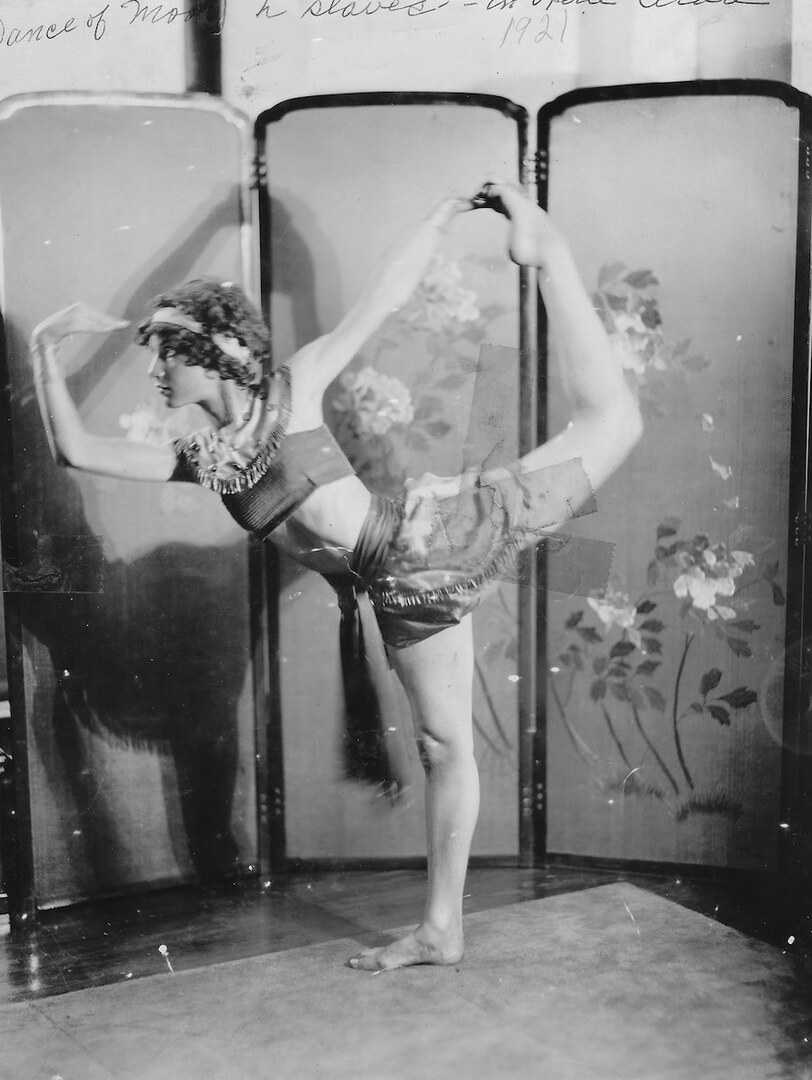
    <summary type="html"><![CDATA[<p><strong><em>For several years during the Great Depression, renowned Chicago-born ballerina and vaudeville performer Betty Felsen brought her talent to Cleveland, where she operated a dance school that was part of a vibrant performing arts scene that flourished in Playhouse Square. </em></strong></p><img src="https://mail.clevelandhistorical.org/files/fullsize/a5760486badccfc9ccbaff511c1a27a8.jpg" alt="Betty Felsen Solo " /><br/><p>Born Bertha Felsenthal on June 9, 1905, in Chicago, Betty Felsen took her first dance lesson at age 8. Three years later, in 1916, she enrolled in the Pavley-Oukrainsky Ballet School, named after Andreus Pavley and Serge Oukrainsky, who had been partners of the famed Russian ballerina Anna Pavlova. The Pavley-Oukrainsky Ballet became the official ballet of the Chicago Opera Association in 1919, and from 1920 to 1922 Felsen performed nationwide as a ballerina soloist with the Chicago Opera, notably in the Verdi opera <em>Aida</em>. </p><p>By the latter year, Felsen, now 17 years old, wanted to assert creative control over her dancing and expand her repertoire, so she left the Chicago Opera to take up vaudeville. Her first major performance, co-starring with singer Ruth Etting in the musical <em>Rainbo Trail</em>, ran over four months in Chicago’s Million Dollar Rainbo Room in 1922 and 1923. In 1923 she began performing with Jack Broderick on the B. F. Keith and Pantages vaudeville circuits throughout the U.S. and Canada. Over the next four years, their act evolved from a simple dance act to one with more than twenty dancers, an orchestra, and elaborate costumes and sets, garnering critical acclaim.</p><p>When Broderick quit the act at its pinnacle in late 1927, Felsen continued to perform with her own troupe, Betty Felen & Company, for several more months. Failing to find a new partner with whom she had the same rapport or possessing the brilliance of Jack Broderick, she left the vaudeville stage in late summer 1928, moving first to Worcester, Massachusetts, where she co-owned and operated a dance school with a local vaudeville dancer in addition to performing locally and on summer tours around New England with her students. </p><p>In 1932, Betty Felsen left Worcester for Cleveland, where she opened the Betty Felsen School of the Dance, first located in the Carnegie Hall Building on Huron Road and then moving east to 1706 Euclid Avenue. Offering affordable tuition for ballet, tap, and vocal lessons, Felsen’s school thrived with around 100 students. The school went through three name changes, first to Betty Felsen Studios, then Felsen & Burke Studios of Stage and Radio Arts (reflecting a brief partnership with David Burke), and finally the Betty Felsen Studios of Stage and Radio Arts. </p><p>Felsen and her advanced students performed an annual program called the Betty Felsen Revue at the Masonic Auditorium. Some of her students were active professionally, particularly in various Cleveland productions. These young professionals included Elaine Dion and the Lorenz sisters, Lois Jane, Virginia, and Lorna. Billy Shipman and Patricia McCormack auditioned for Eddie Cantor, a major figure in vaudeville, on Broadway, and in motion pictures.</p><p>Felsen garnered appreciation for her selfless service to her profession. She judged singing and dancing performances for multiple amateur talent competitions, including one in 1936 sponsored by <em>Cleveland News</em>, and often gave free lessons at her school to the winners. The December 1936 issue of <em>The American Dancer</em> magazine also commended her for offering professionals appearing in Cleveland with free use of a studio in her school for rehearsal and practice. </p><p>Betty Felsen’s time as a dance instructor in Worcester and Cleveland proved but a short interlude between her days of ballet and vaudeville stardom and retirement. She closed her school soon after marrying Samuel Tonkin in 1937. Despite her short time shaping Cleveland’s performing arts community, the story of Betty Felsen’s dance school reveals a richness of talent that surrounded and transcended the grand stages and screens of Playhouse Square.</p><p><em><strong><a href="https://mail.clevelandhistorical.org/items/show/1016">For more (including 15 images) view the original article</a></strong></em></p>]]></summary>
    <published>2024-02-25T20:27:26+00:00</published>
    <updated>2026-04-17T19:17:43+00:00</updated>
    <link rel="alternate" type="text/html" href="https://mail.clevelandhistorical.org/items/show/1016"/>
    <id>https://mail.clevelandhistorical.org/items/show/1016</id>
    <author>
      <name>David Tonkin</name>
    </author>
  </entry>
  <entry>
    <title type="html"><![CDATA[Donauschwaben German-American Cultural Center]]></title>
    <summary type="html"><![CDATA[<img src="https://mail.clevelandhistorical.org/files/fullsize/50b4a4f713ade34ff781cfb18a338e6a.jpg" alt="The German-American Cultural Center" /><br/><p>German-speaking immigrants have been settling in Cleveland for more than two centuries and remain one of the largest and most influential ethnic groups. Unbeknownst to many though, the end of World War II brought a wave of ethnic Germans from Eastern Europe to the city in the 1950s. These people are known as Danube Swabians, an homage to their early 18th-century Swabian ancestors who left Germany by invitation to colonize parts of the Danube River Valley in the Austro-Hungarian Empire in what is today mostly Hungary, Romania, Croatia, and Serbia. Having kept their language and culture alive through the centuries, Germany’s defeat in World War II, followed by Soviet occupation of that region, meant oppression, incarceration, and death for many of the nearly two million ethnic Germans caught behind the Iron Curtain. This subjugation led to the forced migration of several hundred thousand Danube Swabians who came to the United States in the largest numbers from 1950 to 1952, many settling in Cleveland, where they found work, raised families, and forged new, unbreakable ties to their new homeland. </p><p>Like so many immigrants, the Cleveland Danube Swabians unsurprisingly sought to preserve key aspects of their cultural identity, namely through associational life. That first began by mixing with the Banater Club, an existing German-speaking organization which had a small building (Banater Hall) on W. 140th Street near Lorain Avenue. There the Danube Swabians joined recreational groups, such as <em>Gesangvereine</em> (choirs) and folk dance troops, and introduced their own youth and sports initiatives as well as educational opportunities. In 1958 the Society of Danube Swabians was formerly recognized and elected its first president, Anton K. Rumpf. A year later a women’s group was formed with leadership from President Katharina Ritzmann. By 1960 the Society had formalized its bylaws and structure, elected a Board, and endeavored to grow the organization. This was done so successfully that it was soon clear they had outgrown the Banater Club. For the festive annual events like <em>Tag der Donauschwaben</em> (Day of the Danube Swabians), <em>Trachtenfest</em> (Folk Costume Festival), and <em>Weihnachtsfeier</em> (Christmas Celebration), they had to rent spaces to accommodate the large crowds. German language course offerings, known first as Weekend School, soon had to be held in classrooms in local churches. By 1970 the Weekend School was renamed the German Language School and offered classes for varying age levels as well as kindergarten in rooms at St. Stephen’s Catholic Church. That same year the Board approved the use of $97,000 in member donations to purchase Ritter Farm, a 17-acre parcel off Columbia Rd. in Olmsted Township, in the hope it would eventually accommodate the needs of the Cleveland Danube Swabian community. </p><p>Soon after closing the deal the land was cleared and leveled by member volunteers. In short order soccer fields, tennis courts, a pond, as well as a bar, picnic and restroom facilities were installed, but no large central building yet for its many indoor programs. The new property was renamed “Lenau Park,” after Nikolaus Lenau, a famed 19th-century German poet (from what is today Romania) who had settled in Ohio for a short time in the 1830s. Economically speaking, the 1970s were a terrible time to commence such a project as the United States soon entered its worst economic downturn since the Great Depression. Undaunted, the group proceeded with planning and fundraising for its main clubhouse under the tireless efforts of then President Josef (Sepp) Holzer. Construction eventually began in 1980 and culminated in the <em>Donauschwaben Deutsch-Amerikanishes Kulturzentrum</em> (Danube Swabian German-American Cultural Center), a 46,000 plus sq. ft. multi-level building that is today replete with sundry class, meeting, and dance rooms, a two-lane bowling alley, an indoor soccer field with locker and shower facilities, as well as a central ballroom. Named in honor of Josef Holzer (<em>Holzer Halle</em>), the ballroom has kitchen, bar, and restroom facilities to accommodate nearly 600 people. Dedication ceremonies were held on the 17th and 18th of May, 1986, the first day in English, the second in German. The keynote address on that first day was given by Cleveland State University President Walter B. Waetjen, himself of German descent. </p><p>A motto of sorts sits high above the stage in <em>Holzer Halle</em>. The Josef Linster quote reads “<em>Nur der ist seiner Ahnen wert, der ihre Sitten treu verehrt</em>.” This translates roughly to “Only those who honor the traditions of their ancestors are worthy to be their descendant.” Whether consciously or not, the newer generations of leadership have imbibed this sage message. Just as the founders had intended, the Cultural Center continues to be a conduit for German language and culture. Today, the German Language School offer eight levels of language instruction for children and six levels for adults as well as national and international proficiency exam testing. The strong tradition of associational life is alive and well too. For those interested in sports, the Concordia Soccer Club, the Blau-Weiss Tennis Group, the Edelweiss Ski Club, or the <em>Kegelverein</em> (bowling club) fit the bill. Dance groups for all ages, a choir group (<em>Banater Chor</em>), and the <em>Blaskapelle</em> (Brass Band) uphold musical traditions. The event calendar is packed all year round, from Lenten fish fries to the massive Oktoberfest celebration. And one certainly need not be of German heritage to join in the fun. Shaped by their history, from being guest immigrants in a foreign land in the 18th century to <em>Vertriebene</em> (expellees) in the 20th century, they value inclusivity and welcome their neighbors, thus personifying an American ideal that we still struggle with today.</p><p><em><strong><a href="https://mail.clevelandhistorical.org/items/show/872">For more (including 9 images) view the original article</a></strong></em></p>]]></summary>
    <published>2019-08-23T20:45:13+00:00</published>
    <updated>2026-04-17T19:17:39+00:00</updated>
    <link rel="alternate" type="text/html" href="https://mail.clevelandhistorical.org/items/show/872"/>
    <id>https://mail.clevelandhistorical.org/items/show/872</id>
    <author>
      <name>Mark B. Cole</name>
    </author>
  </entry>
  <entry>
    <title type="html"><![CDATA[The Sachsenheim: Transylvanian Saxon Immigrants Find a Home on Cleveland&#039;s West Side]]></title>
    <summary type="html"><![CDATA[<img src="https://mail.clevelandhistorical.org/files/fullsize/c1d27aa40af2d9a6aca9f62b1c6c5d3b.jpg" alt="The Sachsenheim" /><br/><p>According to legend, Prince Vlad III, the fifteenth century Wallachian prince who inspired Bram Stoker to create Dracula, once cruelly impaled a thousand Saxons on stakes in his bloody quest to conquer neighboring Transylvania.  While Vlad the Impaler  was an actual historical figure and while there is some historical evidence that the Saxons of Transylvania may have crossed paths with him in his incursions in the late 1400s into their lands, the legend itself is likely an exaggerated account of a battle gory by today's standards, but not so much so by those of the fifteenth century. Yet the legend does suggest something about the west side Transylvanian Saxon immigrants to the United States who, in 1907, purchased a large house at 7001 Denison Avenue in the Cleveland Stockyards neighborhood and converted it into a place they called the Sachsenheim.  The word translates literally to "Saxons' Home."  As you read a little bit more about the Saxons from Transylvania, you will understand why having a home was so important to them. </p><p>The Saxons were ethnic Germans who, at the invitation of King Geza II of Hungary, began immigrating in the twelfth century into Transylvania--at the time a vast, but thinly populated area east of Hungary, near lands further to the east that later became the Romanian principalities of Moldavia and Wallachia.  The Saxons called Transylvania "Siebenburgen"--seven towns, after the original seven fortified settlements they built there.  Over time they built more towns and villages.  As centuries passed, Transylvania--not Germany, became their home.  They survived Vlad the Impaler's assault upon their home in the fifteenth century, but the mid-nineteenth century brought a new threat to their home when nationalism took root in eastern Europe.  The ruling Hungarians implemented a policy called Magyarization, which aimed at destroying the language and culture of all non-Hungarians.  And, the Romanians, by now forming a majority of the population, contended that Transylvania should become part of a Romanian state.</p><p>Saxons began leaving Transylvania in large numbers in the late nineteenth and early twentieth centuries.  Many came here to Cleveland, where, by 1895, colonies existed on both the east and west sides of the city. Like other immigrant groups did in America's pre-welfare society, they formed local fraternal benefits organizations called Erster Siebenburgen Sachsen Kranken Untersteutszung Verein ("First Transylvanian Saxons Sick Benefit Society") to protect members of their community from catastrophic illness and industrial workplace injury and death. These local organizations later led to the creation of a national organization, known today as the Alliance of Transylvania Saxons (ATS) with local branches here in Cleveland and elsewhere in the United States.  It was west side Cleveland's Branch 1 that in 1907 bought and converted the dwelling at 7001 Denison Avenue into the Sachsenheim so that its members would have a place to gather and engage in cultural activities.  </p><p>The Eintracht Singing Society, organized in 1897, practiced and performed at the Sachsenheim.  In 1904, Branch 1 and the Eintracht united, according to an ATS publication, "beginning a period of intensive civic and cultural work in Cleveland."  In 1902, Branch 4 was organized for women.  Both branches over the years have actively maintained the Sachsenheim as well as planned the scheduling of cultural activities there.  In 1905, a second singing society was organized, "Hermania," which in 1922 united with the earlier formed singing society to form Eintracht-Hermania, the predecessor of today's surviving mixed chorus, Eintracht-Saxonia Sachsenchor.  Over the years, other cultural groups were organized at the Sachsenheim, including a cultural dance group called the Cleveland Saxon Dance Group.  These cultural groups perform today not only here in the United States, but also internationally in Europe.</p><p>The Sachsenheim itself changed over the years.  Renovations and expansions were made to the building--one in 1910 and and a second in 1925, which added a ballroom, two bowling alleys, a music room, dining room, a restaurant, and other amenities to the facility.  The Sachsenheim also opened itself during this era to the Stockyards Neighborhood, allowing local residents and organizations to use the hall for weddings, showers and other events.  The restaurant today hosts a weekly Taco Tuesday and is a popular gathering place for young people in the neighborhood.</p><p>Over the years since its founding, the Sachensheim has been maintained primarily through revenues raised by the events of the cultural activities groups. The women of the Auxiliary Committee of Branch 4 have for years provided catering services for events at the hall.  Money is also raised by the Sachsenheim's bi-annual homemade sausage sale that, according to the ATS, is "well known around town."  As a result of the efforts of these two local branches of the Alliance of Transylvania Saxons and others, as well as that of the singing society Eintracht-Saxonia Sachsenchor, and with help from time to time from other organizations and the residents of the Stockyards neighborhood, the Sachsenheim at 7001 Denison Avenue, while very far away from Transylvania, continues to this day to be the Transylvanian Saxons' home in Cleveland. </p><p><em><strong><a href="https://mail.clevelandhistorical.org/items/show/671">For more (including 12 images) view the original article</a></strong></em></p>]]></summary>
    <published>2014-11-06T16:31:04+00:00</published>
    <updated>2026-04-17T19:17:40+00:00</updated>
    <link rel="alternate" type="text/html" href="https://mail.clevelandhistorical.org/items/show/671"/>
    <id>https://mail.clevelandhistorical.org/items/show/671</id>
    <author>
      <name>Jim Dubelko</name>
    </author>
  </entry>
  <entry>
    <title type="html"><![CDATA[National Cleveland-Style Polka Hall of Fame]]></title>
    <summary type="html"><![CDATA[<img src="https://mail.clevelandhistorical.org/files/fullsize/cfba737f6637e717a15a31a1c44c2a8d.jpg" alt="Exterior, 2009" /><br/><p>The National Cleveland-Style Polka Hall of Fame Museum--located at 605 East 222nd Street, Euclid, Ohio, is filled with artifacts and memorabilia from polka stars of yesterday and today. Some of the highlights include "America's Polka King" Frank Yankovic's accordion and stage outfits, as well as memorabilia and awards from Tony Petkovsek's 50 years in polka radio and promotion.  Within these walls you will find items dating back to the turn of the century, as well as information on the polka stars who have been inducted into the Hall of Fame.     </p><p>So what is Cleveland-Style Polka? Polka originated in Bohemia, but many different nationalities have embraced the lively music and adapted it to their own customs.  Cleveland-style polka has its roots in Slovenian culture, and as such is sometimes referred to as Slovenian-style polka. It took off in Cleveland thanks to the tens of thousands of Slovenian immigrants that flooded Cleveland in the late 19th and early 20th-centuries. The Cleveland-Style Polka is characterized by fluid moves and a slower pace than other ethnic polkas. It became most popular in the post-World War II era, with Frankie Yankovic leading the way as its most recognizable star. The style was perhaps most beloved by second and third generation Slovenian Americans looking for a reminder of their youth and heritage (the songs were based on Old World, Slovene-language folk music), while still wanting to dance and swing to a fresher form of music with English lyrics.  The music appealed to all types of Americans, however, and became commercially successful, with Polka bands touring the nation and radio stations from coast to coast playing Cleveland-style polkas.</p><p>Within the walls of the Cleveland-Style Polka Hall of Fame, one can trace the development of  Cleveland-style polka beginning in 1900 and through each decade to the present. There is a special place dedicated to Lifetime Achievement Honorees, the Trustee's Honor Roll and the Greatest All-Time Hits. The museum has also established an archival library and video collection of polka history. </p><p><em><strong><a href="https://mail.clevelandhistorical.org/items/show/287">For more (including 4 images) view the original article</a></strong></em></p>]]></summary>
    <published>2011-07-23T16:16:08+00:00</published>
    <updated>2026-04-17T19:17:38+00:00</updated>
    <link rel="alternate" type="text/html" href="https://mail.clevelandhistorical.org/items/show/287"/>
    <id>https://mail.clevelandhistorical.org/items/show/287</id>
    <author>
      <name>Amanda Ahrens, Silvia Sheppard, Andrew Glasier,&amp;#32;&amp;amp;&amp;#32;Brian Berger</name>
    </author>
  </entry>
</feed>
