<?xml version="1.0" encoding="UTF-8"?>
<feed xmlns="http://www.w3.org/2005/Atom">
  <title type="text">Cleveland Historical</title>
  <updated>2026-08-21T20:14:06+00:00</updated>
  <generator uri="http://framework.zend.com" version="1.12.20">Zend_Feed_Writer</generator>
  <link rel="alternate" type="text/html" href="https://mail.clevelandhistorical.org/"/>
  <link rel="self" type="application/atom+xml" href="https://mail.clevelandhistorical.org/items/browse?output=rss2"/>
  <id>https://mail.clevelandhistorical.org/</id>
  <author>
    <name>Cleveland Historical</name>
    <uri>https://mail.clevelandhistorical.org</uri>
  </author>
  <link rel="hub" href="http://pubsubhubbub.appspot.com/"/>
  <entry>
    <title type="html"><![CDATA[Adele&#039;s Lounge Bar: A Home for Beatniks, Bikers, Co-eds, and Hippies]]></title>
    <summary type="html"><![CDATA[<p><strong><em>For a short time, a small and humble lounge served as a home for a diverse assortment of people to enjoy each other's company, write poetry, organize activism, and sometimes seek a higher level of consciousness. But surrounding institutions did all in their power to close it down.</em></strong></p><img src="https://mail.clevelandhistorical.org/files/fullsize/17b684014c408712aa2b75d489c25474.jpg" alt="Martin Prengler Serving Patrons" /><br/><p>Travel back in time to the sixties, and the epicenter of Cleveland’s counterculture scene may well have been 11605 Euclid Avenue, where a small and humble bar was nestled in an ordinary storefront built in front of a turreted Victorian rooming house on the north side of the street between East 115th and 116th Streets. There, one could find an inclusive atmosphere that hosted patrons of many backgrounds and worldviews, a place where Marty and Sam would welcome their patrons with a pint of beer. This little gathering place was Adele’s Lounge Bar, which opened in 1954 in a commercial building that also housed L. Schwartz Antique Shop next door.</p><p>One faithful patron, Paul Hilcoff, recalls, “It was a long, fairly narrow space. When you entered from the street, the bar was along the wall on the right. An aisle ran behind the bar and the remaining space was filled with wooden tables. I'm fairly sure there were no booths…. By evening on most days, it was crowded, and there was a perceptible buzz in the air. On weekend nights you'd be lucky to squeeze in there at all, let alone get a table. Lighting was typical barroom-dim, but adequate to pick out faces at the other end of the room… just the usual stale-beer-and-cigarette-smoke background radiation that always permeated well-attended bars.” Yet there was something more important than appearances at Adele’s—the atmosphere and culture it created.</p><p>Adele’s is remembered for its diverse clientele, as it was home to bikers, college kids, poets, artists, musicians, hippies, members of the LGBTQ community, interracial couples, and the not-so-occasional high schooler. Hilcoff describes what made Adele’s important to its former patrons: “One of the chief attractions of Adele's, at least from my perspective, was that it was a place where outsiders and misfits could feel comfortable. This atmosphere had already been established by the time I started going there.” But by being home to so many diverse patrons, Adele's caught the attention of University Circle institutional leaders and the Cleveland and Circle police forces, who increasingly disliked the unpredictability and sometimes disorder along Euclid Avenue.</p><p>Adele’s peaceful bliss and coexistence within its own community would soon come to end. In the years after its formation in 1957, the University Circle Development Foundation (UCDF) set its sights on de-urbanizing the Circle as well as discouraging establishments and crowds that it believed would be undesirable for the community. Unfortunately, in its view, Adele's Lounge Bar and other popular hangouts along Euclid Avenue fit this description. </p><p>As a home to countercultural ideas, Adele’s saw a lot of activism being conducted underneath its roof. Adele’s was also known as one of the few inclusive bars that were friendly toward LGBTQ people, which troubled a lot of traditionalists. In addition, Adele’s was home to underground activist and post-Beat poet d. a. levy, who infamously ran multiple periodicals such as <em>Buddhist Third Class Junkmail Oracle</em> and <em>Marrahwanna Quarterly</em>. Institutional leaders had no room for places like Adele’s in their new plans for the Circle.</p><p>Adele’s had a darker side that made it easier for its antagonizers to prey upon it. The culture of Adele's was not so different from the counterculture sweeping the rest of the country. Adele’s, neatly located near Case Tech and Western Reserve University, attracted hordes of young people, many of them from nearby colleges or the Heights suburbs, and some of them engaged in illicit drug use or consumed alcohol under age. By 1966 the use of marijuana, LSD, and other drugs started to catch the attention of the community and law enforcement. Some accounts suggest that dealers sold drugs to adolescents not only outside of the lounge but in it as well. There were also multiple accounts of alcohol being served to minors in the establishment. With violations of this nature, Adele’s soon found itself in the court systems.</p><p>The way to permanently shut down Adele’s Lounge Bar seemed to be through inflicting harsh punishments for liquor violations. Throughout its remaining years, Adele’s would spend a great amount of time temporarily closed or operating without a liquor license. Tragically, on February 3, 1969, a fire broke out in the early morning hours, leaving Adele’s completely destroyed and condemned by the city. Authorities blamed an arsonist for the fire, but the destruction of the business would go unpunished. Finally, then, fire accomplished what heavy policing and litigation could not—forcing Adele’s to close for good.</p><p>Though some in the media derided it as a haven for “alcoholics and LSD freaks,” Adele’s and similar establishments nearby served as oases for poets, musicians, and activists. And, as one article stated, Adele’s had been “perhaps the only place where an interracial couple wouldn’t feel watched, or where people could talk about socialism or the Bomb without being harassed.” Despite the backlash that Adele’s stirred, its community seemed to look back fondly on the decade of peace, love, and drugs when Adele’s was the heart of countercultural Cleveland.</p><p><em><strong><a href="https://mail.clevelandhistorical.org/items/show/984">For more (including 10 images) view the original article</a></strong></em></p>]]></summary>
    <published>2022-11-24T16:40:03+00:00</published>
    <updated>2026-04-17T19:17:42+00:00</updated>
    <link rel="alternate" type="text/html" href="https://mail.clevelandhistorical.org/items/show/984"/>
    <id>https://mail.clevelandhistorical.org/items/show/984</id>
    <author>
      <name>Savannah Shaver</name>
    </author>
  </entry>
  <entry>
    <title type="html"><![CDATA[Little Ted&#039;s Restaurant and Bar: The Lost Little Hole in the Wall]]></title>
    <summary type="html"><![CDATA[<p><strong><em>It’s Saturday night, and you’re looking for somewhere to cruise. You don’t want to head to Mac and Jerry’s; the last time that you were there you went for a tall drink of water who didn’t quite swing your way. But he did plenty of swinging once you dared to speak to him. You can’t go back to the Cadillac Lounge; you broke Gloria’s “twelve-inch rule” with a quick kiss and got yourself banned last week. The other places that sprang up after the war have dwindled, and you can never be sure what other "safe" bar is open this month. Well, there’s always Little Ted’s…</em></strong></p><img src="https://mail.clevelandhistorical.org/files/fullsize/f81dc06857949879f0899dfc5c0c9993.jpg" alt="Little Ted&#039;s Restaurant and Bar" /><br/><p>Little Ted’s Restaurant and Bar was nestled in a dense business block catty-corner from Superior Avenue and East 3rd Street, right across from the Cleveland Public Library, and was owned and operated by restaurateur Ted Miclau. From 1944 to 1955, people would have been able to see the neon signs and walk in for some chicken paprikash or steak and greens, while enjoying the novelty of air-conditioning on a hot summer’s day and televisions showing live broadcasts throughout the day. The restaurant was popular, with regular advertisements in local papers touting well-cooked meals for a decent price, as well as musical acts for the bar downstairs. Little Ted’s also regularly appeared in papers as the venue for various events: A luncheon for the local American Civil Liberties Union, where the national head spoke to the assembled about new legislation and what it meant for labor rights. A dinner for the Yugoslavian University Club, where college students could mingle and listen to talks about conditions abroad from the <em>Plain Dealer's</em> foreign affairs editor. And, on December 31st, a big blowout party where guests would be able to enjoy live music, party favors, hats, and noisemakers to ring in the New Year included with their purchase of dinner.
By all accounts, Little Ted’s was a cornerstone of the community, and Ted Miclau was a pillar that rested on it. Born in Romania, Theodore Miclau was later apprenticed to a beautician, for whom he worked until he moved to Chicago, Illinois in 1926, where he built up a chain of five beauty shops and parlors. While there, he earned the nickname “Little Ted” due to his short stature and gentle speaking voice. With the repeal of the Prohibition Act, he purchased and renovated an old building and opened up one of the first legal nightclubs in the city, “Little Ted’s Garden.” Unfortunately, the Chicago Mafia had a vested interest in ensuring the bars of the city did not compete with their own now-legal speakeasies. Not without paying for protection, at least. “...one night, gangsters kidnapped me from my night club… They stuck a gun in my ear, beat me up, and threatened my family unless I bought their protection.” </p><p>The Chicago Mafia’s scare tactics did not end with this incident, and Miclau was forced to flee back to Romania in 1937. He would not return to the United States until 1943, and chose to re-settle in Cleveland, where he attempted to renovate an old nightclub called “the Showboat.” The project wound up falling through, and Miclau purchased a property at 304 Superior Avenue Northeast, renovated it, and named it “Little Ted’s Restaurant and Bar,” which would become quite an upstanding establishment and the start of a chain of “Little Ted’s” businesses. These included Little Ted’s Black Angus Restaurant, Little Ted’s Loop Cafe, Little Ted’s Latin Lounge, Little Ted’s Towne Casino, and Little Ted’s Pearl Motel. However, Little Ted’s had a secret. It was not just a family restaurant that hosted police balls and big meetings and wedding receptions… its basement was also a safe space for gay men to socialize and cruise.
Pre-Stonewall Cleveland had few options for members of the queer community to get together safely. Civil rights groups like the Mattachine Society and <a href="https://clevelandhistorical.org/items/show/880">G.E.A.R.</a>, the Gay Educational and Awareness Resources foundation, would not come to the city for decades. And openly queer bars and nightclubs like Snickers or the Five-Cent-Decision were even further off. In his very directly titled essay, “The Cleveland Bar Scene in the Forties,” John Kelsey described a world of uncertainty and shifting safe spaces. Gay men had no option to be open due to Ohio’s existing anti-gay laws, and had to make do with bars owned and operated by straight people for straight people, hoping that they would be willing to tolerate gay patrons. This created a boom-and-bust cycle as gay men spread information via word-of-mouth—printed guidebooks like <em>Bob Damron's Address Book</em> would not exist until 1964— about a new bar that was willing to accept their business, only to become disenchanted and leave or find the bar failing, at which point they would jump ship to a new place. Some bars and clubs had staying power, like the upscale Cadillac Lounge at East 9th and Euclid, with its fine decorations, live music, and beautiful murals. However, the Cadillac had a strict dress code and a “twelve-inch rule” for male patrons that was enforced by its owner, Gloria Lenihan, with all of the fierceness of a prom chaperone at a Catholic school. This rule prevented any male customers from making physical contact, or getting closer than a foot apart from each other, while on the premises.
Little Ted’s, by contrast, had no dress code and there seems to have been nothing to prevent two men from shaking hands or getting chummy at the bar. However, these more lax standards carried a special danger. As John Kelsey wrote, “Here things were more informal; almost anyone was let into this large, dark room, and there was no dress code. Yet you had to watch yourself there; sometimes rather shady characters, such as shakedown artists, would turn up in the weekend crowd.” An event just like what Kelsey described did occur on May 26, 1952, where a 48-year-old veteran named Walter Koppitch bonded with a younger patron via stories of their mutual times in the military, and invited him home… only to be robbed. The younger man stole Walter’s wallet, containing $14, and his watch. The thief was later apprehended. Now, whether Walter was a gay man, or if he was just a kindhearted veteran looking to help a fellow out, his experience was not the first nor the last shakedown a Little Ted’s patron received.
In the end, however, this is all that ties Little Ted’s to the queer community of Cleveland in the early twentieth century, a handful of lines in an essay, a few crimes and "crimes" between men, and the occasional whisper. The restaurant is gone, abandoned in 1955 when Little Ted’s moved locations, and Ted Miclau died in 1991. With him, died the only man that could give a definitive reason for why he opened his restaurant to the queer community during a time when queer people were forced into hiding. The building that hosted the business was torn down to make room for the expansion of other businesses and even the numbering system has changed. Little Ted’s, like many other pieces of Cleveland’s history, is now dead and buried with the man that built it.</p><p><em><strong><a href="https://mail.clevelandhistorical.org/items/show/979">For more (including 6 images) view the original article</a></strong></em></p>]]></summary>
    <published>2022-11-21T22:22:09+00:00</published>
    <updated>2026-04-17T19:17:42+00:00</updated>
    <link rel="alternate" type="text/html" href="https://mail.clevelandhistorical.org/items/show/979"/>
    <id>https://mail.clevelandhistorical.org/items/show/979</id>
    <author>
      <name>Madison Matuszak</name>
    </author>
  </entry>
  <entry>
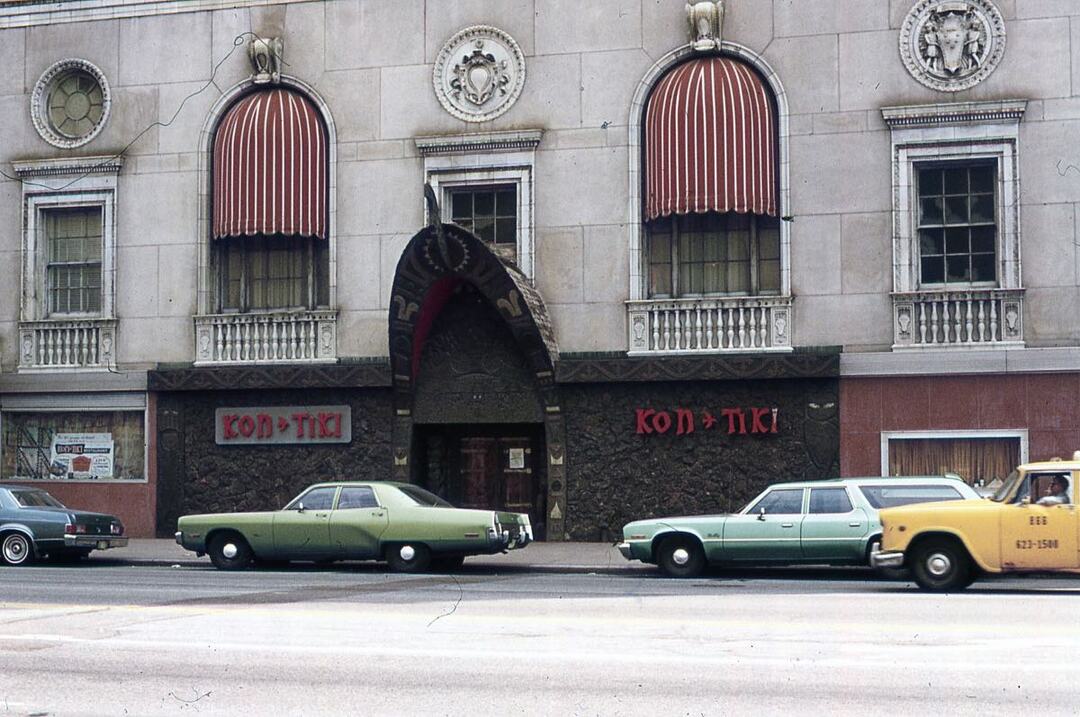
    <title type="html"><![CDATA[Sheraton-Cleveland&#039;s Kon-Tiki Restaurant : Cleveland&#039;s Favorite Exotic Getaway ]]></title>
    <summary type="html"><![CDATA[<p><strong><em>On its opening day in January 1961, Sheraton-Cleveland’s Kon-Tiki restaurant welcomed more than 2,000 visitors to Cleveland's first new Tiki bar in twenty years. Whether they were tired of a dreary Cleveland winter or were simply interested in the city’s newest restaurant, these visitors experienced what many could never have imagined, an exotic Polynesian paradise just off Public Square in downtown Cleveland.</em></strong></p><img src="https://mail.clevelandhistorical.org/files/fullsize/efbbd7972e4b22ff9fb07b591e9d90b6.jpg" alt="Sheraton-Cleveland&#039;s Kon-Tiki restaurant on Superior Avenue" /><br/><p>In late 1933 former bootlegger and globe traveler Ernie Gantt opened the world’s first Tiki bar in Hollywood, California, naming it “Don the Beachcomber.” Gantt decorated the interior with masks, totems, and idols he collected during his Polynesian adventures and served his exotically named, high-strength rum cocktails to an enthusiastic post-prohibition crowd. Soon after opening, the laid-back island vibe and convenient location just off Hollywood Boulevard drew the attention of Hollywood stars looking for an alternative to the stuffy and formal nightclubs of the era, causing the bar’s popularity to skyrocket. Word of the Beachcomber spread, causing countless imitators to open copycat bars. The most notable was Vic Bergeron’s Trader Vic’s in Oakland, California, which invented many Tiki mainstays like the Mai-Tai and Crab Rangoon.</p><p>Seven years after Gantt opened the Beachcomber in Hollywood, Sammy Brin introduced Tiki to Cleveland by opening Club Zombie inside the Hawley House Hotel on West 3rd and St. Clair. Featuring tropical-themed decorations with fake palm trees disguising the supporting columns and split-bamboo-covered walls, Club Zombie quickly became Cleveland’s most popular nightclub and laid the groundwork for the Kon-Tiki and other Tiki bars across the city.</p><p>Tiki’s popularity rose exponentially following World War II when veterans who returned home from the Pacific spread stories and memories of the tropical shores they enjoyed while on leave. They and those who grew weary of their daily routine looked to Tiki, which allowed them to temporarily escape their daily grind to a distant, imaginary tropical paradise for a drink or two at happy hour or a backyard cookout. Another reason for the rise of Tiki was the excitement regarding the addition of Hawai’i as the 50th state in the union. Tiki culture emerged and evolved into a distinctly American blend of the global sounds of Exotica music, westernized Chinese food, Caribbean rum, and Polynesian-inspired décor that dominated American culture in the mid-20th century.</p><p>In 1958 the Sheraton Corporation purchased the four-decade-old <a href="https://clevelandhistorical.org/items/show/465">Hotel Cleveland</a> on the southwest side of Public Square for $10 million and embarked on a $5 million renovation and modernization project. An essential part of the project was a 3,000-person capacity ballroom atop a large parking garage designed to entice suburbanites to return to the downtown nightlife scene. The second significant aspect of the project was the closure of Hotel Cleveland’s flagship restaurant, the Bronze Room. For over forty years, the formal and stately Bronze Room allowed politicians, executives, and other high-echelon Clevelanders to dine and dance in luxury; however by the late 1950s, consumers began to want more than just a meal when they went to a restaurant. They now wanted an exciting and entertaining experience, and the stiff and formal atmosphere of the Bronze Room offered little to these new discerning patrons. In response to this nationwide shift in consumer demand, Sheraton’s management partnered with former actor Stephen Crane, owner of Hollywood’s standout Tiki restaurant the Luau, and replaced the aged Bronze Room with the third restaurant in a new, national chain of Tiki restaurants named Kon-Tiki. This new chain joined two other major Tiki chains, Don the Beachcomber and Trader Vic’s, and soon every major American city would host at least one Tiki bar.</p><p>Sheraton named the Kon-Tiki chain after the primitive balsawood raft that explorer and anthropologist Thor Heyerdahl used to travel over 4,000 miles across the Pacific Ocean in 1947. Heyerdahl’s voyage atop his raft, the <em>Kon-Tiki</em>, was an experiment hoping to prove his radical theory that refugees fleeing South America arrived and populated Polynesia rather than migrants sailing from the Asian mainland. Heyerdahl’s voyage on the primitive raft enraptured the American public, who kept apprised of his progress via long-range radio transmissions. The book and subsequent documentary film he produced about the trip became a massive success, topping Cleveland’s bestseller list in 1950, eventually selling over fifty million copies in more than seventy languages. </p><p>On January 23, 1961, the 230-seat Kon-Tiki restaurant opened its doors, welcoming Cleveland to the Tiki heyday. Keeping with the idea of an exciting dining experience, Crane designed the restaurant with the diner’s experience in mind. After passing through the large wooden doors beneath the prow-shaped awning, guests waiting to be seated had their view of the restaurant’s dining room obstructed by panels and rock-lined walls; this allowed their anticipation to build and lent an aura of mystery to the restaurant. When it was time to be seated, guests went to one of six individually themed rooms after crossing a running stream that fed rock-lined ponds from a waterfall and a wooden bridge with intricately carved balusters featuring Tiki idols. Whether they sat at the bar in the Aikane room, the intimate patio room, or the large Māori Long Hut with room for fifty, diners at the Kon-Tiki would experience what, at the time, people considered an authentic Polynesian atmosphere while eating dishes with exotic names such as opiopioi moa, kalua maia, laiki, kihapai, and omaomao prepared by a chef brought in from Hong Kong. </p><p>The food menu was undoubtedly important, but the cocktails set the Kon-Tiki apart from competing restaurants. Drinks such as the Tahiti, Luau Grog, Zombie, Jamaica Sangaree, and Guatemala Cooler showcased Tiki’s international influences, while their vague descriptions in the menu ensured patrons would experience the unknown. The drinks served by the Kon-Tiki were a blend of house-made syrups, fresh fruit, and various spirits served in unique mugs, stemware, and hollowed-out pineapples that distinguished them from traditional American cocktails. Adding to the entertaining atmosphere, some were even lit aflame before being presented to the customer. </p><p>Tiki resonated in American pop culture mainly because of its sense of escape. However, the late 1960s ushered in the arrival of jet-powered passenger planes that offered an actual escape to a tropical island. Additionally, worldwide decolonization struggles and the increased availability of modern media began to educate the American public that Tiki’s agglomeration of so many distinct cultures masked a more sobering reality. A group of white men developed Tiki culture by taking sacred symbols from peoples across the world, using them as mugs to hold cocktails. They did so while yearning for a wholly manufactured version of a culture that just a few generations earlier had been the target of a campaign of cultural genocide led by missionaries and imperial powers to force “civilization” onto the island inhabitants and now was a target for nuclear tests, military occupations, and hordes of tourists.</p><p>The Kon-Tiki closed its doors in early 1976, portending the end of Cleveland’s Tiki era until the resurgence of high-quality crafted cocktails led Stefan Was to open Porco, now Cleveland’s only Tiki bar on West 25th that, like other modern tropical bars, has shifted away from cultural exploitation while retaining the focus on well-crafted fruit-based drinks. Was managed to find the wooden exterior doors and other decorations from the Cleveland Kon-Tiki and incorporated them into Porco’s interior design. As fate would have it, patrons who are looking for a well-crafted tropical drink pass through the very same doors that welcomed 2,000 curious Clevelanders to the Sheraton-Cleveland Kon-Tiki more than sixty years ago.</p><p><em><strong><a href="https://mail.clevelandhistorical.org/items/show/977">For more (including 15 images) view the original article</a></strong></em></p>]]></summary>
    <published>2022-11-21T22:21:51+00:00</published>
    <updated>2026-04-17T19:17:42+00:00</updated>
    <link rel="alternate" type="text/html" href="https://mail.clevelandhistorical.org/items/show/977"/>
    <id>https://mail.clevelandhistorical.org/items/show/977</id>
    <author>
      <name>Benjamin King</name>
    </author>
  </entry>
  <entry>
    <title type="html"><![CDATA[Kiefer&#039;s Tavern: From Prussia with Love]]></title>
    <summary type="html"><![CDATA[<img src="https://mail.clevelandhistorical.org/files/fullsize/8e61741ce6c1e55d4ad108a393fae5a3.jpg" alt="Sign of Better Times" /><br/><p>Some classic restaurants bank on culinary excellence. Others feature great ambiance or perhaps famous clientele: celebrities, gangsters, politicians and so forth. However, the claim to fame for Kiefer’s – the venerable German eatery – might be the strangest: the longest-closed hostelry that still has a sign out in front. </p><p>This is not to say that Kiefer’s didn’t have great food and good karma. Quite the contrary; Kiefer recipes for signature dishes like wiener schnitzel are still floating around the Internet. But since the restaurant closed in 1991, virtually everything around West 25th Street and Detroit Avenue has changed. Art galleries. New residences. Revamped buildings. A huge park planned for nearby Irishtown Bend. In fact, the only vestiges of an earlier time are the St. Malachi complex and the lonely Kiefer’s sign at 2519 Detroit Ave. The giant Seymour building in which Kiefer’s was located dates to the early 20th Century, and it too is getting a major facelift – a conversion to affordable housing. </p><p>The story of Kiefer’s begins in Paradise – the name of the restaurant that previously occupied the space. Kiefer’s, on the other hand, began as a beer and bratwurst stand launched by William and Anna Kiefer at the Great Lakes Exposition of 1936. When the event closed in late 1936, the Kiefers bought out Paradise and renamed it Swartzwald (“Black Forest” in German). It was a good time for German and central European cuisine and the establishment thrived. Expansions swallowed an adjoining carpet store, furniture store and barber shop and by the 1940s the eatery’s seating capacity topped 400. William baked and prepped. Anna handled the cooking and bookkeeping. Otto Thurn and his oompah band entertained patrons and conducted singalongs. Heavy wood paneling, Teutonic murals and copious beer immersed patrons in the Black Forest. President Jimmy Carter once held a nationally televised meeting there.</p><p>The restaurant's early years coincided with the rise of the Bund. Seeking to promote favorable views of Nazi Germany, the Bund was populated primarily by American citizens of German descent. In 1939 and 1940 the Schwartzwald was a hotbed of Bund activity. Soon, however, Schwarzwald (like most German terms) became an undesirable moniker, so the couple renamed their establishment “Kiefer’s.” </p><p>In 1960 the Kiefers sold out to a syndicate headed by Jack and Joseph Klingbeil but the menu changed little: everything from paprikash to pig’s knuckles. A second consortium headed by County Treasurer Francis E. Gaul bought Kiefer's in 1976, seasoning it with a slight Irish flavor. The rediscovery and renovation of Ohio City was just beginning at this time. That was fine for Kiefer’s but it also was a harbinger of increased competition. Nonetheless, when Gaul shuttered the restaurant in 1991, he blamed a recession and the 18-month renovation of the Main Avenue Bridge.</p><p>Signs of change are everywhere along lower Detroit Avenue. That’s a great thing for the most part. But when the Seymour Building overhaul is complete, the one remaining “sign of other times” will probably disappear. </p><p><em><strong><a href="https://mail.clevelandhistorical.org/items/show/913">For more (including 8 images) view the original article</a></strong></em></p>]]></summary>
    <published>2020-07-01T14:55:22+00:00</published>
    <updated>2026-04-17T19:17:42+00:00</updated>
    <link rel="alternate" type="text/html" href="https://mail.clevelandhistorical.org/items/show/913"/>
    <id>https://mail.clevelandhistorical.org/items/show/913</id>
    <author>
      <name>Chris Roy</name>
    </author>
  </entry>
  <entry>
    <title type="html"><![CDATA[The Last Moving Picture Company: Dinner and a Movie]]></title>
    <summary type="html"><![CDATA[<img src="https://mail.clevelandhistorical.org/files/fullsize/d6515d6f324dfc82016c3c43511e1e16.jpg" alt="New Life on Playhouse Square" /><br/><p>It didn’t live long. Its street presence was minimal and its food unremarkable. Nonetheless, The Last Moving Picture Company deserves a place in the pantheon of Cleveland restaurants. </p><p>Located at 1365 Euclid Avenue in Playhouse Square, “LMPC” was founded by Hamilton F. Biggar and several chums from Hawken School. Biggar (1947-2014) had launched the <a href="https://clevelandhistorical.org/items/show/477">Mad Hatter</a> dance club on East 18th Street, two years earlier, in 1971. He was the nephew of Jim Biggar, CEO of Nestle USA and Stouffer’s, so perhaps food was in Ham’s blood. In any event, the first-time restaurateur opened his bistro in a former Stouffer’s restaurant in the spring of 1973—four years after the State, Ohio, and Palace Theaters closed and five years after the Allen Theater went dark. Although the theaters had escaped demolition and <em>Jacques Brel</em> would soon open in the State Theater lobby, the district was largely comatose. But amidst all the emptiness, several interesting eateries opened at around the same time. The Elegant Hog was a pubby, wood-paneled hotspot. The Rusty Scupper, with its two-story atrium, was so festooned with ficus, philodendron and ferns that one might assume houseplants were on the menu. And Boukair's, a staple at 1520 Euclid, became the New York Steak House months before LMPC opened and was replaced within a year by the Parthenon. Thus, The Last Moving Picture Company was part of an admirable yet doomed movement to breathe new life into an area that was more “Playhouse Bare” than Playhouse Square. And people responded: Through the early and mid 1970s, suburbanites and business travelers flooded in.</p><p>In addition to its pioneer spirit, The Last Moving Picture Company should be recognized for a generous and maybe illegal “pour your own” policy. In effect, a restaurant patron ordering a mixed drink (say a Bloody Mary) would have a large ice-filled glass, a small carafe of Bloody Mary mix, and (yes folks) a bottle of vodka delivered to his table. Armed with these ingredients, the happy recipient was free to be his own mixologist. This, of course, was a recipe for economic and dipsomaniacal disaster since customers quickly discovered that they could forego the Bloody Mary mix entirely and pour themselves an eight-ounce, ultra-dry vodka martini for the price of a single drink. Neither the policy nor the customers’ livers lasted long.</p><p>But moving pictures are what made The Last Moving Picture Company truly unique. Cut into every wall of the restaurant was a movie screen, behind which were small closets containing an 8-millimeter projector and stacks of old films. Rushing frantically from closet to closet to change reels, a full-time projectionist would treat patrons to endless (and soundless) streams of Buster Keaton, Charlie Chaplin, Mae West and Harold Lloyd . . . sort of a sports bar for movies. Accordingly, the restaurant’s menu was a Hollywood smorgasbord: Fatty Arbuckle was a hamburger. Boris Karlov was a Polish sausage. Joan Crawford was a sirloin. Marilyn Monroe was (what else?) a cheesecake. Complementing the films and filets, the restaurant and upstairs bar featured countless kitschy accoutrements: a nickelodeon, a ticket booth cashier’s station, an old film projector repurposed to dispense beer. Music was piped through old floor radios. Placemats were laminated movie cards.</p><p>The Last Moving Picture Company did a door-busting business until, well, it didn’t. By the late 1970s most of the district’s restaurants had closed, including The Last Moving Picture Company. And while the eateries didn’t survive, Playhouse Square certainly did. In 1977 the Playhouse Square Foundation obtained long-term leases for the Palace, State, and Ohio Theaters. By 1991 each venue had reopened and, in the aggregate, were entertaining some 750,000 patrons a year. Ham Biggar—a champion squash player—went on to launch the 13th Street Racquet Club in a warehouse at Dodge Court and East 13th Street. He must have cringed when, just around the corner, his cinema-centric eatery became a McDonald’s. But 40 years hence, Biggar would surely be gratified to see that the golden arches are gone and that the curtain has risen on new generation of Playhouse Square theaters and bistros.</p><p><em><strong><a href="https://mail.clevelandhistorical.org/items/show/891">For more (including 6 images) view the original article</a></strong></em></p>]]></summary>
    <published>2019-11-29T14:51:15+00:00</published>
    <updated>2026-04-17T19:17:42+00:00</updated>
    <link rel="alternate" type="text/html" href="https://mail.clevelandhistorical.org/items/show/891"/>
    <id>https://mail.clevelandhistorical.org/items/show/891</id>
    <author>
      <name>Chris Roy</name>
    </author>
  </entry>
  <entry>
    <title type="html"><![CDATA[Prosperity Social Club: Neighborhood History On Tap]]></title>
    <summary type="html"><![CDATA[<p><strong><em>In 1938, Stanley Dembowski opened a small pub called Dempsey's Oasis at 1109 Starkweather Avenue. The establishment would become one of Cleveland's most enduring taverns.</em></strong></p><img src="https://mail.clevelandhistorical.org/files/fullsize/147f95cac83399229036103c7a930207.jpg" alt="Stanley and Richard Dembowski Exemplifying the &quot;Family Business&quot;" /><br/><p>What kind of pub gets shout-outs from national media ranging from Maxim and GQ to Huffington Post and Better Homes and Gardens? The answer is Prosperity Social Club—one of Tremont’s, and Cleveland’s, homiest and most storied spots for drinking and dining. </p><p>Prosperity Social Club, formerly known as Dempsey's Oasis, has a history that comprises almost 80 years. That history started with Jack Dempsey, heavyweight boxing champion of the world from 1919 to 1926, and namesake of the pub's original incarnation. Stanley Dembowski, born in Dulsk, Poland, in 1896 (one year after Jack Dempsey was born in Manassa, CO), opened Dempsey’s Oasis on Starkweather Avenue in 1938. Dembowski fought in France in World War I and was discharged on June 18, 1919. Sixteen days later, Dempsey won the heavyweight crown, knocking out Jess Willard. In a 1982 interview with The Plain Dealer, Stanley Dembowski recalled betting $500 that Dempsey would defeat Gene Tunney in their 1926 fight. Dempsey lost, but from then on “Everyone began calling me Dempsey. So when I started this business [at 1109 Starkweather, which previously hosted an establishment called Hot Dog Bill’s], I called it Dempsey’s. The Oasis part was added because an oasis is where thirsty people go to get dethirsted.” Stanley retired in 1967 and his son Richard, together with wife Theresa, took over. They remained until 2000 when the pub was sold to a pair of Irish businessmen. Veteran restaurateur Bonnie Flinner purchased the establishment five years later and renamed it Prosperity Social Club—a salute to the sardonic optimism that pervaded the Great Depression. </p><p>In a 2015 interview, Richard Dembowski stated that one of the restaurant’s keys to success was its ability to attract a diverse clientele: Tremont residents, downtown businesspeople, steelworkers, healthcare workers from Metro General and so on. He noted sanitation as another cornerstone—that the family made such a strong commitment to cleanliness that the local health inspector became a regular patron. According to Dembowski, “The inspector knew where he could get a good, safe meal.” The Dembowskis also gained a place in the neighborhood’s heart by actually being “locals” (they lived next door) and by being exceptional citizens. The family worked on Saint Augustine Church’s Food for the Poor campaigns and spearheaded Coats for Kids programs. In the 1980s, Stanley and Richard became local spokesmen for the Polish Solidarity campaign—the first independent labor union in a Soviet-bloc country and a key contributor to the eventual collapse of the Soviet Union. </p><p>A final success factor, recalled Dembowski, was that Dempsey’s was the first public house in the neighborhood to have a television. Good food, drinks, camaraderie and TV: a winning combination in any decade. Small wonder that people occasionally refer to Dempsey’s/Prosperity as a real-world “Cheers.” </p><p>Like any great old pub, Prosperity Social Club has changed little in appearance. Art Deco influences, wormy chestnut walls, a walnut bar, and vintage beer memorabilia abound. Most of the tables and chairs are original. A flickering television quietly displays shows from the 1950s and 1960s. A kitschy game room includes an old-fashioned bowling machine and vintage board games. One thing the pub lacks, however, is clichéd celebrity photos, although there certainly have been enough notable visitors. Over the years, Dempsey’s/Prosperity has been patronized by notables ranging from Dennis Kucinich and George Voinovich to John Glenn and Robert De Niro (the latter showed up in full “army greens” during the 1977 filming of The Deer Hunter). </p><p>Not only is Prosperity Social steeped in history, it also is surrounded by history. Immediately to the west is the Lincoln Park Baths (c. 1921), the last of 10 bathhouses erected in Cleveland to provide sanitary services to the working poor. Next to the Baths is the building that once housed the Royal movie theater, one of several theaters in or near the Tremont neighborhood. And across the street is Lincoln Park, public green space whose “roots” date to the 1850s. But in that special way that only pubs can be, Prosperity Social Club is truly ”living history.”</p><p><em><strong><a href="https://mail.clevelandhistorical.org/items/show/743">For more (including 6 images) view the original article</a></strong></em></p>]]></summary>
    <published>2015-10-28T21:53:13+00:00</published>
    <updated>2026-04-17T19:17:41+00:00</updated>
    <link rel="alternate" type="text/html" href="https://mail.clevelandhistorical.org/items/show/743"/>
    <id>https://mail.clevelandhistorical.org/items/show/743</id>
    <author>
      <name>Chris Roy</name>
    </author>
  </entry>
  <entry>
    <title type="html"><![CDATA[Irv&#039;s Deli]]></title>
    <summary type="html"><![CDATA[<img src="https://mail.clevelandhistorical.org/files/fullsize/b7a3dd530fcb7ee0a539ddbd5f58eb2a.jpg" alt="Irv&#039;s Deli, 1982" /><br/><p>For decades, Irv's Deli, on the corner of Coventry and Hampshire Roads, was the place to wallow in Coventry Village’s eclectic edginess. The delicatessen and adjoining bar opened in 1959, when the street was mainly a commercial district serving the area's heavily Jewish population. In the thirty years Irv's was in business, Coventry Village changed drastically: at various and often overlapping times a hangout for hippies, biker gangs, punks, wannabes, gawkers, drug seekers, university students, and even middle-class families. For many years, restaurant owner Irving Gulko’s business model and customers kept pace with Coventry's many transformations. However, as Coventry continued to evolve, Irv’s came more and more into conflict with the neighborhood. </p><p>When Gulko opened his deli and bar, he served everything from Chinese food and pizza to shots and beers. Although Gulko came from a family of restaurant owners (his father and grandfather both operated delicatessens in Cleveland), his establishment was often associated with unappetizing food and poor sanitation. Rumors accusing the enigmatic Gulko of running prostitution, drug, and bookmaking businesses were common. What is known for sure is that Irv's Deli was indeed a hangout for down-and-outers, counter culturists, and motorcycle gangs such as the Outlaws and Hell's Angels. But it also was popular with other types. At 2:00 AM, one might find Irv’s still crawling with bikers, late-night munchies sufferers, and Case Western Reserve University students cramming for exams. </p><p>Irv’s problems escalated in the early 1980s. The neighborhood was becoming more family-friendly, but Irv’s was the epicenter of more and more crimes and police reports. In 1982 Coventry Neighbors, Inc. (CNI), a civic betterment organization formed in 1969, took action. It introduced a (winning) referendum on the 1982 election ballot that stripped Gulko's right to serve wine and liquor by the glass. Gulko fought the election results with little success. Starting in 1983, he could only sell beer by the glass and take-out alcoholic beverages. The facility limped along for another six years and closed in 1989. </p><p>Ironically, for a business associated with alcohol, crime and drugs, Irv's was for a short time a popular venue for Cleveland's straight edge hardcore community. Musical performances were organized by local teens, featuring bands like Confront, Project X, Gorilla Biscuits, and other acts known for their steadfast sobriety and lyrics promoting the virtues of "clean living." A decade after its closing, Irv’s also received a fictive cinematic treatment: the epicenter of a movie called <em>The NightOwls of Coventry</em> starring “Marv” as the restaurant’s somewhat too sympathetic owner.</p><p><em><strong><a href="https://mail.clevelandhistorical.org/items/show/438">For more (including 7 images&#32;&amp;&#32;7 audio files) view the original article</a></strong></em></p>]]></summary>
    <published>2012-04-25T12:33:52+00:00</published>
    <updated>2026-04-17T19:17:39+00:00</updated>
    <link rel="alternate" type="text/html" href="https://mail.clevelandhistorical.org/items/show/438"/>
    <id>https://mail.clevelandhistorical.org/items/show/438</id>
    <author>
      <name>Heidi Fearing</name>
    </author>
  </entry>
  <entry>
    <title type="html"><![CDATA[Lemko Hall]]></title>
    <summary type="html"><![CDATA[<img src="https://mail.clevelandhistorical.org/files/fullsize/11d4782592985335cb6f68175b49c7c9.jpg" alt="Lemko Hall, ca. 1970s" /><br/><p>Lemko Hall may be best known as the location of the wedding reception in the 1978 film "The Deer Hunter." The facility’s rich non-Hollywood history is less well known. In fact, few people know the meaning of the word Lemko, which refers to a Slavic ethnic group whose people came from a part of the Austro-Hungarian Empire that is now southeastern Poland. </p><p>Lemkos began immigrating to Cleveland in the late 19th-century (around the same time as other Central and Eastern Europeans) and settled in Tremont in large numbers. Immigrant Andrew Koreny constructed "Koreny Hall" in 1911, and it became a social center with a saloon and a ballroom for special events and performances. For a time, a savings and loan serving Rusyn immigrants also was located in the building.</p><p>Cleveland's Lemko population continued to grow and, by the early 1930s, it was the largest of any city in the nation. Until it moved to Yonkers, New York, in 1939 the Lemko Association of the USA and Canada (founded in Cleveland in 1931) had its headquarters in Cleveland and published its newspaper in the city.</p><p>In the 1930s, the local branch of the Lemko Association purchased Koreny Hall and renamed it Lemko Hall. For almost six decades, the building continued to serve as a community and cultural center for Lemkos, hosting theatrical performances, concerts, lectures, weddings, language classes, and several of the Lemko Association's national congresses. Neighborhood residents continued to frequent its bar, as well. The Lemko Association sold the building to a developer in 1987. It now contains a mix of condominiums and ground-floor commercial spaces.</p><p><em><strong><a href="https://mail.clevelandhistorical.org/items/show/325">For more (including 5 images) view the original article</a></strong></em></p>]]></summary>
    <published>2011-08-15T15:57:27+00:00</published>
    <updated>2026-04-17T19:17:38+00:00</updated>
    <link rel="alternate" type="text/html" href="https://mail.clevelandhistorical.org/items/show/325"/>
    <id>https://mail.clevelandhistorical.org/items/show/325</id>
    <author>
      <name>Michael Rotman</name>
    </author>
  </entry>
  <entry>
    <title type="html"><![CDATA[Elks&#039; Field]]></title>
    <summary type="html"><![CDATA[<p><strong><em>As you look at the vast asphalt parking lot stretching from the Winking Lizard to Giant Eagle, it is hard to believe that the area in front of you was once one of the most exciting places in Lakewood.  National tennis tournaments, softball world championships, Al Capone's bulletproof Cadillac, yearly circuses and carnivals. It all happened right here.</em></strong></p><img src="https://mail.clevelandhistorical.org/files/fullsize/c00142c93f985174b88fbec1aec5bd7d.jpg" alt="Elk&#039;s Field" /><br/><p>The building currently occupied by The Winking Lizard was built in 1913 and was the original home of The Lakewood Tennis Club. 2000 spectators were on hand at the club on July 3, 1916, to witness a national clay court tennis tournament. The tennis club vacated the building shortly thereafter, and in 1918 Lakewood Lodge No. 1350 of the Elks took control of the building. The Elks are a national fraternal organization with chapters (or "lodges") across the country.  The lodges function as social clubs, but they also maintain a focus on doing good deeds and helping others in their community.  </p><p>The tennis courts next to the Lakewood Lodge were soon converted into a state of the art softball stadium that regularly drew hundreds of spectators for men's and women's games. Elks' Field was the country's first lighted softball stadium, and the World Softball Championships were played there in 1944 and 1946.  During the 1920s and 1930s, the Elks Lodge also hosted circuses and carnivals at the site.  Al Capone's black bulletproof Cadillac was memorably featured at one carnival.</p><p>The fun at Elks' Field ended in 1958 when the land was leased for the construction of a supermarket. Today, the Winking Lizard inhabits the former Elks Lodge. The building contains a basement bowling alley and still features a grand stairway near the entrance and an upstairs fireplace.  </p><p><em><strong><a href="https://mail.clevelandhistorical.org/items/show/249">For more (including 5 images) view the original article</a></strong></em></p>]]></summary>
    <published>2011-07-13T16:49:07+00:00</published>
    <updated>2026-04-17T19:17:38+00:00</updated>
    <link rel="alternate" type="text/html" href="https://mail.clevelandhistorical.org/items/show/249"/>
    <id>https://mail.clevelandhistorical.org/items/show/249</id>
    <author>
      <name>Richard Raponi</name>
    </author>
  </entry>
  <entry>
    <title type="html"><![CDATA[Stone Mad Pub]]></title>
    <summary type="html"><![CDATA[<img src="https://mail.clevelandhistorical.org/files/fullsize/434cfcf1a0fc989fbc3c6b1255ae0bc7.jpg" alt="Stone Mad Pub, Exterior" /><br/><p>Opened in 2008, Stone Mad Pub is the latest in a long tradition of saloons and bars located at 1306 West 65th Street. The history of the building speaks to the importance of these establishments within a community, and reflects the changes that the Detroit Shoreway neighborhood has experienced over the last century. </p><p>The building was constructed as a tavern and store house by Cleveland's <a href="https://clevelandhistorical.org/items/show/156">Leisy Brewing Company</a> in 1912. The construction of the bar coincided with a period of great success for the brewery. As Cleveland's largest brewery at the turn of the century, Leisy owned multiple taverns throughout the city. This was a common practice for breweries of the era. Saloon keepers generally paid rent at the first of the month and were billed weekly for beer and whiskey. Breweries established the prices, which were generally the same throughout all of their saloons. </p><p>The choice to build on West 65th was likely due to the rapidly growing working-class immigrant population in the neighborhood. The neighborhood surrounding the tavern was densely populated with Irish, Italian, and Romanian immigrants. At a time when boardinghouses were common -- and living quarters were cramped -- the saloon offered a space to socialize and relax. The saloon keepers, who could generally speak English, were important members of the ethnic community. They regularly acted as intermediaries between the immigrant population and government officials. Some establishments even acted as banks for their patrons. </p><p>While production for Leisy Brewing Company peaked in 1918, the Prohibition enacted between 1920-1933 quickly resulted in the brewery's downfall. The bar on 1306 West 65th Street, however, continued operation as a popular speakeasy of the time. What is now known as the Detroit Shoreway neighborhood was notorious for Romanian, Irish, and Italian bootleggers during the Prohibition. Oral histories from the neighborhood suggested that the speakeasy at 1306 was raided by the police one night, and that barrels of whiskey were cracked open and poured onto West 65th Street. Despite such displays, Prohibition had little effect on the alcohol consumption of Cleveland residents. It is estimated that whereas Cleveland had about 1,200 bars in 1919, by 1923 these had all been replaced by over 3,000 speakeasies. Even more common was the sale of liquor in neighborhoods by those with an entrepreneurial spirit, and the brewing and distilling of homemade beverages for personal use. </p><p>Following Prohibition, the bar on 1306 West 65th Street continued to reflect its place within an ethnic community. The establishment was operated through the 1950s by an Italian social club known as the Societa Operia Italiana di Mutuo Soccorso del West Side. Italian social clubs, which were generally made up of people from the same family or hometown, peaked in popularity during the 1930s and 1940s. With the effects of post World War II suburbanization and assimilation, these societies slowly lost their importance as social and recreational outlets. By the 1960s the establishment was known as the I & R Bar, or the Italian and Romanian Bar. Due to the continued decline in the presence of these ethnic communities in the surrounding neighborhood, the establishment became the R & A Lounge by the 1980s. </p><p>With the disappearance of commerce and industry from the area, the neighborhood began to show signs of physical deterioration. Through the efforts of community organizers and citizen action groups, the commercial district on West 65th Street and Detroit Avenue has been revitalized over the last three decades. Efforts to develop the area as a center for the arts are also well on their way. These changes in the neighborhood were both instigated by and helped foster a resurgence in the creation of locally operated businesses. As with much of the redevelopment that has occurred in Detroit Shoreway, Stone Mad Pub acknowledged and preserved the history of the area while creating an establishment that would also serve the needs of a rapidly changing neighborhood. The front bar was designed as a traditional Irish pub, while the dining room took on an Italian motif.</p><p><em><strong><a href="https://mail.clevelandhistorical.org/items/show/213">For more (including 5 images) view the original article</a></strong></em></p>]]></summary>
    <published>2011-06-01T17:36:46+00:00</published>
    <updated>2026-04-17T19:17:37+00:00</updated>
    <link rel="alternate" type="text/html" href="https://mail.clevelandhistorical.org/items/show/213"/>
    <id>https://mail.clevelandhistorical.org/items/show/213</id>
    <author>
      <name>Richard Raponi</name>
    </author>
  </entry>
</feed>