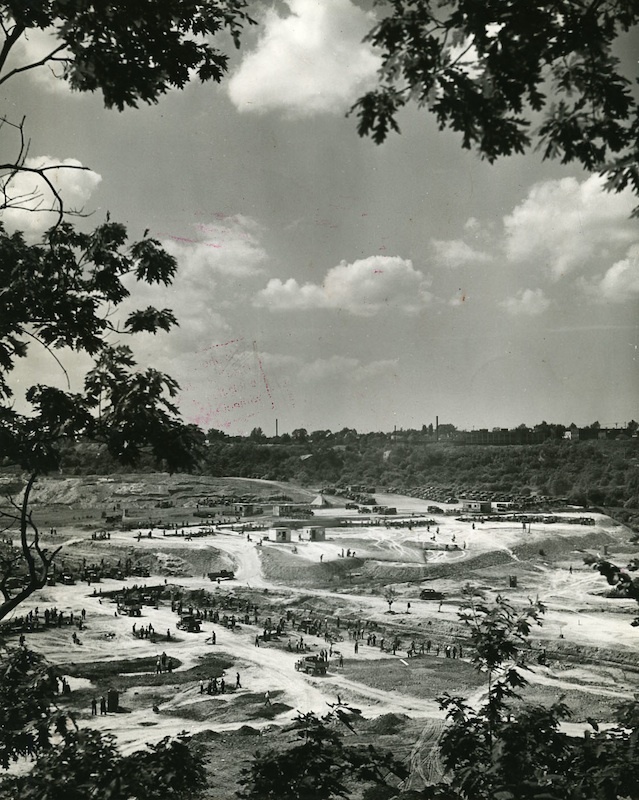
<?xml version="1.0" encoding="UTF-8"?>
<feed xmlns="http://www.w3.org/2005/Atom">
  <title type="text">Cleveland Historical</title>
  <updated>2026-08-22T03:15:52+00:00</updated>
  <generator uri="http://framework.zend.com" version="1.12.20">Zend_Feed_Writer</generator>
  <link rel="alternate" type="text/html" href="https://mail.clevelandhistorical.org/"/>
  <link rel="self" type="application/atom+xml" href="https://mail.clevelandhistorical.org/items/browse?output=rss2"/>
  <id>https://mail.clevelandhistorical.org/</id>
  <author>
    <name>Cleveland Historical</name>
    <uri>https://mail.clevelandhistorical.org</uri>
  </author>
  <link rel="hub" href="http://pubsubhubbub.appspot.com/"/>
  <entry>
    <title type="html"><![CDATA[Rockefeller Park Greenhouse: Municipal Nursery and Botanical Garden]]></title>
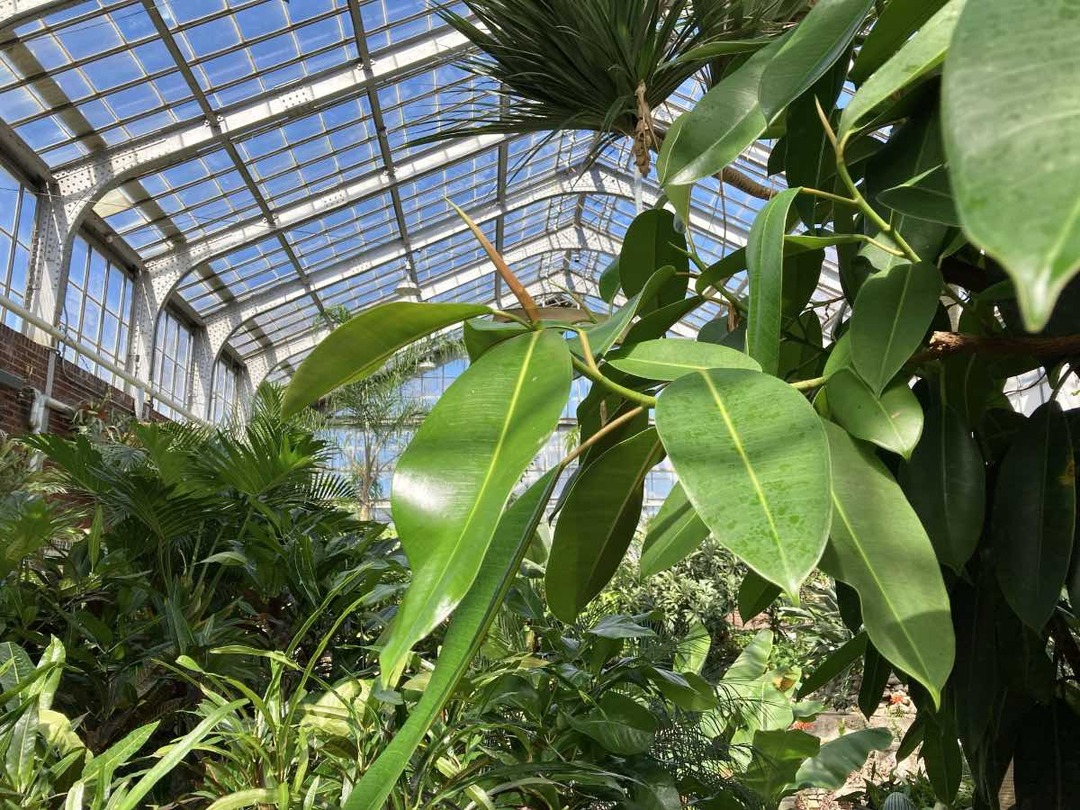
    <summary type="html"><![CDATA[<p><strong><em>Tucked away on a hilltop above the Cultural Gardens is an unassuming facility that for more than a century has played a mostly unseen role in supplying the Forest City’s parks, boulevards, and public properties with flowers, shrubs, and trees, while also cultivating a distinctive collection of tropical foliage and fruit-bearing trees.</em></strong></p><img src="https://mail.clevelandhistorical.org/files/fullsize/ff65e75684b088775c7c081ec99ba269.jpg" alt="Tropical Showhouse" /><br/><p>The Rockefeller Park Greenhouse has its origin in greenhouses given to the city by the estate of William J. Gordon, whose country seat became Gordon Park in 1894. Five years after John D. Rockefeller deeded land to connect Gordon Park with Wade Park in 1897, the municipal government planned a new “city greenhouses” complex, which opened in 1905. Sometimes erroneously referred to as the Gordon Park Greenhouse in its early years, the complex was actually in Rockefeller Park. </p><p>The primary purpose of the city greenhouses was to supply trees and shrubs for Cleveland’s parks, boulevards, and public properties. The greenhouses also donated flowers to hospital wards. However, the idea of a botanical showcase for the city also took root. In 1913, the city completed a large new greenhouse to display palms, ferns, and orchids to the public, including the donated exotic plant collection of William E. Telling. This greenhouse also provided a place to keep the goldfish from the Public Square pond during the winter. </p><p>Despite its pre–World War I origins, the Rockefeller Park Greenhouse as we know it is largely a product of the New Deal. Between 1937 and 1939, the Works Progress Administration (WPA) rebuilt the city greenhouses with a substantial new Palm House (now called the Tropical Showhouse) surrounded by six other greenhouses that raised the facility’s area under glass sixfold to 35,000 square feet. A center walk divided the Palm House into two lush sunken gardens lined with tufa rock salvaged from the Great Lakes Exposition. One of these gardens featured a waterfall and the other a statue. Looming overhead were six 30-foot-tall royal palms taken from the Florida exhibit at the Great Lakes Exposition, as well as other tropical trees and plants. </p><p>After World War II, City Greenhouse, as it was then known, unveiled periodic improvements. In 1946, the greenhouse’s new cacti exhibit opened, its specimens backed by a painted desert scene in the fashion of a diorama. In addition to continuing to serve as a prominent destination for garden clubs and other groups, City Greenhouse also furnished tropical plants for special events, notably a New Orleans French Quarter–themed display for the 1956 Cleveland Home and Flower Show in Public Auditorium. </p><p>In 1962, the Leonard C. Hanna Fund gave $300,000 to improve and expand City Greenhouse. The gift funded a new entrance building and a Japanese Garden, completed in 1964, at which time the facility began to be known as Rockefeller Park Greenhouse. Unfortunately, in the following decade the facility began to suffer a dwindling city budget that accompanied Cleveland’s steepening population decline. By 1980, the city briefly contemplated closing the greenhouse before deciding against it. Then, in 1991, the Friends of Greenhouse, a nonprofit, formed to raise funds to place the facility on a firmer footing and use it to host special events. Later additions included the Betty Ott Talking Garden with its statue of Helen Keller and the Willott Iris Garden, in which hundreds of varieties of iris bloom each spring and summer.</p><p>Today the Rockefeller Park Greenhouse remains, as it has for more than a century, a place of welcome respite from the winter cold and arguably one of the city’s best free attractions in Cleveland.</p><p><em><strong><a href="https://mail.clevelandhistorical.org/items/show/1076">For more (including 14 images) view the original article</a></strong></em></p>]]></summary>
    <published>2026-01-02T17:52:59+00:00</published>
    <updated>2026-04-17T19:17:43+00:00</updated>
    <link rel="alternate" type="text/html" href="https://mail.clevelandhistorical.org/items/show/1076"/>
    <id>https://mail.clevelandhistorical.org/items/show/1076</id>
    <author>
      <name>J. Mark Souther</name>
    </author>
  </entry>
  <entry>
    <title type="html"><![CDATA[Cleveland Public Library: &quot;The People&#039;s University&quot;]]></title>
    <summary type="html"><![CDATA[<img src="https://mail.clevelandhistorical.org/files/fullsize/0e7c93e6061d9f733f0cc0d657eafde7.jpg" alt="Main Library Looking East, 1940" /><br/><p>The Cleveland Public Library comprises one of the largest collections in the United States: nearly ten million items. The Library’s two buildings on Superior Avenue (the main structure, 1925) and the Stokes Wing (1997) command an entire city block between East 3rd and East 6th Streets. The exceptional collection and iconic buildings demonstrate both the institution's importance as a symbol of democracy and—at a more pragmatic level—the library's popularity.</p><p>The development of the Cleveland Public Library mirrored a larger movement in the United States: merging practices from tax-funded school-district libraries with early circulating libraries that required fees or membership dues. Heavily laden in classist ideals of democracy, these early public libraries became increasingly popular in the last decade of the 19th century. The advancement of publicly funded libraries also was a response to rapid social changes—particularly industrialization and a tidal wave of immigrants. Thus public lending institutions focused largely on maintaining large collections of educational materials, even though limited operating hours and a closed-stack system limited their accessibility.</p><p>Cleveland's first public library was founded in 1869, following the passage of a law providing library funding as part of the Cleveland school system. Known until 1883 as the Public School Library, the new institution on the third floor of a building off West Superior Avenue was estimated to have 5,800 books on its opening day. Visitors to the 20 x 80-foot room had to submit their requests at a main counter. The item would then be retrieved from the stacks by an employee of the library. This system remained in place until 1884, when William Howard Brett was appointed librarian. Under Brett's direction, the institution became a model for progressive, service-oriented libraries throughout the United States, a fact that led to its popular nickname "The People's University."</p><p>The notion of accessibility lay at the core of Brett’s innovations. He made all materials in the adult sections available to the public. Cleveland Public Library also became the first large urban library to institute an open-shelf policy. In addition, Brett developed programs and collections for children, instituted a classification system to group books of similar subject matter, opened Cleveland's first branch libraries, created library stations throughout the city, expanded the collection of fiction, and created the city’s first stand-alone children's room.  This trailblazing librarian helped secure both the land and funding for the Cleveland Public Library's permanent home in the city's emerging civic district east of Public Square.</p><p>And what a home it is. Designed by the prominent architectural firm of Walker & Weeks, the five-story facility was completed in 1925 for about $5 million. It is one of six buildings conforming to the Group Plan, an ambitious 1903 city-planning scheme built around a massive three-segment public park (the Mall) northeast of Public Square. Like most of the Group Plan buildings, the library reflects a Beaux Arts, neoclassical design. Its interior was modeled in a Renaissance style, making ample use of Italian marble. Vaulted ceilings are adorned with paintings of mythological and historical figures, while grand staircases carved in Botticino marble and elaborately decorated passageways invite visitors to explore the library's various departments. </p><p>Library functions were sorely tested during the Great Depression, when restrictions on public taxation reduced funding to libraries. Salaries were reduced, staff was let go, and the acquisition of new materials dropped drastically, even as library usage increased by up to 20 percent. Fortunately, Franklin D. Roosevelt's Public Works programs included the Cleveland library: WPA employees made building repairs, cleaned, painted, and even copied musical scores. In the 1930s, the library also was a recipient of federally funded art. In addition to countless prints and paintings, three WPA murals adorn the main Library’s walls to this day. Six additional murals were painted for branch libraries. </p><p>The late 1990s were a busy and productive time for the Cleveland Library system. Massive renovations were made to the building. A second structure—named after former U.S. Congressman Louis Stokes—was built in 1997 on the former site of the Cleveland Plain Dealer which, since 1957 had been used by the library as an annex. Focused largely on science and technology, the Stokes Wing has 11 floors totaling 267,000 square feet and more than 30 miles of book shelves for a capacity of 1.3 million books. </p><p>The two buildings are connected by an underground corridor below the outdoor Eastman Reading Garden, named after Linda Anne Eastman (1867–1963), the first woman to head a major U.S. city library system and a pioneer in the modern library system. The garden that bears her name was designed by landscape architecture firm OLIN, and includes sculptures by Maya Lin and Tom Otterness. The garden provides space for concerts, garden shows, book displays, and public art exhibits. Think of it as the center of a cultural sandwich—part of a block-long demonstration of Cleveland’s prowess and historic leadership in the arts and humanities. </p><p>Today, the Cleveland Public Library operates 27 branches throughout the city, a mobile library, a Public Administration Library in City Hall, and the Ohio Library for the Blind and Physically Handicapped. Among the main facility’s special collections are the Mears and Murdock baseball collections, the Cleveland Theater collection, 130,000 volumes of children's material, a 74,000-volume rare book collection, 1.3 million photographs, and the John G. White Chess Collection—believed to be the largest and most comprehensive chess library in the world. In 2009, CPL became the first library in the United States to offer e-book downloads. </p><p><em><strong><a href="https://mail.clevelandhistorical.org/items/show/788">For more (including 15 images&#32;&amp;&#32;1 video) view the original article</a></strong></em></p>]]></summary>
    <published>2017-04-25T08:47:19+00:00</published>
    <updated>2026-04-17T19:17:41+00:00</updated>
    <link rel="alternate" type="text/html" href="https://mail.clevelandhistorical.org/items/show/788"/>
    <id>https://mail.clevelandhistorical.org/items/show/788</id>
    <author>
      <name>Richard Raponi</name>
    </author>
  </entry>
  <entry>
    <title type="html"><![CDATA[Civilian Conservation Corps: The Dedication of Euclid Creek Reservation]]></title>
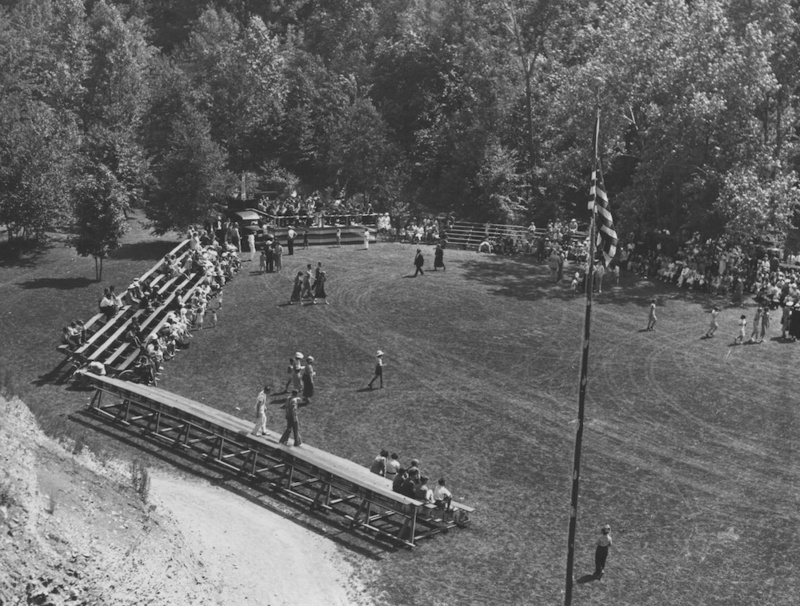
    <summary type="html"><![CDATA[<p><strong><em>At the height of the Great Depression, battalions of young men stationed at Euclid Creek Reservation worked tirelessly making Cleveland's Metropolitan Park System accessible to the public.  It wasn't just the park system that benefited from their labors, however.</em></strong></p><img src="https://mail.clevelandhistorical.org/files/fullsize/59843295e9d50875ee47d69213170802.jpg" alt="Euclid Creek Dedication, 1936" /><br/><p>Ushered in by parade and sounds of the WPA Band, the Metropolitan Park Board and representatives of the Village of South Euclid formally dedicated Euclid Creek Reservation on June 24, 1936. The day marked the first public dedication of any unit in the Metropolitan Park System.  Despite being in the midst of an economic depression, the South Euclid Kiwanis Club threw caution to the wind in planning the celebration. An array of scheduled activities offered a little something for everyone. Ceremonial undertakings were supplemented throughout the afternoon with children's races, games, a Works Progress Administration-sponsored vaudeville act, and appearance by professional strongman Arthur Santell.   Once adequate numbers of steel bars had been refashioned into pretzels, a guard mount of the Civilian Conservation Corps lowered the American flag to conclude the evening. </p><p>The day had been made possible by the labors of these enlisted conservationists.   Since November 21, 1933, a junior CCC company was stationed at a barracks within Euclid Creek Reservation on Highland Road. The division spent their days digging, planting trees, landscaping, trimming deadwood, and lugging around stones.   Thanks to the work of  "Camp Euclid," the grounds were sculpted with scenic roads, parking lots, trails and picnic areas.  The once primitive lands of Euclid Creek Reservation had been transformed into an accessible public park within a few short years.</p><p>While the Great Depression was far from over at the time of Euclid Creek Reservation's dedication, the new park and its youthful laborers offered a visual representation of the strides made in the country toward achieving social and economic stability.   It hadn't been long since the U.S. economy bottomed out and the Great Depression reached its peak.  Amid this mess, Franklin D. Roosevelt was inaugurated as President of the United States on the fourth of March.   The first actions of his famous "Hundred Days" aimed to stabilize the economy; a bank holiday was called and the Economy Act drafted and quickly passed by both houses of government.   By his second week, Roosevelt began efforts to assist the unemployed with government relief and the development of labor creating programs.  The first work program submitted to both congress and the public was the Civilian Conservation Corps.  The bill authorized the government to enlist young men for work on conservation projects. Its hefty goal was to revitalize both the natural environment and the spirit of America's young, disaffected populace.   By month's end, the bill passed and efforts were underway to mobilize a work force of America's unemployed youth.</p><p>The CCC admitted its first enrollee on April 7, 1933. A battalion of Cleveland men were relocated to a U.S. Army reconditioning camp at Fort Knox, Kentucky by the middle of May.   Joining the ranks of over 250,000 men initially recruited for Roosevelt's reforestation army, these young Clevelanders were generally shipped out west or placed in one of the plus 40 companies founded in Ohio state parks that year.   Following much planning and filing of paperwork by the Metropolitan Park Board, a CCC camp was secured for Euclid Creek Reservation.  State Park 15, Company 595 was established in November to perform manual work in Euclid Creek and North Chagrin Reservations.  Under the supervision of engineers and landscape architects, the young men began the labor-intensive process of park building.   Work started immediately.   Among their many accomplishments, stone quarries were filled, dams and retaining walls built, foot and bridle trails blazed, a lake excavated, and land graded for drainage and construction.</p><p>The symbolic opening of Euclid Creek Reservation in 1936 honored more than the park improvements made by CCC crews; the Village of South Euclid had much to celebrate.   In addition to offering employment to young men and promoting the conservation of local natural resources, Civilian Conservation Corp camps throughout the United States provided an economic boost to their surrounding communities. Each of the nearly 200 CCC recruits at Camp Euclid pocketed between five and eight of their 30-dollar monthly earnings; with the remainder sent to an appointed family member on relief, the young men often used this allowance for recreational activities at local establishments such as pool halls, bars, movie theaters and restaurants.</p><p>Camp construction, maintenance, and the purchase of operational supplies also supported regional employment and businesses.  A CCC camp cost around $20,000 to build. At the time Camp Euclid was founded, both local labor and materials were used for construction of the barracks.   Once built, the cost of running a CCC camp reached upwards of $5,000 a month for food, supplies and maintenance.   Additionally, CCC camps hired "local experienced men" to dissuade any possible resentment felt by jobless members of the community.   These men, who were generally selected by the Metropolitan Park Board at Camp Euclid, lived within the immediate vicinity of projects and had experience in the work at hand.   Since WPA funds were also generously expended for park improvements in Euclid Creek Reservation, many unemployed residents of South Euclid with experience in the building trade found temporary work during trying times.</p><p>While the CCC camp benefited the surrounding community, East Cleveland and South Euclid residents also did their part in making the work relief program a success. Spurred on by public enthusiasm for the CCC, concern for the well being of enlistees, and a healthy dose of fear over the possibilities of 200 young men with money consistently being set loose on the town, the Welfare Council for Co. 595 formed to assist in the creation of programs at the camp.  Representatives of local religious, civic and educational groups composed the board. Although the barracks already supplied its residents a government sponsored emergency school, it lacked critical resources like books and sporting equipment.  The Welfare Council raised money to fund recreational and educational activities. By 1934, Camp Euclid offered classes in aviation principles, English, commercial art, public speaking, ethics, radio engineering, woodworking, music and banking.  Recreational activities such as wrestling, boxing and calisthenics were also offered in the evening.  The Cleveland Y.M.C.A oversaw the initial organization of these programs.  Camp Euclid staff estimated that 96% of the company took part in one or more of the weekly activities. </p><p>The combined labors of the surrounding community, CCC employees and recruits, government officials, and the Metropolitan Park Board culminated in the dedication of Euclid Creek Reservation.  By the time the barracks at Camp Euclid was demolished in 1944, wartime production had brought an end to the nation's fiscal crisis. Work relief programs such as the CCC were dismantled; their legacy, however, was imprinted within the radically altered landscape of the Cleveland Metroparks. Grounds that sat dormant during the 1920s while the Metropolitan Park Board acquired property were reshaped as an accessible public park system.  The young men who helped create these parks with shovels, picks and axes were also rebuilt. The CCC provided residents of Camp Euclid a temporary reprieve from the hardships of the outside world, and offered them a chance to resume a life that had been impeded by the Great Depression.</p><p><em><strong><a href="https://mail.clevelandhistorical.org/items/show/690">For more (including 15 images&#32;&amp;&#32;2 audio files) view the original article</a></strong></em></p>]]></summary>
    <published>2015-01-05T07:39:48+00:00</published>
    <updated>2026-04-17T19:17:40+00:00</updated>
    <link rel="alternate" type="text/html" href="https://mail.clevelandhistorical.org/items/show/690"/>
    <id>https://mail.clevelandhistorical.org/items/show/690</id>
    <author>
      <name>Richard Raponi</name>
    </author>
  </entry>
  <entry>
    <title type="html"><![CDATA[Harold H. Burton Memorial Bridge]]></title>
    <summary type="html"><![CDATA[<img src="https://mail.clevelandhistorical.org/files/fullsize/a2eab890089139545a5ab048039ac422.jpg" alt="Main Avenue Bridge Construction, 1939" /><br/><p>Republican Justice Harold Hitz Burton served as Cleveland's 45th mayor from 1936 to 1940, U.S. Senator from Ohio from 1941 to 1945, and U.S. Supreme Court Associate Justice from 1945 until his retirement in 1958 due to failing health. Burton was born in Jamaica Plain, Massachusetts, in 1888, and graduated from Bowdoin College and Harvard Law School. Law was Harold Burton's calling, and in his various practices he sought to uphold it as dispassionately as possible. Upon the United States' entry into World War I, he sought commission as an officer in the 361st Infantry of the 91st Division and achieved the rank of Captain by fall 1918. In his service he fought in Verdun during the Meuse-Argonne Offensive, was  awarded the Belgian Croix de Guerre "for extraordinary heroism and gallantry in action," and was recognized by General John J. Pershing "for exceptionally meritorious and conspicuous services during the Argonne Offensive."</p><p>Following the resigning of his commission in 1919, Burton moved to Cleveland with his wife to practice corporate law in a local firm before forming his own firms: Cull, Burton & Laughlin and Andrews, Hadden & Burton. After a brief stint as Cuyahoga County Commander of the American Legion he was persuaded to join the world of politics by local Republican Party leader Maurice Maschke. In 1921, Cleveland constituents voted to create the position of City Manager, an individual to work closely with the city government to oversee city development and governance with the  goal of  eliminating party politics in the interest of the city's progress. Burton initially served under City Manager William R. Hopkins as City Law Director from 1930 to 1931, though some of his time in office was as interim City Director following the removal of Hopkins by the city council. The position of City Manager was  eliminated in November 1931, thereby restoring the mayoralty. Burton later ran for the recreated position of Mayor in 1935 as an independent Republican seeking to oust the corrupt Harry L. Davis. By 1936 Cleveland had become rife with corruption in the form of gambling, racketeering, and protection rackets. Burton's desire to eliminate corruption led him to hire Eliot Ness as City Safety Director, tasking Ness with cleaning up the city.</p><p>As a mayor during the Great Depression, Burton benefited from a number of New Deal programs designed to put people back to work and rebuild the aging infrastructure of the city. One of the most successful and influential of these was the Works Progress Administration (WPA), a federal program that provided economic aid to workers and cities through construction projects and infrastructure renovations that often could not be afforded by the cities themselves. Cleveland's Memorial Shoreway, now a segment of Ohio State Route 2, was originally constructed to provide transit to the Great Lakes Exposition of 1936. This roadway was expanded using WPA funding to provide access to downtown Cleveland from the West Side as one of the nation's first limited-access expressways, with the majority of it completed in 1939. Mayor Burton worked closely with the WPA and its administrators to increase the funding given to Cleveland for its development. Under Burton and with federal assistance, Cleveland's unemployment declined from 125,000 persons to 75,000 using the almost $1.5 million that the WPA provided in relief funding to the city government each month. Following Burton's death, the Main Avenue Bridge, a segment of Memorial Shoreway, was later renamed the Harold H. Burton Memorial Bridge in his memory.</p><p>Harold Burton served as Mayor of Cleveland for only four years before pursuing election to the U.S. Senate, and he was ultimately appointed into the Supreme Court by Harry S. Truman in 1945. As an Associate Justice he later voted in favor of and helped produce unanimity in the landmark <em>Brown v. Board of Education</em> case, which can be considered the highlight of his career on the court.</p><p>Harold Burton served as a model soldier, Republican Mayor, and Associate Justice throughout his life, seeking only to do what he considered to be righteous and just. It is because of this that he left a very noncontroversial legacy, and as such has been somewhat ignored by history which remembers great and controversial figures alike.</p><p><em><strong><a href="https://mail.clevelandhistorical.org/items/show/688">For more (including 7 images) view the original article</a></strong></em></p>]]></summary>
    <published>2014-12-19T21:42:37+00:00</published>
    <updated>2026-04-17T19:17:40+00:00</updated>
    <link rel="alternate" type="text/html" href="https://mail.clevelandhistorical.org/items/show/688"/>
    <id>https://mail.clevelandhistorical.org/items/show/688</id>
    <author>
      <name>Steven Nickels</name>
    </author>
  </entry>
  <entry>
    <title type="html"><![CDATA[The Great Depression and the Zoo: Infrastructure and Insecurity]]></title>
    <summary type="html"><![CDATA[<p><strong><em>Cleveland's Brookside Zoo faced a crisis at the onset of the Great Depression.  With Clevelanders going hungry, the city government was faced with the decision of whether to spend its limited resources caring for and feeding zoo animals.</em></strong></p><img src="https://mail.clevelandhistorical.org/files/fullsize/179c4df538a371bbc6b80e9fcfbd6236.jpg" alt="WPA Rebuilds Brookside Park, ca. 1938" /><br/><p>The Great Depression was a trying time in the City of Cleveland. As early as 1931, nearly one third of the city's work force was unemployed, and things would only get worse. With an already growing economic divide between suburban communities and inner city residents, the depression hit those living in Cleveland the hardest; the tax base that financed local government all but dried up, leading to a financial crisis. Public funding for institutions such as parks and libraries were heavily cut, requiring that they operate on a shoestring budget. Brookside Zoo found itself in a predicament. While maintenance of park grounds could be delayed, animals in the zoo needed food and care. The economically conservative city government was unable to provide relief within its budget; as people were waiting in food lines, the decision to provide care for animals at the zoo raised a few eyebrows. The animal population dwindled, and existing structures and exhibits deteriorated.</p><p>Despite these setbacks, the depression era marked a period of incredible expansion and growth for both the Cleveland Metropolitan Park System and the City of Cleveland's Zoo. The Brookside Zoo offered free recreation, and droves of cash-strapped city residents visited its remains.  Aiding in its revitalization, federal work relief programs provided the labor needed to completely overhaul Brookside Park and Zoo. The latter would emerge the economic crisis with both a new skeleton of an infrastructure and a foundation of public support, paving the way for a period of expansion in the 1940s.</p><p>A comment by Captain Curley Wilson in 1934 concerning the shape of the public zoo summed up the depression-era state of affairs: "Sixth city-and 25th zoo -- but what are you going to do when you haven't got any money?"  Beginning his work as superintendent of the zoo in 1931,  plans for development of the grounds had already been stilted by a lack of available city funding.  All the while, attendance and usage of the free park increased due to both the newly found free time of the unemployed as well as the cautious spending habits of those with work.</p><p>Coming into his new job, Captain Wilson was initially charged with building the zoo to be on par with established zoological gardens in the United States. Efforts to remodel a bird preserve were undertaken, but plans for new structures were soon bypassed to meet the more immediate need of feeding animals. The new superintendent was instantly confronted with the staff's inability to afford adequate security at the zoo; a seal was killed at the hands of a bottle wielding vandal, birds were shot after-hours, and four locals executed a not-so-daring break-in to retrieve a pet monkey placed in the zoo's care by local police.  </p><p>Providing a bit of salt for an open wound, the shrinking zoo needed to deny donations of new animals due to the cost of their upkeep. Even when zoo advocate Laura Mae Corrigan offered a donation in 1933 of 28 animals acquired on safari in Africa, the city was initially forced to refuse the gift. While it was known that the exotic animals would be an incredible boon to the zoological garden's validity as an institution, there was no available money to cover the cost of caring for the animals. Eventually, the widow of steel magnate James W. Corrigan padded her donation with a $5000 check to provide four years worth of food for the zoo's new inhabitants. The gift from Africa would act as the highlight of Brookside's collection during the Depression era.   </p><p>Beyond Corrigan's generous gift, the zoo's infrastructure expanded greatly during the Depression era.  A hefty list of construction projects was undertaken at the zoo and Brookside Park, utilizing work relief programs.  Under the umbrella of the WPA, the zoo was provided two new exhibits - a Sea Lion pool and Monkey Island; runs for prairie dogs, guinea pigs and woodchucks were also constructed, and the bear pits were reconditioned.  The grounds were rehabilitated with new roads, a lake, animal shelters, picnic grounds, and parking lots.  All in all, Brookside Park and Zoo received much in the way of attention and resources from work relief programs.  </p><p>A decade of depleted funding during the Great Depression also had its adverse effects.  A 1940 inspection of the grounds found that nearly every building at the zoo leaked, and needed roofing and spouting.  Most structures required painting and new plumbing, fencing throughout the zoo needed repaired or replaced, and the heating plant was due for a complete overhaul. The deteriorating remnants of Cleveland's early zoo structures littered the grounds which were redeveloped by work relief laborers.  As the zoo emerged from the Great Depression, this contrast in the physical landscape aptly reflected the state of the institution; pushed forward by a resurgence in popularity and the evident possibilities for further expansion, the zoo's growth was restrained by its ties with Cleveland's Department of Recreation as just one of many public spaces in the city's vast park system.  </p><p><em><strong><a href="https://mail.clevelandhistorical.org/items/show/615">For more (including 12 images) view the original article</a></strong></em></p>]]></summary>
    <published>2013-06-19T10:14:47+00:00</published>
    <updated>2026-04-17T19:17:40+00:00</updated>
    <link rel="alternate" type="text/html" href="https://mail.clevelandhistorical.org/items/show/615"/>
    <id>https://mail.clevelandhistorical.org/items/show/615</id>
    <author>
      <name>Richard Raponi</name>
    </author>
  </entry>
  <entry>
    <title type="html"><![CDATA[Bluestone Quarries: Euclid Township&#039;s &quot;Bluestone Rush&quot; Boomtown]]></title>
    <summary type="html"><![CDATA[<img src="https://mail.clevelandhistorical.org/files/fullsize/cbe7476989dd05c70343ae2a4adbab2e.jpg" alt="Bluestone Quarry" /><br/><p>Denison Park, which anchors the northeastern edge of Cleveland Heights just west of Euclid Creek, straddled one of the old Euclid bluestone quarries that dotted the landscape to the east of Cleveland. Nearby, a town called Bluestone appeared in Euclid Township in present-day South Euclid to serve several quarries, including that of Irish-born Duncan McFarland on Euclid Creek. Peopled by mostly by Irish and Italian immigrants, the town was a wide-open boomtown with a general store and saloon, not unlike western mining towns. Railway spurs opened to carry the heavy loads of stone to market. Euclid bluestone was used widely in the Cleveland area and in Detroit, Milwaukee, and Buffalo as flagstone for sidewalks, exterior steps, windowsills, and a host of other applications. </p><p>The boomtown atmosphere of the village of Bluestone settled down as the quarrying business slowed in the 1900s and 1910s, and by the 1920s the Cleveland Metropolitan Park Board transformed the largest of the quarries into a portion of the Euclid Creek Reservation. Bluestone quarrying never regained its former importance but did continue in limited form under the aegis of the WPA in the 1930s. The old Euclid City Hall, now the Cleveland-Style Polka Hall of Fame, is among the few reminders of that effort.</p><p>The northeastern section of Cleveland Heights, almost rural as late as the 1920s, began to fill with subdivisions, a process that accelerated as the last farmlands gave way to the bulldozers in the years after World War II, aided by the WPA-constructed Monticello Boulevard in the late 1930s. Impressive growth helped raise Cleveland Heights's population to around 60,000 by the early 1950s. In response to the need for convenient recreational facilities to relieve having to travel up to three miles to use the nearest city parks, in 1955, Denison Park opened on the site of one of the bluestone quarries that had been used for years thereafter as a city dump. Named for Cleveland Heights councilman Robert F. Denison, it added a swimming pool in 1968 to relieve overcrowded Cumberland Pool. In recent years, with populations trending downward, the pool closed.</p><p>The suburban development that followed the "bluestone rush" reflected its legacy. In the Noble-Monticello area of Cleveland Heights, Bluestone and Quarry roads were so named for their proximity to Nine Mile Creek on the western fringe of the Euclid Creek quarrying area. Today many slabs of bluestone remain intact on Cleveland Heights sidewalks, although many are nearing the end of their useful life due to damage from vehicles, freeze-and-thaw cycles, and erosion. The Bluestone condominium development on Mayfield Road also keeps the name alive.</p><p><em><strong><a href="https://mail.clevelandhistorical.org/items/show/552">For more (including 6 images&#32;&amp;&#32;6 audio files) view the original article</a></strong></em></p>]]></summary>
    <published>2012-09-15T14:17:18+00:00</published>
    <updated>2026-04-17T19:17:39+00:00</updated>
    <link rel="alternate" type="text/html" href="https://mail.clevelandhistorical.org/items/show/552"/>
    <id>https://mail.clevelandhistorical.org/items/show/552</id>
    <author>
      <name>J. Mark Souther</name>
    </author>
  </entry>
  <entry>
    <title type="html"><![CDATA[WPA Art at Oxford School]]></title>
    <summary type="html"><![CDATA[<img src="https://mail.clevelandhistorical.org/files/fullsize/daacb521145b5a78a42a554846b1748f.jpg" alt="The Pied Piper" /><br/><p>Tucked away in a Cleveland Heights neighborhood is a whimsical trove of 1930s federal art. Thousands of students and hundreds of teachers who walked daily through the halls and library of Oxford Elementary School have passed by these beautiful pieces of art. </p><p>During the Great Depression, President Franklin D. Roosevelt developed a variety of programs to provide work relief for millions of needy Americans. The Works Progress Administration (WPA) Federal Art Project (FAP) put local artists to work creating murals, sculpture and ceramics using the "American Scene" for inspiration.</p><p>Under the direction of the Cleveland Museum of Art and the Cleveland Public Library, the Cleveland FAP employed needy artists adorning schools and public buildings throughout Greater Cleveland. The Cleveland Heights school district requested works pertaining to children's themes and the American Scene during the late 1930s and 1940s. Oxford Elementary received funding for two murals, two hydrocals, and thirty-five ceramics (though only some of the ceramics were completed).</p><p>In 1941, artists LeRoy Flint and Henry Olmer, inspired by the history of Cleveland, created a pair of relief panels for Oxford depicting "Agriculture" and "Industry." They were sculpted in clay, but cast in hydrocal, a type of extra-hard plaster. Cleveland Heights artist Edris Eckhardt guided the work of the Sculpture and Ceramics Division of Cleveland FAP. </p><p>In 1972 the school board approved a $19.5 million bond issue, which included the renovation of Oxford, thereby threatening its large Cinderella and Pied Piper of Hamlin murals. In the 1970s, the beauty and artistic value of Federal Art were just beginning to be recognized and scholars were searching for surviving pieces. Public pressure led to a reconsideration by the coordinating architects for the remodeling program. Oxford PTA president Donalene Poduska, with the help of principal James Evans and experts in American art, worked tirelessly to save the neglected Cinderella mural. At a time when only a fraction of the nation's federal art remains intact, a major project in 2000 restored and stabilized both of the Oxford murals.</p><p><em><strong><a href="https://mail.clevelandhistorical.org/items/show/503">For more (including 9 images&#32;&amp;&#32;6 audio files) view the original article</a></strong></em></p>]]></summary>
    <published>2012-06-13T11:43:06+00:00</published>
    <updated>2026-04-17T19:17:39+00:00</updated>
    <link rel="alternate" type="text/html" href="https://mail.clevelandhistorical.org/items/show/503"/>
    <id>https://mail.clevelandhistorical.org/items/show/503</id>
    <author>
      <name>Mazie Adams</name>
    </author>
  </entry>
  <entry>
    <title type="html"><![CDATA[Garfield Park]]></title>
    <summary type="html"><![CDATA[<img src="https://mail.clevelandhistorical.org/files/fullsize/ee77b1c0bb05b84e7cae9584422b68e3.jpg" alt="Garfield Park Postcard, 1908" /><br/><p>The city of Cleveland bought about 180 acres of land in 1894 to create Newburgh Park. In 1897, the park was renamed Garfield Park after former President James A. Garfield. The park, well known in Cleveland for its natural beauty and its mineral springs, provided many recreational opportunities. The park soon housed facilities for boating, swimming, and playing tennis or baseball. During the winter, visitors often went sledding and ice skating.  </p><p>But starting in the 1960s, the park began to have problems due to the city's financial inability to maintain it. The once famous spring water became contaminated; the park pool was closed and allowed to deteriorate; and grass and weeds took over the tennis court. Crime in the park increased, though Garfield Heights repeatedly asked for an increased police presence. But the neglect continued, despite community concerns. </p><p>This neglect was prolonged until the 1980s, as the city of Cleveland and Garfield Heights fought over and over for solutions to the financial burden that the park had become. Owned by the city of Cleveland since the beginning, the park was now located within Garfield Heights boundaries, which were established later. The city proposed many solutions to the hindrance. It tried to sell the park to Garfield Heights, but the suburb could afford neither the price set by the city nor the cost of taking care of the park. By this time few people used the park, and many considered it an eyesore. Garfield Park had come a long way: once a treasured natural gem, it had become a dangerous eyesore. But the community's desire to keep the park never faded. The issue of the park had become so important to the community that those running for public office in Garfield Heights in the 1970s and 1980s made sure to address its future in their campaigns. Despite the attention, the problem dragged on. And the question remained: what to do with Garfield Park? </p><p>There was talk of leasing the park to the Cleveland Metroparks for many years, but it was not until the 1980s that talk turned into action. The Metroparks leased the park from the city of Cleveland in 1986 and began to restore it to its former glory. A nature center was built in 1987, which bustles with activity to this day. The park restored the lake, the marsh, some of the recreational facilities, and the trails, making Garfield Park once more a treasured place for city dwellers and suburbanites to find refuge in nature. </p><p><em><strong><a href="https://mail.clevelandhistorical.org/items/show/492">For more (including 7 images) view the original article</a></strong></em></p>]]></summary>
    <published>2012-06-02T10:23:56+00:00</published>
    <updated>2026-04-17T19:17:39+00:00</updated>
    <link rel="alternate" type="text/html" href="https://mail.clevelandhistorical.org/items/show/492"/>
    <id>https://mail.clevelandhistorical.org/items/show/492</id>
    <author>
      <name>Kelsey Smith</name>
    </author>
  </entry>
  <entry>
    <title type="html"><![CDATA[Forest Hill Park Footbridge: Echoes of Olmsted in East Cleveland]]></title>
    <summary type="html"><![CDATA[<img src="https://mail.clevelandhistorical.org/files/fullsize/826ab9db7f48746d828d7839e8cccd61.jpg" alt="North Approach to Footbridge" /><br/><p>Supported by a steel superstructure and faced with Euclid bluestone quarried nearby, Forest Hill Park Footbridge traverses Forest Hill Boulevard in East Cleveland on land that was once part of Standard Oil tycoon John D. Rockefeller's summer estate. Spanning 347 feet across a deep valley in the Dugway Brook watershed, the 48-foot-high pedestrian bridge was intended to nestle in the hilly landscape of the Heights (the westernmost foothills of the Appalachians) on Cleveland's east side.</p><p>Designed by Wilbur Watson and Associates in 1939 with consulting architects F. B. Walker and A. D. Taylor, Forest Hill Park Footbridge was built in 1939-40--the work of more than 1,000 men toiling for two years.  The men were paid with Works Progress Administration funds as part of its plan to put unemployed Americans back to work on useful projects. Wilbur Watson was a nationally known civil engineer and bridge designer who also engineered the Lorain-Carnegie Bridge over the Cuyahoga River. Taylor, who planned Forest Hill Park for the Rockefellers, was president of the American Society of Landscape Architects and a protege of the Olmsted firm founded by Frederick Law Olmsted, the "father of landscape architecture" who co-designed New York's Central Park. Taylor's sensibilities are reflected in the picturesque bridge.</p><p>Over the years the bridge suffered from neglect. A wire fence "cage" to prevent pedestrian falls, marred its graceful span, while vandals broke and removed stones from its parapet. Park volunteers repaired this damage in 2021, helping to ensure that the footbridge remains a beautiful presence for park users.</p><p><em><strong><a href="https://mail.clevelandhistorical.org/items/show/479">For more (including 8 images) view the original article</a></strong></em></p>]]></summary>
    <published>2012-05-23T10:46:59+00:00</published>
    <updated>2026-04-17T19:17:39+00:00</updated>
    <link rel="alternate" type="text/html" href="https://mail.clevelandhistorical.org/items/show/479"/>
    <id>https://mail.clevelandhistorical.org/items/show/479</id>
    <author>
      <name>J. Mark Souther</name>
    </author>
  </entry>
  <entry>
    <title type="html"><![CDATA[Horseshoe Lake]]></title>
    <summary type="html"><![CDATA[<img src="https://mail.clevelandhistorical.org/files/fullsize/07d40a892eb6e17e9d5e4836d19cae04.jpg" alt="Horseshoe Lake, ca. 1910" /><br/><p>In 1852, the North Union Shakers dammed Doan Brook for the second time, generating power for a new woolen mill and creating what would later become known as Horseshoe Lake.  The new dam symbolized the continued growth of the North Union community, which was founded in 1822. The Shakers had previously dammed the Doan Brook at a spot further west to power a saw mill, creating Lower Shaker Lake in the process.  In addition to operating these mills, the Shakers farmed, raised cattle, and manufactured small items such as brooms, barrels, and clothespins.  They sold their wares and foodstuffs to Cleveland residents and neighboring farmers. By the early 1850s, the North Union Shakers were at their peak, with over 300 members spread across three different settlements. The next thirty years would witness the decline of the community, however.</p><p>The numbers of North Union Shakers steadily dwindled in the years following the Civil War, as elderly members passed away and new converts proved hard to find. Strict Shaker religious practices (including a strict vow of celibacy) and the communal nature of Shaker living did not  appeal to the generation coming of age after the Civil War. Nor could the hand-made items the Shakers crafted compete with the cheaper mass produced goods flooding American markets at this time. Not only was the North Union community losing members, it was also losing money.</p><p>The North Union Shakers disbanded in 1889. The 20 or so remaining members, most of whom were elderly, moved to other Shaker communities. Although the Shakers eventually left northeast Ohio, the lakes they created to power their mills remained. In 1896, Horseshoe Lake was part of the 279 acres of parkland donated to the City of Cleveland by the Buffalo real estate company that had purchased the old Shaker lands.  The new parkland followed the path of Doan Brook, connecting with Ambler Park, Wade Park, Rockefeller Park, and Gordon Park to create a nearly continuous stretch of parks from Shaker Heights to Lake Erie.</p><p>In the 1930s, workers with the New Deal's Works Progress Administration (WPA) landscaped the area, turning it from "a pile of mud and rocks" into Horseshoe Lake Park.  The City of Shaker Heights spent nearly a million dollars to renovate the park in 2004, adding new playground equipment and an elevated boardwalk that winds its way through wetlands. The renovations were completed in 2007.  </p><p>More recently, the dam has been the subject of controversy. In 2018 the Ohio Department of Natural Resources discovered a sinkhole along the dam, leading to the decision to drain Horseshoe Lake and conduct an assessment of the dam's condition the following year. In 2021 the Northeast Ohio Regional Sewer District informed the cities of Shaker Heights and Cleveland Heights that in light of minimal flood-control benefits, the risk of dam failure, and the high cost of rebuilding the dam, removal of the Horseshoe Lake Dam should be given close consideration. Preservation-minded citizens, however, have urged that the lake's historical value needs to be considered before abandoning the 170-year-old lake. For now, the lake's fate hangs in the balance.</p><p><em><strong><a href="https://mail.clevelandhistorical.org/items/show/425">For more (including 10 images) view the original article</a></strong></em></p>]]></summary>
    <published>2012-04-01T08:06:29+00:00</published>
    <updated>2026-04-17T19:17:39+00:00</updated>
    <link rel="alternate" type="text/html" href="https://mail.clevelandhistorical.org/items/show/425"/>
    <id>https://mail.clevelandhistorical.org/items/show/425</id>
    <author>
      <name>Michael Rotman</name>
    </author>
  </entry>
  <entry>
    <title type="html"><![CDATA[Stinchcomb Memorial: &quot;Mr. Metropolitan Park&quot;]]></title>
    <summary type="html"><![CDATA[<img src="https://mail.clevelandhistorical.org/files/fullsize/b6f5a81bfe2dc144ea2972ee0b993771.jpg" alt="William Stinchcomb " /><br/><p>A close friend and editor for the Plain Dealer likened Stinchcomb to Moses Cleaveland and Tom Johnson as a Cleveland icon. Upon Stinchcomb's retirement, the Cleveland Metroparks' chairman of the board stated, "I know of no man to whom the citizens of Cuyahoga County owe more than to William Stinchcomb." This is precisely why Stinchcomb, or "Mr. Metropolitan Park," has a monument erected in his name in the Rocky River Reservation of the Cleveland Metroparks which he founded, designed, and directed.</p><p>William Stinchcomb believed people to be at home in the outdoors, and that urbanites in particular needed access to wilderness and wildlife in order to maintain a healthy life. Stinchcomb stated that "[w]e must have these great outdoor rest places close to a great industrial city such as this is, and as working days grow shorter we must find healthful ways of filling leisure time." As the very first engineer of the Metropolitan Parks System, he was responsible for the ring-shaped design of the refuge that encircles the city of greater Cleveland.</p><p>Stinchcomb's idea and design of the Cleveland Metroparks may have been influenced by Boston's Emerald Necklace; a u-shaped system of parks that virtually surrounds the city. Stinchcomb alluded to such an influence by using the term Emerald Necklace as a nickname for the Cleveland Metroparks. The Emerald Necklace of Boston was designed by Frederick Law Olmsted, a pioneer in landscape architecture, in 1880. Olmsted's sons John Charles and Frederick Law Jr. created the first ever landscape architectural firm, Olmsted Brothers, the same firm hired by Stinchcomb to help create Cleveland's Emerald Necklace in 1915.</p><p>In 1922, Stinchcomb undertook a massive reforestation project that consisted of the planting of over 2,500 trees in the Rocky River reservation.  During the Great Depression, he employed government organizations including the PWA, WPA, and CCC to improve the parks system and connect the various reservations by making them more accessible to the public through the construction of roads, water mains, and various types of trails.</p><p>Stinchcomb retired in 1957 after 35 years as Director of the Cleveland Metroparks due to rapidly declining health. He died on January 17, 1959, shortly after he attended an informal unveiling of his own memorial in November 1958. The thirty-foot-tall monument, formally dedicated on October 17, 1959, was produced with a budget of $8,000. It was collaboratively designed by sculptor William McVey and architect Ernst Payer, and overlooks the first parcel of land that Stinchcomb purchased for Cleveland's metropolitan parks system in 1919. This overlook is just south of the Rockliffe Lane entrance to the Rocky River North Reservation. The monument itself is made of concrete with two speakers near the top for use with the amphitheater, an inlaid red granite bas-relief sculpture of Stinchcomb in profile, and a granite podium with an inscription detailing Stinchcomb's life.</p><p><em><strong><a href="https://mail.clevelandhistorical.org/items/show/388">For more (including 5 images) view the original article</a></strong></em></p>]]></summary>
    <published>2012-01-10T10:35:57+00:00</published>
    <updated>2026-04-17T19:17:38+00:00</updated>
    <link rel="alternate" type="text/html" href="https://mail.clevelandhistorical.org/items/show/388"/>
    <id>https://mail.clevelandhistorical.org/items/show/388</id>
    <author>
      <name>Matthew Sisson</name>
    </author>
  </entry>
  <entry>
    <title type="html"><![CDATA[Erie Street Cemetery: The City&#039;s Oldest Existing Cemetery]]></title>
    <summary type="html"><![CDATA[<img src="https://mail.clevelandhistorical.org/files/fullsize/339dc6a8f2ea9c0d279933f59d550ef5.jpg" alt="Erie Street Cemetery Entrance" /><br/><p>On East 9th Street, enclosed by a 19th century iron fence and Gothic gateway, is the Erie Street Cemetery — the final resting place of some of Cleveland's most notable pioneers and combatants. Located right next door to Progressive Field, even the popular baseball stadium is easily forgotten once you find yourself surrounded by the many weathered gravestones. Although not all are marked, there are almost 8,000 burials in the cemetery, the oldest dating back to 1827. Scattered among the graves are monuments that have been constructed to honor some of the cemetery's more famous occupants. Some of these include Joseph L. Weatherly, founder and first president of the Board of Trade of Cleveland; Lorenzo Carter, community leader and the first permanent settler of Cleveland; and Chief Joc-O-Sot, chief of the Mesquakie tribe who fought in the Black Hawk War. </p><p>There are 168 veterans buried in the Erie Street Cemetery who participated in the Revolutionary War through the Spanish-American War. Ninety-eight of these men owe their veteran status to their participation in the Civil War. For example, General James Barnett was an officer in the Civil War and was on the commission for the construction of the Soldiers and Sailors' Monument. He has both a family grave site and a monument. Also buried among fellow Civil War veterans is Jabez W. Fitch, best known for having charge of Camp Taylor, he later served in the 19th Ohio Volunteer Infantry.  </p><p>Despite the many Cleveland pioneers and soldiers buried at Erie Street Cemetery, efforts were made to reclaim the land for other purposes in the early 20th century. Bodies were even removed to other cemeteries in the in order to make room for new streets. In 1915, the Pioneers' Memorial Association was formed and fought to keep the cemetery and all who remained there undisturbed.  Since then efforts have been made to beautify the cemetery by groups like the Works Progress Administration and the Cleveland Grays. Today some markers are worn or broken to the point of being indecipherable, but the graves of numerous dignitaries and veterans can still be found.  </p><p><em><strong><a href="https://mail.clevelandhistorical.org/items/show/319">For more (including 10 images) view the original article</a></strong></em></p>]]></summary>
    <published>2011-08-08T15:47:59+00:00</published>
    <updated>2026-04-17T19:17:38+00:00</updated>
    <link rel="alternate" type="text/html" href="https://mail.clevelandhistorical.org/items/show/319"/>
    <id>https://mail.clevelandhistorical.org/items/show/319</id>
    <author>
      <name>Heidi Fearing</name>
    </author>
  </entry>
  <entry>
    <title type="html"><![CDATA[Donald Gray Gardens: Great Lakes Exposition]]></title>
    <summary type="html"><![CDATA[<img src="https://mail.clevelandhistorical.org/files/fullsize/215bcf92919ba548bb90cfeb1c650e21.jpg" alt="Sunken Garden in Donald Gray Gardens" /><br/><p>The Donald Gray Gardens were situated on 3.5 acres of lakefront just to the north of Cleveland Municipal Stadium. The gardens and the Horticulture Building (1000 feet to the west of the gardens) were built in 1936 as part of the Great Lakes Exposition. One visiting the Expo had to pay twenty-five cents to reach the gardens, entering through the building. Ironically, the gardens sat on what was once the city dump, also a haven for the homeless during the Great Depression. Winsor French of the <em>Cleveland Press</em> remarked on this saying, "Incredible, to pass a dump one day and the next to find it a garden, complete with rolling lawns and flowering shrubs, but that's the way they do things."</p><p>Hundreds of workers from the New Deal's WPA (Works Progress Administration) were in charge of planting and landscaping the gardens. The man who designed the gardens was a prominent Cleveland architect by the name of A. Donald Gray who also had a private landscaping business and served as gardening editor for the Cleveland Press. Gray accomplished the task of constructing the gardens in only sixty-eight days. He created a rich and diverse setting in his landscape with waterfalls, ferns, mosses, vines, annuals, perennials, and rhododendron, to name just a few. Different gardens existed within the space, too, such as the various nationality gardens in the "Gardens of the Nations" and period gardens representing the eras of the frontier, Civil War, World War I, and the garden of the future. Expo visitors could relax in the gardens and enjoy views of Lake Erie on one of the many benches that lined a gravel walkway. </p><p>The Horticulture Building, meanwhile, was 60 feet wide and stretched 190 feet in length, with outdoor terraces at the top two levels holding umbrella tables and floral boxes It was built with the intention of being one of the permanent gifts left behind after the two year Expo ended, along with the gardens and the East 9th Street underpass. The building was designed in a modern, oval-tiered shape. Its fifty-foot tall entrance was embellished with Roman-style murals depicting harvesting and gardening scenes intricately painted by local artists. The building was under the sponsorship of the Garden Center of Greater Cleveland with contributions from other groups such as the Mentor Headlands Garden Club and Our Garden Club of Rocky River. Chairman of the project was Mrs. Elizabeth Mather, who planted the first tree outside the gardens. There were rotating flower shows in the building each month, along with space for garden club meetings and exhibition areas. </p><p>Unfortunately, the Horticultural Building burned down in 1941, only five years after it had opened. The gardens, however, lasted longer than any other part of the Expo. Indeed, they remained in their original location north of Municipal Stadium until being dug up and destroyed during the construction of the new Cleveland Browns Football Stadium in the late 1990s.</p><p><em><strong><a href="https://mail.clevelandhistorical.org/items/show/291">For more (including 9 images&#32;&amp;&#32;2 audio files) view the original article</a></strong></em></p>]]></summary>
    <published>2011-07-24T09:05:50+00:00</published>
    <updated>2026-04-17T19:17:38+00:00</updated>
    <link rel="alternate" type="text/html" href="https://mail.clevelandhistorical.org/items/show/291"/>
    <id>https://mail.clevelandhistorical.org/items/show/291</id>
    <author>
      <name>Judy MacKeigan</name>
    </author>
  </entry>
  <entry>
    <title type="html"><![CDATA[Old Spring]]></title>
    <summary type="html"><![CDATA[<img src="https://mail.clevelandhistorical.org/files/fullsize/d5889ec847bb598c56622b5feaa102ef.jpg" alt="Collecting Water, ca. 1930" /><br/><p>Present-day Amherst is located within what was once the Western Reserve in the Northwest Territory. This land belonged to the Connecticut Land Company who surveyed the land between 1796 and 1806 and divided Amherst, which was five square miles, into 100 lots. The first known permanent settler who purchased the land from the Connecticut Land Company in 1811 was Jacob Shupe. Shupe settled in northern Amherst on Beaver Creek. Using the area's sandstone and the creek's waters, he developed the first saw mill, grist mill, and whiskey distillery in the area. Many other early settlers to Amherst were veterans of the War of 1812 who had been given tracts of land by Congress for their military service. Each family settled on or near Beaver Creek and used its waters to develop their farms. Josiah Harris of Massachusetts arrived in 1818 and purchased the land where the Old Spring stands today. At the time, the area of Amherst was known as "The Corners," as the five main streets converged near the spring on Beaver Creek. </p><p>As the village grew in population through the mid-nineteenth century the spring became the center of economic activity. By the early 1900s the water was pumped into storage tanks, and later the spring was used by a brewery.  In 1914, a free running pipe was installed for easier access to the drinking water from the spring.  </p><p>By the 1930s both local and federal money helped restore the spring. In 1930, August Nabakowski, a local roofer whose business was located across the street from the spring, built an archway at the entrance to the spring with recycled materials, including broken tiles, pebbles, sandstone and cement.  In 1936, workers from the New Deal's Works Progress Administration (WPA) built stone tables and a fireplace at the site, and reinforced a guard wall in the area between the Old Spring and Beaver Creek.  </p><p>Since the rejuvenation of the public space in the 1930s, families have often picnicked or simply spent time down the small steep hill behind Town Hall to enjoy the scenery, the sound of rushing water or a fresh drink. Although most houses had indoor plumbing, some families who lived on the outskirts of town could not drink their running water and still had to rely on the Old Spring for drinking water.  By the 1960s the water from the Old Spring was deemed unfit for human consumption because of the high level of bacteria.  Some Amherst residents blamed people who put chemicals on their lawns, which became a popular practice in the 1950s.  A sign today still warns visitors to the spring not to drink the water.    </p><p><em><strong><a href="https://mail.clevelandhistorical.org/items/show/257">For more (including 6 images&#32;&amp;&#32;1 audio file) view the original article</a></strong></em></p>]]></summary>
    <published>2011-07-17T12:12:30+00:00</published>
    <updated>2026-04-17T19:17:38+00:00</updated>
    <link rel="alternate" type="text/html" href="https://mail.clevelandhistorical.org/items/show/257"/>
    <id>https://mail.clevelandhistorical.org/items/show/257</id>
    <author>
      <name>Emily Miller Marty</name>
    </author>
  </entry>
  <entry>
    <title type="html"><![CDATA[Cain Park: From Wooded Ravine to Home of the Arts]]></title>
    <summary type="html"><![CDATA[<img src="https://mail.clevelandhistorical.org/files/fullsize/8469841c79ab79bf0ab9bceeb6e1c8ef.jpg" alt="Covering Dugway Brook, ca. 1937" /><br/><p>Before it became Cain Park, the ravine between Taylor and Lee roads was merely a wet, overgrown gully visited by only the most adventurous of hikers.  In 1914,  the Central Improvement Association of Cleveland Heights (then still a village) formed a committee to look into the possibility of turning the Dugway Brook ravine into a more formal public park.  It was not until the 1930s, however, that Cain Park began to take shape.  </p><p>Much of the credit for the development of Cain Park in the 1930s can be given to Dr. Dina Rees Evans, who taught drama and English at Cleveland Heights High School. In 1932 "Doc" Evans became the first person in the United States to receive a Ph.D. in theater. She was an adamant believer in the ability of drama education to have a positive effect on students.  In the summer of 1934, the drama club she ran at Heights High, called the Heights Players, collaborated with the Civic Theater of Allied Arts (the city's adult stage group) to put on a production of Shakespeare's "A Midsummer Night's Dream." The show took place on a hastily assembled wooden stage at the foot of the sledding hill, along which spectators gathered.  The production proved to be wildly successful and spurred the further development of Cain Park.  </p><p>Frank Cain, for whom the park is named, served as Mayor of Cleveland Heights from 1914 to 1946. After witnessing the success of the 1934 production, Cain threw his support fully behind the construction of a 3,000-seat amphitheater in the park. Besides constructing the amphitheater, workers from the Great Depression-era Works Progress Administration (WPA) also helped drain the ravine which Cain Park is situated in, covering up and culverting the creek that ran through its center. Attractive landscaping, tennis courts, ball fields, and walking paths completed the transformation of the former "wild" land into a public park.  </p><p>The amphitheater had its grand opening in August 1938 with the staging of "A Midsummer Night's Dream."  Plays, operas, concerts, and other cultural events have been held at Cain Park ever since.  Evans, meanwhile, continued to serve as managing director of Cain Park Theater until 1950. She attracted top-flight young talent to the theater company, including music director Jack Lee, producer Ross Hunter, and actors Hal Holbrook, Dom DeLuise, Carol Kane, Jack Weston and Pernell Roberts.  Evans retired from teaching in 1958. The amphitheater was renamed in her honor in 1989. </p><p><em><strong><a href="https://mail.clevelandhistorical.org/items/show/193">For more (including 9 images, 3 audio files,&#32;&amp;&#32;1 video) view the original article</a></strong></em></p>]]></summary>
    <published>2011-04-21T14:08:21+00:00</published>
    <updated>2026-04-17T19:17:37+00:00</updated>
    <link rel="alternate" type="text/html" href="https://mail.clevelandhistorical.org/items/show/193"/>
    <id>https://mail.clevelandhistorical.org/items/show/193</id>
    <author>
      <name>Michael Rotman</name>
    </author>
  </entry>
  <entry>
    <title type="html"><![CDATA[Slovenian Cultural Garden]]></title>
    <summary type="html"><![CDATA[<img src="https://mail.clevelandhistorical.org/files/fullsize/cmp-jugo-1938aerial_6a33683e55.jpg" alt="Yugoslav Cultural Garden, 1938" /><br/><p>Originally named the Yugoslav Cultural Garden, the Slovenian Garden is located near the intersection of St. Clair Avenue and East Boulevard, adjacent to the Polish Garden. </p><p>Over 100,000 people paraded in support of the Yugoslav Garden's dedication on a rainy morning in May 1938. Dignitaries included Mayor Harold Burton, Governor Martin Davey, Senator Robert Bulkley, Judge Frank J. Lausche (later a United States Senator), United States Representatives Martin L. Sweeney, Robert Crosser and Anthony Fleger, Chief Ohio Supreme Court Justice Carl V. Weygandt, WPA Director Colonel Joseph H. Alexander, and Dr. Konstantin Fotic, the Yugoslavian Envoy in Washington. The garden reflected the culture of Cleveland's Croatians, Serbians, and Slovenians and their sometimes conflicted past. As Yugoslavia dissolved in the 1980s and 1990s, so too did the ideal of a unified Yugoslavian Cultural Garden. In 1991, the garden was rechristened the Slovenian Cultural Garden, and separate Serbian and Croatian Garden Delegations emerged.</p><p>In "The Paths Are Peace", Clare Lederer describes the Yugoslav Cultural Garden's design: "A circular fountain and pool are the central features of a paved court. Two stately linden trees, the typical Slovenian "lipa", whose sweet-scented, delicate blossoms are used in the brewing of a delightful tea, tower at either side of the garden entrance. The Jugoslav Garden slopes in three levels between the upper and lower boulevards. To the left of the entrance is a reposeful, formal, sunken garden to the right, a semi-circular section. A semi-circular stairway leads to the halfway lower level, and a wide stairway from the mid-level to the lower level, where there extends a spacious, stage-like paved court. Encircling this setting is a beautiful, natural amphitheatre formed of massive shade trees and the cooling stream of Doan Brook." </p><p>Over the years, statuary in the Garden has included Bishop Frederick Barago, a missionary to the Ottawa and Ojibway Native American tribes (1797-1868); Ivan Cankar, a poet and political activist (1876-1918); Simon Gregorcic, a priest and poet (1844-1906); General Rudolph Maister, a poet and political activist (1874-1934); Prince-Bishop Petar II Petrovic-Njegos, poet and ruler of Montenegro (1813-1851); and Ivan Zorman, a poet and composer (1885-1957). </p><p>Slovenians began settling in Cleveland in the 1880s. The first to arrive settled in the Newburgh area. By the late 1880s and early 1890s a much larger community began to form along St. Clair Avenue. At its peak in the 1920s and 30s, the community ran from E. 30th to E. 79th Streets between the lake and Superior Avenue. The Slovenians kept moving east until the 1980s, eventually establishing a sizable presence in  Lake County. Few Slovenians settled on the west side of Cleveland. The two small communities that developed in the West Park and Denison neighborhoods later moved to Maple Heights and Garfield Heights.</p><p>U.S. Census data for 1910 lists 14,332 Slovenians already living in Cleveland. By 1970, the number had risen to include 46,000 foreign-born or mixed-parentage Slovenians living in Greater Cleveland area. In the 1990s, the community in the Cleveland area numbered well over 50,000.</p><p>After the establishment of an independent Slovenia in 1991, its government opened an Honorary Consulate and appointed a local Slovenian, Dr. Karl B. Bonutti, honorary consul. While the use of the Slovenian language has all but disappeared in large parts of the community, many Slovenians still support organizations and attend performances that reflect their ethnic heritage and traditions.</p><p><em><strong><a href="https://mail.clevelandhistorical.org/items/show/138">For more (including 6 images&#32;&amp;&#32;1 audio file) view the original article</a></strong></em></p>]]></summary>
    <published>2011-01-06T11:49:31+00:00</published>
    <updated>2026-04-17T19:17:37+00:00</updated>
    <link rel="alternate" type="text/html" href="https://mail.clevelandhistorical.org/items/show/138"/>
    <id>https://mail.clevelandhistorical.org/items/show/138</id>
    <author>
      <name>Mark Tebeau</name>
    </author>
  </entry>
  <entry>
    <title type="html"><![CDATA[Polish Cultural Garden]]></title>
    <summary type="html"><![CDATA[<img src="https://mail.clevelandhistorical.org/files/fullsize/cmp-polish-47unveiling_1b58bb213e.jpg" alt="Unveiling, 1947" /><br/><p>Located near the southwest corner of St. Clair and East Boulevard, the Polish Cultural Garden was dedicated in 1934 with the planting of an elm tree from Poland. Originally designed as a sunken, hexagonal court, the Polish Garden was designed with organic material from Poland.</p><p>Poles were one of Cleveland's largest nationality groups in the 20th century. Some arrived even earlier. In 1870, the first notable U.S. Census counted 77 Poles living in the city. The earliest Polish immigrants settled within the Czech community around Croton Street. Eventually, however, the Poles created their own settlement adjacent to Tod (E.65th) St. and what became Fleet Avenue. The area soon became known as Warszawa, after the capital city of Poland. Today, the area is known simply as Slavic Village today. Immigrants continued to move to Cleveland in the 1880s, increasing the Polish population considerably. Two more settlements grew up in the late 1880s and 1890s. The Poznan neighborhood was established around E. 79th St. and Superior Ave. and Kantowo arose in the Tremont area.</p><p>Cleveland's Polish community continued to grow with the city's need for workers. The largest influx occurred between 1900-14. The U.S. Census for 1920 records 35,024 Poles with several smaller neighborhoods having been settled by WWI: Josephatowo near E. 33rd St. and St. Clair Ave., Barbarowo at Denison Avenue, and along Madison Ave with other groups including Slovaks. All immigration after WWI was inconsequential and the Cleveland Polish community peaked in 1930 with a population of 36,668 foreign-born Poles.</p><p>The movement to the suburbs began as early as 1910. By 1970, only 6,234 Poles still resided within the city limits. The U.S. Census for 1990 estimated that only 1,635 Poles remained in the city, with Slavic Village being the community's main center.</p><p>At the center of the Polish Cultural Garden stands an octagonal fountain decorated with allegorical figures that represent music, literature, science and astronomy. It has an ornamental border of jumping fish and small carved turtles along its base. The fountain was dedicated to the daughter of 16th century poet Jan Kochanowski. The little girl's death at 2  ½ years of age prompted Kochanowski to write a series of 19 elegies. Fittingly, the fountain was built largely by the help of small donations from schoolchildren. It was dedicated in 1953.</p><p>Surrounding the central fountain are seven busts showing Polish notables. All the busts were dedicated between 1947 and 1966. Among the notables are 19th century composer and pianist Frederic Chopin (1810-1849), 16th century astronomer Nicholas Copernicus (1473-1543), and 20th century physicist and chemist Maria Sklodowska Curie (1867-1934). </p><p><em><strong><a href="https://mail.clevelandhistorical.org/items/show/134">For more (including 6 images&#32;&amp;&#32;2 audio files) view the original article</a></strong></em></p>]]></summary>
    <published>2011-01-06T11:45:29+00:00</published>
    <updated>2026-04-17T19:17:37+00:00</updated>
    <link rel="alternate" type="text/html" href="https://mail.clevelandhistorical.org/items/show/134"/>
    <id>https://mail.clevelandhistorical.org/items/show/134</id>
    <author>
      <name>Mark Tebeau</name>
    </author>
  </entry>
  <entry>
    <title type="html"><![CDATA[Italian Cultural Garden]]></title>
    <summary type="html"><![CDATA[<img src="https://mail.clevelandhistorical.org/files/fullsize/cmp-italian-34markerdedication_b840de7753.jpg" alt="Marker Dedication, June 1934" /><br/><p>With the dedication of a bust of the poet Virgil, the Italian Cultural Garden was opened on October 12, 1930 before a crowd of 3000 local Italians celebrating Columbus Day and the 2000th anniversary of Virgil's birth. Over the next decade, the Italian Garden Delegation added sculptures, and designed and constructed the formally landscaped space. On September 14, 1941, the Italian Cultural Garden was officially dedicated. It cost over $100,000 to build the garden, with the city contributing approximately $18,000 and the Federal Government  contributing over $94,000 through WPA funds.</p><p>Cleveland's Italian community started to slowly form during the Civil War. The U.S. Census of 1870 shows a very limited Italian presence in the city, as only 35 Italian immigrants were registered. The next 50 years, however, saw a far more explosive growth as 20,000 Italians moved to the city. By the late 1920s, 6 Italian neighborhoods were established in Cleveland; Big Italy, between Woodland Ave. and Orange Ave. from E. 9th St. to E. 40th St., was the largest community. Another neighborhood grew up around the St. Marian Church at E. 107th St. and Cedar Ave., and Collinwood also housed a significant number of Italians. On the west side, Italians took up residence in two areas; one near Clark and Fulton Avenues, and one on Detroit near W. 65th St. At the end of the 1920s some Italians moved out of Big Italy to an area at Woodland Ave. and E. 116th St. After WWII many Italians moved to the suburbs while others kept the Italian neighborhoods viable into the 1970s. </p><p>In 1960 there were still 19,317 foreign-born Italians in the city. By 1990 this count was 1,429 though still the second largest European immigrant group in Cleveland.Today, Little Italy, centered at Mayfield and Murray Hill Roads is Cleveland's identified Italian community.   </p><p>Designed formally, the two-level Italian Cultural Garden was, to borrow Clare Lederer's phrasing, "grandly conceived in the spirit of the Italian Renaissance." The upper level of the garden has a large circular marble fountain, a stone parapet, and a bronze bust of the poet Virgil. Mounted on a stone column taken from the ancient Roman forum, this sculpture was a gift from the Italian government under Mussolini. The upper level also includes a block of stone extracted from the side of Monte Grappa in northern Italy. This is in honor of the many northern Ohio members of the 332nd Regiment of Infantry who fought on Italian soil during World War I. There is also a table that recalls the flight of Italian General Balbo from Rome to Cleveland in 1933. </p><p>The lower level is accessible from above by two curved staircases that flank a semicircular, brick-paved court. Set into a thirty-foot, decorated retaining wall is a double shell fountain. Six medallions of carved stone adorn the wall and represent six Italian cultural figures: Giotto di Bondone, a painter, sculptor and architect (1267-1337); Michelangelo, a painter, sculptor, architect and poet (1475-1564); Petrarch, a scholar, poet and humanist (1304-1374); Guiseppe Verdi, an operatic composer (1813-1901); Leonardo da Vinci, painter, sculptor, draftsman, architect, engineer and scientist (1452-1519); and Guglielmo Marconi, an inventor best known for his work in radio technology (1874-1937).</p><p><em><strong><a href="https://mail.clevelandhistorical.org/items/show/115">For more (including 7 images&#32;&amp;&#32;5 audio files) view the original article</a></strong></em></p>]]></summary>
    <published>2010-12-31T12:12:50+00:00</published>
    <updated>2026-04-17T19:17:37+00:00</updated>
    <link rel="alternate" type="text/html" href="https://mail.clevelandhistorical.org/items/show/115"/>
    <id>https://mail.clevelandhistorical.org/items/show/115</id>
    <author>
      <name>Mark Tebeau</name>
    </author>
  </entry>
  <entry>
    <title type="html"><![CDATA[Hungarian Cultural Garden]]></title>
    <summary type="html"><![CDATA[<img src="https://mail.clevelandhistorical.org/files/fullsize/cmp-hung-1938_3207d4ea2b.jpg" alt="Garden Dedication" /><br/><p>The Hungarian Cultural Garden began with the dedication of a bas-relief to composer Franz Liszt (1811-1886) on the site in 1934; it was completed and formally dedicated in 1938. The Garden is constructed on two levels along the upper boulevard, and overlooks lower East Boulevard. Designed by a well-known architect of Budapest, Hungary, its design is distinguished by a compact, opulent, and formal landscape style. The original design and intentions have been well maintained, with hedges cut to a larger size. This lends the spaces a contemplative feel of discovery. </p><p>The Hungarian population's first significant immigration to Cleveland began in the 1870s. The Buckeye Rd. neighborhood, on the easternmost edge of the city at that time, was the first Hungarian settlement area. A separate settlement arose in the 1880s between Madison St. (now E. 79th) and E. 65th St. along the south-side of Woodland Ave. The largest wave of Hungarian immigration occurred between 1870 and 1924. In 1900 the U.S. Census recorded 9,558 Hungarians (or 8% of the city's foreign born population) in Cleveland. By 1920 this number was 43,134 (18%). During these years Hungarians would come to Cleveland and then encourage relatives and friends to emigrate as well. Called "chain migration," this eventually created a community on the west side of Cleveland where several hundred immigrants from the same village settled. </p><p>After 1920 the original Buckeye Rd. neighborhood expanded to Woodland Ave. and ran between E. 72nd St. and E. 125th St. It is estimated that the years 1947-53 brought 6,000 Hungarian immigrants to Cleveland with 6-9,000 more arriving in 1956 after the Hungarian Revolution. By the 1960s with the trend to the suburbs, the Buckeye Rd. neighborhood began to decline. The 1990 U.S. Census recorded 61,681 Cleveland area residents asserting Hungarian descent.</p><p>From East Boulevard, visitors enter the Hungarian Cultural Garden through a patterned wrought-iron gateway gifted by the Verhovay Insurance Association. Crafted by Handcraft Metal, whose crafts people trained at the renowned Rose Iron Works, the gate is like the traditional type of archway leading to country estates in the Szekely region of Hungary. The Szekely Kapus is decorated with two small, delightful peasant figures in bronze; it also bears the year 1938, signaling the Gardens' formal dedication. Though "rehabilitated" in recent years, the gate remains a remarkable tribute to the delicate artistry of early twentieth century ironworkers in Cleveland. </p><p>Clara Lederer, writing in "Their Paths are Peace", describes the principal plot on the upper level as "a rectangular reflecting pool and fountain... set in a pattern of low walls and geometric walks of brick, stone, and marble, and rich plantings of the growths best known in Hungary--hawthorn, yew, cotoneasters, and azaleas. Two linden trees, formal flower beds, and brick, stone, and marble walls and walks are the features of the lower garden. Two wing sections, formal arrangements of lawn, brick paths, and sculptured stone benches, adjoin the larger upper garden. In the section to the left of the entrance is a bas-relief of Franz Liszt."</p><p>The Garden contains three busts and an additional bas relief commemorating Bela Bartok, a composer and collector of folk music (1881-1945); Endre Ady, a poet, writer and journalist (1877-1919); Imre Madach, a writer, poet, lawyer and politician (1823-1864); and Joseph Remenyi, a writer who taught at Case Western Reserve University (1892-1956). </p><p><em><strong><a href="https://mail.clevelandhistorical.org/items/show/109">For more (including 6 images&#32;&amp;&#32;4 audio files) view the original article</a></strong></em></p>]]></summary>
    <published>2010-12-29T13:31:07+00:00</published>
    <updated>2026-04-17T19:17:37+00:00</updated>
    <link rel="alternate" type="text/html" href="https://mail.clevelandhistorical.org/items/show/109"/>
    <id>https://mail.clevelandhistorical.org/items/show/109</id>
    <author>
      <name>Mark Tebeau</name>
    </author>
  </entry>
  <entry>
    <title type="html"><![CDATA[Valleyview Homes Estates]]></title>
    <summary type="html"><![CDATA[<img src="https://mail.clevelandhistorical.org/files/fullsize/press-valleyview40_c9c9eea7ab.jpg" alt="Valleyview Homes, 1940" /><br/><p>In Cleveland, several public housing projects (Cedar-Central, Outhwaite, Lakeview Terrace) preceded the development of Valleyview Homes Estates. However, Valleyview was among the first (along with Woodhill and Carver Park) to actually be built and overseen by the Cleveland Metropolitan Housing Authority (CMHA). Completed in 1940 on a bluff overlooking the Cuyahoga Valley in southeastern Tremont (then known as South Side), Valleyview was comprised of two-story brick buildings containing a total of 582 apartments . The project cost nearly $3.5 million and featured playgrounds, a community center, and craft shops. Local artists commissioned by the Works Progress Administration (WPA) created numerous murals and other pieces of art, which were placed in various spots throughout Valleyview.</p><p>Despite the 1949 passage of a city ordinance banning racial discrimination in public housing, Valleyview—like virtually all public housing on the west side of Cleveland—remained segregated for decades. Integration was finally achieved in the early 1970s. By this time, however, federal limits on the percentage of a family's income that could be collected left too little rent revenue to cover the costs of maintenance. CMHA thus became more dependent on federal money; but the government provided only 90 percent of funds required for maintenance and less than half of other expenses. At Valleyview, upkeep faltered, and arson, drug dealing, and physical deterioration increased. More and more residents left. By 1978, police officers refused to enter Valleyview without two-person patrols. </p><p>By the 1980s, Valleyview clearly was on its last legs. The death knell was Clark Freeway, the highway that had caused so much controversy two decades earlier when County Engineer Albert Porter sought to route it through Shaker Lakes. That effort failed, but by 1990 the Ohio Department of Transportation had successfully run Clark Freeway—now the Troy Lee James Freeway (I-490)— through South Tremont. The massive Clark Fields park was carved in two and most of the original Valleyview Homes were razed. In 2004, buoyed by a $19.6 million Hope VI grant, the remaining units structures were torn down, and construction began on Tremont Pointe, a mixed public/private development. </p><p>Perhaps the greatest living legacy of Valleyview Homes is its collection of WPA art. Several of Valleyview’s sculptures are on display at Tremont Pointe. Also at Tremont Pointe—behind a large wall of glass at the complex's northwest corner—is the terra cotta Valleyview Mural. Designed by Leroy Flint and executed by Henry Olmer, the mural is essentially a topographic roadmap of the old Valleyview neighborhood.  Other pieces formerly housed at the site are on view at Cleveland State University and CMHA’s headquarters on Kinsman Road.  </p><p><em><strong><a href="https://mail.clevelandhistorical.org/items/show/104">For more (including 9 images) view the original article</a></strong></em></p>]]></summary>
    <published>2010-11-27T16:17:09+00:00</published>
    <updated>2026-04-17T19:17:37+00:00</updated>
    <link rel="alternate" type="text/html" href="https://mail.clevelandhistorical.org/items/show/104"/>
    <id>https://mail.clevelandhistorical.org/items/show/104</id>
    <author>
      <name>Michael Rotman</name>
    </author>
  </entry>
  <entry>
    <title type="html"><![CDATA[Forest Hill: John D. Rockefeller&#039;s Summer Estate]]></title>
    <summary type="html"><![CDATA[<img src="https://mail.clevelandhistorical.org/files/fullsize/foresthill3_c7c86d4dd9.jpg" alt="Entrance to Forest Hill" /><br/><p>Forest Hill was once the sweeping estate of oil baron John D. Rockefeller. Originally from a small town near the Finger Lakes in upstate New York, Rockefeller purchased the land along Euclid Avenue as a commercial venture in 1873, opening (along with other investors) a "water cure resort" centered around a Victorian mansion built on a hilltop overlooking Cleveland and Lake Erie. After the resort quickly went out of business, the mansion became the Rockefeller family's summer home, often referred to as "the homestead." The Rockefellers split time between here and their home on Euclid Avenue's Millionaires' Row until the family moved to New York City in 1884, after which point they returned to Forest Hill each summer. After his wife died in 1915, however, John D. Rockefeller seldom returned to Cleveland and Forest Hill. The summer home burned down under mysterious circumstances in 1917. </p><p>Rockefeller sold Forest Hill to his son John Rockefeller Jr. in 1923 for $2.8 million. In 1939, Rockefeller Jr. donated 235 acres of the Forest Hill acreage to the cities of Cleveland Heights and East Cleveland with the express stipulation that they be used for public recreation. This land included the site of the old Rockefeller house (now used as a sledding hill), and was developed into a public park by the landscape architect and Cleveland Heights native A. D. Taylor. The park opened in 1942, allowing members of the public to at last savor the cool lake breezes previously enjoyed by the richest man in the world. Picnic areas, walking trails, ballfields, and a swimming pool were some of the amenities added to the park over the years. </p><p>On the land east of Lee Boulevard, Rockefeller Jr. commissioned Andrew J. Thomas of New York to design a Garden City-influenced residential and commercial development. The resulting Forest Hill subdivision included 81 French Norman–style houses situated with common back yards that formed greenswards, as well as the gateway business block now known as the <a href="https://clevelandhistorical.org/items/show/206">Heights Rockefeller Building</a>, before the Great Depression prevented a fuller expression of the Rockefeller-Thomas vision. After prolonged difficulty in developing the remainder of the Forest Hill residential allotment, Rockefeller Jr. sold the land in 1948 to a Toledo-based syndicate that in turn sold lots to individuals who built mostly California ranch houses.</p><p><em><strong><a href="https://mail.clevelandhistorical.org/items/show/83">For more (including 7 images&#32;&amp;&#32;3 audio files) view the original article</a></strong></em></p>]]></summary>
    <published>2010-11-13T10:27:50+00:00</published>
    <updated>2026-04-17T19:17:37+00:00</updated>
    <link rel="alternate" type="text/html" href="https://mail.clevelandhistorical.org/items/show/83"/>
    <id>https://mail.clevelandhistorical.org/items/show/83</id>
    <author>
      <name>Michael Rotman</name>
    </author>
  </entry>
  <entry>
    <title type="html"><![CDATA[Dunham Tavern: Cleveland&#039;s Oldest Surviving Structure]]></title>
    <summary type="html"><![CDATA[<img src="https://mail.clevelandhistorical.org/files/fullsize/lg_dunham-pc-60-90_50d7a11df9.jpg" alt="Postcard, ca. 1960" /><br/><p>Established in 1824, Dunham Tavern was originally the home of the Massachusetts-born couple Rufus and Jane Pratt Dunham. The Dunhams came to the Cleveland area in 1819 after acquiring farmland. They lived in a log cabin until the main home was built in 1824. The house was solid and well built, but not ostentatious. It consisted of two rooms downstairs and upstairs around a central hall with a one-story wing at the rear. The exterior of the house was clad with clapboard and decorated with delicate details. Simple moldings highlighted the clean lines. It was designed in a modest, American style, but built well enough to last nearly 200 years.  A separate structure housed the tenants. Since its completion the house has undergone many updates and renovations. According to the Plain Dealer "by the 1840s when the Dunhams added a tap room and sleeping quarters for stagecoach drivers along the Buffalo-Cleveland Road, bold columns, large dentils and heavier Greek Revival moldings were preferred to the more refined federal detailing of the original house." </p><p>In these early days the tavern became a political center and place where young people would go to enjoy themselves. Whig-party political meetings were often held in the tavern as well as turkey shoots and other leisure-time activities. As the city grew up around the small country house in the latter half of the nineteenth century, the Dunhams struggled to keep up with the rapid changes occurring. In 1857 the tavern ceased accepting travelers and was sold. It became a single-family home. A string of owners took care of the property during this half of the century. </p><p>After the Great Depression hit the city in 1929 the city's priorities changed. Most of the beautiful homes on Euclid Avenue were torn down. The modest Dunham Tavern remained. This was mostly likely because of one man, the Cleveland landscape architect Donald Gray who purchased the home in 1932. Gray was very well known as a designer as well as a Cleveland activist. He restored much of the original architecture from the nineteenth century and replanted the Tavern's orchard. For a time in the 1930s the tavern served as a studio for WPA artists and printmakers. When Gray felt he could no longer maintain the century-old home he established a non-profit that could, the Society of Collectors. Dunham Tavern escaped the wrecking ball that was mid-century Cleveland because of their effort and mission that was to maintain the building and collect period furniture and home items to complement the house.</p><p>The organization opened Dunham Tavern to the public as a museum in 1941. They held a semi-annual "Trinkets and Treasures" antique fair that supported the mounting bills for the historic home.  At this time there was a rise of popularity in restoring older American buildings. Looking to national examples like Colonial Williamsburg, older homes (the closer to Revolutionary era the better) became treasures and valuable structures. Today Dunham Tavern remains amidst factories and warehouses on one of the busiest streets in Cleveland. In recent years the museum tore down a 1920s textile factory which stood next to the tavern as part of an effort to return green space to the area, much like it was when the tavern was first built. </p><p><em><strong><a href="https://mail.clevelandhistorical.org/items/show/14">For more (including 8 images&#32;&amp;&#32;1 audio file) view the original article</a></strong></em></p>]]></summary>
    <published>2010-09-14T15:28:21+00:00</published>
    <updated>2026-04-17T19:17:36+00:00</updated>
    <link rel="alternate" type="text/html" href="https://mail.clevelandhistorical.org/items/show/14"/>
    <id>https://mail.clevelandhistorical.org/items/show/14</id>
    <author>
      <name>CSU Center for Public History and Digital Humanities</name>
    </author>
  </entry>
</feed>