<?xml version="1.0" encoding="UTF-8"?>
<feed xmlns="http://www.w3.org/2005/Atom">
  <title type="text">Cleveland Historical</title>
  <updated>2026-08-21T20:29:27+00:00</updated>
  <generator uri="http://framework.zend.com" version="1.12.20">Zend_Feed_Writer</generator>
  <link rel="alternate" type="text/html" href="https://mail.clevelandhistorical.org/"/>
  <link rel="self" type="application/atom+xml" href="https://mail.clevelandhistorical.org/items/browse?output=rss2"/>
  <id>https://mail.clevelandhistorical.org/</id>
  <author>
    <name>Cleveland Historical</name>
    <uri>https://mail.clevelandhistorical.org</uri>
  </author>
  <link rel="hub" href="http://pubsubhubbub.appspot.com/"/>
  <entry>
    <title type="html"><![CDATA[Kilbane Town: A Story About One of Cleveland&#039;s Most Famous Boxing Champions]]></title>
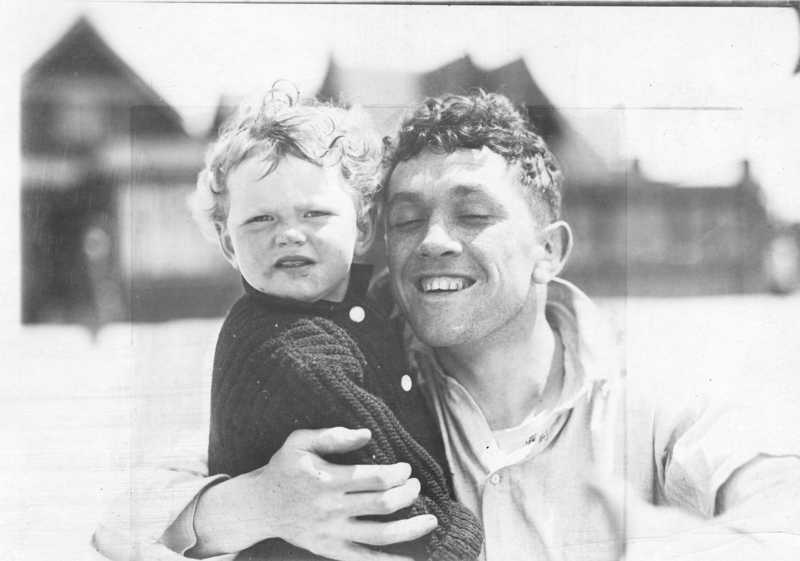
    <summary type="html"><![CDATA[<p><strong><em>It hadn't been called "Kilbane Town" in 100 years.  In 2012, Cleveland City Council resurrected the name to honor an extraordinary Clevelander.</em></strong></p><img src="https://mail.clevelandhistorical.org/files/fullsize/bef8b2fa76b7c3f4e940516d91225130.jpg" alt="Johnny Kilbane and Daughter, 1913" /><br/><p>The Cleveland Leader dubbed the west side neighborhood near Herman Avenue and West 74th Street "Kilbane Town," in honor of world featherweight boxing champion Johnny Kilbane. In March 1912, Kilbane Town was the end point of one of the longest and largest St. Patrick's Day parades in city history.</p><p>Just one month earlier, the diminutive second-generation Irish American from the west side of Cleveland, had faced Abe Attell, a scrappy Jewish-American boxer, for the world featherweight boxing title in a match held in Los Angeles. Attell had dominated the featherweight class since 1901, holding the World Featherweight Champion title between 1901 and 1905, and again from 1906 until 1912. He had even defeated Kilbane less than two years earlier, on October 24, 1910, in a title match held in Kansas City. This time the result would be different. Kilbane defeated Attell in their grueling 20 round rematch to become world champion.</p><p>Kilbane returned to Cleveland on the perfect day for an Irish-American boxer--St. Patrick's Day.  At 4 PM on March 17, 1912, his train pulled into Union Station located on Lakeside Avenue between West 6th and West 9th Streets.  There, Johnny emerged from the train waving a green flag symbolizing his Irish roots.  Throngs of Clevelanders were there to greet him, literally covering the hillsides and embankments near the Station.  Cleveland newspapers "conservatively" estimated that the crowd in downtown Cleveland that day numbered 200,000.</p><p>A parade sponsored by the La Salle Club of St. Malachi Church formed at the Station and carried Johnny and his family by automobile to the steps of Cleveland City Hall (then located at East 4th and Superior Avenue).  Mayor Newton Baker, who broke his rule against attending parades on Sunday, was there to greet Johnny.  The parade then wound its way through the streets of downtown Cleveland, before crossing the Cuyahoga River onto Cleveland's west side.  There, the parade proceeded all the way down Detroit Avenue to West 74th Street--to Kilbane Town, finally and reluctantly disbanding there at 7:00 PM, approximately three hours after the parade began. </p><p>Johnny Kilbane was born and raised in Cleveland's Old Angle, before moving uptown to West Herman Avenue in 1910.  He was an affable man who captured the public's love and affection as much by his fighting prowess as by his reputed clean living style and devotion to his blind father, young wife and daughter. Johnny did much to bring respectability to a sport that was, at the time, generally considered to be disreputable.</p><p>After his boxing days were over, Johnny Kilbane remained in the public eye by operating a west side gym for kids and later by embarking on a career in politics which included a term as State Senator.  He ended his public career as Clerk of Courts for Cleveland Municipal Court, a position he held until his death in 1957.</p><p>In 2012, one hundred years after Johnny Kilbane won the World Featherweight Boxing title, Cleveland City Council passed legislation renaming Herman Avenue between West 74th and West 76th Streets "Kilbane Town" in honor of that historic sports event.</p><p><em><strong><a href="https://mail.clevelandhistorical.org/items/show/288">For more (including 9 images) view the original article</a></strong></em></p>]]></summary>
    <published>2011-07-23T16:18:09+00:00</published>
    <updated>2026-04-17T19:17:38+00:00</updated>
    <link rel="alternate" type="text/html" href="https://mail.clevelandhistorical.org/items/show/288"/>
    <id>https://mail.clevelandhistorical.org/items/show/288</id>
    <author>
      <name>Jim Dubelko</name>
    </author>
  </entry>
  <entry>
    <title type="html"><![CDATA[Saint Colman Catholic Church]]></title>
    <summary type="html"><![CDATA[<img src="https://mail.clevelandhistorical.org/files/fullsize/saintcolman-clevelandstateuniveristy-clevelandmemory_brookins028-w65thandlorainintersection-nd_4a6232f0c9.jpg" alt="View From Intersection at W. 65th and Lorain Avenue" /><br/><p>St. Colman Catholic Church, located on West 65th Street near Lorain Avenue, was founded in 1880 as a response to the rapidly growing Irish immigrant population on Cleveland's West Side. Father Eugene M. O'Callaghan, former pastor of the predominately Irish St. Patrick's Catholic Church, held the first mass in a rented home off of Gordon Street (W 65th Street).  Later that year, the first church was constructed on Gordon Street and the home was converted into St. Colman School. With over 1,000 worshipers in 1883, the church was expanding in both its size and the role it played within the surrounding community. A new school was built on Gordon Street in 1885, and a convent was constructed for the Sisters of St. Joseph to begin their residency the following year.  By 1904, a larger three-level schoolhouse opened that included a 1,000 seat auditorium in the basement.</p><p>Taking four years to construct, St. Colman Catholic Church opened its doors in 1918. The classically styled structure could accommodate 2,800 people. St. Colman continued to expand, with a convent added in 1921, and both a second school and rectory constructed in 1930. The Church continued to act as the centerpiece of the neighborhood's Irish community until the middle of the century.</p><p>The West Side Irish community remained stable until the end of World War II. Soon after, however, the community dissolved as a result of the general exodus of Cleveland residents away from the urban core. In this changing environment, St. Colman Church evolved to meet the needs of an increasingly diverse and less prosperous community. With the 1904 school being closed and demolished in 1974, St. Colman opened one of the West Side's first preschools in its 1930 school building. Additionally, the church expanded its role ministering and providing social services to the outlying neighborhood through the development of a recovery program, literacy projects, an outreach ministry, and HUD-supported housing for senior citizens. </p><p>In an effort to downsize the Cleveland Catholic Diocese, Bishop Richard Lennon announced that St. Colman would merge with St. Stephen in March 2009. This order led to local grassroots efforts by the community to get Lennon to reconsider his decision. Rev. Bob Begin visited Lennon on two occasions to make the case for St. Colman. A flurry of appeal letters were sent to Lennon, arguing that the parish's social services had a tremendous impact on the urban poor, and that the church was financially stable. The works done by both Begin and St. Colman’s parishioners convinced Lennon to keep the church open.</p><p>However, not every church was spared closure. St. Emeric Church closed on June 30, 2010, leaving hundreds without a parish. Enter St. Colman; Rev. Begin collaborated with St. Emeric’s parishioner Eva Szabo, to hold monthly masses at St. Colman. Begin started learning Magyar, a Hungarian language, in order to prepare for St. Emeric’s churchgoers. He told the Plain Dealer, “I’ll learn to speak Hungarian enough to do the prayers.” The masses continued while Szabo and others continued to fight for their parish.</p><p>When Rev. Begin turned 75, he had to retire under church law. St. Colman’s parishioners disagreed, wishing Begin could stay longer. In their efforts, they submitted over 3,000 signatures and letters to Lennon to change his mind about Begin’s retirement. Lennon listened and offered to allow Begin to work for one more year, which Begin accepted. Begin officially retired in 2014, but continued to help and assist the church and those in need.</p><p><em><strong><a href="https://mail.clevelandhistorical.org/items/show/185">For more (including 6 images&#32;&amp;&#32;2 audio files) view the original article</a></strong></em></p>]]></summary>
    <published>2011-03-17T04:42:38+00:00</published>
    <updated>2026-04-17T19:17:37+00:00</updated>
    <link rel="alternate" type="text/html" href="https://mail.clevelandhistorical.org/items/show/185"/>
    <id>https://mail.clevelandhistorical.org/items/show/185</id>
    <author>
      <name>Richard Raponi&amp;#32;&amp;amp;&amp;#32;Katherine Gerchak</name>
    </author>
  </entry>
</feed>
