<?xml version="1.0" encoding="UTF-8"?>
<feed xmlns="http://www.w3.org/2005/Atom">
  <title type="text">Cleveland Historical</title>
  <updated>2026-08-21T20:31:28+00:00</updated>
  <generator uri="http://framework.zend.com" version="1.12.20">Zend_Feed_Writer</generator>
  <link rel="alternate" type="text/html" href="https://mail.clevelandhistorical.org/"/>
  <link rel="self" type="application/atom+xml" href="https://mail.clevelandhistorical.org/items/browse?output=rss2"/>
  <id>https://mail.clevelandhistorical.org/</id>
  <author>
    <name>Cleveland Historical</name>
    <uri>https://mail.clevelandhistorical.org</uri>
  </author>
  <link rel="hub" href="http://pubsubhubbub.appspot.com/"/>
  <entry>
    <title type="html"><![CDATA[Goodrich House: Flora Stone Mather&#039;s Tribute to Her Old Stone Church Pastor]]></title>
    <summary type="html"><![CDATA[<img src="https://mail.clevelandhistorical.org/files/fullsize/39eece9deaa94f50e267611122b647d2.jpg" alt="At the Loom" /><br/><p>The Goodrich House was erected in 1897 and was founded by Flora Stone Mather.  Mrs. Mather can be described as a pious woman who was influenced by the establishment of other settlement houses in Cleveland, most notably the Hiram House.  She named the organization out of loyalty to her pastor at Old Stone Church, William H. Goodrich. The first location of the Goodrich House was in downtown Cleveland on East 6th and St. Clair Avenue.  Within two years of its opening it had summer camps and education classes in a variety of subjects. The Goodrich House organized street clubs while also providing classes and workshops for cooking and sewing. One of the Goodrich House's most famous alumni is Newton D. Baker who became the 37th mayor of Cleveland from 1912 to 1915 and the U.S. Secretary of War from 1916 to 1921.  </p><p>As the reputation of the Goodrich House increased, it used programs to promote unity and break down barriers of mistrust between immigrants from countries such as Italy, Ireland and Poland.  For example, in 1918 it hosted an "All Nations Pageant" to ease tensions among immigrant ethnic groups who often wrestled over employment and housing privileges.  </p><p>The Goodrich House always emphasized its connection with the inhabitants of the community and developed programs to serve their needs. Like other settlement houses, it served a vital role in assisting Cleveland's poor during times of malcontent. For example, the Goodrich House formed soup kitchens for those whose families who were unable to cook during the flu epidemic of 1918-19. The settlement later created a newsletter for soldiers during World War II and offered a day nursery for children who resided in downtown hotels. In a 1950s pamphlet the Goodrich House defined itself as, "A social settlement, helping people in the neighborhood 'realize'" that what is good for one family is good for everyone."</p><p>In 1963, Goodrich House was renamed Goodrich-Gannett Neighborhood Center, honoring both Reverend Goodrich of the Old Stone Church and Alice Gannett, a long-time head worker at the settlement house. The name change of the organization coincided with the purchase of the old library building it was then occupying at 1368 East 55th Street. The Goodrich-Gannett Neighborhood Center later moved to a new facility just down the street at 1400 East 55th Street. Soon after the settlement closed in 2019, the facility became the new home of another social service agency, the Northern Ohio Recovery Association, which provides chemical dependency services.</p><p><em><strong><a href="https://mail.clevelandhistorical.org/items/show/386">For more (including 9 images) view the original article</a></strong></em></p>]]></summary>
    <published>2012-01-09T21:01:13+00:00</published>
    <updated>2026-04-17T19:17:38+00:00</updated>
    <link rel="alternate" type="text/html" href="https://mail.clevelandhistorical.org/items/show/386"/>
    <id>https://mail.clevelandhistorical.org/items/show/386</id>
    <author>
      <name>Sule Holder</name>
    </author>
  </entry>
  <entry>
    <title type="html"><![CDATA[Kilbane Town: A Story About One of Cleveland&#039;s Most Famous Boxing Champions]]></title>
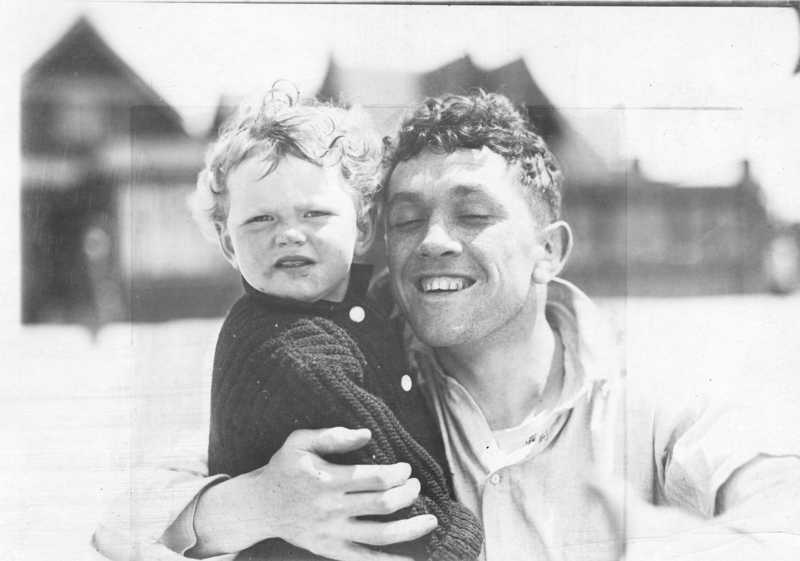
    <summary type="html"><![CDATA[<p><strong><em>It hadn't been called "Kilbane Town" in 100 years.  In 2012, Cleveland City Council resurrected the name to honor an extraordinary Clevelander.</em></strong></p><img src="https://mail.clevelandhistorical.org/files/fullsize/bef8b2fa76b7c3f4e940516d91225130.jpg" alt="Johnny Kilbane and Daughter, 1913" /><br/><p>The Cleveland Leader dubbed the west side neighborhood near Herman Avenue and West 74th Street "Kilbane Town," in honor of world featherweight boxing champion Johnny Kilbane. In March 1912, Kilbane Town was the end point of one of the longest and largest St. Patrick's Day parades in city history.</p><p>Just one month earlier, the diminutive second-generation Irish American from the west side of Cleveland, had faced Abe Attell, a scrappy Jewish-American boxer, for the world featherweight boxing title in a match held in Los Angeles. Attell had dominated the featherweight class since 1901, holding the World Featherweight Champion title between 1901 and 1905, and again from 1906 until 1912. He had even defeated Kilbane less than two years earlier, on October 24, 1910, in a title match held in Kansas City. This time the result would be different. Kilbane defeated Attell in their grueling 20 round rematch to become world champion.</p><p>Kilbane returned to Cleveland on the perfect day for an Irish-American boxer--St. Patrick's Day.  At 4 PM on March 17, 1912, his train pulled into Union Station located on Lakeside Avenue between West 6th and West 9th Streets.  There, Johnny emerged from the train waving a green flag symbolizing his Irish roots.  Throngs of Clevelanders were there to greet him, literally covering the hillsides and embankments near the Station.  Cleveland newspapers "conservatively" estimated that the crowd in downtown Cleveland that day numbered 200,000.</p><p>A parade sponsored by the La Salle Club of St. Malachi Church formed at the Station and carried Johnny and his family by automobile to the steps of Cleveland City Hall (then located at East 4th and Superior Avenue).  Mayor Newton Baker, who broke his rule against attending parades on Sunday, was there to greet Johnny.  The parade then wound its way through the streets of downtown Cleveland, before crossing the Cuyahoga River onto Cleveland's west side.  There, the parade proceeded all the way down Detroit Avenue to West 74th Street--to Kilbane Town, finally and reluctantly disbanding there at 7:00 PM, approximately three hours after the parade began. </p><p>Johnny Kilbane was born and raised in Cleveland's Old Angle, before moving uptown to West Herman Avenue in 1910.  He was an affable man who captured the public's love and affection as much by his fighting prowess as by his reputed clean living style and devotion to his blind father, young wife and daughter. Johnny did much to bring respectability to a sport that was, at the time, generally considered to be disreputable.</p><p>After his boxing days were over, Johnny Kilbane remained in the public eye by operating a west side gym for kids and later by embarking on a career in politics which included a term as State Senator.  He ended his public career as Clerk of Courts for Cleveland Municipal Court, a position he held until his death in 1957.</p><p>In 2012, one hundred years after Johnny Kilbane won the World Featherweight Boxing title, Cleveland City Council passed legislation renaming Herman Avenue between West 74th and West 76th Streets "Kilbane Town" in honor of that historic sports event.</p><p><em><strong><a href="https://mail.clevelandhistorical.org/items/show/288">For more (including 9 images) view the original article</a></strong></em></p>]]></summary>
    <published>2011-07-23T16:18:09+00:00</published>
    <updated>2026-04-17T19:17:38+00:00</updated>
    <link rel="alternate" type="text/html" href="https://mail.clevelandhistorical.org/items/show/288"/>
    <id>https://mail.clevelandhistorical.org/items/show/288</id>
    <author>
      <name>Jim Dubelko</name>
    </author>
  </entry>
</feed>
