<?xml version="1.0" encoding="UTF-8"?>
<feed xmlns="http://www.w3.org/2005/Atom">
  <title type="text">Cleveland Historical</title>
  <updated>2026-08-21T21:04:58+00:00</updated>
  <generator uri="http://framework.zend.com" version="1.12.20">Zend_Feed_Writer</generator>
  <link rel="alternate" type="text/html" href="https://mail.clevelandhistorical.org/"/>
  <link rel="self" type="application/atom+xml" href="https://mail.clevelandhistorical.org/items/browse?output=rss2"/>
  <id>https://mail.clevelandhistorical.org/</id>
  <author>
    <name>Cleveland Historical</name>
    <uri>https://mail.clevelandhistorical.org</uri>
  </author>
  <link rel="hub" href="http://pubsubhubbub.appspot.com/"/>
  <entry>
    <title type="html"><![CDATA[Nike Site CL-59: One of Eight Cold War–Era Missile Bases in the Cleveland Area]]></title>
    <summary type="html"><![CDATA[<img src="https://mail.clevelandhistorical.org/files/fullsize/c8baac09f73f03ff1eec12597183bdff.jpg" alt="Nike Missiles Prepped for Transport" /><br/><p>By the year 1956, the United States and the Soviet Union had been engaged with one another in the Cold War for almost a decade. Although there was no direct confrontation between the two world superpowers, the development of weapons and defense systems was heating up heading into the 1950s. Cleveland and its surrounding suburbs played a part in the Cold War narrative due to the fact that eight Nike missile installations were active in and around the city itself during the late 1950s and early 1960s. Among these installations was one in the West Side suburb of Parma Heights. Designated as Nike Site CL-59 by the U.S. Army, it was tasked with protecting that particular part of Northeast Ohio from the perceived Soviet threat. </p><p>The Army officially activated Nike Site CL-59 in 1956, and by July of that year, the base was capable of launching the cutting-edge Nike Ajax missile at incoming Soviet bombers. However, as technology advanced during the Cold War, soon there was a bigger and deadlier weapon which would replace the Nike Ajax missile. This new missile was named the Nike Hercules and was considered more capable of taking out a greater number of Soviet aircraft and could also be equipped with a nuclear warhead. Nike Site CL-59 was retrofitted to accept this new technology following its tenure being armed with the Nike Ajax missile.</p><p>As far as the base itself, the installation could be split into two major sections. One section was referred to as the ‘Control Area’ while the other was the ‘Launch Area.’ The control area was primarily where military personnel worked and spent much of their time and included amenities such as a mess hall and a barracks where soldiers lived. The other portion, referred to as the launch area, has a fairly self-explanatory purpose. The missiles themselves were located here, as well as an underground storage apparatus for them and their launchers which actually propelled the missiles skyward. The storage of fuel and waste products was also located in this section in the form of underground tanks.</p><p>Nike Site CL-59 occupied 187.2 acres in an area located near primarily residential-zoned property as well as <a href="https://clevelandhistorical.org/items/show/316">Crile Hospital</a> to the east. During the base’s heyday, an interesting intersection of military and civilian life occurred there in the form of dances and even beauty pageants which were held in or in close proximity to the base itself and involved servicemembers stationed there. Additionally, there was even an organized basketball team made up of some servicemembers from the ‘B Battery’ section of the base who played other local teams.</p><p>Nike Site CL-59’s tenure in the Parma – Parma Heights area was fairly short, though, due to the fact that it was only formally active from 1956-1961. The years following CL-59’s deactivation were filled with discussion and debate as far as what the land should become when the military was finished with it. Most bases in the Cleveland area were re-designated into areas having to do with education or recreation, and as fate would have it, land occupied and in close proximity to CL-59 became both of these things.</p><p>Following the base’s peak, the area the site once stood on was divvied up amongst various local entities, and the creation of recreational areas such as public parks occurred. Nike Park, located on Pleasant Valley Road, as well as Nathan Hale Park were two such locations born out of what used to be a military base which at one point had the potential to launch nuclear missiles. Another notable structure located in close proximity to Nike Site CL-59 is Cuyahoga Community College’s Western Campus. The institution, which was first completed in 1965, is actually on land which was primarily Crile Hospital. However, the fact that Tri-C West is the closest modern structure to what used to be the base’s launch area is most certainly a fact most students studying there are not aware of and makes for an interesting bit of area trivia.</p><p>Another aspect of the former location of Site CL-59 involves the removal of two underground storage tanks which at one point housed potentially dangerous fluids such as fuel and acid. This action occurred in the year 2000, a full thirty-nine years after the base was formally deactivated in 1961. It is important to note that at this point, all of the recreational and educational facilities which were planned for the former missile site’s location had been present for a number of years themselves. The U.S. Army Corps of Engineers was involved in the removal of the tanks, and the local citizenry was also made to be a part of the entire event, with public forums and the like being held.</p><p>All in all, although Nike Site CL-59 itself can most certainly be considered a relic of the Cold War, what became of the area is something quite different than what the land was originally meant for. Although the base itself disappeared decades ago, the strategic defense it once provided for part of the local area has not been forgotten by those who consider themselves Cold War historians. Also, it is worth pointing out the juxtaposition between the area when it was occupied by tools of warfare versus what it consists of now. Today, what used to be CL-59 is made up of facilities which are used to educate students and serve as recreational areas for local citizens, a far cry from the destructive objects which once occupied the land.</p><p><em><strong><a href="https://mail.clevelandhistorical.org/items/show/896">For more (including 8 images) view the original article</a></strong></em></p>]]></summary>
    <published>2019-12-05T21:40:38+00:00</published>
    <updated>2026-04-17T19:17:42+00:00</updated>
    <link rel="alternate" type="text/html" href="https://mail.clevelandhistorical.org/items/show/896"/>
    <id>https://mail.clevelandhistorical.org/items/show/896</id>
    <author>
      <name>Andrew Shaniuk</name>
    </author>
  </entry>
  <entry>
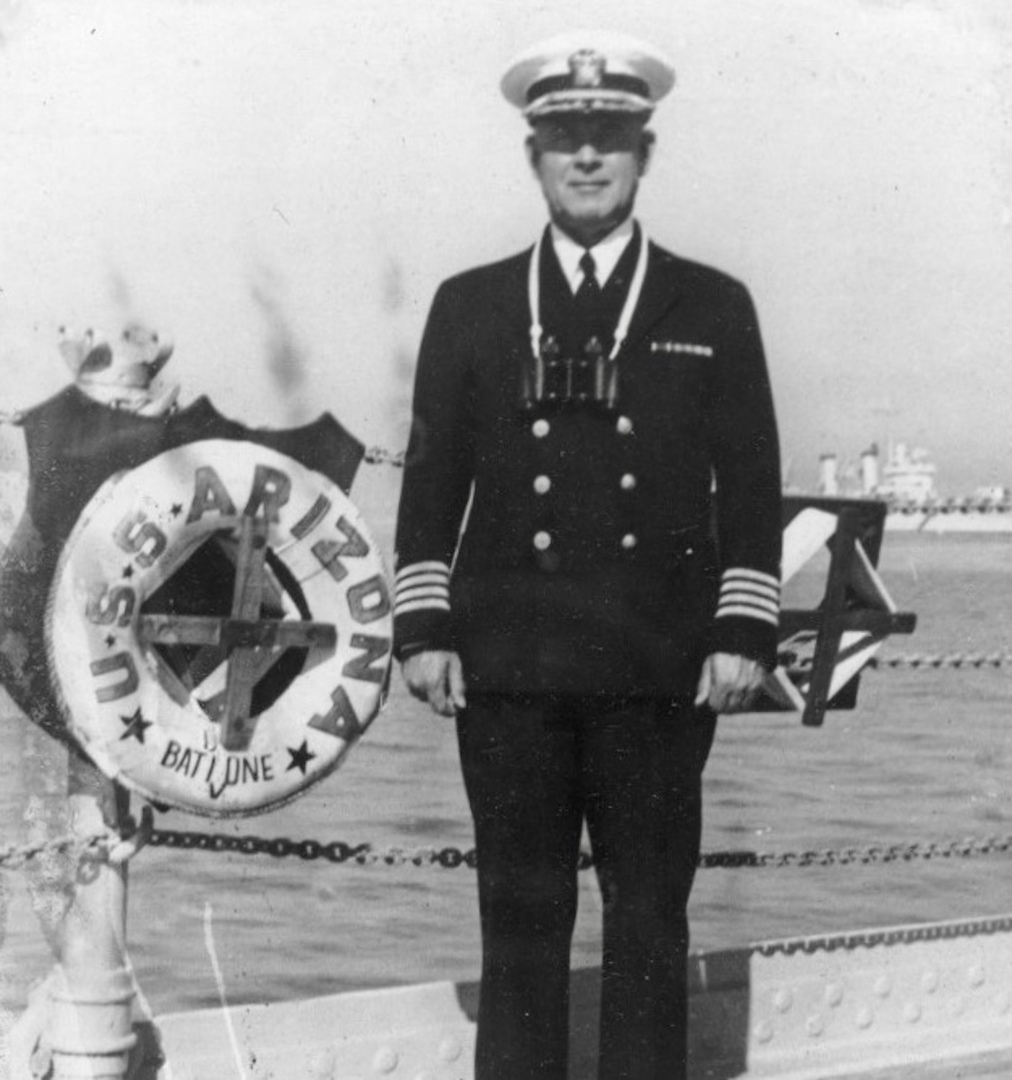
    <title type="html"><![CDATA[Admiral Isaac  Campbell Kidd: The Search for a Memorial to Cleveland&#039;s Forgotten World War II Hero]]></title>
    <summary type="html"><![CDATA[<p><strong><em>As the attack progressed, a Japanese plane dropped a bomb on the Arizona which struck its forward magazine, blowing up the ship.  Admiral Isaac Campbell Kidd, standing on the bridge above that magazine, was killed instantly, almost certainly incinerated by the blast. No part of his body was ever found. Only his Class of 1906 Naval Academy ring. And that was found welded to part of the bridgehead, undoubtedly the part where the Admiral's hand rested at the moment of his death. </em></strong></p><img src="https://mail.clevelandhistorical.org/files/fullsize/ebb15823be912aebad3518232e3754db.jpg" alt="Aboard the USS Arizona" /><br/><p>It was never easy to navigate your way to the birthplace of Isaac Campbell Kidd, one of Cleveland's most important World War II war heroes.  The little grey house, built in about 1875, was located at 3059 Mabel Court.  To get there, you had to know a little Ohio City geography.  From Franklin Circle, you drove west on Franklin Boulevard.  Then, just after you passed the Robert Russell Rhodes mansion (today, the Rhodes Mansion Apartments), you would turn left onto West 31st Place, and then quickly left again onto Mabel Court, a winding little alley with just a handful of houses on it.  The house in which Admiral Kidd was born sat about 100 feet down the alley, on the right side. </p><p>So just who was Isaac Campbell Kidd?  When the USS Arizona went down during the Japanese attack on Pearl Harbor on December 7, 1941—a date which President Franklin Roosevelt said "will live on in infamy"—1171 members of the Arizona crew of 1511 men lost their lives.   Among them was  Rear Admiral Isaac Campbell Kidd.  The USS Arizona was his flagship. </p><p>According to eyewitness accounts, when the attack began, Admiral Kidd, who was not aboard the ship at the time, bravely rushed to it and assumed command as the senior officer.  As the attack progressed, a Japanese plane dropped a bomb on the Arizona which struck its forward magazine, blowing up the ship.  The Admiral, standing on the bridge above that magazine was killed instantly, almost certainly incinerated by the blast.  No part of his body was ever found.  Only his Class of 1906 Naval Academy ring. And that was found welded to part of the bridgehead, undoubtedly the part where the Admiral's hand rested at the moment of his death.   Kidd was posthumously awarded the Congressional Medal of Honor.</p><p>Isaac Campbell Kidd was born in that little grey house on Mabel Court on March 26, 1884.  He spent all of his boyhood years growing up on Cleveland's west side. He attended Cleveland public schools and he graduated from West High School in 1902.  At his class's graduation, he gave the commencement address, ironically warning against Japanese military aggression in the Pacific.  He was recommended for an appointment to the Naval Academy by famed Ohio Senator Marcus Hanna, and attended the prestigious military college, excelling in both football and boxing, and becoming the college's heavyweight boxing champion.  </p><p>In 1906, following his graduation from the Academy, he served in a number of important expeditions as the United States began to grow its modern navy and strive to become a world sea power.  He first served on the USS Columbia during the Marine Expeditionary Force to the Canal Zone in 1906.  The following year, he participated in President Theodore Roosevelt's "Great White Fleet," sixteen battleships that circumnavigated the world over a fourteen month period.  </p><p>During much of World War I, before America's entry, Kidd served on the USS Pittsburgh.  The ship patrolled off the coast of Mexico, once it became known that Germany was attempting to induce Mexico to enter the war, promising it Texas, Arizona and New Mexico if Germany should win.  Once America did enter the war, Kidd was assigned to a new battleship, the USS New Mexico, which saw limited action, but in 1919 served as the escort of the transport George Washington, carrying President Woodrow Wilson to the Versailles Peace Conference in France.</p><p>During the years between the two World Wars, Kidd continued to receive important assignments and rise in the officer ranks.  In 1938, he became Captain of the USS Arizona, and two years later—the year before his death—he received his final promotion to Rear Admiral and final assignment as Commander of Battleship Division ONE, which consisted of three battleships, including his flagship, the Arizona.  He was serving in that assignment when the Japanese attacked Pearl Harbor.</p><p>Admiral Kidd's death was not reported in Cleveland until December 11, 1941, four days after the attack.  An article in a Cleveland newspaper which detailed his life and death, listed his birthplace as "near Detroit School, 4800 Detroit Avenue."  In early 2015, however, it was learned that the newspaper report was wrong, and he actually was born in the house at 3059 Mabel Court--for too long unrecognized as the birthplace of one of Cleveland's most important war heroes.  Unfortunately, by the time this became know, the house had suffered extensive damage in a fire during the winter of 2014-2015, and was demolished in April 2015.  Like the Admiral himself whose body was never recovered after the attack on the USS Arizona, there is now no trace left of Isaac Campbell Kidd's birthplace in Cleveland.</p><p>Research of the various houses that Isaac Kidd lived in while he grew up in Cleveland revealed that none are still standing, so none may be landmarked. There is no school in Cleveland named after him.  There is no park in Cleveland which bears his name.  The only remembrance of his bravery, his death, and his connection to the City of Cleveland, is a small historical marker which stands outside the grounds of the Coast Guard station, almost hidden by trees, on East Ninth Street just north of the North Marginal Road.  Given all that Isaac Campbell Kidd gave to his country, and given his strong connection to the City of Cleveland, the marker seems a very inadequate memorial.</p><p><em><strong><a href="https://mail.clevelandhistorical.org/items/show/696">For more (including 12 images) view the original article</a></strong></em></p>]]></summary>
    <published>2015-03-13T22:14:27+00:00</published>
    <updated>2026-04-17T19:17:40+00:00</updated>
    <link rel="alternate" type="text/html" href="https://mail.clevelandhistorical.org/items/show/696"/>
    <id>https://mail.clevelandhistorical.org/items/show/696</id>
    <author>
      <name>Jim Dubelko</name>
    </author>
  </entry>
  <entry>
    <title type="html"><![CDATA[Crile Military Hospital]]></title>
    <summary type="html"><![CDATA[<img src="https://mail.clevelandhistorical.org/files/fullsize/59e2642baef37f1c85baa9032fa4d731.jpg" alt="Entertaining the Troops, 1944" /><br/><p>Rustling trees, wildlife, ponds, fountains, and students hustling between their cars and classrooms. The first impressions of Cuyahoga Community College's Western Campus would, most likely, not include hints of its significant military history. Yet, wounded soldiers, German prisoners of war, and an entire military "city" were once the occupants inhabiting the property at 11000 Pleasant Valley Road in Parma. The site's rich history began when Crile General Hospital was dedicated on Easter Sunday 1944.</p><p>Built as a "temporary" facility, Crile grew to be more than a hospital. Its barracks-type structures were in almost continuous use for thirty years and served a variety of purposes. The Crile complex provided medical care to veterans of two wars, held 250 German POWs during World War II, and housed a Nike anti-aircraft missile base during the Cold War. It became home to Tri-C's Western Campus in 1966. </p><p>Crile General Hospital was built by the U.S. Army and named in honor of George Washington Crile (1864-1943), an internationally renowned surgeon and founder of the Cleveland Clinic. Crile served in both the Spanish American War and World War I and was a pioneer in military medicine, leading research and treatment of shock, blood transfusion, and blood banking. </p><p>Crile General Hospital actually received its first patient weeks before the official opening. In early March 1944, Richard Currier, a severely wounded POW, arrived as the lone patient in a facility with nearly 2,000 beds, 7 miles of corridors, and a staff of 1,000. Other patients arrived a few weeks later. In December 1944 the first detachment of German POWs arrived from Camp Perry, Ohio and remained until the end of 1945. Repatriated to Germany at the end of the war, many returned to the United States and subsequently became citizens. </p><p>After the end of World War II, Crile General Hospital became Crile Veterans Hospital in June 1946. Crile General Hospital had treated and healed over 15,000 patients by this time. The capacity of Crile was reduced to 1,000 beds, but was reorganized for clinical study and teaching. Physical therapy, occupational therapy, and corrective therapy were additional aspects of the Veterans Hospital's program. </p><p>The Crile Hospital in Parma closed in 1964, relocating to a new facility in University Circle (now the Louis Stokes VA Medical Center). In the fall of 1966, however, life returned to its empty ward and hallways as Cuyahoga Community College's newly created Western Campus enrolled 3,000 students. In 1975, the barracks were torn down and a new campus rose on the site of the old hospital to meet the community's expanding educational needs. </p><p>The site's military legacy has not been forgotten, however. Dedicated to preserving Cuyahoga Community College Western Campus's rich history, the Crile Archives, housed at the Tri-C Western Campus, is home to artifacts, documents, photographs, and books chronicling combat medicine and veterans' experiences from World War I to the present.</p><p><em><strong><a href="https://mail.clevelandhistorical.org/items/show/316">For more (including 10 images) view the original article</a></strong></em></p>]]></summary>
    <published>2011-08-05T09:17:56+00:00</published>
    <updated>2026-04-17T19:17:38+00:00</updated>
    <link rel="alternate" type="text/html" href="https://mail.clevelandhistorical.org/items/show/316"/>
    <id>https://mail.clevelandhistorical.org/items/show/316</id>
    <author>
      <name>Jennifer Pflaum</name>
    </author>
  </entry>
  <entry>
    <title type="html"><![CDATA[7th Ohio Volunteer Infantry]]></title>
    <summary type="html"><![CDATA[<img src="https://mail.clevelandhistorical.org/files/fullsize/f06dda7506d035029f398ed9e075f843.jpg" alt="Monument, Woodland Cemetery" /><br/><p>While no actual Civil War battles took place in Northeast Ohio, the role that its men played in the war was still a significant one. The 7th Ohio Volunteer Infantry, which is better know as the 7th OVI, was a heroic group of men from all over Northeast Ohio who served proudly in the American Civil War. The 7th OVI was initially composed of 1800 men in 10 companies and was in fact only one of a number of infantry units composed of men from the state of Ohio.  Indeed, when President Lincoln called on troops to join the war effort in April of 1862, there were enough volunteers from across Ohio to fill the entire quota of 75,000!  </p><p>Most men from the 7th OVI were true Cleveland boys with a strong spirit to fight for the Union.  These were men of culture and good social status, including clergymen, students, teachers, bankers, farmers, and mechanics.  When the 7th Ohio was called into service on April 30, 1861 Colonel E.B. Tyler was chosen to lead the infantry.  The 7th Ohio mustered at Camp Taylor in Cleveland, located near what is now East 30th and Woodland Avenue.  The troops then were moved to Camp Dennison near Cincinnati to receive further training, weapons, and uniforms.  It was here that most of the 7th signed up for three years of service to defend the Union.  After their service began, they headed out to West Virginia on June 26, 1861.  </p><p>When Colonel E. B. Tyler was promoted to General,  William R. Creighton, with whom the history of the Seventh is identified, took over as Colonel of the 7th OVI. Creighton was part of the old Cleveland Light Guard militia unit which formed the nucleus of what became the 7th OVI.  He led the 7th through many famous battles such as Cedar Mountain, Antietam, Chancellorsville, and Gettysburg before he lost his life in the Battle of Ringgold, Atlanta on November 27, 1863. On that same day, Creighton's Lieutentant Colonel, Orrin J. Crane, also lost his life.  Both Creighton and Crane always led their men into battle showing great courage and valor.  </p><p>After Creighton and Crane lost their lives, the 7th headed south to aid in the Atlanta campaign.  Before the campaign began, however, the 7th Ohio was pulled from action at the front because their enlistment time had expired.  Those who wanted to continue to fight for the Union joined the 5th Ohio. The rest of the regiment was mustered out, with its men paid and discharged at Camp Cleveland on July 8, 1864.  </p><p>A war historian wrote of the 7th regiment that "[a]ll in all, considering the number of its battles, its marches, its losses, its conduct in action, it may be safely said that not a single regiment in the United States gained more lasting honor or deserved better of its country than the Seventh Ohio Volunteer Infantry." The unit lost 10 officers and 174 men to hostile action and 2 officers and 87 men to disease. The memory of the 7th OVI, however, will live forever in marbled monuments around the country. One such monument can be found in Woodland Cemetery in Cleveland, where both Creighton and Crane are buried. </p><p><em><strong><a href="https://mail.clevelandhistorical.org/items/show/255">For more (including 6 images) view the original article</a></strong></em></p>]]></summary>
    <published>2011-07-16T15:24:25+00:00</published>
    <updated>2026-04-17T19:17:38+00:00</updated>
    <link rel="alternate" type="text/html" href="https://mail.clevelandhistorical.org/items/show/255"/>
    <id>https://mail.clevelandhistorical.org/items/show/255</id>
    <author>
      <name>Heidi Fearing</name>
    </author>
  </entry>
  <entry>
    <title type="html"><![CDATA[Jack &amp; Heintz Co.]]></title>
    <summary type="html"><![CDATA[<img src="https://mail.clevelandhistorical.org/files/fullsize/jahco-billjackgivesturkeydec24-42low_89c851fbd8.jpg" alt="Christmas Turkeys, 1942" /><br/><p>Bill Jack and Ralph Heintz formed Jack & Heintz in 1940 in Palo Alto, California. They soon moved their company to the Cleveland area, building a small plant at 17600 Broadway Avenue in Maple Heights.  The company made airplane parts, and it soon received a military contract to produce airplane starters. After their initial work orders were fulfilled on time and at a lower cost than other contractors, Jack and Heintz soon received more military contracts, including a significant one for the production of autopilot devices. </p><p>By 1944, Jack and Heintz employed over 8700 workers (including several thousand women) at their expanded Maple Heights location and several other new plants around the area.  This number is staggering when one considers that at its inception in 1940 the company only employed about 50 people. </p><p>While its name may have been Jack & Heintz, it was Bill Jack who became the charismatic public face of the company.  Before founding Jack & Heintz , Jack had been a  machinist, then became a leader in the machinist's union, and eventually opened his own plant, making him a wealthy man.  </p><p>Jack believed that a company should take good care of its employees -- or "associates," as he preferred to call them. Everyone -- even Jack himself -- was called by their first name, and the titles "sir" and "mister" were strictly forbidden. More significantly, workers at JAH-CO (as the company was popularly known) received free health care, paid sick leave, free meals, access to a sauna and massages, frequent cash bonuses, and two weeks of paid vacation at no-cost company resorts.  Smoking on the job was permitted, as was the hanging up of pin-up girls. Workers even received complimentary donuts, coffee (in a personal mug embossed with their name!), and vitamins. The company had a music collection totaling nearly 5000 records, which it played from during working hours.  In return, associates agreed to work 12-hour shifts, 7 days a week with only one day off a month. Despite these long hours, worker morale was high and absenteeism remained well below the national average. In terms of the speed and efficiency at which the company fulfilled its military contracts, the working conditions at the plant were deemed to be wildly successful. Eventually, the company's unique treatment of its employees received national publicity, and Jack savored the spotlight. Workers seemed to support Jack, as well -- literally singing his praises in the "JAH-CO Victory Song" </p><p>JAH-CO -- On to VIC-TO-RY!</p><p>Working ev'ry hour for our LI-BER-TY!</p><p>JAH-CO -- That means you and me!</p><p>Ev'ry one must fight for VIC-TO-RY!</p><p>"Bill" and "Ralph," You've stood by us,</p><p>We're all in back of YOU</p><p>Anything you care to ask,</p><p>We're waiting here to do.</p><p>When the war ended, however, the lucrative military contracts that allowed JAH-CO to take such good care of its workers came to an end as well. In 1946, the company merged with Precision Products. Both Jack and Heintz sold all their stock after the acquisition, making millions but giving up their voting control in the new company. While Precision Products vowed to make no changes to JAH-CO's unique personnel practices, little by little the new owners of Jack & Heintz scaled back Jack's way of doing things. </p><p><em><strong><a href="https://mail.clevelandhistorical.org/items/show/153">For more (including 8 images&#32;&amp;&#32;1 video) view the original article</a></strong></em></p>]]></summary>
    <published>2011-03-03T12:18:25+00:00</published>
    <updated>2026-04-17T19:17:37+00:00</updated>
    <link rel="alternate" type="text/html" href="https://mail.clevelandhistorical.org/items/show/153"/>
    <id>https://mail.clevelandhistorical.org/items/show/153</id>
    <author>
      <name>Michael Rotman</name>
    </author>
  </entry>
</feed>
