<?xml version="1.0" encoding="UTF-8"?>
<feed xmlns="http://www.w3.org/2005/Atom">
  <title type="text">Cleveland Historical</title>
  <updated>2026-08-21T20:29:09+00:00</updated>
  <generator uri="http://framework.zend.com" version="1.12.20">Zend_Feed_Writer</generator>
  <link rel="alternate" type="text/html" href="https://mail.clevelandhistorical.org/"/>
  <link rel="self" type="application/atom+xml" href="https://mail.clevelandhistorical.org/items/browse?output=rss2"/>
  <id>https://mail.clevelandhistorical.org/</id>
  <author>
    <name>Cleveland Historical</name>
    <uri>https://mail.clevelandhistorical.org</uri>
  </author>
  <link rel="hub" href="http://pubsubhubbub.appspot.com/"/>
  <entry>
    <title type="html"><![CDATA[Rockefeller Park Greenhouse: Municipal Nursery and Botanical Garden]]></title>
    <summary type="html"><![CDATA[<p><strong><em>Tucked away on a hilltop above the Cultural Gardens is an unassuming facility that for more than a century has played a mostly unseen role in supplying the Forest City’s parks, boulevards, and public properties with flowers, shrubs, and trees, while also cultivating a distinctive collection of tropical foliage and fruit-bearing trees.</em></strong></p><img src="https://mail.clevelandhistorical.org/files/fullsize/ff65e75684b088775c7c081ec99ba269.jpg" alt="Tropical Showhouse" /><br/><p>The Rockefeller Park Greenhouse has its origin in greenhouses given to the city by the estate of William J. Gordon, whose country seat became Gordon Park in 1894. Five years after John D. Rockefeller deeded land to connect Gordon Park with Wade Park in 1897, the municipal government planned a new “city greenhouses” complex, which opened in 1905. Sometimes erroneously referred to as the Gordon Park Greenhouse in its early years, the complex was actually in Rockefeller Park. </p><p>The primary purpose of the city greenhouses was to supply trees and shrubs for Cleveland’s parks, boulevards, and public properties. The greenhouses also donated flowers to hospital wards. However, the idea of a botanical showcase for the city also took root. In 1913, the city completed a large new greenhouse to display palms, ferns, and orchids to the public, including the donated exotic plant collection of William E. Telling. This greenhouse also provided a place to keep the goldfish from the Public Square pond during the winter. </p><p>Despite its pre–World War I origins, the Rockefeller Park Greenhouse as we know it is largely a product of the New Deal. Between 1937 and 1939, the Works Progress Administration (WPA) rebuilt the city greenhouses with a substantial new Palm House (now called the Tropical Showhouse) surrounded by six other greenhouses that raised the facility’s area under glass sixfold to 35,000 square feet. A center walk divided the Palm House into two lush sunken gardens lined with tufa rock salvaged from the Great Lakes Exposition. One of these gardens featured a waterfall and the other a statue. Looming overhead were six 30-foot-tall royal palms taken from the Florida exhibit at the Great Lakes Exposition, as well as other tropical trees and plants. </p><p>After World War II, City Greenhouse, as it was then known, unveiled periodic improvements. In 1946, the greenhouse’s new cacti exhibit opened, its specimens backed by a painted desert scene in the fashion of a diorama. In addition to continuing to serve as a prominent destination for garden clubs and other groups, City Greenhouse also furnished tropical plants for special events, notably a New Orleans French Quarter–themed display for the 1956 Cleveland Home and Flower Show in Public Auditorium. </p><p>In 1962, the Leonard C. Hanna Fund gave $300,000 to improve and expand City Greenhouse. The gift funded a new entrance building and a Japanese Garden, completed in 1964, at which time the facility began to be known as Rockefeller Park Greenhouse. Unfortunately, in the following decade the facility began to suffer a dwindling city budget that accompanied Cleveland’s steepening population decline. By 1980, the city briefly contemplated closing the greenhouse before deciding against it. Then, in 1991, the Friends of Greenhouse, a nonprofit, formed to raise funds to place the facility on a firmer footing and use it to host special events. Later additions included the Betty Ott Talking Garden with its statue of Helen Keller and the Willott Iris Garden, in which hundreds of varieties of iris bloom each spring and summer.</p><p>Today the Rockefeller Park Greenhouse remains, as it has for more than a century, a place of welcome respite from the winter cold and arguably one of the city’s best free attractions in Cleveland.</p><p><em><strong><a href="https://mail.clevelandhistorical.org/items/show/1076">For more (including 14 images) view the original article</a></strong></em></p>]]></summary>
    <published>2026-01-02T17:52:59+00:00</published>
    <updated>2026-04-17T19:17:43+00:00</updated>
    <link rel="alternate" type="text/html" href="https://mail.clevelandhistorical.org/items/show/1076"/>
    <id>https://mail.clevelandhistorical.org/items/show/1076</id>
    <author>
      <name>J. Mark Souther</name>
    </author>
  </entry>
  <entry>
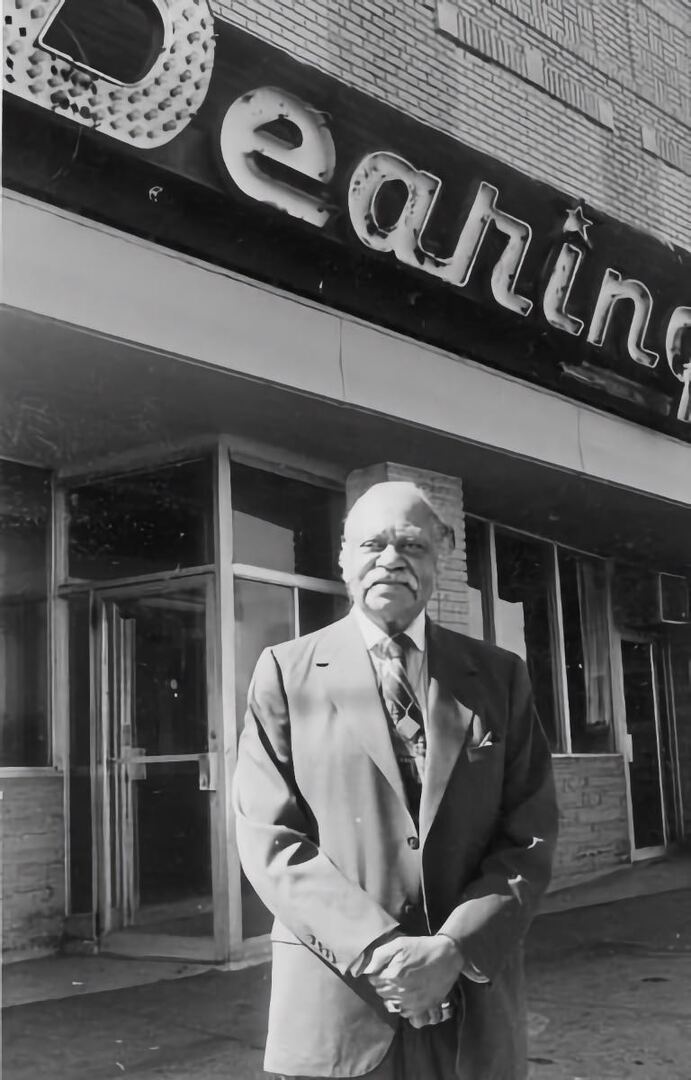
    <title type="html"><![CDATA[U. S. Dearing: Cleveland&#039;s  “Mister Restaurant”]]></title>
    <summary type="html"><![CDATA[<p><strong><em>In 1956, the <i>Call & Post</i>, Cleveland’s weekly African American newspaper, praised a leading light in the city’s restaurant field: “There is a double-star attraction featured by U. S. Dearing ... which has attracted the happy attention of approximately 65,000 Clevelanders during the past six months. Dearing’s double-feature is not a song and dance team or a couple of nationally famed stage stars; it is his Golden Brown Fried Chicken and his Hickory Smoked Barbecue.” So good was Dearing’s food that his wife, said to be a “fine cook” in her own right, confided to the paper that she usually served the restaurant’s food at parties in their 783 East Boulevard home: “I find it just too difficult to match the cooking that comes out of my husband’s kitchens,” she exclaimed.</em></strong></p><img src="https://mail.clevelandhistorical.org/files/fullsize/eaf4757cad966edd111dcd2665e4ac21.jpg" alt="U. S. Dearing Outside His Last Restaurant" /><br/><p>Born in 1903 in Washington, Virginia, in the foothills of the Blue Ridge Mountains, Ulysses S. (“Sweets”) Dearing was abandoned at birth and raised by his uncle in a tarpaper shack. At age 14 he joined the Great Migration, arriving in Pittsburgh with no money and no formal education. After a stint working in a Carnegie Steel mill and as a butler, Dearing opened his own restaurant in the Hill District before buying and operating a small hotel there in the early 1930s. Soon thereafter, Dearing tried to open a restaurant and hotel in the rural outskirts of the city but suffered a flood that, with the weight of the Great Depression, returned him to financial ruin. </p><p>As a result, Dearing left the Steel City for the Forest City in 1932. According to a story he told often, Dearing arrived in Cleveland with 97 or 98 cents in his pocket, which he said he threw on the sidewalk after getting off the bus at East 107th Street and Euclid Avenue because he decided someone else might need it more than he. Over the next two years, Dearing worked as a short-order cook before eventually landing a job as the manager of the popular, Green Book–listed <a href="https://greenbookcleveland.org/locations/cedar-gardens/">Cedar Gardens</a> restaurant at 9706 Cedar, a Harlem-inspired “black and tan” club where jazz music brought the races together. There he earned the nickname “Prince of Green Pastures” because Cedar Gardens was the pulsing heart of an emerging upscale Black nightlife district that assumed this name upon the death in 1935 of Black actor Richard B. Harrison, beloved for his starring role in the Broadway hit <i>Green Pastures</i>.</p><p>Over the next decade, Dearing managed other entrepreneurs’ ventures, all of them featured in the <i>Green Book for Negro Motorists</i>, while struggling to launch his own. He managed Jack Hecht’s Cedar Gardens (1933–37), Benny Mason’s <a href="https://clevelandhistorical.org/items/show/967">Cedar Country Club/Mason's Farm</a> in Solon (1938–42), and Mason’s <a href="https://greenbookcleveland.org/locations/blue-grass-club/">Blue Grass Club</a> (1943–45). During his tenure at Mason’s Farm, Dearing briefly owned two restaurants of his own. First, he operated Dearing’s Tasty Shop (1938–39), formerly the <i>Green Book</i>–listed <a href="https://greenbookcleveland.org/locations/the-chicken-coop/">Chicken Coop</a>. Then he bought the Park Avenue Restaurant at 5622 Woodland in 1941 but owned it for less than a year. Dearing then opened his next Dearing’s at 9708 Cedar (next to Cedar Gardens) in the former Palace Cafe in 1943, but within a few months he had moved a block to the former site of <a href="https://greenbookcleveland.org/locations/club-ron-day-voo/">Club Ron-Day-Voo</a> at 9804 Cedar, where he remained until 1945. </p><p>Following the end of World War II, Dearing finally hit his stride, entering what was to turn out to be a nearly four-decade run. In 1946, he opened his newest Dearing’s restaurant at 1035 East 105th Street. His move to 105th, the main commercial thoroughfare running through Glenville, placed Dearing’s among the vanguard of Black-owned businesses in a neighborhood that was soon to transform from one of the city’s prime Jewish communities into the so-called “Gold Coast,” which supplanted “Green Pastures” as the most coveted address for upwardly mobile African Americans. For several years he shared his block with other illustrious Black-owned establishments, including <a href="https://clevelandhistorical.org/items/show/882">Cafe Tia Juana</a>, <a href="https://greenbookcleveland.org/locations/gold-coast-tavern/">Gold Coast Tavern</a>, and <a href="https://greenbookcleveland.org/locations/mercury-bar/">Mercury Bar.</a></p><p>Within a few years, Dearing had expanded to four locations that included the dining rooms Alonzo Wright’s <i>Green Book</i>–listed <a href="https://greenbookcleveland.org/locations/carnegie-hotel/">Carnegie</a> and <a href="https://clevelandhistorical.org/items/show/636">Majestic</a> Hotels, as well as in Club Amvets, which resurrected a former Dearing’s location at 9804 Cedar. He advertised citywide delivery service by 1949, although this effectively meant only a few square miles of the East Side at a time when the vast majority of African Americans still lived in either Cedar-Central or Glenville. Thereafter, with his own restaurant’s “shack fried chicken” and barbecued ribs having become wildly popular, Dearing scaled back to concentrate solely on his Glenville dining room. </p><p>Open 24 hours a day, Dearing’s flagship restaurant was known not only for its unforgettable fried chicken but also for its sumptuous Sunday dinners. One Sunday menu in 1953, for instance, included thirteen entree options — Roast Prime Rib of Beef Au Jus, Roast Young Hen Turkey with Gravy and Cranberry Sauce, Roast Loin of Pork with Candied Yams, Broiled Boston Lamb Chops on Toast Points, Baked Sugar-cured Ham with Fresh Fruit Sauce, Stewed Fresh Country Chicken Dublin Style, Roast Long Island Duckling with Stewed Apples, Sauce Baby Chicken Livers in Butter on Toast, Broiled Prime Boston Strip Steak with Mushrooms, Lobster a la Newburgh in Casserole, Saute Veal Sweet Breads with Fresh Mushrooms, Broiled Fresh Caught Lake Erie White Fish Maitre D’Hotel, Broiled Fresh Caught Red Snapper with Lemon Butter, and Fried Jumbo Frog Leg with Tartar Sauce — all modestly priced between $1.25 and $2.25. </p><p>The Glenville-based Dearing’s enjoyed a long run, proving so successful that Dearing began to expand with the assistance of his son U. S. Dearing Jr. In 1956, he opened Dearing’s Carry-Out Store, whose slogan was, “Your apartment is your dining room.” Between 1960 and 1970, Dearing’s added five additional locations: Dearing’s Chic-A-Rib Room (1960), later named Dearing’s Living Room Lounge, Mark I Lounge, Second Choice Lounge, and finally the Candlelight Room, in the former Gem Snack Bar & Bar-B-Q at 10932 Superior Avenue; Dearing’s Carry-Out (1963) at 12019 Ashbury Avenue; Dearing’s Continental Lounge (1968) at 12804 St. Clair Avenue; Dearing’s Party Center (1969) at 17324 Harvard Avenue; and finally Dearing’s Catering (1970), later known as the Mark III Lounge and Carry-Out, at 11223 St. Clair.</p><p>Amidst his overall expansion, Dearing sold his original Glenville restaurant in 1962 to his employee Grace Sears, but just two years later he bought back the building to attempt a new concept, Mr. D’s Pancake House, which offered more than 80 different pancakes and, like his original restaurant, was open around the clock. Just a year later, he pivoted again, turning it into Mr. D’s Seafood, but then he abruptly closed down before the end of 1965. Perhaps these more specialized eateries fell short of expectations with pancakes mainly appealing in the morning hours and seafood costing more. </p><p>For the remainder of the decade, Dearing’s overall enterprise continued to prosper. However, no sooner had Dearing reached the zenith of being proprietor of his own local chain than he began to scale back. In 1971, he phased out the Continental, and he also shuttered his carry-out on East 105th following a devastating fire in 1972. Four years later, he closed the Mark III on St. Clair and, soon after on the advice of his doctor, in 1977 he also sold the Party Center to Edward Haggins and Dale Carter, with whom he shared his famous fried chicken recipe. Carter then carried on the Dearing’s tradition in Lee-Harvard, first as Dearing’s Lounge and then as Juva De’, which featured musical acts like the O’Jays.</p><p>Dearing, meanwhile, spent his remaining years concentrating on his Candlelight Room at Superior and East 110th, which operated until a few months before his death in 1984. Although only one of the Dearing’s buildings (the one in Lee-Harvard) stands today, Dearing’s legacy lives in the memory of many who remember his culinary prowess and warm hospitality. It is therefore little surprise that the <i>Cleveland Press</i> dubbed him “Mr. Restaurant,” rightly recognizing Dearing’s reputation as one of and possibly<i> the </i>foremost Black restaurateur of the twentieth century in Cleveland.</p><p><em><strong><a href="https://mail.clevelandhistorical.org/items/show/1073">For more (including 13 images) view the original article</a></strong></em></p>]]></summary>
    <published>2025-11-24T12:44:21+00:00</published>
    <updated>2026-07-29T17:40:22+00:00</updated>
    <link rel="alternate" type="text/html" href="https://mail.clevelandhistorical.org/items/show/1073"/>
    <id>https://mail.clevelandhistorical.org/items/show/1073</id>
    <author>
      <name>J. Mark Souther</name>
    </author>
  </entry>
  <entry>
    <title type="html"><![CDATA[The Sapirstein Family: A Greeting Card Company Grows in Glenville]]></title>
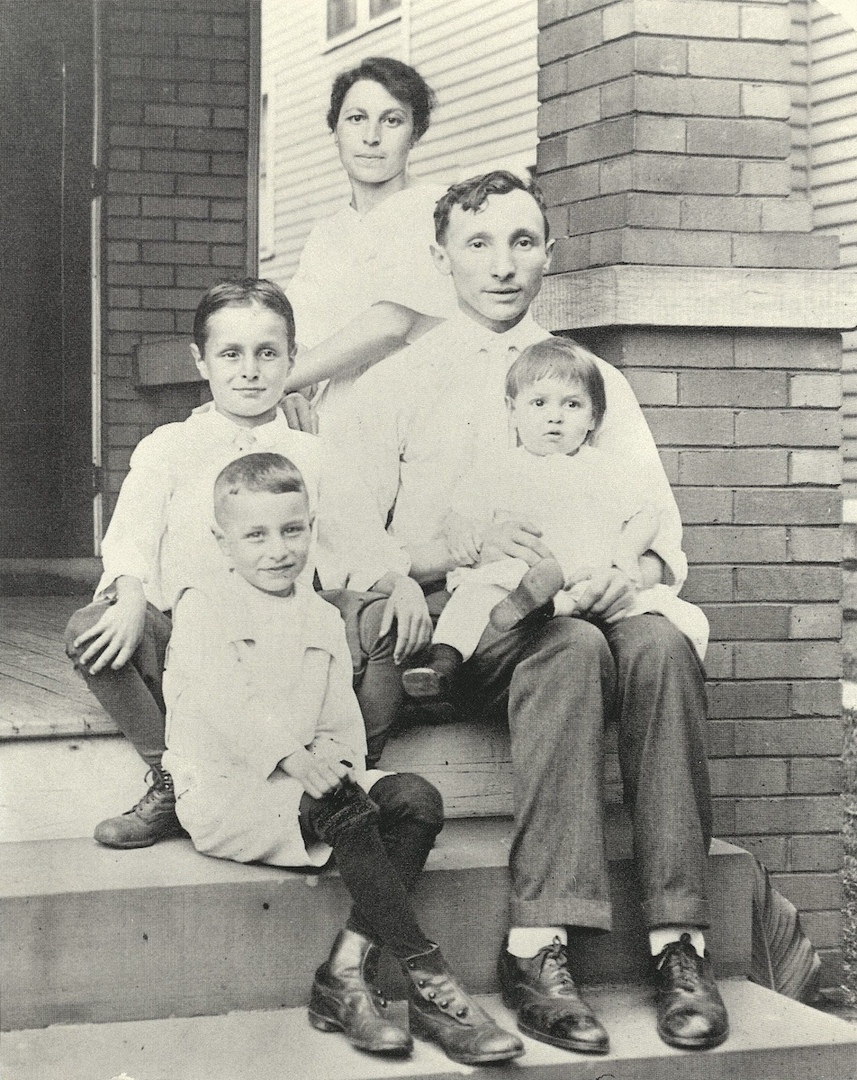
    <summary type="html"><![CDATA[<p><strong><em>In 1930, a year after the start of the Great Depression, 21-year old Irving Sapirstein, oldest son of postcard jobber Jacob Sapirstein, came to the conclusion that the Sapirstein family could make more money manufacturing and selling their own greeting cards rather than only selling those manufactured by others. To help make his point,  he  wrote some greeting card verses and then had printing plates made for them.  When he  approached his father and began telling him his idea, his father grabbed the metal plates from his  hands and smashed them on the ground, declaring, "We're jobbers, not manufacturers."  </p></strong></p><img src="https://mail.clevelandhistorical.org/files/fullsize/422644a32d53a85c64ee25a8b6f68028.jpg" alt="The Jacob and Jennie Sapirstein Family" /><br/><p>The website of the American Greetings Corporation contains scant information — more corporate legend than historical fact — regarding the founding of the company by Jacob Sapirstein, a Polish Jew who immigrated to the United States in 1906. A review of news articles, deeds, directory listings, census sheets, and other records available online, provides a fuller view into the early years of the business that, in Cleveland's Glenville neighborhood, began to grow into the world's second largest manufacturer of greeting cards.</p><p>Jacob Sapirstein was born in 1884, in the village of Wasosz in northeastern Poland. His parents were Rabbi Isaac Sapirstein and Marion (Mollie) Berenson. He grew up in nearby Grajewo, which, like Wasosz, was located in a region of Poland that had been seized by Russian Empress Catherine the Great during one of the partitions of Poland in the late 18th century. When he was 21 years old, Jacob decided to leave the village and his family, and immigrate to the United States. Sources differ as to exactly why he decided to leave Poland when he did, but they all agree that it was related to the harsh conditions to which Jews were subjected while living under Russian rule. </p><p>With financial assistance from the Hebrew Immigrant Aid Society, Jacob booked passage on a ship bound for America. He landed in Boston in late December 1906 and then continued on to Chicago where he had been offered a job as an apprentice tailor. However, he found that the job was not at all to his liking, and, within days after starting, he made the life-changing decision to quit the job and head for Cleveland where another job, and another future, awaited him. </p><p>Jacob's new job in Cleveland was working in the card shop at the Hollenden Hotel. For many years, this legenday hotel stood on the southeast corner of Superior Avenue and East 6th Street where the Fifth Third Center stands today. The card shop in the hotel was then operated by Moses Fenberg, variously described as a relative or friend of the Sapirstein family. He not only gave Jacob a job, but also a place to stay—in Fenberg's house on the West Side. As it turned out, Sapirstein wasn't very happy with the card shop job either, and complained to Fenberg that he wasn't making enough money. Fenberg responded with what Jacob Sapirstein later said was the best advice he ever received — "If you want to make more money, become a postcard jobber." And so that was exactly what he did.</p><p>In the early twentieth century, postcard jobbing — wholesaling cards of manufacturers to retail stores — was a tough job with long hours. In his early years of jobbing, young Sapirstein used streetcars to travel to the commercial areas of the east and west sides of Cleveland, carrying with him boxes containing an assortment of postcards. At each stop near drug stores, candy shops, and other retail businesses that he thought might buy his cards, he got off and peddled them. Then, after he had visited all the stores in one area, he caught another streetcar that took him to the next commercial area of the city. And so his work days went, traveling the streets of Cleveland, peddling from the time stores opened in the morning, until they closed in the evening. And when he returned home in the evening, he spent more hours doing the work necessary to fill the card orders he had procured that day.</p><p>In time, just as Moses Fenberg had told him, Sapirstein was making more money than he had at the card shop — in fact so much more that, by 1908, he could afford to marry Jennie Kanter, a young woman from his home village in Poland. After they married, they moved out of Fenberg's house and into a Woodland Avenue apartment in the East Side's Cedar-Central neighborhood. At the time, it was a working-class neighborhood and home to many Jewish immigrants. Jacob and Jennie's first son, Isaac (later known as Irving), was born there in 1909. Their second son, Moses (later called Morris) was born there two years later. Both sons, as well as third son Harry (born in 1917), would come to play important roles in the early growth of the company that eventually became the American Greetings Corporation.</p><p>In 1914, World War I began. Soon after the start of hostilities, the United States imposed an embargo on the import of German goods, including the then-popular German-made postcards and greeting cards. This embargo, as well as the increased demand for cards that occurred during the war years, benefitted not only America's domestic card manufacturing industry but also jobbers like Jacob Sapirstein who sold those cards to retail businesses. Soon, Jacob could afford to purchase a horse and wagon with which he could more easily travel the streets of Cleveland peddling his cards, especially the new folded greeting cards which had become popular during the war. In time, as his jobbing business grew, Sapirstein exchanged that horse and wagon for a new Ford automobile. </p><p>With the growth of his business, Jacob and his wife and children were also able by 1918 to move out of the Cedar-Central neighborhood and into the more upscale Glenville neighborhood, one in which they would live for the next two decades and during which time Jacob's jobbing business would see substantial growth before transforming into a card manufacturing business. The first house the Sapirsteins bought in Glenville was a two-family house at 856-858 East 95th Street, near St. Clair Avenue. However, after living in this house for only a year, they sold it and purchased the house right next door — also a two-family — at 852-854 East 95th. Why the family would sell the first and buy the second is somewhat of a mystery, but it may have been related to the so-called first business expansion of the company described below.</p><p>As earlier noted, Jacob Sapirstein's jobbing business now included the new and popular folded greeting cards, as well as the more traditional postcards. As a result of this enlargement of his inventory and other growth in his jobbing business, Sapirstein at some point found it necessary to move all of his inventory out of the house and into the family garage. Different articles published by different newspapers in different years assign different addresses and dates to this first so-called expansion of the business, but the article that was published in the <em>Cleveland Jewish News</em> on May 24, 1985, which was based on an interview with Jacob's son Irving, is the most detailed and convincing. It also featured a photograph of Irving standing in front of what is clearly the garage at 852-854 East 95th Street. The caption below that photograph reads: "The company's first expansion — in 1917 — to Jacob Sapirstein's garage on East 95th Street." (The expansion at that address actually most likely occurred not in 1917, but instead in 1919 when the Sapirsteins purchased the second house on E. 95th Street.)</p><p>It was not only the expansion of the business into the family garage that was a marker of the growth of Sapirstein's jobbing business in the early years of the family's residency in Glenville. During the Influenza Pandemic of 1918-1920, Jacob Sapirstein contracted the virus and became so ill that he couldn't work. According to several articles, his sons Irving and Morris — though then not yet even teenagers — had to perform many of their father's jobbing duties, including jumping on streetcars in order to deliver cards to customers and keeping the books of the business at home. This inevitably led, in the decade of the 1920s, to both Irving and Morris becoming jobbers like their father. This, in turn, likely resulted in a large increase in the customer base of the business. Notable of the sons' early efforts, in 1928, Irving and Morris successfully procured a large order of postcards and greeting cards for Euclid Beach Park. This sale produced $48,000 in revenues for the family jobbing business — the equivalent of almost one million dollars in today's money.</p><p>By the time the Great Depression arrived in 1929, both Irving and Morris were jobbing full time with their father in the family business that was now known, according to Cleveland directories, as "The Sapirstein Greeting Card Company." It was at about this time, according to Jacob's son Irving, that he had the conversation with his father about going into the greeting card manufacturing business that led to his father shattering Irving's printing plates. However, while, according to Irving, Jacob (who later became known at American Greetings as "J.S.") was a hard sell, he "finally came around." While the exact year that the Sapirstein family began manufacturing their own greeting cards is difficult to determine, it may well have been in 1932 when, for the first time since 1919, the family business address was listed not at 852 East 95th Street but instead at 9313 Yale Avenue, then the site of a brick commercial building located less than a quarter mile from the Sapirstein home. </p><p>In 1934, the Sapirsteins incorporated their new manufacturing business under the name of the Sapirstein Greeting Card Company, and, in 1935, Jacob's third son Harry joined the company as a full-time employee. Meanwhile, his oldest son, Irving, who exhibited an artistic bent, became involved in the creation of the company's first greeting cards. His most notable early verse, which became the company's slogan, was: "From someone who wants to remember someone too nice to forget." </p><p>In 1938, the Sapirsteins changed the name of their company to the American Greeting Publishing Company, after expanding outside the Cleveland area by opening a manufacturing facility and branch office in Detroit, Michigan in 1936. (The company name would later be simplified to the American Greetings Corporation.) Several years after this, in 1941, the Sapirsteins moved their company out of Glenville and into a large commercial building complex on West 78th Street on Cleveland's West Side. And, several years after the business left Glenville, Jacob and Jennie Sapirstein left too, selling their house in the neighborhood and moving to University Heights. </p><p>Since the 1940s, American Greetings has grown and expanded numerous times, and now has manufacturing facilities and offices in many locations across the United States and around the world. Its headquarters today are located in Westlake. It is unlikely that many current employees of American Greetings are even aware of the company's humble beginnings in the Glenville neighborhood. Nevertheless, this is exactly where, over the course of more than two decades, that the Sapirstein family grew Jacob Sapirstein's postcard jobbing business into the second-largest manufacturer of greeting cards in the world.</p><p><em><strong><a href="https://mail.clevelandhistorical.org/items/show/1035">For more (including 19 images) view the original article</a></strong></em></p>]]></summary>
    <published>2024-10-31T18:21:09+00:00</published>
    <updated>2026-04-17T19:17:43+00:00</updated>
    <link rel="alternate" type="text/html" href="https://mail.clevelandhistorical.org/items/show/1035"/>
    <id>https://mail.clevelandhistorical.org/items/show/1035</id>
    <author>
      <name>Jim Dubelko</name>
    </author>
  </entry>
  <entry>
    <title type="html"><![CDATA[Forest City Hospital: &quot;A Hospital For All&quot;]]></title>
    <summary type="html"><![CDATA[<img src="https://mail.clevelandhistorical.org/files/fullsize/35f9272e2d0be955d7ce6ffb822e96f5.jpg" alt="Architectural Rendering of Forest City Hospital, ca. 1954" /><br/><p>Forest City Hospital, located in the Glenville neighborhood, was considered Cleveland’s first fully interracial hospital when it opened in 1957. The site of the hospital was on the grounds of the old Glenville Hospital at 701 Parkwood Avenue, which was eventually entirely razed for the development of Forest City. This construction was made possible by the Forest City Hospital Association, which was formed in 1939 by physicians and community members who supported the creation of an interracial hospital that could effectively serve Cleveland's Black population and provide an institution where Black physicians could find steady work. Some of the prominent founding members of the Forest City Hospital Association included Dr. Ulysses Grant Mason Jr., Dr. Middleton H. Lambright, and Dr. Samuel Freedlander.</p><p>Throughout the decades preceding the opening of Forest City Hospital, there had been active discussion among Cleveland’s medical community and public advocacy from local civic organizations for the development of such a facility. In 1930, about 35 Black physicians practiced in Cleveland, with only five being employed securely as staff of the Western Reserve Society Medical School. The rest were forced to seek positions at institutions where they might be subjected to outright discrimination through unequal working conditions and unjust terminations. Many African American physicians reported that though they were forced to work long hours, it was not an uncommon occurrence not to work directly with a single patient over an entire shift as white patients would request to see a white doctor while Black patients were routinely denied care by institutions for a variety of reasons. Along with physicians who pushed for the creation of a hospital where they would be accepted fully and find solid work, the ever-growing Black population of Cleveland also exerted pressure on the established hospital systems. Between 1910 and 1940, Cleveland's African American population grew from 8,488 to nearly 85,000. This increase in population, and subsequently patients seeking medical care, elicited unsatisfactory responses from Cleveland hospitals. Some institutions established specific days that served as the only times when Black patients were even considered to receive care, while some institutions enacted policies whereby Black patients were forced to wait and receive care in the oldest wings of a building and be treated only using the oldest equipment.</p><p>These major problems in the treatment of Black physicians and the care available to the entire Cleveland Black community led to the establishment of the Forest City Hospital Association in 1939. Of the 39 founding members, nine were Black physicians hoping to spark the creation of a new institution free from racial discrimination and bias. The association searched for properties where they could either build a brand-new building or renovate an existing one. Eventually, the organization decided that the site of the old Glenville Hospital would be suitable as it was in a prime location to serve the Black community in Cleveland’s east side neighborhoods. Throughout the 1940s and into the 1950s, the Forest City Hospital Association worked closely with the Cleveland branch of the NAACP, which they viewed as the likeliest source of significant funding for the construction of a new interracial hospital. However, this proposed cooperation in the building of a medical facility would be fraught with dilemmas due to disagreements on exactly where and how such a project would be undertaken. Specifically, the NAACP was continually reluctant to commit any large sum of money towards the building of a new hospital as they had already recently invested in building two other hospitals to serve black communities in New York and Chicago, each of which had proved to be a financial drag on the NAACP. In May 1954, the NAACP voted to formally disapprove of plans presented by the Forest City Hospital Association to tear down the old Glenville Hospital and create a new building. This vote effectively ended the NAACP’s involvement in the initial funding of the new facility. Opportunely, the Forest City Hospital Association had gained favor in the public eye and forged connections with other Cleveland organizations willing to help fund the project. In 1954, the Cleveland Hospital Fund granted $404,000 to the Forest City Hospital Association, allowing it to break ground at the old Glenville Hospital site. In 1955, with construction just underway, Ohio Governor Frank J. Lausche launched a public subscription campaign in support of the hospital. This effort, along with other fundraising activities conducted by the Forest City Hospital Association, contributed an additional $641,000 to the total fund.</p><p>After just over two years of construction, Forest City Hospital officially opened its doors to patients on August 4, 1957, with Cleveland's <em>Call & Post</em> newspaper declaring the institution to be "A hospital for all." The hospital initially held 92 beds, but it would eventually become a 103-bed facility. Among the care offerings at Forest City Hospital were general practice and family care, surgery, gynecology, emergency services, and state-of-the-art X-ray and imaging services. In just its first year of operation, Forest City Hospital admitted over 2,500 patients, conducted over 1,300 surgical operations, took over 4,500 X-rays, and was the site of over 500 births. Of 53 physicians on staff, 26 were Black, as were most of the other hospital staff such as nurses and technicians. For its entire time in operation, Forest City Hospital served as an institution where anyone, regardless of race, could receive high-quality and timely medical care without risk of discrimination or segregation.</p><p>Forest City Hospital functioned comfortably for nearly a decade until 1967, when concerns over the building’s ability to add more beds and facilities to accommodate an ever-growing population came to a head. For the next several years, the hospital embarked on a new fundraising campaign in an attempt to raise enough money to build a new expansion and effectively double the total amount of bed space. However, throughout the early 1970s total admissions fell and consistently occupied bed space declined, jeopardizing the plans for any new expansion. From the loss of this potential fundraising and the inability to renovate, the quality of services at Forest City Hospital reportedly fell. Moving forward, Forest City Hospital began to prioritize outpatient and supportive services, along with keeping a high-quality emergency care unit running. By the 1970s, nearly all medical organizations in Cleveland had removed major barriers targeting Black patients and healthcare workers from finding care and work. Coupled with the facilities of Forest City becoming outdated and with no hope of a renovation for the hospital, patients and physicians continually left for other Cleveland institutions. Beset by financial stress, low admissions, and a shortage of physicians and nurses, Forest City Hospital finally closed in 1978. Although it lasted barely over two decades, Forest City Hospital provided a crucial lifeline in an era of struggle for access to quality healthcare.</p><p><em><strong><a href="https://mail.clevelandhistorical.org/items/show/1022">For more (including 4 images) view the original article</a></strong></em></p>]]></summary>
    <published>2024-04-10T14:56:23+00:00</published>
    <updated>2026-04-17T19:17:43+00:00</updated>
    <link rel="alternate" type="text/html" href="https://mail.clevelandhistorical.org/items/show/1022"/>
    <id>https://mail.clevelandhistorical.org/items/show/1022</id>
    <author>
      <name>Andrew Zelina</name>
    </author>
  </entry>
  <entry>
    <title type="html"><![CDATA[Willie Pierson: A Builder of the Black Metropolis]]></title>
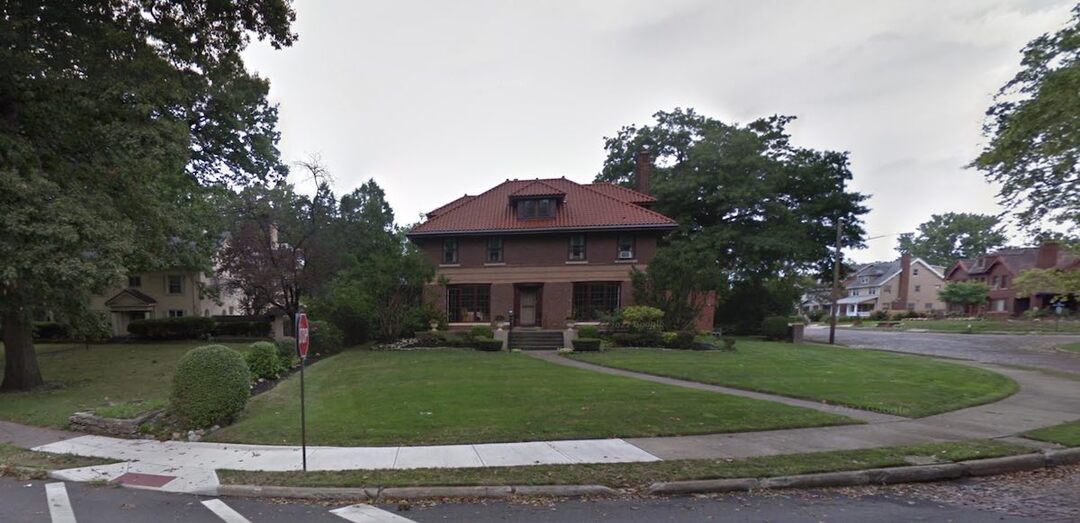
    <summary type="html"><![CDATA[<p><strong><em>At a 1947 testimonial dinner at the Phillis Wheatley Association to honor African American businessman Willie Pierson, John O. Holly, the president of Cleveland’s Future Outlook League, said, “If we had a few more Willie Piersons, this community would be almost self-sustaining.” Indeed, by investing in a number of businesses in the 1930s and ’40s with an eye toward creating opportunities in the city’s Black community, Pierson had become one of Cleveland’s most influential Black leaders of his time.</em></strong></p><img src="https://mail.clevelandhistorical.org/files/fullsize/eb5d09b1f8ee1b136b28bedca3f07bed.jpg" alt="Willie Pierson House" /><br/><p>Willie Pierson was born in Guthrie, Oklahoma Territory, in 1898. After serving in World War I, he migrated to Cleveland’s Cedar-Central neighborhood, where he operated a pool room. Over the ensuing years, he garnered a reputation as a “numbers racketeer” and, in the process, amassed considerable wealth. At a time when African Americans struggled to get access to credit, engaging in lotteries and other forms of gambling was a common way to circumvent systemic exclusion. But like his better-known contemporary Benny Mason who operated the famed <a href="https://clevelandhistorical.org/items/show/967">Mason’s Farm</a> club in Solon, Pierson would not simply grow wealthy but also use his wealth to invest in Black community advancement.</p><p>Pierson’s first noteworthy business venture followed the repeal of Prohibition. In 1934 he and Rodger Price, who would become his partner in numerous business ventures, opened the <a href="https://greenbookcleveland.org/locations/log-cabin/">Log Cabin Grill</a> at 2290 East 55th Street. The Log Cabin, styled in the manner of a “swanky hunting lodge,” became one of the most popular establishments in the heart of what many called Cleveland’s Harlem. Along with the <a href="https://clevelandhistorical.org/items/show/636">Majestic Hotel</a> across the street, the Log Cabin appeared in the <i>Negro Motorists’ Green Book</i> and attracted visiting celebrities such as Duke Ellington and Joe Louis. </p><p>With the exception of the Log Cabin, Pierson and Price poured their money into ventures that helped fellow African American entrepreneurs succeed in pursuing their own ambitions. In placing hiring power in African Americans' hands, they went beyond the Future Outlook League's call, "Don't Buy Where You Can't Work." In 1936, the men invested in the dream of Robert H. (Bob) Shauter to own his own drugstore. Shauter, a graduate of the Western Reserve University School of Pharmacy, had worked as a soda clerk in white-owned pharmacies but now had the opportunity to use his degree in his own drugstore, <a href="https://greenbookcleveland.org/locations/shauter-drugs/">Shauter Drugs</a>, at 9208 Cedar Avenue. When he was denied the opportunity in the early 1940s to open another pharmacy in the Reserve Building at Woodland and East 55th, Shauter turned to <i>Call & Post</i> publisher <a href="https://clevelandhistorical.org/items/show/686">W. O. Walker</a> for help. Walker decided to buy the Reserve Building to create a space where Black businesses and professional offices would not be sealed out on account of race. But Walker needed investors, and few in the Black community had significant capital. Two exceptions were Pierson and Mason, who joined him in forming the Woodland-55th Corporation, which purchased the Reserve Building and the Leiden Drug Co. inside it in 1943, in turn enabling Shauter to expand his business, which became Cleveland’s first Black-owned drugstore chain. </p><p>Indeed, Pierson situated himself as a facilitator of pioneering businesses. His financial support solved the problem of Black bowling leagues’ difficulty in gaining access to lanes in white-owned alleys. Piggybacking on Elmer Reed’s founding of the National Bowling Association, an umbrella for Black leagues, in 1939, Pierson and Price helped Reed start a ten-lane venue called <a href="https://greenbookcleveland.org/locations/united-recreation/">United Recreation</a> at 8217 Cedar Avenue in 1941. United Recreation was reputedly the first Black-owned bowling alley in the United States. Another pioneering African American business that Pierson supported was Sears Brothers Jewelry and Watchmaking School, which had been denied a renewal of its lease in the Prospect Fourth Building in downtown. Pierson and his associates welcomed John and Burl Sears in the Reserve Building in 1945, aiding what was likely the nation’s largest Black watchmaking school.</p><p>As he invested in Black enterprises, Pierson enjoyed growing prosperity. After years of living in a tiny tenement near Cedar and East 36th, he bought a sizable home in 1939 at 2304 East 89th Street and became a generous supporter of nearby Karamu House, an interracial arts-focused settlement. He also burnished his reputation as a sportsman by owning thoroughbred horses stabled at Thistledown. By 1943, Pierson purchased a tile-roofed brick mansion at the fork of East Boulevard and East 98th Street in the Glenville neighborhood. In doing so, he was in the vanguard of the emergence of East Boulevard as the most prestigious residential address in what African Americans came to call the “Gold Coast.” Just as discriminatory lending practices led some African Americans like Pierson and Mason to turn to illicit numbers activities to generate capital, they also sealed off suburbs from Black homeownership, making places like the “Gold Coast” the closest attainable equivalent.</p><p>Not every venture Pierson took on enjoyed success. Another wartime investment that might have been his greatest triumph ended up being his biggest failure. Around the same time that he moved to East Boulevard, Pierson committed $100,000 to start what was billed as the nation’s first Black-owned and -operated factory. The idea originated not in Cleveland but in Toledo, where Black attorney Orlando J. Smith had recently failed to advance a vision for such a factory. Undeterred, Smith convinced Pierson, Price, Mason, and another investor to start the American Enterprises garment factory, which he would manage. On December 30, 1943, the factory opened in a building at 1250 Ontario Street, two blocks north of Public Square. With 210 power machines, the plant employed 129 workers, most of them African Americans, and enjoyed a federal war work contract to supply Army coats and other clothing. Despite its promise, the enterprise soon faltered. Even though it had added a significant number of major orders from the private sector, the factory began to struggle to obtain supplies and also suffered from Smith's managerial inexperience and what the owners complained was government officials' “Jim-Crow” refusal to extend loans. By January 1945, the factory was shuttered and the firm in bankruptcy.</p><p>After the war, Pierson tailored his longtime advocacy for mentoring and bringing Black entrepreneurs into co-owned business enterprises to the pressing need to create jobs for returning Black servicemen. He argued in 1946 that African Americans with the means should pool their resources, saying, “We’ll never control the business life in our own communities until we buy the buildings in which it is housed.” In 1947 he and Price helped Wendell Bishop, long a porter in the downtown Thom McAn Shoe Co. store, open his own shoe shop in the Reserve Building, a venture jointly owned by Bishop, Pierson, Price, Mason, W. O. Walker, and Frances Shauter (Bob Shauter’s widow). Echoing other Pierson beneficiaries, Bishop Shoes became the city’s first Black-owned shoe retailer. As Pierson told the audience at the testimonial dinner in his honor that same year, “If I had two million dollars I’d solve the economic problems of the Negro in Cleveland with the simple theory that wealth is not the cash you have in the bank but the money you put to work.” </p><p>Had Pierson remained in Cleveland and lived longer, he might have been overjoyed to see African Americans succeed in moving into once-exclusionary suburbs but saddened to see how white disinvestment and limited amassing of Black capital combined to hollow out the Cedar-Central neighborhood where he had helped build the pulsing heart of Cleveland’s Black Metropolis. But Pierson moved to Victorville, California, in 1951 after buying an interest in Murray's Dude Ranch (an important <i>Green Book</i> site along Route 66), and he died in 1963. One year after his death, former Log Cabin hostess Ella Mae Ellis bought the business, but it only lasted for seven more years. In 1965, Elmer Reed closed United Recreation after a drop in the popularity of bowling and a failure to get his insurance policy renewed. In 1966, the Woodland-55th Corporation sold the Reserve Building—for twenty-three years the city’s largest Black commercial and office building but now struggling—for a gas station. Likewise, Shauter Drugs' one remaining store closed in the early 1970s. </p><p>Although today there is no physical trace of Willie Pierson’s business empire, the houses where he lived as he rose toward the zenith of his entrepreneurial and philanthropic activity are still standing. Today the long line of grand homes on East Boulevard is, to many passersby, merely an attractive backdrop to the Cleveland Cultural Gardens, but the street’s houses also embody the legacy of the World War II years, when influential African Americans like Willie Pierson were pioneers of the emerging “Gold Coast.”</p><p><em><strong><a href="https://mail.clevelandhistorical.org/items/show/1009">For more (including 8 images) view the original article</a></strong></em></p>]]></summary>
    <published>2023-12-08T23:28:54+00:00</published>
    <updated>2026-06-11T01:36:52+00:00</updated>
    <link rel="alternate" type="text/html" href="https://mail.clevelandhistorical.org/items/show/1009"/>
    <id>https://mail.clevelandhistorical.org/items/show/1009</id>
    <author>
      <name>J. Mark Souther</name>
    </author>
  </entry>
  <entry>
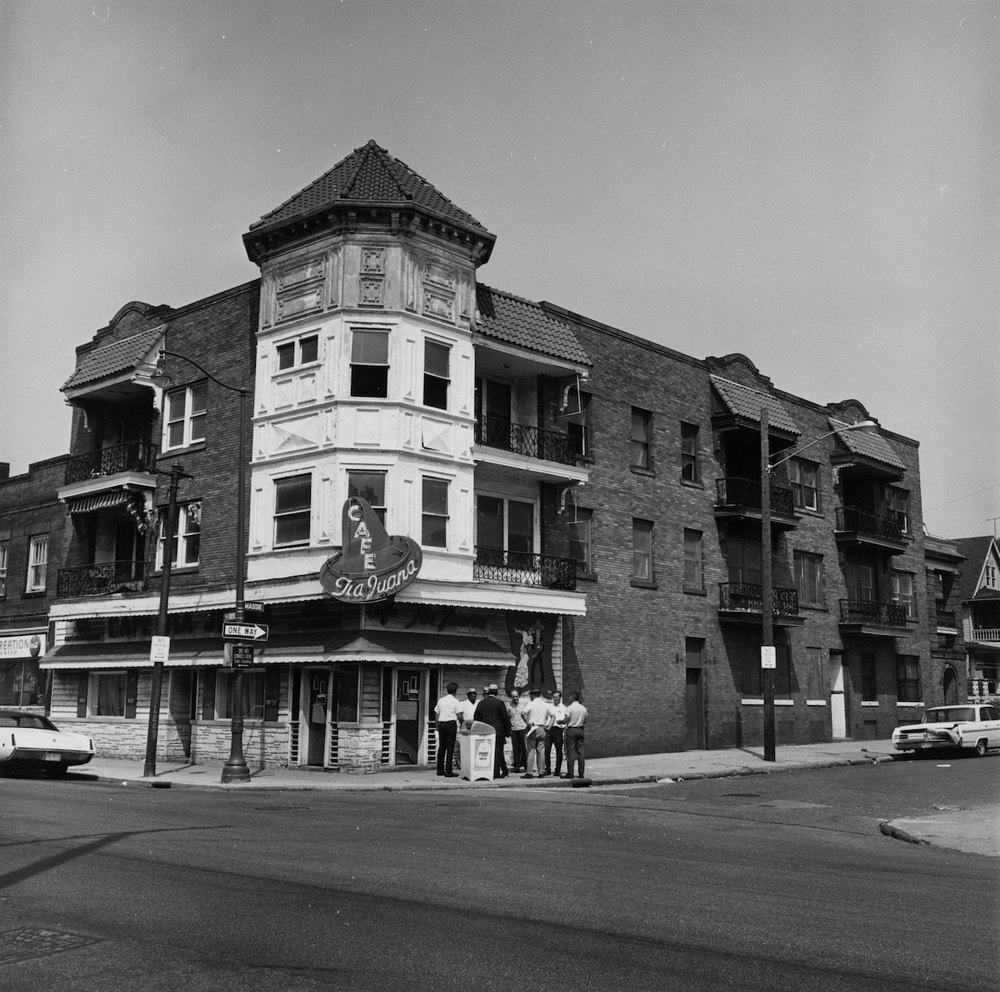
    <title type="html"><![CDATA[Cafe Tia Juana : Second Wave Jazz in Glenville]]></title>
    <summary type="html"><![CDATA[<p><strong><em>Cafe Tia Juana was meant to be a catalyst for change during the racially divided 1940s. The most "plush" jazz club in Cleveland became one of the most infamous, with a reputation that eventually brought the café to its demise. </em></strong></p><img src="https://mail.clevelandhistorical.org/files/fullsize/0cf03608bde602831950bef6fa0a19db.jpg" alt="Cafe Tia Juana at the corner of Massie Avenue and East 105th Street" /><br/><p>It’s a typical cold and drizzly evening in Cleveland, 1948. A young woman can be seen walking along the cracked asphalt. The buzzing light of the flickering neon sign ahead beckons her as the wafting sounds of snare drum riffs, husky baritone vocals, and a blaring trumpet become louder. The sultry-sounding music coming from behind the fogging windows increases her anticipation. The rat-a-tat riffs and spontaneous blats of the saxophone call her name as her heartbeat quickens with excitement. At last, she enters into its musical oasis.</p><p>This musical escape was called Cafe Tia Juana, a true oasis for Cleveland’s jazz fanatics during a time of tumultuous racial tensions in the late 1940s to 1960s. Located in the Glenville neighborhood, Cafe Tia Juana was one of Cleveland’s most popular jazz clubs and was nationally recognized for bringing the hottest names of jazz through its doors. It eventually developed a dually famous and infamous reputation, encapsulating contradiction. It was said that the club provided “a rich formula of beauty and glamour and top-flight musical talent,” yet was simultaneously “a source of disorder and aggression to the community.” Perhaps this complex identity mirrors the time, place and culture in which it was birthed. Cafe Tia Juana opened during jazz’s second wave, not the earlier Jazz Age, featuring the free form of bebop. Cafe Tia Juana developed a dual reputation for lawlessness and sensuality while also providing an interracial haven where people from mixed backgrounds could gather. The club–like jazz itself–broke through the social expectations of its time.</p><p>Cafe Tia Juana was intentionally integrated when racial segregation was common. The club was opened in 1947 by Catherine and Arthur “Little Brother” Drake, along with Little Brother’s previous business partner, Willie Hoge. The inspiration for the venture came after Catherine Drake was barred from entering a club in Cleveland because she was African American. She was with Hoge at the time, who was solely permitted, as he was a white customer. In response, the two Drakes and Hoge decided to open their own venue that would not discriminate against anyone who wanted to enter, creating an inclusive congregation of musical talents and admirers alike. Catherine Drake became the first African American woman to own and manage a jazz club in Cleveland.</p><p>The club’s appearance made it stand out amongst numerous other venues. It was designed by Charles L. Sallee Jr., the first African American graduate of the Cleveland Institute of Art. Sallee designed the club with unapologetic lavishness in a colorfully playful “Mexican style” with a surprising element of posh sophistication, using velvet carpets and excessive draperies. The interior architecture was also unique, with a four-leaf clover-shaped bar and booth design based around an elevated revolving stage in the center. Despite the club’s Spanish name (a variation of the Mexican city, Tijuana), Sallee’s design is rooted in Southeast Asian inspiration versus the “South of the Border” theme which advertisements claimed. Sallee served in the military during World War II and was stationed in the Philippines for some time where he drew his inspiration for the design of Cafe Tia Juana. The country’s sunny skies, colorful architecture, and vibrant culture inspired the colorful Pacific Island atmosphere of Cafe Tia Juana.</p><p>At its finest, Cafe Tia Juana was nationally recognized as a hot jazz club and was every bit the musical oasis that the Drakes had sought to create. It was luxuriously extravagant through its interior decorative style and by its nationally acclaimed jazz superstars. Impressively, in Cafe Tia Juana’s first two years of operation, it hosted the nation’s most famous jazz icons including Dizzy Gillespie, the King Cole Trio, Billie Holiday, Sarah Vaughan, and Ella Fitzgerald, with The King Cole Trio being advertised as an upcoming performance in the club’s introductory article in 1947. The <em>Cleveland Call and Post</em> described the club in those early years as the “fabulous, most beautiful cafe spot in the Midwest” and as a “plush and fabulous cafe spot where top-flight entertainment is the mode.”</p><p>Despite the club’s promising start, Cafe Tia Juana struggled to maintain its positive reputation. As early as 1949, Cafe Tia Juana started to experience financial hardship as customers began to dwindle, due to changing music trends. In efforts to maintain excitement and to mitigate revenue troubles, Cafe Tia Juana became liberal in its entertainment offerings, first hosting talent shows and local bands, then clambakes, fashion shows and eventually exotic dancers. This expansion of entertainment also coincided with the club’s change of management and chronic financial and legal troubles. Catherine Drake became the sole owner of the club and managed Tia Juana with her two sons after Hoge and Little Brother were sent to prison for numerous racket schemes. In 1961, the U.S. Treasury Department “seized for nonpayment of delinquent Internal Revenue taxes due from Cafe Tia Juana.” The club was eventually managed by Mansfield Turner who started to bring in national jazz attractions once more, starting with Valerie Carr, in efforts to boost its image. Despite Turner’s efforts for revitalization, Cafe Tia Juana became exclusively associated with its poor management, gambling escapades, illegal activity and violence through a series of stabbings and a shooting. </p><p>In 1969, Cafe Tia Juana was closed permanently and the original building complex that ran along the corner of Massie Avenue and 105th Street was bought by Cleveland Christ Church Citadel of Hope Ministries and, soon after, was demolished. Although Cafe Tia Juana is long gone, its memory remains as an important symbol of Cleveland’s music history. It was both impacted and influenced by jazz and race during its short life and was a catalyst for change, it challenged cultural norms and expectations, representing an iconic time from Cleveland’s past. Tia Juana opened as a reaction to the discriminatory character of Cleveland and its racially divided public spaces. The space stood for equality and change in the face of adversity, successfully creating a lasting legacy.</p><p><em><strong><a href="https://mail.clevelandhistorical.org/items/show/882">For more (including 11 images) view the original article</a></strong></em></p>]]></summary>
    <published>2019-11-20T20:08:13+00:00</published>
    <updated>2026-04-17T19:17:39+00:00</updated>
    <link rel="alternate" type="text/html" href="https://mail.clevelandhistorical.org/items/show/882"/>
    <id>https://mail.clevelandhistorical.org/items/show/882</id>
    <author>
      <name>Petra Brown</name>
    </author>
  </entry>
  <entry>
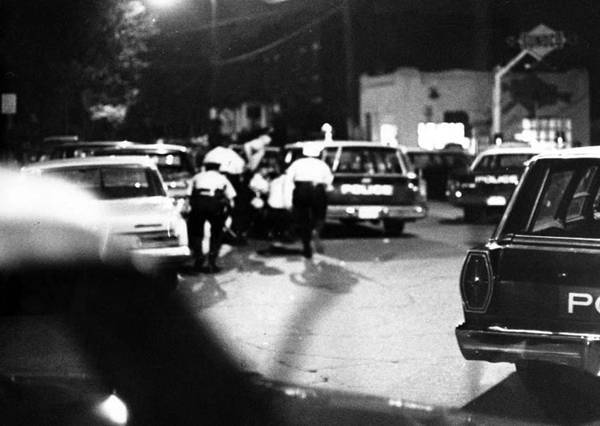
    <title type="html"><![CDATA[The Glenville Shootout: Racial Conflict and Conspiracy in Cleveland]]></title>
    <summary type="html"><![CDATA[<p><strong><em>Following the end of the hour-long gunfight that took place in Glenville on July 23, 1968, three white policemen, three black nationalists, and one black civilian lay dead in the streets of east Cleveland. Why did it happen and who was to blame?</em></strong></p><img src="https://mail.clevelandhistorical.org/files/fullsize/f3135ded34a34d0bb9e1803f7589d18c.jpg" alt="Policemen duck for cover during the Glenville Shootout" /><br/><p>On the evening of July 23, 1968, shots rang out in Cleveland’s predominantly black east side neighborhood of Glenville. Though it is unknown who fired the first shot, it is known that the Cleveland Police Department and the Black Nationalists of New Libya, a militant black nationalist group led by Fred (Ahmed) Evans, played a part in the fierce, hour-long gun battle now commonly referred to as the 'Glenville shootout'. Once gunfire died down, three white policemen, three black nationalists, and one black civilian lay dead in the streets of Glenville. After, rioting ensued for three straight days and resulted in the damaging or destruction of 62 buildings. Both during and after the riots, black Glenville residents were brutalized by white policemen fueled by racism and resentment from the deaths of fellow officers. Glenville would never be the same again.</p><p>Many black Clevelanders during the early-to-mid 1960s viewed white city authorities (as well as members of the Cleveland police department) as antagonistic white supremacists who did nothing to stop the urban decay, racism, discrimination, and violence that plagued their communities. Civil rights and black nationalist groups in Cleveland aimed to improve social and economic conditions for black Clevelanders but were often met with violent opposition from white residents, policemen, and city authorities. Racial tensions often culminated in episodes of intense racial violence, as was seen in neighboring communities, like <a href="https://clevelandhistorical.org/items/show/7">Hough</a>, throughout the 1960s. In 1967, the election of Carl Stokes, the first black mayor of a major city, helped calm racial tensions in Cleveland — but only temporarily.</p><p>Fred (Ahmed) Evans, leader of a militant black nationalist group known as the Black Nationalists of New Libya, faced constant conflict with white authorities and police throughout his life. To authorities, Evans’s black nationalist ideology and militant tendencies represented a threat to the perpetuation of white supremacy which their authority relied upon. Following the assassination of Martin Luther King Jr., Evans became increasingly concerned about what he saw as a white police state and began amassing a cache of weapons for the purpose of defending himself and his community. Tensions between Evans and the Cleveland Police Department reached a peak in the summer of 1968 when police surveillance was ordered on Evans’s 12312 Auburndale Avenue apartment following reports to city hall that Evans was planning to stage an attack against the police department. Though this report was unverified, police patrol cars (manned by white policemen) were stationed outside Evans’s apartment for several days prior to the shootout — despite black officials’ warnings to do precisely the opposite. </p><p>Neither the Cleveland police department nor members of New Libya agree to this day on exactly how or why the ensuing confrontation ended in violence. According to police, Evans orchestrated the shootout and was thus the one to blame; according to Evans and other black nationalists, police aggression and violence had instigated the shootout. Ultimately, the version of events told by city hall and the police department swayed the white public and media; blame for the bloodshed and destruction was placed solely on Evans while police racism, aggression, and violence went ignored. Evans’ trial jury was composed of seven white Clevelanders who were all, throughout the course of the trial, exposed to various forms of media, despite rules forbidding it. White members of the prosecution used racial slurs against Evans’ black defense team but were never disciplined. While it was proven that Evans had hidden in an attic during the gunfight and had never personally fired a single shot, this did not matter to the white judge and jury — Evans was charged with and convicted of first-degree murder. Evans originally received the death penalty, but was later re-sentenced to life in prison where he died of cancer in 1978.</p><p>Though it remains unknown exactly who initiated the shootout, it is known that the Cleveland police department had a history of largely antagonistic relations with Evans and black residents of Glenville which ultimately culminated in the events of July 23, 1968. Stokes’s decision to temporarily enact black community policing as a means of preventing additional deaths after rioting began lost him favor with many white Clevelanders, the police department, and city hall. Stokes was succeeded by Ralph Perk, a white ‘law-and-order’ mayor who stamped out any chance that black nationalist groups in Cleveland had of improving their social and economic situations. Glenville has still not fully recovered from the events of that night; the continued existence of vacant lots, burned-out buildings, and violent interactions with white police in the following years served to remind its residents that the conditions which had ultimately led to the shootout and riots had continued to endure. It has been suggested by both sides that the Glenville shootout was a conspiracy on some level - but whether the events that took place that July night were a conspiracy by the Black Nationalists of New Libya to ambush the police force or a conspiracy by the Cleveland police department to disrupt and destroy black nationalism in Cleveland is matter that also remains contested to this day.</p><p><em><strong><a href="https://mail.clevelandhistorical.org/items/show/858">For more (including 11 images) view the original article</a></strong></em></p>]]></summary>
    <published>2018-11-21T19:48:40+00:00</published>
    <updated>2026-04-17T19:17:42+00:00</updated>
    <link rel="alternate" type="text/html" href="https://mail.clevelandhistorical.org/items/show/858"/>
    <id>https://mail.clevelandhistorical.org/items/show/858</id>
    <author>
      <name>Riley Habyl</name>
    </author>
  </entry>
  <entry>
    <title type="html"><![CDATA[Dunbar Life Insurance Company: Championing Black Home Ownership]]></title>
    <summary type="html"><![CDATA[<img src="https://mail.clevelandhistorical.org/files/fullsize/f52db6f8015b5dcff4aa0426e2ba23f6.jpg" alt="Dunbar Life Insurance Company Postcard #1" /><br/><p>The Ludlow neighborhood straddles the Cleveland/Shaker Heights boundary and, through an arrangement with the Cleveland School Board in 1912, became part of Shaker Heights School District. Although Oris and Mantis Van Sweringen's garden suburb of Shaker Heights used restrictive covenants to practice social exclusion, soon after the mid-20th century a number of African Americans began to move into Ludlow by purchasing delinquent Van Sweringen lots. John and Dorothy Pegg were not the first to purchase lots, but their property did become the focus of an attack by white neighbors on January 3, 1956, when a bomb destroyed their garage and blew a hole in their dining room wall. The Peggs banked at the Cleveland Trust, which refused to give them a mortgage at a time when African Americans found it incredibly difficult to secure the means to afford home ownership, but the Peggs were able to secure a mortgage from the black-owned Dunbar Life Insurance Company.</p><p>The roots of Dunbar Life Insurance lay in the business success of Herbert S. Chauncey, a prominent African American lawyer who attracted many of his friends to his idea of creating a savings and loan company. With the help of his friends, Chauncey was able to secure a state charter and opened the Empire Savings and Loan Company in 1919. Empire SLC was first located in the offices of 2316 East 55th Street and became the first banking venture in the black community. Before World War I, many black-owned businesses found it difficult to acquire a strong economic base among their own race, but the modest success allowed Chauncey to open another branch.</p><p>Empire began operating at a time when the ghetto in Cleveland was forming and a large migration of blacks from the southern states were pouring into the city. The 1910 African American population of 8,448 soared to 34,451 ten years later. By 1930, the population nearly doubled to 72,000. The Depression hit Empire SLC hard, and in January 1935 the firm had to file for bankruptcy. All of the money loaned out by Empire was on black homes. During the Depression, African Americans were hit the hardest, but many black homeowners were able to keep up payments in whole or in part to keep from defaulting.</p><p>Chauncey was one of the first who began helping blacks gain homes with mortgages and loans, but ultimately it was Melchisedech Clarence (M.C.) Clarke who further helped blacks in insurance matters. As the state insurance examiner in 1935, Clarke was assigned to investigate the fraternal insurance societies in Cleveland, including two that were founded by Chauncey. While investigating four Cleveland insurance companies, Clarke realized that these companies should be consolidated to reduce expenses and protect policy holders. This merger became known as the Dunbar Mutual Insurance Society, which combined the assets of those fraternal societies and reinsured their policy holders. Clarke became operating head of the organization and resigned from his position as state examiner.</p><p>Dunbar Mutual expanded in 1943 after Clarke convinced his associates at the company that providing home loans would give stockholders a larger profit on their investments as opposed to investing in government and municipal bonds. Dunbar Life Insurance Company became licensed as insurance company on April 11, 1945. Clarke had anticipated that the Midwest would continue to see industrial and economic growth after World War II and that this was the “most opportune time” to launch the company. </p><p>Clarke expressed a desire to help the housing crisis for blacks by “relieving much of the congestion in our urban cities.” During World War II, another migration brought Cleveland’s black population to 147,847 by 1950, and many of the original migrants who occupied the area west of East 55th Street began to move eastward from the original settlement, primarily into an area bounded on the east by East 105th Street, on the north by Euclid Avenue and Woodward Avenue on the south. A growing number also gravitated toward Glenville, which had been a largely Jewish neighborhood for a generation. In 1940 the African American population in Glenville was just 899, but by the end of the decade, the population increased to 22,060, or 24 percent of the total population. In the same years, the Jewish population decreased from 27,000 to 15,000 as many Jews moved to Cleveland Heights and other eastern suburbs. Black population influx was located almost entirely in western Glenville on the streets off East 105th Street just south of St. Clair Avenue, and by 1960 this area of Glenville was 90 percent black.</p><p>In 1948 Dunbar Life had invested more than $300,000 in first mortgage loans to more than 100 black families. By the end of 1950, Dunbar Life had over $7 million in total insurance force and a capital surplus of $198,760. This success had allowed Dunbar Life to open a new branch office in the Glenville area on January 3, 1952, where hundreds of the company’s policyholders resided. Dunbar Life passed the $1 million mark in total assets in 1952 and held over half their assets invested in first mortgage loans on black property valued at $578,195.24. </p><p>The year 1952 also saw Clarke and his Dunbar investors purchase the outstanding stock of Quincy Savings and Loan Company. Quincy became approved for FHA mortgage loans under provisions of the National Housing Act in 1954. Before this approval, Dunbar Life was the only black-operated financial institution making FHA insured loans to the African American community. With the approval of Quincy, this increased the capital available to blacks in Cleveland to purchase homes.</p><p>In 1956, at the age of 66, M. C. Clarke died at the Cleveland Clinic. Clarke would not live to see Dunbar Life merge with the third largest black insurance company in the country, Supreme Liberty Life Insurance Company of Chicago, in 1958. The combined life insurance in force would total more than $140 million and combined assets exceeding $22 million. Quincy Savings and Loan would see incredible financial success as well. The company’s assets grew to more than $11 million by 1979. That year two Cleveland businessmen bought controlling interest of Quincy Savings and Loan and renamed it Cleveland Community Savings Company. By 1982, the company had liabilities that exceeded their assets, and in the following year Cleveland Community Savings was closed by the Federal Savings and Loan Insurance Corporation.</p><p><em><strong><a href="https://mail.clevelandhistorical.org/items/show/857">For more (including 6 images) view the original article</a></strong></em></p>]]></summary>
    <published>2018-11-21T19:48:40+00:00</published>
    <updated>2026-04-17T19:17:42+00:00</updated>
    <link rel="alternate" type="text/html" href="https://mail.clevelandhistorical.org/items/show/857"/>
    <id>https://mail.clevelandhistorical.org/items/show/857</id>
    <author>
      <name>Joseph A. Boomhower</name>
    </author>
  </entry>
  <entry>
    <title type="html"><![CDATA[Brith Emeth Temple/Ratner School]]></title>
    <summary type="html"><![CDATA[<img src="https://mail.clevelandhistorical.org/files/fullsize/055190be2d074795553c31f77a091024.jpg" alt="Detail of Circular Portico" /><br/><p>In 2013 the Lillian and Betty Ratner Montessori School celebrated the semicentennial of its founding in 1963. Melding its Jewish roots with the educational philosophy of Maria Montessori, the Ratner School is both a story of innovative education and of suburbanization. Ratner developed at Park Synagogue in Cleveland Heights, where it was housed for most of its first two decades before moving to Lyndhurst and, later, Pepper Pike.  </p><p>For a generation, Cleveland Heights represented upward mobility for Cleveland Jews, just as the Glenville neighborhood had for the previous generation. The Temple on the Heights (B'nai Jeshurun), which opened on Mayfield Road in 1926, signaled that decades of eastward movement of the city's Jewish population might continue into the suburbs, but in the meantime East 105th Street in Glenville was still on the build as a hub of Jewish life. Another congregation, Anshe Emeth, had recently moved from the Central neighborhood to a new facility on East 105th. Known as the Cleveland Jewish Center, the synagogue housed a religious school and recreational facilities that included the Council Educational Alliance, a forerunner of the Jewish Community Center of Cleveland.</p><p>Meanwhile, a group of Vassar-educated women founded the Park School in 1918 to provide a setting for "learning by living." Originally holding classes in the Heights Masonic Temple at Mayfield and Lee roads, the Park School grew to serve preschool through high school. The school leased a tract between Euclid Heights Boulevard and Mayfield Road in 1929 from John D. Rockefeller Jr., who tore up the lease three years later. The school's president, Harold T. Clark, predicted that the Park School would complement Rockefeller's nearby Forest Hill residential allotment.  </p><p>By the early 1940s, it was already apparent that the Jewish community was forsaking Glenville for Cleveland Heights.  Anshe Emeth Beth Tefilo purchased the Park School grounds with the idea of building a new synagogue there. In the meantime Lillian Ratner, whose husband Leonard B. Ratner headed Forest City Materials (which progressed from lumber sales to suburban real estate development after World War II), worked with Rabbi Armond E. Cohen and Anne Cohen to reorganize the Park Nursery School under congregational control in 1943. Instruction focused on "character training, handicrafts and Jewish customs." After World War II, Anshe Emeth Beth Tefilo commissioned renowned architect Eric Mendelsohn to design Park Synagogue. The congregation sold the Cleveland Jewish Center to Cory Methodist Church in 1946 and moved into Mendolsohn's new copper-domed synagogue four years later.</p><p>Twenty years after leading the transition of the Park School, Lillian Ratner acted upon her interest in the Montessori method and founded the Lillian Ratner Montessori School in 1963. The nursery school operated for the next nineteen years at Park Synagogue, during which time it attracted a diverse student body that was eventually primarily non-Jewish. In 1969 the school expanded to the third grade and was renamed the Lillian Ratner Montessori Day School. Over the next dozen years the school gradually expanded to serve through the eighth grade. The growth necessitated a move, and Ratner left Park Synagogue's grounds to occupy a repurposed school building in Lyndhurst in 1982. Finally, in 2006, it moved to its present location in Pepper Pike.</p><p>Ratner's current facility began as the Brith Emeth Temple. From its inception in 1959, the Brith Emeth Congregation had met in the First Unitarian Church in Shaker Heights. Under Rabbi Philip Horowitz's guidance, Brith Emeth grew to nearly 400 families in its first few years, making it the tenth largest Reform congregation in Ohio. Brith Emeth acquired land for its own temple in Pepper Pike in 1962. In doing so, it overcame the legacy of exclusion embodied in the Van Sweringen Company deed restrictions since 1926, when the railroad barons' Shaker Heights venture grew to include Shaker Country Estates, a vast, wooded expanse earmarked for large home sites. Later absorbed by Beachwood, Pepper Pike, Orange, Hunting Valley, and Gates Mills, the properties continued to carry their original Van Sweringen restrictive covenants. Brith Emeth's success in building on former Van Sweringen land contrasted with a fight that pitted another Jewish congregation against a hastily formed Pepper Pike Homeowners Association that purportedly opposed the temple on grounds of endangering the community's residential character.</p><p>Like Park Synagogue, Brith Emeth sought a highly regarded architect for its building. Edward Durell Stone, who had designed Busch Memorial Stadium in St. Louis, the U.S. Embassy in New Delhi, and the U.S. Pavilion at the 1958 Brussels world's fair, built a modernistic temple on the north side of Shaker Boulevard. Brith Emeth worshipped at the temple from 1967 until its membership shrank to the point that it merged with Park Synagogue in the 1980s, by which time the latter was reacting to the large-scale departure of Jewish residents from Cleveland Heights into more easterly suburbs. From 1986 to 2006, when it built its current facility across Brainard Circle, Park Synagogue East progressed from a branch of the main temple in Cleveland Heights to become the location of its main offices and many of its activities. The congregation sold the onetime Brith Emeth Temple to the Ratner School, which benefited from the fact that the original temple design provided for a 500-student religious school. Indeed, in 1970 the Samuel Y. Agnon School, an ecumenical Jewish day school, opened in the temple before moving several years later. Ratner's history, like that of Park Synagogue, reflects the eastward migration of Jewish Cleveland and a legacy of strong congregational support of Judaic education aimed toward a broad cross-section of society.</p><p><em><strong><a href="https://mail.clevelandhistorical.org/items/show/672">For more (including 8 images) view the original article</a></strong></em></p>]]></summary>
    <published>2014-11-08T08:48:32+00:00</published>
    <updated>2026-08-12T15:12:19+00:00</updated>
    <link rel="alternate" type="text/html" href="https://mail.clevelandhistorical.org/items/show/672"/>
    <id>https://mail.clevelandhistorical.org/items/show/672</id>
    <author>
      <name>J. Mark Souther</name>
    </author>
  </entry>
  <entry>
    <title type="html"><![CDATA[Street Clubs of the East Side: &quot;We Do Our Own Thing Ourselves&quot;]]></title>
    <summary type="html"><![CDATA[<img src="https://mail.clevelandhistorical.org/files/fullsize/1b2ca92c217f7880b4ce38ff4730531f.jpg" alt="E. 85th Street Club Cleanup, 1952" /><br/><p>In August 1940, residents on East 85th Street on Cleveland's east side decided to organize their efforts for the betterment of the their block and Mrs. Beatrice Beasley, a citizen of the street, founded the E. 85th Street Club. In its beginning stages, the E. 85th Street Club held meetings at members' homes routinely every month, whereas after the Fairfax Recreation Center was completed in 1958, meetings were held weekly. The street club served members from East 85th between Cedar Avenue and Central Avenue in Fairfax. The club was dedicated to doing good within its own block by holding an annual spring cleaning program, which entailed older members as well as the youth raking leaves, painting houses, whitewashing trees and curbs, and remodeling abodes. The organization also held a "Back to School" dance for the children, which included refreshments, prizes, and music disc-jockeyed by Eddie O'Jay, who was known for discovering and managing the R&B music group "The Mascots," later known as the legendary "O'Jays." Other community outreach events included giving fruit baskets to the sick, donating money to various Fairfax events, and holding neighborhood picnics and banquets.</p><p>"We do our own thing ourselves," "Improve, don't move" - These are the mottos that spearheaded street clubs into action. When federal urban renewal programs fell short in their attempt to stabilize urban neighborhoods, street clubs tried to fill the void. While the E. 85th Street Club's work may have been the most publicized, other street clubs took very similar actions to make their neighborhood a better place to live. Christmas parties, home renovations for the poor and elderly, and voiced opinions regarding community renewal were not unusual. Street clubs, also known as neighborhood clubs or civic clubs, were prominent especially on Cleveland's east side neighborhoods, such as Fairfax, Glenville, and Hough. An annual meeting called "Street Club Organization Day" started in 1968 to bring together street club presidents to lead combined efforts to address problems plaguing the community. Workshops were led by the Street Club Presidents League, as well as representatives of various community non-profit organizations such as Citizens for Better Housing Inc. and University-Euclid Development Center. Through the meeting, combined club efforts yielded clean-up campaigns and an award banquet. Street clubs also participated in yearly beauty contests known as "The Beautiful Block Contest" and "The Bright and Beautiful Contest," conducted by the Cleveland newspaper The Call & Post. Contests were judged based on appearance and the total house participation. While this encouraged blocks to clean and renovate homes, other streets sometimes experienced difficulty contending, for they were plagued by absentee landlords and even rats. Since then, street clubs and neighborhood associations have expanded to the outer parts of Cleveland, including Shaker Heights as well as the west side of Cleveland.</p><p><em><strong><a href="https://mail.clevelandhistorical.org/items/show/666">For more (including 5 images&#32;&amp;&#32;1 audio file) view the original article</a></strong></em></p>]]></summary>
    <published>2014-08-13T20:46:48+00:00</published>
    <updated>2026-04-17T19:17:40+00:00</updated>
    <link rel="alternate" type="text/html" href="https://mail.clevelandhistorical.org/items/show/666"/>
    <id>https://mail.clevelandhistorical.org/items/show/666</id>
    <author>
      <name>Julie A. Gabb</name>
    </author>
  </entry>
  <entry>
    <title type="html"><![CDATA[Miles Standish School Garden: Horticulture Education in Glenville]]></title>
    <summary type="html"><![CDATA[<img src="https://mail.clevelandhistorical.org/files/fullsize/3a74cbfbefcecc5f2e5e9e306e9558cb.jpg" alt="Student Gardener Harvesting Eggplants" /><br/><p>Cleveland Public Schools began its horticulture education program for students, the first such program in the United States, in 1904, around the same time as the height of success of the Glenville Race Track, located between East 88th and East 101st streets. When Glenville Mayor Fredrick Goff closed the track in 1908, only the abandoned lot remained until the Miles Standish Elementary School was constructed in 1921. Other parcels of land also provided space for the construction of nearby Empire Junior High School. In 1960 a three-acre tract was allotted for Miles Standish Elementary School's horticulture program, under the direction of Dr. Edward T. Johnson. The garden was one of seven sponsored by the board of education. The Miles Standish school garden served pupils in the 4th-10th grades. The crops grown included corn, tomatoes, peppers, beets, cabbage, corn, and eggplants. Flowers were also raised in another part of the garden. The garden also had a high tunnel hoop house and its own water supply with a built-in irrigation system.</p><p>In order to participate in the school garden, students paid an annual fee of $1.25 (or $10 in modern value) for a plot. If the plot was successful, it could yield $25-$30 ($200-$240) in fruits and vegetables. Produce from the garden was also donated to the Eliza Bryant Jennings senior living home. In addition to working twice a week in the garden, where such duties include sowing, caring for, and harvesting fruits and vegetables from their plot, students also attended horticulture classes. Students learned how to prevent insects from eating their crops, as well as basics related to crop cultivation. Miles Standish Elementary School also held an annual Open House, with various themes each year. Some of the themes included "Garden City U.S.A.," "The Enchanted Forest," and "MSG Round-Up," the latter featuring a stagecoach and gardeners sporting cowboy costumes. The Open House also ran a competitive exhibition in which students could receive ribbons for their standout vegetables.</p><p>By 1979, many of Cleveland Public Schools' gardens were in decline due to financial strain and budget cuts. This led to the demise of the Miles Standish garden for a few years, until around the mid 1980s, when several community members brought the garden back as a community garden not so much for students, but for older Glenville citizens. As of now, the Miles Standish Community Garden still stands (next to what is now called Michael R. White Elementary School), cultivating not only crops, but a connection between the community's older generations and younger generations.</p><p><em><strong><a href="https://mail.clevelandhistorical.org/items/show/665">For more (including 7 images&#32;&amp;&#32;2 audio files) view the original article</a></strong></em></p>]]></summary>
    <published>2014-08-13T14:07:15+00:00</published>
    <updated>2026-04-17T19:17:40+00:00</updated>
    <link rel="alternate" type="text/html" href="https://mail.clevelandhistorical.org/items/show/665"/>
    <id>https://mail.clevelandhistorical.org/items/show/665</id>
    <author>
      <name>Julie A. Gabb</name>
    </author>
  </entry>
  <entry>
    <title type="html"><![CDATA[Glenville High School: Home of the Tarblooders]]></title>
    <summary type="html"><![CDATA[<img src="https://mail.clevelandhistorical.org/files/fullsize/34ec361e3d595a492293be7625c457fb.jpg" alt="Original Glenville High School" /><br/><p>Glenville High School opened in 1892 on Parkwood Drive in Cleveland's east side village of Glenville. The student body grew so rapidly that even a series of early additions soon proved incapable of holding it, so a new Glenville High School building opened in 1904. Two years later, after Cleveland's annexation of the village, Glenville joined the Cleveland Metropolitan School District. Following years of migration from the Woodland neighborhood to Glenville in the early twentieth century, the red-brick two-story school reached a 90 percent Jewish student body. As the neighborhood grew and African Americans began migrating to Glenville for jobs and housing, the demographic changed to 90 percent African American by 1950. Additions were constructed in 1911, 1922, and 1939 to serve the growing enrollment, but the school found itself overcrowded by the 1950s and early 1960s. In 1963, the school was well over its 1,608-student capacity with enrollment exceeding 1,900 students. To alleviate the problem, some Glenville residents were sent to nearby John Hay High School in Fairfax. </p><p>In 1963, Cleveland citizens voted to allow the Cleveland Metropolitan School District to receive a $55 million bond, from which $3.5 million went to build a new Glenville High School, since the present school at the time was old, small, and outdated (with its old science laboratories and equipment). The new Glenville High School opened for the new school year of 1966, located at its present day location of 650 East 113th Street. While the old school had one-way hallways, shared classrooms, and wooden floors, the spacious new school had large lecture halls, updated equipment, and a large gymnasium. Glenville High School had striking similarities to John F. Kennedy High School in the Lee-Harvard neighborhood. J.F.K. was built a year earlier, and as some Glenville alumni noted, the only difference from Glenville High School was that the blueprint was flipped, where the location of J.F.K. cafeteria was on the opposite side in Glenville High School. Glenville High School maintained a rivalry with J.F.K. High School in sports, as well as neighboring Collinwood High School. Glenville at the time was known for its track-and-field team, the Glenville Tarblooders. A "tarblooder" was a robot man, named after the men who "bled tar" from working on the railroads in the early 1900s. </p><p>Glenville High School has had notable alumni, whether it be athletes from Glenville's successful football team, politicians such as former Cleveland mayor Michael R. White and Howard Metzenbaum, actors like Steve Harvey and Ron O'Neal of <em>Superfly</em> fame, and the creators of Superman. In addition to its alumni, the school prides itself on its athletics, especially the track and football teams.</p><p><em><strong><a href="https://mail.clevelandhistorical.org/items/show/657">For more (including 7 images&#32;&amp;&#32;5 audio files) view the original article</a></strong></em></p>]]></summary>
    <published>2014-05-12T21:40:41+00:00</published>
    <updated>2026-04-17T19:17:40+00:00</updated>
    <link rel="alternate" type="text/html" href="https://mail.clevelandhistorical.org/items/show/657"/>
    <id>https://mail.clevelandhistorical.org/items/show/657</id>
    <author>
      <name>Julie A. Gabb</name>
    </author>
  </entry>
  <entry>
    <title type="html"><![CDATA[Scatter&#039;s Barbecue: The Heart of Herman Stephens&#039; Glenville Business Empire ]]></title>
    <summary type="html"><![CDATA[<img src="https://mail.clevelandhistorical.org/files/fullsize/958ac2e397895c4bebbb80fba667987a.jpg" alt="Scatter&#039;s Barbecue, 1954" /><br/><p>Before Hot Sauce Williams and Beckham's B&M Bar-B-Que ruled the east side, Scatter's Barbecue was Glenville's home for ribs, shoulder sandwiches, and fries soaked in Scatter's notable barbecue sauce. Herman "Scatter" Stephens, born in Birmingham, Alabama on June 1, 1920, moved to Cleveland in 1934 with his family. He graduated from Central High School in 1938 and attended West Virginia State College. After his college years, his family assisted in opening Scatter's Barbecue in 1952. It was not unusual to find his relatives, such as his mother, Emma Ricks, and aunt Nancy Stephens, in the restaurant assisting Scatter during the early years of the restaurant.</p><p>Located at 931 East 105th Street in the heart of Glenville's lively strip, Scatter's Barbecue was known for its shoulder sandwiches, where the meat was so tender it would "fall off the bone." The restaurant's walls were covered with framed portraits of prominent African Americans of the day, many of whom Scatter befriended, such as Sugar Ray Robinson and Count Basie. While Scatter's clientele included notable celebrities, many regulars were from the Glenville area. It was common for students from Empire Junior High School, located down the street, to stop by after school for a sauce-soaked paper bag of fries. </p><p>Scatter became an entrepreneur, owning not only a restaurant, but several businesses under the umbrella of Stephens Enterprises Inc. Herman "Scatter" Stephens owned Stephens Cigarette Service Inc., a cigarette and bowling machine servicing company, at 933 East 105th adjacent to Scatter's Barbecue, and the Silver Dollar Lounge. The lounge hosted his annual grandiose birthday parties, for which he issued an open invitation to "the world." By 1967, Stephens Enterprises expanded to include Stephens Real Estate, Stephens Vending Co., and the Lucky Bar. Scatter was a notable high-roller in Glenville, where he was known for having the latest Cadillacs, as well as a world traveler. In the summer of 1967, Scatter accompanied the Count Basie Orchestra to Europe for their tour. Since Scatter knew Count Basie, he was able to assist Cafe Tia Juana in booking jazz shows, featuring acts like saxophonists Eddie Lockjaw Davis and Sonny Stitt.</p><p>On September 10, 1967 at 2:30 A.M., tragedy struck when Scatter was shot in his Stephens Cigarette Service/Vending Co. store by a white assailant with possible mob ties. After being shot twice, Scatter stumbled out of the store and tried to escape to his barbecue restaurant, where the gunman followed him and shot him three more times. </p><p>Scatter's funeral took place September 21 at East Mount Zion Baptist Church. Some witnesses recalled the funeral being among the largest in the neighborhood in decades, with 3,000 mourners attending and traffic backed up for blocks. The funeral was just as impressive as his life; Scatter was buried in an $8,000 copper casket and the procession included 63 Cadillac Eldorados. Some of the attendees were rumored to be Sugar Ray Robinson and Joe Louis, who were able to slip out without being photographed. </p><p>Scatter's family ran the restaurant years after his passing, eventually closing in 1983. Though the only remnant of Scatter's Barbecue is the intact building, Scatter's legacy is still cherished in the Glenville community to this day.</p><p><em><strong><a href="https://mail.clevelandhistorical.org/items/show/654">For more (including 4 images&#32;&amp;&#32;2 audio files) view the original article</a></strong></em></p>]]></summary>
    <published>2014-04-23T15:47:37+00:00</published>
    <updated>2026-04-17T19:17:40+00:00</updated>
    <link rel="alternate" type="text/html" href="https://mail.clevelandhistorical.org/items/show/654"/>
    <id>https://mail.clevelandhistorical.org/items/show/654</id>
    <author>
      <name>Julie A. Gabb</name>
    </author>
  </entry>
  <entry>
    <title type="html"><![CDATA[Cory United Methodist Church: Formerly Cleveland Jewish Center]]></title>
    <summary type="html"><![CDATA[<img src="https://mail.clevelandhistorical.org/files/fullsize/4fb8831eb8170f1bd8978a1ad4a29481.jpg" alt="Interior, Cory Methodist, 1958" /><br/><p>From about 1915 to 1935, Cleveland's Glenville neighborhood became a major area of settlement for second-generation Jewish immigrants. By 1936, more than 70 percent of the total neighborhood population was Jewish. New immigrants and relocated residents from the Woodland Avenue area created a distinctively Jewish enclave, with Jewish-owned groceries, delis, shops, and synagogues. One of the city's largest synagogues was built during the years Glenville was becoming the heart of Jewish Cleveland. Constructed in 1920, the Cleveland Jewish Center was home to Anshe Emeth Beth Tefilo Congregation. When completed as the first "Jewish Center" west of the Alleghenies, it contained a 2,400-seat auditorium, a gymnasium, an indoor pool, and a branch of the Cleveland Hebrew Schools.</p><p>Anshe Emeth originated as an Orthodox congregation in 1869 with a small group of Jews of Polish descent. They met in rented halls until 1880 when they purchased their first place of worship near the Central Market on East Third Street. Around this time there were many who wished to become a Reform congregation, causing a temporary split within the membership. The influx of African Americans from the South into previously Jewish neighborhoods coincided with the eastward movement of Jewish population away from downtown. In 1903, the congregation built a new synagogue on East 37th Street near Woodland Avenue. By this time Anshe Emeth was recognized as the leading Orthodox congregation in Cleveland. In 1916, Anshe Emeth merged with Congregation Beth Tefilo and, four years later, it built the Cleveland Jewish Center on East 105th Street. Following rancorous internal debate, Anshe Emeth Beth Tefilo became a Conservative congregation. In 1946, the congregation sold the Cleveland Jewish Center to Cory Methodist Church. Four years later, Anshe Emeth Beth Tefilo completed its move to a location acquired earlier in the decade on Mayfield Road in Cleveland Heights and took the name Park Synagogue. The Pepper Pike-based Brith Emeth congregation's merger with Park Synagogue in 1986 transformed Brith Emeth Temple into an eastern branch of Park, a response to the continuing eastward movement of congregation members.  </p><p>Cory Methodist Church's move into the old Cleveland Jewish Center reflected a similar eastward trend in the city's African American population, with Blacks often following in the footsteps of Jews. Indeed, Cory's purchase was but one of several examples of black congregations succeeding Jewish ones on Cleveland's east side. In 1875, a twelve-member prayer group purchased land on the corner of Central Avenue and East 37th Street, just several blocks from where Anshe Emeth would build twenty-eight years later. Named for Rev. John Bruce Cory, a Methodist missionary, in 1911, Cory Methodist purchased the Scovill Avenue Methodist property at Scovill Avenue and East 35th Street. A fire in February 1921 forced services to be held elsewhere until repairs could be completed.  </p><p>Between 1937 and 1943, over 600 new members joined Cory. Recognizing the need for a larger facility, Cory's congregation started a building fund in 1944. The members of Cory purchased the Cleveland Jewish Center for $135,000, making it the largest Black church in Cleveland and one of the largest in the United States. Since Methodist canon states that all debt must be paid before a church can be dedicated, the congregation officially moved in March 1947, with the dedication service and cornerstone-laying taking place March 9, 1958.  </p><p>Cory's rank as Cleveland's largest Black church made it a nationally important stop for civil rights luminaries in the 1960s. Martin Luther King, Jr., spoke at Cory in May 1963. Traffic came to a standstill for twenty blocks around the church prior to his arrival. During his address to an overflowing crowd, King stated that he had "never seen a more aroused response." Malcolm X also spoke at Cory on April 3, 1964, giving his famous speech "The Ballot or the Bullet." In his rousing speech, Malcolm X advised African Americans to exercise their right to vote, but cautioned that if the American government continued to prevent African Americans from attaining full equality, it might be necessary for them to take up arms.</p><p>The church, like its Jewish predecessor, also made ample use of its plant to minister to all its congregants' needs, including social opportunities. Cory Recreation Center offered church youth many opportunities for fun and learning. It sponsored little-league baseball and football teams, as well as dance and music classes, youth bands, and beauty pageants. It even provided an indoor swimming pool and gymnasium. Community outreach programs at the Cory Center include a Headstart program and daycare center, a senior program, and computer classes. The Eastside Hunger Organization opened its first Hunger Center at Cory in 1971, part of a long tradition of community outreach that continues to make Cory a beacon in the Glenville neighborhood.</p><p><em><strong><a href="https://mail.clevelandhistorical.org/items/show/643">For more (including 4 images&#32;&amp;&#32;1 audio file) view the original article</a></strong></em></p>]]></summary>
    <published>2013-12-10T08:12:07+00:00</published>
    <updated>2026-04-17T19:17:40+00:00</updated>
    <link rel="alternate" type="text/html" href="https://mail.clevelandhistorical.org/items/show/643"/>
    <id>https://mail.clevelandhistorical.org/items/show/643</id>
    <author>
      <name>Donna Tressler</name>
    </author>
  </entry>
  <entry>
    <title type="html"><![CDATA[The Glenville Plan: &quot;Urban Renewal is Black Removal&quot;]]></title>
    <summary type="html"><![CDATA[<img src="https://mail.clevelandhistorical.org/files/fullsize/8d076ed2aecfb455be65fe3018aff0f6.jpg" alt="Councilman Leo Jackson" /><br/><p>"Urban renewal is black removal." So said 24th Ward Councilman Leo Jackson, a fiery African American politician who advocated for the advancement of his ward. This short but poignant quote summarized his feelings about urban renewal projects in Cleveland, which Jackson believed "created a market for slum operators" and forced African Americans out of their homes. The councilman is known for his efforts in fighting against slum operators and for his attempts to abolish the Board of Zoning Appeals, which unfortunately never came to fruition. The solution, according to Jackson, was to enforce strict zoning standards within Glenville in order to fight urban blight because assisting the community from within was less harmful to the well-being of urban residents than removing Glenville's existing structures and starting from scratch. For these reasons and the unsuccessful attempts to implement urban renewal in the Hough and Central neighborhoods, Councilman Jackson did not support urban renewal, especially "The Glenville Plan."</p><p>In the mid-twentieth century, African Americans were moving into Glenville and the Jewish population of Glenville, the former majority in the area, was moving out. This shift a common trend in the United States during the era of the Second Great Migration, when African Americans moved into northern cities such as Detroit, Chicago, and Cleveland. As the African American population in Glenville soared, the neighborhood suffered from overcrowding and deteriorating buildings due to the greed and neglect of the landlords who divided single-family homes into multi-family dwellings and failed to maintain their rental properties. The population shift also led to businesses leaving the Glenville neighborhood as they followed the Jewish population into the suburbs. On a national level, as urban areas decayed, plans for urban renewal emerged. Proposed in 1964, the Glenville Plan was created to remedy the urban blight that was creeping its way into the neighborhood as the demographics of the area were changing. </p><p>Like the federally funded University-Euclid urban renewal project to its south and west, the Glenville Plan claimed to be able to transform the crowded, disordered, and unplanned neighborhood to a planned, well-ordered place that was both pleasant and livable. Although the Plan claimed to preserve most residential neighborhoods, it would have altered the residential makeup of the area by reconfiguring residential neighborhoods. In addition, new housing would also have included tall-tower apartments, rowhouses, and walk-up apartments by razing the structures along the southeast corner of Glenville and along Lakeview Road.</p><p>Along with housing, other features of Glenville's urban renewal included the creation of a new shopping center, improving existing traffic patterns, and a new school that would also be utilized as a neighborhood center. To accommodate the retail decline, the Plan designed a shopping center along East 105th Street. The design of the center included two new buildings and ample off-street parking. The Plan also aimed to improve east-west travel by widening the streets of Greenlawn and Parkgate into three lanes and creating through streets to better connect the city. Finally, the Plan would have removed Parkwood School on East 110th Street and constructed a larger school with athletic fields and walkways for community use to promote student safety and community involvement. Most importantly, Glenville residents were encouraged, within the Plan, to begin the urban renewal process in their own homes by performing maintenance on their properties.</p><p>However, the Glenville Plan became just another urban fairytale. Not only did Leo Jackson spearhead opposition, so did the black professional class who had moved up into the large homes of the East Boulevard and Wade Park sections, which they tended to see as separate from Glenville. Fearing that Glenville might become "another Hough" if subjected to urban renewal, they spoke out. Ultimately, however, the plan faltered because after 1966, Cleveland had fallen out of favor with the federal government for its abysmal record of urban renewal failures, and then the Glenville Shootout turned the neighborhood into a war zone in the summer of 1968, dashing any lingering hopes of action.  Like the plans for the Hough and Central neighborhoods where there were good intentions on paper, the Glenville Plan never became a reality.</p><p><em><strong><a href="https://mail.clevelandhistorical.org/items/show/638">For more (including 11 images&#32;&amp;&#32;1 audio file) view the original article</a></strong></em></p>]]></summary>
    <published>2013-12-04T21:51:26+00:00</published>
    <updated>2026-04-17T19:17:40+00:00</updated>
    <link rel="alternate" type="text/html" href="https://mail.clevelandhistorical.org/items/show/638"/>
    <id>https://mail.clevelandhistorical.org/items/show/638</id>
    <author>
      <name>Marilyn Miller</name>
    </author>
  </entry>
  <entry>
    <title type="html"><![CDATA[Glenville&#039;s Racial Transition: Making &quot;The Gold Coast&quot;]]></title>
    <summary type="html"><![CDATA[<img src="https://mail.clevelandhistorical.org/files/fullsize/a304b3312e1eaf8fbeb18f8973d745f1.jpg" alt="The Jewish Migration, 1961" /><br/><p>The Jewish Community Federation collaborated with the Cleveland Board of Education to organize the Glenville Summer Tutoring Program in the summer of 1970. This program was designed to assist Glenville High School students, as the Call and Post describes, to "bone up on needed courses for the coming year." The Glenville Summer Tutoring Program is just one of many programs the Jewish Community Federation implemented to assist the Glenville community. What is the connection between the Jewish organization and the African American community of Glenville? Glenville was once a neighborhood that housed a largely Jewish population only thirty years before. Its rapid change begged the question of how the suburban Jewish community might relate to Cleveland, which one keen observer had dubbed a "City without Jews."</p><p>What was a quiet country escape east of Cleveland was annexed by the city in 1905. Migration trends in Cleveland shortly following the annexation saw Jews moving out of Woodland and settling in the Glenville area. Glenville eventually came to house the largest Jewish population within the city. However, during the Second Great Migration, African Americans moved away from the Jim Crow South and into northern urban areas such as Cleveland. Unlike non-Jewish neighborhoods, Jewish families often were more willing to sell their houses to African American families that were usually subject to racial discrimination within the real estate market, producing a "revolving door" of demographic change in Glenville. After selling their homes, the Jewish community moved out into the suburban Heights area due to the population influx and advances in their own economic situations, leaving the Glenville community with almost an entirely African American population.</p><p>African Americans comprised only 2 percent of Glenville's population of 61,614 in 1940. By 1950, the African American population increased to 40 percent of the 63,980 people living in the neighborhood. This drastic change could be easily observed by Glenville residents. Within the neighborhood, Jewish businesses were leaving, the school demographics rapidly switched from being predominantly Jewish to predominantly African American, large one-family houses were being rented out as multi-family dwellings, and synagogues were being converted into churches. The synagogue that once housed the congregation of Anshe Emeth Beth Tefilo was purchased by Cory Methodist Church after the congregation moved to what became known as Park Synagogue on Mayfield Road in Cleveland Heights.</p><p>What makes the Glenville neighborhood unique is the connection between the African American and Jewish community. Not only was there a relative lack of friction during the transitional years of the revolving door in the mid-twentieth century, the Jewish community continued to contribute to the Glenville community, not only with the Glenville Tutoring Project, but through many other initiatives sponsored or co-sponsored by the Jewish Community Federation. For many upwardly mobile African Americans, the middle decades of the twentieth century were ones in which Glenville's spacious homes with sweeping lawns and vibrant businesses along East 105th offered a sense of arrival, a sentiment embodied in the newcomers' nickname for the neighborhood: The Gold Coast.</p><p><em><strong><a href="https://mail.clevelandhistorical.org/items/show/637">For more (including 8 images&#32;&amp;&#32;3 audio files) view the original article</a></strong></em></p>]]></summary>
    <published>2013-12-04T21:48:31+00:00</published>
    <updated>2026-04-17T19:17:40+00:00</updated>
    <link rel="alternate" type="text/html" href="https://mail.clevelandhistorical.org/items/show/637"/>
    <id>https://mail.clevelandhistorical.org/items/show/637</id>
    <author>
      <name>Marilyn Miller</name>
    </author>
  </entry>
  <entry>
    <title type="html"><![CDATA[E. A. Schellentrager House: Glenville’s Evergreen Manor]]></title>
    <summary type="html"><![CDATA[<img src="https://mail.clevelandhistorical.org/files/fullsize/3face41d2719d85168d4a02b61f6185d.jpg" alt="Evergreen" /><br/><p>Situated at 690 Lakeview Road in Cleveland's historic Glenville neighborhood, the E. A. Schellentrager House, known to the Schellentrager family as "Evergreen," was built in 1893.  It was designed by one of Cleveland's most prolific late nineteenth-century architects, Fenimore C. Bate.  Bate was very possibly Cleveland's most successful architect of houses designed in the Queen Anne style.  Bate is also notable as the architect who designed Grays Armory on Bolivar Avenue in downtown Cleveland.</p><p>Ernst August Schellentrager, for whom Evergreen was built, was an immigrant from the Thuringia region of Germany who came to Cleveland in 1864 as a 14 year old. By 1867, he was employed as an assistant pharmacist in a downtown drug store.  Just six years later he opened his own drug store on St. Clair Avenue--at what today would be 3361 St. Clair.  He operated his drug store from that downtown Cleveland location for 46 years.</p><p>In addition to operating his drug store and being father to nine children, E. A. Schellentrager was a Cleveland community activist. He served on the Cleveland School Board for 14 years from 1878 until 1892. He was compelled to resign his position that year when he and his family moved to Glenville, then a suburb of Cleveland.  While on the Cleveland School Board, Schellentrager headed the German instruction committee. He also served as Board President in 1886.  </p><p>Schellentrager was an early leader in the efforts to promote the professionalization of the pharmacist practice in Ohio.  He was an active member of the Ohio and Cleveland Pharmacists' Associations, and was one of the founders of the Cleveland School of Pharmacy.  He served as President of the Cleveland Pharmacy School for 22 years--from its inception in 1882 to 1904. In 1908, the Cleveland School became one of Western Reserve University's colleges.  </p><p>E.A. Schellentrager lived at Evergreen for 11 years.  In 1904, the same year that he stepped down as President of the Cleveland School of Pharmacy, Schelletrager sold the two-acre estate to a real estate developer. The family moved to a house on East 115th Street, where E. A. lived until his death in 1926.  </p><p><em><strong><a href="https://mail.clevelandhistorical.org/items/show/486">For more (including 8 images) view the original article</a></strong></em></p>]]></summary>
    <published>2012-05-30T08:49:27+00:00</published>
    <updated>2026-04-17T19:17:39+00:00</updated>
    <link rel="alternate" type="text/html" href="https://mail.clevelandhistorical.org/items/show/486"/>
    <id>https://mail.clevelandhistorical.org/items/show/486</id>
    <author>
      <name>Jim Dubelko</name>
    </author>
  </entry>
  <entry>
    <title type="html"><![CDATA[Bratenahl: A Village Apart]]></title>
    <summary type="html"><![CDATA[<img src="https://mail.clevelandhistorical.org/files/fullsize/9e4be91b3c8bb96a45508559942cf52b.jpg" alt="Lakeshore Boulevard, 1938" /><br/><p>Surrounded on three sides by the city of Cleveland, and bordered on the fourth side by Lake Erie, Bratenahl has remained to this day a secluded village. The village began as farmland in the early nineteenth century, owned by its namesake, Charles Bratenahl. Before becoming Bratenahl, the village was part of Glenville, the "village of glens." Around the turn of the twentieth century, wealthy industrialists began to buy property for their homes here. Looking to escape the problems of the city that were creeping towards Millionaires' Row, these men chose beautiful lakefront properties on which to build their great estates.</p><p>Conflict arose when those who lived in the southern end of Glenville, the renters, wanted to be annexed to the city of Cleveland.  The millionaires of the north had moved to Glenville to escape the city. After a prolonged conflict, the annexation was voted out. But the inhabitants of northern Glenville took no chances. They seceded from Glenville in 1904 to form the village of Bratenahl. Glenville was eventually annexed to Cleveland, but without its former northern section.</p><p>What began as a class difference evolved into a racial divide during the 1950s and 1960s. Black populations were migrating out from the city, and white populations fled even further out to the suburbs. The Memorial Shoreway, whose East 72nd to East 140th Street segment was completed in 1941, eventually constituted a racial barrier between Bratenahl and the increasingly black communities to the south. In the late 1960s, the effort to desegregate schools became more widespread across the nation and did not pass by Cleveland. The State of Ohio ordered Bratenahl School District, which included only kindergarten through eighth grade, to merge with the Cleveland public schools because it did not have a high school. This was all part of the growing desegregation process. Bratenahl fought for twelve years to keep its district. Appeals went back and forth between Bratenahl and the State of Ohio. Finally, in 1980, Bratenahl lost its battle and merged officially with Cleveland public schools.</p><p>Bratenahl has been the seat of an odd sort of paradox. The millionaires that lived there continued to be involved in the city of Cleveland, and yet chose to live apart from all of its problems in the seclusion of a neighborhood they formed themselves. The racial barrier of the Cleveland Memorial Shoreway (Interstate 90) still remains in place today, separating the upscale village of Bratenahl from the impoverished, predominantly black Glenville neighborhood. Bratenahl has remained separate from the city, and yet contributes to the racial divides still present in Cleveland.</p><p><em><strong><a href="https://mail.clevelandhistorical.org/items/show/358">For more (including 8 images) view the original article</a></strong></em></p>]]></summary>
    <published>2011-12-05T21:13:59+00:00</published>
    <updated>2026-04-17T19:17:38+00:00</updated>
    <link rel="alternate" type="text/html" href="https://mail.clevelandhistorical.org/items/show/358"/>
    <id>https://mail.clevelandhistorical.org/items/show/358</id>
    <author>
      <name>Kelsey Smith</name>
    </author>
  </entry>
  <entry>
    <title type="html"><![CDATA[Stephen E. Howe Elementary : The Fight for Equal Schools]]></title>
    <summary type="html"><![CDATA[<img src="https://mail.clevelandhistorical.org/files/fullsize/9940672e6b1e1c8383e7d31484eb7a52.jpg" alt="Rev. Bruce W. Klunder " /><br/><p>The fight to desegregate schools in Cleveland in the post-World War II era led to a contentious and complicated debate in the city over the issues of race, freedom, and equality. Glenville's Stephen E. Howe Elementary School is central to the tale. On this site, in 1964, one man gave his life for his belief that all children should have equal access to a quality education.</p><p>Between 1950 and 1965, Cleveland's black population grew dramatically while the population of Cleveland as a whole decreased. This resulted in overcrowded schools on the city's predominantly black east side and under-enrollment in the predominantly white west side. By the early 1960s, black students were placed on waiting lists for kindergarten and subjected to half-day classes as white schools remained under-enrolled in full-day kindergarten. In response, parents formed the Relay Parents March to Fill Empty Classrooms and organized protests to challenge the inequities perpetuated by the School Board's policies.</p><p>School Board President Ralph McCallister agreed to bus some black children to under-enrolled schools in white areas, but to appease white voters his plan included stipulations that black students could not attend physical education classes, eat in the cafeteria, and could only use the bathroom once per day. As a result, African Americans looked to the Cleveland Congress on Racial Equality (CORE) and the United Freedom Movement (UFM) to take action and stand up to the school board.</p><p>When whites rioted in Little Italy in January 1964 to protest against black children being bused to schools in their neighborhood, it became clear that McCallister either would not or could not honor his September 1963 agreement to integrate the schools. The construction of new schools was seen as a less volatile alternative, especially as these schools would be built in black neighborhoods in order to maintain segregation in the district. The UFM demanded a stop to the construction of these new schools, arguing that any new schools should be built in racially mixed areas on the east side.</p><p>On April 6th, 1964, around 50 UFM protestors arrived at the construction site for the new Stephen E. Howe Elementary school, set to be built in a predominantly black area of the east side's Glenville neighborhood. On the following day, 27-year old Reverend Bruce Klunder - a founding member of the Cleveland CORE, father of two, and white - laid down behind a bulldozer as four protestors laid in front to prevent the construction from taking place. The operator, in his attempt to avoid the protestors in front, backed up the bulldozer without seeing Klunder, instantly crushing the reverend to death.</p><p>The following evening, over 2,000 people attended the memorial service for Klunder. Although these attempts to desegregate the schools were considered a failure and the new segregated schools were eventually built, Klunder's death helped to unify the black community to fight against injustice. The fight for equal schools continued, resulting in a <a href="https://clevelandhistorical.org/items/show/813">1976 federal court order</a> to desegregate Cleveland's schools through the implementation of a comprehensive busing program.</p><p><em><strong><a href="https://mail.clevelandhistorical.org/items/show/254">For more (including 8 images&#32;&amp;&#32;3 audio files) view the original article</a></strong></em></p>]]></summary>
    <published>2011-07-16T10:16:04+00:00</published>
    <updated>2026-04-17T19:17:38+00:00</updated>
    <link rel="alternate" type="text/html" href="https://mail.clevelandhistorical.org/items/show/254"/>
    <id>https://mail.clevelandhistorical.org/items/show/254</id>
    <author>
      <name>CSU Center for Public History and Digital Humanities</name>
    </author>
  </entry>
</feed>