<?xml version="1.0" encoding="UTF-8"?>
<feed xmlns="http://www.w3.org/2005/Atom">
  <title type="text">Cleveland Historical</title>
  <updated>2026-04-18T02:29:30+00:00</updated>
  <generator uri="http://framework.zend.com" version="1.12.20">Zend_Feed_Writer</generator>
  <link rel="alternate" type="text/html" href="https://mail.clevelandhistorical.org/"/>
  <link rel="self" type="application/atom+xml" href="https://mail.clevelandhistorical.org/items/browse?output=rss2"/>
  <id>https://mail.clevelandhistorical.org/</id>
  <author>
    <name>Cleveland Historical</name>
    <uri>https://mail.clevelandhistorical.org</uri>
  </author>
  <link rel="hub" href="http://pubsubhubbub.appspot.com/"/>
  <entry>
    <title type="html"><![CDATA[Max S. Hayes High School: Building a Cleveland Citizen]]></title>
    <summary type="html"><![CDATA[<p><strong><em>Max S. Hayes was an inspirational leader and voice of the labor movement in the city of Cleveland during the early 20th century. With manufacturing continuing to boom after World War II, Cleveland needed vocational training more than ever before to meet the need for new workers. When city leaders decided to build a new trade school, Hayes proved a fitting namesake for it.</em></strong></p><img src="https://mail.clevelandhistorical.org/files/fullsize/585eacd9c6b5fd63e6033efe2df4ee56.jpg" alt="Students at Max S. Hayes High School" /><br/><p>After World War II and into the 1950s, young men had more ample time and opportunity to look to their futures in a peacetime economy still dominated by industrial work, and as a result the enrollment in vocational schools on the West Side of Cleveland rose rapidly. During the war, the West Side division enrollment had averaged around 67 students, but by 1948 it had soared to 2,800 before leveling off at a slightly lower number in the following years. </p><p>In 1952, talks began about opening a new trade school on Cleveland’s West Side. The school was proposed to be opened on West 49th and Detroit Avenue. The conditions of the other trade schools on the West side were growing overcrowded, and the old Cleveland Trade School on Eagle Avenue had nowhere to expand in its densely packed downtown block. The new school’s opening was seen as ideal because it would allow more space for the influx of new apprentices in need of space.</p><p>There was dispute over whom the new school would be named after. The choice came down to William Green and Max S. Hayes. Green was the former president of the American Federation of Labor and was a conservative figure compared to Max S. Hayes. Hayes was ultimately chosen as the namesake for the school because he was a more progressive figure who stood for workers as compared to Green, who leaned towards favoring greater union cooperation with labor management. </p><p>Max S. Hayes was a Cleveland politician and writer in the early 20th century. Hayes was a member of the American Socialist Party and an advocate for workers’ unions and workers' rights in the city of Cleveland. The newspaper developed in 1891, named <em>The Cleveland Citizen</em>, was Hayes's ultimate mark on the labor and socialist politics in not only Cleveland and Ohio but in the entirety of the United States. <em>The Cleveland Citizen</em> was the first labor-focused newspaper in the United States. The paper concentrated on getting out information relevant to the city's working class. Hayes was also nominated as a candidate for Vice President of the United States on two occasions — once in 1900 under the Socialist Party and then again in 1920 as the candidate for the Farmer-Labor Party — but without success. </p><p>Upon Max S. Hayes Vocational School's opening in 1955, it met with instant success. When the school opened, there were only young men in attendance who were split up into a three-group program. The largest group included 4,000 young men who attended both day and night classes and were already working in their field and now extending their education. The second group included 2,700 students who were apprentices. Another 325 of the students were high school young men who planned on working in the field after graduation and not attending college or university. Max S. Hayes Vocational School offered 22 programs, including bricklaying, automotive, barbering, plumbing, and the list goes on. </p><p>The school has run very much the same since its opening. The primary changes have been the pivot from being a general vocational school to a school only for high school age students, and the expansion of young women also being able to attend the school. However, Max S. Hayes High School no longer exists in its original incarnation. In 2015, it was relocated to a new building on West 65th Street just a few minutes south of the original location. With the funds available, the Cleveland Metropolitan School District decided to build a new Max S. Hayes High School in order to have an updated space with new facilities to better suit its current generation of students. The school still serves as a pull school that educates students from all over the city with the goal of training the next generation of workers in Cleveland and upholding Max S. Hayes's legacy.</p><p><em><strong><a href="https://mail.clevelandhistorical.org/items/show/1046">For more (including 12 images) view the original article</a></strong></em></p>]]></summary>
    <published>2024-12-01T23:23:36+00:00</published>
    <updated>2026-04-17T19:17:43+00:00</updated>
    <link rel="alternate" type="text/html" href="https://mail.clevelandhistorical.org/items/show/1046"/>
    <id>https://mail.clevelandhistorical.org/items/show/1046</id>
    <author>
      <name>Mike Webber</name>
    </author>
  </entry>
  <entry>
    <title type="html"><![CDATA[Club Azteca: A Center for the Mexican-American Community]]></title>
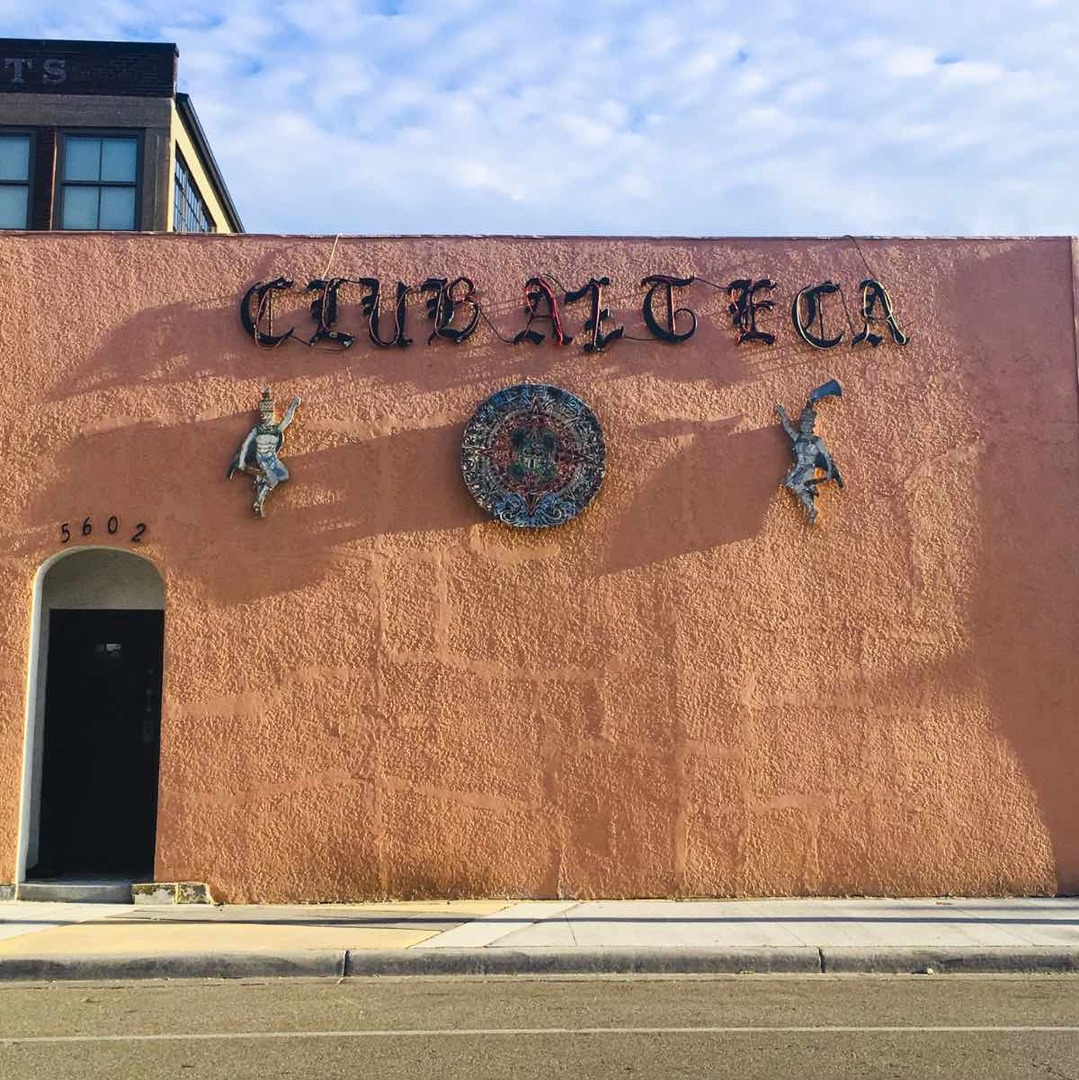
    <summary type="html"><![CDATA[<p><strong><em>The autumn of 1951 was a momentous time for Cleveland's Mexican community. After years of raising funds through biannual fiestas and receiving gifts from Mexican organizations across the United States and even a contribution from the National Bank of Mexico, Club Azteca closed a deal to purchase a building for its first permanent home in the neighborhood that would later be known as Detroit Shoreway. The club served as a social and cultural center for Mexican Clevelanders for the next seven decades.</em></strong></p><img src="https://mail.clevelandhistorical.org/files/fullsize/da447b7bda34d7bb32839e5cfabd5c31.jpg" alt="Club Azteca Exterior | Exterior del Club Azteca" /><br/><p>Club Azteca had its start in discussions among Mexican men who were taking English classes at the Hiram House settlement on Orange Avenue in the early part of the Great Depression. With the encouragement of a Hiram House language instructor, they decided in 1932 to establish Club Azteca as the first formal Mexican organization in Cleveland to provide a forum and safe haven for socializing, cultivating cultural traditions, and addressing common issues such as limited economic opportunity and discrimination that faced their community. The first Club Azteca president was Felix Delgado, who had left central Mexico to work as a Texas sharecropper before moving to Cleveland in 1923 to work on the Baltimore & Ohio Railroad. </p><p>Mexicans had been moving to Cleveland since the Mexican Revolution in 1910, and their numbers grew further during and after World War I. Like Delgado, many took jobs on the railroads, as well as in the steel mills, at a time when such jobs were being vacated by U.S. soldiers. Unlike some immigrant groups that concentrated in a single neighborhood, Mexicans had no single, well-defined center, and this remained true into the 1930s. </p><p>For its first twenty-five years, Club Azteca held biweekly or monthly meetings in the homes of members. The club also organized occasional larger events at venues such as Swiss Hall and St. Michael's Hall in Tremont, Ceska Sin Sokol Hall in Clark-Fulton, and Carpathia Hall in Detroit Shoreway. Such events included Club Azteca's commemorations of the anniversaries of Mexican Independence in 1820 and Mexico's defeat of the French army in the Battle of Puebla on May 5, 1862 (Cinco de Mayo). The event featured a historical pageant with members playing the part of Mexican military heroes. </p><p>When it incorporated in 1945, Club Azteca numbered more than 300 members. As the community and the club expanded after World War II, Club Azteca's leaders began to seek a permanent home closer to where many members now lived on the Near West Side. By 1951, the club had pooled enough resources to buy a former hardware store and apartment building at 5602 Detroit Avenue, which it fixed up over the next few years through "sweat equity." The new Club Azteca–Casa Mexico officially opened on June 15, 1957.</p><p>In addition to being a place to dance and socialize on weekend nights and to gather for potluck Sunday dinners, Casa Mexico provided important community services. It had a welcoming committee that delivered gift baskets to newcomers, and if a family arrived with nowhere to stay, the club found temporary quarters by tapping its members. The club also served as a clearinghouse for information that new migrants needed about where to buy food and how to do a myriad of daily activities in the city. For blue-collar workers who lived in roominghouses without kitchens, Club Azteca provided homemade meals. </p><p>Although Cleveland's Hispanic communities remained distinct, certain moments drew them together. In 1978, for example, the annual celebration of the feast day of Our Lady of Guadalupe (the patron saint of Mexico) at St. Michael's Hall encompassed not only Mexican but also Puerto Rican Clevelanders. The celebration included both Mexican and Puerto Rican music, and foods included the familiar enchiladas, burritos, and tacos alongside pastellas, a kind of Puerto Rican pastry. The festivities included a promenade by the queens and princesses of Club Azteca and its Puerto Rican counterpart, Club San Lorenzo, an organization founded in 1969 by natives of San Lorenzo, Puerto Rico. In 1990, a new event called Festival 90 drew together Club Azteca, Club San Lorenzo, and Club Alma Yaucana, another organization founded in 1961 to welcome newcomers from Yauco, Puerto Rico. </p><p>Although it was cooperating with other organizations, Club Azteca was beginning to suffer financial challenges in the 1980s, leading it to use its Detroit Avenue hall primarily as a nightclub to generate much-needed revenue. Club Azteca hosted "Puerto Rican Night" dances on Saturdays, an appeal to a community that was about five times larger than the city's Mexican-American community by 1990. By the end of the twentieth century, in spite of continuing to have many "social members" who enjoyed its nightclub, Club Azteca had dwindled to only 67 voting members, which led its officers to worry about the club's future. </p><p>Indeed, within a few more years Club Azteca's building fell into disuse. During this difficult time, Ruth Rubio-Pino, whose parents had managed the club from the mid-1950s until 2007, became president under a new Club Azteca administration in 2015. She tried to revive the struggling organization but found little support and the headquarters building now essentially beyond repair. After the building went into foreclosure in 2019, Club Azteca's small remaining membership was able to relieve its financial burden by transferring its building to the Cuyahoga Land Bank in 2020. </p><p>When a developer acquired the building as part of several parcels it was assembling to erect a large apartment building, it and Club Azteca agreed to develop a plan for incorporating the organization's heritage into the new building's design. Although Casa Mexico was demolished in 2021, exactly 70 years after its purchase, Club Azteca continues to explore possibilities for creating a space to honor its long legacy as a community anchor for Mexican culture and social action in Northeast Ohio.</p><p>___</p><p>El otoño de 1951 fue un momento crucial para la comunidad mexicana de Cleveland. Después de años de recaudar fondos mediante fiestas bianuales y de recibir regalos de organizaciones mexicanas a lo largo y ancho de los Estados Unidos, e incluso una contribución del Banco Nacional de México, el Club Azteca llegó a un acuerdo para comprar un edificio para su primera sede permanente en el barrio que más tarde sería conocido como la Detroit Shoreway. El club sirvió como un centro cultural y social para los habitantes mexicanos de Cleveland durante las siguientes siete décadas.</p><p>El Club Azteca tuvo su inicio en conversaciones entre los hombres mexicanos que estaban tomando clases en el asentamiento social de la Hiram House en la avenida Orange en los comienzos de la Gran Depresión. Alentados por un instructor de lenguas de Hiram House, decidieron en 1931 establecer el Club Azteca como la primera organización formal mexicana en Cleveland para proveer un foro y un lugar seguro para socializar, cultivar las tradiciones culturales y ocuparse de cuestiones de interés común como las limitades oportunidades económicas y la discriminación con la que se enfrentaban en sus comunidades. El primer presidente del Club Azteca fue Félix Delgado, que había dejado el centro de México para trabajar como aparcero en Texas, antes de mudarse a Cleveland para trabajar en el ferrocarril de Baltimore & Ohio.</p><p>Los mexicanos se habían estado mudando a Cleveland desde la Revolución Mexicana en 1910 y sus cifras habían crecido más durante y después de la Primera Guerra Mundial. Como Delgado, muchos tomaron trabajos en los ferrocarriles, así como en las siderurgias, en un tiempo en el que esos trabajos estaban siendo abandonados por los soldados de los Estados Unidos. A diferencia de otros grupos inmigrantes que se concentraban en un único barrio, los mexicanos no tenían un centro único y bien definido, y esto siguió siendo cierto hasta avanzados los años treinta.</p><p>Durante sus primeros veinticinco años, el Club Azteca tuvo reuniones cada dos semanas o mensualmente en las casas de sus miembros. El club también organizaba eventos más grandes en espacios como el Swiss Hall y el Hall de St. Michael en Tremont, el Ceska Sin Sokol Hall en Clark-Fulton y el Carpathia Hall en la Detroit Shoreway. Estos eventos incluían las conmemoraciones del Club Azteca de los aniversarios de la independencia de México en 1820 y de la derrota del ejército francés en la Batalla de Puebla el 5 de mayo de 1862 (Cinco de Mayo). Los eventos incluyeron una representación histórica con los miembros del club interpretando el papel de los héroes militares mexicanos.</p><p>Cuando se estableció formalmente en 1945, el Club Azteca contaba con más de 300 miembros. Según la comunidad y el club se expandieron después de la Segunda Guerra Mundial, los líderes del Club Azteca empezaron a buscar una sede permanente más cerca de donde muchos miembros vivían entonces en el Near West Side. Para 1951, el club había juntado suficientes recursos para comprar una antigua ferretería y edificio de apartamentos en el número 5601 de la avenida Detroit, que arreglaron a lo largo de los siguientes años trabajando sin remuneración. El nuevo Club Azteca-Casa México oficialmente se inauguró el 15 de junio de 1957.</p><p>Además de ser un lugar para bailar y socializar en las noches de los fines de semana, y para reunirse para cenas compartidas los domingos, la Casa México proveyó servicios comunitarios importantes. Tenía un comité de bienvenida que repartía cestas de regalos a los recién llegados, y si una familia llegaba sin un lugar en el que quedarse, el club les encontraba un alojamiento temporal valiéndose de sus miembros. El club también servía como un centro para distribuir información que los nuevos migrantes necesitaba sobre dónde comprar comida y cómo hacer múltiples actividades diarias en la ciudad. Para los trabajadores que vivían en pensiones/casas de huéspedes sin cocinas, el Club Azteca proveía comida casera.</p><p>Aunque las comunidades hispanas de Cleveland poseían características distintas, ciertos momentos las juntaban. En 1978, por ejemplo, la celebración anual del Día de Nuestra Señora de Guadalupe (la patrona de México) en el Hall de St. Michael reunió no solamente a los mexicanos de Cleveland, sino también a los puertorriqueños. La celebración incluyó tanto música mexicana como puertorriqueña, y las comidas incluyeron enchiladas, burritos y tacos, además de pastelillos puertorriqueños. Las festividades incluyeron un desfile ceremonial de las reinas y las princesas del Club Azteca y de su contraparte puertorriqueña, el Club San Lorenzo, una organización fundada en 1969 por los nativos de San Lorenzo, Puerto Rico. En 1990, un nuevo evento, llamado Festival 90, juntó al Club Azteca, al Club San Lorenzo y al Club Alma Yaucana, otra organización fundada en 1961 para dar la bienvenida a los recién llegados de Yauco, Puerto Rico.</p><p>Aunque estaba cooperando con otras organizaciones, el Club Azteca estaba comenzando a enfrentarse a retos financieros en los años 80, lo que llevaría al uso de su sala en la avenida Detroit como discoteca para generar unos ingresos que se necesitan mucho. El Club Azteca acogía los bailes de la “Noche Puertorriqueña” los sábados, un llamamiento a una comunidad que, para 1990, era cinco veces más grande que la comunidad mexicanoamericana. Para el final del siglo XX, a pesar de que continuaba teniendo muchos “miembros sociales” que disfrutaban de su club nocturno, el Club Azteca se había reducido a solamente 67 miembros con derecho a votación, lo que llevó a sus oficiales a preocuparse por el futuro del club.</p><p>En efecto, en unos cuantos años más, el edificio del Club Azteca cayó en desuso. Durante estos tiempos difíciles, Ruth Rubio-Pino, cuyos padres habían administrado el club desde mediados de los años 50 hasta 2007, se convirtió en presidenta bajo una nueva administración del Club Azteca en 2015. Ella intentó revivir la organización, que se encontraba en dificultades, pero encontró poco apoyo y el edificio de su sede ahora en condición esencialmente irreparable. Después de que el edificio se enfrentase a un embargo en 2019, la reducida membresía que le quedaba al Club Azteca pudo aliviar su carga financiera mediante la transferencia de su edificio al Cuyahoga Land Bank en 2020.</p><p>Cuando un promotor adquirió el edificio como parte de varias parcelas que estaba reuniendo para erigir un edificio de apartamentos grande, este y el Club Azteca acordaron desarrollar un plan para incorporar la herencia de la organización en el diseño del nuevo edificio. Aunque la Casa México fue demolida en 2021, exactamente 70 años después de su compra, el Club Azteca continúa explorando la posibilidad de crear un espacio para honrar su legado longevo como pilar de la comunidad para la cultura mexicana y la acción social en el noroeste de Ohio.</p><p><em><strong><a href="https://mail.clevelandhistorical.org/items/show/1008">For more (including 7 images) view the original article</a></strong></em></p>]]></summary>
    <published>2023-11-21T20:59:40+00:00</published>
    <updated>2026-04-17T19:17:43+00:00</updated>
    <link rel="alternate" type="text/html" href="https://mail.clevelandhistorical.org/items/show/1008"/>
    <id>https://mail.clevelandhistorical.org/items/show/1008</id>
    <author>
      <name>J. Mark Souther&amp;#32;&amp;amp;&amp;#32;Matías Martínez Abeijón</name>
    </author>
  </entry>
  <entry>
    <title type="html"><![CDATA[Wallace Manor: Robert Wallace&#039;s Great Stone House]]></title>
    <summary type="html"><![CDATA[<img src="https://mail.clevelandhistorical.org/files/fullsize/7e617f347a46818e63e56bd6eafb0bde.jpg" alt="Wallace Manor" /><br/><p>If you spend a little bit of time studying the history of the houses that line both sides of Franklin Boulevard from the Circle to West 50th Street, you soon learn that they do not stand alone and apart from one another. They are related to one another – many of them intimately. Over time, these houses have shared owners and occupants; fraternal societies and charitable organizations; architects and architectural styles. They have often also shared ties to early Cleveland enterprises and industries. This is certainly the case with Wallace Manor, which has stood on the northeast corner of Franklin Boulevard and West 48th Street since 1883. </p><p>Wallace Manor was built for Robert Wallace, one of three individuals whom Cleveland journalists and historians have credited with the transformation and modernization of the Great Lakes commercial shipbuilding industry in the late nineteenth century. The other two? They also were residents of Franklin Boulevard. Wallace's long-time partner <a href="https://clevelandhistorical.org/items/show/940">Henry Coffinberry</a> lived in a Gothic Revival style house at 3910 Franklin Boulevard, which, like Wallace Manor, is still standing today. And Wallace's other early partner, John Pankhurst, lived in a beautiful Italianate-style house at 3117 Franklin Boulevard. John Pankhurst's house, like those of Robert Wallace and Henry Coffinberry, is still standing. On your next drive down Franklin Boulevard, you might want to take note of the houses at 3117, 3910, and 4724 Franklin Boulevard. They share a connection to each other and to Cleveland's once great shipbuilding industry. </p><p>Robert Wallace was born in 1834 in County Cavan, Northern Ireland. According to Elroy McKendree Avery, an early twentieth-century Cleveland historian, Wallace immigrated to the United States and arrived in Cleveland in 1854. In the eulogy he delivered at a memorial service for Wallace on May 28, 1911, Rev. Henry Tenney, a Congregationalist minister who had been Wallace's pastor, observed that, when Wallace came to Cleveland, he settled on the City's west side because that was where his uncle, Robert Sanderson lived and worked. (Sanderson was a machinist and later principal owner of Globe Iron Works, an historic iron foundry on the West Bank of the Flats.) A listing in the 1856 Cleveland directory is the first record of Wallace's presence here. It states that he was then living on Clinton Avenue and working as a machinist. His name, however, does not appear again in any Cleveland directory until 1865 when he is this time listed as an engineer. </p><p>It may be, as suggested in Rev. Tenney's eulogy, that Wallace spent some, if not all, of those intervening years as a sailor traveling the Great Lakes aboard commercial ships. By the time that the 1866 directory was published the following year, Wallace appears to have set down firm business roots in Cleveland as he and his partner John Pankhurst are listed as the owners of a small machine shop in <a href="https://clevelandhistorical.org/items/show/767">Cleveland Centre</a> at the corner of Center and Columbus Streets. A year after that, in 1867, according to historian Richard J. Wright in his book "Freshwater Whales: a History of the American Ship Building Company and its Predecessors," Wallace developed a portable steam engine for unloading cargo from commercial ships which dramatically improved the unloading process. It also proved extremely profitable for Wallace's machine shop. </p><p>Within two years of his development of the portable steam engine for unloading , Wallace, Pankhurst, and their new partner Henry Coffinberry had accumulated sufficient capital to acquire a controlling interest in Globe Iron Works, from which Robert Sanderson had recently retired. The company had for years been producing steam engines and other iron products for Great Lakes commercial ships. Now, under Robert Wallace's leadership, Globe Iron Works expanded its business. In 1876, it purchased an interest in a nearby dry dock and, under the name Globe Ship Building Company, began building ships. Up until this time, the process of building Great Lakes commercial ships had required the involvement and coordination of several different industries which manufactured different vessel parts at different locations. Robert Wallace, according to historian Wright, changed this industrial process in 1881 when Globe Ship Building built a commercial ship, from start to finish, entirely at its shipyard. Just one year later, in 1882, the company built and launched the Onoko, the first large iron commercial ship to sail the Great Lakes. This ship has been recognized by marine historians as the prototype for all the commercial freighters that sail the Great Lakes today. </p><p>By the time the Onoko was launched in 1882, Globe Iron Works and Globe Ship Building Company had become successful and profitable enterprises. It was at about this time that Robert Wallace and his second wife Fanny – his first wife Lydia had died in 1878 – decided to move from their modest house at 129 (today, 3405) Clinton Avenue onto Franklin Avenue (Boulevard), the West Side's version of nineteenth-century Euclid Avenue's <a href="https://clevelandhistorical.org/items/show/10">Millionaires' Row</a>. In early 1883, Wallace purchased a vacant lot on the northeast corner of Liberty (West 48th) Street and Franklin Avenue that was owned by and located next door to the house of Alanson and Harriet Hopkinson. Alanson, also known as A. G., was the retired first principal of Cleveland's <a href="https://clevelandhistorical.org/items/show/772">West High School</a>. He was well known to Wallace as both were members of the First Congregational Church, and both had served as trustees of the church. In the early 1880s both were also actively involved in the planning and building of a new church for their parish on the southeast corner of Taylor (West 45th) Street and Franklin Avenue. The new stone church for the First Congregational Church – West Side, designed by Coburn and Barnum and dedicated by Rev. Tenney on December 20, 1885, was located just a few blocks east of the Hopkinson property upon which Wallace built his new stone house in 1883. While both the First Congregational Church and A. G. Hopkinson's house are no longer standing, they present yet another example of the intimate historical relationships that the houses and other buildings on Franklin Boulevard, in this instance one still standing and the others not, often had with one another. </p><p>Wallace Manor is, according to local architectural historian Craig Bobby, built in the Queen Anne style. While the identity of the architect who, or architectural firm which, designed the house is unknown, it may have been the firm of Coburn and Barnum, which designed the <a href="https://clevelandhistorical.org/items/show/917">Spitzer-Dempsey House</a> at 2830 Franklin and the <a href="https://clevelandhistorical.org/items/show/938">Sarah Bousfield House</a> at 3804-06 Franklin. In the early 1880s, <a href="https://clevelandhistorical.org/items/show/755">Forrest Coburn</a> was living at 86 Root (1901 West 47th) Street, less than one-half mile from the future site of Wallace Manor. He was also, like Robert Wallace, a member of the First Congregational Church. As a principal of the architectural firm that designed the new First Congregational church, he likely would have interacted with Wallace who, as a trustee, was also deeply involved in planning and building that church. However, according to Bobby, in the absence of documentation that the house was designed by this firm, there is nothing in the design of the house itself which either proves or disproves that it was the work of Coburn and Barnum.  </p><p>Designed as a single family home, Wallace Manor is two and one-half stories tall and has an exterior facade built of sandstone. The expanse of sandstone on the front facade is broken up by at least one belt course of smoothed stones located just below the second floor windows, and the front facade, as well as the expanses of the other exterior walls of the house, are further broken up by stone lintels and hoods around the house's windows. The house has asymmetrical massing with the west side of the front facade extending out beyond the rest of the facade. The roof of the house is hipped and features a number of dormers and three tall stone chimneys. The front of the house has two notable arched windows on the first floor. Also notable is the house's one-story columned porch which extends along the entire length of the eastern part of the front facade.  Located at the rear of the property is another stone building that once likely served as a carriage house. Over its front door on West 48th Street are the initials "RW" carved in stone. The structure, which is depicted on the 1896 Sanborn map, was likely built at the same time as the main house. </p><p>The Robert Wallace family, including for a time his oldest son James, a future president of the American Ship Building Company, lived in Wallace Manor until 1895. In that year they moved, like other wealthy Franklin Boulevard families of that time period, to the Cleveland suburb of Lakewood, where they built a house on Detroit Avenue, west of Nicholson Avenue. That house, which is no longer standing, was located on what today is the campus of St. Edward Catholic High School. After the Wallace family departed from Wallace Manor, the house was home to several middle to upper economic class families, including a general manager of the Cleveland Railway, the president of Citizens Savings and Trust Company, and a physician, before it was sold and converted into a rooming house in about 1920. In 1923, the property was acquired by Hungarian immigrants Julius and Elizabeth Rak, who lived in the house and continued to operate it as a rooming house until their deaths in 1943. By 1930, the carriage house on the property had been converted into a dwelling with a street address of 1453 West 48th Street and was occupied by two families. By 1940, there were seven families (including the Rak family) with a total of 21 people living in Wallace Manor and five families with a total of 9 people living in the carriage house. </p><p>In the second half of the twentieth century, Wallace Manor, like many of the other once grand houses on Franklin Boulevard, was suffering from insufficient maintenance and repair. Photos reveal that, by the 1980s, it was in a deteriorated condition. Most notable was that its once grand front porch had at some time between 1961 and 1986 been razed and replaced with a simple entranceway porch. Like any number of the grand houses on Franklin Boulevard that needed a savior in the late twentieth century, Wallace Manor found one when it was purchased in 1997 by Scott Staley and David Castro. Staley, who is the sole owner of the house today (2021), spent the next 17 years slowly restoring and renovating Wallace Manor. Living in the owner's suite at Wallace Manor, he has also, for the last five years, operated a bed and breakfast in the house which has rooms for guest stays. The carriage house at the rear of the property has also been renovated and today functions as a two-family dwelling. In 2019, descendants of Robert Wallace paid a visit to Wallace Manor, touring the house, snapping pictures, and imagining their ancestors walking from room to room. They too, like their ancestors who once lived there, now share a special relationship with not only those ancestors, but also with Wallace Manor and with historic Franklin Boulevard.</p><p><em><strong><a href="https://mail.clevelandhistorical.org/items/show/943">For more (including 18 images) view the original article</a></strong></em></p>]]></summary>
    <published>2021-04-26T19:29:34+00:00</published>
    <updated>2026-04-17T19:17:42+00:00</updated>
    <link rel="alternate" type="text/html" href="https://mail.clevelandhistorical.org/items/show/943"/>
    <id>https://mail.clevelandhistorical.org/items/show/943</id>
    <author>
      <name>Jim Dubelko</name>
    </author>
  </entry>
  <entry>
    <title type="html"><![CDATA[Stephen Buhrer House: Built for a Cleveland Mayor and  Close Friend of John D. Rockefeller]]></title>
    <summary type="html"><![CDATA[<img src="https://mail.clevelandhistorical.org/files/fullsize/097b7bd4c7a46e21570faa9d767335d4.jpg" alt="Stephen Buhrer House" /><br/><p>The Second Empire style house at 327 Franklin Avenue (today, 4606 Franklin Boulevard), designed by the notable architectural firm of Griese & Weile, was undoubtedly a place of refuge for Cleveland Mayor Stephen Buhrer, as the city struggled to sort itself out politically in the wake of the horrendous United States Civil War.  When Buhrer, a Democrat, was elected mayor on April 1, 1867 after three consecutive Republican administrations dating back to the beginning of that war, the Plain Dealer, then a partisian Democrat paper, couldn't resist.  In its next day edition, it not only celebrated the victory, but also mocked the local Republicans who had branded the Democrats as "traitors" and "disloyal."  A week later, on April 9, the Cleveland Leader, the partisan Republican paper, concluded that Buhrer had only been elected because of  "a fusion of the German beer-drinking vote and Democrats."  And the Leader was just getting started.  It spilled much ink during Buhrer's two terms (1867-1871), criticizing the mayor, who owned a distillery business,  often referring to him as  a "dictator" and claiming that his  police force was notoriously soft on liquor violations,  while hard on citizens when they publicly assembled to celebrate post-Civil War Republican achievements like the Civil Rights amendments to the Constitution.</p><p>Stephen Buhrer led a life that was a Horatio Alger rags-to-riches tale.  He was born in Zoar, Ohio in 1825.  When his father died in 1829, Buhrer was bound over to the Society of Separatists who operated a communal farm there.  He began working on the farm at a young age and learned the cooper trade.  He left the community when he turned 18 years old, eventually settling in Cleveland in 1844.  He initially worked as a cooper here,  but soon left the trade and founded Eagle Distillery, a wholesale and retail liquor business which made him wealthy.  It had offices and a warehouse  on Merwin Street in the fast-growing Cleveland Centre.  Working in a firm next door as a bookkeeper was young John D. Rockefeller,  who once asked Buhrer for a job.   The two later became life-long friends.</p><p>Buhrer married Eva Schneider, a German immigrant, in 1848, and the couple moved to a house in Ohio City.  In 1855, the year following that city's annexation to Cleveland, he entered local politics, winning the Ward 11 trustee (council) election at just 29 years of age.  Buhrer would go on to serve three terms as a ward councilman before being elected mayor in 1867.  As councilman, one of his universally acknowledged Civil War era achievements  was successfully satisfying the federal quota requirements for his ward,  thereby easing his constituents' fears of becoming subjected to what many then viewed as an oppressive federal draft.  Later, as Cleveland mayor, he was credited with building the city's first workhouse and for laying the groundwork for the construction of the first viaduct over the Cuyahoga River, subsequently completed in 1878.</p><p>In 1869, the same year in which he began his second term as mayor, Buhrer, and his wife and their three children, moved into the grand house on Franklin Avenue.  Buhrer lived in the house for almost 40 years, until his death in 1907 at the age of 82.  His second wife, Marguerite Paterson--Buhrer's first wife, Eva, had died in 1889-- continued to live there until her own death in 1914. It would be the last time that the large house with approximately 5,000 square feet of living space was used as a single family dwelling. </p><p>Upon the death of Stephen Buhrer's widow, the house at 4606 Franklin Avenue passed by will to her brother, Abraham Paterson. By the time Paterson inherited the property, Franklin Avenue was no longer the west side's answer to millionaires' row that it had been in the nineteenth century.  Like many other owners of large houses on Franklin Avenue, Paterson converted the Buhrer house into a multi-family dwelling.  According to the 1920 federal census, there were three families and a total of 13 persons, including Paterson and his wife, living there.  By 1930, Paterson had sold the house and, according to the census of that year, the new owner had increased the number of tenant families living there to eight, with 21 people sharing living space in the house.</p><p>Over the years that followed, which included the decade of the Great Depression, followed by several decades of general decline on Cleveland's near west side, the condition of the once grand Buhrer house also declined.  At some point in time between the 1930s and 1950s, the house lost its front porticos and its ornate window shutters.  By 1960, as a tax photo of the house taken in 1961 reveals,  it was a house which hardly resembled the structure designed by Carl Griese and Albert Weile.  By the end of the 1970s, the house appeared to be almost in shambles, with photos showing a board nailed across its front door.  But then in 1980, it was rescued by Charles and Alice Butts, who renovated the house along with a number of others in Ohio City during this period.  As a result of the Butts' efforts, the Buhrer house once again began to at least resemble its original design, although the porticos were not restored. Under the Butts family ownership, the Buhrer house has now for more than three decades served the Ohio City neighborhood as a multi-family dwelling with five suites.  In 2018, the house celebrated its 150th birthday on historic Franklin Boulevard.</p><p><em><strong><a href="https://mail.clevelandhistorical.org/items/show/805">For more (including 15 images) view the original article</a></strong></em></p>]]></summary>
    <published>2017-06-25T07:33:11+00:00</published>
    <updated>2026-04-17T19:17:41+00:00</updated>
    <link rel="alternate" type="text/html" href="https://mail.clevelandhistorical.org/items/show/805"/>
    <id>https://mail.clevelandhistorical.org/items/show/805</id>
    <author>
      <name>Jim Dubelko</name>
    </author>
  </entry>
  <entry>
    <title type="html"><![CDATA[Cogswell Hall: For More Than a Century Providing Affordable Housing for People at Risk]]></title>
    <summary type="html"><![CDATA[<img src="https://mail.clevelandhistorical.org/files/fullsize/b220d6a079bb6ff24b35cea4df3f1a92.jpg" alt="Cogswell Hall" /><br/><p>In Benjamin S. Cogswell's 1908 obituary, the Cleveland Plain Dealer noted that, following his election in 1875 as Cuyahoga County Clerk of Courts, his wife "began one of the most vigorous liquor campaigns ever seen in this county.  It resulted in the indictment of nearly 1,000 saloon keepers.  Cogswell dropped out of politics at the end of his term."  These few sentences say little about Benjamin Cogswell and more about his wife, Helen Marion Cogswell, the founder of Cogswell Hall and an early era activist in the Women's Christian Temperance Union (WCTU), the national organization founded in Cleveland  in 1874 to promote sobriety and  to lobby for the prohibition of the manufacture and sale of alcohol in the United States.  </p><p>After her husband retired from politics in 1878, Helen Cogswell shifted her work at the WCTU into a different arena.  She became a member of the Committee on Prison and Jail Visitation.   She visited jails all over Cuyahoga County, speaking to incarcerated women, listening to their stories and providing them with moral encouragement. And she advocated that the WCTU establish a home for these "friendless" women so that, upon their release from jail, they could have a chance to become useful members of society.  In 1892, acting on Cogswell's recommendations, the WCTU created the first "Training Home for Friendless Girls" in a rented space at Forest Avenue (East 37th Street) and Scovill Avenue (Community College Drive).  While the home initially focused on the rehabilitation of young women already in jail, by 1897 it began engaging in more preventive action--providing a home and training that would keep  young women without friends or family out of jail.</p><p>In 1899, the Training Home for Friendless Girls moved to the west side of Cleveland and into a large house at the corner of Duane Avenue (West 32nd Street) and Franklin Boulevard, after an anonymous donor purchased the house and donated it to the WCTU. The Training Home remained at this location until 1914 when the present larger house at 7200 Franklin Boulevard was built.  It is three stories tall, has a brick facade and is English gothic style. The architect of the new house, which has 22 single rooms for residents, was Charles Hopkinson, who designed a number of buildings on Franklin Boulevard, including the Franklin Circle Masonic Temple.  Helen Cogswell, who had founded the Home for Friendless Girls in 1892, lived long enough to see the home move into and thrive at its new location.  She died four years later In 1918, at the age of 85.</p><p>Over the decades that followed, the names and residential policies of the Training Home changed as urban life in Cleveland threw different challenges at young women and others at risk in the community.  In 1952, the house was renamed Cogswell Hall to honor its founder.  In the same year, it became primarily a short-term residence for young women attending nearby trade or business schools, or working at low income jobs.  Then, in the early 1970s, Cogswell Hall shifted its focus, and opened its doors to low-income elderly women, whom it determined were now the members of the community with the greatest need for affordable housing.  In the 1990s, there was another change when Cogswell Hall began providing housing to single adult women of all ages.  Two decades later, in 2009, when a new addition was added to the original house and separate men and women bathroom facilities installed, federal Fair Housing laws became applicable to Cogswell Hall and it began renting rooms to men for the first time in its history.</p><p>A Monument where Girls Cease to be Friendless.  That's what the Plain Dealer called the Training Home for Friendless  Girls in an article published on March 10, 1918, just a little over a month following the death of founder Helen Marion Cogswell. Nearly 100 years have now have passed since her death.  Over those years, Cogswell Hall has evolved into a monument not only to the good work which she did, but also to the work which her successors have done and continue to do to this day,  providing affordable housing to both men and women in the Detroit Shoreway neighborhood.</p><p><em><strong><a href="https://mail.clevelandhistorical.org/items/show/803">For more (including 9 images) view the original article</a></strong></em></p>]]></summary>
    <published>2017-06-14T14:07:17+00:00</published>
    <updated>2026-04-17T19:17:41+00:00</updated>
    <link rel="alternate" type="text/html" href="https://mail.clevelandhistorical.org/items/show/803"/>
    <id>https://mail.clevelandhistorical.org/items/show/803</id>
    <author>
      <name>Jim Dubelko</name>
    </author>
  </entry>
  <entry>
    <title type="html"><![CDATA[Waverly Elementary School: The Original Site of the Historic West Side Grade School]]></title>
    <summary type="html"><![CDATA[<img src="https://mail.clevelandhistorical.org/files/fullsize/706f3843d146c85dcc76feda58f7b7f3.jpg" alt="Waverly Elementary School" /><br/><p>The year 1884 was a good one for J. H. Schneider and the residents of the Tenth Ward, an area of the west side which today comprises much of the southeastern part of the Detroit Shoreway neighborhood. That year, Schneider, the Cleveland Board of Education member elected from the Tenth Ward, not only saw the successful completion of the building of the new West High School in his ward at the corner of Bridge and Randall Streets, but also that of the new elementary school on Waverly Avenue (today, West 58th Street), between Fir and Bayne (now Wakefield) Streets.  It was the first public elementary school built in the Tenth Ward, and became the neighborhood school for many students who formerly had to leave the ward to attend Detroit School in the Eighth Ward on what is today the corner of Detroit Avenue and West 49th Street.</p><p>The new school building, named "Waverly" after the street on which it was built, was designed by John Eisenmann, architect for the Cleveland Board of Education from 1883-1889.  He is also notable as the man who designed The Arcade in downtown Cleveland.  His Waverly School building was two stories in height.  It had an exterior facade of red brick.  There were 12 classrooms in the building, which included a basement which doubled as a playground when bad weather prevented the school children from going outside. Girls played on one side of the basement; boys on the other.  </p><p>Over the years, many west side children attended Waverly including Cleveland Housing Court Judge Raymond L. Pianka, who attended the K-6 school from 1956 to 1963.  By the time he went to school there, the fortunes of the neighborhood had begun to decline as Cleveland experienced the devastating economic adjustments of deindustrialization in the second half of the twentieth century.  Ray went to school with many children who lived in poverty or near poverty.  In a 2005 interview, Judge Pianka related a story which graphically illustrated the point.  As he told it, on one occasion local health officials came to Waverly Elementary and talked to his class about the importance of brushing their teeth.  One official asked how many kids had toothbrushes.  About one-half the class raised their hands.  Then the official asked, how many kids had their OWN toothbrush.  Only about ten-percent raised their hands.</p><p>By the time that Ray Pianka attended Waverly, additions had already been constructed onto the north and south sides of original building, the first (on the north side) by 1912, and the second larger addition (on the south side) by 1932.  So when Ray attended the school, it was considerably larger than the original 12-room structure.  Nevertheless, though larger, it was also a very old school building.  In 1979, it was torn down and a new Waverly Elementary School built on West 54th Street, between Franklin Boulevard and Bridge Avenue.  There was some irony in this relocation of the school given the fact that it had been named for the street upon which its first building was erected.  </p><p>In 2015, the Cleveland Board of Education announced plans to demolish Waverly Elementary School on West 54th Street and replace it with a new building to be constructed on the same site, but with an address on West 57th Street.  Construction was completed in 2019.  On August 8 of that year, a ribbon cutting ceremony was held at the new  building, marking the opening of the third Waverly Elementary School in Cleveland's history.</p><p><em><strong><a href="https://mail.clevelandhistorical.org/items/show/801">For more (including 7 images) view the original article</a></strong></em></p>]]></summary>
    <published>2017-05-31T09:27:21+00:00</published>
    <updated>2026-04-17T19:17:41+00:00</updated>
    <link rel="alternate" type="text/html" href="https://mail.clevelandhistorical.org/items/show/801"/>
    <id>https://mail.clevelandhistorical.org/items/show/801</id>
    <author>
      <name>Jim Dubelko</name>
    </author>
  </entry>
  <entry>
    <title type="html"><![CDATA[Fir Street Cemetery: Cleveland&#039;s Second Oldest Jewish Cemetery]]></title>
    <summary type="html"><![CDATA[<p><strong><em>"Give me your tired, your poor, your huddled masses yearning to breathe free, the wretched refuse of your teeming shore."  Emma Lazarus' immortal words from her poem "The New Colossus," etched on the Statue of Liberty, had special meaning to one immigrant family buried in this historic Jewish cemetery in Cleveland.</em></strong></p><img src="https://mail.clevelandhistorical.org/files/fullsize/2fe917423c69448b6ae8f17f711353e8.jpg" alt="Aerial View from the South" /><br/><p>When James and Fannie Horwitz experienced the unspeakable heartbreak of losing a child--their 2-year-old son Aaron in January 1865, they undoubtedly found some consolation in burying him in the new Jewish cemetery out in the countryside, west of the Cuyahoga River in Brooklyn Township, on a charming little lane called Peach Street (later to be renamed Fir Street).  The cemetery had just been opened that year by the Hungarian Aid Society (HAS), an organization formed in Cleveland in 1863 by Morris Black, Herman Sampliner and others, for the purpose of providing aid, including burials, to Hungarian Jewish immigrants.  Aaron Horwitz was the organization's first burial at the new cemetery.</p><p>Aaron's father James (or Jacob as he was known in Europe) was a Vienna-trained medical doctor, and his mother Fannie a sister of Michael Heilprin, a brilliant Hebrew scholar.  Both men were Polish Jews who lived in Galicia, an area of historic Poland that had been "annexed" by Austria in first partition of that country in the late 18th century.  In 1848, both men had become ardent supporters of Lajos Kossuth and the Hungarian Revolution.  And when the Hapsburgs defeated the insurgents and Kossuth fled Hungary, both men also did the same.  Horwitz, immigrated to Cleveland, via Sandusky, practicing medicine before turning to business enterprises.  Heilprin went instead to New York, where he became a celebrated Hebrew scholar, a friend of Horace Greeley, and mentor to the young poet Emma Lazarus.  Several sources attribute the inspiration for Lazarus' 1883 poem "The New Colossus" to a meeting she earlier had with Michael Heilprin.  Heilprin was both inspiration to Emma Lazarus and the uncle of an unfortunate young boy who was the first person to be buried at the new Jewish cemetery in Brooklyn Township.</p><p>The cemetery where Aaron Horwitz is buried we know today as Fir Street (or Fir Avenue) Cemetery.  The second oldest Jewish cemetery in Cleveland, it is actually three small, separate historic cemeteries which are located on a rectangular-shaped piece of land bounded on the north by Fir Avenue; the east by West 59th Street; the south by Bayne Court; and the west by West 61st Street.  The center cemetery, where Aaron and other members of the Horwitz family are buried, was owned by the HAS until 1963 when the land was deeded to the Jewish Community Federation (JCF) of Cleveland.  While the first burial took place there in 1865, permission to operate a cemetery on the grounds was not officially granted by the City of Cleveland until 1880,  several years after the section of Brooklyn Township in which it was located was annexed to the City.</p><p>The western cemetery was established by Anshe Emeth, the largest and oldest conservative Jewish congregation in Cleveland.  It was founded by Polish Jewish immigrants in 1859.  The Congregation made its first purchase of land on Fir Street in 1877, the same year that it was granted permission by the City to establish a cemetery on its  grounds there.   Anshe Emeth, in the twentieth century, merged with Beth Tefilo congregation to form Park Synagogue Anshe Emeth Beth Tefilo Congregation.</p><p>The eastern cemetery may also have been founded by Polish Jews, although there is some mystery surrounding the identity of the two Jewish organizations which owned the land in the nineteenth century.  Chebra Kadisha, which acquired the land in 1866, was identified in the conveyance deed simply as a "religious organization."  Thirteen years later, in 1879, through its trustees, it deeded the land to the B'nai Abraham Cemetery Association, an organization for which no records appear to exist.  Chebra Kadisha may have been an early congregation which later merged with other congregations to form  what became, in the twentieth century, the Heights Jewish Center (HJC).  Or, it may have simply been a "burial society."  </p><p>Among the locally famous residents of Fir Street Cemetery are:  Herman Sampliner (1835-1899), founder of the B’nai Jeshurun Congregation; Harry “Czar” Bernstein (1856-1920), owner of Perry Bank and the Perry Theatre, and city councilman allied with Mark Hanna; Moses A. Adelstein (1813-1903), organizer of Cleveland’s first Russian synagogue and first free Jewish cemetery, Lansing Cemetery; Isaac Goldman (1858-1919), Cleveland’s first Jewish building contractor; Fanny Jacobs (1835-1928), founder of Park Synagogue’s sisterhood; Rabbi Gershon Ravinson (1848-1907), a 10th-generation rabbi who became a leading scholar of Talmud; Reverend Elias Rothschild (1858-1914), a kosher butcher with a reputation for offering meals and beds to the down-and-out. Rothschild is believed to have saved the Hebrew Free Loan Society when it ran into financial difficulty.</p><p>This final resting place of so many locally famous Clevelanders, as well as families with heart-wrenching stories like the Horwitz's, Fir Street became an inactive cemetery in 1971, after the last burials there took place.  In the decades that followed, the condition of its grounds steadily deteriorated, in part due to acts of vandalism and in part because the Cleveland Jewish community had moved east, leaving the cemetery geographically distant from its founding congregations.  The condition of Fir Street Cemetery troubled Cleveland Housing Court Judge Raymond J. Pianka, who been interested in the history of the cemetery, and the strange inscriptions on its gravestones, ever since he was a young boy attending Waverly Elementary School, just a block away from the cemetery.  In 2007, he and a stalwart group of neighborhood residents collaborated with Park Synagogue and successfully formed a coalition of funding, organizations and volunteers that, over the next two-year period, renovated and restored the cemetery, cleaning its grounds, fixing broken grave stones, planting trees and hundreds of tulip bulbs, and repairing the entrance gate and signage.  Since the completion of these repairs and renovations in 2009, the cemetery has been maintained by Park Synagogue Anshe Emeth Beth Tefilo Congregation with financial assistance from the JCF.  Fir Street Cemetery is now, once again, a source of pride not only for Cleveland's Jewish community, but also for the Detroit Shoreway neighborhood.</p><p><em><strong><a href="https://mail.clevelandhistorical.org/items/show/800">For more (including 9 images) view the original article</a></strong></em></p>]]></summary>
    <published>2017-05-31T09:25:09+00:00</published>
    <updated>2026-04-17T19:17:41+00:00</updated>
    <link rel="alternate" type="text/html" href="https://mail.clevelandhistorical.org/items/show/800"/>
    <id>https://mail.clevelandhistorical.org/items/show/800</id>
    <author>
      <name>Jim Dubelko</name>
    </author>
  </entry>
  <entry>
    <title type="html"><![CDATA[Bethany Presbyterian Church: The West Side&#039;s First Presbyterian Church]]></title>
    <summary type="html"><![CDATA[<img src="https://mail.clevelandhistorical.org/files/fullsize/23cfc1ce549042e359ed7693e065555b.jpg" alt="Bethany Presbyterian Church" /><br/><p>The small stone church on the southeast corner of West Clinton Avenue and West 65th Street, almost shrouded with trees, is Bethany Presbyterian Church.  It was originally a west side Sunday school mission of the Old Stone Church that evolved into a new parish, which was organized in 1889.  For the first five years of its existence, the new parish, which had about 60 members when it was organized, worshiped in rented quarters: first in a building near Pearl (West 25th) and Lorain Streets, and later in the Wieber Block at the corner of Pearl and Jay Street.  In June 1894, when, according to its founding pastor Rev. Giles H. Dunning, membership had "boomed," the parish purchased two lots on the corner of West Clinton and Gordon (West 65th) to build a church that would provide it with sufficient space as well as a permanent home.  </p><p>Construction of the new church began in 1894, with the cornerstone laid on November 4.  It was completed in 1895, and dedicated on June 2 of that year.  The church, as originally built, was 52 feet by 89 feet, had an exterior facade of stone and brick, and fronted on West Clinton.  At the time, church officials planned to add onto the church and construct a grander front facing Gordon (West 65th).  That never happened.  The new church had a capacity of between 500-600.  It was designed by architect William Warren Sabin, who designed several Presbyterian churches in Cleveland, as well as two Cleveland police precinct stations.  Total construction cost of the church was approximately $10,000.</p><p>This was the neighborhood church where Raymond L. Pianka, Cleveland's long-time Housing Court Judge, worshiped as a boy. His family lived at 6310 West Clinton, just down and across the street from Bethany Presbyterian.  Ray's mother was a deacon and a member of the session at the church, and later, so was Ray.   According to Rev. Don Gordon, pastor of the church from 1964-1968, Ray Pianka, though just a teenager at the time, was one of the most helpful of his parishioners. He ran errands, assisted the secretary, and brought to the church the neighborhood news--both good and bad.  What Rev. Gordon remembered most though about young Ray Pianka was his love of church and community.</p><p>Bethany Presbyterian's original parish was composed of Scottish, Welsh and Irish immigrants.  The parish peaked in size in the 1940s when it had about 700 members.  By the time the Pianka family began worshiping there a decade later, Italian-Americans, especially after the closing of the Church of the Redeemer on West 69th Street, were added to the ethnic mix.  By the 1970s, parish membership had declined to about 140.  In recent years, however, the church has experienced a renewal as it has become home to neighborhood Hispanic parishioners. In 2014, the parish celebrated its 125th anniversary.</p><p><em><strong><a href="https://mail.clevelandhistorical.org/items/show/799">For more (including 9 images) view the original article</a></strong></em></p>]]></summary>
    <published>2017-05-31T08:55:35+00:00</published>
    <updated>2026-04-17T19:17:41+00:00</updated>
    <link rel="alternate" type="text/html" href="https://mail.clevelandhistorical.org/items/show/799"/>
    <id>https://mail.clevelandhistorical.org/items/show/799</id>
    <author>
      <name>Jim Dubelko</name>
    </author>
  </entry>
  <entry>
    <title type="html"><![CDATA[Coburn Mansion: &quot;Sweet Home.  Nothing without Divine Guidance.&quot;]]></title>
    <summary type="html"><![CDATA[<img src="https://mail.clevelandhistorical.org/files/fullsize/7f1d02ec820ed14c9306cb797326214c.jpg" alt="The Coburn Mansion" /><br/><p>As you drive west on Franklin Boulevard, between West 58th and West 65th Streets, it is surprisingly easy to miss the house at 6016 Franklin, despite its high pitched roof, its multiplicity of windows, dormers and entrances, its towers and other interesting architectural details, and despite the fact that it is one of the largest houses in the neighborhood.  Situated on the north side of the street between two more noticeable brick apartment buildings, you might just unknowingly pass by it.  But you shouldn't.  It was once the home of one of Cleveland's most prominent nineteenth century architects, and it is worth the time to stop and admire.  And, see if you can discern the Latin inscription on the house's gable.  It seems to sum up the architect's beliefs about family and religion.</p><p>Forrest A. Coburn, the designer and original owner of the house at 6016 Franklin Boulevard, was born in Lowell, Massachusetts in 1848.  When he was 14 years old, his family moved to the Cleveland area, initially settling on Coe Ridge (Lorain) Road in Rockport Township, but later moving to the west side of Cleveland.  In 1866, at age 18, Coburn entered the work force as a bookkeeper, but  soon found his life work when in 1868 he was hired to be a draftsman in the downtown offices of Joseph Ireland, one of Cleveland's great early architects.  Coburn worked  for Ireland, and later Walter Blythe--another important early Cleveland  architect, until 1873, when he left town to study architecture in New York.  In 1875, he returned here an architect, working at first in Blythe's office, but in 1878, leaving that employment to form a partnership with Frank Seymour Barnum, who later became the architect for the Cleveland School Board, designing many of the districts early twentieth century school buildings.</p><p>Coburn and Barnum, which initially had offices in the Hardy Block on Euclid Avenue--just a stone's throw from Public Square, quickly became one of the city's best and most prolific architectural firms.  Perhaps most telling of how quickly the firm rose to prominence was its selection, in 1881, to design the catafalque for President James Garfield, when his body lay in state at Monumental (Public) Square from September 24-26, before being transported to and buried at Lake View Cemetery.</p><p>During the last two decades of the nineteenth century, according to the records of the Cleveland Landmarks Commission, Coburn and Barnum designed at least 143 buildings in the Cleveland area, a number of them considered to be among the best designed in the city during this era.  One--the Blackstone Building, on the southwest corner of Seneca (West 3rd) Street and Frankfort Avenue, which was built in 1881 by Jacob Perkins and demolished in the early 1960s, has been cited by one architectural historian as a leading example of the work of the new class of post-Civil War architects in Cleveland who, in the last several decades of the nineteenth century, produced some of the city's grandest downtown buildings.  </p><p>The firm was also known for its residential designs.  It designed 20 of the mansions on Millionaires' Row, including the Howe Mansion, which today is located on the campus of Cleveland State University and known as Parker Hannifin Hall.  The firm also designed a number of houses and churches on the west side of Cleveland that are still standing,  including the Spitzer-Dempsey House at 2830 Franklin Boulevard, the Sarah Bousfield ("Stone Gables") House at 3806 Franklin Boulevard, the George Warmington Duplex at 4906-08 Franklin Boulevard, the John Pankhurst House at 3206-08 Clinton Avenue, the Thomas Axworthy Houses at 3802 and 3804 Clinton Avenue, and Olivet Baptist Church at 5022 Bridge Avenue.  The firm also designed a number of cultural institution buildings in University Circle and elsewhere, including the still-standing Olney Art Gallery on West 14th Street in Tremont.</p><p>The influence of Forrest Coburn extended, however, far beyond the nineteenth century Cleveland area buildings that he designed.  Two of the architects in his office, Walter Hubbell and Czech immigrant W. Dominick Benes, after Coburn's death, started their own firm--Hubbell and Benes, which designed a number of Cleveland's best known early twentieth century buildings, among them the West Side Market (1907-1910) and the Cleveland Museum of Art (1917).  Another architect in the office, John H. Edelman, later moved to Chicago and became the mentor of a young Louis Sulllivan, the architect who would eventually become known to the world as the father of the American skyscraper.</p><p>For much of his early career, Forrest Coburn had lived in a simple house at 86 Root (1901 West 47th) Street, but in 1887 he purchased several lots on Franklin Boulevard and began drawing up plans for the large house at 6016 Franklin Boulevard.  Completed in 1890, the house was designed as a duplex, with the Coburn family living in the larger "half" of the house, and the smaller "half" rented out.  Forrest Coburn lived in this house for only seven years, dying--it was said-- from overwork in 1897 at the age of 49.   After his death, his widow and children continued to reside in the house until 1912 when it was sold out of the family.  In 1942, the house was converted into a seven-suite apartment building, which it remained as until 2002, when, after an extensive renovation, it was converted into a four unit luxury condominium.  It is now, once again, one of the jewels of the Franklin-West Clinton Historic District.</p><p><em><strong><a href="https://mail.clevelandhistorical.org/items/show/755">For more (including 12 images) view the original article</a></strong></em></p>]]></summary>
    <published>2016-01-24T18:01:19+00:00</published>
    <updated>2026-04-17T19:17:41+00:00</updated>
    <link rel="alternate" type="text/html" href="https://mail.clevelandhistorical.org/items/show/755"/>
    <id>https://mail.clevelandhistorical.org/items/show/755</id>
    <author>
      <name>Jim Dubelko</name>
    </author>
  </entry>
  <entry>
    <title type="html"><![CDATA[Isabella Brothers Bakery: The West Side&#039;s Cathedral of Bakeries]]></title>
    <summary type="html"><![CDATA[<img src="https://mail.clevelandhistorical.org/files/fullsize/d8b96ac84493c010cce1615908b961a1.jpg" alt="Early Delivery Truck" /><br/><p>The "Cathedral of Bakeries."  That's how one incensed customer in a letter to the editor referred to Isabella Brothers Bakery in 1976, when a Plain Dealer writer failed to mention it in an article that purported to list the best bread bakeries in Cleveland.  Perhaps, though, the paper's omission was excusable.  While the bakery was still producing its locally famous Italian breads, its best days had already passed, as large chain grocery stores were slowly putting it and many other small local bakeries and neighborhood stores out of business.  </p><p>Italian breads.  If you are of Italian descent--or even if you are not, and you grew up in the Detroit-Shoreway neighborhood, you undoubtedly remember the delicious Italian breads sold by Isabella Brothers Bakery. The business was founded in 1914 by Anthony Isabella, an immigrant from the Campania region in southern Italy.   Arriving in Cleveland in 1908, Anthony settled on West 69th Street, north of Detroit Avenue, where a colony of Italian immigrants, which included several of his father's sisters and other relatives, was already forming.  It is said that the view of Lake Erie from the north end of West 69th attracted these immigrants to this street--once the home of the notorious McCart Street gang, because it reminded them  so much of the Bay of Naples back in their homeland.</p><p>Anthony Isabella initially found work, like so many other Italian immigrants living in the neighborhood, at the Joseph & Feiss men's clothing factory on West 53rd Street.  However, he didn't stay there long.  He had apprenticed as both a butcher and baker in Italy and he soon went into business with a cousin (and future brother-in-law) Robert Mazzarella, the two men starting up a grocery store and a bakery at 1256-58 West 69th Street in 1914.  It was really the perfect location.  Not only did the two-story red brick building provide sufficient space for a grocery on the first store, living quarters for both men and some of their relatives on the second, and a bakery in a small building at the back,  but it already had the name "Isabella" carved in stone upon it.  Because the building had been erected in 1910 by one of Anthony Isabella's uncles.</p><p>In 1920, Anthony Isabella was joined in Cleveland by his younger brother A. Dominic, known to the family as "Mimi." The two brothers then formed Isabella Brothers Bakery, which continued for another decade to bake bread out of the building at 1258 West 69th. Meanwhile, Anthony's former partner, Robert Mazzarella, took over sole operation of the grocery store, later moving it in 1933 to the northeast corner of West 69th and Detroit where it became a neighborhood fixture for decades.</p><p>During this era of the early twentieth century, as the Italian population on the street grew to the point where virtually every person living there was either an Italian immigrant, or descended from or married to one, an incredible retail community developed on West 69th Street.  Italian immigrants, whom historians have noted were more apt in this period to become first generation retail business owners than immigrants from other ethnic groups, opened up numerous shops on the approximately one-half mile stretch of residential street between Detroit Avenue and the Lake Shore and Michigan Southern railroad tracks.  In the 1930 Cleveland city directory, ten such shops on the street were specifically listed, but the actual number was undoubtedly much higher than that.  The 1930 federal census suggests (by identifying a number of residents as owning their own shops or stores) that perhaps as many as 30 such businesses were operating out of the seventy-plus houses and apartment buildings on the street.  This number included up to ten barber shops, possibly six shoe-maker/repair stores, five groceries, two bakeries (Isabella Brothers and its neighborhood competitor Fiocca Brothers Bakery), two candy stores, and an assortment of other retail businesses--even a pool room.  There had also at one time been several saloons on the street, but of course none were listed in either the census or city directory in 1930. Prohibition had driven them underground.</p><p>Isabella Brothers Bakery thrived in this retail community, not only selling its twenty different types of Italian bread to residents on West 69th and other nearby streets, but also making deliveries to homes in other Italian neighborhoods on both the west and east sides of town.  Anthony Isabella's son Joseph, who in 2015 was still living on West 69th street, remembered those deliveries--how his father or uncle would drop him off in front of a house; how he would enter the house--regardless of whether the customer was home or not, and how he would place the customer's bread order in the bread box in the kitchen, and then leave.  </p><p>With the growth of the bakery's business well underway, Anthony Isabella and his wife Carrie decided in 1930 to purchase a parcel of land up the street at 1370 West 69th and there build a new a modern new bakery building.   The Isabella family continued to bake and deliver Italian bread from this new address well into the 1980s, as the next generation of Isabellas--Anthony's two sons, Louis and Joseph, gradually took over the reins of the business.  But, as noted earlier, large chain grocery  stores, eventually forced Isabella Brothers Bakery out of business.  The historic West 69th Street bakery closed its doors for good in 1988.  Today, the former bakery building is the home of Esperanza Threads.</p><p><em><strong><a href="https://mail.clevelandhistorical.org/items/show/729">For more (including 13 images&#32;&amp;&#32;3 audio files) view the original article</a></strong></em></p>]]></summary>
    <published>2015-08-02T04:40:44+00:00</published>
    <updated>2026-04-17T19:17:41+00:00</updated>
    <link rel="alternate" type="text/html" href="https://mail.clevelandhistorical.org/items/show/729"/>
    <id>https://mail.clevelandhistorical.org/items/show/729</id>
    <author>
      <name>Jim Dubelko</name>
    </author>
  </entry>
  <entry>
    <title type="html"><![CDATA[W. J. Roberts House: The Restoration of a Grand Franklin Boulevard Home]]></title>
    <summary type="html"><![CDATA[<img src="https://mail.clevelandhistorical.org/files/fullsize/ff37f7dbef0e6f7914d4e6f5ff31dc5f.jpg" alt="The W. J. Roberts House" /><br/><p>Many of the houses on Franklin Boulevard tell a story of the wealth that could be accumulated in Cleveland in the late nineteenth and early twentieth centuries as the City became an industrial powerhouse in the Midwest.  The house at 5005 Franklin Boulevard is one such house.  But this house--like others along the Boulevard, also tells a story of renewal and restoration.  </p><p>Built in 1874 by Dudley Baldwin, a wealthy nineteenth century Cleveland railroad man, banker, and real estate developer, the house was first owned and occupied by Harvey and Alice Murray, before it was purchased in 1882 by Teresa Roberts, the wife of William J. Roberts, an up and coming industrialist in  Cleveland's early industrial era.  Born in 1844 in Cincinnati, "W. J.," as he was known, left the Queen City and came to Cleveland when he was about 30 years old to find his fortune.  It was an era when Cleveland was beginning to catch (and would later surpass) Cincinnati in both population and industrial might.</p><p>Robertsin  became associated with two Clevelanders, Samuel Gibson and Fred Beckwith.   In 1874, the three started the Gibson, Roberts and Beckwith Lead Works  on Champlain Street, where the Terminal Tower Complex sits today. Later, the company moved its manufacturing operations to the Flats on the east bank of the Cuyahoga River, in an area then known as Cleveland Centre.  There, the company built a new factory  for its lead piping and other lead products manufacturing.  The business rapidly grew and continued to operate at this location well into the twentieth century when it merged with several other companies to form the United Lead Co.  Roberts continued his involvement in the business, and later, once his reputation as a businessman was firmly established, also became involved in Cleveland's banking industry, becoming President of Brooklyn Savings & Loan Association.</p><p>By all accounts, the Roberts were very happy in their grand Italianate house at 5005 Franklin Boulevard.  One story that has been passed down in the family is that, at one point, W. J. and Teresa Roberts decided to sell the house--possibly to move to an even grander address, but, after making the deal, were so unhappy at the prospect of leaving the house, that they bought it back--at a higher price than what they sold it for!  The couple and their children lived in the house for nearly 40 years, until his death in 1919.  The following year, Teresa sold the house and moved into an apartment.</p><p>After the Roberts family left, and as Franklin Boulevard became a less desirable location in the first half of the twentieth century for Cleveland's wealthy West Siders, the house, like many on Franklin Boulevard, searched for a new use and, like many others, became a boarding house.  Elida Humphrey, a widow, operated the house as such from the late 1920s until her death in 1957.  By this time, two new problems threatened neighborhood houses as deindustrialization and flight to the suburbs hit the City of Cleveland hard.  Many of the grand old homes on Franklin Boulevard began to deteriorate from age, neglect and disrepair.  </p><p>In the 1970s, as Ohio City began to experience re-gentrification and Detroit-Shoreway activists to the west began their efforts to revitalize historic Gordon Square, a number of the grand old homes on Franklin Boulevard experienced renewal and restoration.   Henry Kinicki and Tillie Tybuszewski, who purchased the W. J. Roberts house in 1976, converted it back to a single-family dwelling and lived in it for nearly three decades.  In 2005, they sold the house to Russell Cendrowski and Roger Scheve, who then painstakingly restored it remarkably to its original nineteenth century grandeur.  Next trip down Franklin Boulevard, be sure to pay attention to the beautiful Italianate house on the southwest corner of the Boulevard and West 50th Street.</p><p><em><strong><a href="https://mail.clevelandhistorical.org/items/show/716">For more (including 12 images) view the original article</a></strong></em></p>]]></summary>
    <published>2015-07-04T07:23:56+00:00</published>
    <updated>2026-04-17T19:17:40+00:00</updated>
    <link rel="alternate" type="text/html" href="https://mail.clevelandhistorical.org/items/show/716"/>
    <id>https://mail.clevelandhistorical.org/items/show/716</id>
    <author>
      <name>Jim Dubelko</name>
    </author>
  </entry>
  <entry>
    <title type="html"><![CDATA[Admiral Kidd&#039;s Neighborhood: West 50th Street from Bridge to Franklin]]></title>
    <summary type="html"><![CDATA[<img src="https://mail.clevelandhistorical.org/files/fullsize/79590b8f5feb39e683e49b237eac3b5f.jpg" alt="West 50th Between Franklin and Bridge" /><br/><p>Some say that Admiral Isaac Campbell Kidd, the highest-ranking officer to die at Pearl Harbor on December 7, 1941, decided to make a career of the Navy because his Irish ancestors hailed from County Wexford, a place on the southeast coast of Ireland well-known for its maritime activities. And that may be true. But a young boy is just as often influenced by the neighborhood in which he grows up, and the Cleveland neighborhood in which Isaac Campbell Kidd grew up--Birch Street (today, West 50th) from Bridge Street to Franklin Avenue, was populated by a number of men, women and families whose work on or near the Great Lakes might well have inspired a boy in his youth to turn his attention and ambitions to the sea. </p><p>Kidd's neighborhood was part of two residential subdivisions, the larger of which--the Alottment of Benedict and Root, platted in 1852, in the waning days of Ohio City when that city was still Cleveland's rival on the west bank of the Cuyahoga River. Together with the smaller Dudley Baldwin Subdivision, which was platted in 1863, but then revised in 1869 when Franklin Avenue was realigned to run parallel with Detroit Street, the land which came under development before the onset of the Civil War consisted of more than one hundred acres, covering the area south of Franklin Avenue to Lorain Street, and west of Harbor (West 44th) Street all the way to Courtland (West 54th) Street. </p><p>Originally, it was expected that the land would be developed by nineteenth century Cleveland real estate mogul Silas Stone, who developed the large residential subdivision north of Detroit Street, from Taylor (West 45th) Street to Oakland (West 58th) Street. However, Stone defaulted on his contract with Peter Wedell, the land owner, and after Wedell died in 1847, his widow Eliza sued Stone in Superior Court, a local court of equity, seeking relief. Stone was found liable to the widow, and the land in question was sold at public auction in 1849 to Cleveland banker Dudley Baldwin, Wedell's Administrator. </p><p>After receiving title, Baldwin turned around and sold approximately eighty-percent of the land to George Benedict, later editor of the Cleveland Herald, but at the time Clerk of the Superior Court, and Elias Root, a Cleveland businessman who was also serving as Sheriff of Cuyahoga County, the office charged with the duty of conducting land sales at public auctions. Despite these irregularities, Baldwin, Benedict and Root, successfully laid out the streets for this new residential area of what was by this time the west side of Cleveland, and sales of lots in the Benedict and Root subdivision, which was developed first, were soon underway in early 1853. </p><p>From the start, the two subdivisions attracted many in Cleveland who made their living on or near the Great Lakes. In the 1860 census, of the 18 families living on the block of Birch Street where Kidd would later live, six were headed either by vessel captains, sailors or ship carpenters. By 1880, when there were 42 families living on the block, six families were headed by vessel captains and three by ship carpenters or ship builders. Many of the other families on the block were also headed by men who worked in Cleveland's then burgeoning transportation industry, doing such varied jobs as baggage masters, railroad brakemen, switchmen, street car conductors, and travel agents. </p><p>This was the neighborhood into which the Kidd family moved in 1888. And, just five years later, when Isaac Kidd, Jr., was 9 years old, another vessel captain, Charles Miner moved in next door to the Kidds at 107 Birch (1832 W 50th). Miner, recently retired and the father-in-law of Isaac's aunt Minnie--who also lived on the block, no doubt enjoyed spending some time in his last years--he died in 1901, reveling the young Kidd boys with stories of his travels and experiences on the Great Lakes. While Admiral Kidd's own sudden and tragic death in 1941 foreclosed the possibility of him writing his memoirs and crediting growing up on West 50th Street, between Bridge and Franklin, for some role in his career choice, clearly growing up on such a block placed him in close contact with people who would have talked about what life, and life's work, was like on the water. </p><p>With the passage now of more than one hundred years since Admiral Kidd left that neighborhood to attend the Naval Academy, many changes have come to West 50th Street between Bridge and Franklin. The street is now paved with asphalt instead of gravel or brick as it was in Kidd's day. The neighborhood's tree population is engaged in a battle with the emerald ash borer, instead of the Tussock moth or Dutch elm disease that earlier-generation trees on the street battled in the first half of the twentieth century. The ethnic population is no longer primarily of English, Irish and German mix as it was in Kidd's day, but is now instead a more diverse mix of whites, African-Americans and Latinos. </p><p>And the housing stock on the block for at least the last two decades has been undergoing tear-downs and new construction that is very different from the tear-downs and new construction that Kidd witnessed on the street in the decade of the 1890s. In the process of this most recent rebuilding of West 50th Street, Admiral Kidd's boyhood home at No. 1830 was lost. But there remain many historic houses on West 50th, some that date back to the very beginning of the neighborhood in the 1850s, and some which were the homes of people who undoubtedly played an important role in the career choice of one of Cleveland's greatest and most tragic war heroes. In fact so much still remains on West 50th Street from the time when Isaac Kidd walked the block, that were he here today, he might well gaze down the street from its intersection with Franklin Boulevard, and say, "This is where I grew up. This is my neighborhood."</p><p><em><strong><a href="https://mail.clevelandhistorical.org/items/show/697">For more (including 12 images) view the original article</a></strong></em></p>]]></summary>
    <published>2015-03-24T10:05:14+00:00</published>
    <updated>2026-04-17T19:17:40+00:00</updated>
    <link rel="alternate" type="text/html" href="https://mail.clevelandhistorical.org/items/show/697"/>
    <id>https://mail.clevelandhistorical.org/items/show/697</id>
    <author>
      <name>Jim Dubelko</name>
    </author>
  </entry>
  <entry>
    <title type="html"><![CDATA[A Tinnerman Presence: A Story about Industry and Neighborhood]]></title>
    <summary type="html"><![CDATA[<img src="https://mail.clevelandhistorical.org/files/fullsize/999c4ff769a6f13781f47989907da2c8.jpg" alt="George A. Tinnerman House" /><br/><p>School children walking past the northwest corner of Franklin Boulevard and West 65th Street will someday remember it as where the Rite Aid neighborhood drugstore was located.  Adults in the neighborhood remember that it used to be where the old Pick-N-Pay grocery store stood.  Only the older residents of the neighborhood remember that up until the mid-1960s the Kaufman Funeral Home stood on this corner.  And perhaps there are only a few, if any, left in the neighborhood who remember that, before it was the Kaufman Funeral Home, the grand old house on the corner of Franklin Boulevard and West 65th Street belonged to George August Tinnerman, a German immigrant who launched one of the great industrial enterprises in the history of Cleveland.</p><p>George August Tinnerman was born in Bavaria in 1845.  In 1847, the year before the 1848 Revolutions which shook central Europe from Vienna to Paris, George immigrated to America with his parents Henry and Sophia Tinnerman.  Like his father who was a wheelright, George entered the trades but as a tinner.  In 1868, he opened a hardware store on Lorain Avenue--just east of its intersection with Fulton Road.  Among the products George sold were cast iron stoves.  In 1875, according to his son Albert, George became dissatisfied with the cumbersome cast iron stoves and invented the first steel range--a forerunner of today's range stoves.  George became so successful in selling his new steel stoves that, in 1913, he closed his hardware store and began to exclusively manufacture stoves and ranges.  </p><p>In 1890, as George Tinnerman grew financially successful, he and his family moved from their house on Fulton, which abutted the Tinnerman stove and range manufacturing plant, to a more fashionable address on the northwest corner of Franklin Boulevard and Gordon Street (now West 65th Street).   George and his wife Caroline completed the raising of their four children in this house, and, when the children became adults, three of them acquired houses on Franklin Boulevard in the 6000-7000 block--none more than a few minutes walk from their parents' home on the corner of West 65th.  Members of the Tinnerman family continued to live on Franklin Boulevard until well into the decade of the 1940s.</p><p>In 1925, George A. Tinnerman died and his son Albert H. Tinnerman, who until 1938 lived at 6910 Franklin Boulevard, took over the family business.  In 1925, Albert  invented a new fastener for stoves called a "speed nut."  As it turned out, Albert's invention had application not only in the manufacture of stoves, but also in the manufacture of automobiles and aircraft.  In the 1930s, Albert's son, George A. Tinnerman II, convinced Henry Ford to use the speed nuts in his automobiles, and in the 1940s, during World War II, the United States government also began using Tinnerman's speednuts in its aircraft.  One source claimed that the federal government's use of the Tinnerman speed nut not only reduced the weight of American war planes, but also cut production time in half.</p><p>In 1950, Tinnerman Products-- now a national manufacturer of speed nuts and other clips and fasteners, moved from its original location on Fulton Road to a new state of the arts facility on Brookpark Road in the suburb of Brooklyn.  During the decades of the 1950s and 1960s, Tinnerman Products continued to grow under the guidance of Albert Tinnerman and then his daughter Alberta Buttris, a third generation Tinnerman and granddaughter of George A. Tinnerman.  In 1969, the company's separate corporate existence in Cleveland came to an end when it merged with Cleveland industrial giant, Eaton Corporation.</p><p>Today, the Tinnerman Stove and Range Company building at 2048  Fulton Road is home to Vista Color Imaging, a visual marketing solutions business.  The former 100,000 square foot Tinnerman Products headquarters and factory in Brooklyn is now vacant and in search of a new business owner.  And at the corner of Franklin Boulevard and West 65th Street, a Rite Aid drug store now stands where the fashionable home of George A. Tinnerman once stood.  But, with three other homes of the George Tinnerman family still standing on the 6000-7000 block, you can still feel the Tinnerman presence on Franklin Boulevard.</p><p><em><strong><a href="https://mail.clevelandhistorical.org/items/show/566">For more (including 11 images) view the original article</a></strong></em></p>]]></summary>
    <published>2012-12-13T09:34:04+00:00</published>
    <updated>2026-04-17T19:17:39+00:00</updated>
    <link rel="alternate" type="text/html" href="https://mail.clevelandhistorical.org/items/show/566"/>
    <id>https://mail.clevelandhistorical.org/items/show/566</id>
    <author>
      <name>Jim Dubelko</name>
    </author>
  </entry>
  <entry>
    <title type="html"><![CDATA[Abraham Teachout House]]></title>
    <summary type="html"><![CDATA[<img src="https://mail.clevelandhistorical.org/files/fullsize/a7aaf2894c9642fb15aadbe43097640f.jpg" alt="The Teachout House" /><br/><p>In 1886, 69-year-old Abraham Teachout, a fierce supporter of the Prohibition movement gave a speech at the party's annual Cuyahoga County convention which he ended with the words: "The saloons must go but I am afraid I will not see the day." Teachout, who had been the Prohibition Party's district congressional candidate in 1884, did not live to see the age of Prohibition—but it was not for lack of trying. The owner and builder of the Teachout house at 4514 Franklin Boulevard, lived 26 more years after giving that speech, dying in 1912 at the age of 95 years old. America's short-lived Prohibition era would not begin until the passage of the Eighteenth Amendment to the U.S. Constitution in 1920—some eight years after Teachout's death. </p><p>Abraham Teachout, one of Cleveland's wealthy nineteenth century businessmen and a close friend of John D. Rockefeller, was born in western New York in 1817. In 1836, he moved with his family to northeastern Ohio, settling in North Royalton, where the Teachouts are considered to be one of that suburb's early pioneer families. Over the course of the next 20 years Abraham engaged in a number of businesses moving to several cities, including Painesville, Columbus and Chattanooga, Tennessee, before achieving success as a Cleveland lumber merchant. Teachout was one of the first to ship lumber out of the South by rail to urban centers north of the Ohio River. He also was founder of the A. Teachout Co., which specialized in the manufacture of doors, sashes and other related building construction materials. The company, which was eventually headed by three generations of the Teachout family, had its offices on Prospect Avenue (formerly Michigan Street) in downtown Cleveland for many years. </p><p>The Teachout House is one of the most interesting houses on Franklin Boulevard. The house has over 5,000 square feet of living area and is notable for its impressive windows and its somewhat onion-shaped cupola. Teachout purchased the land upon which the Teachout house was built in 1883. At the time, he and his family lived on Fulton Road. It is unknown how long the house was under construction, but the family moved into the house shortly after construction was completed in 1887. Abraham lived in the house until his death in 1912. During his 25 years of residence on Franklin Boulevard, the elderly businessman was often seen being driven in his carriage by his African-American carriage driver, Mack Henry, a former slave. After Abraham's death, his widow (who was his third wife--the first two wives predeceased him) remained in the house another decade, selling the house to the Michael and Mary Malloy family in 1924. </p><p>Abraham Teachout was a notable supporter of Hiram College. Hiram was founded in 1850 by the Christian Disciples of Christ congregation of which Teachout was a long time member. He worshiped at the <a title="Franklin Circle Christian Church" href="https://clevelandhistorical.org/items/show/537#.WBXghvkrJ7c" target="_blank" rel="noreferrer noopener">Franklin Circle Christian Church</a>  for nearly 50 years and served as superintendent of the church's Sunday school program for 25 years. Abraham sat on the Hiram College Board of Trustees for many years, as did his son Albert and later his grandson David. It was as a result of a $10,000 gift by Abraham Teachout that Hiram College built its first college library in 1900. Prior to the construction of a new library building in 1995, Hiram College's library was known as the Teachout-Cooper Memorial Library. Abraham Teachout and many members of his immediate family and other family relatives are buried in the Teachout family plot at Riverside Cemetery.</p><p><em><strong><a href="https://mail.clevelandhistorical.org/items/show/565">For more (including 9 images) view the original article</a></strong></em></p>]]></summary>
    <published>2012-12-06T14:36:02+00:00</published>
    <updated>2026-04-17T19:17:39+00:00</updated>
    <link rel="alternate" type="text/html" href="https://mail.clevelandhistorical.org/items/show/565"/>
    <id>https://mail.clevelandhistorical.org/items/show/565</id>
    <author>
      <name>Jim Dubelko</name>
    </author>
  </entry>
  <entry>
    <title type="html"><![CDATA[Oliver Alger House]]></title>
    <summary type="html"><![CDATA[<img src="https://mail.clevelandhistorical.org/files/fullsize/bdccfea0ed4f93faf7f4db7235e77588.jpg" alt="The Oliver Alger House" /><br/><p>The Oliver Alger House was built by one of the village of West Cleveland's most popular mayors.  A successful commission agent in Cleveland before becoming a gentleman farmer, Oliver Alger served as mayor of  West Cleveland for six years--longer than any other mayor of the village which was annexed to the City of Cleveland in 1894. Alger's house, which in the late nineteenth century was one of the grandest mansions on Detroit Avenue, was saved from the wrecking ball in 1998 when the Detroit-Shoreway Community Development Organization arranged for it to be moved to the northwest corner of Franklin Boulevard and West 77th Street. (Interestingly, the house had been moved one time before--about forty feet west of its original site when West 67th Street was extended north to Detroit Avenue in the early 1900s.)  The house is now one of the historic grand houses in the Franklin Boulevard-West Clinton Historic District of Cleveland.  </p><p>In a strange twist of post-mortem fate, it was not only Oliver Alger's Detroit Avenue mansion that was moved twice after his death in 1891.  In 1894, the Village Town Hall for West Cleveland where Alger presided as Mayor from 1883-1889, was moved by Irish immigrant James Faeron to a vacant lot on West 69th Street and then moved again in 1911 to its present location on Herman Avenue when the City of Cleveland extended Herman Avenue west from West 67th to West 69th Street.</p><p>And even more strangely, fate bestowed yet one more after death move on Oliver Alger--one which has impacted his legacy not only as the most famous and popular mayor of West Cleveland but also as a local horticulturalist who was so talented that his farm was visited in 1867 by an editor of a national journal devoted to horticultural interests.  In 1915, less than three decades after Alger's death, the City of Cleveland, as part of a plan (which never materialized) to build a convention center on the Erie Street Cemetery grounds, removed the remains of hundreds of people from the cemetery and reinterred them at Highland Park Cemetery.  Among the remains removed were those of Oliver Alger and his wife Mary and their infant son who had been buried in a vault on the northeast corner of the cemetery.  At Highland Park Cemetery, Oliver Alger's remains, as well as those of his wife and their infant child, are entombed under a nondescript patch of grass that lies between  two monuments--one erected to a man named James Miller and the other to man named Enoch Collier. </p><p>Today, residents and visitors to Herman Avenue near West 69th Street are reminded of the history of the Village of West Cleveland by the former town hall building that now sits at 6702 Herman Avenue.  The 1998 relocation of Oliver Alger's mansion from Detroit Avenue to Franklin Boulevard reminds residents and visitors of the grandeur of nineteenth century Franklin Boulevard which was arguably second only to Euclid Avenue's Millionaire's Row as Cleveland's most prestigious residential avenue.  But a visitor to the southern tip of Section 2 in Highland Park cemetery where Oliver Alger is buried will find nothing there--not even a faded stone, as a memorial to one of West Cleveland's most popular mayors and one of Cuyahoga County's pioneer horticulturalists.</p><p><em><strong><a href="https://mail.clevelandhistorical.org/items/show/526">For more (including 8 images) view the original article</a></strong></em></p>]]></summary>
    <published>2012-07-25T17:23:21+00:00</published>
    <updated>2026-04-17T19:17:39+00:00</updated>
    <link rel="alternate" type="text/html" href="https://mail.clevelandhistorical.org/items/show/526"/>
    <id>https://mail.clevelandhistorical.org/items/show/526</id>
    <author>
      <name>Jim Dubelko&amp;#32;&amp;amp;&amp;#32;Raymond L. Pianka</name>
    </author>
  </entry>
  <entry>
    <title type="html"><![CDATA[The House That Brass Built: The Farnan Family Builds One of Detroit Shoreway&#039;s Treasures]]></title>
    <summary type="html"><![CDATA[<img src="https://mail.clevelandhistorical.org/files/fullsize/3f6c070bd717c2c46e9668d86a978117.jpg" alt="The House that Brass Built" /><br/><p>The yellow pastel colored, Italianate style house on the corner of W. 73rd Street and Herman Avenue, which in recent years has been restored to its nineteenth century grandeur, was built by a member of the family that pioneered Cleveland's brass industry.
Cleveland's first brass foundry was built in 1852 on Center Street (located in the East Bank of the Flats) by Irish immigrant Walter Farnan. The business quickly flourished as brass was a important metal alloy used in many products manufactured in the nineteenth century. It was especially critical in the construction of municipal water works systems, and thus Farnan Brass Works became an early supplier in the 1850s to the Cleveland waterworks system.
In 1860, Walter Farnan's oldest son James, now active in the family business, purchased 12 acres of farmland on Detroit Avenue in what was then northern Brooklyn Township. Today it is part of the Detroit Shoreway neighborhood of the west side of Cleveland. According to county tax records, James Farnan, who became owner of Farnan Brass Works upon the death of his father in 1866, built the house which is the subject of this story in 1870. Unfortunately, James did not live long enough to enjoy his grand house. He died from cancer in 1875 at age 44. Mary Farnan, his widow, not only completed the task of raising the couple's four surviving children but, in addition, took over the reins of Farnan Brass Works, running the company for 36 years until her own death in 1911. She was so successful as a business woman that, in 1894, she was able to hire noted local architect W. D. Benes to design an extensive remodeling of her home.
The house that brass built was originally located on what is now the northeast corner of W. 70th Street and Detroit Avenue. Several years after Mary Farnan's death, the house was purchased by Thomas "Coal Oil" Masterson, an Irish immigrant, political activist and local entrepreneur, who, in 1917, moved the house to <a href="https://clevelandhistorical.org/items/show/288">Kilbane Town</a>. Masterson and his family lived in the house on the corner of W. 73rd and Herman for nearly 50 years. It was sold by the family in 1968 shortly after the death of Thomas Masterson's widow, Ida.
In the late 1970s and early 1980s, efforts began to be undertaken by concerned citizens to revitalize Cleveland's historic Detroit Shoreway neighborhood, including rehabilitating and restoring many of the historic houses in the neighborhood. Tim and Mimi Elliott, two suburbanites, moved into the neighborhood and began restoring a number of those historic houses.  One of them was the Farnan's Italianate mansion that Coal Oil Masterson had moved to the corner of W. 73rd and Herman. The restoration of that house by the Elliotts took years of patience, hard work and quality craftsmanship.  Today, as a result of their labors, the house that brass built is once again a neighborhood jewel.</p><p><em><strong><a href="https://mail.clevelandhistorical.org/items/show/524">For more (including 8 images) view the original article</a></strong></em></p>]]></summary>
    <published>2012-07-17T09:55:55+00:00</published>
    <updated>2026-04-17T19:17:39+00:00</updated>
    <link rel="alternate" type="text/html" href="https://mail.clevelandhistorical.org/items/show/524"/>
    <id>https://mail.clevelandhistorical.org/items/show/524</id>
    <author>
      <name>Jim Dubelko</name>
    </author>
  </entry>
  <entry>
    <title type="html"><![CDATA[Saint Mary&#039;s Romanian Orthodox Church]]></title>
    <summary type="html"><![CDATA[<img src="https://mail.clevelandhistorical.org/files/fullsize/28eb6e2d03b27d53516a8699b3609a70.jpg" alt="St. Mary Orthodox Romanian Church, 1934" /><br/><p>Founded in 1904, St. Mary's Romanian Orthodox Church was the first Romanian Orthodox parish established in the United States. Originally located on Detroit Avenue, the parish's development and eventual relocation to Warren Road parallels the story of the Romanian immigrant experience in Cleveland.</p><p>The Romanian population of Cleveland primarily emigrated from the province of Transylvania during the first fifteen years of the 20th century. The choice to leave their homeland was influenced by a combination of factors that included an economic depression and the Austro-Hungarian Empire's effort to abolish the culture of other nationalities through restrictive laws governing marriage, work, and land ownership. Most immigrants were drawn to Cleveland by the availability of work, and the promise of one day returning home to purchase land.  Viewing their time in America as temporary, there was little to no emphasis placed on creating permanent structures or assimilating into the larger community.  The religious needs of the Romanian immigrants were attended to by traveling Orthodox clergy or the Russian Orthodox parish of St. Theodosius in Tremont.</p><p>During this first wave of immigration, the Romanians created a network of fraternal organizations that provided assistance such as death benefits and aid for sick or injured workers. Once these organizations were in place, the immigrant community focused on the creation of churches. Announcements were distributed  throughout the West Side neighborhood, and in August of 1904, 101 persons attended a constitutional meeting to establish a Romanian church.  Divisions quickly formed within this congregation between Romanians of Greek-Catholic and Orthodox faiths, resulting in the founding of both St. Mary's and St. Helena's church.  A Romanian Orthodox priest was assigned to the former parish, and plans were made by 1906 for the construction of the church.</p><p>At the opening service of St. Mary's Romanian Orthodox Church in August of 1908, police stood guard outside and dispersed crowds attempting to interfere with parish members entering the church.  Just nights before, vandals had thrown rocks through the stained glass windows.  The parish's first pastor had resigned, but was still being served warrants for libel against parish members.  Plans for the church's construction had resulted in warring factions within the Romanian parish.  The pastor had presented plans for a large church that cost $25,000; leading members of the parish opted for a much smaller design that would only cost $7,500.  While the church was an important aspect of life, the congregation opted for the smaller structure.  Much of the immigrant community was sending money to family back home, paying dues to fraternal societies, and saving their earnings to purchase land in their birthplace - they saw little need for permanent, grand structures.  Supporters of the more elaborate structure desired the church to act as an anchor for  the growing, transient Romanian population.  Despite its turbulent beginnings, St. Mary's would play a central role within the community; it not only provided for the spiritual needs of it members, but offered a place to congregate, socialize, and develop relationships that aided newcomers to Cleveland in finding work and housing. </p><p>Romanian immigration into the United States had peaked by the beginning of World War I. With nearly 12,000 Romanians living and working in Cleveland prior to the Great War, the number would decrease by half in the years that immediately followed its conclusion. As was the case since the beginning of the 20th century, many Romanians left Cleveland once they had saved enough money to return home and purchase land; this task generally took about three years. Previously, new immigrants had replaced those that left. Following the war, however, the Immigration Act of 1924 restricted the annual number of Romanians entering the U.S. to around 600 a year. As the transient population atrophied, the number of Romanians living in Cleveland drastically declined. Additionally, the Paris Peace Treaty designated Transylvania, homeland to a majority of northeast Ohio's Romanian population, a part of Greater Romania. Many who had emigrated to escape persecution by the Austro-Hungarian Empire returned to the land of their birth.</p><p>Those remaining in America developed a permanent settlement between West 45th Street and West 65th Street that lasted until the mid century.  The predominately transient male population gave way to families of Romanian descent. Even as the immigrant population dwindled, however, the church continued to grow.  St. Mary's thrived by shifting its focus to meet the needs of a changing community. While in 1928 the parish had dwindled to 43 paying members, the church sponsored educational and service opportunities for the Romanian settlers and their children, and became active in promoting the preservation of its congregation's Romanian heritage.  This change in focus coupled with strong pastoral leadership soon saw the church grow to over 600 members - becoming the largest parish in the Episcopate.  With the growth of the church, the restraints of the original structure's size became evident. The parish hall, built in 1926, was enlarged in 1937 to provide space for dances, sports, and church programs.  By 1940, planning began for the construction of a new church. Delayed by World War II, a design was finally prepared for a new structure in 1950.  </p><p>Initially, the church was to be constructed at the Detroit Avenue site; parishioners called a last minute general meeting in 1954 to vote on the location.  Younger members of the parish led the movement to relocate their parish to a new site on the outskirts of the city in the Westpark neighborhood. The relocation of the church reflected both the assimilation and exodus of the Romanian community from what is now the Detroit Shoreway neighborhood. As with many of Cleveland's immigrant enclaves, the process of acculturation over generations eventually weakened the community's ties to the neighborhood. With the increased prosperity of each consecutive generation, those that could afford to leave the aging city often moved away towards the suburbs.  At a special meeting of parishioners called in 1954, it was overwhelmingly voted to sell the Detroit Avenue property and relocate the church at its current location on Warren Road.  On August 21, 1960, the new St. Mary's Romanian Orthodox Cathedral was consecrated.  The cathedral would continue to help preserve the heritage and community of the Romanian immigrants that once lived in the ethnic enclave that is now the Detroit Shoreway neighborhood.  The parish would also take on new challenges and meaning as Cleveland became home to a new a new wave of Romanian immigrants following World War II.</p><p><em><strong><a href="https://mail.clevelandhistorical.org/items/show/451">For more (including 8 images) view the original article</a></strong></em></p>]]></summary>
    <published>2012-05-08T17:28:58+00:00</published>
    <updated>2026-04-17T19:17:39+00:00</updated>
    <link rel="alternate" type="text/html" href="https://mail.clevelandhistorical.org/items/show/451"/>
    <id>https://mail.clevelandhistorical.org/items/show/451</id>
    <author>
      <name>Richard Raponi</name>
    </author>
  </entry>
  <entry>
    <title type="html"><![CDATA[Zitiello Bank]]></title>
    <summary type="html"><![CDATA[<img src="https://mail.clevelandhistorical.org/files/fullsize/30f3154f21ec19d1b16f2ededf12532b.jpg" alt="The Zitiello Bank Building" /><br/><p>The Zitiello Bank, located at 6810 Herman Avenue, was the earliest known ethnic bank opened in the Detroit-Shoreway neighborhood.</p><p>The bank was founded by Joseph Zitiello, an immigrant from the Campania region of Italy who came to Cleveland in 1898.  Joseph was just one of several members of the Zitiello family who by 1910 had purchased homes on West 69th Street.  As was customary with Italian immigrants, a number of the Zitiellos were proprietors of small businesses that were operated out of their homes. Joseph ran a butcher shop.  Luigi was a saloon keeper.  Pasquale was the neighborhood grocer.   </p><p>By 1910, Joseph Zitiello had achieved financial success as a butcher and began to engage in private banking.  In 1916, he built the Zitiello Bank building on the corner of West 69th and Herman Avenue.  In 1920, Zitiello, who by this time was known as the "King of the Italian Colony" on the west side of Cleveland, incorporated the Zitiello Bank.  Later, the Zitiello Bank opened a branch office on Fulton Road.  In 1929, while at this branch office, Joseph Zitiello was shot by several assailants who were attempting to rob the bank. Zitiello returned their fire, chasing the would-be robbers from his bank.</p><p>The Zitiello Bank, like many small banks, was forced to close during the Great Depression. Even so, the Zitiello family remained in the neighborhood, contributing both to the community and to their new country.  In 1967, Ronald J. Zitiello, an American soldier and grandchild of one of the original Zitiello immigrants from Italy, was killed in the Vietnam War.  A memorial garden dedicated to his memory is located in the neighborhood.</p><p>More than one hundred years have passed since the first Zitiello immigrants from the Campania region of Italy came to Cleveland and settled on West 69th Street.  Today, a number of descendants of those original immigrants still live on West 69th Street, helping to anchor the ongoing revitalization of this old Cleveland neighborhood. </p><p><em><strong><a href="https://mail.clevelandhistorical.org/items/show/450">For more (including 7 images) view the original article</a></strong></em></p>]]></summary>
    <published>2012-05-08T17:24:58+00:00</published>
    <updated>2026-04-17T19:17:39+00:00</updated>
    <link rel="alternate" type="text/html" href="https://mail.clevelandhistorical.org/items/show/450"/>
    <id>https://mail.clevelandhistorical.org/items/show/450</id>
    <author>
      <name>Jim Dubelko</name>
    </author>
  </entry>
  <entry>
    <title type="html"><![CDATA[&quot;Black Jack&quot; McGinty: From the Old Angle to the Desert Inn]]></title>
    <summary type="html"><![CDATA[<p><strong><em>Like world champ Johnny Kilbane, Thomas McGinty saw boxing as a way out of the poverty that was endemic among Irish immigrants in early twentieth century Cleveland. </em></strong></p><img src="https://mail.clevelandhistorical.org/files/fullsize/39e79d8a565384103b99215439b4b6d4.jpg" alt="Thomas J. McGinty (1892-1970)" /><br/><p>He wasn't called "Black Jack" when, in 1912, he married Helen Mulgrew from West 67th Street and the two newly weds moved into a house at 1377 West 69th Street. In 1912, he was Tommy McGinty, and he was one of Cleveland's best featherweight boxers.</p><p>Like world featherweight boxing champion <a href="https://clevelandhistorical.org/items/show/288">Johnny Kilbane</a>, Tommy McGinty was a second generation Irish-American who grew up in Cleveland's Old Angle and saw boxing as a way out of the poverty that was endemic to the Angle in early twentieth century Cleveland. By 1909, Tommy McGinty, just like Johnny Kilbane, was boxing under the management of the legendary Jimmy Dunn. Also like Kilbane, McGinty moved uptown in the years just before World War I to what is now the Detroit Shoreway neighborhood. However, while Kilbane went on to win the featherweight boxing title in 1912, McGinty's career was cut short in 1911 by an injury he suffered in a fight. Turning lemons into lemonade, McGinty withdrew from the ring and became one of Cleveland's earliest and most successful fight promoters.</p><p>In addition to promoting boxing matches in Cleveland, however, Tommy McGinty also promoted gambling, operating a cheat spot at 2077 West 25th Street that was famously raided by Cleveland Safety Director Elliot Ness on July 21, 1936. It was his promotion of gambling that gave Tommy McGinty the moniker "Black Jack" McGinty.</p><p>While McGinty's cheat spot on West 25th street catered to a lower economic class, McGinty also provided gambling opportunities to the rich and famous. In 1930, he built the <a href="https://clevelandhistorical.org/items/show/331">Mounds Club</a> on Chardon Road, just across the Lake County line. The Mounds Club was famous in Cleveland for two decades as a swanky night club that featured lively entertainment, alcohol and gambling. Like McGinty's cheat spot on West 25th Street, the Mounds Club too was often the target of raids by local law enforcement officials.</p><p>In 1950, after the State of Ohio had closed down the Mounds Club, Tommy McGinty, now better known as Thomas J. McGinty, took his gambling operations national and, along with several organized crime figures from Cleveland, founded the Desert Inn in Las Vegas. McGinty's ownership of the Desert Inn, as well as his association with alleged organized crime figures Moe Dalitz and Morris Kleinman, soon drew the attention of federal authorities. In 1951, McGinty was subpoenaed to testify before Senator Estes Kefauver's committee on organized crime in America.</p><p>McGinty avoided federal prosecution and shortly thereafter retired to West Palm Beach, Florida, where he died in 1970--a long way away from the home that he and Helen Mulgrew shared on West 69th Street in 1912.</p><p><em><strong><a href="https://mail.clevelandhistorical.org/items/show/326">For more (including 6 images) view the original article</a></strong></em></p>]]></summary>
    <published>2011-08-17T04:39:29+00:00</published>
    <updated>2026-04-17T19:17:38+00:00</updated>
    <link rel="alternate" type="text/html" href="https://mail.clevelandhistorical.org/items/show/326"/>
    <id>https://mail.clevelandhistorical.org/items/show/326</id>
    <author>
      <name>Jim Dubelko</name>
    </author>
  </entry>
  <entry>
    <title type="html"><![CDATA[Needham Castle: Once One of the Grandest Mansions on the West Side]]></title>
    <summary type="html"><![CDATA[<img src="https://mail.clevelandhistorical.org/files/fullsize/c0c223e927490a26cfe82fadf1dc72da.jpg" alt="Needham Castle" /><br/><p>Where a grocery store and parking lot now stand on the south side of Detroit Avenue just west of West 58th Street there once stood a mansion so large that neighbors called it "Castle Needham" after the man who built it.  The castle was said to be "surrounded by spacious grounds, on which flowers and fruit trees grew in rich abundance."  Other sources noted the "marble fountain on the front lawn which distinguished it from its neighbors," and that it was "one of the most interesting landmarks in the residence district."</p><p>Castle Needham, or Needham Castle as it was later called, was built in 1842 by Needham M. Standart, a nineteenth century Lake Erie shipbuilder who was born in New York and moved to Milan, Ohio in the 1820s.  In the 1830s, Standart relocated to fast-growing Cleveland where he built a number of Lake Erie steamers, including the famous steamboat Cleveland.  He served as mayor of Ohio City from 1840-1841 and was one of the commissioners who in 1854 negotiated the terms of the annexation of Ohio City to the City of Cleveland.  </p><p>In the decades leading up to the Civil War, Needham Castle was the site of "brilliant evening parties" that were said to be the talk of the west side for weeks afterwards.  It was also rumored that more than "brilliant talk" occurred at Needham Castle and that its famed cupola was often used in these years as a hiding place for runaway slaves as part of Cleveland's Underground Railroad.  </p><p>Shortly after the end of the Civil War, Needham Standart, whose son William had commanded the famous "Standart's Battery" of the 1st Ohio Light Artillery during the war, suffered a severe business reversal and was forced to declare bankruptcy.  Needham Castle was sold to pay his debts.  In the early 1870s, it was acquired by early Cleveland industrialist Daniel P. Rhodes (the father of historian James Ford Rhodes), who attempted to preserve the castle while redeveloping the surrounding mansion grounds into a residential subdivision.  Before Rhodes could complete the project, however, he died suddenly in 1875.</p><p>In the 1880s, Needham Castle was purchased by Herman and Ida Stuhr.  Herman Stuhr, a German immigrant architect  and lumber dealer, designed several commercial buildings in Cleveland and built a number of the houses on West Clinton Avenue that still stand on that street today.  In 1912, Stuhr decided to convert Needham Castle into a three-family residence for his extended family.  Shortly after completing the project, Herman Stuhr, like previous owner Daniel Rhodes, died suddenly.</p><p>In the years following Herman Stuhr's death, Needham Castle continued to be the subject of neighborhood talk.  Every March 6, for more than 50 years from the early 1880s until the mid-1940s, Herman Stuhr's widow, Ida, who lived to age 95, hosted a grand dinner party at Needham Castle for friends and family in celebration of her birthday.  She continued to host these parties at Needham Castle until 1946 when she moved out to live with her daughter and sold  the castle to St. Mary Romanian Orthodox Church.  </p><p>In the years following World War II, St. Mary used Needham Castle as an apartment house for Romanian immigrants coming to America in the wake of the communist takeover of their country.  The castle also served as a photography studio, its beautiful Victorian era rooms and decor serving as the perfect backdrop for parish wedding pictures.</p><p>St. Mary also had planned to eventually build a new and larger church on the mansion property, but abandoned the plan in the early 1950s when its parish priest could not resolve his differences with city leaders over living conditions in the Detroit-Shoreway neighborhood.  Instead, St. Mary built its new church on a site on Warren Road.  In 1954, Needham Castle was purchased by a realty company which tore down the historic old mansion and built a Kroger grocery store in its place.</p><p>Some mysteries of Needham Castle, including the rumor that it served as an Underground Railroad site, have been largely lost to history.  However, one mystery has been solved.  Although Needham Castle had stood at 5913 Detroit Avenue for more than 110 years and was widely touted as one of the most famous landmarks on Cleveland's west side, an exhaustive search in 2011 of newspapers, city and county records, public libraries, and private historical society collections, failed to uncover a single photo, painting or other image of the house.  Then, in 2014, a descendant of Herman and Ida Stuhr, who had read this story online, generously provided copies of photos and sketches of the historic mansion.  A number of those now appear in the photo array that accompanies this story.</p><p><em><strong><a href="https://mail.clevelandhistorical.org/items/show/324">For more (including 9 images) view the original article</a></strong></em></p>]]></summary>
    <published>2011-08-15T10:15:22+00:00</published>
    <updated>2026-04-17T19:17:38+00:00</updated>
    <link rel="alternate" type="text/html" href="https://mail.clevelandhistorical.org/items/show/324"/>
    <id>https://mail.clevelandhistorical.org/items/show/324</id>
    <author>
      <name>Jim Dubelko</name>
    </author>
  </entry>
  <entry>
    <title type="html"><![CDATA[Velma West: &quot;The Modern Murderess&quot;]]></title>
    <summary type="html"><![CDATA[<p><strong><em>While gangsters, bootleggers and gamblers were among the cast of interesting characters drawn to the bustling Gordon Square business district during its heyday, the historic Four Corners intersection also has ties to one of the most infamous murderers of the 1920s.  </em></strong></p><img src="https://mail.clevelandhistorical.org/files/fullsize/5cd06ae6aac2fd7c7b18ce80b8b7e965.jpg" alt="Velma West in Court" /><br/><p>On December 7, 1927, Velma West and her mother Catherine Van Woert spent the day Christmas shopping in downtown Cleveland.  Upon their return to Catherine's home in East Cleveland, they were met by the local police and Lake County sheriff.  West was taken into custody and transported to the Lake County jail for questioning in the murder of Thomas Edward West.  After three hours of interrogation, Velma West admitted to the murder of her husband. Local papers quickly picked up on the sensational story of a 21 year old, cigarette-smoking city-girl that beat her husband to death with a claw hammer.</p><p>Hailing from East Cleveland, young Velma Van Woert was employed at Rothman Variety on the corner of West 65th Street and Detroit Avenue at the age of 19. She worked there for about a year before being fired. During this time, she had agreed to marry the 56 year old owner of a nearby restaurant where she regularly spent her lunch breaks. Just weeks before the planned wedding, Velma met Thomas Edward West. She broke off her engagement and married the farmer in 1926, moving to his home in the small, rural community of Perry, Ohio.  The following year, Thomas was found murdered; the young flapper accused of the crime quickly captured the city's attention. </p><p>Velma West's story was intriguing. Her childish persona did not match the callousness of the crime. She was spoiled, prone to extreme mood swing, in fragile mental and physical health, and inclined to faint in public. West also embodied for many readers the strangeness and excesses of city life. Descriptions of her short hair, choice of clothes, cigarette smoking, biting tongue, and care-free attitude were presented as clues to the underlying causes of Velma's violent outburst. </p><p>The mystery surrounding this case was not if West killed her husband, but what led the young woman to commit such an unspeakable act.  New angles to the drama were regularly presented in local papers, including physical abuse, a "strange" love for her girlfriend, and insanity.  West quickly became a Cleveland celebrity.  Reporters fixated on her fashion choices, newspapers were condemned for their sympathetic treatment of an accused murderer, and a local theater even offered the young woman a leading role upon her release.   </p><p>On March 5, 1928, Velma West pleaded guilty to the second degree murder of her husband.  The crime never went to trial. She was sentenced to life in prison, and transported to the Woman's Reformatory at Marysville.</p><p><em><strong><a href="https://mail.clevelandhistorical.org/items/show/216">For more (including 6 images) view the original article</a></strong></em></p>]]></summary>
    <published>2011-06-01T17:41:56+00:00</published>
    <updated>2026-04-17T19:17:37+00:00</updated>
    <link rel="alternate" type="text/html" href="https://mail.clevelandhistorical.org/items/show/216"/>
    <id>https://mail.clevelandhistorical.org/items/show/216</id>
    <author>
      <name>Richard Raponi</name>
    </author>
  </entry>
  <entry>
    <title type="html"><![CDATA[West Cleveland Town Hall]]></title>
    <summary type="html"><![CDATA[<img src="https://mail.clevelandhistorical.org/files/fullsize/3f773eacffc4c8e04b9ef2164895610a.jpg" alt="6802 Herman Avenue, 1948" /><br/><p>Carved out of the Brooklyn Township territory, West Cleveland was incorporated as a village in 1871. The new suburb consisted of 1,500 acres of land and was bounded on the north by Lake Erie, on the east by the Cleveland corporation line near Gordon Avenue (West 65th Street), on the west by Highland Avenue (West 117th Street), and on the south by Lorain Street. The village was developed by landowners as a residential subdivision. It was hoped that the suburban setting would appeal to the housing wants and needs of Clevelanders living in an industrial area of the near west side known as the "Triangle". The plan was successful, and the area was predominately settled by working class immigrants.</p><p>A two-story, wood-framed structure at West 83rd Street and Detroit Avenue was built as the town hall for the Village of West Cleveland.  The building housed the local jail and governmental offices, but also regularly acted as a site for voting and community meetings. With the expansion of the Village of West Cleveland to around 6,000 people in the 1890s, the local government proved inadequate in providing necessary services such as police protection and the grading of roads.  In 1893, residents of West Cleveland voted to annex their suburb to the City of Cleveland. The following year, appointed commissioners from West Cleveland and Cleveland negotiated and agreed on provision for the terms of West Cleveland's annexation.  As part of this agreement, the site of the town hall was to become a police station.  Auctions were held for the purchase of the historic building. Initial plans to relocate the structure and have it act as a school were never realized.  Instead, the building ended up in the hands of Irish immigrant and land developer James Faerron in 1894. The new owner moved the town hall to a lot of land off of McCart Street (West 69th Street) and used it as a residence. In 1912, the City of Cleveland purchased portions of Faerron's land to extend Herman Avenue. The building was once again moved, this time to its current location at 6802 Herman Avenue. </p><p><em><strong><a href="https://mail.clevelandhistorical.org/items/show/214">For more (including 8 images) view the original article</a></strong></em></p>]]></summary>
    <published>2011-06-01T17:37:05+00:00</published>
    <updated>2026-04-17T19:17:37+00:00</updated>
    <link rel="alternate" type="text/html" href="https://mail.clevelandhistorical.org/items/show/214"/>
    <id>https://mail.clevelandhistorical.org/items/show/214</id>
    <author>
      <name>Jim Dubelko&amp;#32;&amp;amp;&amp;#32;Richard Raponi</name>
    </author>
  </entry>
  <entry>
    <title type="html"><![CDATA[Stone Mad Pub]]></title>
    <summary type="html"><![CDATA[<img src="https://mail.clevelandhistorical.org/files/fullsize/434cfcf1a0fc989fbc3c6b1255ae0bc7.jpg" alt="Stone Mad Pub, Exterior" /><br/><p>Opened in 2008, Stone Mad Pub is the latest in a long tradition of saloons and bars located at 1306 West 65th Street. The history of the building speaks to the importance of these establishments within a community, and reflects the changes that the Detroit Shoreway neighborhood has experienced over the last century. </p><p>The building was constructed as a tavern and store house by Cleveland's <a href="https://clevelandhistorical.org/items/show/156">Leisy Brewing Company</a> in 1912. The construction of the bar coincided with a period of great success for the brewery. As Cleveland's largest brewery at the turn of the century, Leisy owned multiple taverns throughout the city. This was a common practice for breweries of the era. Saloon keepers generally paid rent at the first of the month and were billed weekly for beer and whiskey. Breweries established the prices, which were generally the same throughout all of their saloons. </p><p>The choice to build on West 65th was likely due to the rapidly growing working-class immigrant population in the neighborhood. The neighborhood surrounding the tavern was densely populated with Irish, Italian, and Romanian immigrants. At a time when boardinghouses were common -- and living quarters were cramped -- the saloon offered a space to socialize and relax. The saloon keepers, who could generally speak English, were important members of the ethnic community. They regularly acted as intermediaries between the immigrant population and government officials. Some establishments even acted as banks for their patrons. </p><p>While production for Leisy Brewing Company peaked in 1918, the Prohibition enacted between 1920-1933 quickly resulted in the brewery's downfall. The bar on 1306 West 65th Street, however, continued operation as a popular speakeasy of the time. What is now known as the Detroit Shoreway neighborhood was notorious for Romanian, Irish, and Italian bootleggers during the Prohibition. Oral histories from the neighborhood suggested that the speakeasy at 1306 was raided by the police one night, and that barrels of whiskey were cracked open and poured onto West 65th Street. Despite such displays, Prohibition had little effect on the alcohol consumption of Cleveland residents. It is estimated that whereas Cleveland had about 1,200 bars in 1919, by 1923 these had all been replaced by over 3,000 speakeasies. Even more common was the sale of liquor in neighborhoods by those with an entrepreneurial spirit, and the brewing and distilling of homemade beverages for personal use. </p><p>Following Prohibition, the bar on 1306 West 65th Street continued to reflect its place within an ethnic community. The establishment was operated through the 1950s by an Italian social club known as the Societa Operia Italiana di Mutuo Soccorso del West Side. Italian social clubs, which were generally made up of people from the same family or hometown, peaked in popularity during the 1930s and 1940s. With the effects of post World War II suburbanization and assimilation, these societies slowly lost their importance as social and recreational outlets. By the 1960s the establishment was known as the I & R Bar, or the Italian and Romanian Bar. Due to the continued decline in the presence of these ethnic communities in the surrounding neighborhood, the establishment became the R & A Lounge by the 1980s. </p><p>With the disappearance of commerce and industry from the area, the neighborhood began to show signs of physical deterioration. Through the efforts of community organizers and citizen action groups, the commercial district on West 65th Street and Detroit Avenue has been revitalized over the last three decades. Efforts to develop the area as a center for the arts are also well on their way. These changes in the neighborhood were both instigated by and helped foster a resurgence in the creation of locally operated businesses. As with much of the redevelopment that has occurred in Detroit Shoreway, Stone Mad Pub acknowledged and preserved the history of the area while creating an establishment that would also serve the needs of a rapidly changing neighborhood. The front bar was designed as a traditional Irish pub, while the dining room took on an Italian motif.</p><p><em><strong><a href="https://mail.clevelandhistorical.org/items/show/213">For more (including 5 images) view the original article</a></strong></em></p>]]></summary>
    <published>2011-06-01T17:36:46+00:00</published>
    <updated>2026-04-17T19:17:37+00:00</updated>
    <link rel="alternate" type="text/html" href="https://mail.clevelandhistorical.org/items/show/213"/>
    <id>https://mail.clevelandhistorical.org/items/show/213</id>
    <author>
      <name>Richard Raponi</name>
    </author>
  </entry>
  <entry>
    <title type="html"><![CDATA[Gordon Square Arcade: A District&#039;s Namesake]]></title>
    <summary type="html"><![CDATA[<img src="https://mail.clevelandhistorical.org/files/fullsize/180d212a73d010c18dffe0bfa2193fad.jpg" alt="The Gordon Square Arcade" /><br/><p>The Gordon Square Arcade opened to the public on April 8, 1921. The unique and massive structure quickly became the centerpiece of the Gordon Square commercial district, and a source of pride for the surrounding neighborhood. The monumental building was not only constructed to meet the needs of the community, but acted as a reflection of the neighborhood's growth into a commercial center. In part, the success and growth of Gordon Square, and the choice to build the arcade on the corner of West 65th and Detroit Avenue, was due to its location. Interurban and crosstown streetcars not only provided Clevelanders access to the Gordon Square area. It also attracted residents from the developing communities of Rocky River and Lakewood. </p><p>Construction of the arcade took about one year to complete, and cost $1,500,000. The Gordon Square Arcade and Community Building included a seventy-five room hotel, a seventy-five stall market, a pool and billiard room, the Capitol Theatre, seventy offices, thirty-one stores, a barber shop, and a restaurant. </p><p>The Gordon Square Arcade remained the heart of a healthy commercial district until the middle of the 20th century, when post war affluence and the construction of highways played their part in promoting a mass exodus of residents, businesses, and industry from the City of Cleveland to the suburbs. New waves of settlers into Cleveland would never again match the numbers of those leaving, and the population began to plummet. Businesses left behind vacant storefronts, factories moved away, and the commercial district slowly began to deteriorate. In what is now considered the Detroit Shoreway neighborhood, these changes culminated in the collapse of the Gordon Square Arcade's parapet onto West 65th Street in 1978.</p><p>Through the efforts of citizen groups and the Detroit Shoreway Community Development Organization, the Gordon Square Arcade was saved from demolition and rehabilitated. In the process, the arcade once again became the centerpiece of Gordon Square and helped reestablish the intersection of West 65h Street and Detroit Avenue as a commercial district. A symbol of the possibilities of urban redevelopment, the Gordon Square Arcade has become a model for efforts to revitalize the Detroit Shoreway neighborhood.</p><p><em><strong><a href="https://mail.clevelandhistorical.org/items/show/211">For more (including 7 images) view the original article</a></strong></em></p>]]></summary>
    <published>2011-06-01T17:35:11+00:00</published>
    <updated>2026-04-17T19:17:37+00:00</updated>
    <link rel="alternate" type="text/html" href="https://mail.clevelandhistorical.org/items/show/211"/>
    <id>https://mail.clevelandhistorical.org/items/show/211</id>
    <author>
      <name>Richard Raponi</name>
    </author>
  </entry>
</feed>