<?xml version="1.0" encoding="UTF-8"?>
<feed xmlns="http://www.w3.org/2005/Atom">
  <title type="text">Cleveland Historical</title>
  <updated>2026-08-21T21:05:06+00:00</updated>
  <generator uri="http://framework.zend.com" version="1.12.20">Zend_Feed_Writer</generator>
  <link rel="alternate" type="text/html" href="https://mail.clevelandhistorical.org/"/>
  <link rel="self" type="application/atom+xml" href="https://mail.clevelandhistorical.org/items/browse?output=rss2"/>
  <id>https://mail.clevelandhistorical.org/</id>
  <author>
    <name>Cleveland Historical</name>
    <uri>https://mail.clevelandhistorical.org</uri>
  </author>
  <link rel="hub" href="http://pubsubhubbub.appspot.com/"/>
  <entry>
    <title type="html"><![CDATA[Fischer &amp; Jirouch Company: The Architectural Ornament Studio That Decorated Cleveland ]]></title>
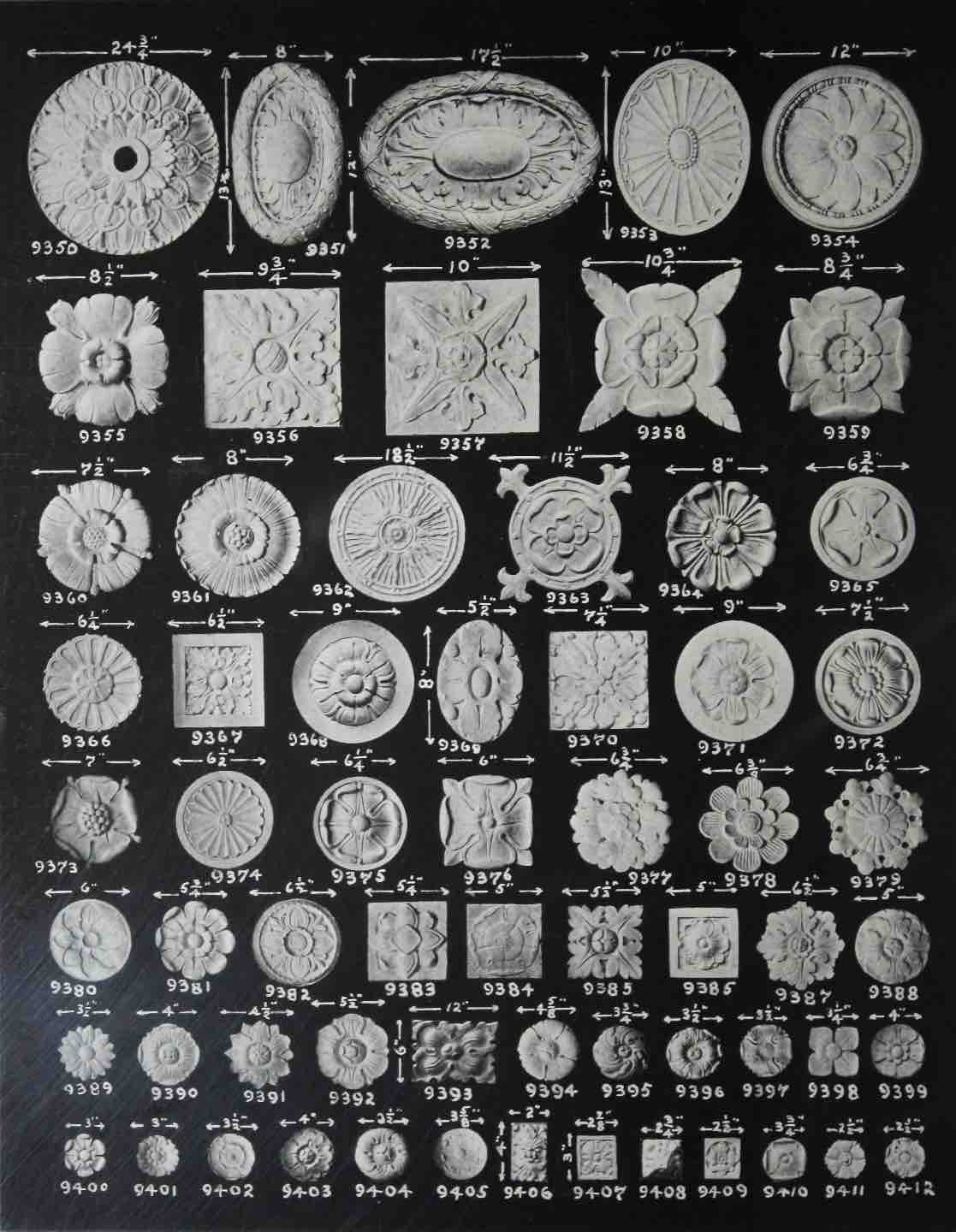
    <summary type="html"><![CDATA[<p><strong><em>Life was not treating Frank Jirouch well. In 1892, at the age of 16, he had left school to take a job as a machinist at the White Sewing Machine Company, but it hadn’t taken him long to realize that machining wasn’t his passion. After several years of practicing his skills as a carver, in 1900, he jumped at the opportunity to join a major woodcarving project in Newark, New Jersey. This move set Jirouch on a path that would include co-founding one of the nation’s foremost decorative architectural relief sculpture studios, as well as making him a sought-after sculptor whose works may still be seen across the city and around the world. </em></strong></p><img src="https://mail.clevelandhistorical.org/files/fullsize/b8d4c0264e4906490a54c89dd5feb611.jpg" alt="Rosettes in F&amp;J Catalog" /><br/><p>Frank L. Jirouch was born to Czech immigrant parents in 1876 on Case Avenue (later East 40th Street) in a part of the Hiram House neighborhood later razed for the Northern Ohio Food Terminal. He attended the Fowler School in the Broadway neighborhood to the south before leaving at the end of his eighth-grade year in 1892 to work at White Sewing Machine in the Flats. Within a year, a banking “panic” plunged the nation into depression. By 1896, the unrelenting slump had claimed his machinist job, but Jirouch already knew his future was as a sculptor. </p><p> </p><p>Opportunity knocked in 1900, when he learned that the Prudential Life Insurance Company was expanding its Newark, New Jersey, headquarters and was employing woodcarvers for interior work. Jirouch moved to Newark, working that job in the daytime and studying architectural modeling at night at the Mechanics Institute in Midtown Manhattan. After a year, he encouraged his friend, Cleveland woodcarver George J. Fischer, to join him on the Prudential project. Upon returning to Cleveland in 1902, the friends founded the Fischer & Jirouch Company in a tiny building at the corner of Huron and Middle Streets (now a grass plot across from Rocket Arena). Their specialties included decorative plaster relief sculptures and wood-carved interior elements. As they built their reputation, they soon found their studio too small, so they moved in 1906 to a larger building at Scovill Avenue and Erie Street (where the Innerbelt Freeway passes over East 9th Street today). Continuing to grow, Fischer & Jirouch moved once again, in 1910, to an even larger three-story building on Superior Avenue near East 49th Street that allowed ample space for their factory and a showroom. </p><p> </p><p>In the first three decades of the 20th century, the work of Fischer & Jirouch appeared in many new downtown office buildings, hotels, and theaters, as well as institutional landmarks. A partial list includes the Union Trust Building, Guardian Trust Building, Hanna Building, Ohio Bell Telephone Building, Cleveland Public Library, Federal Reserve Bank of Cleveland, Hotel Cleveland, the Alcazar and Sovereign Hotels, Park Lane Villa, the Hippodrome, Allen, State, and Palace Theaters, John Hay High School, Tomlinson Hall at Case Institute of Technology, Severance Hall, and St. John’s Cathedral. F&J also maintained an architectural modeling department that produced plaster scale models to guide building projects by Walker & Weeks, Hubbell & Benes, and other Cleveland-based architecture firms. </p><p> </p><p>The company also published catalogs and advertised regularly in the <i>Plain Dealer</i> in the 1910s and 1920s. Its products ranged from architectural features such as brackets, capitals, classical figures, columns, corbels, cornices, crown moldings, finials, friezes, gargoyles, lunettes, mantels, medallions, pilasters, and rosettes to lawn and garden embellishments—benches, bird baths, fountains, lawn furniture, lily pools, pergolas, peristyles, rose arbors, sundials, and urns. Fischer & Jirouch's ads worked to cultivate a public taste for artful living. In one such ad in 1917, the firm acknowledged the role of the lawn mower in popularizing the “undecorated lawn” but urged making “the garden an outdoor part of the home as well as a beautiful setting for the house.” Even if one did not envision outdoor sculpture, another 1918 ad suggested, “Make the birds your friends by placing a bird bath in your garden. It is beautiful, ornamental and instructive for the children.” </p><p> </p><p>During the years that Fischer & Jirouch was ornamenting some of the city’s most important buildings and filling homes and gardens with decorative sculpture, Frank Jirouch was becoming prominent in his own right as a sculptor. After studying art at the Cleveland School of Art and the Philadelphia Academy of Fine Arts during the World War I years, he continued his studies at Académie Julian in Paris from 1920 to 1924. When he returned to Cleveland, Jirouch began to win many commissions, most notably to sculpt a decorative sundial titled <i>Night Passing the Earth to Day</i> for the Fine Arts Garden overlooking Wade Lagoon. He designed some two dozen busts in the Cleveland Cultural Gardens, as well as the fifteen heroic bronze eagles that flanked the bridge entrance to the 1936 Great Lakes Exposition.</p><p> </p><p>The disruption of the housing industry during the Great Depression and World War II, followed by a postwar trend toward simpler contemporary styles, shrank the market for decorative sculptural work. Five ornamental plasterwork companies in Cleveland closed during the depression years, but Fischer & Jirouch survived as a result of its reputation as the city’s foremost such firm. F&J had employed sixty workers at its peak, but by the 1950s only twenty craftsmen continued to produce sculptural works, utilizing only half of the available space. The company’s elaborate showroom closed as a result of the diminished public interest in its products. </p><p>In 1956, Fischer and Jirouch sold their business to longtime employee Theodore N. Takacs, whose Hungarian-born father also worked there. After Takacs died in 1966, his wife Helen headed the company for another eleven years, long enough to see an uptick in business following the emergence of historic preservation in Ohio City in the late 1960s. While Cleveland’s nascent restoration movement was hardly sufficient to sustain the firm, F&J’s national reputation—and the fact that by 1978 it was one of only four surviving ornamental plasterwork manufacturers in the United States—enabled it to draw most of its business from out of state. With more than 4,000 molds, the company was able to produce virtually any adornment a history-minded client might desire. In addition to serving home restorers, Fischer & Jirouch also began to supply plasterwork used by movie and television stage set designers. F&J items appeared in Erica Kane’s living room on the ABC soap opera <i>All My Children</i> and in movies including <i>The Age of Innocence</i>, <i>A Bronx Tale</i>, and <i>Ghostbusters</i>. </p><p> </p><p>In 1977, Corrado Mattei and Louis Cretoni, originally from Italy, bought the business from Helen Takacs. Like Theodore Takacs, Mattei had worked for the company for more than two decades before acquiring it. By the mid-1990s, Fischer & Jirouch was one of only two decorative plasterwork firms in the nation, with a crew of just “four Italians, three Filipinos, and a pair of Romanians.” As had been true for the company’s entire history, the plant operated quietly, with all work still done by hand. The firm continued to use its building on Superior Avenue well into the 21st century under the leadership of Corrado Mattei’s son Robert. In 2024, after the owner retired, the Fischer & Jirouch building was listed for sale, but the illustrious decorative arts firm's legacy did not end. Chicago-based Royal Corinthian acquired the company and still uses 1,700 of its original molds. Although Fischer & Jirouch is no longer based in Cleveland, its legacy endures locally in countless buildings, houses, parks, and gardens, as well as in the surviving molds that continue to introduce the firm's designs into new settings.</p><p><em><strong><a href="https://mail.clevelandhistorical.org/items/show/1087">For more (including 14 images) view the original article</a></strong></em></p>]]></summary>
    <published>2026-06-10T20:25:54+00:00</published>
    <updated>2026-07-02T01:07:13+00:00</updated>
    <link rel="alternate" type="text/html" href="https://mail.clevelandhistorical.org/items/show/1087"/>
    <id>https://mail.clevelandhistorical.org/items/show/1087</id>
    <author>
      <name>J. Mark Souther</name>
    </author>
  </entry>
  <entry>
    <title type="html"><![CDATA[St. Mary Cemetery: Cleveland&#039;s First West Side Catholic Cemetery]]></title>
    <summary type="html"><![CDATA[<p><strong><em>St. Mary Cemetery lies in the middle of one of the most densely populated residential areas on Cleveland's west side. Its nine acres of land, dotted with shade trees and beautiful grave stones, is surrounded by a fence, and, at its West 41st Street entrance, a posted sign advises visitors of its visiting hours.  However, neither this entrance nor its other on West 38th is gated. This being the case, St. Mary's almost beckons to neighbors and any other passersby to  visit it at any time, day or night, enjoy its grassy grounds, walk its pretty paths, and, most importantly, respect its magnificent  monuments.</em></strong></p><img src="https://mail.clevelandhistorical.org/files/fullsize/1cc9a1a467673d53392c76e36c48e8e6.jpg" alt="The once ornate West 41st Street entranceway to St. Mary Cemetery." /><br/><p>In 1853, just one year before Ohio City was annexed to the City of Cleveland, thus becoming Cleveland's west side, prolific nineteenth-century real estate developer Hiram Stone platted a new residential subdivision south of Ohio City in Brooklyn Township. He called it "H. Stone's Addition to Ohio City & Cleveland," a remarkably prescient title at the time. The new subdivision stretched west from Pearl (West 25th) Street all the way to Gauge (West 44th) Street, and from Clark Avenue north to <a href="https://clevelandhistorical.org/items/show/659">Walworth Run</a> at Ohio City's southern boundary. </p><p>The platted area contained almost 700 lots for residential houses, but left undeveloped in its midst were thirteen acres located just east of Burton (West 41st) Street and north of Clark Avenue. In 1861, as houses were going up in Stone's subdivision—many of them for German immigrants who were pouring into Cleveland in this period in large numbers—the southernmost six acres of the undeveloped thirteen in the middle of the subdivision were purchased by the Catholic Diocese of Cleveland for, according to the deed of purchase, "cemetery purposes for the benefit of German Catholics on the west side of the Cuyahoga River." </p><p>Many of the early records of St. Mary Cemetery appear to have been destroyed in a fire, making research of the early years of the cemetery difficult.  However, secondary sources tell us that St. Mary Cemetery was established on those six acres of land in 1862 by St. Mary of the Assumption parish, Cleveland's first west side German Catholic parish. The property for St. Mary Cemetery was purchased during the pastorship of Father F. X. Obermueller, a German immigrant, but it appears that it was under a subsequent pastor, Father Stephen Falk, a Swiss immigrant who served the parish from 1862 to 1880, that the cemetery grounds were developed and consecrated. In St. Mary Cemetery's early years, it was often referred to as Burton Street Cemetery, after the street upon which it fronted. That street, in turn, had been named after <a href="https://clevelandhistorical.org/items/show/660">William Burton</a>, an Ohio City pioneer whose summer cottage was built on the street in 1839 and still stands directly across from St. Mary Cemetery.  </p><p>Just a few years after St. Mary Cemetery opened, another German Catholic parish, <a href="https://clevelandhistorical.org/items/show/649">St. Stephen</a>, was established on Cleveland's west side. It began in 1869 as a mission of St. Mary of the Assumption for German Catholics living west of Gauge (West 44th) Street. A decade later, in 1881, another parish, <a href="https://clevelandhistorical.org/items/show/717">St. Michael Archangel</a>, was also founded as a mission of St. Mary's for German Catholics living on Cleveland's southwest side. In the years that followed, German Catholics who belonged to either St. Mary of the Assumption, St. Stephen or St. Michael's parishes were permitted to be buried at St. Mary Cemetery which, by this date, had now become part of Cleveland's west side following the 1867 annexation of an area of Brooklyn Township that included the lands upon which the cemetery was located.</p><p>It is interesting to note that no Cleveland newspaper mentioned St. Mary Cemetery during the first decade of its existence. The first to mention the cemetery, albeit obscurely, was the Plain Dealer on May 30, 1871, when it published an article which noted that, on Decoration Day, Father Falk of St. Mary's German church had, at the west side "Catholic cemetery," decorated the graves of "J. Mayer, J. Schneider, F. Werz, A. Klein, K. Mecil, B. Lais, F. Schwonger, S. Vochatger, C. A. Schmidt, and Jas. Macklin." All of these men presumably were German Catholics who had fought for the Union—and for which some had died—in America's Civil War. Cleveland city directories were even slower in acknowledging the existence of the new cemetery. St. Mary Cemetery was not listed in any Cleveland directory until 1874.</p><p>Thousands of German immigrants and descendants of German immigrants were buried at St. Mary Cemetery in the years that followed its establishment, many of them beneath beautiful gravestones inscribed in the German language. A number of these gravestones are memorials to notable German Catholics who, in the second half of the nineteenth century, operated successful retail businesses on Lorain Avenue near Fulton Road, an intersection that soon became known as <a href="https://clevelandhistorical.org/items/show/966">Lorain-Fulton Square</a>. A number of those gravestones honor members of the related Fridrich and Schmitt families who operated several different businesses in that west side commercial district, including <a href="https://clevelandhistorical.org/items/show/964">Fridrich Bicycle</a>, one of the oldest retail bicycle shops in the United States until it closed its doors in 2024. </p><p>Another example of a notable German immigrant businessman buried at St. Mary Cemetery is Friedlin "Freddie" Hirz (1843-1903), a tailor who for years had a shop on Lorain Avenue, just west of what is today West 45th Street. His shop was so well known that it was featured in the 1874 Atlas of Cuyahoga County. Another is Edward Disler, a German immigrant and jeweler who successfully operated a store on Lorain Avenue near West 25th Street for many years.</p><p>While St. Mary Cemetery was explicitly founded for German Catholic burials, Catholics of other ethnicities were later given permission to bury their dead there too. The first of these were Bohemian Catholics many of whom lived near the cemetery in a west side neighborhood that was known in the second half of the nineteenth century as the <a href="https://clevelandhistorical.org/items/show/646">Isle of Cuba</a>. The early-arriving immigrants likely first worshiped with German Catholics at either St. Mary of the Assumption or St. Stephen, but, by 1872, their numbers were sufficiently large that the Bishop permitted them to form a parish of their own, which they called <a href="https://clevelandhistorical.org/items/show/661">St. Procop</a>, after Bohemia's patron saint. Their first church was built on Burton Street, just south of St. Mary Cemetery in 1874. One of the earliest verifiable burials of a Bohemian Catholic at St. Mary Cemetery occurred in 1892, when 41-year- old Miloslav Holecek, a Cleveland grocer and immigrant from <span>Karlova Huť in Central Bohemia</span>, died and was buried there. His gravestone, as well as those for a number of other Bohemian immigrants buried at St. Mary's, is inscribed entirely in the Czech language.</p><p>In the early years of the twentieth century, Catholic immigrants of other ethnic groups from Central Europe who often tended to settle in urban areas where Germans and/or Bohemians had first settled, including Hungarians, Poles, and Slovaks, became members of the west side German and Bohemian Catholic parishes, and when they died, they were permitted to be buried at St. Mary Cemetery too. Their gravestones were often inscribed in their native languages.</p><p>In 1917, Father Casimer Reichlin, the first pastor of St. Stephen who had served for an incredible 47 years, died.  By this time, there appears to have already been a large circular section near the West 41st Street entrance to St. Mary Cemetery, in the center of which a large cross had been erected. It further appears that it was decided that this beloved pastor should be buried in that section, with a large sculpted monument erected over his grave. Four years later, Father Reichlin's long-time friend and fellow priest, Bishop Joseph Koudelka, who had been a pastor at both St. Procop and St. Michael, died and was buried next to Father Reichlin's grave in the circular section. A similarly sized sculpted monument was placed over his grave too. Soon this circular section of St. Mary Cemetery became known as the Priests Circle. In the years that followed, other notable local priests who had served west side Catholic parishes were accorded the same honor and buried in the Priests Circle, some below large monuments and others below simple flat grave markers. As of October 2025, there were eleven priests buried in the Priests Circle. Father Stephen Falk, whose efforts led to the development of the cemetery and its consecration in 1862, is not buried in the Circle, as he died in 1899 long before the Priests Circle was initiated. A simple flat grave marker in Father Falk's memory, which apparently replaced a more elaborate earlier monument, is located in another section of St. Mary Cemetery.</p><p>By the early 1920s, there were few available burial plots left at St. Mary Cemetery. The parish of St. Mary of the Assumption decided to remedy this by expanding the cemetery's lands, and in 1927 and 1928 it successfully purchased three additional acres of land for the cemetery that abutted the eastern end of the original cemetery grounds.  The additional acres had earlier been developed as residential lots in H. Stone's Additional Subdivision. Houses on the lots were either torn down or moved, and the cemetery grounds were successfully extended all the way to West 38th Street. Along with the additional land, St. Mary Cemetery was further enhanced at this time with a second entrance on West 38th Street and a new walking path that led from that entrance directly to a new circular section in the cemetery.</p><p>On November 15, 1931, the new addition to St. Mary Cemetery was consecrated at a ceremony attended by a representative of Bishop Joseph Schrembs.  Some five years later, on May 17, 1936, the Cuyahoga County Council of the Veterans of Foreign Wars placed a flagpole and a memorial plaque in the center of the new circular section, the plaque inscribed: "Dedicated To The Veterans Who Served . . . Lived . . . Died . . . for their Country."  </p><p>As previously noted, St. Mary Cemetery had long held the graves of a number of German Catholic soldiers who fought and died in the Civil War, and also likely holds graves of soldiers and veterans who had fought in the Spanish-American War and/or in World War I. No veterans from any of these war, however, are buried in this new circular section. The first soldier buried in what became known as the Soldiers Circle, was Charles L. Andrews, a U. S. Navy radio operator who was killed on Easter Sunday, April 5, 1942, during the Battle of Bataan in the Philippine Islands. The remains of sixteen other soldiers or veterans who served in World War II were also buried in the Circle between 1942 and 1948.</p><p>In 1945, as a result of dwindling attendance numbers, St. Mary of the Assumption parish was dissolved and, in 1948, the management, care and maintenance of St. Mary Cemetery was transferred to the Calvary Cemetery Association, an organization which was later renamed the Catholic Cemeteries Association of the Cleveland Diocese. By the early 1950s, the last of the available lots in the cemetery were purchased, and, by 1976, according to a January 21, 1976 Plain Dealer article, the number of annual burials at St. Mary Cemetery had dropped to just fifty.  Today, in 2025, the annual numbers appear to be considerably less. According to findagrave.com—a website at which volunteers create memorials for people whose remains have been buried in cemeteries all around the world—the remains of only nine deceased persons have been buried at St. Mary Cemetery since 2020.  </p><p>St. Mary Cemetery is no longer the active burial place for west side Catholics that it once was. Burials are now few and far between. The cemetery's elaborate gate that once stood at its West 41st Street entrance in 1929 is gone. The sacred monuments to Father Reichlin, Bishop Koudelka and Father Falk have been substantially damaged, likely by vandals. The cross in the middle of the Priests Circle, which stood there for years until recently, is now gone. Acts of vandalism, as noted in a number of Plain Dealer and Press articles over the years, and the effects of exposure of the cemetery's monuments to Cleveland's weather over long periods of time, have left many monuments damaged and unreadable while many others have simply vanished. Still, St. Mary Cemetery remains one of the most historic cemeteries on Cleveland's west side and one which should be visited, respected, and carefully managed and maintained, not only for the descendants whose ancestors are buried there, but also for all Clevelanders who see value in preserving an important piece of their city's history.</p><p><em><strong><a href="https://mail.clevelandhistorical.org/items/show/1072">For more (including 15 images) view the original article</a></strong></em></p>]]></summary>
    <published>2025-11-23T16:18:32+00:00</published>
    <updated>2026-04-17T19:17:43+00:00</updated>
    <link rel="alternate" type="text/html" href="https://mail.clevelandhistorical.org/items/show/1072"/>
    <id>https://mail.clevelandhistorical.org/items/show/1072</id>
    <author>
      <name>Jim Dubelko</name>
    </author>
  </entry>
  <entry>
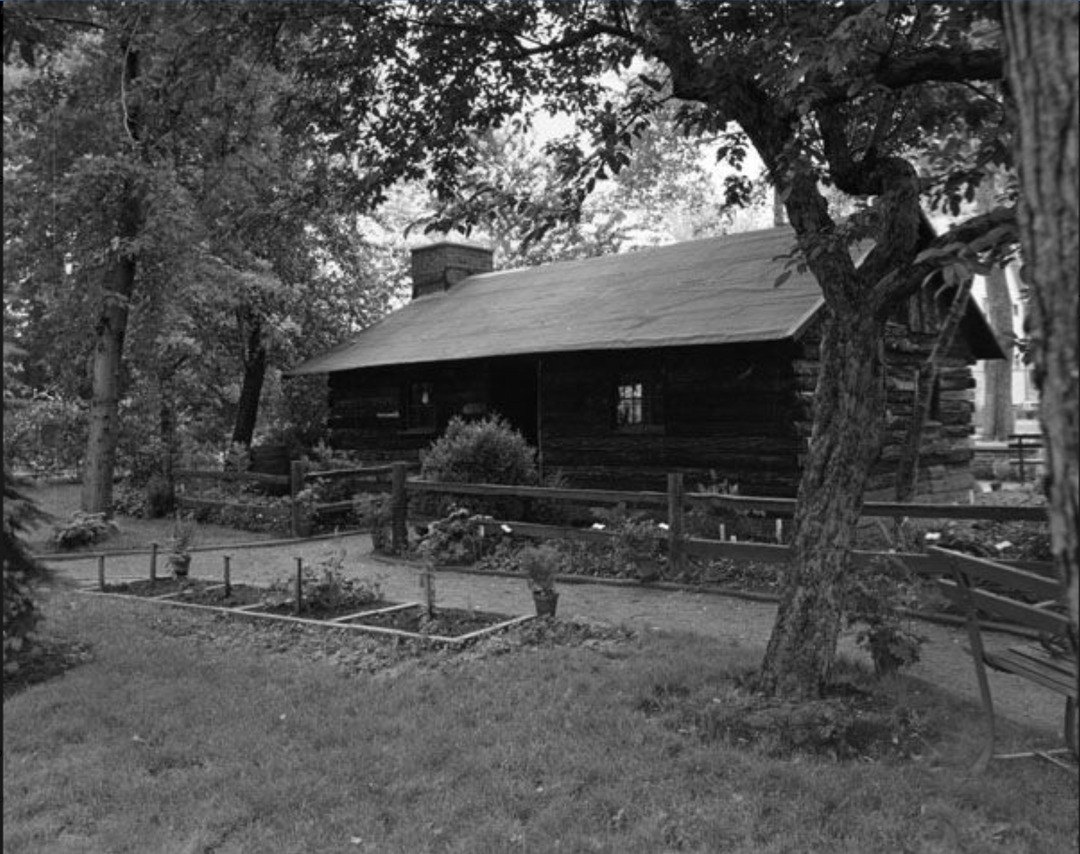
    <title type="html"><![CDATA[Zverina Log House: A Bit of Historic Czechia on Cleveland&#039;s Southeast Side]]></title>
    <summary type="html"><![CDATA[<p><strong><em>Having spent much of his childhood in a rural village in Bohemia, Czech immigrant Anton Zverina Jr. wanted to provide his American children with a glimpse of what life was like in such a village. So, in 1908, in the middle of the apple orchard in the backyard of his house on Miles Avenue, in what is today Cleveland's Union-Miles neighborhood, he built for them a traditional Czech log house to play in.</em></strong></p><img src="https://mail.clevelandhistorical.org/files/fullsize/8d51cf25dee19c7141a341b8d0cff3c1.jpg" alt="Zverina Log House" /><br/><p>It's a long journey from the village of Čechtice, in the South Moravian region of the Czech Republic, to Cleveland, Ohio.  However, like thousands of other Czechs who left their homes  in Bohemia for America in the second half of the nineteenth century, eleven-year-old Anton Zverina Jr. made that journey with his parents and two siblings in 1874. The family settled in a neighborhood on the southeast side of Cleveland, near what is today the intersection of Broadway Avenue and East 55th Street.  The neighborhood soon filled with so many Czech immigrants that it became known locally as "Little Bohemia."</p><p>Anton's father  started several businesses in Little Bohemia, including a grocery store.  Soon, young Anton was working for him in that grocery store—but perhaps sometimes, in idle moments, he would dream of what his more rural life  in Čechtice had been like.  His father's grocery store was first located on Dille Street, near Broadway and Forest (East 37th), and then later for several years on Willson (East 55th) near that street's intersection with Broadway and Hamlet Avenues. In 1889, the Zverina family left a more lasting mark on the neighborhood when the grocery store moved into a new three-story red brick commercial building on Broadway Avenue, just north of East 55th Street.  The building, still standing today and known as the Zverina Building, was designed for Anton Zverina Sr. by fellow Czech immigrant Andrew Mitermiler, a prominent Cleveland architect who, among other historic buildings in Cleveland, designed Ceska Sin Sokol Hall  on Clark Avenue  on the city's west side..</p><p>Andrew Mitermiler had a daughter named Rose and, in 1895, six years after the Zverina Building was built, Anton Jr. married Rose.  After marrying, the two moved into an apartment on an upper floor of the building that Rose's father had designed for Anton Jr.'s father.  Here, they started their lives together.  By 1904, they were sharing the apartment with their first four children, who ranged in age from the oldest (Rose), who was six years old, to the youngest (Frances), who was a newborn.</p><p>Like his father, Anton Jr. became a successful businessman in Little Bohemia.  He expanded his father's grocery and real estate businesses, and started several new businesses of his own, including one on Blanche Avenue, near Weckerling (East 53rd) Street, just north of the CC&S railroad tracks.  There, he built several commercial buildings, the chief amongst them a factory in which he manufactured a "coffee enhancement" made from the chicory herb.  </p><p>By 1905, Anton Zverina Jr. had accumulated enough wealth to do what many other Czech immigrants in Cleveland had done once they were financially able to do so.  Anton looked to move his family out of the crowded urban environment of Little Bohemia and into a more rural setting, perhaps somewhere that reminded him of his childhood village.  He found the ideal setting in  Newburgh Township, some four miles southeast of  Little Bohemia. There, he purchased the former  M. S.  Robertson farm which consisted of about five-acres of land that fronted on the south side of Miles Avenue, near what is  today  that street's intersection with MLK Boulevard.  The farm land included a large orchard filled with apple, pear and other fruit trees.</p><p>In 1906, the year after Anton Jr. had purchased the farmland, he, Rose and their children moved into a large new house built for them on the property.  A year or so after they had settled into their new home, Anton undertook to build, in the middle of  the farm's fruit orchard,  a little piece of Bohemia for his children.  By 1908, he had constructed a large single-story log house complete with a fireplace for cooking meat on one end of its interior and a large play area for his children complete with a large U-shaped table with benches on the other end.  In 1909, one year after the log house was completed, the area of Newburgh Township in which Zverina family  now lived and which in 1907 had been incorporated as the Village of Corlett, now was annexed into the City of Cleveland. These municipal events, however, did not seem to deter the Zverina family from enjoying their little bit of Czechia.</p><p>According to daughter Frances Zverina, who grew up to become a Cleveland public school teacher as well as a horticulturalist, Anton and Rose Zverina's children—who  included youngest son Robert, born in 1911—played in the log house to their heart's content.  In addition to being a constant source of entertainment for them, the log house also served as a place for gatherings of the extended  Zverina family, for friends and their families, and for almost anyone else  in the neighborhood who needed a pleasant place to celebrate any important event. According to Frances, the log house even served in 1914 as the site of a clambake at which future Cleveland mayor Harry L. Davis was nominated to become Cleveland's next mayor. Even after Anton Jr.'s death in 1934 , the Zverina family continued to use the log house for special events and occasions, and this continued for almost three more decades until the death of Anton's wife Rose in 1962.</p><p>In 1963, Frances Zverina and her brother Justin, who had inherited the property, parceled off and donated to the Cleveland School Board the log house and about a quarter acre of land upon which it stood, to be used in the School District's gardening program, which had been started in the early twentieth century.  Frances Zverina, in addition to her job as a school teacher in the district, was also a lover of herbs, something passed on to her from her father. In the late 1960s, she successfully persuaded the Cleveland School Board to design and build a special herb garden near the log house that would enable children at nearby Miles Public School to grow, tend to, and learn all about the value of herbs to humans.  </p><p>The new herb garden and log house were a successful addition to Cleveland school's horticulture programs from the time the restoration and garden work was completed in 1970, until the program was terminated during the Cleveland School Board's 1978 financial crisis.  While the formal school program ended, the herb garden and log house were, starting in 1981, voluntarily tended to by Reverend Ralph Fotia, pastor of the nearby Shaffer United Methodist Church, and his staff, for another decade.</p><p>In 1984, while Pastor Fotia was tending to the log house and its gardens, the City of Cleveland, acknowledging the importance of the log house and its herb garden to Cleveland's history, made the log house a local landmark, but in the process erased its Czech identity, designating it simply as the "Miles Garden Log Cabin and Herb Garden."  Moreover, even though it was now a local landmark, this did not seem to help improve the condition of the log house and the surrounding gardens, which severely deteriorated over the years that followed.  In the early twenty-first century, several plans were advanced to repair and restore the building, as well as the herb garden. Only one—a cleanup of the grounds by students from Washington Park community school in 2018, was successfully completed. More recently, a community development organization in the newly designated Union-Miles neighborhood, undertook a review of the condition of the Zverina Log House, which it renamed "The Union-Miles Log House," but to date, no repairs have been done to the log house, nor does it appear that any additional restoration work to the grounds of the log house has been done.</p><p>While time may be running out for the  more than a century-old Zverina Log House, it is hoped that a way can be found by the Cleveland Metropolitan School Board, which still owns the property, with help from Union-Miles neighborhood organizations, to restore the log house and its  grounds not only as a remembrance to Cleveland's historic school garden program, but also to Czech immigrants like Anton Zverina Jr. who built this little piece of Czechia in Cleveland, and who, on a broader scale, played an important role in  the development of Cleveland's southeast side in the nineteenth and twentieth centuries.</p><p><em><strong><a href="https://mail.clevelandhistorical.org/items/show/1057">For more (including 15 images) view the original article</a></strong></em></p>]]></summary>
    <published>2025-05-11T12:33:51+00:00</published>
    <updated>2026-04-17T19:17:43+00:00</updated>
    <link rel="alternate" type="text/html" href="https://mail.clevelandhistorical.org/items/show/1057"/>
    <id>https://mail.clevelandhistorical.org/items/show/1057</id>
    <author>
      <name>Jim Dubelko</name>
    </author>
  </entry>
  <entry>
    <title type="html"><![CDATA[Hruby Conservatory of Music: From Czech Family Orchestra to Slavic Village Institution<br />
]]></title>
    <summary type="html"><![CDATA[<img src="https://mail.clevelandhistorical.org/files/fullsize/3872ca41d1075c2a3b85f3a1718def56.jpg" alt="The Hruby Family Orchestra, 1912" /><br/><p>The Hruby Conservatory of Music, located in Cleveland’s Slavic Village neighborhood, was founded by Frank J. Hruby in 1917. The Hrubys had immigrated to Cleveland from Prague in 1883, when Frank was just six months old, for his father to find more opportunities in his musical career. Growing up in an incredibly musically talented household, Frank and his five brothers formed the Hruby Brothers Orchestra (renamed the Hruby Family Orchestra as Frank’s two sisters and father joined) in 1907. They performed at venues around Cleveland and even traveled across multiple northern U.S. states for their concerts. The success of the orchestra made the Hruby family name famous in the Cleveland music scene, and enabled each member of the family to find stable work in either musical performance or education.</p><p>For over 50 years, the institution acted as an artistic and cultural centerpiece for Cleveland’s Czech-American population, as students enjoyed opportunities for high-quality instruction on various instruments, singing, and live performances. The conservatory’s prominence in the community benefited from its proximity to another major Czech-American cultural center, the <a href="https://clevelandhistorical.org/items/show/739">Bohemian National Hall</a>, where students could join dramatics groups and participate in public showcases. Another major factor that considerably boosted the conservatory’s stature as a significant cultural center in the public eye was that several members of Hruby’s immediate family performed with the Cleveland Orchestra at various points throughout from 1918 onward. The family’s locally renowned musical talent and the conservatory’s established reputation as an institution of artistic excellence allowed Hruby Conservatory to attract students not only from the nearby Czech-American neighborhoods, but from nearly every part of Cleveland.</p><p>The conservatory operated until Frank Hruby’s retirement in 1968. The building remained unused for nearly a decade when private owners purchased it in 1976. In 1980, the old conservatory building was reopened as a school of music, becoming the Broadway Branch of the Cleveland Music School Settlement. In 1983, the structure began operating as the Broadway School of Music and the Arts, the name it retains to this day.</p><p><em><strong><a href="https://mail.clevelandhistorical.org/items/show/1025">For more (including 4 images) view the original article</a></strong></em></p>]]></summary>
    <published>2024-05-08T04:17:21+00:00</published>
    <updated>2026-04-17T19:17:43+00:00</updated>
    <link rel="alternate" type="text/html" href="https://mail.clevelandhistorical.org/items/show/1025"/>
    <id>https://mail.clevelandhistorical.org/items/show/1025</id>
    <author>
      <name>Andrew Zelina</name>
    </author>
  </entry>
  <entry>
    <title type="html"><![CDATA[The William F. Cody Lawsuit: Buffalo Bill&#039;s Failed Attempt to Recover His Grandfather&#039;s Euclid Avenue Property]]></title>
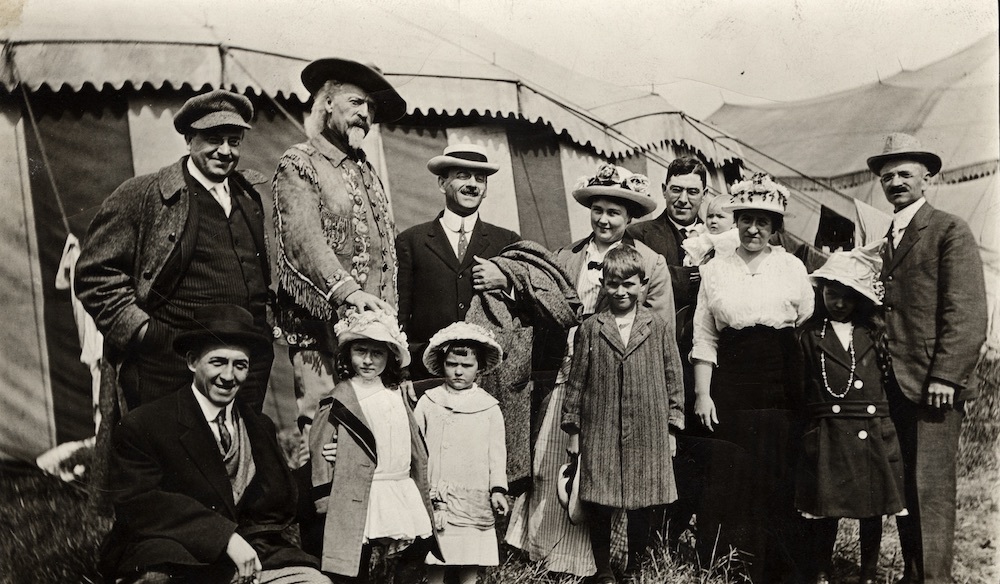
    <summary type="html"><![CDATA[<p><strong><em>He hunted buffalo on horseback.  He was a top scout for the United States Army.  He created and starred in his own magnificent Wild West Show which played to huge crowds all across America and before the crowned heads of Europe.  However, in 1882, William F. "Buffalo Bill" Cody was simply no match for Cleveland's justice system.</em></strong></p><img src="https://mail.clevelandhistorical.org/files/fullsize/af805ab6e91c3669e2965ddcd732b431.jpg" alt="Meeting with his Cleveland family." /><br/><p>Philip Cody, the grandfather of Buffalo Bill Cody, was one of Cleveland's pioneer settlers. A Massachusetts native, he lived much of his life in Toronto, Canada, where he became wealthy operating a tavern and speculating in real estate. In about 1830, when he was 60 years old, Cody, his wife Lydia, and nine of their 11 children, moved to Cleveland, then a small village on the south shore of Lake Erie. According to Cody family tradition, they moved here because of political unrest in Canada and because of business opportunities in Cleveland, which was beginning to boom as the result of the construction from 1825 to 1832 of the Ohio and Erie Canal. Cody settled on a 55-acre farm in what was then Cleveland Township. (It became East Cleveland Township in 1845, and in 1872 was annexed to the City of Cleveland.) The farm had 342 feet of frontage on the south side of Euclid Avenue just west of what is today East 86th Street, and stretched all the way south to Quincy Avenue in what is today Cleveland's Fairfax neighborhood. Philip Cody lived on this farm for almost twenty years, continuing to engage, as he had in Canada, in real estate transactions, many of them with members of his family who lived nearby. In or about 1847, the year Lydia died, he moved in with his daughter Sophia, whose husband Levi Billings operated a tavern near Doan's Corners, just a half mile or so east of the Cody farm. A few years later, on January 2, 1850, at the age of 80, Philip Cody died. </p><p>And that might have been the end of this story except for two developments which occurred in the Cody family almost three decades after Philip's death. First, according to newspaper accounts, in October 1878, Joseph A. Cody, a son of Philip Cody who had lived with or nearby his father during the 1840s, confessed on his deathbed to his nephew Lindus Cody that he had forged deeds and swindled his siblings and their descendants out of their share of Philip's farm. And second, the story about Joseph Cody's deathbed confession eventually reached the ears of Lindus' cousin, William F. "Buffalo Bill" Cody, who by this time had become one of the most famous celebrities in late nineteenth century America.</p><p>"Buffalo Bill" Cody was born near LeClaire, Iowa in 1846. His father, Isaac, was one of Philip Cody's 11 children. Isaac had come to Cleveland with the rest of the family, but had left the area around 1840, following his brothers Elijah and Philip Jr. west to Iowa, before eventually moving to Kansas in 1854. Shortly after his arrival there, Isaac was stabbed twice in the chest while giving a speech opposing the extension of slavery in the state, suffering injuries from which he never fully recovered. When he died in 1857, his 11-year-old son Bill had to go to work, according to biographers, in order to help his mother and four sisters. He became a wagon train messenger, a pony express rider, a buffalo hunter, and finally a scout for the U.S. Army. By 1870, his western exploits caught the attention of Edward Judson, who, under the pseudonym "Ned Buntline," began writing a series of dime novels about "Buffalo Bill" Cody which soon made him a household name in America. Capitalizing on his newfound fame, Cody, when he was not scouting for the Army, began starring in plays (called "combinations"). His performances in these plays, which were based upon his reputed feats in the Wild West, further enhanced his fame, especially back East. Then, in 1883, Cody, with the assistance of his publicist John Burke and others, created Buffalo Bill's Wild West, a show, which, unlike the plays in which he appeared, featured real cowboys engaged in rodeo events, reenactments of buffalo hunts, feats of marksmanship (starring, among others, Ohio's Annie Oakley), and amazing tricks performed on horseback (some by <a href="https://clevelandhistorical.org/items/show/904">Adele von Ohl Parker</a>, who later created her own Wild West Show on Parker Ranch in North Olmsted, Ohio), all performed in outdoor venues. The performances of these shows over the next three decades would cement Cody's fame for several generations of Americans, and was a major influence on the development of twentieth century western films, rodeos and circuses in this country.</p><p>In 1880, just three years before Buffalo Bill Cody launched his Wild West Show, his Aunt Margaret, the widow of his father's brother Elijah, learned about the alleged fraudulent acts of Joseph Cody and, according to news accounts, launched her own two-year long personal investigation into the matter, traveling around the country, examining deeds, identifying heirs, and talking to family members and others with knowledge of Joseph Cody and the mental condition and business acumen of Philip Cody in the 1840s. In early 1882, she contacted her nephew Buffalo Bill about the matter, not just because he was a celebrity, but also likely because she needed money to file a lawsuit. According to one source, Buffalo Bill, who agreed to bankroll the effort--in large part, he later claimed, in order to help his four sisters--paid $5,000 to retain Hutchins, Campbell, and Johnson, a prominent law firm in Cleveland with offices in the Blackstone Building, located just a block or so from the old County Court House on the northwest quadrant of Public Square. It was there that the Cody lawsuit would be heard before Judge Gershom Barber, a reputedly able jurist who had served as a brigadier general during the Civil War. It wasn't long before Cleveland's major newspapers--the Plain Dealer, the Leader, and the Herald, as well as major newspapers across the country, were abuzz with articles claiming that a lawsuit was about to be filed here in Cleveland against a number of wealthy Euclid Avenue residents and that the famous Buffalo Bill Cody was a plaintiff in the suit. Estimates of the value of the land which Cody was trying to recover for his sisters and the other heirs ranged, according to different articles, from $300,000 to $3,000,000.</p><p>The Cody lawsuit was filed in Cuyahoga County Common Pleas Court on July 22, 1882. Named as plaintiffs were 14 heirs of Philip Cody representing six of his 11 children, led by William F. Cody. (Of Philip Cody's remaining five children, one had died without children, two were alleged to have participated in the fraud against the heirs, and the heirs of the remaining two, Elizabeth Custead and Lydia O'Dell, apparently—as intimated in a letter to the editor which appeared in the Cleveland Leader on March 17, 1882—declined to participate in the lawsuit). Named as defendants were 104 Clevelanders who were alleged to be at the time of the filing of the suit the owners of the land that had constituted Philip Cody's 55-acre farm at the time of his death in 1850. The defendants included four upper class Cleveland families who lived or owned land on Euclid Avenue, by then one of the most famous residential streets in America, if not the world. The vast majority of the remaining defendants were middle class or working class Clevelanders, most owning or living in houses on Lincoln Avenue (today, East 83rd Street), between Cedar and Quincy Avenues. The southernmost part of this section of the street was fast becoming an ethnic enclave for Cleveland's Czech immigrants who would just one year later organize St. Adalbert Catholic Church on Lincoln Avenue, between Garden (today, Central) and Quincy Avenues.</p><p>The plaintiffs' theory of liability in the Cody Lawsuit was that the 104 defendants had purchased their land, either directly or indirectly, from, in essence, thieves—the petition claiming that Philip Cody, Jr., as well as his brother Joseph, had fraudulently acquired their father's farm in the 1840s—and that the law does not recognize the validity of even a bona fide purchaser's title when it is obtained from a thief. The petition further claimed that the fraud was committed by Joseph Cody and Philip Cody, Jr., when they took advantage of their father's diminished mental condition and either forged deeds in his name or induced him to sign deeds, conveying half of Philip Sr.'s farm, in trust, to Joseph Cody's wife, and the other half to Philip Cody Jr.'s wife. For their remedy, the plaintiffs asked the court to convey to them a six-tenths interest (because only six of the ten Cody children or their descendants were participating in the suit) in each defendants' property, subject to adjustments for improvements made and for rents collected. </p><p>The Cody lawsuit plaintiffs never were allowed an opportunity to proceed to trial and present evidence in support of their petition's allegations in open court. Instead, their petition was subjected to a number of formulaic nineteenth century procedural motions by attorneys representing various individual defendants and groups of defendants, including several filed by Ephraim J. Estep, a well known member of the Cleveland bar and former resident of Euclid Avenue (see Allen-Sullivan House story), who represented 62 of the defendants, including Darius Cadwell, one of Judge Gershom Barber's colleagues on the Common Pleas Court bench. Essentially, the defendants complained that plaintiffs' petition did not allege sufficient specific facts from which the court could legally find for the plaintiffs. Judge Barber, who appears to have agreed with the substance of the defendants' motions, gave the plaintiffs two opportunities to correct the alleged legal deficiencies in their petition and, when they failed to do so to his satisfaction, dismissed their petition in May of 1883. It is difficult today, even for a retired lawyer, to determine the exact grounds upon which the court based its decision. However, the plaintiffs' attorney, John Hutchins, in an interview he gave which appeared in the Plain Dealer on July 23, 1889, stated that the judge's decision was based on a statute of limitations argument. This essentially means that the time within which the plaintiffs were legally required to bring such an action based on fraud had expired before the suit was filed. The Cody heirs filed an appeal from Judge Barber's judgment to the Cuyahoga County Court of Appeals (then called the District Court), which affirmed the lower court's judgment in October 1885. An appeal to the Ohio Supreme Court was dismissed in November 1887 "for failure to file printed record," an indication that Buffalo Bill Cody had, by this time, tired of the case and was no longer willing to throw good money after bad.</p><p>In addition to the Plaintiffs not getting their day in court, it should be noted that neither did Joseph Cody and Philip Cody, Jr., both of whom had died before the lawsuit was filed. While the dismissal of the case was a victory for the defendants, it left unanswered the question of whether Joseph and Philip Cody, Jr. did, in fact, commit fraud and deprive the other children and their heirs out of a share of the Cody farm. On that question, it must be emphasized, as noted above, that Philip Cody engaged in a number of real estate transactions in the 1840s wth members of his family, including his sons-in-law William Custead, John Odell, and Levi Billings. And yet none of these individuals, or the Cody daughters that they married, were ever charged with fraud.</p><p>Over 130 years have passed since William F. "Buffalo Bill" Cody came to Cleveland in a failed effort to recover his grandfather's 55-acre farm on Euclid Avenue. Unlike other Cleveland Historical stories that are about people or places, little is left standing in Cleveland to commemorate or otherwise remind us of Buffalo Bill's 1882 lawsuit. But there are some places which can serve to do so. You can make a trip to East Cleveland Township Cemetery and there view the weathered gravestone of Buffalo Bill's grandparents, Philip and Lydia Cody. Or you can take a drive down East 83rd Street, just south of Cedar Avenue, and see three houses at 2202, 2208 and 2210 East 83rd that were standing in 1882 and were owned and/or occupied by defendants in the Cody Lawsuit. And finally, you can visit the website of the International Cody Family Association, formed shortly after the death of William F. "Buffalo Bill" Cody in 1917, to travel back to a time when Buffalo Bill Cody was a household name in America, when Euclid Avenue was one of the grandest residential avenues in the United States, and when a trip by Buffalo Bill to Cleveland for the purpose of bringing a lawsuit against wealthy Euclid Avenue residents was an event which captured the attention and interest not only of Clevelanders, but of people all across the country.</p><p><em><strong><a href="https://mail.clevelandhistorical.org/items/show/873">For more (including 12 images) view the original article</a></strong></em></p>]]></summary>
    <published>2019-09-23T20:21:06+00:00</published>
    <updated>2026-04-17T19:17:39+00:00</updated>
    <link rel="alternate" type="text/html" href="https://mail.clevelandhistorical.org/items/show/873"/>
    <id>https://mail.clevelandhistorical.org/items/show/873</id>
    <author>
      <name>Jim Dubelko</name>
    </author>
  </entry>
  <entry>
    <title type="html"><![CDATA[Standard Brewing Company: What Ever Happened to Erin Brew Beer?]]></title>
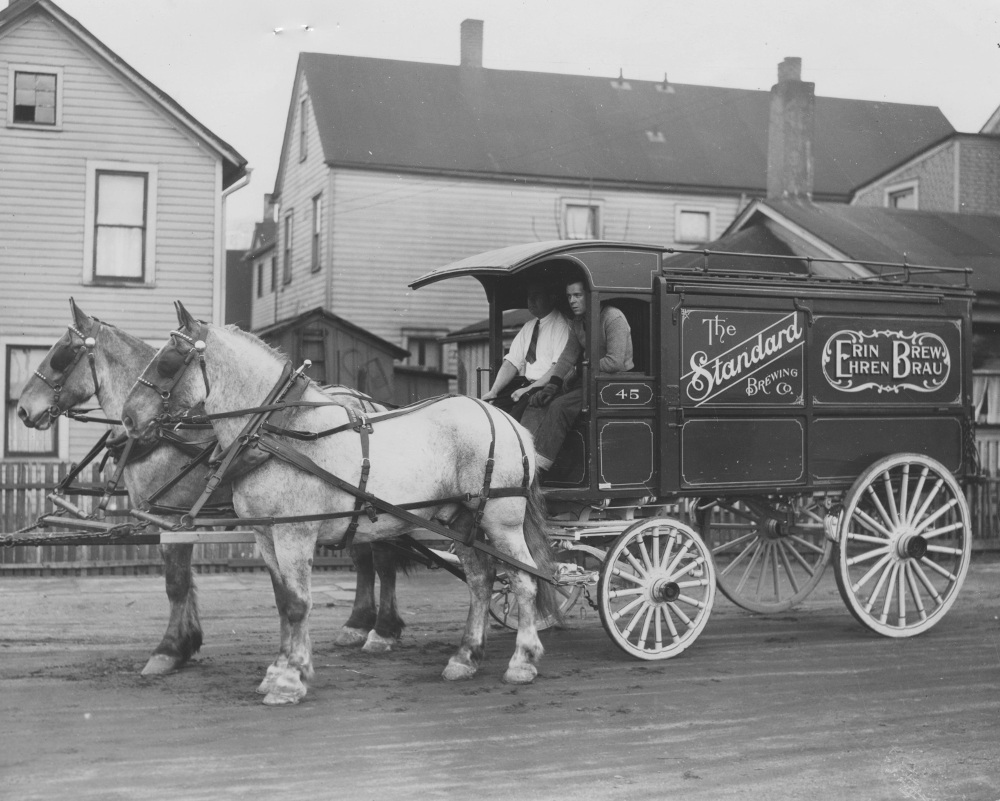
    <summary type="html"><![CDATA[<p><strong><em>When the Standard Brewing Company sponsored the TV and radio broadcasts of Cleveland Indians games in 1948 (the year the Tribe last won the World Series), the company's Erin Brew beer, for decades a favorite in the city's Irish-American community, suddenly became one of the most popular beers in all of Cleveland. </em></strong></p><img src="https://mail.clevelandhistorical.org/files/fullsize/246ee1e9dabac3347720325b2b5e7508.jpg" alt="Delivering Neighborhood Beer" /><br/><p>Train Avenue on the west side of Cleveland is undoubtedly so named because it follows the tracks of the Big Four Railroad in a northeasterly direction from the old Stockyards near Clark Avenue and West 61st Street almost all the way to the Cuyahoga River.  If you travel to Train Avenue's western end today, you'll see on the south side of the street—just before you get to the West 61st Street intersection—several old red brick buildings.  Near the top of one are two granite stones, one carved with the word "Bottle" and the other with "Works."  On the building next to that, you'll see another granite stone, this one carved with the year "1913." Whether you're a beer lover or not, give yourself a pat on the back, for you have just arrived at the place where the Standard Brewing Company once manufactured Erin Brew beer—one of the most popular beers in the history of Cleveland.</p><p>The Standard Brewing Company had its origins in the founding of the Kress-Weiss Brewing Company in 1902.  In that year, Stephen S. Creadon, a west side saloonkeeper and second generation Irish-American, entered into an agreement with German immigrant brewer Andrew Kress  and several investors to produce a weiss (light wheat) beer out of an old butcher shop located on the corner of Sackett and Louis (West 32nd) Streets, in today's Clark-Fulton neighborhood.  Unfortunately, the venture faltered, and Creadon and Kress soon parted ways.  In 1904, Creadon, who retained the lease to the brewery building, brought in new investors and Jaroslav Pavlik, a Czech immigrant brewer, and incorporated anew under the name of the Standard Brewing Company. Pavlik brewed lager beer—darker and heavier than weiss beer—and sales quickly took off. The following year, the growing firm recapitalized and moved to a larger facility, an old flour mill located on the north side of Train Avenue near the West 61st street intersection.</p><p>Just one year after moving to its new location, the young company faced a serious challenge to its continued existence.  In November 1906,  J. P. Kraus, a banker with First National Bank which had financed the new venture and controlled most of the company's stock, proposed that its directors approve a sale of their business to Cleveland and Sandusky Brewing Company.  The latter was a large regional brewery which had been gobbling up local independent breweries in the Cleveland and Sandusky areas since 1897.  Standard Brewing's directors—led by Creadon, whose experiences as a saloon keeper had perhaps persuaded him to stay away from conglomerates—voted to stay independent and rejected the proposed sale.  However, Creadon now had to find new financing for his company and find it quickly.  His search ended with John T. Feighan, a Forest City Savings and Trust Company banker, who, like Creadon, was a member of the west side Irish community.  Feighan's bank, which since 1903 had been located in a new building on the southwest corner of Pearl (West 25th) Street and Detroit Avenue, was right across the street from Creadon's other business—his neighborhood saloon.  Soon Feighan became not only a lender and director of Standard Brewing, but also an officer of the company, serving first as its treasurer and then later as its president after Creadon's death in 1921.</p><p>Creadon's savvy in the saloon business, Feighan's business acumen, and Pavlik's brewing skills:  They were a winning combination.  By 1913, new brewery buildings had gone up on both the north and south sides of Train Avenue and the company was now marketing Pavlik's lager under the name of Erin Brew, making it a favorite among Cleveland's west side Irish-American community.  According to the company's 1914 corporate report, between the years 1906 and 1913 it almost doubled production, increasing annual output from 40,000 barrels to 75,000 in that period.  As it approached the end of that decade, Standard Brewing Company had become one of Cleveland's largest and most successful independent breweries.  Then, in 1919, the State of Ohio banned the sale and manufacture of liquor within the state, and one year after that the Eighteenth Amendment to the U.S. Constitution was passed, ushering in the era of national Prohibition.  Standard Brewing Company, like several other Cleveland breweries that survived Prohibition, converted its manufacturing facilities to the production of ginger ale and other soft drinks.  When Prohibition ended in 1933, those breweries were able to quickly shift production back to beer.  By May of that year, Standard Brewing Company was once again producing Erin Brew beer for a very thirsty consumer public.</p><p>In the 1940s, just after the end of World War II, Standard Brewing Company, under the leadership of John T. Feighan and George Creadon, son of founder Stephen Creadon, entered into a series of annual agreements to sponsor radio and TV broadcasts of Cleveland Indians baseball games.  When the Indians won the World Series in 1948, Erin Brew beer went from being the favorite beer of Cleveland's Irish community to being one of the most loved beers in all of Cleveland.  Responding to this increased demand, in 1950 the company built an extensive new bottling and canning facility just west of its earlier twentieth-century buildings on Train Avenue.  Sadly, this would be the peak of Standard Brewing Company's successful operations in Cleveland.</p><p>The decade of the 1950s marked the beginning of the end for Cleveland's brewing industry, as a changing consumer public and improved transportation facilities promoted the success of large national breweries at the expense of smaller local breweries.  Standard Brewing Company was one of the last of Cleveland's independent breweries to succumb, selling its brewery facilities to the F & M Schaefer Brewing Company of New York in 1961.  Three years after that, Schaefer sold the facilities to C. Schmidt & Sons Inc., a large Philadelphia brewery.  By the mid-1960s, Erin Brew was replaced by Standard Premium and soon the once most popular beer in Cleveland was just a memory.</p><p><em><strong><a href="https://mail.clevelandhistorical.org/items/show/809">For more (including 14 images) view the original article</a></strong></em></p>]]></summary>
    <published>2017-07-08T16:21:19+00:00</published>
    <updated>2026-04-17T19:17:41+00:00</updated>
    <link rel="alternate" type="text/html" href="https://mail.clevelandhistorical.org/items/show/809"/>
    <id>https://mail.clevelandhistorical.org/items/show/809</id>
    <author>
      <name>Jim Dubelko</name>
    </author>
  </entry>
  <entry>
    <title type="html"><![CDATA[Bohemian National Hall: A Cultural Center for Cleveland&#039;s Czechs]]></title>
    <summary type="html"><![CDATA[<img src="https://mail.clevelandhistorical.org/files/fullsize/14357e3222464abd464b26c96346de2c.jpg" alt="Bohemian National Hall" /><br/><p>In the early 1880s, an idea arose in the Lodge Bratri v Kruhu of the Czech Slovak Benevolent Association that people of Bohemian nationality needed a community building dedicated to their societies and culture. In August 1887, Bohemian representatives met to discuss the possibility of creating such a space. </p><p>The cornerstone for Bohemian National Hall was laid on December 20, 1896, and was dedicated the following September. During the dedication ceremonies, all local Bohemian communities and societies were invited to participate, but every other ethnic group was excluded to make this a distinctly Bohemian celebration.  Bohemians attended the celebrations from Chicago, Detroit, Pennsylvania, Toledo, and even New York. The hall served as a meeting place for over 40 lodges, societies, and clubs. In 1911, classrooms were added to teach language skills. </p><p>In the late summer of 1900, the Bohemian National Turners Association held their annual convention in Cleveland. A number of tournaments took place at area locations such as Forest City Park and Central Armory with about 400 members in Cleveland alone and 800 visiting delegates. On August 23, the award banquet for the convention was held in the Bohemian National Hall. </p><p>The hall also brought large crowds for its annual celebration of Jan Hus Day. Hus was a Bohemian reformer burned at the stake on July 6, 1415, for heresy and is considered a national hero. The Bohemians would have large celebrations including plays and various performances. In 1915, events at Gordon Park brought 20,000 Bohemians to the area with many attending later events at the hall. </p><p>Also in 1915, representatives for the Czech and Slovak people met in the hall to discuss the need for a common sovereign state. This meeting, now known as the Cleveland Agreement, sparked the idea of creating what would come to be Czechoslovakia. On May 10, 1945, celebrations were held for the liberation of Czechoslovakia from German occupation with speeches by Louis Krch, president of the Slovak National Alliance and Joseph Novy, of the Czechoslovakian Consul. The celebration called for unity among Czechs and their European neighbors--Poland, Hungary, and Austria. Cleveland area Czechs also began a collection drive of clothing and household goods that would be dropped off at the hall and later sent to war torn Czechoslovakia. </p><p>In May 1975, Bohemian National Hall was added to the National Register of Historic Places. The next month, the hall was sold to the American Sokol Inc. Sokol is a program dedicated to the idea of a strong mind and body, emphasizing the importance of physical fitness. After the sale, the hall continued to host Sokol meetings, gymnastic events, lodge functions, Czech classes, and other Czech-oriented cultural events. A major renovation and restoration project in the early 2000s added an athletic facility and museum, now used as the Czech Cultural Center. </p><p>Today, the hall still teaches classes, holds events and meetings, and serves as a source of information and pride for the Cleveland Czech population. </p><p><em><strong><a href="https://mail.clevelandhistorical.org/items/show/739">For more (including 6 images) view the original article</a></strong></em></p>]]></summary>
    <published>2015-10-09T13:50:21+00:00</published>
    <updated>2026-04-17T19:17:41+00:00</updated>
    <link rel="alternate" type="text/html" href="https://mail.clevelandhistorical.org/items/show/739"/>
    <id>https://mail.clevelandhistorical.org/items/show/739</id>
    <author>
      <name>Danielle Rose</name>
    </author>
  </entry>
  <entry>
    <title type="html"><![CDATA[Broadway and East 55th: The Slavic Downtown]]></title>
    <summary type="html"><![CDATA[<img src="https://mail.clevelandhistorical.org/files/fullsize/e589c2c3469619bd7df334c71d3e1a68.jpg" alt="Polish Folk Festival" /><br/><p>The area around Broadway Avenue and East 55th Street was originally developed by Irish and Welsh immigrants, but in the 1880s large groups of Polish, Czech, and Slovak newcomers moved into the area for work in the Cleveland mills and steel yards. With this ethnic shift, the area took on a Slavic identity that has remained to this day. </p><p>The Broadway-55th district had a number of businesses and institutions that paid homage to the roots of its inhabitants. One of the earliest Slavic establishments of the area was Our Lady of Lourdes Church, showing the central role that religion played in the lives of settlers. Established in 1883 by Rev. Stephen Furdek, the current church was built in 1902. The church functioned as more than a religious center; it also provided a safe haven for incoming immigrants and a social hub with events to bolster community relations. For decades, Our Lady of Lourdes was the largest Bohemian parish in Cleveland and remains an integral part of the neighborhood. </p><p>The First Catholic Slovak Union was created by Stephen Furdek in 1890 to provide insurance and benefits to immigrant Slovaks living in America. As the organization grew it became obvious that larger offices were necessary. In 1919, the FCSU purchased a large house in Slavic Village at 3289 East 55th Street where it continued to serve the Slavic community for decades. </p><p>A few years later, Broadway Savings and Trust opened. Owned by Oliver Mead Stafford and Caesar A. Grasselli, it primarily served the financial needs of the Polish settlers and became a mainstay of the area. In the mid-1900s, the business was sold and the building became Fisher’s Dry Goods, catering to the needs of the neighborhood and selling products needed to make traditional Polish meals. While the building changed hands again in 1958, it maintained its Slavic roots. Yaros Podzimek, who emigrated from Czechoslovakia in 1950, opened Hubcap Heaven in the historic building, and the business still operates there today. </p><p>The area of Broadway and East 55th was also a central location of ethnic entertainment. In 1913, the Olympia Theater opened as a vaudeville house and in 1918 was renovated to operate as a movie theater. In addition to the movies shown, the theater was home to a number of performances by the Polish Opera, Polka performances, and local bands. Also in the area was Bundy’s Music Center. In addition to hosting performances by a number of polka performers and opera singers, the center was where Chester Bundy, who recorded polka music for Bravo, Dart, and Columbia Records in the 1950s, began his career. A block away was the Hruby Conservatory of Music, which operated from 1918 to 1968. Today it is the Broadway School of Music & Art. </p><p>More important than the businesses of the Slavic Village neighborhood is the sense of community and deep connection to traditions. Beginning in 1978, the area started an annual Broadway Fair and Street Sale. Businesses would have sidewalk sales, live music, and plenty of ethnic food such as kielbasa and Hungarian horns.  Around the same time the area began hosting an annual Harvest Festival, the majority of which took place on Fleet Avenue but was celebrated throughout the entire area. There is an annual Polish Constitution Day Parade, a celebration of the 1791 creation of the Polish Constitution. </p><p>Over the decades, many changes have been made to the Broadway and East 55th neighborhood; businesses have come and gone, the population has declined with suburban migration, and other ethnicities have moved into the area. Despite these changes, Slavic pride and traditions have remained strong and show no sign of disappearing. </p><p><em><strong><a href="https://mail.clevelandhistorical.org/items/show/727">For more (including 7 images) view the original article</a></strong></em></p>]]></summary>
    <published>2015-07-28T12:20:32+00:00</published>
    <updated>2026-04-17T19:17:41+00:00</updated>
    <link rel="alternate" type="text/html" href="https://mail.clevelandhistorical.org/items/show/727"/>
    <id>https://mail.clevelandhistorical.org/items/show/727</id>
    <author>
      <name>Danielle Rose</name>
    </author>
  </entry>
  <entry>
    <title type="html"><![CDATA[Forest City Brewing Company]]></title>
    <summary type="html"><![CDATA[<img src="https://mail.clevelandhistorical.org/files/fullsize/5ae91fb35283d72b87a18f0abe811739.jpg" alt="Forest City Brewing Company" /><br/><p>One could easily mistake the recent proliferation of microbreweries and brew pubs springing up on what often seem to be every other block in Cleveland as a modern and unique phenomenon.  All of this has occurred here before, however, and with even more vigor and success than today’s upstarts are enjoying.  With the influx of beer-loving immigrants from Germany, Bohemia and Ireland after the Napoleonic Wars ended in 1815, Cleveland was a big, and expanding, beer-drinking town.  Just as IPAs fuel the burgeoning beer market today, at the end of the 19th century it was the new German lager that was all the rage, and most of the two dozen breweries then producing upwards of half a billion barrels of beer, switched from ale to lager brewing.  Ironically, the shift today is back in the other direction, from the now disdained lager, back to ale.  In an attempt to take advantage of the huge profits being raked in by beer barons of the day such as Isaac Leisy and George Gund, in the spring of 1904 a grocer and tailor pooled their resources and built a state of the art brewery on Union Avenue and East 69th Street, and the Forest City Brewing Company was born.</p><p>Michael Albl was brought to America by his father in 1850, leaving behind his handicapped mother in Stenovic, a province of Pilsen in what was then Bohemia.  Arriving in Cleveland, like many Czech immigrants of the time, Albl quickly found work as a cooper in Rockefeller’s refinery.  In the winter of 1873 he opened a grocery at 4950 Broadway that would grow to become one of the largest in the area.  By this time Albl was trusted and admired by his community and was often called on to serve as executor of estates and to offer business advice to his neighbors.  He dabbled in real estate and the insurance business, and was elected to a string of political offices after garnering the support of the community. He was appointed judge on April 1, 1887, and waterworks trustee in 1890.  In 1904 Albl teamed with fellow Czech Joseph Troyen to build a state of the art brewery just a short walk from Albl’s successful grocery and Troyen’s clothing shop.  They recruited Vaclev Humel from the Pilsner Brewing Company on Cleveland’s west side to supply the beer brewing expertise they lacked.</p><p>The enormous building at 6920 Union Avenue was designed by Mueller & Mildner, a team of architects from Detroit who specialized in breweries throughout the Midwest and Canada at the turn of the 20th century. This was a hulking industrial building built more for function rather than form, but was described as, “the most distinctive and unusual industrial architecture to be found on this continent” by the journal Historic Preservation in 1975.  The brewery was among the first to switch to steel fermenting tanks, vats and kegs, and coupled with the steel supports of the brewery itself, made it far less prone to fire than previous breweries.  It opened with a brewing capacity of 50,000 barrels/year to serve a mostly local market, and is estimated to have cost $220,000 to construct. </p><p>Although the brewery was successful from the start and was featured in many of Cleveland’s saloons in the early 20th century, several difficulties had to be confronted by Albl and his team.  A worker named Emil Kohlt was severely burned on July 16, 1909, when scalding wort was accidentally spilled on him.  Just two years later Jerry Mrazek was the subject of the most grisly event that occurred at the brewery when his body was found boiled at the bottom of a huge brewing vat.  Newspaper accounts vary, with one claiming he fell into the boiling liquid after fainting due to illness, while another maintains that it was suicide.  Despite these accidents, the brewery was constantly expanding during these early years, and in 1913 a $25,000, three-story bottling line was planned.  With construction nearing completion the night of December 17th of that year, and despite the brewmaster, Marian Hansky, living in a house directly across the street, two men armed with sledgehammers did extensive damage to the new addition and parts of the existing brewery.  The men, who were never apprehended, were suspected of belonging to the Prohibition movement, which would be the biggest and most constant threat to Forest City Brewing. </p><p>Prohibition began in Ohio in 1919, a year before it became law across the United States.  Forest City was one of the very few breweries in Cleveland that attempted to remain open during this period.  Michael Albl’s son Frank attempted to keep Forest City afloat by producing Zem-Zem grape juice and XLNT De-Alcoholized beer, but was rumored to have continued  supplying local speakeasies with the fully-alcoholized, illegal variety.  After numerous lay-offs, Prohibition won and the brewery finally closed its doors in 1930, leaving only Pilsener Brewing Company operating in Cleveland by the end of Prohibition.</p><p>With the repeal of Prohibition in 1933, Forest City immediately went back into production.  Hansky was still the brewmaster, brewing the famous Samson Ale—named after the brewery near Albl’s hometown in Bohemia that produced the original Budweiser.  Forest City, better suited than most Cleveland brewers to resume production, accounted for 25% of the beer sold in the first year after Repeal, but soon struggled financially once the new beer conglomerates got up to speed.  The brewery was purchased by the Carling Brewing Co. in 1944 for $477,000, but they would consolidate their production facilities four years later and the brewery on Union was closed and the equipment sold.  The building was not well-suited for other businesses, and after a short period as Distributors Furniture Warehouse in the 1970s, the building was demolished in February 2012.  Of all the many breweries that once proudly called Cleveland home, the Forest City Brewing Company's building on Union Avenue is the only one that has ever been named to the National Register of Historic Places.  </p><p><em><strong><a href="https://mail.clevelandhistorical.org/items/show/721">For more (including 13 images) view the original article</a></strong></em></p>]]></summary>
    <published>2015-07-14T15:48:04+00:00</published>
    <updated>2026-04-17T19:17:41+00:00</updated>
    <link rel="alternate" type="text/html" href="https://mail.clevelandhistorical.org/items/show/721"/>
    <id>https://mail.clevelandhistorical.org/items/show/721</id>
    <author>
      <name>Michael Barkacs</name>
    </author>
  </entry>
  <entry>
    <title type="html"><![CDATA[Saint Procop Roman Catholic Church: A Contentious Beginning and Inevitable Ending for a Historic West Side Czech Church]]></title>
    <summary type="html"><![CDATA[<img src="https://mail.clevelandhistorical.org/files/fullsize/3767f036c6ae2c20ce0265ac625009c1.jpg" alt="At its Peak" /><br/><p>They were probably hoping for a better result.  The Czech parishioners, that is.  Especially those who were old enough to remember what had happened three decades earlier.  Back in 1874, after they had completed construction of their first church, that small white wooden structure on Burton Avenue (West 41st Street) on the same grounds as this new church.  First there was the incident in 1878 when the pastor, Father Koudelka, had refused to permit the burial in consecrated grounds of a young man, who had not attended mass or gone to confession regularly enough.  And then there was the pastor's arrest the following year for libel and his hurried departure thereafter from the parish. Followed by the all too short stay of the kindly Father Antl.  And then the acrimonious dispute with Bishop Gilmore in 1884 over the election of a new parish council.  Even Father Furdek, the father of American Slavs, couldn't resolve that dispute.  That was the year the Bishop closed the church, sparking violent confrontations between parishioners, church officials and local police officers, which continued on and off for much of the rest of the decade.  </p><p>But that, they must have thought, was then and this, of course, now.  The year 1903 — an entirely different time, an entirely new century, and now an entirely new and beautiful church.   It had been designed by Godfrey Fugman and Emile Ulhrich, respected Cleveland architects.  Ulhrich, who would design many other beautiful churches in Cleveland over the next several decades, including St. Elizabeth of Hungary on Buckeye Road, was an immigrant from France.  He designed the new St. Procop church to resemble Montmartre's Basilica of the Sacre-Coeur in Paris.  </p><p>The new St. Procop church, like the church it resembled, was built in Byzantine-Romanesque style.  Its exterior facade was constructed of buff pressed brick with Berea Blue Stone trimmings.  It had twin bell towers with unusual octagonal cupolas that flanked the entrance.  Behind those towers was an impressive dome made of steel and glass.  The building was 144 feet long and 88 feet wide at its transepts.  The interior of the church was equally beautiful.  It was the first church in Cleveland designed with a free-standing ceiling, with no columns to obstruct the view of the congregation.  It featured an assortment of frescoes, stained glass windows and statues, including one of the Infant Jesus of Prague and another of the Virgin of Svata Hora ("Holy Mountain").  The interior lit dome was viewed by many as particularly striking. </p><p>But those parishioners who had hoped that dedication of the new church in 1903 would usher in a new era of community and not controversy, must have soon been shaking their heads.  The following April, a burglar broke into the church and blew up the safe behind the altar.  Six months later, a worker painting the interior domed ceiling fell from the scaffolding and plunged to his death.  And just months after that, a mysterious fire broke out in the church's boiler room.  But that was mostly it.  As the years passed, controversy seemed to depart from the new church and it settled down to become a place where people simply came to worship, to exchange their marriage vows, to baptize their children, and sometimes to say final good-byes to their dead.  </p><p>It was not controversy, but numbers which finally ended the church's existence. Since the 1930s, Cleveland's Czech population, had been declining — in part due to the federal government's decision in the 1920s to all but ban immigration from Eastern Europe, and in part due to the migration of Czechs, like Cleveland's other white ethnic groups, to the suburbs. At its peak in the 1930s and 1940s, St. Procop was where over 1000 neighborhood families worshiped.  By 1960, that number was down to less than 600.  And, as if to provide physical proof of that decline, church officials were forced in 1962 to remove the beautiful twin towers and the exterior dome due to years of deterioration that the parish could not afford to repair.  By 2007, despite efforts to convert the historic ethnic church into a regional church,  the number of families in the parish had dropped to just 200.</p><p>In 2009, Bishop Richard Lennon announced the closing of St. Procop, as well as a number of other Cleveland area Catholic churches.  A final mass held in the church on August 30, 2009, was attended by Bishop Lennon, former church pastors, parishioners, and protesters who were holding signs, including one that read, "Keep Our Church Open."</p><p><em><strong><a href="https://mail.clevelandhistorical.org/items/show/661">For more (including 12 images) view the original article</a></strong></em></p>]]></summary>
    <published>2014-06-10T08:41:31+00:00</published>
    <updated>2026-04-17T19:17:40+00:00</updated>
    <link rel="alternate" type="text/html" href="https://mail.clevelandhistorical.org/items/show/661"/>
    <id>https://mail.clevelandhistorical.org/items/show/661</id>
    <author>
      <name>Jim Dubelko</name>
    </author>
  </entry>
  <entry>
    <title type="html"><![CDATA[Ceska Sin Sokol Hall: The Birthplace of Northeast Ohio College Gymnastics ]]></title>
    <summary type="html"><![CDATA[<img src="https://mail.clevelandhistorical.org/files/fullsize/ee95bcb053785c6c4cae587c1fb5f8e5.jpg" alt="Ceska Sin Sokol Hall" /><br/><p>In the early 1940s, before he was even old enough to cross the street, young Joe Bachna gazed at Ceska Sin Sokol Hall  from his father's photography studio at 4203 Clark Avenue.  The three and one-half story building located down and across the street at 4314 Clark Avenue, loomed large, both in the immediate neighborhood and in his imagination.  Joe dreamed about the day when he too, like his older brothers Alfred, Rudy and Gilbert, could go to the Hall and become a Sokol member, a gymnast.</p><p>At the time that Joe Bachna was growing up in this west side neighborhood of Cleveland which was then heavily populated by Czech, Slovak and German-Americans, Ceska Sin Sokol Hall had been home to a number of west side Sokol organizations for nearly 40 years.  The Sokols ("Falcons"), a physical education and cultural program founded in Prague in 1862 to promote national solidarity and pride, was part of the culture that Czech immigrants brought with them to America in the second half of the nineteenth century.  The first Sokol in America was organized in St. Louis in 1865, and by the 1870s Sokols were being founded among the growing Czech population living in Cleveland.  </p><p>In the 1890s, Cleveland's west side Czech Sokols--Nova Vlas ("New Country") and Ceska-Zbavny ("Czech Entertainment")-- began purchasing property and building gyms in the Clark-Fulton area.  In 1903, they and a number of lodges, clubs and other men's and women's ethnic organizations pooled their resources for the purpose of acquiring a single large hall for all of their activities.  Forming a patronat ("board of managers"), they  purchased Hungaria Hall in 1907.  The hall, which had been built in 1890 by wealthy Hungarian-American magnate Theodore Kundtz, was renamed Ceska Sin Sokol Hall.   </p><p>During the the years that followed the purchase, thousands of west side neighborhood boys and girls undertook gymnastic training at Ceska Sin Sokol Hall.  They also imbibed the Sokol creed of developing strong minds and sound morals to go along with their strong bodies.  They practiced, put on exhibitions, engaged in competitions, and, on special occasions, participated in slets (literally "rallies," but actually festivals), where hundreds and sometimes even thousands of Sokol members performed elaborately choreographed gymnastic routines.  The Bachna family became involved in these and other Hall activities starting in the 1920s.  Joseph Bachna, Sr. and his wife Angela, immigrants from what became Czechoslovakia, were members of a number of clubs and other organizations at the Hall, and their boys at early ages became members of the Slovak Gymnastic Union Sokol.</p><p>While all of the Bachna boys developed life-long relationships with Sokol organizations and with Ceska-Sin Sokol Hall, the relationship that one of them developed was to have an enormous impact on the development of college gymnastics in northeast Ohio.  Rudy Bachna, whose competitive career was derailed at age 9 when he suffered a crippling injury to his left hand, founded the gymnastic program at Kent State University in 1959.  It was the first such college program in northeast Ohio and it quickly became successful, serving as a model for college gymnastic programs across the country.  Rudy trained a number of Pan-American and Olympic gymnasts, including Betty Jean Maycock, who won a gold medal at the 1960 Pan-American games and participated in the 1960 Olympics in Rome.  In 1980, in recognition of his contributions to college gymnastics, Rudy Bachna was inducted into the Greater Cleveland Sports Hall of Fame.  In 1993, two years after his retirement, he and his wife Janet, also a gymnastics coach, were inducted into the Kent State University Hall of Fame.</p><p>Today, Sokol gymnasts still train at Ceska Sin Sokol Hall and are still competitive, much like the Bachna boys were more than a half-century earlier.  And while their numbers are smaller, these Sokol-trained gymnasts have continued over the years to contribute to northeast Ohio, sometimes in fields other than gymnastics.   In 1969, when 17-year-old Peter Sikora, a west side Sokol member of Ceska Sin Sokol Hall, suffered a trampoline accident at St. Ignatius High School that left him a quadriplegic for life, his days as a gymnast were over.  But in the Sokol tradition of developing a sound mind as well as a sound body, Peter went on to college and then to law school.  He became a lawyer and then a Cuyahoga County Juvenile Court judge in 1989, where he served for 23 years until his death in 2012.  Like Rudy Bachna, Judge Sikora too found a way to contribute to his community despite his physical limitations, just as his early gymnastic training at Ceska Sin Sokol Hall would have taught him to do.</p><p><em><strong><a href="https://mail.clevelandhistorical.org/items/show/655">For more (including 13 images) view the original article</a></strong></em></p>]]></summary>
    <published>2014-05-07T08:41:23+00:00</published>
    <updated>2026-04-17T19:17:40+00:00</updated>
    <link rel="alternate" type="text/html" href="https://mail.clevelandhistorical.org/items/show/655"/>
    <id>https://mail.clevelandhistorical.org/items/show/655</id>
    <author>
      <name>Jim Dubelko</name>
    </author>
  </entry>
  <entry>
    <title type="html"><![CDATA[Joseph and Feiss Company: A Pioneer in Progressive Industrialism]]></title>
    <summary type="html"><![CDATA[<img src="https://mail.clevelandhistorical.org/files/fullsize/300f5c5c5235cd6dc5fcebf0b47c2d09.jpg" alt="Moving to the West Side" /><br/><p>If your ancestor was a Czech or Italian immigrant who lived on the west side of Cleveland, there's a good chance he or she worked at the Joseph & Feiss Company, or at least had a relative or close friend who worked there.  A Cleveland business since the mid-nineteenth century, Joseph & Feiss was by 1930 the oldest garment manufacturer in the United States.  It employed thousands of immigrants and second and third generation Americans at its mammoth plant on West 53rd Street.  They worked there until Hugo Boss, the large German concern which had purchased the company in 1989, closed the Cleveland plant in 1998, transferring the remaining workers to another plant in the Cleveland suburb of Brooklyn.</p><p>Joseph & Feiss was founded in 1841 by Caufman Koch, a Jewish immigrant from Bavaria who moved his clothing business from Meadville, Pennsylvania to Cleveland in 1845--at a time when a lot of merchants, following the completion of the Ohio Erie canal a decade earlier, were moving to the fast-growing city on Lake Erie.  In the early years, he operated a small shop at various locations downtown, procuring  the garments he sold from immigrant tailors who worked out of their homes in nearby Cleveland neighborhoods. </p><p>One of those early contract workers was Frank Jindrak (1850-1926), a Bohemian immigrant who came to Cleveland with his parents in 1854 when he was just 4 years old.  In 1860,  when he was 10, his father pulled him out of school and put him to work at home making garments for Mr. Koch's business.  This was the beginning of Jindrak's 60-year association with Joseph & Feiss.  For the first ten years he worked out of his house, and, then when the company began to transition to the factory method of operation in 1870, Frank became a cutter in a factory for the next 50 years.  The company honored him  with a dinner in 1920, and there he told those present a story about the early years of the company.  During the Civil War, when he was just a little boy, Frank would travel downtown to the company's offices then on Superior Avenue near West 6th Street, bringing with him clothing that he and his father had made.   Caufman Koch would greet him at the door, take the clothing from him and say:  "Well, Frank, what do you want now?"  "All the money," young Frank would respond.  Koch would then laugh and feign indignation: "Oh, no!  You can't have it all.  We need some of it for ourselves."  </p><p>Frank Jindrak's story probably got some good laughs at that 1920 dinner.  But, in addition to being humorous, it was allegorical for one of the most important issues for industrial businesses like Joseph & Feiss in the late nineteenth and early twentieth centuries, Labor-Management relations.  Prior to 1909, Joseph & Feiss was a typical garment manufacturer of that era, paying its employees as little as possible and working them for as many hours as hard it reasonably could.  But in that year, Richard Feiss, son of Julius Feiss (the "Feiss" in Joseph & Feiss), became factory manager.  While living in Boston from 1897-1904 and obtaining his undergraduate and law degrees from Harvard University, Feiss had become a disciple of Frederick Taylor, the well-known industrial efficiency engineer of the late nineteenth century.  When Feiss returned to Cleveland, he set out to manage the company's work force in a manner that would maximize productivity but at the same time create a humane work environment that would keep workers healthy and happy.  According to Cleveland State University historian David Goldberg, Feiss accomplished this by joining together Taylor's principles of scientific management with Progressive era welfare capitalism, establishing a work environment at Joseph & Feiss that many at the time viewed as the most progressive in America.</p><p>Feiss, with the assistance of Progressive era reformer Mary Barnett Gilson whom Feiss made head of the company's employment and services department, redesigned the chairs employees sat on and the tables they worked upon to reduce injury and fatigue; provided employees with well-lit and well-ventilated work areas; sponsored employee dances, picnics, choral societies, clubs, orchestras, and athletic programs; provided medical and counseling services; established employee savings programs; awarded promotions based on performance; and increased wages. In addition, in 1917, Feiss introduced the five-day work week for employees at the company's plant, several years before Henry Ford, often cited as the first industrial employer in the United States to do so.</p><p>Perhaps it was progressive policies like the above that kept Joseph & Feiss a non-union shop in the decades of the 1910s and 1920s--a time when garment manufacturers in New York, Chicago, and elsewhere were fast becoming union shops.  It wasn't until 1934, during the Great Depression and almost a decade after Richard Feiss was forced out of the company in 1925 by his father and older brother, that the American Clothing Workers of America, finally won the right to bargain for and represent the garment workers of Joseph & Feiss.</p><p>Joseph & Feiss would remain one of Cleveland's largest employers for another five decades, employing over 2,000 employees at its West 53rd Street plant throughout this period.  Eventually, however, new plant technology, cheaper labor sources, and changing markets ended the company's 150-year run in Cleveland.  In 2003-2004, several years after the plant closed operations, the main factory building was razed, leaving on the site today only the company's office building on West 53rd Street and its massive warehouse building near the intersection of Walworth Avenue and Junction Road.  In 2015, the warehouse received new life when it was purchased with the intent to make it the new home of Menlo Park Academy, a public charter school for gifted children.  After $17 million in repairs and renovations, the school opened its doors in the historic building in the Fall of 2017.</p><p><em><strong><a href="https://mail.clevelandhistorical.org/items/show/653">For more (including 12 images) view the original article</a></strong></em></p>]]></summary>
    <published>2014-04-20T16:47:14+00:00</published>
    <updated>2026-04-30T16:26:39+00:00</updated>
    <link rel="alternate" type="text/html" href="https://mail.clevelandhistorical.org/items/show/653"/>
    <id>https://mail.clevelandhistorical.org/items/show/653</id>
    <author>
      <name>Jim Dubelko</name>
    </author>
  </entry>
  <entry>
    <title type="html"><![CDATA[The Isle of Cuba: Cleveland&#039;s West Side Czech Neighborhood in its Early Years]]></title>
    <summary type="html"><![CDATA[<img src="https://mail.clevelandhistorical.org/files/fullsize/95951dcc1fbfdb4cf645789224c5973c.jpg" alt="A West Side Czech Parade" /><br/><p>In 1895, Hugo Chotek, a Czech-American journalist who lived in Cleveland, wrote a history of the city's early Bohemian (Czech) community.  To learn about the origins of the community's west side settlement, south of the Walworth Run, he interviewed surviving pioneer settlers, including 73-year old Maria Novak, who had come to the west side--then Brooklyn Township, as a young woman in 1853.  Maria painted a bleak picture of the social life there, far away from the much larger Bohemian settlement that had developed on the east side, near Broadway Avenue. "Our social life was dire with little if anything in the way of entertainment," she told Choteck.</p><p>Perhaps the years had clouded Maria's memory or perhaps she was referring only to those very first years of the west side settlement, which, according to the United States census, numbered only 13 families in 1860, but then grew to more than 100 families by 1870.  What is certain, however, is that once the Cleveland newspapers around 1867  began reporting on the settlement, which they referred to as the "Isle of Cuba," no one in Cleveland imagined it as a place lacking in entertainment.  </p><p>For the last three decades of the nineteenth century, Cleveland newspapers routinely reported on the wild Bohemians of the Isle of Cuba who danced to harmonica music in the saloons and dance halls scattered about their west side neighborhood, occasionally drank too much beer, and sometimes engaged in knife fights with predictably unhappy endings.  (Author's note: Given the centrality of saloons in the early days of the community, I selected the original location of one of the saloons--Link's, on what today would be the northeast corner of Clark Avenue and West 47th Street, as the site of this story.)  </p><p>In 1882, the Cleveland Leader wrote that this neighborhood was called "Isle of Cuba" because of the periodic overflows of the Walworth Run and its tributaries which flooded the area and left the high grounds in a shape that some thought looked like the Caribbean island.  But most Clevelanders, given what they had been reading in the local papers, probably thought  it was because the neighborhood was isolated from the rest of the city and was populated by Slavic immigrants with strange customs, who more than occasionally engaged in rowdy behavior.</p><p>Also contributing to this view of the neighborhood in this period were reports by the local newspapers, especially the Cleveland Leader, of the long running battle between church officials and the lay parishioners of St. Procop Roman Catholic Church on Burton (West 41st) Street, on the eastern edge of the Isle of Cuba.  The Leader characterized this battle, which lasted from the mid-1870s until the late 1880s, as one between a dictatorial Slavish church and an open-minded lay population.  It called upon Cleveland's Protestant ministers to conduct "missionary work" among the west side Bohemians.  From time to time thereafter, the paper commented on the spiritual progress that these ministers were making in that community.  </p><p>As the nineteenth century was winding down, the news stories about rowdy Bohemian adults on the Isle of Cuba gradually were replaced with stories about rowdy juvenile gangs.  During the Spanish-American War, one neighborhood gang called the "Cubans" regularly conducted battles against a gang on the other side of the Walworth Run aptly named the "Spaniards."  A few years later, when the British were fighting the Boers in South Africa, these same boys--or their younger brothers, renewed their battles under the gang names of the "Britons" and the "Boers." </p><p>Over the decades, the neighborhood name "Isle of Cuba" morphed into "Island of Cuba," then to "Little Cuba," and then to the "Cuba District" or just simply "Cuba."  And finally, at least according to Cleveland newspaper accounts, the name became passé in the late 1920s. By then, the west side Bohemians, along with the Germans, Slovaks, Irish, Italians and other ethnic groups living in the area, had created a mature neighborhood with retail shops up and down Clark Avenue, industrial businesses throughout the neighborhood, and durable neighborhood institutions, including, in addition to St. Procop's Church and other Christian denominational churches, Ceska Sin Sokol Hall, and Mravenec Building and Loan Association, later known as People's Savings and Loan Association. No longer was it considered to be a place isolated from the rest of Cleveland.</p><p><em><strong><a href="https://mail.clevelandhistorical.org/items/show/646">For more (including 9 images) view the original article</a></strong></em></p>]]></summary>
    <published>2014-01-30T15:01:55+00:00</published>
    <updated>2026-04-17T19:17:40+00:00</updated>
    <link rel="alternate" type="text/html" href="https://mail.clevelandhistorical.org/items/show/646"/>
    <id>https://mail.clevelandhistorical.org/items/show/646</id>
    <author>
      <name>Jim Dubelko</name>
    </author>
  </entry>
  <entry>
    <title type="html"><![CDATA[Milan R. Stefanik Statue: Finding a New Home for a Slovak Cultural Hero]]></title>
    <summary type="html"><![CDATA[<img src="https://mail.clevelandhistorical.org/files/fullsize/8d0b4f244614dc0ec8e8d2509f59eb66.jpg" alt="Cleveland Stefanik Statue " /><br/><p>In years past, when you traveled Martin Luther King Jr. Drive to the Cleveland Museum of Art, you likely noticed the formidable-looking bronze statue towering over the road's intersection with Jeptha Drive, the little road that takes you up to the Museum parking lot.  The statue was erected as a memorial to Milan R. Stefanik, Slovakia's greatest and most treasured national hero.  It had been a featured monument in Wade Park for nearly 90 years and was a source of pride for Cleveland's Slovak community.  However, on your next trip to University Circle, don't going searching for this statue in Wade Park.  It's  no longer there.  As a result of extensive road and sewer construction work in Wade Park, the statute was removed in 2013 from its site at this intersection and, in a somewhat controversial move, eventually relocated to to the Slovak Cultural Garden, down the road in Rockefeller Park.</p><p>It's easy to understand why the memory of Milan Stefanik is so treasured by Cleveland's Slovak-American community and why even after 90 years moving his statue to a new location created some controversy in this ethnic community.  Stefanik, son of a Lutheran minister, was born in 1880 in a village in what is today western Slovakia.  In his youth, he was a brilliant student.  He attended Charles University in Prague where he earned a PhD in Philosophy.  In 1904, he immigrated to France where in the space of a decade he achieved an international reputation as a Renaissance man who excelled in a number of different fields of scientific endeavor.  In 1914, when World War I broke out in Europe, Stefanik joined the French Army becoming a military pilot, flying missions against Axis forces in Europe.  Within a short time, he was promoted to the rank of general.  In addition to his military duties, he traveled extensively in Europe and in the United States with future first president Tomas Masaryk and others lobbying for the creation of Czechoslovakia.  After the war ended, Stefanik was returning to the new republic in May 1919 to become its first minister of defense, when the plane he was piloting--just after it had crossed over the border into Czechoslovak airspace,  mysteriously crashed, killing him. </p><p>Within months of Stefanik's death, Cleveland's Slovak community undertook plans to have a statue sculpted in his honor.  It was not an easy project to complete.  Slovak-American leaders in New York and in other U.S. cities argued that the statue should be sited in a more important venue, Washington, D.C.   Back in Cleveland, some members of City Council wanted the statue to be located in a park in Garfield Heights.  Cleveland's Slovak community, however, led by ethnic journalist and civic leader, John Pankuch, was persistent and succeeded in 1924 in erecting the statue in Wade Park--where, according to Pankuch, it would be visible to thousands of members of the general public who "would pass by [it] every hour." </p><p>In 1929, just five years after the statue was placed in Wade Park, a proposal was made to move it to the new Slovak Cultural Garden that was being planned in Rockefeller Park.  Drawings were made, footers were laid, and preliminary work to raise the statue off its pedestal was started.  But then John Pankuch and others stepped in and persuaded the Slovak community to keep the statute in Wade Park where it remained ever since until its relocation in 2013.  Now as the centerpiece of the Slovak Cultural Garden, the Milan R. Stefanik statue sits on a pedestal that was built upon the same footers that the Slovak Civic League had poured for it in the early 1930s.  It is situated between the busts and pedestals of two other Slovak cultural heroes, poet Jan Kollar and Stephen Furdek, the father of American Slavs.  While, as noted, this move was not without controversy, many in the Slovak community shrug it off and say that the statue has simply finally come home.</p><p><em><strong><a href="https://mail.clevelandhistorical.org/items/show/611">For more (including 13 images) view the original article</a></strong></em></p>]]></summary>
    <published>2013-05-18T06:04:14+00:00</published>
    <updated>2026-04-29T16:14:44+00:00</updated>
    <link rel="alternate" type="text/html" href="https://mail.clevelandhistorical.org/items/show/611"/>
    <id>https://mail.clevelandhistorical.org/items/show/611</id>
    <author>
      <name>Jim Dubelko</name>
    </author>
  </entry>
  <entry>
    <title type="html"><![CDATA[Czech Cultural Garden]]></title>
    <summary type="html"><![CDATA[<img src="https://mail.clevelandhistorical.org/files/fullsize/czech-cmp-62dedication_f562ab7ca1.jpg" alt="Kids at Masaryk Unveiling, 1962" /><br/><p>Dedicated in 1935, the Czech Cultural Garden tells the story of migrants from the central European region of Bohemia and Moravia through a sculptured frieze depicting the history of the migration of Czechs to the United States. </p><p>Landscape architects B. Ashburton Tripp and Maurice Cornell designed the Garden, which has a circular lawn centered on the frieze of Czech history.  The frieze is flanked by an Eagle Pylon and a Lion Pylon. Atop the frieze and facing the lawn are busts of Bedrich Smetana, a composer (1824-1884); Dr. Miroslav Tyrs, an educator and organizer of Sokol gymnastic societies (1832-1884); Jan E. Purkyne, an anatomist and physiologist (1787-1869); and Bozena Nemcova, a writer (1820-1862). The garden also contains busts celebrating Frantisek Palacky, a historian and politician (1798-1876); Antonin Dvorak, a composer (1841-1904); the Reverend Jendrich Simon Baar, a priest and novelist (1869-1929); Karl Havlicek, a journalist (1821-1856); and Thomas Masaryk, the first president of Czechoslovakia (1850-1937). Most of these statues, as well as the frieze, were made by Frank L. Jirouch, a Cleveland-born sculptor of Czech descent. </p><p>On April 1, 1939, the President of Czechoslovakia planted two linden trees from Bohemia in the garden. In 1949, the Czech delegation added the Tyrs, Nemcova, and Purkyne busts, and in June 1962, Masaryk's statue was added. At the dedication ceremony, United States Senator Frank Lausche lauded the choice of Masaryk, giving the dedication political resonance in the broader context of the raging Cold War. Lausche stated, that "the love of liberty lives strong in the hearts of the Czechoslovakian people in America. ... Our government will not make any pact for the degradation of Czechoslovak liberty."</p><p>Czech immigrants first settled in the flats, later moving to neighborhoods at the edge of the city, such as "Little Bohemia" in the Broadway area from East 37th Street to Union Avenue, as well as the Broadway-Fleet and Clark-Fulton neighborhoods.</p><p><em><strong><a href="https://mail.clevelandhistorical.org/items/show/107">For more (including 5 images&#32;&amp;&#32;4 audio files) view the original article</a></strong></em></p>]]></summary>
    <published>2010-12-29T13:17:51+00:00</published>
    <updated>2026-04-17T19:17:37+00:00</updated>
    <link rel="alternate" type="text/html" href="https://mail.clevelandhistorical.org/items/show/107"/>
    <id>https://mail.clevelandhistorical.org/items/show/107</id>
    <author>
      <name>Mark Tebeau</name>
    </author>
  </entry>
</feed>