<?xml version="1.0" encoding="UTF-8"?>
<feed xmlns="http://www.w3.org/2005/Atom">
  <title type="text">Cleveland Historical</title>
  <updated>2026-08-21T21:18:07+00:00</updated>
  <generator uri="http://framework.zend.com" version="1.12.20">Zend_Feed_Writer</generator>
  <link rel="alternate" type="text/html" href="https://mail.clevelandhistorical.org/"/>
  <link rel="self" type="application/atom+xml" href="https://mail.clevelandhistorical.org/items/browse?output=rss2"/>
  <id>https://mail.clevelandhistorical.org/</id>
  <author>
    <name>Cleveland Historical</name>
    <uri>https://mail.clevelandhistorical.org</uri>
  </author>
  <link rel="hub" href="http://pubsubhubbub.appspot.com/"/>
  <entry>
    <title type="html"><![CDATA[The Shore Clubs of Collinwood: Cleveland’s “It” Summer Spot on Lake Erie]]></title>
    <summary type="html"><![CDATA[<img src="https://mail.clevelandhistorical.org/files/fullsize/9fb7b4b640acee709c22ad73e4e3974d.jpg" alt="Helen O&#039;Brien&#039;s Shore Club Postcard
" /><br/><p>Known as a popular entertainment and leisure location that housed numerous shore clubs in the early to mid-1900s, the property at East 185th and Lake Shore Boulevard was sold and a fire subsequently destroyed any trace of the shore clubs’ existence in 1946. Despite there being no physical trace of the shore clubs, the clubs provided fantastic entertainment and meals to Clevelanders who sought out a day of leisure. The grounds had a private mansion that was built around 1900 and each of the various shore clubs redecorated and reshaped the mansion and its grounds over time.</p><p>The first shore club at this location was the Moonbeam Shore Club, which first opened to the public in May 1925. This shore club provided live entertainment, such as the musical stylings of Jack Mile’s Moonbeam Shore Club Orchestra and Al Waldon’s Serenaders. The shore club hired young women to sing and dance at the club. The Moonbeam Shore Club had its headquarters at Hotel Griswold (8844 Euclid Avenue); however, the Moonbeam Shore Club was not open for long and went up for sale in August 1926. By December 1926, The Lakeshore Gardens took over the location and offered great food and lively music that made patrons flock to the dance floor. But like the Moonbeam Shore Club, the Lakeshore Gardens were not open for very long.</p><p>On May 13, 1927, Marigold Gardens opened on East 185th and Lake Shore Boulevard. Night club owner Phil Seiznick operated Marigold Gardens and his business was described as a roadhouse or a nightclub that had live entertainment and a café. Since Seiznick was also the owner of Club Madrid (2422 Euclid Ave.), two orchestras, Club Madrid Night Owls and the Royal Hawaiians, played at Marigold Gardens in addition to cabaret acts. He also added an outdoor dance pavilion to the club grounds so that there was a dedicated dance space outside. In 1928, while Marigold Gardens was still in operation, another shore club called Shore Acres Gardens (also spelled Shore Acre Gardens) advertised its presence, suggesting that there was a second shore club located at E. 185th and Lake Shore. However, there was likely a connection between Marigold Gardens and Shore Acres Gardens because the latter had Phil Seiznick’s Club Madrid Night Owls play at their club. There are only a few advertisements for the Shore Acres Gardens in the summer of 1928, so it is likely that the Shore Acres Gardens had connections to Marigold Gardens and was not open very long. In contrast, Marigold Gardens continued operations until 1933.</p><p>In June 1933, Herman Pirchner purchased Marigold Gardens and renamed it the Alpine Shore Club. The new Alpine Shore Club had a German theme for its beer garden and boasted an Alpine yodeling orchestra and waiters wearing lederhosen. There were umbrella shielded tables on the porch and on the beach around the dance floor so that when visitors were not dancing, they could rest in the comfortable shade. Prior to owning Alpine Shore Club, Pirchner was entangled with the Mafia due to selling illegal beer during Prohibition. Although Pirchner got out of bootlegging alcohol, the Mafia continued to target his business interests, including the speakeasy on the second floor of the mansion on the property. The Mafia set off stink bombs in the speakeasy to draw customers out of the club without paying their bills. Therefore, Pirchner enlisted the help of famed safety director Eliot Ness and the Mafia stopped targeting the Alpine Shore Club. On November 28, 1935, Pirchner and Helen O’Brien opened the <a href="https://clevelandhistorical.org/items/show/79">Alpine Village</a> in Playhouse Square, which operated until 1961. Despite purchasing a second club location, Pirchner continued the Alpine Shore Club a couple more years with his co-owner Helen O’Brien.</p><p>By 1937, Helen O’Brien solely ran the Alpine Shore Club and renamed it Helen O’Brien’s Shore Club in the following year. She wanted to keep the Bavarian band but added Irish dancing to the list of entertainment at the club. Her shore club was a popular location for events, such as wedding anniversaries. O’Brien also had famous performers much like the clubs before hers, including Johnny Hayduk’s Caballeros, Dick O’Heren, Gypsy Martin Willesh, Ludwig Bosch, and Barbara Edwards. Fantastic full course meals were also served to club visitors. After Helen O’Brien’s Shore Club, there was one last entertainment venue at this location. </p><p>The last mention of Helen O’Brien’s Shore Club was in September 1938 and the first mention of Lake Shore Picnic Grounds was in August 1940. Therefore, there must have been a transition from Helen O’Brien’s Shore Club to Lake Shore Picnic Grounds during that two-year window. The Lake Shore Picnic Grounds offered racing, baseball, dancing, and swimming. Local residents could easily reach the Lake Shore Picnic Grounds by car or by public buses and enjoy a day of leisure activities. The picnic grounds’ accessibility made it a popular location not only for the general public, but also for local businesses and social clubs to reserve for outings. What set this shore club apart from previous ones was its policy of explicitly welcoming everyone regardless of race. A number of Black organizations used the grounds. For example, in 1942, the grounds hosted the annual picnic of the Tuxedo Club, an African American social club. </p><p>Despite the Lake Shore Picnic Grounds’ welcoming atmosphere, the Cleveland Catholic Diocese purchased the property in 1945 with the intent of turning the mansion and pavilion on the property that used to be a nightclub operated by Marigold Gardens and Alpine Shore Club into an extension of a nearby orphanage. However, the structures were beyond repair and a new orphanage location was procured. In June 1946, there was a large fire at East 185th and Lake Shore Boulevard that could be seen as far as 18 miles away. The fire ravaged the mansion and pavilion leaving only three brick chimneys in place and causing $30,000 in damage. The origin of the fire was never determined. With the fire, came an end to E. 185th and Lake Shore Boulevard’s history as an entertainment venue. Today, St. Joseph’s High School and HWR Christian Center Park occupies E. 185th and Lake Shore Boulevard where the shore clubs once offered recreation and entertainment near the shores of Lake Erie.</p><p><em><strong><a href="https://mail.clevelandhistorical.org/items/show/965">For more (including 12 images) view the original article</a></strong></em></p>]]></summary>
    <published>2022-08-26T15:53:59+00:00</published>
    <updated>2026-04-17T19:17:42+00:00</updated>
    <link rel="alternate" type="text/html" href="https://mail.clevelandhistorical.org/items/show/965"/>
    <id>https://mail.clevelandhistorical.org/items/show/965</id>
    <author>
      <name>Sarah White</name>
    </author>
  </entry>
  <entry>
    <title type="html"><![CDATA[Collinwood Community Services Center: Community Development and Demographic Change]]></title>
    <summary type="html"><![CDATA[<img src="https://mail.clevelandhistorical.org/files/fullsize/276815a02292eae9d508df6141ed60e4.jpg" alt="Five Pointe Community Center" /><br/><p>Cleveland at the end of the 1960s saw entire neighborhoods change radically in only a few years. Collinwood is a neighborhood that went through such a transition. Collinwood, like much of Cleveland, as ethnic communities and whites left for the suburbs, African Americans and white Appalachians arrived to fill industrial positions. Racial tension and race-based violence became a major concern in Collinwood. In 1966, the Hough riots erupted in Cleveland demonstrating conclusively that race relations were at a low point.</p><p>The year 1967, which was a year after the Hough Riots, brought a great success for black Americans: Carl Stokes became the first black mayor of a major city. Stokes strove to improve the living conditions of Clevelanders through the use of his flagship program, Cleveland: NOW!. The Stokes administration applied the Cleveland: NOW! brand to a variety of initiatives related to community development. Stokes planned to use $177 million in funds to redevelop Cleveland and planned for the program to use over $1 billion during a ten-year period. Many of these programs from Cleveland: NOW! worked from neighborhood multi-service centers. </p><p>However, the Cleveland: NOW! program hit a snag early in development. The Glenville Shootout, a battle between black nationalists and the police, occurred on July 23, 1968. This battle and subsequent riots severely hampered the Cleveland Now! project and dashed the public’s enthusiasm for Stokes. The situation became even worse when it was discovered that Fred Ahmed Evans, the leader of the group that fought the police in Glenville, had purchased the weapons using money from the Cleveland: NOW! program. Most examinations of the Cleveland: NOW! program end here. Some works on the topic argue that the Glenville Shootout "killed prospects for the success of Cleveland: NOW!” However, the program did not officially end until after 1971 and continued to work successfully towards rebuilding Cleveland even after the riots. An example Cleveland: NOW!’s programming success is the Collinwood Community Services Center (Collinwood CSC).</p><p>The Collinwood neighborhood had many of the same issues on a smaller scale as the city. Collinwood experienced extreme demographic changes that led to racial conflicts at the time. The Collinwood CSC’s report shows 90% of the population of South Collinwood was ethnic Europeans and 5-10% was black in 1965. By 1968, they estimated that the black population had grown to 30%, the ethnic population had fallen to 40% and Appalachian whites had established themselves with 30% of the population. The area also saw a dramatic rise in crime rate. The Center associated the rise with violent conflicts between young Appalachian and African American men.</p><p>In this volatile scenario, the Collinwood CSC was established. Initially a project of the Alta House, it quickly signed up for the Cleveland: NOW! program. This pairing of settlement house and city government to establish a multi-service center was common. These multi-service centers all provided a variety of general social service functions. These functions ranged from job counseling, juvenile court office, city health offices, officials from county welfare, legal aid, and classes in health and safety. Many others included health care services and daycare. They drafted specific proposals for programs directed towards their community. </p><p>One of the first multi-service centers was in the Collinwood. The direct predecessor to the Collinwood CSC was the Collinwood Youth Association which began in 1967. The Center started operating in January 1968. It stood initially at 742 East 152nd Street. The multi-service center operated multiple locations in the area other than the main office. These were two drop-in centers on East 140th St and two other centers at Five Points (the intersection of St. Clair and 152nd St.). They proposed to move their main center to the Five Points area, and, in the end, it was moved to 813 East 152nd St. The community center became the Five Points Community Center sometime after 1989 and exists there to this day. </p><p>The Collinwood CSC was oriented to combatting the rising crime rate in the area through social programing and helping Appalachian migrants find employment. To accomplish this, the Collinwood CSC designed programs to engage young people and to provide job assistance and training. They developed programs specifically targeting job training, community programing, and drop-in centers for youths. These programs had good participation and a high success rate. The drop-in centers were places to gather for young blacks and Appalachian whites.  </p><p>The Collinwood CSC, like many of Cleveland: NOW!’s programs, has been written off as a failure. The writers who declare this are usually only examining Cleveland: NOW! via the effects of Carl Stokes political career, or its ability to prevent race-based conflict, or the popularity of the program. Examining the Collinwood CSC by looking at the successes of its programs and the number of people affected by it tells a different story. The Collinwood CSC is representative of the whole of Cleveland: NOW! in that it is pronounced dead with the Glenville Shootout, but is only getting started serving the community.</p><p><em><strong><a href="https://mail.clevelandhistorical.org/items/show/779">For more (including 5 images) view the original article</a></strong></em></p>]]></summary>
    <published>2016-12-12T22:29:04+00:00</published>
    <updated>2026-04-17T19:17:41+00:00</updated>
    <link rel="alternate" type="text/html" href="https://mail.clevelandhistorical.org/items/show/779"/>
    <id>https://mail.clevelandhistorical.org/items/show/779</id>
    <author>
      <name>Jacob Taylor</name>
    </author>
  </entry>
  <entry>
    <title type="html"><![CDATA[Villa Angela, Nottingham]]></title>
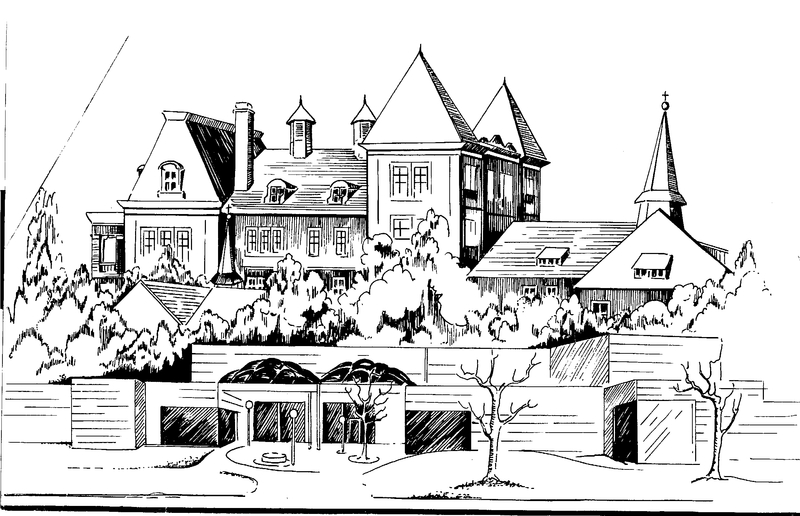
    <summary type="html"><![CDATA[<p><strong><em>In 1850, a group of Ursuline Sisters came to Cleveland from France and quickly became an essential part of Catholic education across Northern Ohio. In 1874, the Ursulines acquired land in Nottingham Village for a new boarding school to be operated by the nuns. Initially housing girls as Saint Mary School, the program grew to include boys as well with the addition of Saint Joseph Seminary. Although both schools have long been shuttered, the educational spirit of the campus lives on at Villa Angela-St. Joseph High School in Cleveland's northeast corner.</em></strong></p><img src="https://mail.clevelandhistorical.org/files/fullsize/effc86693f5c63364ea1ff5b7a53a574.jpg" alt="Sketch of Villa Angela Academy" /><br/><p>In 1850 Bishop Amadeus Rappe traveled to Boulogne-sur-Mer, France, to seek aid from his former colleagues for the Cleveland Diocese. He invited the Ursuline nuns to come to Cleveland to initiate efforts to provide education within the diocese. In August 1850, four sisters traveled to Cleveland and assumed residence in the Samuel Cowles House secured by the Bishop near East Fourth Street and Euclid Avenue. By September, a space was opened to board girls and provide a day school. During the ensuing years, the school expanded in enrollment and the nuns required more space to accommodate growth. The Ursulines began staffing  parish day schools by 1853 and also ventured to Youngstown, Toledo, and Tiffin, Ohio, creating the parochial school system as the community grew in size. Commercial Cleveland was growing and surrounding the school. </p><p>By 1874, reacting to Mother Mary's observations concerning the shrinking downtown facility, Bishop Gilmour determined the conditions on Euclid and Fourth  could no longer adequately serve the students, staff, and program. He urged the Sisters to purchase property on the lakeshore in the village of Nottingham, just east of Collamer Village. Thirty-seven acres of property bounded by Euclid Creek to the east was owned by George Gilbert and was for sale. The Bishop originally sought the land as a site for a diocesan seminary but thought again to urge the nuns to consider the property. They toured the beautiful property, buried religious medals at the site, and prayed for a favorable acquisition of the land. Mr. Gilbert met the offer tendered by the Sisters and completed the sale in June 1874. They named the grounds Villa Angela in honor of their foundress Saint Angela Merici. The Ursulines used the next three years to build a residence and a school for girls called St. Mary School and began classes in September 1878 for boarding and day school enrollees.  </p><p>At the urging of Cleveland’s bishop, the Ursulines opened a school for boys in 1886 on the grounds at Villa Angela. St. Joseph Seminary grew in service to young boys in grades one to eight. In 1892 a new larger building was built to accommodate the boys at St. Joseph; it remained in service until 1946 when a fire destroyed the facility. Interestingly, within five years, the Marionists, a Catholic order of priests and brothers, would open Saint Joseph High School about a mile east of the Villa Angela property on the Lake Erie shore.</p><p>Meanwhile, St. Mary remained a popular residence and day school for girls staffed and managed by the Ursulines. The property housed the schools, a convent for the nuns and open orchard property. In 1906 the Humphrey Company (owners of next door neighbor Euclid Beach) bought 11 acres of Villa Angela property. The real estate proved most profitable and provided ongoing financial support for the Ursuline educational efforts in the community. The historical records show St Mary School was renamed Villa Angela Academy in  August, 1941  as it transitioned to a four year high school which served girls until its merger in 1990 with St. Joseph High School. Villa Angela - St. Joseph High School serves coeducational classes on the lake shore at East 185th Street. </p><p>The original Villa Angela property is currently owned by the City of Cleveland and is the home of the Memorial-Nottingham Branch of the Cleveland Public Library. The surrounding grounds make up part of the system of lakeshore parks on Cleveland’s east and west sides. Villa Angela Beach adjoins Euclid Beach Park and Wildwood Park to provide scenic overlooks, a fishing pier, a sandy beach and boat launch access to Lake Erie.</p><p><em><strong><a href="https://mail.clevelandhistorical.org/items/show/746">For more (including 11 images) view the original article</a></strong></em></p>]]></summary>
    <published>2015-11-11T11:30:26+00:00</published>
    <updated>2026-04-17T19:17:41+00:00</updated>
    <link rel="alternate" type="text/html" href="https://mail.clevelandhistorical.org/items/show/746"/>
    <id>https://mail.clevelandhistorical.org/items/show/746</id>
    <author>
      <name>Jim Lanese</name>
    </author>
  </entry>
  <entry>
    <title type="html"><![CDATA[Waterloo Arts District]]></title>
    <summary type="html"><![CDATA[<img src="https://mail.clevelandhistorical.org/files/fullsize/827d7f05f22f215eb1f66c83f1c7b828.jpg" alt="Pop Life Building" /><br/><p>The stretch of Lake Erie coastline known as Collinwood (original name: Collamer) was once renowned for its lush vineyards. The fertile land proved so hospitable for the cultivation of grapes that in 1870 the area was North America’s largest shipping point for grapes. But agriculture was not Collinwood’s only industry: By 1890 it was a major switching point for the Lake Shore & Michigan Southern (later New York Central and now CSX) Railroad. </p><p>Waves of European immigration—particularly Irish, Italian and Slovenian—fueled Collinwood’s expansion in the early 20th century. Proximate businesses such as Fisher Body, Lincoln Electric, Eaton Axle, and General Electric provided abundant employment. The interior of the Beachland Ballroom on Waterloo Road, originally the Croatian Liberty Hall, pays homage to the neighborhood’s ethnic heritage. Down the street, the Slovenian Workmen’s Home showcases a time when immigrant workers made their way to and from nearby factories and rail yards.</p><p>Tensions began to emerge after World War II, as more and more African Americans moved into Collinwood. A 1946 riot at Euclid Beach Park (which, at the time, excluded blacks) was one of the early red flags. Myriad plant closings, ongoing tensions among students, and predatory tactics of local realtors further undermined Collinwood’s stability, with large numbers of white homeowners leaving the area. </p><p>But new faces were also arriving. In the 1990s, lured by affordable rents, young people started to trickle in. Artists found inexpensive gallery and studio space. Others were drawn to the area’s growing underground music scene. Over time, Collinwood’s identity began to evolve from industry and rail to arts, culture and food & drink. And the epicenter was the intersection of Waterloo Road and East 156th Street. </p><p>Arts programs in Collinwood actually date to the 1960s when funding was provided to help children and adults deal with the community’s race conflicts. But since then Collinwood has further solidified its arts reputation: Waterloo Arts was formed in 2002, using seed money from The Cleveland Foundation. The Waterloo Arts Fest —an annual banquet of food, art, music and other street entertainment—was launched shortly thereafter. In 2004 the Waterloo Arts building opened and now hosts artists’ studios and galleries; a café featuring live music and open mic nights; and an annex for educational programs and performances.</p><p>Music, gallery and public art, street performances and plays along Waterloo Road are now Collinwood’s calling card. Swing dances happen regularly at the Slovenian Workmen’s Home and musical performances with national acts are held almost nightly at the Beachland Ballroom, whose name is a quiet salute to Euclid Beach. The neighborhood also hosts record stores, vintage clothing shops, craft stores, bars, cafes, and a recording studio. Small wonder that Collinwood was named one of America's Best Secret Neighborhoods by Travel + Leisure, or that The Wall Street Journal featured the neighborhood in a story about using the arts to fight blight.</p><p><em><strong><a href="https://mail.clevelandhistorical.org/items/show/712">For more (including 5 images) view the original article</a></strong></em></p>]]></summary>
    <published>2015-06-03T15:06:54+00:00</published>
    <updated>2026-04-17T19:17:40+00:00</updated>
    <link rel="alternate" type="text/html" href="https://mail.clevelandhistorical.org/items/show/712"/>
    <id>https://mail.clevelandhistorical.org/items/show/712</id>
    <author>
      <name>Liza Langdon&amp;#32;&amp;amp;&amp;#32;Chris Roy</name>
    </author>
  </entry>
  <entry>
    <title type="html"><![CDATA[Collinwood High School]]></title>
    <summary type="html"><![CDATA[<p><strong><em>In 1874, a single rail stop was constructed about ten miles east of downtown Cleveland, allowing incoming trains to switch engines before entering the city. The operation quickly grew to accommodate hundreds of trains,  with thousands of workers to form a thriving manufacturing and residential neighborhood. Today, Collinwood remains a blue collar community, with deep ties to the old railyard. Collinwood High School, home of the Railroaders, has served this working community since 1907.</em></strong></p><img src="https://mail.clevelandhistorical.org/files/fullsize/0f11c9b00df3a4c8dffcb28dbc4f0912.jpg" alt="Clark School" /><br/><p>Cleveland, Ohio's northeast corner grew from a railroad stop in the mid 1800's to a vibrant community by the turn of the century. Few people resided in the area until the Lake Shore and Michigan Southern Railroad developed a line to Painesville and Ashtabula and placed stop number 11 in "Frogsville," a swampy area about ten miles northeast of the mouth of the Cuyahoga River along the Lake Erie shoreline. By 1863 twenty families lived in the area bounded by Collamer Village to the south and Nottingham Village to the east. The railroad stop grew from a place to switch engines to enter the central city to a multi-purpose maintenance and railroad switching operation. The railroad expansion in the area brought more population and by 1876, the railroad’s well regarded chief engineer, John Collins gave his name to the settlement. By 1899 the Directory of Collinwood listed its population at 3,237 residents. 
At the turn of the twentieth century the community was responding to a growing need for schools. Originally a one room building on Collamer Avenue (now East 152 Street) and Waterloo Road served the neighborhood children. By 1864, a second red brick school was added serving all grades until 1889. That year, Clark School was built at Saint Clair Avenue and Clark Street (East 147 Street) to accommodate the growing student population. In 1892, Clark High School graduated its first class – one senior.  </p><p>Frank P. Whitney, a recent Oberlin College graduate, was hired as principal for 90 students at Clark. Frank grew up on a farm in Huron, Ohio, and spent two years teaching in the rural village of Wakeman. Following his first year at Collinwood, he rode his bicycle to New York City, boarded a steamer for England and explored English schools via bicycle for the summer. Upon his return he was appointed to lead Collinwood's schools as superintendent where he began to install programs inspired by his visit to English schools.
During this same period, Cleveland experienced its initial wave of central and southern European immigrants arriving to work, live, and settle in ethnic enclaves throughout the city. Collinwood also experienced this phenomenon. The railroad line bisected the village and provided a valuable resource for factory development and transportation access. Areas north and south of the tracks afforded plenty of land to develop residential housing for the immigrant workers. Manufacturers sought inexpensive land adjacent to the rail lines and attracted the needed human resources, first from Cleveland to the west, and later more European immigrants into the developing neighborhood. The abundant construction and factory-style work suited the people who populated the region. The neighborhood mix of residential and industrial space defined the community’s character, it blended the immigrant workforce with the manufacturing boom. Several large corporations established factories to support Cleveland’s manufacturing leadership that emerged during the end of the nineteenth century and the first half of the twentieth century. 
Meanwhile, more students required more space. In 1907, South High School was dedicated on the site where Collinwood High School now stands. During that year, a <a href="https://clevelandhistorical.org/items/show/394">tragic fire at Lakeview School</a> took the lives of 172 students and two teachers. Cleveland annexed Collinwood Village and its schools were added to the Cleveland Public Schools in 1910. Mr. Whitney joined the school district as principal (West Tech), supervisor, and assistant superintendent before returning to his Collinwood "home" in 1926 as principal of the newly built Collinwood High School. During its first year, enrollment reached 3,488 students, Ohio’s largest school at the time. In less than thirty years, the school enrollment alone exceeded the neighborhood's entire resident population.
The neighborhood reached its highest population census between 1930 and 1960. Whitney's influence continued with his leadership through 1941 as the high school thrived with high enrollments, dedicated faculty, and nationally recognized programs featuring health, citizenship, and character education and student guidance. "Railroader" football teams of the 1940s and Lady Railroader track teams of a more recent era, excelled on the track and in the classroom. Honors academics joined numerous extra curricular programs to provide students with Cleveland’s best educational opportunities throughout the new century.
Collinwood continued to reflect developments of the larger Cleveland community. By the 1960s and 1970s, <a href="https://clevelandhistorical.org/items/show/392">racial strife at the high school</a> reflected community tensions. Its mix of people, manufacturing employers, schools, and social climate reflected the rise and fall story of the rust belt urban center and its school challenges.</p><p><em><strong><a href="https://mail.clevelandhistorical.org/items/show/695">For more (including 8 images&#32;&amp;&#32;6 audio files) view the original article</a></strong></em></p>]]></summary>
    <published>2015-03-03T13:41:43+00:00</published>
    <updated>2026-04-17T19:17:40+00:00</updated>
    <link rel="alternate" type="text/html" href="https://mail.clevelandhistorical.org/items/show/695"/>
    <id>https://mail.clevelandhistorical.org/items/show/695</id>
    <author>
      <name>Jim Lanese</name>
    </author>
  </entry>
  <entry>
    <title type="html"><![CDATA[Euclid Beach Park Riot: Violence and the Color Line at Cleveland&#039;s Leading Amusement Park]]></title>
    <summary type="html"><![CDATA[<img src="https://mail.clevelandhistorical.org/files/fullsize/ae8d406be862bd2da867a65be35d430a.jpg" alt="Euclid Beach Park Police" /><br/><p>On August 4, 1946, almost one year after the dropping of atomic bombs on Japan and the end of World War ll, a picket line appeared in front of Cleveland's Euclid Beach amusement park for the first time in its history.  Protesting the park's long-standing policy of excluding African Americans from using the park's roller rink, swimming facilities, and dance hall, an interracial crowd of over 100 picketers, including many uniformed World War ll veterans, held signs reading, "We Went to Normandy Beach Together — Why Not Euclid Beach?" Others compared the park's owner with the recently defeated leader of Nazi Germany: "Hitler and Humphrey believe in super race."</p><p>In the weeks that followed, protests continued and violence broke out. On August 23, Albert Luster, a member of the interracial civil rights group the Congress of Racial Equality (CORE), was severely beaten by Euclid Beach Park policemen. Luster had planned to join an interracial group of ten or so CORE members who, like other groups that summer, sought to test the park's policies by attempting to enter the dance hall together. But he had arrived late to the park; the group had already been roughly ejected from the park by the time he showed up. Park policeman Julius Vago found Luster sitting by himself on a park bench and set upon him with his nightstick in an apparently unprovoked attack. </p><p>Then, on September 21, two black Cleveland police officers scuffled with members of the Euclid Beach Park Police, and Patrolman Lynn Coleman ended up with a bullet in his leg. Coleman and Henry Mackey, off duty at the time, observed an interracial group of CORE members being treated roughly by park policemen as they tried to enter the dance floor. When the two Cleveland Police officers attempted to intervene, a fight ensued and Coleman's gun went off, hitting him in the leg. Other Cleveland Police officers detailed to the park soon intervened. Coleman was taken to the hospital, while the Euclid Beach Police officers involved in the fight, after undergoing questioning at Central Police Station, were released, the Cleveland Police Department opting not to pursue charges against them. The events that night came to be known as the Euclid Beach Park Riot.</p><p>Discussions soon began in Cleveland City Council that would result in the passage, the following February, of an ordinance that explicitly outlawed discrimination at Cleveland's amusement parks. Racial segregation at Euclid Beach seemed to be coming to an end. However, before the start of the 1947 season Euclid Beach leased its roller rink and dance hall to private clubs not bound by the amusement park ordinance.  The bathing facilities in the park closed for good in 1951 after only a few summers of interracial swimming.</p><p>It is no coincidence that the 45-year policy of segregation at Euclid Beach met its most serious challenge in 1946, a year after the end of World War ll.  The war heightened the likelihood of racial confrontations as black and white Clevelanders attempted to define what it would mean for race relations in the city.  After the war ended, many white Clevelanders looked nostalgically to the years before the Great Depression and the war, and hoped to return to what they considered to be normalcy and stability after so many years of disorder. For many white Clevelanders, that meant returning to a racially divided community. Black Clevelanders, on the other hand, had been emboldened by their participation in the war effort — both at home and abroad — and anti-Nazi rhetoric seemed to discredit racist ideologies at home. They sought to solidify gains made during the war and stake a claim to full racial equality in the postwar city.  These differing visions of postwar Cleveland collided at Euclid Beach in 1946. </p><p><em><strong><a href="https://mail.clevelandhistorical.org/items/show/562">For more (including 7 images&#32;&amp;&#32;2 audio files) view the original article</a></strong></em></p>]]></summary>
    <published>2012-09-26T17:55:21+00:00</published>
    <updated>2026-04-17T19:17:39+00:00</updated>
    <link rel="alternate" type="text/html" href="https://mail.clevelandhistorical.org/items/show/562"/>
    <id>https://mail.clevelandhistorical.org/items/show/562</id>
    <author>
      <name>Michael Rotman</name>
    </author>
  </entry>
  <entry>
    <title type="html"><![CDATA[Collinwood School Fire]]></title>
    <summary type="html"><![CDATA[<img src="https://mail.clevelandhistorical.org/files/fullsize/c6bbf892cf5e906323a5d357c3d70a75.jpg" alt="Lakeview Elementary School" /><br/><p>On 4 March 1908, a tragedy occurred that prompted changes in school safety across the United States. About nine o'clock in the morning on March 4, 1908, nine-year-old Niles Thompson jumped out of a window at Lakeview Elementary to escape a fire that had started in the basement of his school. Nearly two hundred children who had also been lucky enough to escape watched as flames engulfed the Collinwood school. Niles frantically ran among his schoolmates, searching for his little brother, Thomas. Once Niles realized his brother was not one of the safe children, he ran back into the school to save Thomas. Neither of the two Thompson boys walked out of their school again. </p><p>Niles and Thomas Thompson were among the 172 children and two teachers who were trapped inside the school and died in the fire. Nineteen of these children could not be identified. That weekend, the entire Collinwood community mourned for those lost.  According to Cleveland's Plain Dealer, "The village seemed to be one vast procession of hearses and carriages. . . . Scarcely did one funeral carriage pass before another came into sight wending its way with its sorrowful burden to the burying grounds. . . . Those who had no dead to mourn stood on the streets watching the grim procession as they passed. There was scarcely a dry eye in Collinwood." The following Monday,  memorial and funeral services were held at Lake View Cemetery for all the victims of the Collinwood school fire. Businesses in the Collinwood neighborhood were closed for the day out of respect for the dead and their families. Lakeview Elementary children that survived served as pallbearers and other Cleveland school children made memorials in the shape of flowers. </p><p>A number of building deficiencies contributed to the fire's start and to so many children getting trapped inside the blazing building. According to the State Deputy Fire Marshal, who investigated the burnt building, the fire began when an overheated furnace ignited exposed dry wood in the boiler room.  Obstruction of a clear pathway to the exits, narrow stairs, and the school's highly flammable structure were blamed for the fire and consequent deaths of so many children. This "awakened the state to action for better protection against fire in schools and public buildings." Following the Lakeview school fire, many changes were made in school building in Cleveland and throughout the country. For the former, these changes included iron stair cases, concrete floors, fireproof coverings for pipes, the placement of doors directly in front of stair cases, and unobstructed doorways. Everywhere in the United States, laws were passed that required enclosed stairwells and special door latches.</p><p><em><strong><a href="https://mail.clevelandhistorical.org/items/show/394">For more (including 7 images) view the original article</a></strong></em></p>]]></summary>
    <published>2012-01-12T20:12:36+00:00</published>
    <updated>2026-04-17T19:17:38+00:00</updated>
    <link rel="alternate" type="text/html" href="https://mail.clevelandhistorical.org/items/show/394"/>
    <id>https://mail.clevelandhistorical.org/items/show/394</id>
    <author>
      <name>Heidi Fearing</name>
    </author>
  </entry>
  <entry>
    <title type="html"><![CDATA[Fisher Body Strike]]></title>
    <summary type="html"><![CDATA[<img src="https://mail.clevelandhistorical.org/files/fullsize/74955f59721a65b41cabd20d106e1bf1.jpg" alt="After the Strike" /><br/><p>The Fisher Body Ohio Company in Collinwood - located on E. 140th Street and Coit Road - began production in 1921.  This new division of General Motors was one of the many industrial plants that emerged and proliferated due to the neighborhood's rail yard and Cleveland lines.  Spread across three shifts, 7,000 employees at Fisher Body worked to manufacture Chevrolet bodies almost exclusively. </p><p>At 2 p.m. on 28 December 1936, approximately 200 workers at the Fisher Body plant abruptly stopped work and staged a sit-down.  Once the news spread of the strike, 125 picketers marched on the street in support of the strike.  The workers gave their demands: They wanted their hours cut to three seven-hour shifts so layoffs could be avoided.  On holidays and Sundays the workers expected to be paid double.  Finally, they wanted the union members who discussed the settlement of their terms be paid for the time they spent negotiating.  However, negotiation proved to be long and difficult The men remained inside Collinwood's Fisher Body for more than a month. </p><p>Other General Motor plants were in the middle of a strike when Collinwood began their sit-down, and others followed.  The situation was severe enough to gain the attention of President Franklin D. Roosevelt. He was not pleased with General Motors' refusal to budge, and the federal government stepped in to see that negotiations began between strikers and General Motors Corporation, which  "account[ed] for about one-twentieth of the economic activity of the United States." </p><p>Finally, on February 12, 1937, General Motors held a conference in Flint, Michigan. The following day a band marched through the streets of Collinwood followed by members of the United Automobile Workers of America union and other Fisher Body employees.  The parade ended at Public Hall where union members voted on the agreement struck between General Motors and the U.A.W.A. </p><p>The loss of $1,800,000 in wages over the six-week period had hit both the families of the strikers and a number of Collinwood businesses hard. In Cleveland, the strike caused the greatest unemployment since 1929; the year of the stock market crash that began the Great Depression. According to the Plain Dealer, "Word of the strike settlement was received with rejoicing by the whole Collinwood district, where many of the strikers live and where merchants had felt the financial effect of the stoppage of thousands of weekly pay envelopes."</p><p><em><strong><a href="https://mail.clevelandhistorical.org/items/show/393">For more (including 8 images) view the original article</a></strong></em></p>]]></summary>
    <published>2012-01-12T19:45:33+00:00</published>
    <updated>2026-04-17T19:17:38+00:00</updated>
    <link rel="alternate" type="text/html" href="https://mail.clevelandhistorical.org/items/show/393"/>
    <id>https://mail.clevelandhistorical.org/items/show/393</id>
    <author>
      <name>Heidi Fearing</name>
    </author>
  </entry>
  <entry>
    <title type="html"><![CDATA[Collinwood High School Riots]]></title>
    <summary type="html"><![CDATA[<img src="https://mail.clevelandhistorical.org/files/fullsize/94f4e6aa64bdc96b8bfd10d1b721d274.jpg" alt="Arresting Students" /><br/><p>On the morning of April 6, 1970, 350 to 400 whites, mostly students, gathered outside of Collinwood High School and began throwing rocks at the school, breaking 56 windows. Teachers told the 200 black students who attended school that day to go to the third-floor cafeteria for their protection. At 10:30 a.m., the white mob entered the school and went to the second floor. They damaged furniture, broke windows, and threw clubs at the school's music director. Afraid, the black students began breaking off the legs of chairs to arm themselves and blocking the stairs leading to the third floor with tables and chairs. Luckily, the white students left the school and the black students were escorted to buses to take them home. Teachers and policemen had to form a line in order to block the whites from attacking the students who were boarding. This was just one of many serious, racially motivated confrontations that took place in Collinwood over a fifteen-year period. </p><p>The first major incidents at Collinwood High School occurred in 1965, the same time the rest of the country was seeing racial clashes in schools. After the Supreme Court ruled that racial segregation in public schools was unconstitutional in the 1954 case of Brown v. Board of Education of Topeka, many schools in the South became places of protests and violence. Northern schools saw the same disturbances when they began to make efforts toward greater integration. In the case of Collinwood, industrialization not only increased its population, but also its diversity. According to a Cleveland Plain Dealer columnist, "with the passage of each year, the western fringes of the Collinwood area [were] being occupied by the Negro overflow from Glenville." This change in demographics, coupled with civil rights demonstrations, caused racial tensions to surface and intensify in Collinwood, particularly at the neighborhood's high school. </p><p>Finally, after fifteen years of violence in the country's schools, radical measures were being taken in some schools and by the federal government to stop the dangerous episodes once and for all. In a New York school, a committee was formed by the mayor to prevent future violence. Other schools suspended or expelled large groups of students for any racial confrontations and hired security force guards to keep the peace. In April 1969, Senator Robert C. Byrd asked Congress to pass a law that would make the disruption of any school that received federal aid a federal crime. </p><p>Cleveland's mayor Carl Stokes was prompted to follow these examples after the dangerous episode of April 1970. The mayor kept the school open but protected it with policemen backed by National Guard units in case a severe situation should arise. Nevertheless, Collinwood High School was still the scene of other racial clashes, the worst occurring in the fall of 1974. Three black students were stabbed in September of that year, and the next month another student was fatally shot by a sixteen-year-old white student. After these disturbing incidents, the racial violence at the Collinwood school began to dwindle.</p><p><em><strong><a href="https://mail.clevelandhistorical.org/items/show/392">For more (including 8 images&#32;&amp;&#32;4 audio files) view the original article</a></strong></em></p>]]></summary>
    <published>2012-01-12T19:20:56+00:00</published>
    <updated>2026-04-17T19:17:38+00:00</updated>
    <link rel="alternate" type="text/html" href="https://mail.clevelandhistorical.org/items/show/392"/>
    <id>https://mail.clevelandhistorical.org/items/show/392</id>
    <author>
      <name>Heidi Fearing</name>
    </author>
  </entry>
  <entry>
    <title type="html"><![CDATA[Collinwood Railroad Yard Strike]]></title>
    <summary type="html"><![CDATA[<img src="https://mail.clevelandhistorical.org/files/fullsize/0053a7b6e27d75d0ecba7410257209f5.jpg" alt="Collinwood Chosen for Stockyards" /><br/><p>On the afternoon of April 10, 1920, 500 workers at Cleveland's largest and busiest rail yard at the time - the Collinwood Railroad Yards and Diesel Terminal - left their work stations and staged a walk-out.  The strike was a result of unresolved grievances against both the yardmen's local workplace and the Brotherhood of Railway Trainmen union.  Collinwood laborers joined with their fellow Cleveland rail workers to form the Cleveland Yardmen's Association, mirrored on the "outlaw" Chicago Yardsmen Association.  The new union vowed to stay away until their demands for wage increases were met.   The fervor of the strike spread, prompting other temporary organizations to form in New York, Pittsburgh, St. Louis, and Kansas City. </p><p>The building of the Collinwood Rail Yards began in 1873 when the Lake Shore and Michigan Southern Railway chose Collinwood to be the location of new stockyards and railway shops.  Collinwood began to grow both in population and in economic success due to its connection with numerous industrial cities and new job opportunities.   It is not surprising, therefore, that the strike severely affected other industries, as well as the citizens of Cleveland and other striking regions.  Dormant freight cars resulted in severe the food and fuel shortages in cities.  Blast furnaces, steel mills, and other plants had to lay off men, and some factories were even reduced to permanently closing because coal and raw materials were no longer being transported. </p><p>The strike was short-lived for the Collinwood workers, many of them returning to work only a few days after their walkout.  By the 21 April, only 35% of New York Central line employees were working. Collinwood's yard, on the other hand, had almost all of its men back, had even hired a few more men to make up for the still absent workers, and was running normally. Collinwood was the exception though. Most railroad workers from both Cleveland and other cities were determined to return to work only if Washington would recognize their new union and if their wage demands were met. The situation was severe enough that government aid was needed to supplement the food and fuel shortages.  President Woodrow Wilson eventually became involved.  The president appointed a Railroad Labor Board which negotiated with official unions and consented to wage increases that July.  The strikes slowly dwindled as men returned to their jobs or were replaced, but the initial huge hit continued to cause problems in the areas where the strikes occurred.</p><p><em><strong><a href="https://mail.clevelandhistorical.org/items/show/391">For more (including 8 images) view the original article</a></strong></em></p>]]></summary>
    <published>2012-01-12T18:50:37+00:00</published>
    <updated>2026-04-17T19:17:38+00:00</updated>
    <link rel="alternate" type="text/html" href="https://mail.clevelandhistorical.org/items/show/391"/>
    <id>https://mail.clevelandhistorical.org/items/show/391</id>
    <author>
      <name>Heidi Fearing</name>
    </author>
  </entry>
  <entry>
    <title type="html"><![CDATA[Cunningham Sanitarium]]></title>
    <summary type="html"><![CDATA[<img src="https://mail.clevelandhistorical.org/files/fullsize/6783c030a5527a09c1ab1f328d002bb0.jpg" alt="Cunningham Sanitarium, ca. 1920s" /><br/><p>Located along the shore of Lake Erie, where Villa Angela-St. Joseph High School now stands, was once the largest hyperbaric chamber ever built.  The Cunningham Sanitarium was an institution that focused on clean-air breathing treatment. It was built in 1928, only eight miles east of the industrial heart of Cleveland, near East 185th Street at 18485 Lake Shore Boulevard. Named after a Kansas City physician specializing in hyperbaric oxygenation (or "tank treatment,")  Doctor Orval J. Cunningham, and funded by Canton-based Timken Roller Bearings Company's owner Henry H. Timken, the Sanitarium's coastal property was chosen because it was aesthetically pleasing. </p><p>Dr. Cunningham based his treatment on the belief that diabetes and cancer are caused by living organisms that fail to grow in the presence of oxygen. Therefore, by increasing the oxygen, the organisms fail to multiply and eventually die off. To do this accurately, Cunningham would sequester his patients in highly oxygenated environments for long periods of time cycled with periods of normal atmospheric conditions. </p><p>The million-dollar facility, engineered by Alois Hauser, chief engineer of Timken Co. at the time, was considered the first "attempt in human history to house people in such a unique structure." After nearly a year of hard labor by the Melbourne Construction Company, the facility opened to the first of its patients on December 1, 1928. No luxury was spared in the the five-story, sixty-five foot, 900-ton sphere. Able to accommodate forty patients at a time, the climate-controlled environment maintained a steady sixty-eight degrees with sixty-five percent humidity. </p><p>Unfortunately, five years after the hospital's opening the depressed financial status of the economy forced Cunningham to sell. Desperate for a buyer, Cunningham offered the institution to his twenty-year-old protégé, James Rand Jr., son of James Rand, president of Remington-Ran New York. The half-million dollar sale took place on September 28, 1934. Renamed the Ohio Institute of Oxygen Therapy, the investment failed to attract patients or an income, and changed hands once again in 1936. Abandoning oxygen therapy and operating as a general hospital, Boulevard Hospital also closed quickly due to financial problems. </p><p>After years of being shuttered and unused, the sanitarium and hospital was sold to the Cleveland Catholic Diocese, which built St. Joseph High School next door and continued to operate the former facility in various ways. Under orders from the U.S. War Production Board, on March 31, 1942, the steel ball was dismantled and scrapped for a mere $25,000 worth of metal weight. In 2009, following its purchase from the Catholic Diocese by the Hospice of the Western Reserve, the former sanitarium hospital met a similar fate, with many of its building materials being salvaged for reuse.</p><p><em><strong><a href="https://mail.clevelandhistorical.org/items/show/378">For more (including 8 images) view the original article</a></strong></em></p>]]></summary>
    <published>2011-12-21T21:53:02+00:00</published>
    <updated>2026-04-17T19:17:38+00:00</updated>
    <link rel="alternate" type="text/html" href="https://mail.clevelandhistorical.org/items/show/378"/>
    <id>https://mail.clevelandhistorical.org/items/show/378</id>
    <author>
      <name>Morgan Choffin</name>
    </author>
  </entry>
  <entry>
    <title type="html"><![CDATA[Euclid Beach Park: Amusements, Rides, and Restrictions]]></title>
    <summary type="html"><![CDATA[<img src="https://mail.clevelandhistorical.org/files/fullsize/c14f60446b249c2dcbd842e349808cff.jpg" alt="Jr. Balloon Race, 1931" /><br/><p>In 1901, Dudley S. Humphrey became the owner of Euclid Beach amusement park, vowing to make the park a respectable, family friendly place for recreation. He had previously run a popcorn stand at the park, though the prevalence of alcohol, freak shows, and gambling under the old ownership did not mesh with his Protestant values. Humphrey's new Euclid Beach, where everything was guaranteed to be "of a highly moral and elevating character," instantly became a success. The park no longer had an admission fee, so one could enjoy a day at the park for little or no money. Streetcar companies introduced single fare service to the park, making getting there cheap and convenient too. Euclid Beach Park proudly touted these new, improved features with the motto: 'One Fare – Free Gate – No Beer.'</p><p><span>Occupying 90 acres of lakeshore property near the Collinwood-Euclid township border, the park grew rapidly under the Humphrey family management to add unique food options, attractions, amusements, and recreational resources for Cleveland’s growing population during the first half of the 20th century. A park railway connected beach and fishing facilities with a dancehall, theatre, and roller skating rink. A Ferris wheel, merry-go-rounds, and a funhouse were among the 157 "spaces and structures" on the park’s map. Rocket cars, roller coasters of all sizes, flying scooters, and "dodgem" cars attracted visitors of all ages as well as the park's arcade. Hundreds of local company and organization picnics filled the Euclid Beach schedule every season. Concerts and political rallies also marked the calendar. All tolled, millions of visitors enjoyed Euclid Beach during the 69 Humphrey management years with some event crowds rivaling the local pro sports gatherings of 85,000 plus.</span></p><p>The Humphrey's vision of Euclid Beach Park, sadly, also involved the strict regulation of African American visitors, who were admitted to the park but prevented from using all of its facilities. These practices culminated in a series of <a href="https://clevelandhistorical.org/items/show/562">protests and violent incidents</a> during the summer of 1946, prompting the mayor to order the park closed a month early. From that point on, the park's dancehall – whose racial policies had been the target of many of the protests – remained closed to the public. Nevertheless, Euclid Beach remained popular in the years after World War II but ultimately closed in 1969. </p><p>Although it has been closed since 1969, Euclid Beach lives on throughout Northeast Ohio in a number of ways. Cleveland Metroparks assumed management of Cleveland’s lakefront parks in 2013. A visit to Wildwood Park, which occupies the site of Euclid Beach amusements and the lakeside beach, now accommodates visitors, boaters, and swimmers in a park setting. In addition, even those too young to have visited the park themselves can still take a ride on the <a href="https://clevelandhistorical.org/items/show/561">rocket car</a>, crunch into an authentic <a href="https://clevelandhistorical.org/items/show/273">Humphrey popcorn</a> ball, hear the quavering cackle of <a href="https://clevelandhistorical.org/items/show/559">Laughing Sal</a>, and enjoy the park's 1910 <a href="https://clevelandhistorical.org/items/show/519">carousel</a>, lovingly restored after being rescued from a shuttered amusement park in Maine, in its new location at the Western Reserve Historical Society in University Circle.</p><p><em><strong><a href="https://mail.clevelandhistorical.org/items/show/82">For more (including 11 images, 2 audio files,&#32;&amp;&#32;1 video) view the original article</a></strong></em></p>]]></summary>
    <published>2010-11-12T15:47:15+00:00</published>
    <updated>2026-04-17T19:17:37+00:00</updated>
    <link rel="alternate" type="text/html" href="https://mail.clevelandhistorical.org/items/show/82"/>
    <id>https://mail.clevelandhistorical.org/items/show/82</id>
    <author>
      <name>Michael Rotman&amp;#32;&amp;amp;&amp;#32;Jim Lanese</name>
    </author>
  </entry>
</feed>
