<?xml version="1.0" encoding="UTF-8"?>
<feed xmlns="http://www.w3.org/2005/Atom">
  <title type="text">Cleveland Historical</title>
  <updated>2026-04-18T02:24:04+00:00</updated>
  <generator uri="http://framework.zend.com" version="1.12.20">Zend_Feed_Writer</generator>
  <link rel="alternate" type="text/html" href="https://mail.clevelandhistorical.org/"/>
  <link rel="self" type="application/atom+xml" href="https://mail.clevelandhistorical.org/items/browse?output=rss2"/>
  <id>https://mail.clevelandhistorical.org/</id>
  <author>
    <name>Cleveland Historical</name>
    <uri>https://mail.clevelandhistorical.org</uri>
  </author>
  <link rel="hub" href="http://pubsubhubbub.appspot.com/"/>
  <entry>
    <title type="html"><![CDATA[Adele von Ohl Parker: The Second Act]]></title>
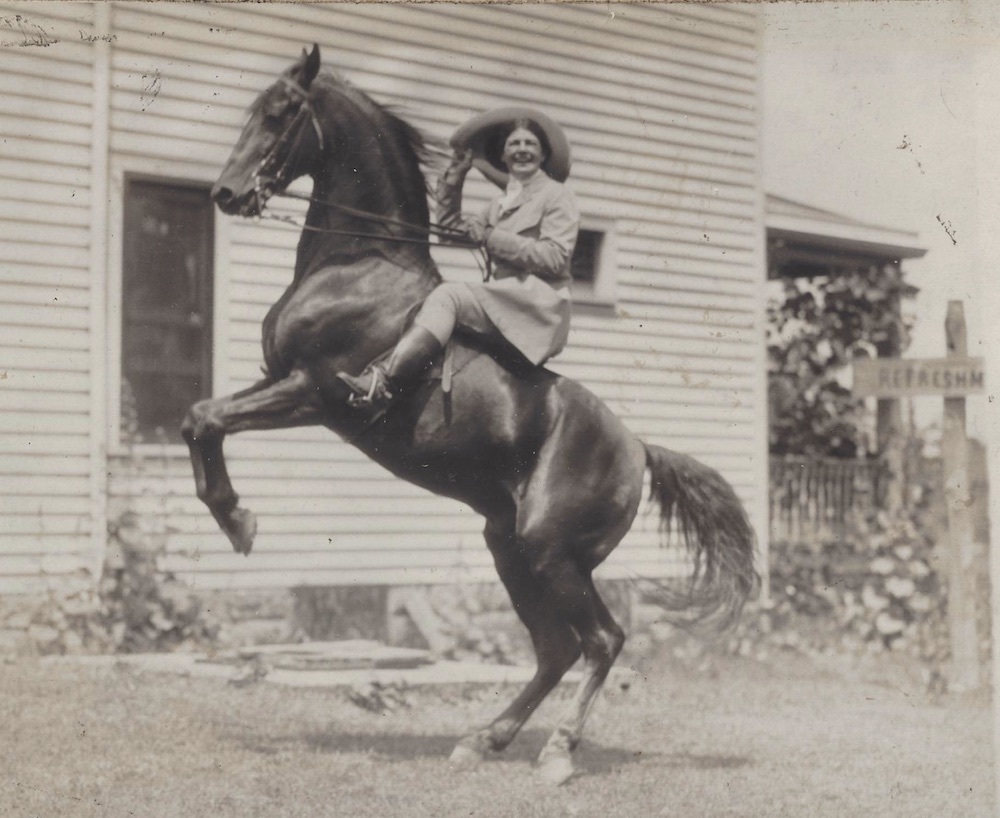
    <summary type="html"><![CDATA[<p><strong><em>"There are many women leading a butterfly's existence who would be glad to go into something worthwhile."</p><p>– Adele von Ohl Parker, Los Angeles, California. Summer, 1916.</em></strong></p><img src="https://mail.clevelandhistorical.org/files/fullsize/b68cb6e8c1a8be0c021f3bb9c2aa9e10.jpg" alt="At home on her North Olmsted ranch" /><br/><p>As World War I raged across battlefields in Europe, Adele von Ohl Parker, nationally known daredevil rider, waged a campaign  in the United States for the creation of a mounted Red Cross to be composed entirely of upper-class horsewomen.  Conscious of the limitations that society placed upon women like herself in the early twentieth century,  she believed that women would rally around her campaign.  She wasn't wrong, but before such a mounted Red Cross could be successfully organized here, World War I came to an end.</p><p>Adele Ohl was born on December 13, 1885, into an upper-class family in Plainfield, New Jersey.  Her maternal Scottish ancestors had operated horse farms there since the early eighteenth century, and were said to have supplied horses to George Washington during the American Revolution.  Adele grew up around horses and learned to ride them expertly at a riding academy in Plainfield that was owned by her grandmother and managed by her mother.  When she was still a teenager, she began doing daredevil tricks with her horse Delmar.  In 1905, after adding back onto her last name the "von" that her paternal German ancestors had dropped when they came to America, nineteen year old Adele von Ohl  appeared at the Hippodrome Theater in New York City. There, riding Delmar, she performed an act in which they plunged off a high platform into a tank of water below. The act caught the attention of the East Coast media, who were quick to label her one of America's most daring woman riders, also noting that Adele did not ride a horse sidesaddle like most women then did, but instead rode astride her horse as men did.  </p><p>Adele von Ohl's act also caught the attention of William "Buffalo Bill" Cody, who hired her in 1907 to perform tricks on horseback for his Wild West extravaganza.  She toured the country with Buffalo Bill's troupe from 1907 to 1909.  In that latter year, she married James Letcher Parker, a bronco rider also performing with Cody's show.  They both left Cody's Wild West for the Vaudeville circuit, appearing over the course of the next two decades in acts with "Wild West" themes, like "Cheyenne Days," "Texas Round-up," and "Rodeo Days."  During this period, Adele Parker also appeared with the Ringling Bros. and  Barnum & Bailey Circus and worked for several years as a stunt woman in Hollywood, appearing in early movies with cowboy star Tom Mix.  In the fall of 1928, Parker traveled to Cleveland, where she was scheduled to appear at Keith's Palace Theater.  Her show, however, was canceled and, as she later said, "I was stranded in Cleveland with two horses and seven cents."  Perhaps she recognized that Vaudeville was coming to an end, and perhaps she also recognized that, at age 42, her daredevil riding days were coming to an end too.  Whatever the reason, she approached A. Z. Baker, President of the Union Stockyards in Cleveland, where her horses were being stabled, and asked him if she could perform an exhibition of daredevil riding at the livestock show that was being held that Fall in downtown Cleveland at Public Hall.  She then used the exhibition to generate interest in a new riding school – the Von Ohl School of Horsemanship – that she decided she would open in Cleveland, a city she believed held promise to become an important equestrian center in the Midwest.  And thus the stage was set for the beginning of the second act of her equestrian career.</p><p>During the years 1928 and 1929, Parker sited her new riding school at various places in the Cleveland area, including the new Equestrium built by the Union Stockyards at 6800 Denison Avenue in Cleveland, and the Armory of Troop A, 107th Cavalry of the Ohio National Guard located in Shaker Heights.  Neither place turned out to be a good fit, and, in the fall of 1929, she moved her school to North Olmsted, Ohio, where she rented six acres of land on the Henry Giesel farm.  (A decade later, she would purchase the land from the Giesel family.)  Located on Mastick Road, just west of Clague Road, it had bridle paths that led down into Cleveland Metroparks Rocky River Reservation, making it an ideal location for a riding school.</p><p>It is not clear exactly when or why the Von Ohl School of Horsemanship became Parker's Ranch, but the "when" was certainly no later than by May 23, 1930, when a short article about a YWCA horse riding event there appeared in the Plain Dealer.  The "why" for the name change may have been a nod to her husband who helped her start the  ranch in North Olmsted,  but then soon thereafter departed.  The two were divorced several years later.  Following his departure,  Adele's brother Percy, a dog trainer, and her sister Winnonah ("Nona"), an animal trainer and talented horseback rider in her own right,  moved onto Parker's Ranch to assist their sister in its operation.  Over time the ranch grew to have some 34 buildings, including four barns which stabled from 60-70 horses, half of whom were owned by the ranch.  The ranch also became home to an assortment of other animals, including cows, donkeys, goats, chickens, rabbits and pomeranian dogs.  According to the 1940 census, the ranch also came to employ a staff of at least ten persons, ranging from secretaries to cooks to handymen to stablemen.  The Plain Dealer, in an article that appeared on June 22, 1930, called it a "dude ranch in industrial Ohio."</p><p>While Parker's Ranch was founded as  a riding school, it soon became much more than that as Adele Parker initiated programs and events at the ranch that focused on children, including disabled children.  Shortly after opening Parker's Ranch, Adele started a day camp for children.  Day camp was inspired by a program she had developed for kids in Los Angeles a decade earlier called "Junior Rough Riders."  Held  every summer for many years,  day camp at Parker's Ranch was  four days each week for an eight-week session.  At day camp, children were not only taught how to ride horses, but also to love horses and how to care for them.  Along the way, they were also taught a lot of life lessons from Parker and her staff.  She also instituted a number of annual events on the ranch, which gave children opportunities to perform on horseback in front of friends, families and neighbors.  One of those events was the annual Mother's Day Show.  Another was the Annual Horse Show.  And, starting in 1959, the fiftieth anniversary of her last year with Buffalo Bill Cody, Parker began a Wild West show of her own, modeling it after Cody's.  Proceeds from the annual Wild West shows, as well as from other events on the ranch, went to the Society for Crippled Children, today known as Easter Seals.</p><p>In addition to the programs, events and other activities at Parker's Ranch, Adele Parker also gave riding lessons at Cleveland's famed Karamu House  to African American children, a number of whom appeared in riding competitions representing Parker's Ranch.    She also  found time to pursue other passions.  She was a talented sketch artist and oil painter.  She also was, in 1961, one of the founding trustees of the Olmsted Historical Society.  Parker continued to appear at Cleveland area events on horseback well into her seventies, performing at her fifth annual Wild West Show in 1963 when she was 77 years old. When Parker died at her ranch on January 21, 1966 from heart failure, the papers reported that she had no surviving family.  And yet they also noted that more than 300 area children had attended her funeral.  These children were part of the estimated 10,000 children in Cuyahoga, Medina and  Summit Counties that she taught to ride at Parker's Ranch during the Second Act of her equestrian career.  In a real sense, they were her surviving family as well as her legacy in northeast Ohio.</p><p><em><strong><a href="https://mail.clevelandhistorical.org/items/show/904">For more (including 15 images) view the original article</a></strong></em></p>]]></summary>
    <published>2020-02-13T19:48:30+00:00</published>
    <updated>2026-04-17T19:17:42+00:00</updated>
    <link rel="alternate" type="text/html" href="https://mail.clevelandhistorical.org/items/show/904"/>
    <id>https://mail.clevelandhistorical.org/items/show/904</id>
    <author>
      <name>Jim Dubelko</name>
    </author>
  </entry>
  <entry>
    <title type="html"><![CDATA[Squire&#039;s Castle: The Gatehouse for an Oil Executive&#039;s Unbuilt Estate]]></title>
    <summary type="html"><![CDATA[<img src="https://mail.clevelandhistorical.org/files/fullsize/802fa2112aa6360464428b239f685e3a.jpg" alt="Squire&#039;s Castle in 1930" /><br/><p>Will all Cleveland-raised residents who have never visited Squire’s Castle please raise your hands! Not too many? We thought so. After all, Squire’s Castle isn’t just one of the Cleveland area’s most picturesque locations; for generations it’s also been a destination for untold thousands of hikers, nature lovers, bird watchers, geocachers, school groups and, yes, history lovers.</p><p>So first things first: Squire’s Castle isn’t (or perhaps wasn’t) Squire’s Castle. It was intended to be the residence for the gatekeeper of a residential estate whose main building was never erected. The structure—which really does look like a small castle—was built in the 1890s by Feargus B. Squire (1850-1932) who was vice president and general manager of the Standard Oil Company. It was the first piece in a grand plan for a 525-acre residential compound to be occupied by Squire and his wife Rebecca. </p><p>Another misconception—beyond the Castle’s role as Squire’s actual residence—is that the place is haunted. Urban (or perhaps, “rural”) legend has it that Rebecca Squire tripped and broke her neck in the home, and thus survives as the structure’s only supernatural resident. Not true: She died of a stroke in Wickliffe, Ohio, in 1929, five years after the Castle property was sold. </p><p>Here, then, is what’s real. Wealthy and somewhat reclusive, Feargus Squire came to Cleveland from Exeter, England in 1860. He and his wife subsequently lived in New York and Baltimore before returning to Cleveland. Squire joined Standard Oil of Ohio in 1885 as co-manager with Frank Rockefeller, John D. Rockefeller’s brother. Squire is credited with building the first tank wagon for oil shipment. The family lived on Prospect Avenue and later on Euclid Avenue’s Millionaire’s Row at East 78th Street. </p><p>Attracted by the beauty of the Chagrin Valley, Squire purchased 525 acres there in 1890. His plan was to erect two buildings in the style of English or German baronial halls. The existing structure (which the Encyclopedia of Cleveland History describes as “a picturesque castellated and turreted ruin”) was erected to serve as a gatehouse and caretaker’s quarters. The Castle is constructed of silt stone (also known as Euclid bluestone) which was quarried in the area that is now the Cleveland Metroparks’ Euclid Creek Reservation. </p><p>Squire planned to call his domain “River Farm Estate” and he aggressively began improving it with groves of new trees, roads, bridges and ponds, including the body of water we now know as Sunset Pond, nearly two miles from the Castle. The main residence, however, was never constructed, largely because Rebecca Squire hated the idea of country living. Squire thus built Cobblestone Garth, a massive estate in Wickliffe, OH, where he later served as mayor.</p><p>In 1922 Squire sold the Chagrin Valley property to a private developer. It was acquired by the Metropolitan Park Board in 1925—becoming, in effect, the cornerstone of what is now the North Chagrin Reservation portion of the Cleveland Metroparks. It was then that locals began calling the abandoned gatehouse “Squire’s Castle.”</p><p>Before and after the Wickliffe move, Squire often used his Castle as a weekend retreat, although his daughter Irma was far more likely than his wife to accompany him. The place was more than commodious, with several bedrooms, living areas, a large kitchen and a breakfast porch. Squire’s library (the Castle’s western-most room) was filled with books, mementos, paintings and trophy cabinets, as well as stuffed animals, hides and horns (souvenirs from his myriad hunting expeditions). All of the Castle’s rooms had white plaster walls and elegant woodwork. Leaded glass windows looked out on the property. </p><p>Nowadays, the Castle is essentially a stunning and well-maintained shell. The interior is bare and open to the elements. In response to damage by vandals and the need for safety, all of the Castle’s doors, flooring, fixtures, window glass and woodwork have been removed. A basement also has been filled in. Standing inside, you can clearly see the iron struts that once supported the second and third stories. Also visible on some windows are the mounting holes that held leaded glass windows. Several descriptive plaques are the walls’ only adornment. </p><p>Squire’s Castle still sits grandly on a slight rise just west of Chagrin River Road in Willoughby Hills. Its front yard is a huge grassy field. Its back yard is a mountainous incline ribbed with walking paths. Views from literally every window frame are spectacular. Hiking trails abound. Woodstock could be comfortably re-staged on the property’s massive open spaces. Given these attributes, it’s no wonder that Squire’s Castle reigns as one of northeast Ohio’s most popular spots for weddings, picnics, hikes, reunions and, on occasion, the weaving of urban legends. </p><p><em><strong><a href="https://mail.clevelandhistorical.org/items/show/836">For more (including 14 images) view the original article</a></strong></em></p>]]></summary>
    <published>2018-05-29T21:09:09+00:00</published>
    <updated>2026-04-17T19:17:41+00:00</updated>
    <link rel="alternate" type="text/html" href="https://mail.clevelandhistorical.org/items/show/836"/>
    <id>https://mail.clevelandhistorical.org/items/show/836</id>
    <author>
      <name>Chris Roy</name>
    </author>
  </entry>
  <entry>
    <title type="html"><![CDATA[Cleveland Lakefront Reservation: The Long Struggle to Maintain the City&#039;s Lakefront Parks]]></title>
    <summary type="html"><![CDATA[<img src="https://mail.clevelandhistorical.org/files/fullsize/679dd9b50e9291e954a7c85e132098bd.jpg" alt="Edgewater Beach and Skyline" /><br/><p>Since 2013 Cleveland’s lakefront parks have been run by the Cleveland Metroparks. Before the Metroparks assumed administration of the parks, the state of Ohio operated them as units of the Cleveland Lakefront State Park, and before that the city of Cleveland’s Board of Park Commissioners controlled these parks. It was a long road of pollution and vandalism that led to Metroparks control over the lakefront parks. Each previous administration started out with a good budget and short-term plans for the lakefront parks, but long-term maintenance issues ultimately undermined each administration’s stewardship of the parks. </p><p>The urban park movement came rather late to Cleveland, emerging in September 1865 when a city council committee was appointed to consider the establishment of public parks. Finally, after new state laws were enacted, in 1871 Cleveland’s Board of Park Commissioners was created. In 1874 the park board began selling park bonds to finance land acquisition and improvements to create several parks, including Lake View Park. This park stood on the natural bluff overlooking the Lake Erie until Municipal Stadium (later replaced by today’s FirstEnergy Stadium)—built on fill that extended the lakeshore northward—blocked the view. Cleveland’s parks started to take shape over the next ten years through various donations, but they lacked in comparison to park development in other cities with populations similar to Cleveland’s, and with growing urbanization it seemed that the city was running out of land to set aside for parks. Various state legislation led to an increase in park power, and by 1900 Cleveland would gain ten new parks totaling over 1,200 acres, approximately two thirds of which had been donated. Finally a good amount of Cleveland’s lakefront had been saved for parks and conservation in <a href="https://clevelandhistorical.org/items/show/121">Edgewater Park</a>, <a href="https://clevelandhistorical.org/items/show/143">Gordon Park</a>, and <a href="https://clevelandhistorical.org/items/show/996">Lake View Park</a>.</p><p>With so much newly acquired land, the park system started to struggle with the biggest problem that would plague the lakefront. Even the bonds the park commissioners sold could only be used to purchase new lands, not maintain them. Through the first twenty years of the 1900s, multiple public works projects were completed to appease the residents who claimed the city only opened parks away from the urban center. Cleveland’s combined storm water sewage system was also being completed at this time and the water treatment plants sat basically at the edge of Edgewater Park and Gordon Park. On most days the water treatment plant could do its job but with heavy rain, Cleveland’s sewers combined storm water and sewage, dumping the sludge into Lake Erie. </p><p>As in other cities, Cleveland’s parks would serve as a major focus for WPA workers during the Great Depression, but as people left for World War II, vandalism struck the lakefront parks. Continually the parks’ budget got smaller and smaller, not to mention that the Memorial Shoreway sliced through most of the lakefront parks by the 1950s. A series of Cuyahoga River fires culminated in national attention to Cleveland’s growing water pollution problem by 1969. Although the federal government passed the Clean Water Act of 1972, leading to gradual improvements in water quality, little progress was made in curbing the pollution problem in the lakefront parks. No longer able to keep up its coveted park system Cleveland was once so proud of, the city signed a long-term lease with the Ohio Department of Natural Resources, making Edgewater, Gordon, and Wildwood Parks part of a new Cleveland Lakefront State Park.</p><p>The new state park lasted until 2013. The state put together a 100-year plan for the state of the Lakefront Park in 1984, implementing facilities for fishing, boating, swimming, and picnicking and day-use facilities at all designated park areas, but it was only loosely followed over the ensuing years. The main area of attention was cleaning the polluted waters and lakefront which had become a virtual dumping ground. The lakefront continued to change when newly elected mayor Michael White proposed several different projects two years before Cleveland’s bicentennial in 1996. The plan, dubbed North Coast Harbor, included a new science center, an aquarium, and many improvements to the port included a new Regional Transit Authority (RTA) waterfront rapid line. The plan, totaling more than $285 million, promised to make the Cleveland Lakefront State Park Ohio’s most visited state park.</p><p>Although the plan was only partially realized, the lakefront still saw heavy use and, unfortunately, slipping maintenance. As one city council member described in 2004, the parks had become overgrown, the beaches littered with debris, and public bathrooms in deplorable shape. The state simply did not have the funding after cuts, and residents started discussing giving control to the Cleveland Metroparks. Over the next decade it became clearer through the continued pollution that a change was direly needed. After the Clevleand Metroparks assumed stewardship of the parks from the state in 2013, the city gave the Metroparks $15 million for cleanup and upgrades. The Cleveland City Planning Commission, along with the Cleveland Metroparks, put out a waterfront district plan in 2014 to decide the future of the area. The best fit for the lakefront parks seems to be control by a dedicated parks organization committed to long-term conservation. Cleveland Metroparks has answered the call.</p><p><em><strong><a href="https://mail.clevelandhistorical.org/items/show/796">For more (including 9 images) view the original article</a></strong></em></p>]]></summary>
    <published>2017-05-13T21:56:04+00:00</published>
    <updated>2026-04-17T19:17:41+00:00</updated>
    <link rel="alternate" type="text/html" href="https://mail.clevelandhistorical.org/items/show/796"/>
    <id>https://mail.clevelandhistorical.org/items/show/796</id>
    <author>
      <name>Connor Kenney</name>
    </author>
  </entry>
  <entry>
    <title type="html"><![CDATA[Dunkleosteus : Hunting Prehistoric Monsters in the Cleveland Metroparks]]></title>
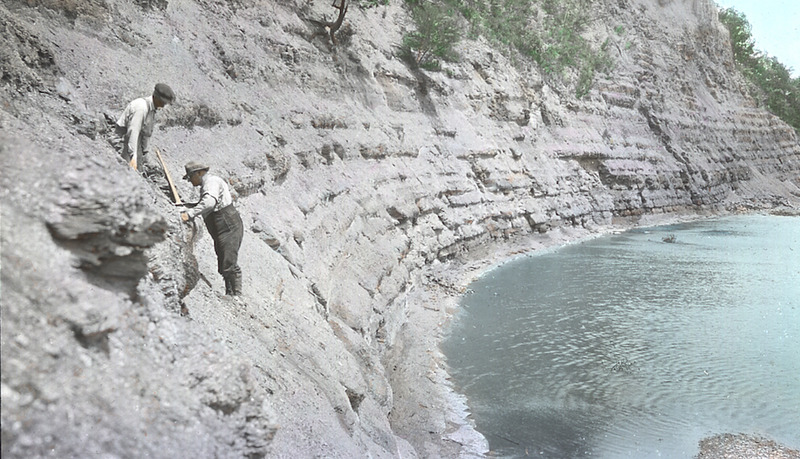
    <summary type="html"><![CDATA[<p><strong><em>Buried in the shale cliffs of Cleveland Metroparks Rocky River Reservation, the bony armor of a prehistoric monster was uncovered by the Cleveland Museum of Natural History in 1928.  The discovery of these fossilized remains, along with the subsequent amassing of Devonian era specimens from the Cleveland Metroparks, helped set the stage for the museum to emerge as a prestigious scientific institution.</em></strong></p><img src="https://mail.clevelandhistorical.org/files/fullsize/4b01d68612c57d64887d4453464ccc7c.jpg" alt="Excavation of Dunkleosteus terrelli, 1928" /><br/><p>Dragged silently downward by the weight of its armored head, the <em>Dunkleosteus terrelli’s</em> lifeless body disappeared into a murky cloud rising from the sea floor.  A death shroud of mud and freshly deposited sediment encased the remains.  As the body disintegrated in the stagnant oxygen-starved environment, organic chemicals were released into the surrounding ooze and triggered the formation of a casing around the decomposing matter. Sediments continued to accumulate above the remains. Pressure and chemical reactions turned the muds into shale, and the concretion to stone. The <em>Dunkleosteus</em> lay entombed for over 360 million years, when the clinks of a pick against stone rejoined the fearsome predator with the living world in the summer of 1928.  </p><p>This was no happenstance reunion; Peter Bungart and Jesse Earl Hyde of the Cleveland Museum of Natural History had been hunting sharks and armored fish in the Cleveland Metropolitan Park System for almost six years.  Walking along the river’s edge in the Rocky River Reservation, the intrepid duo observed a curved shape in the shale nearly 20 feet above them.  Bungart, a paleontologist, scaled the steep wall and wielded the tool of his trade.  A bone of the <em>Dunkleosteus</em> was found.  With permission of the Park Board, they returned ten days later to excavate the prehistoric monster. Its ancient tomb was carved from the cliff, and lowered to the bank of the Rocky River in 300 pound chunks. The solidified remains of primeval mud, ooze and petrified bone were transported to the Cleveland Museum of Natural History’s headquarters on East 9th Street and Euclid Avenue.</p><p>Bungart patiently chipped away at the stone in the basement of museum headquarters for nearly eight years. Armed with a dental drill, hammer, chisel, and blow torch, he released the <em>Dunkleosteus</em> from its encasement. With equal perseverance, the flattened remnants of the warrior fish were reshaped and the prehistoric puzzle was pieced together.  Only the bony armor comprising the predatory placoderm’s skull survived, but Bungart’s reconstruction was still the largest and most complete non-composite representation of the <em>Dunkleosteus terrelli</em> species  in the world.  Following the discovery of the armored fish by Ohio geologist Jay Terrill in 1867 along the shale banks of Cove Beach in Sheffield Lake, fossilized remains of the <em>Dunkleosteus</em> had been displayed at prestigious institutions such as the British Museum and the American Museum of Natural History in New York. Bungart’s monster, culled from the rocks of the Rocky River Reservation, became the first distinguished fossil fish specimen of the Cleveland Museum of Natural History.</p><p>   </p><p>The frightening vision of prehistoric life not only helped accredit the Cleveland Museum of Natural History as a relevant scientific institution, but presented a means for the new museum to promote its mission of public education. Imaginations in Cleveland had long run wild over the vicious fish that thrived in the region during the Devonian Period. Similar to its massive dinosaur successors, exhibition of the attention-grabbing skull discretely passed on scientific knowledge to curious museum visitors. Without a whisper, the peculiar depiction of ancient life inspired awe while evoking questions about geology and evolution.   </p><p>The petrified bones also helped validate the need for conservation and preservation of land within the Cleveland Metropolitan Park System. The taxes of Clevelanders were being funneled to the development of parks on the outskirts of the city, necessitating regular illustrations of the undertaking’s public benefits. The budget and efforts of the Park Board, however, were focused on the acquisition and development of land during these formative years.  Providing civic institutions such as the Cleveland Museum of Natural History access to parklands for field work and educational programming was paramount to inscribing value into the landscape. </p><p>Until the 1950s, the Cleveland Museum of Natural History took the lead in developing educational programming and performing scientific research in the park system. Fossil hunting expeditions continued, and the museum soon amassed a world-renowned collection of Devonian fish fossils. Both Big Creek and Rocky River Reservations proved to be incredibly fertile grounds for unearthing long-hidden vestiges of armored fish and sharks. Even as the museum’s collection expanded in size and diversity, the vicious predator <em>Dunkleosteus terrelli</em> remained the most famous of the prehistoric placoderms.  The Cleveland Museum of Natural History continues to maintain its notable collection of specimens, one of which is displayed in Kirtland Hall on museum grounds.  The cast of a <em>Dunkleosteus</em> skull, accompanied by a model representation of the armored fish in its horrifying entirety, can be viewed at the Cleveland Metroparks Rocky River Nature Center.</p><p><em><strong><a href="https://mail.clevelandhistorical.org/items/show/728">For more (including 13 images&#32;&amp;&#32;3 audio files) view the original article</a></strong></em></p>]]></summary>
    <published>2015-08-02T01:44:05+00:00</published>
    <updated>2026-04-17T19:17:41+00:00</updated>
    <link rel="alternate" type="text/html" href="https://mail.clevelandhistorical.org/items/show/728"/>
    <id>https://mail.clevelandhistorical.org/items/show/728</id>
    <author>
      <name>Richard Raponi</name>
    </author>
  </entry>
  <entry>
    <title type="html"><![CDATA[Frostville: Resurrecting the Ghosts of a Rural Past in Suburban North Olmsted]]></title>
    <summary type="html"><![CDATA[<img src="https://mail.clevelandhistorical.org/files/fullsize/d6fdd3017157418674b5c5248ee4da98.jpg" alt="Rocky River Valley" /><br/><p>Awakened from the grave on a chilly October evening in 1975, the ghostly manifestation of Western Reserve pioneer Thomas Briggs greeted trespassers at the Frostville Museum complex in Cleveland Metroparks Rocky River Reservation with scowls and threats of retribution over the displacement of his beloved home. Brave tour leaders steered visitors towards the not-quite-living history exhibition of Briggs’s partially renovated residence, regaling them with details from letters penned by the phantom docent. The writings, compiled by the Olmsted Historical Society, recounted the labors involved in constructing the home and the settler’s joy upon its completion. The specter could have shown a bit more gratitude; the house was previously slated for demolition but had been rescued by the historical society. With funds scraped together by hosting events such as annual antique auctions, members had managed to relocate a 20 x 40 foot section of the 139-year-old home from Lorain Road in North Olmsted to museum grounds in 1969. Efforts to restore the Greek Revival style building in accordance with its original design were well underway. The sturdy home’s new neighbors included a farmhouse erected in 1877,  a small storage shed containing a horse-drawn hearse, and a recently constructed barn that displayed farm tools and a vintage fire engine.   The tiny pioneer village of Frostville was slowly being assembled within the rural terrain of the Cleveland Metroparks system. </p><p>Since the allocation of Frostville's grounds for use as a public museum in 1962 by Cleveland Metroparks, a handful of Olmsted Historical Society members stationed out of a farmhouse worked tirelessly to resurrect ghosts of the region’s earliest European and American settlers.  The group was founded in 1953 as the North Olmsted Historical Society. Its members were not alone in their efforts to unearth a world whose demise was symbolized by highways and generic housing stock. In North Olmsted, and across the United States, the changes wrought by suburbanization spurred the establishment of organizations dedicated to preserving relics of local history.  By the end of the postwar suburban boom, Cuyahoga County had no less than 28 historical societies devoted to conjuring up the restless souls of a distant—and often imagined—past.</p><p>This post–World War II era marked the beginning of rapid change in North Olmsted and its surroundings, and it offers the backdrop for the historical society's invocation of the Briggs ghost. Across the United States, urban sprawl and suburbanization transformed the character and landscape of small communities situated outside urban centers.  Consumer spending that had been restrained during the Great Depression and World War II was unleashed. Demand for homes and consumer goods skyrocketed. </p><p>A slight complication quickly came to light. The construction of new housing had been at a relative standstill in an economy marked by rationing. The public not only had freshly available reserves of money, but Depression-era federal policies offered Americans greater access to affordable, long-term loans. The passage of the G.I. Bill further encouraged home ownership among veterans through a guarantee of low interest mortgages that did not require a down payment. In 1946, the United States Senate estimated that over three million homes were immediately needed to meet consumer demand. America was amidst a housing crisis.</p><p>As postwar manufacturing switched back to the production of consumer goods, a burgeoning automobile industry stimulated home building in places such as North Olmsted. The annual production of cars in America grew from 70,000 in 1945 to over two million the following year. This output rose to over 3.5 million by 1947. To accommodate the new surplus of cars clogging the roadways, vast sums of federal and state funding were allotted to the construction of highway infrastructure during the 1950s. The outmigration of Cleveland residents to the suburb of North Olmsted centered along Lorain Road, which provided a fairly direct route between the cities. The opening of the Ohio Turnpike to traffic in 1955 further accelerated the growth of residential and commercial development in the region.  </p><p>With demand for housing compounded by new transportation networks into and out of cities, construction in suburbs flourished. The grounds that once sustained North Olmsted’s farming community were quickly subdivided and dissected with roads. Barns disappeared from the horizon. In their place, neighborhoods were platted and quickly erected using contemporary construction methods. Feeding the building frenzy, North Olmsted—declared a city in October 1951—witnessed an influx of new residents. A 1950 population of approximately 6,600 residents, which had nearly doubled during the prior decade, increased to over 16,000 by 1960. The trend continued, and the population reached almost 35,000 ten years later.  Both commercial activity and the infrastructure of the city grew in turn.  Notably, the late 1950s saw the beginnings of what would become the Great Northern Mall. The shopping complex helped transform North Olmsted into a regional retail center.  </p><p>Suburban growth also left a wake of destruction in its path. Long-standing structures were regularly razed to make way for residential, commercial and retail developments. Open lands previously used for farming, greenhouses, and hunting disappeared. New settlers couldn’t entirely be blamed for vestiges of the past vanishing from the landscape. Time had taken its toll on many of the region’s oldest buildings, necessitating either demolition or the pouring in of funds for rehabilitation. Countless structures had grown decrepit through years of owner neglect or abandonment. The oldest buildings that remained in the increasingly suburban landscape, however, took on new meaning. They came to symbolize the community’s rural past. In North Olmsted, the death knell for idyllic rural society was countered by the historical society's efforts to salvage physical representations of the past.</p><p>The village of Frostville was a response to the changes brought on by suburbanization;  the historic enclave was born from an endeavor by the North Olmsted Historical Society to prevent the demolition of a vacant home standing within the Rocky River Reservation. The aged farmhouse sat on land purchased by the Metropolitan Park Board in 1925.  The homestead was maintained as a rental property until the 1950s, despite not having electricity or indoor plumbing. The historical society rallied upon learning of the building’s imminent doom, and incorporated as a non-profit association in 1961. The Cleveland Metropolitan Park Board agreed to spare the structure for use as a public museum and cultural center, even though policies enacted during the 1950s curtailed the allocation of park lands for exclusive use by private groups.  </p><p>The relationship between the two organizations was forged on common ground. The Park Board was also reeling from the unsettling impact of suburbanization, and searching for ways to promote preservation and conservation of its lands. By the mid 1950s, parking lots in the Metropolitan Park system overflowed with cars during the summer months. Lines formed at picnic areas for use of grills and public amenities, and the many pairs of feet trampling through green lawns were decimating the flora and eroding the soil. The ever-present threat of environmental degradation escalated as increased populations settled adjacent to park land, especially in connection with the pollution of rivers, creaks and streams. By the late 1950s, park director Harold W. Groth expressed concern that there were “too many people for too little land.” Nature wasn’t being given a chance to recover from the seasonal onslaught of humans. For the first time in its history, the Park Board found it necessary to deviate from the original Metropolitan Park system plan. A proposal was published in 1961 recommending an 8,400 acre park expansion project. Land for the Bradley Woods Reservation in North Olmsted and Westlake was acquired by 1962 to help alleviate overcrowding at Rocky River Reservation and Hinckley Reservation.  </p><p>Just as the Park Board tirelessly worked to recreate an idealized representation of the region’s lost natural environs through landscaping, the North Olmsted Historical Society labored to materialize an interpretive memory of the suburb’s frontier past. As an affiliate of the Park Board, the historical society took on the financial responsibilities of running and maintaining the on-site museum. The farmhouse—known as the Prechtel House—was remodeled, painted, vanquished of bees, and connected to the electrical grid. Descendants of Olmsted Township's earliest settlers donated antiques to furnish its interior. The homestead was named Frostville to commemorate the area’s first post office, which opened in 1829 at the home of Dr. Elias Carrington Frost. The museum was officially opened to the public as part of North Olmsted's sesquicentennial anniversary celebration in 1965. During these early years, the scope of the society’s mission broadened to encompass the historic preservation of the entire original township. The organization’s name was trimmed to Olmsted Historical Society in 1968.</p><p>Guided by Olmsted Historical Society's vision for recreating a small village representative of 19th-century life in Ohio, Frostville steadily grew and took shape as a living history museum.  In 1976, a one-room cabin built during the mid 1830 was placed in the company of the Prechtel House and Briggs House.  A two-story federal style home known as the Carpenter House, which was also erected during the 1830s, was transported to Frostville in 1987. A church dating back to the mid-1800s was relocated to the homestead in 2005, and was soon joined by a carriage house traced to North Olmsted’s first settler. The restoration process for each historic building was long and costly, with many a rummage sale, haunted house, and auction held to acquire necessary finances. Additional structures built on-site included a general store, an events barn, a workshop, and a display barn. All the while, the historical society continued to curate a collection of antiques representative of the region’s history. In 2017 the Olmsted Historical Society constructed a one-room schoolhouse and hoped to rebuild a detached summer kitchen annex of the Carpenter House. </p><p>After over half a century in operation, Frostville is no longer haunted by the ghost of Thomas Briggs during the Halloween season. The turmoil created by the rapid suburbanization of North Olmsted in the 1950s and 1960s subsided. The rush of newcomers slowed to a crawl; the population peaked in the 1980s at over 36,000 residents, and proceeded to decline. While traces of the region’s agricultural past have all but disappeared from the city's landscape, members of the historical society continue their efforts to keep the past alive at the museum complex. Visitors to the living museum in Rocky River Reservation are invited to surround themselves in a world pieced together through the research. physical toil, and craftsmanship of Olmsted Historical Society members. By curating an environment illustrative of 19th century Americana, the village of Frostville offers park-goers a physical link and sense of continuity with the bygone days of Olmsted Township's earliest settlers. </p><p><em><strong><a href="https://mail.clevelandhistorical.org/items/show/724">For more (including 12 images) view the original article</a></strong></em></p>]]></summary>
    <published>2015-07-27T02:39:51+00:00</published>
    <updated>2026-04-17T19:17:41+00:00</updated>
    <link rel="alternate" type="text/html" href="https://mail.clevelandhistorical.org/items/show/724"/>
    <id>https://mail.clevelandhistorical.org/items/show/724</id>
    <author>
      <name>Richard Raponi</name>
    </author>
  </entry>
  <entry>
    <title type="html"><![CDATA[Scenic Park: Stuntmen and Spirits on the Rocky River]]></title>
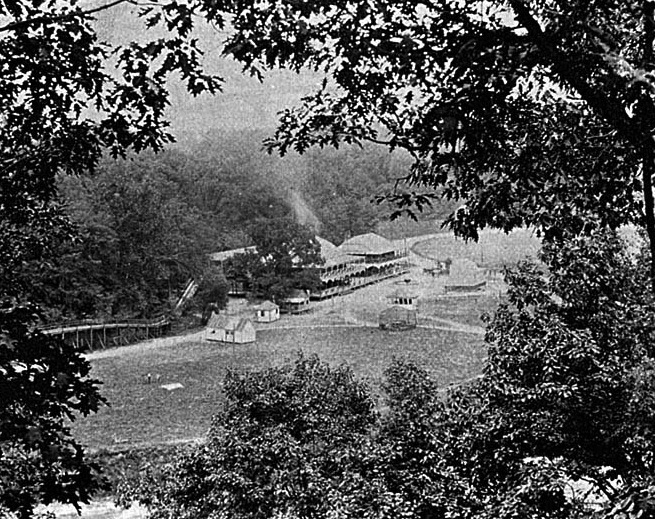
    <summary type="html"><![CDATA[<p><strong><em>Scenic Amusement Park had it all - dancing, rides, recreation grounds, theater and beer gardens. While a favorite destination of Clevelanders, not everyone approved of the frivolity offered at the park.</em></strong></p><img src="https://mail.clevelandhistorical.org/files/fullsize/dc407b25461930dd69c53608ae6ae506.jpg" alt="The Pleasure Grounds of Scenic Park" /><br/><p>In the spring of 1903, the management of Scenic Amusement Park hired surveyors to study possibilities for overcoming the watery divide separating Lakewood and Rocky River. A scheme had been concocted to unite the two suburbs.  On the land that now comprises Cleveland Metroparks Scenic Park, surveyors formulated plans for a multichannel chute to span the width of the Rocky River.  Even though Scenic Park was the leading amusement park west of Cleveland, it was feared that the resort’s continued profitability hung in the balance of completing construction of the newest attraction.  Park management, however, had no intention of erecting a new stomach-dropping toboggan ride; one passage in the chute would transport boxes of cash to Rocky River, while the neighboring duct accommodated a dumbwaiter large enough to convey glasses of beer and liquor to Scenic Park's German Village in Lakewood. Far from being the most exotic diversion, it was assured to become a favorite park-destination for Cleveland’s working class.   </p><p>The proposed engineering feat infuriated an outspoken contingent of Lakewood residents; the village had been voted dry in November of the prior year.  Since its official opening in 1895, the popular amusement park drew the ire of many living in the surrounding community.   Grievances had been lodged with local law enforcement claiming that park management evaded Blue laws by offering music, sporting events, and alcohol on Sundays.  Rumors were abound that a not-so-secret drinking establishment was hidden away in the woods, and that it operated on the Sabbath.  Newspapers provided accounts by anti-saloon league members of fights, lewd comments, rowdyism, and inebriated women sitting on the laps of men.  It wasn't just the careless commingling of limbs that concerned Lakewood residents. Chartered in 1889 and incorporated as a village in 1903, Lakewood was experiencing growing pains.  The village’s potential as a prosperous suburban enclave laid in forging its identity as a residential community - a vision pitted in opposition to the urban character of amusement parks.</p><p>Drunken crowds and unruly behavior were nothing new along the shores of Lakewood. Scenic Park was the last vestige of pleasure gardens designed to attract Clevelanders and potential new residents to the undeveloped grounds in the late 1860s. Located at the picturesque confluence of the Rocky River and Lake Erie, the Clifton Park Association acquired and developed lands abutting the lakeshore and east river bank; the estate touted picnic grounds, bathing beaches, beer gardens, rental boats, a dance hall and hotel. The Rocky River Railroad was laid out in 1869, connecting the retreat with the burgeoning city to the west.  Liquor and beer flowed freely at the resort, as evidenced by the carnage of wrecked buggies leading away from the park on Detroit Avenue.  While a popular destination, the seasonal nature of the recreation grounds could not adequately sustain their operation. Land used for the dummy railway was eventually absorbed for commercial use by the Nickel Plate Railroad in 1881, and the hotel succumbed to flames the following year.  With accommodations and access to the pleasure garden limited, the Clifton Park Association invested little in maintaining or developing the land during the next decade.</p><p> It was waiting game for the land speculators, but their patience paid off.  In 1893, the Detroit Avenue streetcar line was opened by the Cleveland City Railway Co.  The hamlet of Lakewood was immediately accessible for settlement by city dwellers. The Clifton Park Association subdivided their real estate in anticipation of growth. Lakefront property was dedicated to high-end residential development; the rugged bluffs and flood-prone terrain along the Rocky River were slated to become a new type of recreation grounds. </p><p>Across the United States, both landholding and traction companies were investing in the development of amusement parks.  Private parks and picnic grounds in bucolic locals were enclosed and transformed into spaces for public recreation on the outskirts of every urban center by the late 1890s.  Landholding companies, such as the Clifton Park Association,  invested in amusement parks to draw people into the suburbs; additionally, they could lease their undeveloped properties to park operators. Most commonly, these new recreation grounds were built and run by traction companies. It was a wise investment.  Nothing promoted streetcar ridership during the summer more than amusement parks. As further incentive, the excess generating capacity of streetcar companies could be used to power lights and rides at parks located near the end of trolley lines. The Cleveland City Railway Co., leased the park grounds from the Clifton Park Association, and struck gold with the opening of Scenic Park.  Within weeks of the park’s formal opening, the Detroit Avenue streetcar line was overrun by throngs of Clevelanders wishing to breathe in the fresh air and wander through the charming mechanized wonderland. </p><p>Despite the characterizations presented by proponents of temperance, there was much more to Scenic Park than its beer gardens.  The amusement park offered dancing and theater pavilions, a half mile racing track, baseball and recreation grounds, picnic groves, merry-go-rounds, a playhouse for light opera and vaudeville, two boathouses, boat rentals, a Ferris wheel, shooting galleries, an Old Aunt Sally, shoot-the-chutes, swings, and restaurants. Thousands of electric lights illuminated the rustic scenery, lending an attractive backdrop for open air concerts, lavish theatrical performances, sporting and race events, pyrotechnical displays, equilibrists, aeronauts, and any sort of extravagant display that could capture public attention.   </p><p>While all were standard fare in American amusement parks, Scenic Park was renowned for its mile-long Thompson Scenic Railway; purchased and operated by agents of the Cleveland City Railway Co., it was the only scenic railway in the region at the turn of the century.  The mile long coaster skirted the bluffs of the Rocky River, propelling its riders through two tunnels ornamented by paintings and papier machee.  While a price was attached to rides and attractions, admittance to the park was generally free except on Sundays.   Throughout the summer, the amusement park regularly hosted benefit picnics for fraternal, social, political, and labor organizations.  Admission receipts were kept by the clubs, while park management indirectly profited from packed streetcars, concessions and paid attractions. </p><p>As bustling crowds of city dwellers flocked en mass on summer days to escape cramped neighborhoods and breath the clean air, residents of Rocky River and Lakewood could not help but notice the incursion of urban society upon their growing suburbs.  Episodes of drunkenness, crime, and occasional violence accompanied the crowds. The beer-soaked grounds of Scenic Park did little to promote high-end residential development or attract cosmopolitan citizenry into the area.  Lakewood residents were not alone in its concerns. Towns throughout Ohio were going dry at the turn of the century in an effort to thwart what was seen as a root of societal troubles; real estate sales were reported to have boomed in consequence. </p><p>Drying up Scenic Park proved a bit more difficult than expected. While the chute across the Rocky River was never constructed, a nine foot wide footbridge was erected in its place.  Jokingly referred to as the most used bridge in Cuyahoga County, visitors of Scenic Park crossed over the watery impasse onto a small strip of land where liquor was sold.  Following a thorough scouring of law books, the citizens of Lakewood realized that they had no authority to close down the beer garden. Adding fuel to the fire, low alcohol drinks known as "swanky" and "non-intox" continued to be sold on park grounds.  Despite receiving assurances from Scenic Park management of their compliance with the alcohol ban, residents continued to encounter rowdy park-goers and streetcars brimming over with drunkards leaving the grounds. </p><p>The Lakewood police took action during the summer of 1904.  The bridge was boarded up, and policemen disrupted day-to-day operations of the park by stamping out games of chance.  Scenic Park management was sent word that all Sunday amusements would be shut down if any attempt was made to reopen the footbridge.  A sample of "non-intox" was later obtained for analysis during July 4th festivities, and the park manager was arrested for the sale  of alcohol. Cleveland Electric Railway Company, which had acquired the Cleveland City Railway Co., soon-after declared that their lease with the Clifton Park Association would not be renewed following its expiration in 1910.  </p><p>The residents of Lakewood succeeded in drying up Scenic Park. In 1906, the grounds were sublet to the Lincoln Park & Amusement Co. and redeveloped as a family-friendly park. The newly-formed amusement company renamed the grounds Lincoln Park, and invested large sums of money to rebuild the park's infrastructure and public image.  The objectionable features of Scenic Park, alcohol and gambling, were erased from park grounds prior to reopening.  Lincoln Park offered many new attractions in their place, including displays of an Indian village, the streets of Cairo, and an old-time plantation.  Other amusements included a wild west show, a free circus, an illusion palace, a steeple chase, and the largest dancing pavilion in the state.  After one season, the Lincoln Park & Amusement Co. declared bankruptcy. The Cleveland Electric Railway Co. entered into negotiations to sublease the  park to various amusement promoters over the final years of their lease to no success. The amusement park was eventually dismantled.  In May of 1917, the Scenic Park property was purchased by the City of Lakewood from the Clifton Park Association. The land was donated in 1925 to the Cleveland Metropolitan Park Board for use as a gateway to the Rocky River Reservation.  The once-thriving playground for Cleveland's middle and working classes had been reclaimed by the citizens of Lakewood to both reflect and promote the desired residential character of their emerging suburb.</p><p><em><strong><a href="https://mail.clevelandhistorical.org/items/show/702">For more (including 13 images&#32;&amp;&#32;1 audio file) view the original article</a></strong></em></p>]]></summary>
    <published>2015-04-22T06:26:05+00:00</published>
    <updated>2026-04-17T19:17:40+00:00</updated>
    <link rel="alternate" type="text/html" href="https://mail.clevelandhistorical.org/items/show/702"/>
    <id>https://mail.clevelandhistorical.org/items/show/702</id>
    <author>
      <name>Richard Raponi</name>
    </author>
  </entry>
  <entry>
    <title type="html"><![CDATA[The Playhouse Settlement Summer Camp: Camp Karamu]]></title>
    <summary type="html"><![CDATA[<p><strong><em>Karamu House, originally the Playhouse Settlement, is the nation's oldest African American theater. Its development reflected  its members' experiences not only in the segregated city from which it grew but also at a rustic retreat hidden away in Brecksville Reservation.</em></strong></p><img src="https://mail.clevelandhistorical.org/files/fullsize/71a6ececa217bdcd5fb11e04e6e2df8b.jpg" alt="Camp Recreation" /><br/><p>Since the establishment of the Cleveland Metroparks in 1917, many a sojourn in the wilderness has been highlighted by the warmth, flickering light, and crackles of a campfire. As recounted by founding co-director of Karamu House, Rowena Woodham Jelliffe, the impromptu exhibition was credited as the inspiration for the institution's acclaimed modern dance program:    </p><p><blockquote>I… remember one night when youngsters who had been toasting marshmallows moved back in the meadow behind the circle where people were sitting, and did this very interesting, exciting dance in the dark – with their glowing sticks outlining what their hands and bodies were doing… After this one night… the thing that was said was "Tomorrow, let's meet on the plateau and do these same things and see what they look like in daylight."</blockquote>
</p><p>The evenings spent around the fire at the annual Karamu House summer camp in Cleveland Metropolitan Park District's Brecksville Reservation provided camp-goers more than burnt treats and a chance to wield flaming swords.  As an extension of the settlement house, campers could partake in variety of educational classes including nature study, First Aid, sex education, music, crafts, and dramatic arts.  Days were spent building boats, swimming, hiking, learning camp songs, and identifying plants, animals and rocks. The camper's activities were supplemented with ample portions of food, exercise and rest. These excursions into nature embodied the missions of the Cleveland's settlement houses and Park Board. The natural world was believed to offer an environment that could stimulate minds and promote good health in urban dwellers, as well as inspire morality, hope, imagination and calmness.    </p><p>Health, calmness and hope were often in short supply for Clevelanders crowded into the confines of the city's ethnically and racially segregated neighborhoods.  The settlement house movement took hold in Cleveland at the turn of the century to address problems that accompanied  the rise of industry and urbanization. Progressive reformers worked within neighborhoods to provide educational and charitable resources to the community, and battled against substandard living and working conditions, poverty, and disease. By 1910, private philanthropic organizations financed ten settlement houses in Cleveland.   </p><p>Social reformers were especially keen on transplanting city children into rural-esque environments as a means to promote physical and spiritual renewal. Romanticized ideals of nature were pitted as an antithesis to the city and its corruptive influence.  Goodrich Social Settlement, Hiram House, and the Salvation Army were among the many benevolent institutions with camps scattered around the outskirts of Cleveland in the early 1900s.    </p><p>The origins of the Karamu House and its summer camp reach back to this Progressive era social settlement movement. The Men's Club of the prosperous Second Presbyterian Church conceived the relief project in 1915. Located at E. 30th Street and Prospect Avenue, the church group wished to provide services to an adjacent neighborhood devoid of recreational and welfare organizations. Drawn to the socially progressive reputation of Oberlin College, the Men's Club presented alumnus Russell and Rowena Woodham Jelliffe the opportunity to develop and lead their relief effort.  The young couple had recently finished graduate school at the University of Chicago, where they performed field work at the Chicago Commons and Hull House social settlements.  Two homes were acquired near Central Avenue on East 38th Street; one served as the residence of the Jelliffes, and the other as a base for settlement operations. </p><p>This east-side community was undergoing a dramatic change at the time. German, Austrian and Jewish residents were moving away en-mass, succeeded by working class Slavic, Italian and African American settlers enticed by the temporary availability of war-time factory work. The demographic shift escalated just as the settlement house took root in the community. Following 1917, African Americans emigrants from the South flooded into the neighborhood. As one of the few refuges available to these settlers within an increasingly segregated city, overcrowding and poverty quickly followed. Multiple families commonly shared cramped living spaces, while unemployment, crime, discrimination, racial tension, and inadequate sanitation presented challenges to the area's newest residents. </p><p>Fashioned after similar Progressive era welfare agencies, the church-sponsored agency provided a variety of educational classes, social services and recreational actives to the surrounding community.  As the only integrated settlement house in Cleveland, it quickly became a bustling center of the neighborhood. The home hosted popular lawn fetes, a milk station, basketball and football games, and Friday night dances. Reading and game rooms were opened to residents, and instruction was provided in topics such as citizenship, cooking, shopping, and using street car services. As time passed, the Jelliffes veered from traditional settlement-style charitable actives and directed their efforts on providing educational and cultural opportunities to the community. Sponsorial ties to the Second Presbyterian Church were cut, and the Playhouse Settlement of the Neighborhood Association was incorporated in 1919. </p><p>This transition from a settlement house to a neighborhood association, and the creation of its summer camp, was facilitated by a change in the way relief was subsidized in Cleveland. Previously, most charitable institutions relied on the direct philanthropy of Cleveland's prominent citizenry. During the second decade of the 1900s, community fund drives garnered popular favor. These relief organizations aggregated donations, and disbursed funding to vetted charitable groups. The newly established Playhouse Settlement fell under the umbrella of relief efforts sponsored by the Welfare Federation of Cleveland, and was financially backed by contributions to its Community Fund. The organized model for charity both simplified and promoted relationships between Federation committees and civic agencies. </p><p>A long-standing collaboration between the Cleveland Welfare Federation and Cleveland Metropolitan Park Board began in 1923. Brought together by a shared belief that nature provided a necessary counter weight to urban ills, sections of newly acquired park grounds were opened to social organizations for camping, education and recreation. The Welfare Federation handled applications for permits, coordinated resources, evaluated staff, and monitored the safety of camp facilities. </p><p>The Jelliffes wasted no time in taking advantage of the new partnership. On June 25, Playhouse Settlement opened Chippewa Valley Camp in Brecksville Reservation along River Road and Chippewa Creek. Brecksville Reservation remained the vacation grounds of Playhouse Settlement — later renamed Karamu House — until the camp closed in 1947. </p><p>The rustic retreat presented thousands of children a chance to explore and study nature in the Cleveland Metroparks, and was one of only a few summer camps in the Cleveland area available to the city's growing African American population. Just as a moonlit campfire dance helped guide the trajectory of cultural programming at Karamu House, the collaboration between the Park Board and community agencies to open summer camps during the early 1920s blazed a path for promoting educational and recreational programming in the Cleveland Metropolitan Park District during the next half century.</p><p><em><strong><a href="https://mail.clevelandhistorical.org/items/show/701">For more (including 11 images) view the original article</a></strong></em></p>]]></summary>
    <published>2015-04-08T09:42:19+00:00</published>
    <updated>2026-04-17T19:17:40+00:00</updated>
    <link rel="alternate" type="text/html" href="https://mail.clevelandhistorical.org/items/show/701"/>
    <id>https://mail.clevelandhistorical.org/items/show/701</id>
    <author>
      <name>Richard Raponi</name>
    </author>
  </entry>
  <entry>
    <title type="html"><![CDATA[Solar Interpretation Center: A Model of Efficiency]]></title>
    <summary type="html"><![CDATA[<p><strong><em>As prices for gasoline, heating oil, electricity and natural gas skyrocketed during the 1970s,  Americans increasingly explored alternatives to fossil fuel energy resources.   In an effort to promote its mission of conservation, the Cleveland Metroparks opened a unique, state-of-the-art interpretation center that harnessed the power of the sun.</em></strong></p><img src="https://mail.clevelandhistorical.org/files/fullsize/5ee47ef813bbef0ead7bf5f01e7f940c.jpg" alt="Solar Panels" /><br/><p>In 1976, the Cleveland Home and Flower Exposition drew a record crowd of nearly 100,000 persons during its opening weekend.    The annual convention displayed the latest in landscaping techniques, construction materials and methods, and home furnishings.  Eager consumers sauntered about the 250-plus exhibition booths and elaborate indoor gardens that temporarily adorned Cleveland's Public Hall.  Inside the building, a canopy of trees jut out from a transplanted pastoral landscape embellished with waterfalls, rustic patios, windmills, greenhouses, flowering shrubs, and cobblestone walls.  </p><p>Two full-scale model homes highlighted the show. A red cedar shake geodesic dome, called Fantasia, offered potential homeowners reduced building and heating costs by minimizing the structure’s surface area.  The year’s main attraction, however, was a house designed by Neil William Guda of Shaker Heights.  Equipped with “every possible energy-saving device,” the model home invited visitors to explore new ideas about energy efficiency.  Refereed to as the "solar home,"  Guda's exhibit was slated for relocation in the Cleveland Metroparks North Chagrin Reservation at the close of the show.   The underlying concept of the structure aligned with the Cleveland Metroparks long-standing mission to promote conservation, an idea that Clevelanders were increasingly willing to embrace.  </p><p>Public attitudes toward solar power, conservation, and environmentalism were changing.  A nationwide “energy crisis” was leaving its signature on every facet of American life as prices for gasoline, heating oil, electricity and natural gas skyrocketed during the 1970s.  Fossil fuel alternatives began to shed their counter culture stigma, and technologies for harvesting renewable, clean energy garnered public interest.  The exposition's model home envisioned possibilities for the future of home design, and the potential of the wind and sun as practical energy resources - even during the bleakest of Cleveland winters.  </p><p>Decades of postwar prosperity and voracious consumption had screeched to a halt just a few years prior to the 1976  Home and Flower Exposition.  Although oil production in the United States had been outpaced by rising consumer demand since the  late 1940s, prices were kept low in part by East Texas oil reserves. Coinciding with the decline of this oil surplus during the early 1970s, the Organization of Petroleum Exporting Countries (OPEC) imposed an oil embargo in 1973 on nations providing aid to Israel during the Yom Kippur/October War.   Foreign petroleum producers also drastically raised benchmark prices, and the cost of oil quadrupled.  Americans experienced fuel shortages for the first time since the days of World War II rations.  The country's problems were not limited to high gasoline prices, though.  America's infrastructure was built upon fossil fuel combustion, and the oil crisis lent a forceful hand in spiraling the United States into an economic recession.  Industrial workers feared layoffs, over 20,000 gas stations closed, consumer goods inflated to offset transportation expenses, and the high cost of petroleum-based fuels was paralleled by skyrocketing electricity and natural gas prices. </p><p>Local, state, and national government officials quickly called upon citizens to conserve their resources.  Speed limits were lowered, gas stations were asked to close on either evenings or Sundays, and governmental policies were drawn up to promote energy reform and reduce the nation's dependence on petroleum. The finite nature of fossil fuels and impact of over-consumption could no longer be ignored.   As a national debate emerged over the development of petroleum alternatives, the environmental movement flourished and found a voice in shaping energy policy. In Washington, funding was generously allotted to researching alternative power sources.  While the bulk of resources fell to advancing coal based fuels and nuclear fission plants, room was carved out in the budget for the promotion of wind and solar power technologies.</p><p>The promise of clean, renewable solar energy and wind power resonated with the public. The potential environmental toxicity of coal fuels and nuclear waste was not lost on Clevelanders already confronted with a burning river and dying lake.  The energy crisis seemingly worsened each year, and it was believed that the world's supply of oil and natural gas was running out.  The technology required to generate alternative energy, however, was new, untested and incredibly expensive. There was a lot of talk about the possibilities of  passive and active solar-powered homes by 1975, but few prototypes had been constructed.  A solar home erected on Ohio State fairgrounds in the fall of 1975 received mixed reviews; engineers were neither able to keep the house warm or water tank hot without utilizing supplemental power sources. Electricity and natural gas remained the cheapest energy options for heating and cooling homes.  </p><p>In Cleveland, builders turned to conservation techniques in order to stay afloat in the sinking economy. Residential designs became more compact, cathedral ceiling disappeared from new construction, and windows got smaller.  The model home built for the Home and Flower Exposition in 1976 presented a myriad of additional energy saving options to realtors, homeowners, landscapers and construction companies.  The house was meticulously designed to promote energy conservation. Among its many features were an electricity-generating windmill, a greenhouse acting as a solar collector, energy efficient air circulation, automated shutters, triple glazed windows, natural ventilation systems, and copious amounts of insulation lining the ceiling, floor and walls. The most intriguing characteristic of the house was a sawtooth roof pitched at 45 degrees, directing the surface of flat plate solar panels towards the sky.  The home was conservatively estimated to reduce fuel bills by fifty percent, and could run for three days in dark weather.</p><p>Valued at $100,000, not including land, the solar house was presented as a gift to the Cleveland Metroparks.  The conservation-minded institution expressed a willingness to spend $50,000 for the structure's relocation, but it was soon discovered that the allotted funds would not cover the cost of excavating a foundation, laying utilities, and transporting the home. An additional $30,000 in finances was quickly acquired by the Metropolitan Park Board through a grant provided by the Cleveland Foundation. At the close of the Cleveland Home and Flower Exposition, the house was dismantled and trucked to the North Chagrin Reservation.  The building was converted to accommodate the needs of the public and Cleveland Metroparks staff, and dedicated as the Solar Environmental Interpretive Center on October 29, 1976.  As a Cleveland Metroparks interpretative educational center, the old solar home displayed the possibilities of conservation and energy efficiency.  </p><p>On May 3, 1978,  the Solar Interpretive Center hosted a public program entitled, "All You Ever Wanted to Know About Solar Energy and More."  The day marked a new height for the 1970s alternative energy movement.  Despite recent efforts to defund solar research by the Department of Energy, a joint resolution passed by Congress asked that President Jimmy Carter designate the date as "Sun Day."   Polls showed that over 80% of Americans supported government development of solar energy, and it was purported that over thirty million people world-wide would participate in the festivities. Sunrise services, solar cookouts, speeches, concerts, and informational exhibits were planned throughout the country.  To commemorate the day, President Carter visited a solar power research center; in his speech, he pledged to install a solar heat project at the White House. By September, plans were in place to install solar panels on the roof of the West Wing to power the White House kitchen's hot water heater.  The new roof was unveiled to the public on June 20, 1979.  </p><p>America's enthusiasm for alternative energies soon passed. A significant reduction in demand for oil, in part due to the successes of the energy conservation movement, helped stabilize prices in the 1980s. Additionally, new-found reserves of natural gas and petroleum eased fears over the depletion of the world's supply of fossil fuels. As the energy crisis came to a close, government funding for solar energy research was gutted.  Many Americans eased back into complacent use of petroleum-based fuels, and the appeal of alternative energies waned. The solar water heating system at the White House was dismantled in 1986.</p><p>With the energy crisis abated, and the public's interest in solar power subsiding, North Chagrin Reservation's Solar Interpretive Center found new life as the Nature Education Building in 1984.  The prior year, the Cleveland Metroparks announced a capital improvement plan to make its grounds more usable and comfortable for visitors.  A new wildlife preserve and large interpretive nature center were to be constructed in the North Chagrin Reservation as part of the make-over. The Nature Education building was transformed to include touchable educational exhibits, classrooms, and laboratory space.  While many of the energy efficient features were removed, the old solar home - sitting adjacent to Sanctuary Marsh and North Chagrin Nature Center - continues to embody the Cleveland Metroparks' mission of promoting the conservation of natural resources.</p><p><em><strong><a href="https://mail.clevelandhistorical.org/items/show/700">For more (including 11 images) view the original article</a></strong></em></p>]]></summary>
    <published>2015-04-08T09:41:52+00:00</published>
    <updated>2026-04-17T19:17:40+00:00</updated>
    <link rel="alternate" type="text/html" href="https://mail.clevelandhistorical.org/items/show/700"/>
    <id>https://mail.clevelandhistorical.org/items/show/700</id>
    <author>
      <name>Richard Raponi</name>
    </author>
  </entry>
  <entry>
    <title type="html"><![CDATA[River Road Camp: The YMCA in the Cleveland Metroparks]]></title>
    <summary type="html"><![CDATA[<p><strong><em>Cleveland Metroparks North Chagrin Reservation was once home to a rustic resort for Cleveland's youth.  A massive camp built during the 1930s hosted countless children and adults for nearly half a century.</em></strong></p><img src="https://mail.clevelandhistorical.org/files/fullsize/5a59d3b9bd9004793176a849e75e0d9c.jpg" alt="The YMCA Mission" /><br/><p>The lazy days of summer took an industrious turn for attendees of the Young Men’s Christian Association River Road Camp at the Cleveland Metropolitan Park District's North Chagrin Reservation in 1943.  The camp’s forty-four temporary residents had joined in the war effort by enlisting with the United States Crop Corps service. The boys awoke at six o' clock each morning from Monday to Saturday, washed up, made their beds, and straightened the sleeping quarters for inspection.  Upon devouring a large breakfast, they were piled into school buses and shipped off to local farms and orchards. The recruits spent their summer weeding, cultivating plants and harvesting crops. In return for an eight hour day of of sweat and manual labor, the youngsters received forty cents an hour and a chance to enjoy life at the YMCA’s newest camp in the Cleveland Metropolitan Parks. This wasn’t merely a chance for the boys to rough it in the wilderness under the cover of battered tents. The River Road Camp was a tiny, rustic village situated in the forested outskirts of Cleveland.  The rural resort was comprised of thirty-five buildings, including a recreation center, craft shop, nature museum, dining hall, and sleeping cabins.  The impressive complex housed both the mission of the YMCA and its campers — young and old alike — for nearly forty years.  </p><p>Camping had been a cornerstone of the YMCA’s programming since the undertaking of its first American summer overnight expedition in 1885.  Similar to any longstanding institution created for children, the design and purpose of YMCA camps changed over time in response to the values and concerns of adult society. At their core, though, these camps were built upon promoting the tenants of Christian faith,  instilling confidence and self reliance in campers, and fostering positive social development in children.  As early as 1921, the YMCA secured sites within the Cleveland Metropolitan Park District for use as daytime and overnight retreats.  Small camps and structures were erected or borrowed by local chapters of the service organization in Rocky River, Brecksville, and Euclid Creek Reservations.  Boys generally brought their own food and supplies, and camping was free or offered at a nominal charge to cover the cost of ice and kerosene. </p><p>The funding, labor, and impetus to build what would become the YMCA’s River Road Camp materialized with the birth of federal relief agencies during the Great Depression. The land in North Chagrin Reservation had been operated as a camp since the 1920s by the Cleveland Heights Kiwanis Club and the Cleveland Heights Board of Education.  In 1934, the Euclid Post of the American Legion took over existing camp equipment as an experiment in community service. Forty-nine additional American Legion posts agreed to support the funding and operation of the camp within a year. Even in the depths of an economic recession, their venture in the woods took root and grew.  The camp brought together the varied Americanization, youth activity, child welfare, relief, community service, and juvenile delinquency programs of the American Legion.   The American Legion supplied $12,000 in materials, and worked in consort with the Park Board to obtain state and Works Progress Administration support for the construction of the $100,000 camp.  The immense project was meant to provide other social and civic organizations a model in offering the public both recreational and educational facilities.</p><p>By incorporating National Park Service design standards, the cabins and campground of the American Legion Boys and Girls Camp embraced contemporary trends in camp planning.  Partly a response to the theories of child psychologists of the day, professionally designed landscapes were commonly employed that envisioned encampments as planned communities.  Attractive permanent structures and picturesque landscapes gained favor over tented or makeshift sites that typified campgrounds of service organizations prior to the 1930s.  Dedicated in August of 1939, the ornate American Legion camp was envisioned as vacation grounds for the city’s youth.  Children were to be whisked away from the stresses of daily life for a brief stint of leisure, recreation and education; the lucky campers even received a reprieve from daily chores  – including the scourge of kitchen duty.</p><p>Amnesty from the drudgery of daily errands soon came to an end for campers in North Chagrin Reservation.   The American Legion camp was leased to the YMCA in 1942 for use in expanding the latter organization’s service-oriented facilities.  The camp was repurposed as a front line defense against the rise of wartime juvenile delinquency.  Constructive activities and daily tasks bestowed upon camp attendees aimed to not only occupy their time during the summer months, but aid in building character.  Without doubt, the boys participating in the United States Crop Corps remained busy while earning their keep at the YMCA camp. </p><p>The YMCA continued operation of its River Road Camp following the conclusion of World War II.  As an extension of the service organization’s longstanding mission to nurture the spiritual, physical and intellectual development of young men, the summer camp housed a variety of programs that promoted fitness, nature study, and the fashioning of slightly disfigured handicrafts. The success of the camp, and of the national YMCA organization, lay in its openness and affordability to middle class families.  Dependent on attracting paying customers, YMCA branches proved flexible in adapting programming to the needs of their surrounding communities. The River Road Camp became coed in 1957, mirroring a trend in Cuyahoga County of sharing facilities with the Young Women’s Christian Association to meet public demand and lower operating costs.  </p><p>Also critical to the YMCA’s continued success was a transformation of American thought concerning the importance of fitness during the 1950s.  With the advent of the Cold War, the national media quickly pointed out how terribly unfit American children were in comparison to their European counterparts.  Popular rhetoric increasingly equated fitness with morality, and emphasized the importance of health, religion and sports – a position that paralleled the YMCA’s mission.  This emphasis on fitness was further bolstered during the early 1960s as scientific research identified the importance of exercise in preventing disease.  The subsequent health craze invaded mainstream society, as evidenced by the existence of a rather pricey fitness industry at the decade’s end. </p><p>The River Road Camp was revamped in 1966 as an answer to the public’s growing interest in health and fitness. During two ten-day intervals, squads of boys majoring in a sport of their choosing were submitted to intensive training under the direction of branch YMCA instructors.  A half-mile obstacle course highlighted the new fitness camp.  Battalions of youth raced through its 27 activity stations, balancing on beams over tiny pits, dragging themselves across horizontal ladders, climbing and swinging from ropes, and scaling a 40 foot high wall.  Soon after, adults were let in on the fun.  An annual Physical Fitness Camp for Women was established in 1969 that catered to middle class housewives seeking exercise, healthy meals, and massages. </p><p>The fitness and sports-themed camping experience proved popular, and continued to be a mainstay at the River Road Camp until its closing in 1979.  While varied YMCA branches continued to use cabins and grounds in the Cleveland Metroparks for their extensive programming, the lease between the Park Board and the YMCA for the operation of the North Chagrin campgrounds expired in 1980.   As part of the Cleveland Metroparks’ million dollar redevelopment of the North Chagrin Reservation during the early 1980s, the aged buildings of the American Legion summer camp were demolished to make way for a picnic shelter and area for winter sporting activities. </p><p><em><strong><a href="https://mail.clevelandhistorical.org/items/show/699">For more (including 15 images&#32;&amp;&#32;3 audio files) view the original article</a></strong></em></p>]]></summary>
    <published>2015-04-08T09:41:28+00:00</published>
    <updated>2026-04-17T19:17:40+00:00</updated>
    <link rel="alternate" type="text/html" href="https://mail.clevelandhistorical.org/items/show/699"/>
    <id>https://mail.clevelandhistorical.org/items/show/699</id>
    <author>
      <name>Richard Raponi</name>
    </author>
  </entry>
  <entry>
    <title type="html"><![CDATA[Rocky River Dry Dock Co.: Sub Chasers on the Rocky River]]></title>
    <summary type="html"><![CDATA[<p><strong><em>As part of a nationwide campaign to combat the threat of German U-Boats, submarine chasers were built along the banks of the Rocky River opposite what is now the Cleveland Metroparks Rocky River Reservation. The labors of the Rocky River Dry Dock Co.  signaled a revival of America's wooden shipbuilding industry during the Great War.  </em></strong></p><img src="https://mail.clevelandhistorical.org/files/fullsize/a91766a9c2fc49d9f6021a148e77ea06.jpg" alt="Shipbuilding along the Great Lakes" /><br/><p>Traveling through the naval blockade zones of World War I, trained lookouts aboard American merchant ships scanned the hypnotic landscape of rolling waves for evidence of the German U-boat menace.  While watchmen stared along the vast expanse of the ocean in an endless search for periscopes emerging from the water, or whitecaps created by a submarine’s conning towers, it was a futile effort.  The German Unterseeboot was capable of torpedoing an enemy combatant without warning. With sonar yet to be invented, the diesel powered submersibles moved silently and undetected beneath the cover of the water's surface. Apart from out-maneuvering or ramming a surfaced sub, little could be done to save a vessel traveling unaccompanied by military convoy.  The camouflage of evening's darkness offered those aboard merchant ships little comfort. Travelers slept in clothes, with a life preserver on hand. Smoking cigarettes, operating flashlights, or the lighting of matches at night was punishable by a prison sentence.  The helpless sensation of traveling  through the U-boat zone on a merchant ship was described by Clevelander W. C. Coleman in 1918 as being "like that of a child who imagines something coming after him in the dark."</p><p>Coleman’s concerns were well grounded. Since Germany had declared unrestricted submarine warfare throughout the eastern Mediterranean and waters adjoining Great Britain, France and Italy in February of 1917, a small fleet of submersibles waged a relentless campaign to decimate the world's available tonnage of merchant shipping.  The submarine proved to be Germany's most effective and feared naval weapons, and the Central Powers were relying on its relatively small fleet to disrupt existing trade routes. In the year following the declaration of unrestricted submarine warfare, German U-boats sank more tonnage than they had cumulatively destroyed throughout the entire war.</p><p>Across the ocean, thousands of miles away from the battlefields of World War I,  employees of the Rocky River Dry Dock Company speedily labored to complete construction of an effective deterrent to the German Unterseeboot. The small, wooden vessels being built were known as submarine chasers.  Each 110-foot long subchaser was equipped with three gas-driven Standard 6-cylinder engines of 220 horsepower, underwater hydrophones to detect engine noises, ample offensive firepower, and delivery systems for depth charges.  Built for speed and maneuverability, the vessel could effortlessly change course to face an enemy combatant. The ships were uniquely suited for construction at small boatyards like the Rocky River Dry Dock Company. Designed by Albert Loring Swasey for the United States Navy, the craft could be assembled quickly by woodworkers employing standardized construction methods. The average time set for the delivery of a vessel was between 70 to 180 days.</p><p>A fast turnaround time was critical; success in the war depended on it.  Soon-after waging war on Germany in April of 1917, the United States had found itself ill-prepared.  Americans previously relied on Europe’s merchant fleet, which now littered the ocean floor. Germany's submarine campaign threatened to compound severe shortages of food and supplies in Allied nations, and the United States needed to transport goods and troops 3,000 miles across the ocean into war zones.  Military success necessitated not only the construction of new vessels for naval warfare, but the rebuilding of a depleted merchant fleet. Revitalizing America's shipbuilding industry became a top national priority.</p><p>Ten days after declaring war, the United States government established and funded the Emergency Fleet Corporation; the agency was charged with overseeing the construction and delivery of a shipping fleet sufficient to meet wartime demand.  With initial financing of $50,000,000 and the authority to both acquire and construct vessels, the Emergency Fleet Corporation spearheaded efforts to resurrect and modernize America's shipbuilding industry.  German boats in American ports were immediately confiscated, and steel ships already under construction in shipyards were requisitioned by the government.  These efforts proved insufficient to meet wartime demand, and a massive shipbuilding program was initiated. While priority was given to constructing massive steel vessels in large shipyards,  boatyards such as the Rocky River Dry Dock Co. were commissioned to build a fleet of medium sized ships capable of engaging in combat with U-boats and carrying supplies through war zones.</p><p>This revival of America's wooden shipbuilding industry during the Great War presented the Rocky River Dry Dock Co. with new opportunities for growth.   Incorporated in 1914 by Theodore R. Zickes, the boatyard specialized in the repair and construction of yachts, dredges and scows prior to the war.  Located an eighth of a mile from the mouth of the Rocky River, across the banks from what is now Cleveland Metroparks Scenic Park, the Rocky River Dry Dock Co. could dock vessels up to 200 feet in length.  The shipyard was equipped with electricity, up-to-date machinery and its own blacksmith shop.</p><p>Despite the infrastructure for merchant shipping having atrophied elsewhere in the United State since the turn of the century, the transportation needs of industry on the Great Lakes supported the continued activity of shipbuilding and boat repair yards.   The Rocky River Dry Doc Co., not only repaired large barges used in local industry, but specialized in building leisure and racing crafts for Cleveland's most affluent citizens.  This shipping industry along the southern shore of Lake Erie rapidly transitioned to wartime production.  Although the demands of war prompted many investors to speculate in shipbuilding and construct shipyards across the nation, the Rocky River Dry Dock Company's modernized plant and experienced staff presented Zickes a distinct advantage in acquiring multiple contracts with the Emergency Fleet Corporation. </p><p>The Rocky River Dry Dock Co. submitted a bid and received its first contract for the construction of a submarine chaser shortly after the establishment of the Emergency Fleet Corporation. The company delivered the ship to the United States Navy in November of 1917.  The small business was subsequently awarded contracts to build an additional seven subchasers and five Junior Mine Planters for the U.S. Navy between 1918 and 1919.  The government contracts were accompanied by expansion; the workforce grew from around 75 men in 1916 to nearly 200 by the end of World War I, at which time the boatyard had been working at full capacity for over a year.  As an indication of the boatyard's accomplishments in transitioning to wartime production, Zickes was sent by the U.S. Navy to oversee the completion of vessels at an under-performing plant in Alexandria, Virginia.  </p><p>In total, 441 submarine chasers were built at Navy and private boat yards across the United States for the Emergency Fleet Corporation.  Upon delivery to the U.S. Navy, the ships were used by the United States Coast Guard or sent on their way to the war zones of Europe.  One hundred subchasers, including five built in Rocky River, were sold to France.  </p><p>The contributions of submarine chasers to the Allied war effort were difficult to measure. Their agility and speed effectively deterred German U-boats from surfacing and attacking larger vessels.  They were employed to escort troop and cargo ships, and safeguard large steel vessel against unexpected submarine strikes.   Submarine chasers also patrolled waters, generally in hunting units of three, to both attack and identify the location of U-boats.  Successes in combating submarines proved less decisive.  Artillery mounted on subchasers posed little threat to a U-boat's heavily armored conning tower or deck, the latter of which was generally protected by over two feet of water.  The deployment of depth charges, mines rigged to blow at a predetermined depth, required correctly guessing the location and distance downward of a submarine.  While commanding officers claimed a handful of submarine kills, subchasers were more likely to inflict damage to a U-boat or force it to submerge.  </p><p>America's fleet of submarine chasers still aided in diminishing the effectiveness of Germany's unrestricted submarine warfare campaign.   In consort with the Navy's fleet of steel ships, the wooden crafts protected American troops and merchant ships traveling through unsafe waters.   Collectively, the rebuilding of an American merchant and naval fleet made possible the transportation of supplies and soldiers to the battlegrounds of Europe.  Achieved in under two years, the industrial feet helped secure an Allied victory in the Great War.  The construction of submarine chasers at small boatyards like the Rocky River Dry Dock Company illustrated this incredible revitalization of America's shipbuilding industry during World War I.  </p><p><em><strong><a href="https://mail.clevelandhistorical.org/items/show/691">For more (including 14 images) view the original article</a></strong></em></p>]]></summary>
    <published>2015-01-14T10:40:11+00:00</published>
    <updated>2026-04-17T19:17:40+00:00</updated>
    <link rel="alternate" type="text/html" href="https://mail.clevelandhistorical.org/items/show/691"/>
    <id>https://mail.clevelandhistorical.org/items/show/691</id>
    <author>
      <name>Richard Raponi</name>
    </author>
  </entry>
  <entry>
    <title type="html"><![CDATA[Civilian Conservation Corps: The Dedication of Euclid Creek Reservation]]></title>
    <summary type="html"><![CDATA[<p><strong><em>At the height of the Great Depression, battalions of young men stationed at Euclid Creek Reservation worked tirelessly making Cleveland's Metropolitan Park System accessible to the public.  It wasn't just the park system that benefited from their labors, however.</em></strong></p><img src="https://mail.clevelandhistorical.org/files/fullsize/59843295e9d50875ee47d69213170802.jpg" alt="Euclid Creek Dedication, 1936" /><br/><p>Ushered in by parade and sounds of the WPA Band, the Metropolitan Park Board and representatives of the Village of South Euclid formally dedicated Euclid Creek Reservation on June 24, 1936. The day marked the first public dedication of any unit in the Metropolitan Park System.  Despite being in the midst of an economic depression, the South Euclid Kiwanis Club threw caution to the wind in planning the celebration. An array of scheduled activities offered a little something for everyone. Ceremonial undertakings were supplemented throughout the afternoon with children's races, games, a Works Progress Administration-sponsored vaudeville act, and appearance by professional strongman Arthur Santell.   Once adequate numbers of steel bars had been refashioned into pretzels, a guard mount of the Civilian Conservation Corps lowered the American flag to conclude the evening. </p><p>The day had been made possible by the labors of these enlisted conservationists.   Since November 21, 1933, a junior CCC company was stationed at a barracks within Euclid Creek Reservation on Highland Road. The division spent their days digging, planting trees, landscaping, trimming deadwood, and lugging around stones.   Thanks to the work of  "Camp Euclid," the grounds were sculpted with scenic roads, parking lots, trails and picnic areas.  The once primitive lands of Euclid Creek Reservation had been transformed into an accessible public park within a few short years.</p><p>While the Great Depression was far from over at the time of Euclid Creek Reservation's dedication, the new park and its youthful laborers offered a visual representation of the strides made in the country toward achieving social and economic stability.   It hadn't been long since the U.S. economy bottomed out and the Great Depression reached its peak.  Amid this mess, Franklin D. Roosevelt was inaugurated as President of the United States on the fourth of March.   The first actions of his famous "Hundred Days" aimed to stabilize the economy; a bank holiday was called and the Economy Act drafted and quickly passed by both houses of government.   By his second week, Roosevelt began efforts to assist the unemployed with government relief and the development of labor creating programs.  The first work program submitted to both congress and the public was the Civilian Conservation Corps.  The bill authorized the government to enlist young men for work on conservation projects. Its hefty goal was to revitalize both the natural environment and the spirit of America's young, disaffected populace.   By month's end, the bill passed and efforts were underway to mobilize a work force of America's unemployed youth.</p><p>The CCC admitted its first enrollee on April 7, 1933. A battalion of Cleveland men were relocated to a U.S. Army reconditioning camp at Fort Knox, Kentucky by the middle of May.   Joining the ranks of over 250,000 men initially recruited for Roosevelt's reforestation army, these young Clevelanders were generally shipped out west or placed in one of the plus 40 companies founded in Ohio state parks that year.   Following much planning and filing of paperwork by the Metropolitan Park Board, a CCC camp was secured for Euclid Creek Reservation.  State Park 15, Company 595 was established in November to perform manual work in Euclid Creek and North Chagrin Reservations.  Under the supervision of engineers and landscape architects, the young men began the labor-intensive process of park building.   Work started immediately.   Among their many accomplishments, stone quarries were filled, dams and retaining walls built, foot and bridle trails blazed, a lake excavated, and land graded for drainage and construction.</p><p>The symbolic opening of Euclid Creek Reservation in 1936 honored more than the park improvements made by CCC crews; the Village of South Euclid had much to celebrate.   In addition to offering employment to young men and promoting the conservation of local natural resources, Civilian Conservation Corp camps throughout the United States provided an economic boost to their surrounding communities. Each of the nearly 200 CCC recruits at Camp Euclid pocketed between five and eight of their 30-dollar monthly earnings; with the remainder sent to an appointed family member on relief, the young men often used this allowance for recreational activities at local establishments such as pool halls, bars, movie theaters and restaurants.</p><p>Camp construction, maintenance, and the purchase of operational supplies also supported regional employment and businesses.  A CCC camp cost around $20,000 to build. At the time Camp Euclid was founded, both local labor and materials were used for construction of the barracks.   Once built, the cost of running a CCC camp reached upwards of $5,000 a month for food, supplies and maintenance.   Additionally, CCC camps hired "local experienced men" to dissuade any possible resentment felt by jobless members of the community.   These men, who were generally selected by the Metropolitan Park Board at Camp Euclid, lived within the immediate vicinity of projects and had experience in the work at hand.   Since WPA funds were also generously expended for park improvements in Euclid Creek Reservation, many unemployed residents of South Euclid with experience in the building trade found temporary work during trying times.</p><p>While the CCC camp benefited the surrounding community, East Cleveland and South Euclid residents also did their part in making the work relief program a success. Spurred on by public enthusiasm for the CCC, concern for the well being of enlistees, and a healthy dose of fear over the possibilities of 200 young men with money consistently being set loose on the town, the Welfare Council for Co. 595 formed to assist in the creation of programs at the camp.  Representatives of local religious, civic and educational groups composed the board. Although the barracks already supplied its residents a government sponsored emergency school, it lacked critical resources like books and sporting equipment.  The Welfare Council raised money to fund recreational and educational activities. By 1934, Camp Euclid offered classes in aviation principles, English, commercial art, public speaking, ethics, radio engineering, woodworking, music and banking.  Recreational activities such as wrestling, boxing and calisthenics were also offered in the evening.  The Cleveland Y.M.C.A oversaw the initial organization of these programs.  Camp Euclid staff estimated that 96% of the company took part in one or more of the weekly activities. </p><p>The combined labors of the surrounding community, CCC employees and recruits, government officials, and the Metropolitan Park Board culminated in the dedication of Euclid Creek Reservation.  By the time the barracks at Camp Euclid was demolished in 1944, wartime production had brought an end to the nation's fiscal crisis. Work relief programs such as the CCC were dismantled; their legacy, however, was imprinted within the radically altered landscape of the Cleveland Metroparks. Grounds that sat dormant during the 1920s while the Metropolitan Park Board acquired property were reshaped as an accessible public park system.  The young men who helped create these parks with shovels, picks and axes were also rebuilt. The CCC provided residents of Camp Euclid a temporary reprieve from the hardships of the outside world, and offered them a chance to resume a life that had been impeded by the Great Depression.</p><p><em><strong><a href="https://mail.clevelandhistorical.org/items/show/690">For more (including 15 images&#32;&amp;&#32;2 audio files) view the original article</a></strong></em></p>]]></summary>
    <published>2015-01-05T07:39:48+00:00</published>
    <updated>2026-04-17T19:17:40+00:00</updated>
    <link rel="alternate" type="text/html" href="https://mail.clevelandhistorical.org/items/show/690"/>
    <id>https://mail.clevelandhistorical.org/items/show/690</id>
    <author>
      <name>Richard Raponi</name>
    </author>
  </entry>
  <entry>
    <title type="html"><![CDATA[Look About Lodge: The Cleveland Natural Science Club]]></title>
    <summary type="html"><![CDATA[<p><strong><em>Look About Lodge in Cleveland Metroparks South Chagrin Reservation is a symbol of a time when General Science was introduced into the curriculum of Cleveland schools.  The lodge offered a home to science educators entrenched in a battle against juvenile delinquency and public perceptions of a failing educational system.</em></strong></p><img src="https://mail.clevelandhistorical.org/files/fullsize/fdd5a5819eaa4bcac1f6cb2b0938c6aa.jpg" alt="The Science Club Receives a Telescope" /><br/><p>On June 29, 1927, the <em>Cleveland Plain Dealer</em> proclaimed the death of a "Schoolboy Reign of Terror" at the hands of science. Quoting the principal of Sterling Elementary School, located at the heart of the Cleveland's notorious "roaring third" police district, "Last year, in just a few months, I confiscated from small boys twenty-eight weapons of all varieties…Most of these were dirks made of cast-off butcher knives…Fights were uppermost in the mind of every boy." All had changed, according to the newspaper: "today harmony reigns. Fighting has ceased… Science wrought the change. A course in natural science has been running all year, and the children have become so interested that they no longer want to fight.”
Ellis Persing, associate professor at the Cleveland School of Education, helped institute and guide this scholastic experiment. Persing not only aided the training of teachers in offering courses on plants, birds and General Science, but personally taught the delinquent schoolboys to make electric motors, radios and telegraph instruments. As chairman of the Cleveland Schoolmasters Club's science committee, he worked to institute a twelve-year program of science study in public schools such as Sterling Elementary School. The curriculum of public schools, their administration, and the profession of teaching was undergoing massive changes in Cleveland and the country. </p><p>As part of this transformation, efforts were made in Cleveland during the 1920s to develop courses in General Science and introduce them into lower school grades. Persing, with a cadre of former university students, established the Cleveland Natural Science Club in 1925 to promote this cause. Founded on both an enthusiasm for and belief in the importance of science education, the club continued to steadily attract teachers and those interested in nature study. </p><p>Expanding in membership and purpose during the first half of the 1930s, the growth of the Cleveland Natural Science Club culminated in the construction of the current Look About Lodge in the Cleveland Metropolitan Park District's South Chagrin Reservation. The clubhouse is a symbol of a time when science education was pitted in a battle against knife wielding juveniles and perceptions of a faltering educational system. The club provided teachers both an opportunity for continued professional development and resources to promote change in Cleveland's public education system.
Persing, accompanied by peers throughout the Midwest, committed his time and labors to promote the inclusion of science courses at public schools. In a society radically altered by war and technological advances, proponents of revising school curriculum believed that an educated public needed the ability to think scientifically in order to solve modern world problems. Academics such as Persing provided specialized training to teachers, who incorporated biology, elementary science, and revamped nature study courses into public schools during the 1920s.</p><p>Through his work at the Cleveland School of Education, the associate professor connected with like-minded educators wishing to include natural sciences in their classrooms. In 1924, Persing and nineteen students formed the Cleveland Nature Club as an extension of their studies; Persing met with the teachers to hold informal discussions and perform fieldwork. Alumni of the group reformed as the Cleveland Natural Science Club the following year with the goal of promoting science education in classrooms, promoting the conservation of natural resources, and cultivating a public appreciation of the outdoors. Meetings and field trips offered members continued education, specialized training and hands-on experience to aid in professional development. Although composed mostly of women teachers, the club also attracted persons tied to outdoor education and public service clubs such as the Boy Scouts.
By 1931, the group grew to over 100 members. Meetings were held at libraries, homes and university buildings, but much of the club’s activities and fieldwork led them into the Cleveland Metropolitan Park District. The prior year, they helped develop and maintain nature trails in the Bedford and South Chagrin Reservations. Through the initiative of Persing, an arrangement was made with the Cleveland Metropolitan Park Board for the club to create its first headquarters in the South Chagrin Reservation. In return for the sole use of an old home located on parkland that was known as the Winslow farmhouse, the Cleveland Natural Science Club agreed to maintain the building and provide free educational programming to the public. </p><p>The club enthusiastically took on its new responsibilities. In addition to roofing, remodeling and repairing the ragged building, the grounds were landscaped with a Colonial Garden and private educational nature trail. Equipped with a natural history library, small museum, and unparalleled outdoor research facility, this shrine for nature study offered the small group of educators a space for recreation, study and club meetings. The small farmhouse, christened the Look About Lodge, brought to fruition the aims of the Cleveland Natural Science Club. Teachers of nature study and science were provided a home from which they could both share and expand their knowledge, experience and resources. The club would continue to grow as a place of interaction for educators, even as the successor institution to the Cleveland School of Education was defunded in 1936 by the Board of Education due to lack of available funds.
While maintaining its importance as a place for nature study, the growing popularity of both Look About Lodge and Cleveland’s park system during the depression era brought in new members. Although still composed mostly of female teachers, the professions and gender of club members diversified a bit. The small building soon proved inadequate for the growing club. With the assistance of the Cleveland Metropolitan Park Board, the Cleveland Natural Science Club secured a contract for the construction of a new Look About Lodge through the Works Progress Administration. </p><p>The lodge, completed in 1938, was fashioned to meet the needs of educators and natural history students. The design of the new structure more fully realized the club’s ambitions and expanding breadth of member interests. While an improvement in terms of available space, resources and layout, the building retained key features of the club's original headquarters: a museum, a library of scientific books, recreation grounds, and areas for study or group meetings. Its purpose also remained the same. Look About Lodge provided educators a place to explore and study the natural world in order that they may pass their scientific knowledge on to the public.</p><p><em><strong><a href="https://mail.clevelandhistorical.org/items/show/689">For more (including 14 images&#32;&amp;&#32;6 audio files) view the original article</a></strong></em></p>]]></summary>
    <published>2014-12-22T02:36:19+00:00</published>
    <updated>2026-04-17T19:17:40+00:00</updated>
    <link rel="alternate" type="text/html" href="https://mail.clevelandhistorical.org/items/show/689"/>
    <id>https://mail.clevelandhistorical.org/items/show/689</id>
    <author>
      <name>Richard Raponi</name>
    </author>
  </entry>
  <entry>
    <title type="html"><![CDATA[Trailside Museums: Teaching Nature Painlessly ]]></title>
    <summary type="html"><![CDATA[<p><strong><em>The 1930s signaled the beginnings of a new era for the Cleveland Metropolitan Park System.  Under the guidance of the Cleveland Museum of Natural History, the Cleveland Metropolitan Park Board constructed three buildings that changed the way the public used and understood Cleveland parks.</em></strong></p><img src="https://mail.clevelandhistorical.org/files/fullsize/57fb302e10ffb3ab649615369987333d.jpg" alt="Harold Wallin displays Fibber the barn owl" /><br/><p>Tucked away in the oak-hickory forests of the Cleveland Metroparks Brecksville Reservation, the black walnut doors, American chestnut paneling and Berea sandstone that front the Brecksville Nature Center blend harmoniously into the surrounding wooded landscape. Constructed with regional materials by laborers of the Civilian Conservation Corps and the Works Progress Administration, the historic exhibition space is a shrine to its location.  Details of the interior and exterior design relay stories of the flowers, trees and animals native to the vicinity.  A short path leading to the building extends visitors an invitation to explore, learn, and immerse themselves into the natural world.  Opened to the public in June of 1939, the Brecksville Nature Center was one of three trailside museums operated by the Cleveland Metropolitan Park Board in collaboration with the Cleveland Museum of Natural History.  The construction of these trailside museums during the 1930s signaled the beginnings of a new era for the Cleveland Metropolitan Park System.  Through the efforts and guidance of the Cleveland Museum of Natural History,  a foundation of educational and research programs emerged that both helped shape the use and provide cultural value to Cleveland's newest public spaces.</p><p>The partnership between the Metropolitan Park Board and the Cleveland Museum of Natural History that prompted the establishment of trailside museums grew from the board's efforts to display the benefits of a remote park system to Clevelanders. Through much of the 1920s, the Park Board had been busy both purchasing and pursuing eminent domain on what would amount to nearly 9,000 acres of land; while the property obtained was generally not suited for commercial, residential or agricultural uses, its speedy procurement was critical to keep prices low and prevent land speculation.  By plan, the Park Board had devoted very few resources to developing spaces for public use.  </p><p>With the skeleton of a park system in place, and the renewal of a tax levy up for a vote in 1930, the Park Board shifted the disbursement of over three-quarters of available funds to land improvements in 1928.  By making portions of park land physically accessible and developing recreational spaces, the board hoped to garner public approval and interest in the metropolitan park project.  There was a small hitch, however.  While maintaining small departments for legal needs, draftsmen, accounting, landscape design, police protection, engineering and golf course personnel, the organization had no employees devoted to offering programs or educational services to the public. Additionally, the Cleveland Metropolitan Park Board was limited in its powers to enter into contractual relationships with outside organizations.  The board relied on informal arrangements with civic institutions to provide cultural value to the public space.  In 1929, the Ohio State Legislature empowered the Park Board to enter into working contracts with non-profit corporations. Collaboration between the board and the Cleveland Museum of Natural History was cemented that year with the designation of Arthur B. Williams as the park system's first naturalist.  </p><p>Williams tirelessly worked as a "one-man department" performing extensive field research of the park grounds, creating publications for professional and general consumption, and integrating his findings into interpretive programs for the public.  Emulating a trailside museum model popularized at Bear Mountain State Park in New York, a small rustic cabin was opened under Williams' direction in the North Chagrin Reservation during the summer of 1931. Conceived as a tool to get people into the park, the North Chagrin Trailside Museum was embedded within the woods and acted as an adjunct to a nearby educational nature trail previously established by the Cleveland Museum of Natural History.  Both the museum and trail were designed to convey an educational narrative of the beech maple climax forest to park goers.  </p><p>Visitors to the museum were instructed by an assortment of hands-on exhibits pertaining to the natural history of the region - both inanimate and otherwise.  The most acclaimed attraction was an array of tame or baby animals, which included black snakes, skunks, opossums, woodchucks, turtles and owls. Whether it be Pete the raccoon, a collection of arrowheads or cross sections of trees, all exhibited objects and animals were common to the area.  Each was chosen to help inform visitors in their jaunts along the park trails. With Williams generally on hand to answer questions, or to summon crows to perch on his arm in anticipation of food, a visit to the museum was designed as an exercise in non-compulsory education.  Weekly informal talks and guided nature trail hikes were offered for those wanting more. </p><p>The exhibits, events and presentations offered by both Williams and Cleveland Museum of Natural History staff at the trailside museum proved successful in attracting an enthusiastic public.  By 1935, the informal outdoor lectures performed in a small clearing between the cabin and nature trail regularly packed in over 140 eager, inquisitive visitors. Over 34,000 persons had visited the North Chagrin Trailside Museum the prior year, and the educational nature trails continued to attract throngs of park patrons. With the immediate and apparent success of the trailside model in North Chagrin Reservation, plans had long since been concocted to build similar centers along educational nature trails in other parks. Limitations in staff and funding due to the looming economic depression thwarted these efforts.  </p><p>With the assistance of federal funding and work relief projects, additional trailside museums were erected in the Rocky River and Brecksville Reservations during the mid 1930s.  Each mirrored the characteristics of the North Chagrin museum: small rustic cabins were set into the woods adjoining educational nature trails, and were devoted to telling the story of the unique environments in which they sat.  In Rocky River, construction of the museum was supervised by the Metropolitan Park Board's Landscape Department as a Works Projects Administration project.  The cabin premiered in the fall of 1935, and was opened to the public the following summer. Under the guise of eyeballing resident toads, salamanders and pollywogs, programming and exhibits interpreted the habitat of the northern Ohio flood plain. Situated just a short walk from streetcars, the Rocky River museum soon matched the attendance of its North Chagrin counterpart. </p><p>The location of the third Trailside Museum was chosen to depict the oak hickory forests of the Brecksville Reservation.  While work on the building was started by the Civilian Conservation Corps, its completion - as well as the fine craftsmanship - can be attributed to skilled laborers employed through the Works Progress Administration.  Accompanying the opening of the Brecksville museum in 1939, the North Chagrin cabin was also enlarged and remodeled as a Works Project Administration project. A fourth Trailside Museum was opened in 1943 by the Cleveland Museum of Natural History at Gordon Park to interpret the habitat of Lake Erie. This collaboration with the City of Cleveland proved short-lived, however;  the building became inaccessible and was abandoned during the construction of the Memorial Shoreway, but was eventually revamped as the Cleveland Aquarium.</p><p>The three Trailside Museums within the park system continued to offer informal lectures, guided nature walks, and a variety of rotating and permanent exhibits.  Guarded by the forests from the sights and sounds of urban life, these small buildings acted as a hub for interaction between the public and representatives of the Cleveland Metropolitan Park District. The Park Board eventually took over the reins of managing the museums in 1954 following the creation of its own educational department.   Having consistently provided interpretive programming and hands-on educational opportunities at trailside museums for a quarter century, the Cleveland Museum of Natural History helped change the way the public perceived and used parks in Cleveland.  </p><p>Building upon the Natural History Museum's legacy, the Metropolitan Park District continued to expand educational programming within the park system. New, modernized nature centers were built to house public events and exhibitions, as well as to provide amenities to visitors. While both the North Chagrin and Rocky River Trailside Museums were eventually destroyed by fire, the museum in Brecksville Reservation was revamped as the Brecksville Nature Center.  The structure, dating back to the days of the Works Progress Administration, still stands as a reminder of the Park Board's earliest efforts to both engage with and provide educational programming to the public. </p><p><em><strong><a href="https://mail.clevelandhistorical.org/items/show/673">For more (including 13 images&#32;&amp;&#32;6 audio files) view the original article</a></strong></em></p>]]></summary>
    <published>2014-11-11T19:31:33+00:00</published>
    <updated>2026-04-17T19:17:40+00:00</updated>
    <link rel="alternate" type="text/html" href="https://mail.clevelandhistorical.org/items/show/673"/>
    <id>https://mail.clevelandhistorical.org/items/show/673</id>
    <author>
      <name>Richard Raponi</name>
    </author>
  </entry>
  <entry>
    <title type="html"><![CDATA[Griffithsburg: A Stone-Quarrying Ghost Town in South Chagrin Reservation]]></title>
    <summary type="html"><![CDATA[<p><strong><em>The scenic Quarry Park Picnic Area in South Chagrin Reservation masks the history of a small quarrying town that once thrived in the region, but clues to its hidden past can still be found if one knows where to explore.</em></strong></p><img src="https://mail.clevelandhistorical.org/files/fullsize/e20e19563ff75273227ff0f8f6fef670.jpg" alt="Blakeslee&#039;s Mill, ca. 1870" /><br/><p>The Quarry Rock Picnic Area in South Chagrin Reservation invites visitors to envision an era when small bands of pioneer men, women, and children forged a new life in the Western Reserve.  Situated along the bank of the Chagrin River's Aurora Branch, the peaceful retreat masks a history of industry and commerce.  The land that was once home to the town of Griffithsburg has been reclaimed by time and nature.  While traces of the ghosted town have all but disappeared, clues to a hidden past lay quietly beneath the cover of hemlock and oak trees.  </p><p>The lost town of Griffithsburg was born from the imagination of land speculators seeking to capitalize on opportunities offered by the Chagrin River.  With the Aurora Branch dropping sixty feet from its upland headwaters in a series of rapids, the river offered drainage for agriculture and a potential source of waterpower.  Previously known as Pleasant Hill, the area's first settlers of European descent dated back to around 1820 and were attracted by the region's potential as farmland.  Between 1833 and 1834, General James Griffith along with a small group of investors from Portage County purchased 100 acres of land along the Aurora Branch of the river with ambitions to build a cotton mill.  Although these plans were quickly discarded, Griffith moved forward in building his village in the woods.  A business district was nestled within the sandstone cliffs and the Chagrin River, located down the hill from Solon Road.  Homes were constructed near what is now Liberty Road along the river.</p><p>It was a time of land speculation in the Western Reserve.  In the broadest of strokes: the territory was reserved by the State of Connecticut, sold to a syndicate to be known as the Connecticut Land Co., unscrupulously negotiated out of Native American hands, surveyed and laid out in small lots for sale.  The opening of the Ohio and Erie Canal in 1827 expanded commercial opportunities and promoted economic growth in Cuyahoga County and its surrounds.  Land was readily available; many invested in real estate with plans to develop their property and sell at a profit to future settlers.  In an era of water and steam power, real estate along rivers and streams proved key to the construction of mills and factories.</p><p>One of the first orders of business for General Griffith, and for any new settlement in Ohio during the 1800s, was to construct a sawmill.  Looking upstream at the Quarry Rock Picnic Area, its location is now marked only by remnants of a sandstone mill foundation and the small picturesque waterfall. A man-made wooden dam once stretched across the Chagrin's Aurora Branch.  Built where the river level dropped to provide additional power, water was diverted through a channel at the highest point near the mill to a waterwheel and emptied back into the river. What are now the calming sounds of water reaching the confluence of sandstone and shale were once accompanied by the rhythmic, thunderous knocking sounds of a water-powered sawmill.  As surrounding trees were cut to make way for homes, farms, and businesses, the mill repurposed them into construction materials.</p><p>Despite the setback of failed plans to build the cotton mill, Griffithsburg took shape by the mid 1830s.  Seeking buyers of his property, General Griffith found an investor in the somewhat famous author and sailor Archibald Robbins.  Robbins moved to the tiny town and constructed a building that acted as his home and store.  Griffith, exerting his political influence, secured a United States Post Office to be located in Robbins' shop.  With no other nearby post offices, residents from surrounding villages found it necessary to make their way into the inaccessible town.</p><p>For a brief time, Griffithsburg flourished. Up to twenty families lived in the community, and a survey of the land reflected stores, a blacksmith shop, a school, and a factory.  The influx of people to the town's center would soon be diverted, however, as Chagrin Falls opened its own post office in 1838.  Soon-after in 1840, Robbins relocated his store and post office to Solon.  Both Chagrin Falls and Solon would grow exponentially during the 19th century, while the town of Griffithsburg atrophied into non-existence.  Griffith would remain in his town until the early 1850s, when he  disappeared from Cuyahoga County tax records.</p><p>While marking the beginning-of-the-end for Griffithsburg's commercial center, the quarrying industry remained strong through the end of the century. Of the many natural resources, one that surely caught the eye of Griffith and his cohorts was the abundance and accessibility of Berea sandstone along the Chagrin River.  An increased demand for the resilient stone had recently emerged as its value as a high grade building material became evident during the construction of the Ohio and Erie Canal.  The fine-grained Berea grit was discovered to make excellent whetstones, millstones, and grindstones. As industry in the region boomed, and cities and towns emerged across the Midwestern landscape, demand for quarried rock from along the Chagrin River grew.  By the end of the 19th century, over eighty percent of all grindstones produced in the United States came from Ohio.</p><p>Evidence of the quarrying industry can still be seen in the uniform vertical scars etched into the exposed sandstone cliffs along the Aurora Branch of the Chagrin River.  Accompanied by the serenity of South Chagrin Reservation, it is easy to lose sight of the brutal and dangerous work revealed by these simple markings.  There was no easy way to quarry or transport giant cubicles of stone. Commercial quarries of the early 19th century relied on the simplest of tools; drills, blasting powder, sledge hammers, iron wedges, and rods.  Holes were drilled into the stone along the desired breaking point, a small amount of explosive powder was inserted into the holes and detonated, and the stone was manually wrestled away from its ancient home.  Systems of pulleys and levers assisted the movement of these burdensome cubes, which would eventually be transported by horse-drawn wagons. In Northeast Ohio, it was common for quarried rock to be tooled or cut into a round shape. These cast-off quarried materials still litter the gorge of the South Chagrin Reservation.   </p><p>During the second half of the 19th century, the quarrying industry progressively became dependent on access to railroads.  A branch line spur of the Chagrin Falls & Southern Railroad was built into the quarry around 1877.  The tracks can still be faintly seen along the entrance to the Quarry Rock Picnic Area.  While the quarrying industry continued to thrive, it was eventually consolidated and monopolized in Ohio by a few dominant companies by the turn of the century. The Griffithsburg quarry would be abandoned.  The Cleveland Metropolitan Park Board  took over the grounds by 1930, and began the long process of reforestation.  As years progressed, evidence of the Griffithsburg's era of pioneers, commerce and industry faded away.  </p><p><em><strong><a href="https://mail.clevelandhistorical.org/items/show/670">For more (including 11 images) view the original article</a></strong></em></p>]]></summary>
    <published>2014-10-20T01:48:29+00:00</published>
    <updated>2026-04-17T19:17:40+00:00</updated>
    <link rel="alternate" type="text/html" href="https://mail.clevelandhistorical.org/items/show/670"/>
    <id>https://mail.clevelandhistorical.org/items/show/670</id>
    <author>
      <name>Richard Raponi</name>
    </author>
  </entry>
  <entry>
    <title type="html"><![CDATA[Harriet Keeler: Author and Teacher]]></title>
    <summary type="html"><![CDATA[<p><strong><em>In an era characterized by limited educational and career opportunities for American women, Harriet Keeler found celebrity in Cleveland as a nature writer, educator and social reformer.   A memorial to the author in Cleveland Metroparks Brecksville Reservation marks her many achievements, as well as the legacy she carved out pursuing a love of teaching and nature.</em></strong></p><img src="https://mail.clevelandhistorical.org/files/fullsize/3cb7d188e30a08cc4cba557bd3456db8.jpg" alt="Harriet Keeler, 1912" /><br/><p>In 1912, Harriet L. Keeler was chosen as the temporary superintendent of schools for the sixth largest city in the United States. The Cleveland Leader released a feature interview with the recently honored public figure to mark the occassion. The conversation began wth the most pressing of questions: had the unmarried 65 year old ever had a romance in her life? The accomplished author, suffragist, civic activist, social reformer, and retired school teacher offered the politest of responses, "I have lived an intellectual life for my romance, of course having that mother love which is natural to my sex, and which has had its outlet in the love and teaching of children, the love of animals and the love of plants." These outlets of Keeler's intellectual life served her well. Keeler's love of teaching and nature propelled her success as a writer.
While Keeler was recognized in Cleveland for a 38-year career in the public schools and as a respected voice in the Progressive Era women's club movement, she was best known as an author in her day. The life-long educator penned a series of seven nature guides between 1894 and her death in 1921. Keeler's writing style was informed by her experience as a teacher and vast knowledge of botany, language, and literature. Her work as a nature writer offers a glimpse into the way privileged women operated within and utilized conservative gender roles to better their own lives and make substantial, lasting contributions to society.
The opportunities afforded to Harriet Keeler in pursuing her passions as an author, educator, and amateur botanist inversely grew from a limitation of options available to American women during the 19th century. Born in the mid 1840s, Keeler followed a path taken by many young women with means and access to education during the era — she became a teacher. The job of providing an ethical and moral education to children seemed a natural extension of traditional female responsibilities; this allowed honorable, self-sacrificing women to take hold of an opportunity to be paid horribly as educators. After leaving school at the age of 14, Keeler worked as a teacher in Cherry Hill, New York. Working in schools provided women such as Keeler a temporary, socially accepted reprieve from domestic life and motherhood. It also gave them a chance to expand their education by attending either an Academy School (high school) or a "normal school" designed to train teachers. While the administration of schools remained predominately in the hands of men, the field of teaching became the domain of women. By 1900, 75% of American teachers were female.
After a short stint teaching, Harriet Keeler studied at a college preparatory school and proceeded to attend Oberlin College. Keeler's decision to attend Oberlin College in the 1860s set her apart from her female peers; co-educational and women's colleges were scarce, but would grow in popularity toward the end of the century. Graduating with a bachelor of arts from the College Department at Oberlin College, Keeler likely received advanced training in classical languages, literature, and higher mathematics in addition to more common liberal arts studies that centered on education. With few professional job options deemed respectable for women at the time, it is no surprise that upon receiving her degree she accepted employment with a school system.
Just as ideas of proper gender roles steered Keeler and other American women towards careers such as teaching, the study of nature had also become an acceptable pursuit for those deemed the fairer sex. Interaction within the tamed outdoors was already understood to be an extension of a woman's domestic life. With popular conceptions of nature morphing in contrast to an urbanizing country during the latter half of the 1800s, what the city lacked in virtue was imbued upon the natural world. The morality of womanhood found company in romantic visions of picturesque rural landscapes.
Additionally, a division between "scientific" and "recreational" botany emerged early in the century — the latter being cast from the world of science and left to the musings of writers and women. By the end of the 19th century, women had long been active in the informal study of plants. Botany, with its practical application in preparing home remedies, had been taught to women in order that they could perform domestic duties and educate children. Women played an integral part in the identification and organization of North American plant life, but often in an informal role. By the time of Keeler's first foray into publishing nature writing, a tradition of women botanists preceded her.
The opportunities and experiences afforded to Harriet Keeler as a teacher and student converged with the release of her first book on amateur botany in 1894, <em>The Wildflowers of Early Spring</em>. An extensive knowledge of science, Latin terminology, and classical literature, combined with the educator's sensibility for arranging information in a comprehensive and digestible format, can be credited for the popular success of Keeler's writing. Timing also played its part. Not only did her book coincide with the first realized efforts to develop a park system in Cleveland, but the concept of nature was finding new relevance throughout the United States. An increasingly literate female and male population was enamored with birds, flowers, and trees. The 1890s witnessed the beginnings of the nature study movement as well as the blossoming of a nationwide crusade to create idealized, rural-esque park spaces for city dwellers.
It was a good time to be a nature writer. In 1893, the first publication of Frances Theodora Parsons' <em>How to Know the Wild Flowers</em> sold out within five days. By the turn of the century, similar "how-to-know" nature guides were commonplace. Within this overcrowded market, Keeler's comprehensive and scientific approach distinguished her writing from the glut of nature writing available to the public. Her 1900 book <em>Native Trees and How to Identify Them</em> became a seminal amateur work on the subject and would be reprinted over a dozen times.
Harriet Keeler, in the company of countless other middle- and upper-class American women at the turn of the 20th century, navigated through cultural restrictions using preconceived ideals of womanhood as a springboard for creating professional and personal opportunities. While her work as an author and educator were informed by societal boundaries, these acceptable outlets for Keeler's intellectual life proved frutiful.  Through her chosen vocations, Keeler provided lasting contributions to Cleveland in the social changes she helped push forward, the lives she touched as a teacher, and the legacy of her written word.  </p><p>Harriet Keeler's life also inspired a different type of tribute. Following her death in 1921, colleagues and friends — including many prominent Clevelanders — immediatley began work planning a physical memorial to the author, teacher and social advocate. By 1923, three hundred acres of wooded terrain in Brecksville Reservation were dedicated as the <a href="https://clevelandhistorical.org/items/show/663">Harriet Keeler Memorial Woods</a>. The Cleveland Metropolitan Park Board agreed to preserve the grounds from future development, so that the land would act as a home to the flowers, trees and animals that the prominent Clevelander loved. </p><p>Thumbing through the writings of Harriet Keeler, one is reminded of the knowledge and pleasure she has provided to explorers of open fields and forests in Cleveland and throughout the country. Following in this tradition, find a moment to peruse her work and identify a tree or flower when taking your next hike through the Harriet Keeler Memorial Woods in the Brecksville Reservation. Using her words and vast reserves of knowledge as a guide, we are encouraged to discover connections between our natural environment and its underlying world of science, history, and literature.</p><p><em><strong><a href="https://mail.clevelandhistorical.org/items/show/669">For more (including 12 images&#32;&amp;&#32;2 audio files) view the original article</a></strong></em></p>]]></summary>
    <published>2014-10-17T00:20:45+00:00</published>
    <updated>2026-04-17T19:17:40+00:00</updated>
    <link rel="alternate" type="text/html" href="https://mail.clevelandhistorical.org/items/show/669"/>
    <id>https://mail.clevelandhistorical.org/items/show/669</id>
    <author>
      <name>Richard Raponi</name>
    </author>
  </entry>
  <entry>
    <title type="html"><![CDATA[Harriet Keeler Memorial]]></title>
    <summary type="html"><![CDATA[<p><strong><em>Located along the Wildflower Loop Trail of Cleveland Metroparks Brecksville Reservation, a boulder inset with a bronze tablet honors Progressive Era Clevelander Harriet Keeler as a "Teacher - Author - Citizen."   Having lived at a time before women could vote, Keeler forged her own pathway towards citizenship in an effort to reform Cleveland politics and society.</em></strong></p><img src="https://mail.clevelandhistorical.org/files/fullsize/19435e96e28b188f69afbf58100ae50a.jpg" alt="Harriet Keeler Memorial Woods" /><br/><p>The name of <a href="https://clevelandhistorical.org/items/show/669">Harriett L. Keeler</a> has mingled in the memories of Cleveland park users with impressions of Brecksville Reservation's rugged woodlands and colorful wildflowers. Since the dedication of the Harriet Keeler Memorial Woods over 90 years ago, a shelter house, picnic grounds and nature trails have also shared their identity with the celebrated author and respected educator. Along the Wildflower Loop Trail that meanders through the grounds, a boulder inset with a bronze tablet reminds visitors of the "Teacher – Author – Citizen" in order that she may "liveth in the continuing generation of the woods she loved." The simple text offers a compelling, if vague, portrait of one of Cleveland's most distinguished women at the turn of the 20th century. While the inscription easily conveys to a passerby that Keeler was both revered as a Cleveland teacher and local author of nature guides, what did it mean to be a "citizen" during Keeler's lifetime or at the time of the plaque's dedication in 1936 – and why was this word chosen to honor and encapsulate her legacy for future generations?</p><p>To grasp its meaning, we must remember that Ohio women were denied a hallmark of citizenship until the ratification of the Nineteenth Amendment in 1920 – just six months before Harriet Keeler's death. For Keeler, women's inability to vote in political elections was symptomatic of the "topsy-turvy" age in which she lived. This turn of phrase offered by Keeler to the Women's Club of Cleveland during a 1913 speech reveals her sense of a society strangely off-axis and marked by poverty, inequality, political corruption and exploitation. Unable to vote and generally excluded from the inner circles of politics and business, middle and upper class women such as Keeler joined together to form clubs, leagues and reform organizations in an effort to improve their lives and recreate the American city. Lacking unity in purpose, but unprecedented in scope, a foundation of grassroots movements emerged in a collective battle against urban disorder. These organizations empowered women to influence American politics and to create professional opportunities for themselves. Harriet Keeler and her peers helped create and was actively involved in what would be called the Progressive Movement. In turn, the topsy-turvy era in which she lived shaped her legacy as a suffragist, social reformer, and leading citizen of Cleveland.</p><p>The city Harriet Keeler first encountered when she moved to Cleveland in 1871 to become superintendent of the primary schools was largely unrecognizable by the time of her speech to the Women's Club. Keeler watched as Cleveland's population grew from 93,000 to over 560,000 persons during this time. Glimpses of her prior life growing up on a New York farm, or studying at the rural confines of Oberlin College, surely contrasted with daily visions of city streets teeming with immigrants and streetcars. Year by year, she witnessed the emergence of numerous smokestacks peaking through the city's skyline. As industry flourished, it would have been impossible for Keeler to avoid the physical traces of corporations building a city – not just in the smells and sights of cast-off materials from manufacturing processes, but through her dealings with overcrowded classrooms and parents dependent on their children's labor to survive. During her 38-year career as a teacher and administrator, she experienced the transformation of public schools into replicas of factories that spit students out as quickly as they could arrive. By the mid 1880s, she needed only to glance at a newspaper or to take a short walk beyond downtown for a reminder of the disorder that characterized urban life. The influence of unbridled commercialism, political corruption, and unchecked corporate influence was hammered into the physical landscape of an industrial city.</p><p>Despite all the drab characterizations, it was still an age of optimism and hope for middle and upper class residents. Ranked the sixth largest city in the country by the time of her 1913 speech, Cleveland boasted a modern electrical plant, an elaborate park system, municipally owned public transportation, and grandiose plans for a grouping of civic buildings near the historic center of town. Additionally, city life offered a wide range of employment and social opportunities to women. Throughout her time in Cleveland, Keeler was active in women's clubs and civic organizations. Just as teaching was a socially tolerated career for unmarried women, Keeler's participation in these local clubs was a traditional and popular way for women with leisure time to socialize, further their education, and participate in cultural activities. In her late 20s and early 30s, Keeler attended female reading circles and local theater, presented papers to a teacher's club, volunteered on Ladies Committees, and participated in Oberlin College Alumni functions.</p><p>On the eve of the Progressive Era, the club movement exploded in popularity; countless American women became involved in civic affairs during these years. Working within their communities, middle and upper class women's groups expanded their activities to reforming social injustices in the industrial city. The influence of men, as found in commercialism and politics, appeared to have created quite the mess of things. With a historic precedent of the female sex being associated with duties of the home, philanthropy, education, culture and religion, these clubs exerted claims of superior morality to justify their intrusion into the male dominated world of politics and civic life. Harriet Keeler's skill as writer offered a unique path into this restricted world. Following the publication and success of her first book on wildflowers in 1893, the author became a public figure. Her work was included in the Women's Press Club exhibition at the 1893 World's Columbian Exposition. She regularly gave lectures on wildflowers and botany, and was noted as a board or executive member in multiple committees devoted to the cultural advancement of women.</p><p>In an 1896 toast given to the local National Collegiate Alumni, Keeler paid tribute to the "new woman" – one of intellect, who was destined to fill a high mission in the world. Through the turn of the century, this mission of the new woman expanded in scope and influence. Women's clubs became better organized and ingrained into the world of politics and reform, quickly progressing to the state and national level, with the goal of instituting reform through legislation and collective action such as boycotts. The concept of fulfilling a high mission in the world was evident in Keeler's civic work. By 1903, Keeler sat on the board of Cleveland's chapter of the National Consumers League, which advocated for fair working conditions as well as ending the exploitation of children and women in the workplace. As the honorary vice president of the local league in 1909, Keeler urged women to write their senators to request the creation of the National Children's Bureau. The Bureau was to gather data on illiteracy, child labor, juvenile courts, crimes against children, orphanages and infant mortality. Probably the loftiest of missions undertaken by Keeler was in her service on the board of the short-lived Cleveland Peace Society - an organization that participated in a national movement to promote peace and end all war.</p><p>While Keeler continued to volunteer with reform organizations and publish books on amateur botany, she remained a teacher and administrator with the Cleveland public schools until her retirement in 1908. The author stayed active with the school system even after leaving behind her career responsibilities. Echoing the campaigns of other women's clubs throughout America to improve conditions for both teachers and students, Keeler championed ideas such as reduced class sizes, the hiring of tutors, and providing teachers better pay and more autonomy in their classroom. In a nod to the respect garnered by Keeler from both administrators and teachers, the life-long educator and advocate for school reform was nominated to the position of Superintendent of Schools in 1912 following an unexpected resignation of the post. Initially named an "inspiration candidate" by the school board without her knowledge, Keeler quickly found herself appointed the first woman Superintendent of Schools for the City of Cleveland.</p><p>Once having completed this temporary term as Superintendent of Schools, Keeler continued to utilize her privilege and position as a prominent social figure to advocate for social reform. In January 1913, Harriet Keeler was elected president of the Woman Suffrage Party of Cleveland. Largely due to the public successes of the Progressive Era women's club movement, women's suffrage achieved new levels of popular support following the first decade of the 20th century in Cleveland and the United States. Battling against deeply entrenched social norms, however, proved daunting. A state constitutional amendment that would have granted women the vote had failed in 1912. The goal of the Suffrage Party and Harriet Keeler was to gather enough signatures to bring the issue to another vote in 1914. Keeler acted as the spokeswoman of the Suffrage Party, represented the organization at fairs and suffrage parades, circulated petitions, helped organize bi-weekly lectures and mass meetings in the different wards of Cleveland, and spoke to women's clubs throughout the city. Keeler, in ill health, resigned from her position as president in January 1914. Despite the Cleveland branch of the Ohio Woman Suffrage Association advising that it was too soon to renew a campaign for amending the Ohio constitution, the referendum was included on the 1914 ballot but failed.</p><p>Six years and one global war later, women were granted the right to vote. Harriet Keeler continued to publish nature guides all the while. Within two months of her death in 1921, plans to designate a wooded area of the Brecksville Reservation to Keeler's memory were approved by the Cleveland Metropolitan Park District commissions. Friends and associates of Keeler designed and dedicated a boulder monument by 1925 and financed Brecksville Reservation's first educational nature trail in 1929. Fifteen years following Keeler's death, a new granite boulder and memorial plaque was dedicated to the memory of the distinguished teacher and author. Occurring in the depths of the Great Depression – a time characterized by a resurgence in social reform efforts, as well as the reversal of advances achieved toward gender equality – the choice of the word "citizen" recalls the efforts of women such as Harriet Keeler who helped reshape American politics, society and the urban landscape during the Progressive Era.</p><p>Obscured by time, this fitting tribute has met with the same fate as all lasting memorials; as years passed and personal remembrances faded, new generations of park patrons were offered the opportunity to inscribe their own meaning and memories to the grounds' namesake. Only in this way can Harriet Keeler live on "in the continuing generation of the woods that she loved."</p><p><em><strong><a href="https://mail.clevelandhistorical.org/items/show/663">For more (including 9 images) view the original article</a></strong></em></p>]]></summary>
    <published>2014-07-14T00:58:16+00:00</published>
    <updated>2026-04-17T19:17:40+00:00</updated>
    <link rel="alternate" type="text/html" href="https://mail.clevelandhistorical.org/items/show/663"/>
    <id>https://mail.clevelandhistorical.org/items/show/663</id>
    <author>
      <name>Richard Raponi</name>
    </author>
  </entry>
  <entry>
    <title type="html"><![CDATA[Mid Century Exhibits at the Cleveland Zoo: The Modernization of Zoological Gardens]]></title>
    <summary type="html"><![CDATA[<p><strong><em>A look at Cleveland Zoological Park exhibits constructed between 1940 and 1960 tells the story of a dramatic change in how American zoological parks were perceived, built and managed over the last century.</em></strong></p><img src="https://mail.clevelandhistorical.org/files/fullsize/dd78c96ff8aac74f7d20769b09a40399.jpg" alt="Monkey Island, 1937" /><br/><p>Similar to cities, the landscape of zoological gardens in the United States have witnessed many changes during the last century.  Zoo exhibits in places such as Cleveland have transformed from barred enclosures to intricate replications of natural environments.  If you look closely at wildlife exhibitions, it is possible to interpret a little about the history of the era in which they were built.  Whether influenced by the Modernism of the 1950s or the environmental movement of the 1960s, the spaces tell us stories about the people who built and visited zoos.  The development and refinement of these spaces was not only vital to the popularity and financial stability of zoos, but was necessary to meet both internal and public standards for providing healthy living conditions that promote positive behavior in animals. </p><p>Shaped by public usage as well as innovations in design and administrative methods, animal exhibitions offer a unique form of civic architecture. Exhibits were not only built to act as suitable homes for its occupants, but to be appealing, attractive and informative to hordes of spectators.  They were designed to inform us about distant lands, animal behaviors, species characteristics or conservation practices.  The spaces also reflect the goals and ideals of the zoo administration and staff. Due to the incredible amount of planning and cost required to develop exhibits, the physical development of zoos in the United States has been slow. Exhibits constructed during different eras exist side by side within the same landscape. Recognizing the changes in design and public usage provides insight into the time periods in which they were constructed. A look at Cleveland Zoological Park exhibits between 1940 and 1960 offers a point of departure to explore how these spaces reflect the history of zoological gardens in the United States.</p><p><em><strong><a href="https://mail.clevelandhistorical.org/items/show/619">For more (including 9 images) view the original article</a></strong></em></p>]]></summary>
    <published>2013-07-22T00:57:47+00:00</published>
    <updated>2026-04-17T19:17:40+00:00</updated>
    <link rel="alternate" type="text/html" href="https://mail.clevelandhistorical.org/items/show/619"/>
    <id>https://mail.clevelandhistorical.org/items/show/619</id>
    <author>
      <name>Richard Raponi</name>
    </author>
  </entry>
  <entry>
    <title type="html"><![CDATA[Reinventing Cleveland&#039;s Zoo: Education and Recreation for the Whole Family]]></title>
    <summary type="html"><![CDATA[<p><strong><em>Cleveland's public zoo was reinvented during the 1940s, paving the way for it to become one of the  city's most popular attractions.  What changed?</em></strong></p><img src="https://mail.clevelandhistorical.org/files/fullsize/1b2ae627ae73c4839736b56e0aed4b9a.jpg" alt="Bunny Village, 1946" /><br/><p>Did you know that zoos and aquariums in the United States attract nearly 175 million visitors a year?  While not taking into account repeat visitors, this staggering number is over half of the entire population of the county.  With two-thirds of all adults in attendance having a child in tow, the popularity of these institutions can partly be attributed to their successful development as spaces for both education and recreation. In Cleveland, efforts toward this end were realized by the public zoo during the 1940s, and symbolized by a name change from the Brookside Zoo to the Cleveland Zoological Park. With a new name, and under new leadership, the Cleveland Zoo was physically reinvented as a site for children and families.  Both exhibits were constructed and resources developed to attract the new target audience.  By focusing on expanding its role as a space for education while simultaneously cultivating an enjoyable experience for young patrons, the Cleveland Zoological Park established itself as both a valuable and popular civic institution by the end of the 1950s.</p><p>During its first fifty years in existence, Wade Park Zoo and Brookside Zoo were far from prestigious institutions. Despite waves of public interest, the zoo received its fair share of complaints concerning stagnated development and physical deterioration. By the late 1930s, legislation had even been introduced to the City Council to abolish the zoo; this prompted the Cleveland Federation of Women's Club to advocate for the creation of a proper zoological society to manage the grounds. While this idea had been previously suggested and researched, the plans finally resonated enough with the City Council and Cleveland's public to be put into action. </p><p>The tide turned for the Cleveland Zoo in August of 1940. Cleveland's City Council voted to transfer management of the zoo from the city to the Cleveland Museum of Natural History. The non-profit, private organization was appropriated $50,000 a year, and proceeded to install a board of thirty leading citizens; the board created the position of 'Director,' and brought in Fletcher Reynolds to oversee the institution's development in 1942. While the growth of the zoo moved slowly due to its limited resources during World War II, the grounds and existing animal habitats were immediately cleaned and beautified. In October of 1944, the zoo was given a new name and fresh start as the Cleveland Zoological Park. </p><p>The new Cleveland Zoo quickly developed itself as an educational resource. The basement of the main zoo building was converted into a classroom, education and entertainment programs were created, a miniature train was added as an attraction, and a traveling zoo visited parks throughout the city to offer children a chance to both learn about and play with zoo animals. Once revenue became available for physical expansion, a Children's Zoo featuring a fairy tale theme park was added to the grounds. Coinciding with the construction of new exhibit spaces and the introduction of many exotic species to the animal collection, the mid-century zoo had emerged as a popular destination for Clevelanders. While reports of 50,000 daily visitors during the late 1940s were probably greatly exaggerated, each added attraction and shipment of new animals was accompanied by claims of record attendance in local papers.</p><p>Cleveland Zoological Park continued to expand and focus on children's attractions and educational programming throughout the 1950s. School visits and art classes became a commonplace sight at the zoo, and a teacher from the Cleveland Board of Education worked onsite beginning in 1951.   Additional petting and feeding exhibits were also developed, and Fletcher Reynolds regularly presented informational radio broadcasts. Cleveland's public zoo became a space associated with children, their education and recreation.  In turn, it attracted an audience of parents seeking to promote the betterment of their offspring. </p><p>While the public's usage of zoos remained recreational in nature, zoos materialized their role as educational institutions - a transition that guided development to present day. While numerous changes have taken place since the 1950s in how Cleveland's zoo is operated, designed and marketed, the prestige and success of the institution remains intertwined with a perceived educational value. Attracting more than one million visitors a years, Cleveland Metroparks Zoo has grown into one of the city's most popular attractions.</p><p><em><strong><a href="https://mail.clevelandhistorical.org/items/show/617">For more (including 12 images&#32;&amp;&#32;2 audio files) view the original article</a></strong></em></p>]]></summary>
    <published>2013-06-26T10:49:47+00:00</published>
    <updated>2026-04-17T19:17:40+00:00</updated>
    <link rel="alternate" type="text/html" href="https://mail.clevelandhistorical.org/items/show/617"/>
    <id>https://mail.clevelandhistorical.org/items/show/617</id>
    <author>
      <name>Richard Raponi</name>
    </author>
  </entry>
  <entry>
    <title type="html"><![CDATA[The Great Depression and the Zoo: Infrastructure and Insecurity]]></title>
    <summary type="html"><![CDATA[<p><strong><em>Cleveland's Brookside Zoo faced a crisis at the onset of the Great Depression.  With Clevelanders going hungry, the city government was faced with the decision of whether to spend its limited resources caring for and feeding zoo animals.</em></strong></p><img src="https://mail.clevelandhistorical.org/files/fullsize/179c4df538a371bbc6b80e9fcfbd6236.jpg" alt="WPA Rebuilds Brookside Park, ca. 1938" /><br/><p>The Great Depression was a trying time in the City of Cleveland. As early as 1931, nearly one third of the city's work force was unemployed, and things would only get worse. With an already growing economic divide between suburban communities and inner city residents, the depression hit those living in Cleveland the hardest; the tax base that financed local government all but dried up, leading to a financial crisis. Public funding for institutions such as parks and libraries were heavily cut, requiring that they operate on a shoestring budget. Brookside Zoo found itself in a predicament. While maintenance of park grounds could be delayed, animals in the zoo needed food and care. The economically conservative city government was unable to provide relief within its budget; as people were waiting in food lines, the decision to provide care for animals at the zoo raised a few eyebrows. The animal population dwindled, and existing structures and exhibits deteriorated.</p><p>Despite these setbacks, the depression era marked a period of incredible expansion and growth for both the Cleveland Metropolitan Park System and the City of Cleveland's Zoo. The Brookside Zoo offered free recreation, and droves of cash-strapped city residents visited its remains.  Aiding in its revitalization, federal work relief programs provided the labor needed to completely overhaul Brookside Park and Zoo. The latter would emerge the economic crisis with both a new skeleton of an infrastructure and a foundation of public support, paving the way for a period of expansion in the 1940s.</p><p>A comment by Captain Curley Wilson in 1934 concerning the shape of the public zoo summed up the depression-era state of affairs: "Sixth city-and 25th zoo -- but what are you going to do when you haven't got any money?"  Beginning his work as superintendent of the zoo in 1931,  plans for development of the grounds had already been stilted by a lack of available city funding.  All the while, attendance and usage of the free park increased due to both the newly found free time of the unemployed as well as the cautious spending habits of those with work.</p><p>Coming into his new job, Captain Wilson was initially charged with building the zoo to be on par with established zoological gardens in the United States. Efforts to remodel a bird preserve were undertaken, but plans for new structures were soon bypassed to meet the more immediate need of feeding animals. The new superintendent was instantly confronted with the staff's inability to afford adequate security at the zoo; a seal was killed at the hands of a bottle wielding vandal, birds were shot after-hours, and four locals executed a not-so-daring break-in to retrieve a pet monkey placed in the zoo's care by local police.  </p><p>Providing a bit of salt for an open wound, the shrinking zoo needed to deny donations of new animals due to the cost of their upkeep. Even when zoo advocate Laura Mae Corrigan offered a donation in 1933 of 28 animals acquired on safari in Africa, the city was initially forced to refuse the gift. While it was known that the exotic animals would be an incredible boon to the zoological garden's validity as an institution, there was no available money to cover the cost of caring for the animals. Eventually, the widow of steel magnate James W. Corrigan padded her donation with a $5000 check to provide four years worth of food for the zoo's new inhabitants. The gift from Africa would act as the highlight of Brookside's collection during the Depression era.   </p><p>Beyond Corrigan's generous gift, the zoo's infrastructure expanded greatly during the Depression era.  A hefty list of construction projects was undertaken at the zoo and Brookside Park, utilizing work relief programs.  Under the umbrella of the WPA, the zoo was provided two new exhibits - a Sea Lion pool and Monkey Island; runs for prairie dogs, guinea pigs and woodchucks were also constructed, and the bear pits were reconditioned.  The grounds were rehabilitated with new roads, a lake, animal shelters, picnic grounds, and parking lots.  All in all, Brookside Park and Zoo received much in the way of attention and resources from work relief programs.  </p><p>A decade of depleted funding during the Great Depression also had its adverse effects.  A 1940 inspection of the grounds found that nearly every building at the zoo leaked, and needed roofing and spouting.  Most structures required painting and new plumbing, fencing throughout the zoo needed repaired or replaced, and the heating plant was due for a complete overhaul. The deteriorating remnants of Cleveland's early zoo structures littered the grounds which were redeveloped by work relief laborers.  As the zoo emerged from the Great Depression, this contrast in the physical landscape aptly reflected the state of the institution; pushed forward by a resurgence in popularity and the evident possibilities for further expansion, the zoo's growth was restrained by its ties with Cleveland's Department of Recreation as just one of many public spaces in the city's vast park system.  </p><p><em><strong><a href="https://mail.clevelandhistorical.org/items/show/615">For more (including 12 images) view the original article</a></strong></em></p>]]></summary>
    <published>2013-06-19T10:14:47+00:00</published>
    <updated>2026-04-17T19:17:40+00:00</updated>
    <link rel="alternate" type="text/html" href="https://mail.clevelandhistorical.org/items/show/615"/>
    <id>https://mail.clevelandhistorical.org/items/show/615</id>
    <author>
      <name>Richard Raponi</name>
    </author>
  </entry>
  <entry>
    <title type="html"><![CDATA[Cleveland&#039;s Zoo Goes on Safari: The Transition Away from Collection and Colonialism]]></title>
    <summary type="html"><![CDATA[<p><strong><em>Over ninety percent of all animals currently displayed in American zoos were born in captivity.  Highly regulated breeding and exchange programs, however, replaced a much different method of acquiring zoo animals beginning in the 1960s.  </em></strong></p><img src="https://mail.clevelandhistorical.org/files/fullsize/c3513d42693aa350b5fe1c04ea68543f.jpg" alt="Cleveland Zoo Expedition, 1960" /><br/><p>A walk through the Cleveland Metroparks Zoo offers visitors a glimpse into a carefully curated society of animals from around the world. While the vast array of species provides a representation of life on different continents, it's highly unlikely that an inhabitant of the zoo has ever been outside of the United States. Over ninety percent of all animals displayed in zoos were born in captivity. Of course, this has not always been the case. Highly regulated breeding and exchange programs between zoos accredited by the Association of Zoos and Aquariums supplanted the practice of removing animals from their native environment. </p><p>The development of American zoos up until the 1960s hinged on an animal trade often steeped in colonialism, exploitation and a euro-centric worldview. It was an era characterized by famous animal traders and highly publicized trapping expeditions in distant lands. These excursions generated public interest and promoted a vision of zoos as educational institutions. Both the diversity of species provided by traders and a focus on big game animals helped draw in a curious public, and shaped what was expected of city zoos. In Cleveland, this period of institutionalization was pushed forward under the direction of the Cleveland Museum of Natural History and Zoo Director Fletcher Reynolds. In an effort to create a world-class zoo, expeditions were planned to East Africa for the collection of animals in 1950, 1955, 1959 and 1960. The safaris aided in both the expansion of the zoo and its rebranding as an educational civic organization.</p><p>For the first half of the 20th century, the zoo primarily housed and exhibited domestic animals for the viewing pleasure of spectators strolling through park grounds. These animals were not only more affordable, but did not require specialized care. Dating back to the zoo's formative years, with Jeptha Wade's deeding of a deer herd to the city along with his land, the primary means of growing the native collection was through gifts.  While animals were also purchased with park funds, these acquisitions were meant to enhance or replenish existing collections of domestic species.  </p><p>In 1931, approximately 300 of the zoo's 420 animals were domestic species. The small collection of exotic animals housed by the zoo, though, was the highlight of the park. Animals such as lions, elephants and alligators were showcased in the scattershot menagerie, and acted as a gauge for the zoo's status. Generally acquired with donated funds or as gifts from prominent citizens, these non-domestic species were readily available due to an established animal trade in Africa, Asia, and South America. The supply lines were set up to meet the demand of pet stores, vaudeville, circuses and private collectors by the middle of the 19th century. This international animal trade provided a framework from which American zoos developed. Species made available for sale would subsequently be identified with American zoological gardens. </p><p>With the transfer of management of the Brookside Zoo to the Cleveland Museum of Natural History in 1940, the zoo slowly began to develop as a professional zoological garden. As part of this process, the new administration took an active approach to curating and expanding the collection. To emerge as a leading zoological garden required the acquisition of a diverse array of non-domestic species. The board replaced over 100 animals during its first year, and, soon after, discontinued the practice of indiscriminately accepting donations. Drawing upon the experience of prestigious zoological societies throughout the United States, an expedition was planned with the goal of both attracting public attention and bringing in new animals. </p><p>Fletcher Reynolds undertook Cleveland Zoological Park's first African expedition in 1950. During a three-month trip to Cameroon in West Africa, Reynolds collected over 150 species of animals. While a safari conjures images of Reynolds chasing down game in the wilderness, the Zoo director's main purpose was to examine and purchase animals from dealers. By personally heading the expedition, he set up supply lines that the Cleveland Zoological Park could use in the future. The zoo showcased its new inhabitants upon his return, which included baby gorillas, chimpanzees, venomous reptiles, birds, a cheetah and a leopard. In addition, Reynolds returned to Cleveland with photographs and film of the expedition. These were presented to a public fascinated with Africa. The animals and images brought back from Cameroon were meant to be evidence of Cleveland Zoo's evolution into an educational resource for natural history.  </p><p>The next animal collecting expedition occurred in 1955. Plans  to construct a state-of-the-art $600,000 Pachyderm Building were made with the passage of a bond issue in 1952. The objective of the safari was to obtain elephants, hippopotamuses, rhinoceroses and giraffes from East Africa to inhabit and promote interest in the new exhibit.  The trip proved successful; with $65,000 slated for the purchase of animals from dealers, the zoo also acquired tortoises, birds, baboons, monkeys, a cheetah and a wildebeest.  The massive freight was transported by ship from East Africa to New York.</p><p>Later expeditions sponsored by the Zoo were of a much smaller scale, but were meant to meet the same ends as the previous safaris. A 1959 expedition to Africa acquired over a hundred birds and what would become one of the zoo's most iconic inhabitants — Karen the Bongo. At the time, Karen was the only bongo in captivity; both her capture and the expedition were a symbol of the zoo's rising prestige and status as a valuable civic asset. The final zoo-sanctioned safari occurred in 1960. Working with the Board of Education, a ten-week animal identification competition was held by the Cleveland Zoo that culminated in the naming of two students to accompany an expedition to East Africa. Despite the trip being cut short due to political and social unrest in the African nations, the zoo acquired 18 birds, two chimpanzees, and three monkeys. </p><p>That same year, seventeen African countries declared independence. With the dismantling of colonial influence in Africa, the age of collecting expeditions for the Cleveland Zoo came to an end. While the established animal trade would remain a means for purchasing new animals, the conservation movement of the 1960s would help bring into question both the ethics and environmental impact of removing animals from their native habitat. The focus of the Cleveland Zoological Park was redirected towards internal development, rather than the accumulation of animal species.</p><p><em><strong><a href="https://mail.clevelandhistorical.org/items/show/613">For more (including 15 images) view the original article</a></strong></em></p>]]></summary>
    <published>2013-06-01T16:04:18+00:00</published>
    <updated>2026-04-17T19:17:39+00:00</updated>
    <link rel="alternate" type="text/html" href="https://mail.clevelandhistorical.org/items/show/613"/>
    <id>https://mail.clevelandhistorical.org/items/show/613</id>
    <author>
      <name>Richard Raponi</name>
    </author>
  </entry>
  <entry>
    <title type="html"><![CDATA[Balto vs. the Alaskan Black Death]]></title>
    <summary type="html"><![CDATA[<p><strong><em>It was a race against time to save the city of Nome from the Alaskan Black Death.  The only hope for the isolated, snowbound community was the delivery of diphtheria antitoxin by dog sled relay. An unlikely, fury national hero emerged from the treacherous serum run: Balto.</em></strong></p><img src="https://mail.clevelandhistorical.org/files/fullsize/3d9140d3462220aef49bd451f1486448.jpg" alt="Balto and Togo" /><br/><p>With seven children dead, nineteen persons severely ill and 150 under surveillance for infection with the Alaskan Black Death, the small city of Nome, Alaska was under quarantine. Nome's sole doctor moved house to house treating the sick, while a nurse attended to infected Eskimo children. A diphtheria epidemic threatened to decimate the icebound town of 1,400, and the only serum available had expired and proved ineffective.  </p><p>In a race against time to save the city, the territorial Board of Health and Governor of Alaska moved to organize a relay of the area’s best dog sledding teams to transport a batch of serum by way of a postal route through the tundra. Newspapers in Cleveland and other urban centers latched onto the story. The public was reeled in with daily accounts of disease, blizzards, frostbite and subzero temperatures. Norwegian musher Gunner Kaasan and his sled team arrived in Nome with the life saving serum on February 5, 1925 at 5:30 A.M.  Having traveled over 50 miles through treacherous weather, he stumbled into the doctor’s home, handed over the medicine and returned to his dogs. The only words he spoke before collapsing from physical exhaustion commended the lead of his sled team, Balto: “Damn fine dog.”  </p><p>Balto quickly became an American hero and a symbol of the 1925 serum run. The story of the relay, and specifically one dog, had resonated with the public and created a sensation. Even though the disease had predominantly affected an indigenous population in what the press characterized as an uncivilized outpost, the course of events had struck a nerve in urban society. Both public interest in the serum run and Balto's rise to fame emerged from a nation's struggle to hold on to images of an idealized early American past. The run's captivating narrative was framed to portray the age-old theme of man versus nature, and the canine was inscribed with the values of the iconic 1920s hero - loyalty, courage and strength.  </p><p>The 1925 serum run unfolded as a true-life pulp serial, and was shaped as a reflection of urban societies’ values and anxieties. The nation was adjusting to a change; for the first time in the 1920s, more than half of the population lived in cities. The growth of cities was both reinforced by and encouraged mass production and consumerism. In an era characterized by economic prosperity and increased leisure time for many urban residents, a new mass culture emerged. Entertainment flourished; radios, movies, printed media and advertising campaigns could reach and influence a wider range of the public. The changing face of the American landscape tied the country together as never before. The culture and identity of the nation became both associated with and representative of urban society. Tensions mounted as a nation’s social norms faltered under the highly visible influence of consumerism and materialism.  </p><p>While urbanization had always been accompanied by a yearning for an idealized rural past, what seemed to be rapid steps towards modernity necessitated that a new American identity be forged. A moral world of yesteryear was drawn from constructed memories of frontier life.  The bygone era was imagined to be a simpler and primitive time, a moment in the country’s history when men negotiated their own destiny. Representations of traditional values and belief systems, which by their nature were reactionary and defined in contrast to imagined current standards, were echoed in popular culture as a means to address the perceived moral pitfalls of urbanity. </p><p>The story of the serum run was formulated within the context of these unsettling social and cultural changes. Where technology had proved useless in the harsh wilderness, men battled through the forces of nature in a desperate attempt to save Nome's most vulnerable citizens. Hearkening back to America's lost frontier, the simple, moral tale emphasized the goodness and strength of its characters. The familiar narrative broached the works of Zane Gray and Edgar Rice Burroughs.  </p><p>With the successful completion of the relay, the mushers were celebrated throughout Alaska. Leonhard Seppala and Gunnar Kaasan, both of Norwegian descent, found minor celebrity in United States. The run, however, came to be identified with Balto. An unlikely hero, Balto was aptly described in the newspapers as barrel-chested and inexperienced. Paralleling a common rags-to-riches theme, the dog had been used primarily for freight delivery and was never a lead on sled racing squad. Seppala, who owned and trained Balto, had passed over the dog for his own team. </p><p>Accounts of the relay often described Balto as only being chosen as the lead dog by Kaasan amidst a blizzard, when the former leader had proved ineffective in the adverse conditions. Balto's character and personality were formulated within a pattern of the typical 1920s hero. Described as courageous, strong and faithful, Balto joined the ranks of famous adventurers, athletes and protagonists of serials. The canine hero was featured in a Hollywood film and toured through America on the vaudeville circuit.  A monument was erected of his likeness in Central Park, and the 'Balto' name was attached to books and advertisements.  </p><p>The overshadowing success of Balto frustrated Leonhard Seppala, who was arguably the pivotal character in the success of the serum run. The men that had participated in the relay to save Nome, predominately either foreign born or indigenous to the area, had been relegated as background to Balto's story. Seppala believed that his lead racing dog, Togo, deserved the honors that were bestowed upon the second-rate freighting dog.</p><p>  As both Kaasen's superior at the Pioneer Mining Company and the owner of Balto, Seppala ordered his subordinate back to Alaska in 1926. Balto and six teammates from the run were left in the hands of a tour promoter, who sold the dogs to a dime museum. Months later, Cleveland businessman George Kimble came across the dog team chained to a sled at the museum. Securing a price of $2,000 and two weeks to pay the museum owner, Kimble began a crusade to save the dogs. His campaign placed collection boxes throughout Cleveland in hotel lobbies, drug stores, Public Square, restaurants and cigar shops. </p><p>With the assistance of the Cleveland Plain Dealer in promoting the cause, Kimble raised over $2300.00 in 10 days.   On March 19, 1927, the seven dogs were greeted with a parade through Public Square before being taken to their new home at the Brookside Zoo. An estimated 15,000 Clevelanders visited the sled team on their first day at the zoo, where Balto and his teammates lived out the remaining years of their lives as celebrities. A bronze tablet and granite monument inscribed with their names was dedicated in 1931. Originally erected to be a roster of heroic dogs and act as a shrine for animal lovers in Cleveland, the monument would be remembered as the gravestone of the dog pack. </p><p>  Struggling with impaired mobility and a weak heart, Balto was euthanized on March 14, 1933 at the age of fourteen.  Even in death, Balto’s celebrity as the dog that saved Nome endured. His body was mounted and placed on display at the Cleveland Museum of Natural History, where it rivaled a collection of shrunken heads as the most requested exhibit. In a nod to the Husky’s famed bravery, his thyroid and adrenal glands were preserved in George Crile's organ collection at the Cleveland Clinic.  With the pieces-parts of Balto’s corpse eternalized in Cleveland, public memory of the dog continued to be shaped nationally through books and film into the 21st century.  Building off of the narrative created by the 1920s press, posthumous characterizations of the canine persisted in attributing the success of the Serum Run to his valor.  The legend of Balto would withstand the test of time. The anthropomorphized hero acted as a furry reminder of an idealized pioneer past– a time when man, unaided by technology, battled against the forces of nature for survival and the advancement of civilization.</p><p><em><strong><a href="https://mail.clevelandhistorical.org/items/show/610">For more (including 17 images&#32;&amp;&#32;1 audio file) view the original article</a></strong></em></p>]]></summary>
    <published>2013-05-04T23:42:20+00:00</published>
    <updated>2026-04-17T19:17:40+00:00</updated>
    <link rel="alternate" type="text/html" href="https://mail.clevelandhistorical.org/items/show/610"/>
    <id>https://mail.clevelandhistorical.org/items/show/610</id>
    <author>
      <name>Richard Raponi</name>
    </author>
  </entry>
  <entry>
    <title type="html"><![CDATA[Amateur Baseball at Brookside Park]]></title>
    <summary type="html"><![CDATA[<img src="https://mail.clevelandhistorical.org/files/fullsize/5172480c4d68bb55957189a996cb1933.jpg" alt="First Night Game, 1938" /><br/><p>In 1914 and 1915, Brookside Stadium hosted a series of amateur baseball matches that set local and national attendance records. The bowl-shaped natural amphitheater and park setting offered an idyllic atmosphere for the games, which regularly reported audiences of between 30,000 and 80,000.  While probably greatly exaggerated, the 1915 Class A intercity championship contest was estimated to have attracted up to 115,000 Cleveland residents. These games would be remembered as the peak of amateur baseball's popularity in Cleveland. But what prompted the throngs of Cleveland residents to line the sloping hillside of Brookside Stadium in what is now the Cleveland Metroparks Brookside Reservation? In part, attendance numbers can be attributed to an aura of public excitement that surrounded the local championship teams; the success of these amateur clubs contrasted with their cellar-dwelling American League counterpart, recently coined the Cleveland Indians. The public enthusiasm, however, should also be attributed to the efforts of the Cleveland Amateur Baseball Association (CABA). The organization developed one of the most successful and influential amateur systems in the nation. CABA helped organize and promote the sport in Cleveland--and amateur baseball's popularity reached unprecedented heights.</p><p>Baseball had been a favorite local pastime in Cleveland since before the turn of the century. Amateur games on both private grounds and throughout the park system regularly reported attendance in the thousands; spectators, drawn by both their personal ties to the teams and the option of free entertainment, crowded around the city's numerous official and makeshift baseball diamonds. The teams often represented neighborhoods, churches or places of employment, and were financially backed by these local businesses and institutions. The sport offered players affordable recreation and, to a select few, the possibility of moving on to the professional leagues. While payment of players in upper-level amateur and semi-professional leagues was frowned upon, it was not unusual. The backing of successful teams acted as advertising and offered status to local businesses. In addition, it was not an uncommon practice to charge spectators a small admission fee for games on private grounds. The revenue helped pay both backers and players, or covered the expenses of a visiting team.</p><p>By the turn of the 20th century, entrepreneurs had morphed baseball from leisurely recreation into a business. The National League had been establishing itself for nearly 25 years, and the American League was just emerging in markets such as Cleveland. At the professional and semi-professional level, the game was becoming increasingly organized in order to promote and protect the interests of owners and players. As part of this effort to advance the sport, a history of baseball's unique American origins was created by those financially invested in its growth; their marketing complimented the rhetoric of exceptionalism and individualism that was deeply rooted in Progressive Era society. The simple logistics of the highly stylized and complex game, tied in with population growth and urbanization, provided a framework from which the sport emerged as a favorite national pastime. Efforts to organize and market amateur baseball in urban centers such as Cleveland followed, and often mirrored the development of professional leagues.</p><p>In February 1910, the Cleveland Amateur Baseball Association was formed. Independent organizations had previously attempted to order and regulate Cleveland's numerous amateur and semi-professional clubs, but had little success competing with the city league. CABA, however, was backed by Cleveland's Department of Recreation as well as the city's moneyed men. Nationally, the organization was the first to successfully integrate its amateur leagues under a single governing body.  This was no small feat, as CABA's early efforts included consolidating 18 leagues and nearly 250 teams into an amateur system.  While the development of CABA and scope of their local influence was unique, it was informed by the creation of similar amateur organizations throughout the Midwest. In September of the prior year, for example, a branch of the National Amateur Baseball Association was formed in Cincinnati. This organization's development was governed by regulations from the National Amateur Baseball Association of Chicago, which was established as a union in 1906 by semi-professional baseball players of Chicago. Just as in Cleveland, these associations were meant to govern and standardize the sport between leagues and cities.</p><p>CABA was founded on the premise of promoting and protecting amateur baseball, which was growing in popularity each year.  The role of the organization was predominately administrative; park officials were dealing with more independent teams than ever before. CABA, with the support of the city, was to provide assistance in the development of new grounds, improve preexisting fields, administer their use, and act as the point of contact for setting up games between teams- the latter of which was previously achieved by clubs advertising in newspapers. An umpire's association was also formed; CABA administrated both the assigning of games to officials and compensating them for their work.  To pay the costs of this work, CABA annually held a field meet known as "Amateur Day." Proceeds from admission were used to cover the organization's yearly costs. </p><p>From 1910 to 1914, CABA's efforts focused on creating a competitive environment to generate public interest in the amateur system. The organization drafted rules and standardized the city's various leagues.  Membership to the amateur system was free, with each player being required to sign a contract. American League rules of play were adopted, and teams were placed in four divisions--A through D--based on the age of the participants. Within each divisions, teams would battle to claim the title of city champion.  Fostering the creation of a competitive environment paid off quickly; the 1910 Class A championship game at Brookside Stadium drew an estimated 30,000 spectators.</p><p>To ensure the stability of the amateur system, the power of managers was greatly expanded under CABA's administration.  Rules and regulations were implemented to promote the support of financial backers. Newly drafted laws prevented players from jumping teams without written permission from a manager. This assured backers that the team in which they invested would retain its star players and, in a worst case scenario, that they would not be forced to disband their team if multiple members were given a better offer from a competing backer. </p><p>Other laws were drafted in a futile effort to remove what was deemed to be "professionalism" in the amateur sport. The organization threatened to expel players who demanded cash and throw out teams paying their players. After learning that nearly all Class A and many Class B players were being compensated, attempts were briefly made in 1912 to incorporate a semi-professional Class AA division that allowed for this practice. As it became clear that backers meant to enclose baseball diamonds and charge admission to the semiprofessional games, the league was quickly disbanded. By 1913, CABA had declared its intentions to wipe out the practice of paying players and worked to secure evidence against known offenders. As baseball was being marketed as a unique American institution, engrained with the simplicity and morality of the country's rural past, CABA rules were meant both to reinforce these ideals and minimize what was perceived to be the corrupting influence of commercialism on the sport. Charged by the rhetoric of the Progressive movement, city officials and social organizations supported the efforts of CABA as a means to promote the physical development of youth and provide sober recreation to the city's growing populace.</p><p>Within only a few years, CABA created an amateur system that attracted a high level of public attention. Their program earned a reputation as having the largest and best amateur baseball card available to the city's residents. By 1913, CABA made its first attempt at promoting intercity championship games. Working with leagues from St. Louis and Chicago, a tournament was scheduled. Problems quickly arose: there was a general lack of continuity in the rules and schedules employed by the multiple leagues. It was apparent that a governing body was needed. This set the stage for the sport's boom in popularity. </p><p>In February 1914, representatives of CABA met with members of thirteen other amateur leagues in Chicago to organize the National Amateur Baseball Association (NABA). The object of the meeting was to develop an elimination series for determining a national amateur baseball champion. With over 200 teams expected to participate, NABA split the fourteen cities into four sections, each representing four cities. Each city would organize its own league, with membership limited to unpaid players. The winner of the city championship would move on to a sectional intercity tournament, with a national title to be held about the same time as the major league championship game. </p><p>Cleveland's elimination series proved incredibly successful in raising public interest in the amateur sport. The 1914 Class A city and intercity championship games drew record-setting numbers of spectators to Brookside Park. Tournament games were reported to have attracted between 25,000 and 80,000 persons, with high attendance dependent on the cooperation of weather. Cleveland's Telling Strollers pushed through the city and sectional rounds, and moved on to beat Chicago's Butler Bros in a three game series for the Amateur World Series. The 1915 series proved even more successful in drawing the public to Brookside Stadium, with the Cleveland White Autos securing the national championship.</p><p>NABA's success, however, would prove to be short lived. Conflict within its governing body resulted in a schism at a 1916 meeting. The often tenuous relationship between local politics and businesses--not unusual in either professional or amateur baseball--had reached a breaking point within the organization and needed renegotiating. Led by the future mayor of Cleveland, Clayton Townes, representatives from ten of the fourteen cities composing NABA formed the National Baseball Federation. The Federation was created for the same ends as NABA, but with two distinctions. Concerned over the growing influence of sporting goods dealers in NABA's governing body, NBF's membership was restricted to non-commercialized baseball associations. The new federation also developed a AA semi-professional league as a response to amateur teams employing semi-professionals for tournament games. NBF would allow the payment of players in this new league, as long as baseball was not the main source of their income. With the Federation's leadership closely tied and influenced by Cleveland amateur baseball, CABA allied itself with the NBF.  </p><p>Even with internal divisions and the advent of the Great War, amateur baseball continued to attract large audiences in Cleveland. Cleveland teams dominated NBF's Class A division in 1916 and 1918, and tied for the 1917 championship.  NABA and CABA officials suspended their work for the duration of the war in 1918, probably in response to many players' responsibilities at factories and docks under the "Work or Fight" order from the War Department. The NBF focused its efforts on fundraising projects for American troops. Prior to the 1919 amateur season, however, it was decided that a merger between NBF and NABA was in the best interest of the amateur sport. The namesake of the the National Baseball Federation was kept.</p><p>CABA remained at the forefront of amateur baseball in Cleveland until 1932. While both CABA's development as an independent body and the control that they were able to assert over the amateur system was key to their growth, it eventually resulted in the organization's downfall.  With the election of a new mayor in 1931, the commissioner of Cleveland's recreation department was forced to resign; this official was also the acting secretary of CABA.  The ousting was primarily due to a shift in administration and Depression induced budget cuts. The commissioner's resignation, however, was accompanied by allegations that CABA had received preferential treatment from the city in the assignment of playing fields. CABA responded to the new administration's actions by removing their office from City Hall --symbolically breaking its longstanding relationship with the local government. The Cleveland Baseball Federation was quickly formed to take its place.  With strong ties to the local government, backers of many major teams aligned with the Federation. CABA's governing body suspended its activities on April 21, 1932, citing concerns over securing adequate fields from the new administration and a decrease in backers' willingness to invest in the unstable economic climate. For twenty-one years, the organization had managed the development of sandlot baseball in Cleveland. The organization earned a reputation nationwide for its success in promoting and advancing the sport, and was a model for its organizational structure. Building upon the work of CABA, the Cleveland Baseball Federation continued to grow and refine the city's amateur system into the 1950s. For the better part of a half-century, Cleveland was home to the strongest and most popular amateur baseball systems in the country. </p><p><em><strong><a href="https://mail.clevelandhistorical.org/items/show/606">For more (including 11 images) view the original article</a></strong></em></p>]]></summary>
    <published>2013-04-14T14:48:05+00:00</published>
    <updated>2026-04-17T19:17:40+00:00</updated>
    <link rel="alternate" type="text/html" href="https://mail.clevelandhistorical.org/items/show/606"/>
    <id>https://mail.clevelandhistorical.org/items/show/606</id>
    <author>
      <name>Richard Raponi</name>
    </author>
  </entry>
  <entry>
    <title type="html"><![CDATA[National Amateur Baseball Association Tournament]]></title>
    <summary type="html"><![CDATA[<img src="https://mail.clevelandhistorical.org/files/fullsize/e02fd38d79effb97a0755d655e835ff8.jpg" alt="Panorama: Final Intercity Championship Game, 1915" /><br/><p>On October 10, 1915, the natural amphitheater at what is now Cleveland Metroparks Brookside Reservation hosted possibly the largest crowd to ever assemble for an amateur sporting event. Attendance of the baseball game was estimated at between 80,000 and 115,000 by newspapers, park staff and city officials.  The game would be remembered as the pinnacle of  the sport's popularity in Cleveland.  While amateur baseball continued to attract huge audiences until the 1950s, the matches held during the National Amateur Baseball Association tournaments of 1914 and 1915 proved to be the most memorable. Captured in film and panoramic photographs, Clevelanders would harken back to these games as the heyday of the amateur sport. The successes and complications that arose from the series of matches, though, provided a point of departure for the National Amateur Baseball Federation to be born and develop a lasting amateur baseball circuit in the Midwest. </p><p>The match on October 10 was representative of everything amateur baseball could be: The White Autos of Cleveland were down three runs at the end the third inning. Pitcher Big Six Louis Crowley struggled against the Luxus, Omaha's championship team. The game turned at the bottom of the fourth inning. The Autos rallied with seven hits, three errors, two hit baseman and a sacrifice for a total of eight runs. The screams and cheers of the crowd amassed into a deafening roar that contributed to the chaos of the inning; the visiting team threw wildly and missed easy fly balls. The noise continued to stilt conversations and drown out a brass band performing for the occasion. Unable to recover, the Luxus lost by a score of 11 to 6. As soon as the umpire called the final out and the championship was secured, a crowd swarmed the field. Crowley was lifted on their shoulder, and impromptu versions of "The Star Spangled Banner" and "Hail, Hail, the Gang's all Here" were sung. A procession of trucks loaded with rooters and the band led the victorious White Autos down West 25th Street to the viaduct, and eventually to the Hollenden on Public Square. Once the festivities waned, the trucks drove the players back to East 79th Street- where the amateur team lived and worked at their sponsor's auto factory. The White Autos went on to win the national championship in San Francisco.</p><p>The attendance of the game was astounding, and the event was quickly proclaimed to be the largest amateur baseball crowd to ever assemble.  This defining match, however, almost never took place.  The White Autos had already been eliminated from the 1915 tournament by a team from Johnstown, Pennsylvania.  Initially scheduled for three games, the president of NABA ordered the series cut to a single match the night before the contest.  Backers from the club disregarded this ruling to give fans in each city a chance to see the teams play.  Johnstown won the first game, and Cleveland the remaining two.  NABA, however, only recognized the first match.  Up to that point, the number of games in a series was decided on by the clubs.  Because the tournament schedule had no set dates, NABA proved ineffective in managing multiple coinciding intercity series.  Cleveland's division had fallen behind due to multiple extended series.  The White Auto's loss against Johnstown was further marred by a dispute over the officiating;  Johnstown's victory was gained through an umpire's call that ran contrary to major league rules.  NABA conceded that the short notice provided for the abbreviated series was unfair, and ordered that the first game be played over to rectify the disputed call.  Having lost two of the three games, Johnstowns forfeited the rematch and allowed Cleveland to move forward in the tournament. </p><p>Other Cleveland matches were disputed, further raising questions about the fairness and organization of the tournament. The Omaha Luxus filed a complaint against the White Autos for adding players to its roster.  Since NABA failed to put in place a player limit for teams, an intercity series between Detroit and Cleveland found the latter club with two less members. An agreement was made between the teams that Cleveland could increase its roster by two persons in order that both clubs would have 15 players. Omaha's claim suggested that this practice resulted in teams being padded with elite players from their region, and claimed that only the original team should be permitted to play.  At the root of this controversy was a gap in the National Amateur Baseball Associations' rules for taking into account the various conditions of amateur systems in different cities.  In place of set tournament rules from NABA, the tournament matches were held under a series of agreements between competing clubs.</p><p>The list of problems and inefficiencies that arose from these informal agreements was long. Amateur systems represented in the tournament used both American and National league rules, often dependent on their city's major league affiliation.  Procedures to assign skilled and fair umpires were lacking.  Player limits did not exist.  Dates for beginning the intercity competitions varied.  Semi-professional players were brought onto amateur teams. No methods were defined to raise funds to pay visiting teams or reimburse the expenses of injured players.  These issues provided the groundwork from which the National Baseball Federation was built. The ambitious tournament system was young, and would be refined by the Federation.  The National Amateur Baseball Association as it existed would not stand the test of time, and merged with the National Baseball Federation 1919.  While relics and public memory of the games suggest that the record-setting attendance signaled the pinnacle of the amateur sport's popularity in places such as Cleveland, the tournament more notably led to the creation of the National Amateur Baseball Federation- which is now the oldest continually functioning baseball organization in the United States. </p><p><em><strong><a href="https://mail.clevelandhistorical.org/items/show/605">For more (including 8 images) view the original article</a></strong></em></p>]]></summary>
    <published>2013-04-10T23:04:30+00:00</published>
    <updated>2026-04-17T19:17:40+00:00</updated>
    <link rel="alternate" type="text/html" href="https://mail.clevelandhistorical.org/items/show/605"/>
    <id>https://mail.clevelandhistorical.org/items/show/605</id>
    <author>
      <name>Richard Raponi</name>
    </author>
  </entry>
  <entry>
    <title type="html"><![CDATA[Bluestone Quarries: Euclid Township&#039;s &quot;Bluestone Rush&quot; Boomtown]]></title>
    <summary type="html"><![CDATA[<img src="https://mail.clevelandhistorical.org/files/fullsize/cbe7476989dd05c70343ae2a4adbab2e.jpg" alt="Bluestone Quarry" /><br/><p>Denison Park, which anchors the northeastern edge of Cleveland Heights just west of Euclid Creek, straddled one of the old Euclid bluestone quarries that dotted the landscape to the east of Cleveland. Nearby, a town called Bluestone appeared in Euclid Township in present-day South Euclid to serve several quarries, including that of Irish-born Duncan McFarland on Euclid Creek. Peopled by mostly by Irish and Italian immigrants, the town was a wide-open boomtown with a general store and saloon, not unlike western mining towns. Railway spurs opened to carry the heavy loads of stone to market. Euclid bluestone was used widely in the Cleveland area and in Detroit, Milwaukee, and Buffalo as flagstone for sidewalks, exterior steps, windowsills, and a host of other applications. </p><p>The boomtown atmosphere of the village of Bluestone settled down as the quarrying business slowed in the 1900s and 1910s, and by the 1920s the Cleveland Metropolitan Park Board transformed the largest of the quarries into a portion of the Euclid Creek Reservation. Bluestone quarrying never regained its former importance but did continue in limited form under the aegis of the WPA in the 1930s. The old Euclid City Hall, now the Cleveland-Style Polka Hall of Fame, is among the few reminders of that effort.</p><p>The northeastern section of Cleveland Heights, almost rural as late as the 1920s, began to fill with subdivisions, a process that accelerated as the last farmlands gave way to the bulldozers in the years after World War II, aided by the WPA-constructed Monticello Boulevard in the late 1930s. Impressive growth helped raise Cleveland Heights's population to around 60,000 by the early 1950s. In response to the need for convenient recreational facilities to relieve having to travel up to three miles to use the nearest city parks, in 1955, Denison Park opened on the site of one of the bluestone quarries that had been used for years thereafter as a city dump. Named for Cleveland Heights councilman Robert F. Denison, it added a swimming pool in 1968 to relieve overcrowded Cumberland Pool. In recent years, with populations trending downward, the pool closed.</p><p>The suburban development that followed the "bluestone rush" reflected its legacy. In the Noble-Monticello area of Cleveland Heights, Bluestone and Quarry roads were so named for their proximity to Nine Mile Creek on the western fringe of the Euclid Creek quarrying area. Today many slabs of bluestone remain intact on Cleveland Heights sidewalks, although many are nearing the end of their useful life due to damage from vehicles, freeze-and-thaw cycles, and erosion. The Bluestone condominium development on Mayfield Road also keeps the name alive.</p><p><em><strong><a href="https://mail.clevelandhistorical.org/items/show/552">For more (including 6 images&#32;&amp;&#32;6 audio files) view the original article</a></strong></em></p>]]></summary>
    <published>2012-09-15T14:17:18+00:00</published>
    <updated>2026-04-17T19:17:39+00:00</updated>
    <link rel="alternate" type="text/html" href="https://mail.clevelandhistorical.org/items/show/552"/>
    <id>https://mail.clevelandhistorical.org/items/show/552</id>
    <author>
      <name>J. Mark Souther</name>
    </author>
  </entry>
</feed>