<?xml version="1.0" encoding="UTF-8"?>
<feed xmlns="http://www.w3.org/2005/Atom">
  <title type="text">Cleveland Historical</title>
  <updated>2026-08-21T21:18:17+00:00</updated>
  <generator uri="http://framework.zend.com" version="1.12.20">Zend_Feed_Writer</generator>
  <link rel="alternate" type="text/html" href="https://mail.clevelandhistorical.org/"/>
  <link rel="self" type="application/atom+xml" href="https://mail.clevelandhistorical.org/items/browse?output=rss2"/>
  <id>https://mail.clevelandhistorical.org/</id>
  <author>
    <name>Cleveland Historical</name>
    <uri>https://mail.clevelandhistorical.org</uri>
  </author>
  <link rel="hub" href="http://pubsubhubbub.appspot.com/"/>
  <entry>
    <title type="html"><![CDATA[Thomasville Quail Plantations: The Hanna and Wade Winter Retreats in South Georgia&#039;s Red Hills Region]]></title>
    <summary type="html"><![CDATA[<p><strong><em>The names Hanna and Wade are immediately familiar to most longtime Clevelanders. These families amassed fortunes in industries such as iron, oil, coal, steel, tobacco, shipping, telegraphs, railroads, and finance at a time when Cleveland was on the rise, and they poured tremendous sums of philanthropic money into education, healthcare, and the arts. Their names appear throughout the city—Hanna Building, Hanna Theatre, Hanna House at University Hospitals, Wade Park, Wade Oval, Wade Lagoon, Wade Chapel—and one will find their names among the prominent funds that support the collections of the Cleveland Museum of Art. However, fewer Clevelanders may know that the Hanna and Wade legacies are just as visible in the Red Hills region of southwestern Georgia near the Florida border.</em></strong></p><img src="https://mail.clevelandhistorical.org/files/fullsize/aae43c740fda8a1d55797d2d1cebe1be.jpg" alt="Pebble Hill Plantation" /><br/><p>Starting in the 1890s, wealthy Clevelanders were among the northern elites who transitioned from staying at the fashionable winter resort hotels of Thomasville, Georgia, to tranforming former cotton fields and pine forests into private retreats and quail hunting grounds. One of the earliest Cleveland investors in the Red Hills was Howard Melville (“Mel”) Hanna, born in New Lisbon, Ohio, in 1840. After moving to Cleveland in 1852 and serving in the U.S. Navy during the Civil War, Hanna invested in an oil refinery that he sold to his friend John D. Rockefeller’s Standard Oil Company of Ohio, as well as in iron and steel, tobacco, and shipping. He also worked closely with his older brother <a href="https://clevelandhistorical.org/items/show/680">Marcus Alonzo Hanna</a> in the M. A. Hanna Company. </p><p>While his brother Mark was actively managing William McKinley’s 1896 presidential bid, Mel Hanna bought not one but two large former cotton plantations in the pine-studded Red Hills southwest of Thomasville. The Hanna brothers might never have visited Thomasville if not for their sister Salome, who with her husband J. Wyman Jones of New Jersey, had a few years earlier become the first northerner to buy a Thomas County winter estate (christened “Elsoma” in a play on her name). She encouraged her brothers to visit Thomasville. Long a favored winter resort city, Thomasville was arriving at a turning point. By the 1890s, local leaders' concerns about yellow fever led them to enact quarantines, ban train stops, and prohibit alcoholic beverages in public accommodations, even as railroads built by Henry Flagler and Henry’s Plant were opening newer resorts deep into Florida. While coastal Florida eclipsed Thomasville’s popularity with winter tourists, the Red Hills continued its appeal as a hunting paradise with hundreds of thousands of acres of woodlands known for abundant bobwhite quail, wild turkeys, doves, and ducks.</p><p>Mel Hanna’s first purchase in 1896 was a plantation previously owned by his nephew, Charles Merrill Chapin (Salome Hanna's son from her first marriage), who had bought it five years before. The estate, which had originally belonged to Paul Coalson, included an antebellum house that probably dated to the 1830s. Upon acquiring the property, Hanna renamed it Melrose Plantation. A few months later, he bought the adjacent Pebble Hill Plantation, whose main house—built in 1850 by some of the thirty-seven people enslaved by planter John W. H. Mitchell and his wife Julia—had continued to be occupied by the Mitchells’ son for 15 years after she died in 1881. </p><p>Mel and his wife Kate spent their winters at Melrose, joined by their children Kate Benedict, Howard Melville Jr., and Mary Gertrude. In 1905, Hanna expanded the main house, and after his death in 1921, his son hired the renowned Cleveland architectural firm Walker and Weeks to design Georgian Revival–style cottages, barns, and outbuildings. After Hanna Jr.’s death in 1945, his daughters, Fanny (Mrs. Julian Castle Bolton) and Kate (Mrs. Warren Bicknell Jr., named for her aunt) shared the estate. Eventually, in 1952, they divided Melrose, creating a separate estate for Kate and Warren Bicknell called Sinkola Plantation. </p><p>Meanwhile, in 1901, Mel Hanna deeded Pebble Hill to his daughter, Kate Benedict Hanna Ireland, for the symbolic sum of one dollar. She lived there with her husband, Robert Livingston Ireland (also of Cleveland), and later with her second husband Perry W. Harvey. The Harveys expanded Pebble Hill from 3,000 to 10,000 acres. In 1934, two years after her husband died, Kate Harvey’s antebellum main house burned down, leaving only the loggia standing. She then commissioned Cleveland architect Abram Garfield (son of U.S. President James A. Garfield) to build a new fireproof 28-room mansion combining Federal and Greek Revival styles. Kate Harvey lived just four months after its completion. Pebble Hill then passed to her daughter, Elizabeth “Pansy” Ireland Poe, who lived there for four decades. In 1950, she established the Pebble Hill Foundation, ensuring preservation of the estate as a historic house museum, which opened to the public in 1983.</p><p>In 1905, Hanna purchased a third Thomasville estate, Winnstead Plantation, which he gifted to his daughter Mary Gertrude and her husband, Coburn Haskell. Haskell, a former employee of the M. A. Hanna Company, had left to pursue the manufacture of his 1899 patented invention of the modern golf ball. After his death in 1922, Mary Gertrude remained at Winnstead until her passing in 1945, after which the family sold the property. </p><p>The Hanna legacy in Thomasville extended well beyond these estates. Kate Benedict Hanna Ireland’s son, Robert Livingston Ireland Jr., co-owned Foshalee and Ring Oak plantations with Cleveland businessman David S. Ingalls. When Mel Hanna’s grandson Howard Melville Hanna III died in 1936, his widow Pamela remarried Cleveland lawyer and M. A. Hanna president George M. Humphrey. Humphrey built a mansion at Milestone Plantation, which became an occasional retreat for President Dwight D. Eisenhower during Humphrey’s tenure as Secretary of the Treasury. By the middle of the twentieth century, other Hanna descendants owned additional quail plantations around Thomasville. </p><p>Yet the Hannas were not the only Clevelanders who wintered in and bought land in Thomasville. Another was Jeptha Homer Wade II, grandson of Western Union Telegraph founder Jeptha Homer Wade and an early benefactor of the Cleveland Museum of Art. In 1903, Wade began assembling parcels for his own winter retreat south of Thomasville, eventually controlling over 10,000 acres. In 1905, he commissioned Cleveland architects Hubbell and Benes, the same firm that had designed Cleveland’s <a href="https://clevelandhistorical.org/items/show/380">Wade Memorial Chapel</a>, to design Millpond—a Spanish Revival mansion that featured a glass atrium flanked by a loggia. For Millpond’s gardens, Wade retained Frederick Law Olmsted’s apprentice Warren H. Manning, who also designed the grounds at the Vanderbilts’ Biltmore House in North Carolina, the Seiberlings’ Stan Hywet Hall in Akron, the Mathers’ <a href="https://clevelandhistorical.org/items/show/363">Gwinn</a> in Bratenahl, and Wade's Valley Ridge Farm in Hunting Valley. </p><p>Wade and his wife Ellen wintered at Millpond until her death in 1917 and his nine years later after which Millpond was placed in a trust for their children, Jeptha Homer Wade Jr., George Garretson Wade, and Helen W. Wade (Mrs. Edward B. Greene). Helen inherited her brothers’ interests, and when she passed away in 1958, her daughter Helen Wade Garretson Perry owned Millpond for nearly forty more years. Thereafter, the home continued to be owned by descendants of Wade.</p><p>The Hannas, like some other northern industrialists, took former cotton plantations once worked by enslaved or sharecropping Black workers and reimagined them as winter retreats, albeit still depending on Black labor. They retained the term “Plantation” in their names but repurposed the land for hunting quail. In contrast, the Wades and other northerners cobbled together smaller farms and forestlands to fashion 20th-century hunting plantations. Ironically, it was the longstanding practice of burning fields and forests before each next cotton-planting cycle that had the Red Hills region so conducive to quail plantations. In their desire to maintain this quality, winter residents came to embrace conservation practices, especially those recommended by the noted forester and ornithologist Herbert Stoddard. In 1923, a group of plantation owners (including Clevelanders Hanna, Wade, and bird researcher <a href="https://clevelandhistorical.org/items/show/930">Samuel Prentiss Baldwin</a>) formed the Committee on the Cooperative Quail Investigation, which funded a several-year study by Stoddard under the U.S. Bureau of Biologial Survey that culminated in 1931 in Stoddard's influential book on quail conservation.</p><p>Though they learned to embrace forest conservation and wildlife management, quail plantation owners could not overcome wider environmental changes after World War II, including habitat loss amid conversion of farms to exotic grasses or short-rotation pine plantations, pesticide use, and suburban sprawl. By the end of the century, the quail “harvest” plummeted by more than 75 percent. Today, family-owned quail plantations like Wade’s Millpond and conservation organizations are working to restore quail populations. Meanwhile, historic sites such as Hanna’s Pebble Hill offers visitors a glimpse of the leisured lifestyles that Cleveland industrialists enjoyed in Thomasville.</p><p><em><strong><a href="https://mail.clevelandhistorical.org/items/show/1054">For more (including 20 images) view the original article</a></strong></em></p>]]></summary>
    <published>2025-03-25T22:42:17+00:00</published>
    <updated>2026-04-17T19:17:43+00:00</updated>
    <link rel="alternate" type="text/html" href="https://mail.clevelandhistorical.org/items/show/1054"/>
    <id>https://mail.clevelandhistorical.org/items/show/1054</id>
    <author>
      <name>J. Mark Souther</name>
    </author>
  </entry>
  <entry>
    <title type="html"><![CDATA[Baker Electric Building: An Auto Showroom for the &quot;Showplace of America&quot;]]></title>
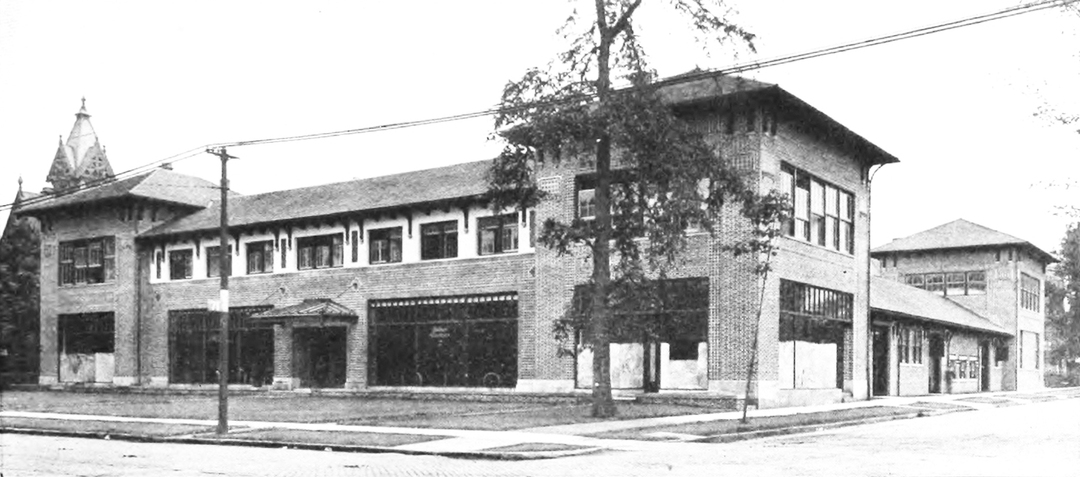
    <summary type="html"><![CDATA[<p><strong><em>In the Great Depression, used-car lots began to replace the sweeping front lawns of some of the deteriorating mansions that were once the pride of Cleveland's famed Millionaires' Row. By the 1950s, Euclid Avenue was a veritable "Motorists' Row" with as many car lots, filling stations, garages, and motels as mansions. Yet, long before this turn, the "Showplace of America," as <em>Baedeker's Travel Guide</em> had recently dubbed Euclid Avenue, was a fitting place for a showroom for innovative—and expensive—new cars made in Cleveland.</em></strong></p><img src="https://mail.clevelandhistorical.org/files/fullsize/7071c4ab7e003ce4b8bab9e8c0df038e.jpg" alt="The Baker Electric Showroom in 1911" /><br/><p>More than a century before Elon Musk's Tesla Roadster was launched into space, the first crude electric carriage was produced by the Scottish inventor Robert Anderson in 1832. In 1891, William Morrison built the first successful electric automobile in the United States. Tesla's electric cars are a luxury item by today's standards, but electric cars have always been items of wealth. The Baker Motor Vehicle Company was founded in 1898 by the engineer Walter Baker to produce electric automobiles. Prior to this, Walter Baker helped found the American Ball Bearing Co. in 1895, which began to develop and produce automobile parts.</p><p>The vehicles at this time were extremely heavy and operated on large batteries that were very expensive. Baker built an electric automobile for his private use but wished to create a lighter machine with a smaller battery for mass consumption. The battery Baker invented used twelve cells, whereas other batteries during that time contained forty to forty-eight cells. By 1905, the success of Baker's lighter, simpler, and lower-maintenance electric automobile had created a demand for other styles including runabouts, stanhopes, four-passenger surreys, depot carriages, and broughams.</p><p>The Baker Motor Vehicle Company continued to adopt advanced technology for its vehicles. In 1909 the company implemented the bevel gear shaft drive as a more efficient transmission over the chain drive. The bevel gear shaft was both light and strong, suitable for small vehicles. The batteries used by the Baker Motor Vehicle Company were praised by their creator Thomas Edison. On July 29th, 1907 a Baker Electric car was driven for 106.8 miles on one charge on a standard lead battery. The record-setting car was shown in the sales room of the Baker Electric Motor Car Building.</p><p>The Baker Electric Motor Car Building was built in 1910. The Arts & Crafts-styled brick building served as Baker's first car showroom. It was designed by the prominent Cleveland architect Frank B. Meade and decorated by Rohrheimer-Brooks. Because only the wealthy could afford automobiles at the time, the showroom was built on Millionaires' Row at Euclid Avenue and East 71st Street (7100 Euclid Avenue). The Baker garages were well-regarded for their electric car services, and the building became a national model for automobile dealerships.</p><p>In 1912, Baker invented a new transmission, which proved to be the greatest revolution in the auto industry since the automobile itself. The new electric transmission was powered by a gasoline motor and eliminated many of the complicated processes in running automobiles such as the gear-driven transmission, clutch, flywheel, heavy self-starter, and the generator to charge the battery. Baker drove a car with this new transmission daily.</p><p>Of the three different models displayed in the Baker Electric Motor Car Building showroom in 1913, the most affordable model was the two-passenger Victoria model, which cost $2,000. The four-passenger coupe cost $2,800. The five-passenger brougham's cost came to $3,100. Adjusted for inflation, these vehicles would cost between $100,00 to $200,000 today.</p><p>In 1915 another Cleveland automaker, Rauch & Lange Carriage Company, merged with the Baker Motor Vehicle Company to form Baker Rauch & Lange Co. By 1915, the light Baker electric coupe launched into increased production. In doing so, they were able to lower the price of the both the couple, the double drive brougham, and the roadster. By the 1920s, Baker R. & L. Co. sold its electric car division to focus on industrial vehicles and equipment. The Otis Elevator Company bought Baker in 1954, and Otis merged with United Technologies in 1975. The latter company sold the Baker Division to German multinational company Linde-Akiengesellschaft in 1977. Baker Materials Handling, the Baker division under Linde-AG, became Linde Lift Truck Corporation in 1999.</p><p>Though the company itself has long ceased to exist, the Baker Electric Motor Car Building still stands on Euclid Avenue today. The building has been occupied over the years by a grinding and finishing shop and various printing companies, and the large picture windows were filled in by bricks to better accommodate the changing needs of the occupants. Ivy covered the building, concealing the aesthetic details of the architecture, when Cumberland Development LLC and Aril Ventures partnered together the buy the building in 2006. The Baker Electric Motor Car Building underwent a $7.1 million restoration project to convert the building into bio-tech labs and medical business offices to take advantage of its location on the newly christened "Health-Tech Corridor" near the Cleveland Clinic. Meade's Early Commercial/Mission Revival mixed-style Baker building was added to the National Register of Historic Places in 2007, which enabled historic tax credits for the restoration project.</p><p>Dick Pace, the real estate developer from Shaker Heights, led the project. Interestingly, Pace is an architect and former partner of Van Dijk Pace Westlake Architects of Cleveland, which was founded by Abram Garfield in 1905. Garfield had often partnered with Baker Electric Building designer Frank Meade on other projects.</p><p>The 50,000-square-foot Baker Electric Building's restoration revealed much of the original showroom. The large windows were recovered. Oak panel walls and showroom lamps were uncovered from drywall and drop ceilings. The showroom's original ceramic tile floor lay underneath asphalt floor tiles and concrete. The original, century-old ceramic tiles were laid out in a checked pattern with an intricate border design.</p><p>The building had room for a dozen tenants, and Pace was getting interest from international companies. In the hopes of being granted a Leadership in Energy and Environmental Design Silver Certificate, or LEED, the renovation implemented green and sustainable practices. There is an electric charging station on the outside of the building and energy companies occupy the building in search of new environmentally safe ways to harness energy. The Baker Electric building is a site of sustainable innovation which has promoted neighborhood growth along Euclid Avenue. </p><p><em><strong><a href="https://mail.clevelandhistorical.org/items/show/826">For more (including 10 images) view the original article</a></strong></em></p>]]></summary>
    <published>2017-12-06T09:56:45+00:00</published>
    <updated>2026-04-17T19:17:41+00:00</updated>
    <link rel="alternate" type="text/html" href="https://mail.clevelandhistorical.org/items/show/826"/>
    <id>https://mail.clevelandhistorical.org/items/show/826</id>
    <author>
      <name>Natalie Neale</name>
    </author>
  </entry>
</feed>